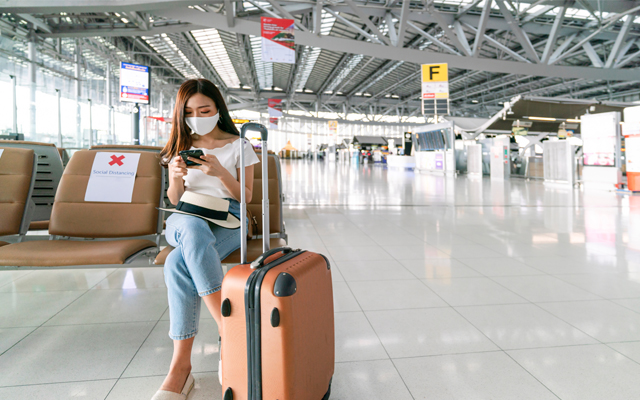
Asian female tourist wearing mask using mobile phone searching airline flight status and sit social distancing chair in airport during coronavirus or covid-19 virus outbreak a new normal concept
Despite the recent ruckus over two imported coronavirus cases that riled up Thailand’s local population, the Thai government has confirmed it will move ahead with its planned medical and wellness tourism programme.
Stricter disease control measures will, however, be implemented, and the first batch of patients are set to arrive at the end of this month.
Thailand to welcome medical tourists from this month as part of its push to attract more high-end travellers
Currently, eligible patients are those seeking infertility treatments or plastic surgery arriving by air. They will have to produce an appointment letter with a doctor in Thailand, documentation from the Thai embassy in their country of origin, and a negative Covid test pre-travel.
They will be tested again on arrival, and before they leave Thailand. Patients may be accompanied by one to three other travellers.
As of now, 62 private and state-owned hospitals are involved in the programme. The quarantine process will be different for medical tourists, and will be primarily handled by the hospitals. A medical hub committee chaired by tourism and sports minister Phiphat Ratchakitprakarn, who helms the project, will also oversee the setup of in-hospital quarantine facilities.
All patients will be required to complete a 14-day quarantine after their treatment, following after, they will be free to travel anywhere in Thailand. Locals tours are also being planned by the government for these tourists.
The programme is run primarily by the Thai government and hospitals. Local tour operators, hotels and hospitals that are not part of the programme will not have access to the tourists.
The Thai government announced earlier in July that 1,700 individuals from 17 countries in the Mekong region, China and the Middle East have already applied for the programme.
Medical tourism forms part of Thailand’s long-term plan to draw higher spending visitors post-Covid. Phuket has recently announced a three billion baht (US$94.6 million) plan to transform 140ha of land near Mai Khao beach, north of the airport, into a medical hub.
Thailand’s Centre for Covid-19 Situation Administration has green-lighted another four categories of foreigners that will be allowed entry into the country during phase six of its reopening in August, including Elite Visa holders, groups of medical tourists, foreign film crews, as well as convention exhibitors and co-organisers, pending cabinet approval.
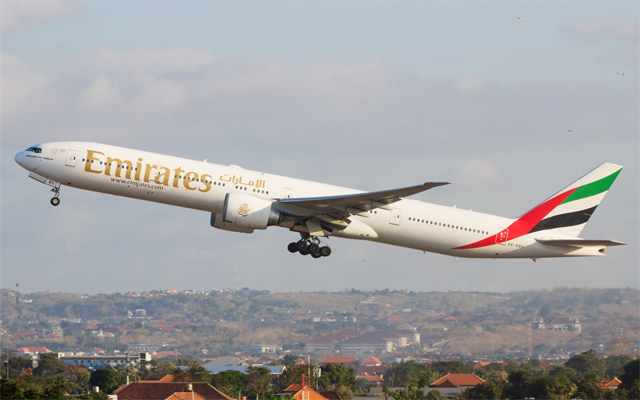
Emirates Airlines Boeing 777-300ER (A6-EBU) leaving I Gusti Ngurah Rai International Airport
Emirates has become the first airline to offer its customers’ free cover for Covid-19-related costs, in a bid to boost travel confidence.
Customers flying with the Middle East airline from now until October 31, 2020 can claim medical expenses of up to €150,000 (US$174,000) and quarantine costs of 100 euros per day for 14 days, should they be diagnosed with Covid-19 during their travel, while away from home.
Emirates has become the first airline in the world to offer free cover for Covid-19-related costs
Sheikh Ahmed bin Saeed Al Maktoum, Emirates group chairman and CEO, said: “We know people are yearning to fly as borders around the world gradually reopen, but they are seeking flexibility and assurances should something unforeseen happen during their travel.”
Applicable across all fare classes and destinations, this cover will be valid for 31 days from when an Emirates’ passenger flies the first sector of their journey.
Customers do not need to register or fill in any forms before they travel, and they are not obligated to utilise this cover provided by Emirates.
Any impacted customer who has been diagnosed with Covid-19 during their travel simply has to contact a dedicated hotline to avail of assistance and cover.
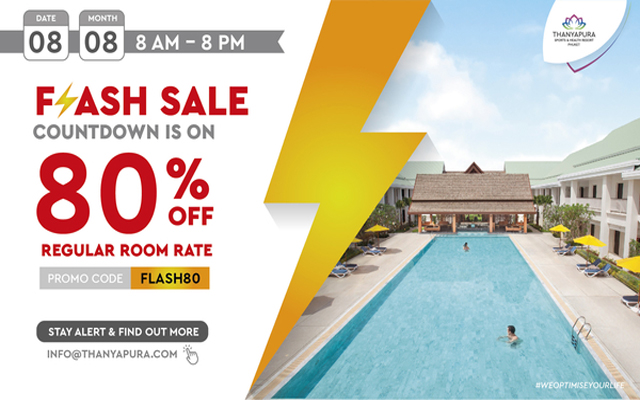
Thanyapura Sports & Health Resort in Phuket will run a 12-hour flash sale on August 8 from 08.00 to 20.00 (GMT+7), offering 80 per cent off its regular hotel rates.
The offer will be valid for stays until September 30, 2021, and guests have the option to purchase sports and wellness packages.
In addition, Thanyapura will allow a one-time date change. Bookings can be made through Thanyapura’s website using the code FLASH80, applicable to all bookings that include breakfast. Hotel bookings made are non-refundable, non-commissionable and are subject to availability.
Located on the Thai island of Phuket, Thanyapura Sports & Health Resort is an active holiday destination offering personalised programmes ranging from sports and fitness to nutrition and lifestyle medicine.
Japan’s NEC Corporation have joined forces with SITA to develop solutions that will enable a secure, seamless and automated journey at airports across the world.
The partnership comes as airports and airlines increasingly look to low-touch and automated passenger processing in order to safeguard the health and safety of passengers amid the global Covid-19 pandemic.
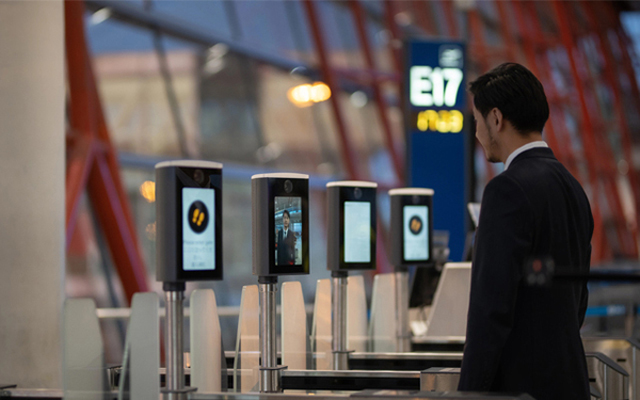
Through NEC and SITA’s partnership, passengers will be able to use their biometric identity through every step of the airport journey, including bag drop and boarding, by simply scanning their face
Through the partnership, passengers will be able to use their digital identity on their mobile phone at every step of their travel journey. They will be able to check-in, make payments, drop their luggage, as well as pass through security, immigration and boarding by simply scanning their face.
This solution will be developed by utilising both companies’ global presence in the market and the combination of technology for common-use platforms and artificial intelligence (AI) solutions, including NEC’s I:Delight identity management platform alongside SITA Smart Path and SITA Flex.
Through identification technologies and AI solutions like face recognition algorithm, NEC’s I:Delight platform enables passengers to be identified quickly and with higher accuracy. SITA Smart Path and SITA Flex solutions are able to integrate mobile and NEC’s biometric technologies with existing common-use infrastructure and airline applications while delivering a smoother airport journey.
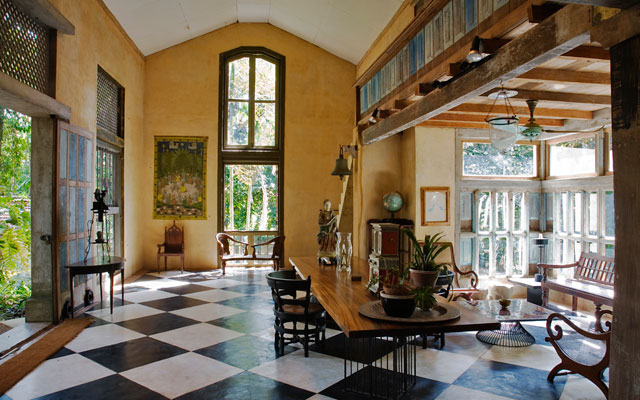
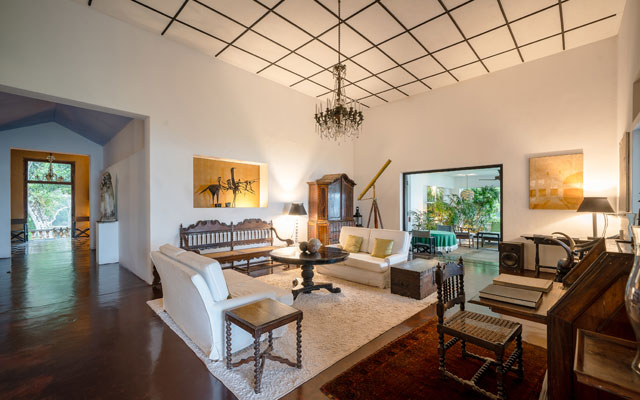
A partnership between Teardrop Hotels and The Geoffrey Bawa Trust has seen Bawa’s Lunuganga country estate located on the southwestern coast of Sri Lanka revitalised and relaunched as a nine-bedroom property.
Grounds of the estate feature the famed architect’s original home, which comprises a former 1930s plantation bungalow, with six private guest suites located around the estate. Lunuganga now also includes the reconstructed three-bedroom house of Bawa’s batik artist friend, Ena de Silva.
Geoffrey Bawa’s Lunuganga country estate
1 of 3
de Silva and her husband Osmund commissioned Bawa to design their home in 1962. In 2009, Ena sold the house to The Bawa Trust, which then moved the property brick by brick from its location in Colombo to Lunuganga. The house took three months to disassemble and six years to rebuild. Changes to the property have been kept to a minimum to preserve as much originality as possible.
A night at Lunuganga – in either the main house or the Ena de Silva villa – starts at US$265++ for two people sharing, inclusive of breakfast. To celebrate the relaunch, Teardrop Hotels is offering guests a 20 per cent discount on all rooms booked before November 30, 2020, which can then be used anytime until April 30, 2022.
An important part of Sri Lanka’s cultural and design heritage, Lunuganga was acquired by Bawa in 1947 as one of his first projects, where he transformed the property from a derelict rubber estate into one of the most beautiful gardens of the 20th century.
Marriott International has launched limited-time staycation offers at select properties across Singapore.
The ongoing 14-day limited-time offer for its Reserve Now, Indulge Later staycation packages will end on August 4, 2020, offering guests up to 20 per cent savings on all suites and 10 per cent off for standard room bookings, for stays until June 30, 2021.
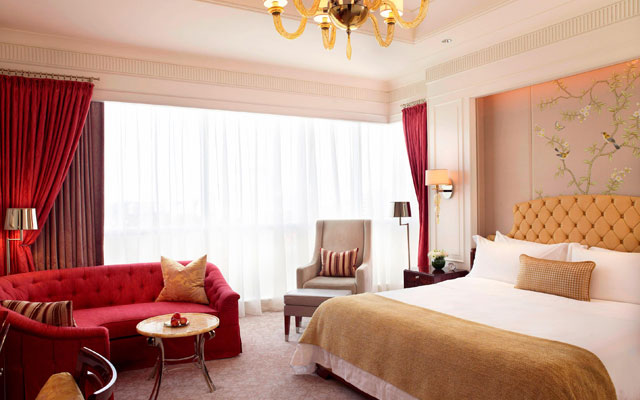
The St. Regis Singapore King Grand Deluxe Guest Room
Three curated, themed packages – Romantic Escapade, Dining, Family Fun – are available under the offer at participating hotels and resorts. The Romantic Escapade package caters to couples, the Dining package offers handcrafted dining experiences, while the Family Fun package comes with a ‘kids eat free’ inclusion.
Guests can choose from an array of bespoke packages at participating hotels: The St. Regis Singapore, W Singapore-Sentosa Cove, The Ritz-Carlton, Millenia Singapore, and Singapore Marriott Tang Plaza Hotel.
At The St. Regis Singapore, guests can enjoy a S$100 (US$72) daily credit for use on dining and spa experiences, an epicurean breakfast for two adults and two children (up to 12 years of age), and a bottle of champagne.
Those looking for a family staycation can check into The Ritz-Carlton, Millenia Singapore. The Ritz Kids Night Safari seeks to cultivate the spirit of the great outdoors in young children, and cater to their thirst for new adventures. This immersive programme will take the little ones on an in-room camping experience, with a sleeping tent pitched in the room, and equipped with a night lamp, an edible turndown amenity, a Ritz-Carlton lion beanie and an activity book.
For Singapore Marriott Tang Plaza Hotel, its staycation package includes a 24-hour stay with check-in and check-out flexibility, S$70 dining credit, complimentary breakfast for 2 children (below 12), free parking, English high tea with champagne, and more.
The global pandemic has led to the rise of the cautiously optimistic traveller, with a greater desire to explore one’s own backyard and revisit favourite haunts over exploring bucket list destinations, according to a recent global study by Hotels.com, an Expedia Group company.
The study uncovered five trends that are shaping post-pandemic travel as vacation seekers around the world adapt to a new normal of travel.
Travellers find safety and comfort revisiting their favourite haunts and seeing more of their own backyards over exploring new places and bucket list destinations
Closed borders, wandering minds and rise of the cautiously optimistic traveller
With the pandemic limiting vacation plans, one thing is for certain – travellers are #ThirstyForTravel, with 84% of respondents admitting that they are looking forward to travelling again.
However, while the desire for travel is strong, travel attitudes have also changed. Some 49% admit that they would still be nervous to travel even after all travel restrictions have been lifted. In fact, at least five out of 10 travellers require reassurance from local governments and health authorities before they start travelling again – 30% would feel most comfortable travelling again when a vaccine has been developed, and 27% would feel reassured when the government confirms that travel is safe.
Furthermore, maintaining personal hygiene takes precedence over staying connected and being fashionable on holiday as hand sanitisers (61%), surgical masks (51%), disinfectant wipes (47%) and travel insurance documents (43%) top the list of necessities to pack for their next vacation. Laptops, iPads, books and magazines (45%), as well as travel accessories such as jewellry, sunglasses and hats (42%) moved down the priority list.
Reliving past memories, familiarity over the unknown
When it comes to post-pandemic travel, familiarity breeds comfort, as 33% want to explore more of their own country and revisit their favourite haunts (31%) over exploring new places (27%) and bucket list destinations (27%).
The desire to rediscover one’s own backyard is also evident, with 29% of respondents preferring to go on a domestic holiday over an international vacation (26%) when planning their next trip.
Retreat for the mind, ‘belly’ and soul
The global pandemic has also paved the way for a new generation of travellers – Generation E – also known as Generation Enlightened, a new wave of travellers seeking to improve their mental and physical wellbeing through travel.
Globally, 86% of travellers believe that travelling is a post-pandemic stress buster that can enrich the mind, body and soul. Feeling relaxed and stress-free (51%) tops the list of what these “Gen E” travellers are looking forward to in their post-pandemic vacation.
When it comes to wellness travel, it’s no longer just about getting massages or practicing yoga. Eating great food (55%) also plays an important role in nourishing the ‘belly’ and soul during travel. This belief extends to the stay experience, with 51% of travellers ranking a good hotel buffet as number one on the list of key amenities that accommodations should have to improve guests’ personal wellbeing.
Other important amenities include fresh towels (50%) and sanitation facilities such as public hand sanitisers (48%), which ranked second and third, respectively.
Beach more, worry less
The trend of wanting to escape the hustle and bustle is also reflected in the types of accommodation travellers would choose to feel most relaxed. Beach resorts (44%), luxury 5-star hotels (43%) and vacation rental (35%) emerged as some of the top accommodation choices for vacationers to feel the most at ease.
With 36% of consumers admitting that they would now actively avoid visiting crowded places once they start travelling again, it comes as no surprise that the sparseness of beaches would appeal to the cautious traveller.
Keeping up with the family and the wanderlust
Notably, romantic getaways (25%) take a backseat to family holidays (38%), as the global pandemic seems to have struck a chord on the importance of family during this period. Some 38% of respondents state that they would start travelling again to spend more time with family and friends they haven’t seen in a while. A holiday with family (40%) or partner (31%) is also the first thing that people plan to spend on when things get back to normal, over a big night out with friends (19%) or shopping (17%).
Among the top holiday motivators for travellers around the world are the need to travel for a change of scenery (45%) and to make the most of one’s freedom post-pandemic (41%).
The study was conducted by One Poll between May 28 and June 24, 2020 among 7,000 respondents in Brazil, Denmark, Finland, France, Hong Kong, Japan, Norway, South Korea, Spain, Sweden, Taiwan, the UK and the US.
Vietnam’s first major lifestyle hospitality chain Wink Hotels has launched, setting its sights firmly on the domestic market, as it readies to open its debut hotel later this year.
Setting out to redefine affordable luxury, Wink Hotels touts itself as “a sleek, chic and vibrant lifestyle brand” that reflects a “young, modern and confident Vietnamese identity”.
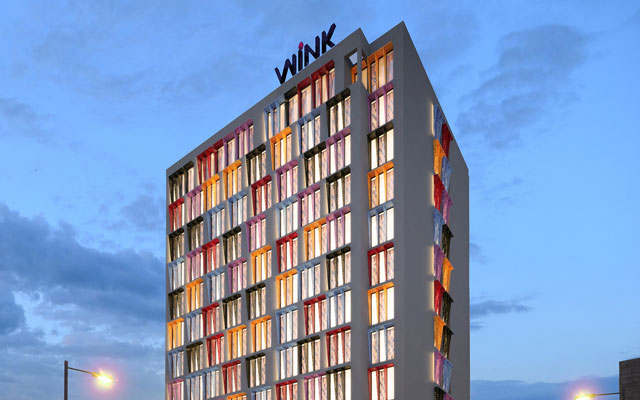
The first Wink branded hotel will rise in Ho Chi Minh City’s Da Kao area in 4Q2020
The hotel chain is designed by AW2, conceived by developer Indochina Kajima, and operated by Indochina Vanguard – the latter two being joint venture companies with Indochina Capital and Kajima Corporation, and Vanguard Hotels, respectively.
The first Wink branded hotel will be the 237-room Wink Hotel Saigon Centre @ 75 Nguyen Binh Khiem, opening in Ho Chi Minh City’s Da Kao area in 4Q2020. It will be the first in a pipeline of 10 hotels to launch across Vietnam over the next four years, according to a press release.
Properties to follow include the 243-room Wink Hotel Danang Centre @ 178 Tran Phu, and a third in riverside Danang as part of a mixed-use complex with a 60m façade on Tran Hung Dao Street, along the Han River.
Fuelled by economic growth and the advent of low-cost carriers, domestic tourism in Vietnam grew 22 per year from 2014 to 2019, registering 85 million domestic travellers last year.
Wink Hotels is looking to tap Vietnam’s booming domestic travel market, as the country’s successful management of the coronavirus and the quick re-opening of the economy have prompted greater emphasis on domestic tourism to spur growth.
With 48 per cent of Vietnam’s 96 million population under the age of 34, the brand is looking to capture “young, aspirational and highly mobile” business and leisure travellers.
Wink Hotels CEO Michael Piro said: “These are exciting times for the Vietnamese hospitality industry. There’s a massive, underserved market segment currently and it is our clear ambition to serve and inspire this youth market with a new and dynamic brand of hospitality.
“Wink Hotels will be modern, bold and resolute in personality – reflecting a strong cultural identity – while being deeply respectful of Vietnamese traditions. At the same time, we offer guests a fun and connected destination experience.”
Wink Hotels aims to inspire youth market in Vietnam with new and dynamic brand of hospitality: Piro
Strategically positioned to embody a youthful spirit, the brand will aim to convey that through Wink Guides, a team of personality-driven associates that will individualise interactions with guests, leveraging their local knowledge and sharing their own stories.
Other key features will be self-check in; grab and go Wink Food Carts; as well as social, community spaces and flexible seating.
Partnership and collaboration will be a signature of all Wink Hotels as the brand celebrates Vietnamese culture, creativity and commerce. For example, Wink has partnered with Toong, Vietnam’s first chain of co-working spaces, which will be featured in all Wink Hotels.
With the recent news of countries opening up after extended lockdowns worldwide, travellers are beginning to see the light at the end of the tunnel, and are looking on releasing their pent-up travel desires.
Simplified as the phenomenon of “revenge travel”, places like China, the US and others saw a surge in travel the moment their lockdowns lifted. While this might seem to indicate a positive recovery for the hospitality industry, there is more than meets the eye.
Hotelplanner has been in the group travel industry for over 20 years, and has seen many such trends following the SARS pandemic and other crises like the 9/11 tragedy. While brands should naturally rejoice at the thought of travel bouncing back, it is something that calls for a well-thought-out strategy, and an accurate assessment of what recovery means.
Here are some insights that provide a clearer picture of the industry’s recovery post-Covid-19.
Recovery is uneven, unpredictable, and unequal
Inevitably, people emerging from lockdowns indicate an increase in travel demand. This in itself is undeniable. However, it is crucial to recognise a few things about recovery.
First, recovery will be uneven; it will come in waves while the pandemic comes under control. Second, it is unpredictable – media sensationalism and promotion of Covid-19 hysteria will hinder the recovery, and at times, stop it in its tracks. And finally, it is unequal. If any, recovery will be most significant in places like South-east Asia, over Northern Asia.
Recovery should not be expected to be consistent worldwide. For instance, in the US, revenge travel has come and gone – with a relatively short lifespan towards the end of June. Reason being, states have begun to retreat back into lockdown measures due to the increase in Covid-19 infections.
Whereas, in South-east Asia, people will be inclined to choose their travel destinations for its low-cost, large natural beaches for social distancing, and track record in containing the virus.
That said, South-east Asia’s recovery will also be dependent on the health of the airline industry. Several airlines like AirAsia and Hong Kong Air are on the brink of bankruptcy; if there is less competition among low-cost carriers, prices for air travel will rise, and higher prices will hurt the recovery.
Government bodies have a part to play
To revive world economies, governments around the world need to do more to add stimulus to the hospitality industry. Recovery is definite, but it has been slow. This slow growth makes it difficult for hospitality companies to deliver quality products and services – all due to low staffing levels. The industry should try to keep high staffing levels to provide quality even at low occupancies. Hopefully, we can see the government help these companies with a payroll stimulus plan.
On top of that, they need to protect the people so they feel confident to travel. Seeing the effort put in to enforce prolonged lockdowns, it is the hope that authorities put in an equal amount of effort in creating a stable society for economic recovery.
Adapt, invent, and innovate: Get used to a new normal
As death rates begin to decline, it signals the end of the pandemic is near. Brands should recognise that while this indicates the end of the crises, it does not mean that a V-shaped recovery is guaranteed. Things will not return to normalcy, and this is a time for them to adapt, invent, and innovate.
Take this opportunity to capitalise on the travel surge. Seize opportunities to make yourself visible online. Travellers that embark on revenge travel are generally social media junkies that consume content from specific channels. With the increased technology literacy that has come with Covid-19 and work-from-home measures, it can also be helpful in aiding companies to overcome limited capacity measures.
One way this can be done is through keeping staffing levels efficient to deliver the best product in line with pandemic protection measures. For example, virtual meetings at hotels will be the solution to having a 200-person meeting, allowing hotels and venues to socially distance and keep capacity low.
Venues can choose to have temporary walls installed in convention halls and split up rooms of a low number of people each, and tie these rooms together through virtual conference technology with cutting-edge AV systems.
Keep your brand in front of your customer, constantly grow, improve and innovate, and you will be able to capture the business you need.
WTTC is urging global governments to adopt a carefully calibrated approach to country-wide border closures, and introduce localised measures only to combat Covid-19 spikes, warning that continued border closures could jeopardise global economic recovery and cripple the already battered travel and tourism sector.
The UN body said that it supports the opening of city to city “air corridors” between global financial centres where infection levels are low, such as London and Frankfurt and New York, to help restart business travel and aid the economic recovery.
WTTC advises regional and local measures only to combat Covid-19 spikes
As some countries around the world are experiencing local coronavirus spikes, this is forcing a re-think by a number of governments which are now having to consider reintroducing tough and unwelcome new “anti-travel” measures, WTTC said in a press statement.
According to the latest statistics from Johns Hopkins University in the US, the worldwide Covid-19 death toll has passed 606,000, while the number of confirmed coronavirus cases has now surpassed more than 14.5 million.
Gloria Guevara, WTTC president & CEO, said: “Enforcing country-wide restrictions is a blunt instrument which benefits no one – neither travellers, the local population, the economy or the travel and tourism sector which has been left reeling from the impact of worldwide travel restrictions.
“Such measures could undo the significant efforts to revive travel and tourism, which has recently shown encouraging signs of emerging from the worst of the pandemic, and which in turn, has brought hope to millions of people around the world who depend upon the sector for their livelihoods.
“Taking a more carefully calibrated approach to strategically combating coronavirus spikes with local measures rather than country-wide closures, will contain Covid-19 and preserve a country’s attempt to kick-start their economy by continuing to attract travellers to unaffected areas.”
The travel and tourism sector plays a critical role to powering the global economic recovery, generating one in four of all new jobs last year. WTTC’s 2020 Economic Impact Report shows that during 2019, the sector supported one in 10 of all jobs, or 330 million jobs in total; and made a massive 10.3 per cent contribution to global GDP.
Guevara added: “It is perfectly possible to fight Covid-19 and support the economic recovery through the travel and tourism sector at the same time. We urge governments to consider only local lockdowns as the key to opening the door to a successful way forward.”
Restoring business travel, especially via transatlantic flights, is key to help kick-start the economic recovery. WTTC research shows that for two of the world’s top business centres, business travellers account for one in every three US dollars spent in New York and one out of every four pound sterling spent in London.
WTTC research showed that every 2.7 per cent increase in travellers would generate or recover one million jobs in the sector. Governments working together with the right coordinated measures could stimulate an increase in travel by as much as 27 per cent, recreating a massive 10 million jobs in travel and tourism.













Marriott International has launched limited-time staycation offers at select properties across Singapore.
The ongoing 14-day limited-time offer for its Reserve Now, Indulge Later staycation packages will end on August 4, 2020, offering guests up to 20 per cent savings on all suites and 10 per cent off for standard room bookings, for stays until June 30, 2021.
Three curated, themed packages – Romantic Escapade, Dining, Family Fun – are available under the offer at participating hotels and resorts. The Romantic Escapade package caters to couples, the Dining package offers handcrafted dining experiences, while the Family Fun package comes with a ‘kids eat free’ inclusion.
Guests can choose from an array of bespoke packages at participating hotels: The St. Regis Singapore, W Singapore-Sentosa Cove, The Ritz-Carlton, Millenia Singapore, and Singapore Marriott Tang Plaza Hotel.
At The St. Regis Singapore, guests can enjoy a S$100 (US$72) daily credit for use on dining and spa experiences, an epicurean breakfast for two adults and two children (up to 12 years of age), and a bottle of champagne.
Those looking for a family staycation can check into The Ritz-Carlton, Millenia Singapore. The Ritz Kids Night Safari seeks to cultivate the spirit of the great outdoors in young children, and cater to their thirst for new adventures. This immersive programme will take the little ones on an in-room camping experience, with a sleeping tent pitched in the room, and equipped with a night lamp, an edible turndown amenity, a Ritz-Carlton lion beanie and an activity book.
For Singapore Marriott Tang Plaza Hotel, its staycation package includes a 24-hour stay with check-in and check-out flexibility, S$70 dining credit, complimentary breakfast for 2 children (below 12), free parking, English high tea with champagne, and more.