TTG Asia
Asia/Singapore Monday, 22nd December 2025
Page 939

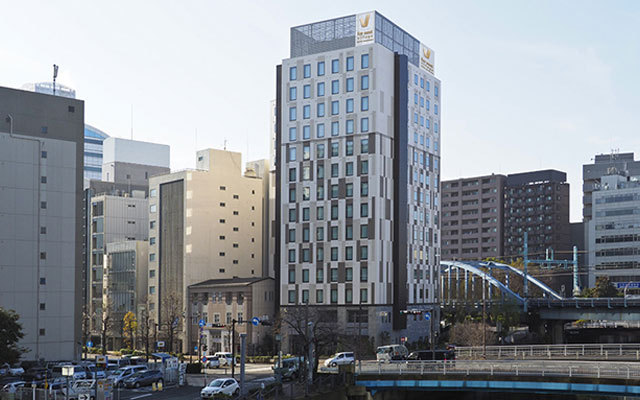
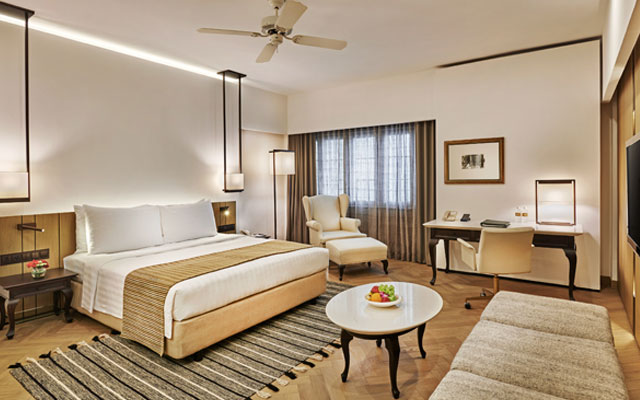
Hyatt’s first UrCove hotel slated for October opening

0
UrCove will cater to the upper-midscale segment of frequent business travellers

Ascott allows guests to Work in Residence

0
Work in Residence

The Ascott Limited (Ascott) has transformed selected apartments into conducive work suites which are now open for bookings, as part of its Work in Residence initiative at participating properties worldwide.

These self-contained work suites are available at over 60 participating properties across more than 10 countries. Ascott’s Work in Residence offers fully-furnished and well-equipped work suites that enable guests to check-in and start work with minimal disruptions. Larger apartments with separate living and dining areas, kitchen and individual bedrooms are also available for project groups.

Ascott’s fully-furnished and well-equipped work suites offer alternative work or study spaces

Guests can choose from daily, weekly or monthly packages. Depending on the length of use and location, the work suites come with a dedicated workstation, regular housekeeping, complimentary coffee and tea or complimentary parking at selected serviced residences. Nespresso coffee machines are also available in selected apartments.

Telecommuting essentials such as high-speed WiFi, wide-screen monitor, webcam for videoconferencing and Bluetooth speakers with microphones are available on demand. To enhance the work-stay experience, task lights, wireless charging stand for tablets and mobile phones, power plugs and USB charging ports, as well as a stationery kit are provided for guests. A range of services are also available, including food delivery, grocery shopping, printing, concierge and book-a-chef for in-room dining.

The launch of Work in Residence follows Ascott’s successful pilot in countries such as Australia, France, Japan, Malaysia, Singapore and Turkey.

Agoda rolls out day use option for South Korea hotels

0

Agoda has launched a beta version of its day use feature across hotels in South Korea, giving guests the option of booking a room for just a few hours.

Currently available at 7,000 hotels across South Korea, the new feature provides guests who do not require a full night’s stay with more flexible booking options, while helping hoteliers maximise room occupancy.

To book a day use room, Agoda users can start by searching for any destination in South Korea on the Agoda mobile app, select the “day use” tab, enter the check-in date, and browse a wide range of properties across the country, including in cities such as Seoul, Jeju Island, Busan, Daegu and Incheon.

Day use rates are available for two- to ten-hour blocks, depending on the hotel’s availability. Users can select from available check-in timeslots before 23.00.

South Korean users can look forward to a full roll-out of the day use feature in the next few weeks. Agoda said that it will work with accommodation partners to increase the selection of day use rooms, as well as look to expand the day use offering in other destinations in the coming months.

TTC unveils US$300m Peace of Mind promise

0

The Travel Corporation (TTC) has unveiled a US$300 million Peace of Mind promise as way of reassuring its travel agent partners of the company’s financial health.

The promise sees the company divulging that it has fixed assets in excess of US$300,000,000 as of December 31, 2019.

As a privately-owned company, TTC said that information around the financial status of the business is usually not released.

“However, these challenging times call for transparency and the reassurance of TTC’s current financial strength and integrity,” it said in a statement.

The company owns 40 travel brands including Trafalgar, Insight Vacations, Contiki, Uniworld, Red Carnation Hotels, and Luxury Gold.

TTC CEO Brett Tollman said: “As The Travel Corporation celebrates our 100th year anniversary, we continue to be a very stable and solvent company. Our Peace of Mind Promise gives the reassurance to our loyal travel advisors and their clients that their monies for future travel are safe and this goes beyond our commitment to having a memorable holiday with us.”

Searches for Bali hotels return to near pre-Covid levels: Sojern

0
Tanah Lot - Temple in the Ocean. Bali, Indonesia.

The lifting of domestic travel restrictions in Indonesia from May has sparked a rise in hotel and flight searches, with hotel searches for domestic travel to Bali increasing by 400 per cent since then.

As well, when it comes to international travel to Bali, hotel searches have almost bounced back to pre-Covid levels, as the Indonesian island looks to welcome international tourists again in September.

The top five international origin countries of travellers wishing to travel to Bali in September include the US, Australia, the UK, Germany, and Japan; Tanah Lot Temple in Bali, Indonesia pictured

These findings are part of Sojern’s latest insights on Covid-19’s impact on the travel industry in Asia-Pacific, as part of a blog series designed to aid travel marketers in their recovery efforts from the global crisis. The insights are based on data of over 350 million traveller profiles and billions of travel intent signals collected on August 11, 2020. However, the data does not capture one hundred percent of the travel market.

Domestic travel within Asia-Pacific fluctuates

When looking at changes in domestic travel in Asia-Pacific since April 5, Sojern noticed changes in the trends. Flight and hotel search and booking trends correspond with each other when it comes to the following countries – Australia, New Zealand, Japan, Taiwan, Thailand, Vietnam, and Singapore.

Australia was found to have the most dramatic decline in travel intent, beginning early July. Initially, when domestic travel was open, Sojern observed a 600 per cent increase in flight and hotel searches and bookings. Now, travel intent is at 300 per cent. This decline could be attributed to the increase of Covid-19 cases within the country.

It is said that flights from Victoria to New South Wales (NSW) are being treated as ‘international’ arrivals at Sydney Airport, with passengers being required to take 14 days of mandatory hotel quarantine. While flights depart from domestic terminals in Melbourne and at other airports across Victoria, Sydney is the only NSW airport still accepting flights from Victoria but at the international terminal. Again, travellers will undergo strict identification and health screening checks.

The past weekend, Queensland announced that it was also closing its borders to travellers from NSW and the Australian Capital Territory, which houses Canberra, Australia’s capital city.

Likewise, New Zealand peaked in travel around early July and has since declined, both for flight and hotel searches and bookings. In Japan, an increase in travel intent was observed in late June (up 300 per cent). Since then, Sojern noticed a decline (up 200 per cent), which could be due to the latest Covid-19 outbreak. Likewise, Taiwan and Thailand saw domestic travel to be high, peaking in July. However, as soon as an increase in Covid-19 cases occured in these areas, domestic travel went down.

On July 24, Danang, a tourism hotspot, saw Vietnam’s first domestically transmitted case in 100 days. Since then, the virus has spread to at least 10 places, including popular domestic travel cities such as Hanoi and Ho Chi Minh. Sojern’s data is reflective of what is transpiring in the country – from mid-July onwards, there was a decline in both domestic flight and hotel searches and bookings.

Since Singapore Tourism Board (STB) revealed the first set of staycation-approved hotels across the Red Dot, Sojern saw an increasing number of hotel searches and bookings, particularly from late July. This is clearly indicative of the pent-up demand for staycations allowing for residents and locals to book their local getaway. The list pulled together by STB continues to grow as more hotels conduct their safety checks and get added to the list.

Domestic hotel and flight searches and bookings

State of travel for Bali – domestic and international

The Indonesian government announced that it will be shifting its focus to boost the domestic tourism market and pursue local tourists. What this means is that the central government has set aside 3.8 trillion rupiah (US$256.6 million) to develop quality destinations and launch new marketing initiatives such as #IndonesiaCARE and Bali Rebound, among other promotional programmes, some of which are being driven by social media campaigns.

As such, it is observed that hotel searches for domestic travellers within Indonesia to Bali have almost recovered to pre-Covid levels. When compared to January, hotel searches are down only 20 per cent and have increased by 400 per cent since May. Domestic travel restrictions in Indonesia were gradually seen to have been lifted from May and Sojern’s data indicates that both hotel and flight searches have started recovering since.

When looking at international travel to Bali, it is seen that hotel searches have almost recovered to pre-Covid levels, but flight searches haven’t shown a recovery yet. That being said, international travel restrictions to Bali will be lifted starting September and our data is reflective of the travel demand then. The top five international origin countries of travellers wishing to travel to Bali in September include the US, Australia, the UK, Germany, and Japan.

Domestic hotel searches to Bali

International hotel searches to Bali

Dreaming of the Maldives

Following the reopening of Maldivian borders to international visitors on July 15, Maldives has announced that 94 per cent of its resorts will reopen by the end of October 2020, following health and safety measures set out by the Ministry of Tourism. Sojern’s data shows that both flight and hotel searches have had some gradual recoveries, but are still far from the levels we saw in January.

That being said, since May, there has been a 50 per cent increase in flight and hotel searches. In early June, when the Maldivian government announced the lifting of travel restrictions to the country starting from July 15, Sojern continued to notice a recovery trend in booking confidence for both flights and hotels.

Well known for the ‘one-island-one-resort’ concept, the top six international origin countries of travellers wishing to travel to the Maldives in September include the US, India, the UK, Germany, Canada, and UAE. Interestingly, in the US, Californians specifically are dreaming of the Maldives as we see it to be one of the top searched international destinations for them in the last 60 days.

Given the current Covid-19 climate, new tourism regulations, and naturally ‘socially’ distanced islands, Maldives is said to be one of the safest destinations to holiday in. Privacy at its best!

International flight searches to the Maldives – May to date

International hotel searches to the Maldives – May to date

In conclusion, the findings this month include changes in domestic travel in Asia-Pacific aligned to the waves of the virus, Bali showing signs of recovery of domestic and international travel, and lastly, the Maldives proving to be a safe haven with the opening of its borders to international tourists.

Malaysian tourism players petition change to license renewal rules

0
Tour buses wait for passengers at National Mosque. Over 25 million people visited Malaysia in 2013.

Tourism Productivity Nexus (TPN) has proposed to the Ministry of Tourism, Arts and Culture Malaysia (MOTAC) to relook existing regulations for tourism businesses to tide them through these challenging times of Covid-19.

TPN chairman, Uzaidi Udanis, said in a meeting on Tuesday chaired by the tourism, arts and culture minister, Nancy Shukri, that he had proposed for the MOTAC to temporarily abolish the requirement that tour operators and travel agents need to maintain a physical office to renew their licenses.

Malaysian tourism players are proposing for the licensing of recreational vehicles and caravans to operators; tour buses outside National Mosque of Malaysia in Kuala Lumpur pictured 

He added: “Many operators and travel agents are currently working from home due to the ongoing pandemic. Yet, they have to maintain an office and pay rental. We proposed that the ministry consider a two-year exemption as it will take about that period for the industry to recover.”

TPN had also proposed for a wider choice of licensed vehicles for the purpose of transporting high-end domestic tourists who are willing to pay more for a comfortable journey.

Uzaidi said: “We proposed the licensing of recreational vehicles and caravans to operators. Under the current regulations, bus operators can convert their tour buses to recreational vehicles, but it has to be licensed under a personal name. Thus, it cannot be used for commercial purposes.”

Also brought up during the meeting was the need to upskill and retrain tourist guides to deepen their knowledge on local destinations so as to cater for the medium to high-end domestic market, shared Uzaidi.

He explained: “It is crucial for tourist guides to provide in-depth story-telling at the destination as this is what local tourists want. They are familiar with the country they live in, so when on a domestic holiday, they seek in-depth explanations of the places they visit.

“We proposed for the Ministry of Tourism, Arts and Culture to look at providing affordable courses on upskilling and retraining such as offering these courses at public universities with a nominal fee. This will encourage tourist guides to take such courses.”

He also put forth the suggestion for the MOTAC to register adventure operators in order to safeguard the safety of tourists. Currently, there is no special category for adventure operators to register with the ministry.

Thais confident about reopening tourism

0
Asian female tourist in protective mask using smartphone to search information while walking to look Buddhist art statues around Wat Bang Chak temple area

As Thailand cautiously starts to reopen its borders to select foreign tourists, the majority of Thais are confident that the country is ready and prepared to restart its tourism engine.

These are the findings from a recent global study which found that four out of five (82 per cent) Thais are confident that Thailand is well-prepared to reopen its tourism and leisure activities – the highest globally.

Tourists from Hong Kong, Singapore, the Philippines, Indonesia, and India are all targeting Thailand as their first destination when international travel restrictions lift; a tourist wearing face mask walking around Wat Bang Chak temple in Bangkok, Thailand pictured 

The study also found that tourists from Hong Kong, Singapore, the Philippines, Indonesia, and India are all targeting Thailand as their first destination when international tourism resumes.

Jointly conducted by social research agency Blackbox Research, data provider Dynata, and language partner Language Connect, Unravel Travel: Fear & Possibilities in a Post Coronavirus (Covid-19) World examines the sentiments, preferences, and expectations of more than 10,000 people across 17 countries regarding travel in a post-Covid-19 world.

Thailand’s economy is heavily dependent on tourism, with foreign tourist dollars contributing around 11 per cent to the national economy. The vast majority (93 per cent) of Thais recognise the importance of the tourism sector to the local economy. In fact, 22 per cent of Thais agree that there is an urgent need for tourism boards, including their own, to promote tourism for economic reasons – the highest globally.

Saurabh Sardana, COO of Blackbox Research, said that both regional interest and citizen sentiment towards restarting local tourism have been encouraging, especially given the country’s phased approach in reopening to business and medical tourists. Sardana noted that establishing traveller’s trust in health and safety protocols is key, and that Thailand needs to capitalise on its success in containing the Covid-19 outbreak.

He elaborated: “It is evident from our findings the immense value tourism contributes to Thailand’s economy. As Thailand progressively opens its borders to international visitors, its immediate priority will be to regain traveller confidence, through reinforcing how Thailand has in place strict health and safety measures, keeping everyone safe.

“In turn, businesses and the Tourism Authority of Thailand need to work collaboratively and ensure full compliance with these measures, and effectively communicate their efforts through the right channels. Only through stringent health protocols and regular public communication can the tourism industry successfully revitalise itself.

“With Thailand’s currently low rate of coronavirus infections, and its strong public health system which played a key role in its tackling of the pandemic, the country is well-placed to be recognised on the regional and global stage as a trusted destination.”

Among South-east Asian countries, Thailand has the strongest domestic appeal. Some 91 per cent of Thais are keen to support local travel attractions in the next 12 months – a positive sign given Thailand’s recent investment of 22.4 billion baht (US$720 million) to stimulate its domestic tourism, of which partial financial aid will be provided to local tourists for selected hotels and restaurants throughout the country.

Sardana noted that while the financial aid will definitely play a part in encouraging locals to travel domestically, the government needs to also take into consideration how travel priorities have shifted in response to the pandemic.

He elaborated: “Our study has found that price is not necessarily the highest priority for their next trip – this applies to all the key areas such as transport (18 per cent), accommodation (15 per cent), and attraction (10 per cent). Instead, visitor safety measures overwhelmingly ranked top of the list for most Thai travellers (transport – 43 per cent; accommodation – 46 per cent; attraction – 53 per cent).

“To complement these stimulus measures, both the government and tourism operators need to work together to ensure safety and cleanliness protocols are met at all times, giving travellers a sense of security as domestic tourism demand begins to kick in. Establishing confidence amongst locals will also help tell the story of trust to a wider international audience.

“What the study has shown us is that the pandemic has unequivocally shifted how we see travel. In order for travel industry players to stay relevant, they need to change the way they approach every aspect and touchpoint in the traveller experience, emphasising safety and rebuilding trust.”

Royal Caribbean hires global health chief to raise safety bar

0

Royal Caribbean Group has named former Pennsylvania secretary of health, Calvin Johnson, as global head of public health and chief medical officer.

In this newly-created role, Johnson will lead the group’s global health and wellness policy, manage its public health and clinical practice, and determine the strategic plans and operations of its global healthcare organisation.

He will also collaborate with the Healthy Sail Panel – a joint safety task force formed by Royal Caribbean and Norwegian Cruise Line – to ensure the company establishes and implements its protocols and recommendations.

Johnson, most recently principal at Altre Strategic Solutions Group, is the former chief medical officer for Corizon Health, then the largest provider of correctional health care in the US, and for Temple University Health System.

He served as secretary of health for the Commonwealth of Pennsylvania from 2003-2008 and was medical director for the New York City Department of Health from 1998-1999.

Bohol ponders travel bubbles with neighbours

0

The Bohol provincial government is preparing to open up select destinations in the province to domestic and international tourists, starting with Panglao, under the Philippines’ travel bubble initiative.

As the province’s best-known destination, Panglao is home to the new Bohol International Airport and a number of hotels.

Bohol eyes reopening certain destinations, starting with Panglao Island; aerial view of a resort and bungalows in Panglao Island, Bohol, the Philippines pictured

Bohol will partner directly with neighbouring market sources that are also successful in mitigating Covid-19 cases, with tourists travelling directly to Panglao, Bohol governor Arthur Yap said in an online presentation at the 4th general membership meeting of the Philippine Tour Operators Association (Philtoa) on Tuesday.

Itineraries within other parts of Bohol can be developed later for point-to-point travel, he said.

Yap has no exact date for reopening Panglao, but hopes that delegates to the Philippine Travel Exchange (Phitex), the country’s biggest government-organised international travel trade event, to be hosted by Panglao in September, can review and critically evaluate the programme.

Calling the programme a “travel bubble within a bubble”, Yap said Bohol will only embark on an aggressive marketing blitz when the scheme is ready for launch, with a concrete tourism plan in place.

Apart from mapping out the tourism plan, there will also be an ordinance detailing firm guidelines for safe travels, with the other critical aspects of sustainability, carrying capacity and environmental laws compliance built into the guidelines.

There will also be the Ultimate Bohol Experience (UBE) seal of excellence for safe and seamless travel for tourism players who are ready to accept tourists.

Another of Yap’s innovation is integrating everything online for a centralised supply chain, from reservations to payment.

Scanning of QR codes using smartphones will be used for contactless contact tracing efforts, while an app will be developed to note the details of tourists and locals without smartphones.

New hotels: JW Marriott Nara, Holiday Inn Express & Suites Queenstown, and more

0

JW Marriott Nara, Japan
The hotel offers 158 guestrooms including 16 suites, alongside amenities such as an Executive Lounge, a 24-hour fitness centre, spa, indoor swimming pool, as well as three F&B options – the all-day dining venue Silk Road Dining, Japanese speciality restaurant Azekura, and Flying Stag lobby lounge and bar. There is also a JW Garden, a plant-filled space where guests can harvest fresh herbs and greens to be incorporated into their menu choices and cocktails at the bar. For meetings and events, a ballroom and four customisable meeting rooms lead off from the main lobby via a Grand Staircase, and collectively offer 640m2 of event space.

Holiday Inn Express & Suites Queenstown, New Zealand
The Holiday Inn Express brand has made its debut in New Zealand with the launch of Holiday Inn Express & Suites Queenstown. The new-build offers 227 guestrooms and suites, some of which provide views of Lake Wakatipu and The Remarkables mountain range. Guests will also have access to a fitness room, sauna, two flexible meeting rooms, self-serve laundry, dry room, onsite parking and a free business centre.

Fraser Suites Akasaka, Japan
The 224-key serviced residence in Tokyo’s CBD offers a range of rooms, from the 32m2 deluxe room to the 60m2 one-bedroom apartments. Outfitted with kitchenettes, rain showers and bathtubs, and state-of-the-art home entertainment systems, the apartments also boast large bay windows that let in natural light and offer unobstructed views of Tokyo’s city skyline, the Tokyo Skytree and Mount Fuji. Facilities include a Japanese-Italian restaurant, 24/7 gym, golf simulator and The Retreat, a conducive space for work and relaxation that comes with massage chairs.

Hotel Elcient Osaka, Japan
The second Hotel Elcient has opened in Sonezaki, Osaka, a 12-minute walk from JR Osaka Station. It offers 253 keys in total, of which 112 are double rooms, with the remaining 141 twin rooms. Facilities include a guest lounge, public bath, and gym.