


Airlines are generally in a bad state during this travel crisis but at a recent Amadeus webinar on the NDC-X programme, you spoke of continued work and investment in NDC projects by your team and airline partners. What is the state of NDC adoption by airlines, particularly those in Asia-Pacific?
We haven’t had any partners stop their projects. Some have slowed down a little because, as you know, they are facing bigger problems – they want to get back in the air and have passengers onboard, which are their top focus.
I think everybody is seeing NDC as the medium- to long-term future. The oil tank has started to turn, and it may take a while to make that complete change in direction but it is not going to stop now.
Most airlines see the advantages for themselves and want to move to this future of retailing. Those who can are continuing. In Asia-Pacific, we’ve had a number of large airlines, like Singapore Airlines, that are using our NDC tools.
But it isn’t just Amadeus that is doing NDC; there are other aggregators in the market that is taking NDC content from airlines.
How is the progress in Asia-Pacific compared to the rest of the world?
I’m seeing airlines in this region really wanting to put differentiating content in NDC, whereas there are some airlines in other regions that are still trying to get the plumbing in place, or are replicating what they are doing now on EDIFACT, perhaps with slight alterations for NDC.
We’ve got other things happening in this region too. When we start to make a big travel agency roll-out of our products, I get the feeling that Asia-Pacific will be in a really strong position (for NDC adoption) and to achieve an essential airline-agency collaboration (for mutual benefits from an improved buying and selling process).
Speaking of that essential buy-in from both seller and buyer for NDC’s success, what is the level of adoption and acceptance today from both parties?
It is still quite low at the moment. We are piloting a few things in the market. We will need all the airlines in the region to be ready, you know, to be fully behind us and in the same way. Although the level of adoption is still low, I expect the next few months to see a great lift-off.
NDC is a two-sided thing and relies on the network effect. What we see on our side is that travel agencies are very demanding about what they want with NDC. What’s the point of (going through the changes) if they are going to get the same air content that they do through EDIFACT channels?
On the other side, airlines need to be ready to put their content (on NDC) and bring something more, something special, or something targeted to the table.
There is still a sense of apprehension among travel agents about NDC, stemming largely from its complexity, the cost of having to alter their processes to accommodate NDC, and fear of losing GDS incentives just so they can access NDC content. Is NDC really as difficult and restrictive?
When NDC was first announced, it was a great, new idea started by IATA with all the airlines pushing for it. It sounded like it was going to be a plug-and-play solution, and the guy programming in his garage will be able to do NDC messaging and create fantastic new apps (to facilitate it).
The reality is that while there is an NDC Standard, it can be interpreted by airlines in different ways. And that’s really where the complexity lies. We face that every day at Amadeus, so I can fully understand why a travel agency doesn’t want to do five different flavours of NDC with five top airlines, and another four flavours with the next tier.
(The differences could come from) NDC version 18.2 from one airline and 19.1 from another. The data can also be different.
Today, the prime booking flow is relatively standard. We are finding that the important (functions) now are servicing, ticketing and payment, and that would include schedule changes and cancellations. These processes can be different from airline to airline, partly due to messaging and partly due to the business practices of the airline. These differences are the ones causing travel agencies to go, “Whoa, I don’t really want to manage all that, just let me get my NDC content from someone with a simplified flow.”
There are a bunch of travel agencies that don’t book (air content) that frequently (and therefore do not see the need to deal with the complexities), but even some of the really large travel management companies are not building direct NDC connections themselves. They are waiting for an aggregator like Amadeus to be in the middle and handle all that complexity in the backend.
Now, at Amadeus, we focus on making it simple for the travel counsellor who can always follow the shop, order, pay workflow no matter which airline he is buying from.
As you can imagine, we are doing a lot of work behind-the-scenes to normalise all that data so that everything (the interface) looks the same and travel agencies are not confused.
We have three common interfaces today – the travel API, Amadeus Selling Platform Connect, and Amadeus cytric corporate booking tool. All handle NDC and traditional traffic. With Amadeus cytric in particular, (NDC and traditional) content looks exactly the same because it is normal people booking and they don’t know anything about NDC and want content as straight-forward as possible.
What about the loss of incentives in booking NDC content?
The thing is, a lot of airlines are using NDC as an opportunity to change their commercial model. There are some travel aggregators in the market that can offer NDC content and are charging travel agencies for accessing their content directly.
From the airlines’ perspective, they see that there is less work for GDSs to do in the middle, so they feel they should not be paying as much. These are commercial discussions that go on between the airlines and us. That might lead to some adjustments to the model, and with that, some adjustments to incentives too.
At Amadeus, we try the best we can to retain the model that is in place and has been very successful for a very long time. We believe the current model can continue to work and bring value to all parties.
The pandemic has led to some significant transformations in the travel and tourism industry. Does the crisis have an effect on NDC progress, perhaps in emphasising certain advantages of NDC that were never before appreciated?
There has been a big focus on NDCs being primarily a selling tool, but it is more than that.
One good thing about NDC is that it can bring along a wealth of information to travel agencies, not just pertinent to the sales process. There is now a lot of talk about rebuilding passenger confidence in the post-Covid phase. Airlines could share information (that helps educate and reassure passengers) on NDC, such as their social distancing rules, their enhanced hygiene and sanitisation procedures on the aircraft or at their lounges, etc. NDC has the capability to convey such information all through the different stages to the sellers and onwards to the customers.
The pandemic (and travel crisis) has also emphasised the importance of servicing. Amadeus has been working hand in hand with travel agencies since the day it was formed, so we know that the servicing side, such as duty of care, emergency support for corporate customers, flexible changes due to shifting meeting plans, etc, are just as important as the price point. In fact, a low price point isn’t enough to make a sale.
At the same time, the use of vouchers was previously not well supported by NDC, but we are starting to discuss how vouchers could be best used going forward.
Are there already airline partners using NDC for such communications?
Not yet. NDC has the rich media capability, but airlines need to understand how they intend to use it (alongside other current communication channels like the press and online) and how to craft their message.
What is Amadeus doing to get the NDC story right with its travel agency community?
It differs with each market segment. Generally though, once travel agencies start looking at the tools Amadeus has put in place (to access NDC content), they will understand that NDC is not a scary thing.
We also take feedback from our travel management and agency community to heart, and invest in making sure the servicing capability works. We cannot do this on our own, so we are sharing feedback with our airline partners and IATA.

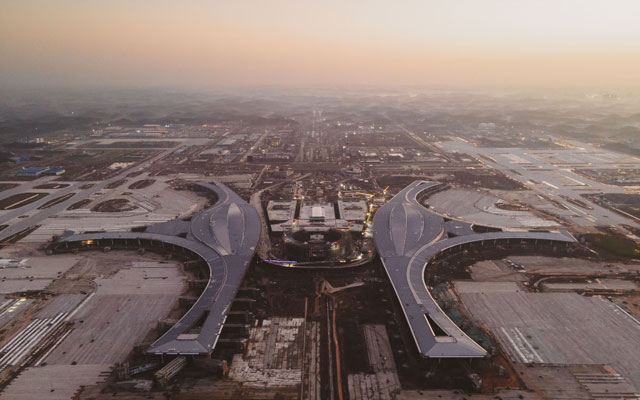













Come 2021, the new international airport in the south-western Chinese city of Chengdu is expected to start operations.
The Chengdu Tianfu International Airport will make Chengdu the third city in China to boast two international airports, after Beijing and Shanghai. It is expected to be completed by the end of this year, and come into operation in 1H2021.
Besides serving as an international aviation hub, the airport will also take on the role of creating an aviation economic zone in the newly-launched Chengdu Eastern New Area, according to a report by National Business Daily.
In line with Chengdu’s efforts to boost the new economy sector, Convergence of Scenes – Chengdu Eastern New Area Meets the Future, one of the events affiliated to 2020 Chengdu New Economy Double Thousand Project, will be held on August 20 at the Chengdu Tianfu International Airport. The event will introduce 100 new scenes and 100 new products of the new economy sector.
Chengdu Eastern New Area, officially licensed this May, is a significant part of Chengdu’s blueprint for development, and new economy constitutes one of the new area’s focuses.
According to the development plan, by 2025, Chengdu Eastern New Area will take an initial shape and the Chengdu Tianfu International Airport’s function as an international aviation hub will gradually stand out.
By 2035, it will become a core fulcrum of the international aviation hubs. At that time, the new economy sector is expected to take a lead in driving the development of Chengdu Eastern New Area.