TTG Asia
Asia/Singapore Wednesday, 31st December 2025
Page 931

Goco promotes Clive McNish to group operations director

0

Clive McNish, former general manager of Glen Ivy Hot Springs, has assumed the new position of group director – operations at Goco Hospitality’s headquarters in Bangkok.

In his new role, McNish will be ensuring the successful opening, operation and management of all Goco Hospitality-branded spas and retreats.

Having worked for GOCO Hospitality in various roles since 2014, McNish first joined as general manager of a Goco wellness resort project in Beijing, China, before becoming the company’s corporate general manager. He then assumed the general manager role at Glen Ivy Hot Springs, America’s oldest hot springs resort acquired by Goco Hospitality in 2016.

At Glen Ivy Hot Springs, McNish led a three-phase, multi-million dollar renovation project that included a global repositioning, alongside new amenities and services.

Previously, McNish served for four years as wellness director and general manager at Kamalaya Wellness Resort in Koh Samui, Thailand.

Daryn Hudson to helm Four Points by Sheraton Phuket Patong

0

Balanced tourism recovery demands holistic approach, say travel experts

0
Professor Geoffrey Lipman, President, SUNx Malta.

Climate change and sustainability should not be ignored for the sake of SDGs, or vice versa, nor should the social impact of travel in terms of job creation and inclusion be overlooked in the path to recovery, said tourism experts during the Virtual Destination Mekong Summit on August 25.

“Now we’re living in an unprecedented situation. For the last nine years, the growth of the travel and tourism GDP has outpaced the growth of the economy,” said Gloria Guevara, president & CEO, WTTC.

Climatefriendly travel practices to gain increasing importance with rise of a new breed of ethically conscious travellers: Lipman

“One out of 10 jobs, or 330 million jobs (worldwide) depend on travel and tourism, and there are currently 121 million jobs impacted due to Covid. It will be 197 million by the end of this year,” she said.

She emphasised the democratisation of tourism over the past two decades, labelling the current travel crisis a social one and calling for a “top-bottom and also bottom-up” approach to solving the crisis.

“Let’s not forget the millions of people who use tourism to put food on the table, and also remember that tourism has a significant social impact that helps to pay for education – 54 per cent of SMEs are led by women, while 30 per cent are led by youth. This is a sector that provides a lot of inclusion and support,” she added.

Another concern is that travel post-Covid will be led by a generation of young, highly ethically conscious people who will inherit the state of climate change in 30-40 years.

“The youth now have Earth Day; they learn the SDGs in their schools. It’s much more in their DNA than in our generation,” said professor Geoffrey Lipman, president, SUNx Malta.

“(We need to think) in terms of climate-friendly travel, so that the young activists won’t be able to say: ‘You shouldn’t fly.’”

Taleb Rifai, former secretary general, UNWTO, also referenced the democratisation of travel. “We have to respect that travel has become a human right – but how to travel, that is our challenge. We have to clean up our act, (but) I don’t think we need to make a choice between (travelling and not traveling).”

Panelists highlighted the power and passion of the young generation to drive new travel initiatives forward, and the importance of local ownership of travel initiatives, for example, localisation of the SDGs.

For this reason, the new Phuket Model being trialed by the Thai government is infused with local community involvement, according to Thailand’s former minister of tourism and sports, H.E. Kobkarn Wattanavrangkul. “Phuket consists of many smaller towns, for example, Kata and Karon, and every town has their own different problems. (Involving the locals and getting their inputs on how to solve local issues) means that Phuket can work on every small town.”

“Governments change but locals are the constant. The real implementers are the locals, the young generation,” she stated.

Mario Hardy, CEO of PATA, underscored the need for “global financing but local implementation,” as locals are the ones to benefit from job creation.

Rifai stated that the crisis has put domestic and regional tourism, which have been somewhat overlooked in the past, squarely into the forefront where they belong, and serve as a wake-up call to the travel industry.

He said: “The tourism sector is known to be one of the most conservative sectors in the world. (We are) counting on the fact that this crisis will make us all change.”

China’s Chengdu to get first Hotel Nikko

0

Malaysia, the Philippines clash over disputed Sabah territory

0
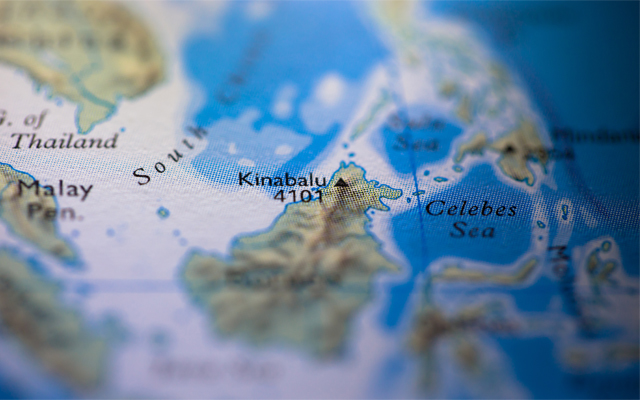
Geographical map location of Mount Kinabalu in Sabah Malaysia in Asia continent on atlas

The long-standing dispute between Malaysia and the Philippines over their territorial rights to Sabah has intensified, following a recent move by the Philippines to approve a new bill for the inclusion of Sabah as part of the country’s map printed on Philippine passports.

Malaysia said that it remains steadfast in protecting the sovereignty of Sabah. Prime minister Muhyiddin Yassin was quoted by the New Sunday Times as having said: “We will not bow to this claim. Sabah remains in Malaysia and it is an integral part of our country. There should be no attempts to take Sabah out of Malaysia or attempts by anyone to claim Sabah as part of their region.”

Philippines approves a bill to include Sabah in the country’s map on issued passports; Mount Kinabalu in Sabah, Malaysia displayed on map pictured 

The government plans to beef up security along Sabah’s sea borders to prevent the intrusion and entry of illegal immigrants.

Recently, the Philippines’ House Committee on Foreign Affairs approved a substitute bill requiring the printing of the country’s map, including its 322km exclusive economic zone and Sabah, on Philippine passports.

According to news reports, Cagayan de Oro City representative Rufus Rodriguez, the author of the bill, said that it “aims to emphasise and insist on our victory on the West Philippine Sea over China in the International Arbitral Tribunal in the Hague, Netherlands, and our legal and historical rights over Sabah”.

He further added that “the inclusion of the map on our travel document is a strong statement that we are asserting our sovereign rights over the West Philippine Sea.”

Meanwhile Sabah’s caretaker chief minister, Mohd Shafie Apdal, said that the Philippines’ never-ending claim on Sabah should be a national agenda to be solved and not used as a political tool, The Star reported.

The report quoted him as having said: “We want the federal government to officially have a government-to-government talk with the Philippines government through an ASEAN platform.”

“The claim itself needs to be erased and done with a long time ago, everything was written and finalised as per the Cobbold Commission when the Federation of Malaysia was formed.”

Shafie said the Philippines’ Sabah claim was never properly dealt with in the past, and that is why it is still continuing.

Korea to strengthen tourism resilience with improved crisis policies and tech push

0
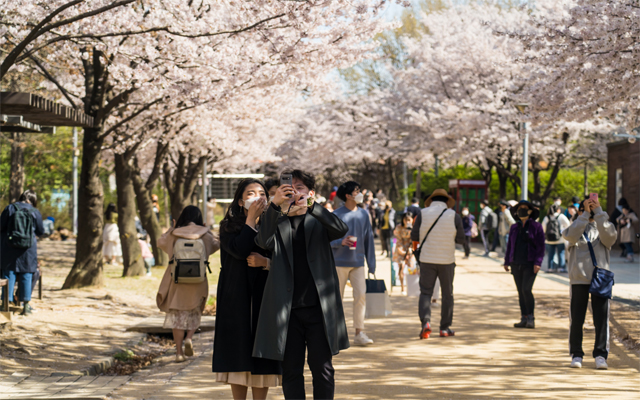
Korean couple wearing mask taking a selfie with cherry blossom trees background

With the pandemic chalking up over US$5 billion in tourism losses for South Korea for the first seven months of 2020 and emphasising the vulnerability of the travel and tourism industry, government officials are now deliberating a set of crisis strategy that would better protect businesses from impacts of future outbreaks.

According to the Ministry of Culture, Sports and Tourism, the pandemic and global travel restrictions have caused January-July international arrivals to South Korea to plummeted 77.1 per cent from the same period last year to about 2.18 million people. Tourist receipts took a less drastic tumble, sliding 19 per cent back from the January-June period last year to approximately US$13.6 billion this year.

South Korea to draw up new policies aimed at building the country’s resilience to future crisis; a Korean couple wearing face masks taking a selfie admist cherry blossom trees pictured 

Choi Bo-geun, director of tourism policy from the Ministry of Culture, Sports and Tourism, told TTG Asia that “effective policies” for the future would be drawn up after “analysing the effectiveness of some of our current support measures”.

Choi added that the government should be able to “systematically apply such policies in the event of future crises”.

While details of these future crises policies are not yet available, Choi referenced some of the useful efforts that are in place today. The government is presently shouldering up to 90 per cent of wages for tourism companies, up from an initial 75 per cent funding.

Coming up, the government intends to use the tourism downtime to examine its language guides, maps and transportation system to improve travellers’ experience in the future, as well as utilise big data to promote smart tourism and establish online tourism.

The technology push is already happening within the private section. Popular accommodation reservation platform Yanolja has leveraged technology to create a safer and cheaper traveling environment for the post-Covid era.

Kim Jong-yoon, head of Yanolja’s online services department, said Artificial Intelligence is being incorporated into its hotel solution, allowing guests to use their smartphone as a room key, a remote control and to access room services and restaurant reservations.

“If we can also use big data to carry out identity authentication for payments and check-ins, cost can be reduced efficiently,” Kim added.

Technology manipulation may not come naturally for some of South Korea’s smaller tourism players. Kim Da-young, CEO of local travel media and training company, Hitchhickr, hopes for easier access to technology resources that can be applied to the tourism sector so that stakeholders can move with the fourth industrial revolution.

The way forward

0

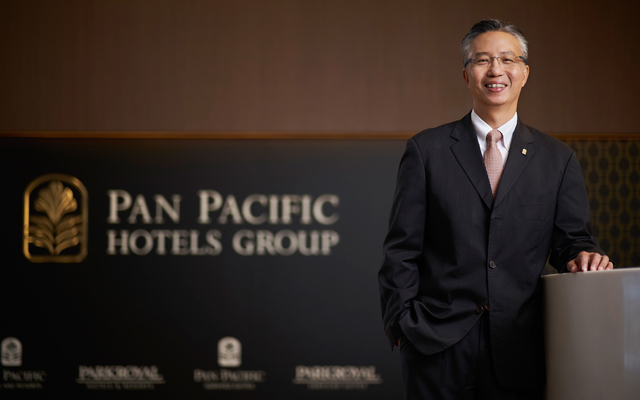
How is Pan Pacific Hotels Group (PPHG) faring amid this pandemic and hospitality crisis?
All of us put on our SARS hat when the outbreak first started. We did up a one-year plan but soon realised we had to cut that up by quarters because there was no way to know when the recovery would happen this time round. With SARS, tourism came back up quite fast. Not this time. We are now already in August.

We will need both prudence and courage to get through this long stretch.

The one thing I’m thankful for is that 80 per cent of our property revenue are from Singapore and Australia. These two countries have very supportive, pro-business governments.

In Singapore, we have five hotels and three serviced suites, with one more coming up. With the Stay Home Notice (a government-imposed measure to guard against imported cases from arriving travellers and residents) and the quarantine business, our properties have been kept busy. We are also thankful for the (government) reliefs for wages and property tax.

We are running at almost 100 per cent, although average rates have been halved. Still, you would never have imagined being able to run full in such a crisis.

Australia has isolation programmes too, and a lot of our hotels are running full as a result. The government there has the JobKeeper Payment, which helps to keep more Australians employed through reliefs for businesses.

We are actually pretty afloat. We are able to pay salaries and expenses, and still have positive cash flow. Without cash flow, we will have to start to think about retrenchment, downsizing teams, etc.

Obviously, we have stopped hiring and a lot of us have to take pay cuts and no-pay leave.

We also had to make some painful decisions very early on to preserve our cash flow. Our China properties were the first to be hit, and with the lockdown, not a single soul was on the streets. We told our teams to take a huge pay cut but we promised to retain them. They accepted the bitter pill. Within two months, around March, we managed to reopen. Right now, business is pretty encouraging – we are doing about 70 to 80 per cent in Tianjin, Ningbo and Xiamen. There was a second wave in Beijing (in July) which brought occupancy down to single digit, but business bounced back quickly to double digit. We are now doing 40-odd per cent there. That’s not bad at all.

(All these decisions were made) while keeping a close eye on our cash flow. We have a war room team that is made up of the best personnel in the business, from finance, asset management, yield management, human capital, etc.

Attention is paid to revenue preservation, which is why many of our properties are very gung-ho about just taking any business.

Is the stress less pronounced now that public activities are resuming and domestic tourism is starting up again in some markets?
Markets with a bigger domestic appetite have a better chance of recovery, like China.

We closed down our properties in North America, and are only starting to reopen them. The Americas have a big domestic market, so tourism has the best chance (for recovery through domestic travel) as long as social distancing is done properly.

Australia also has a big domestic market. Even during pre-Covid days, as much as 80 per cent of our business comes from interstate leisure travel.

Our big concern lies in places like Singapore and most parts of South-east Asia where the domestic travel market is not strong.

Right now, in Singapore, we are being helped all the way to December (by government relief). Staycation demand in November and December will be rather strong, driven by young people who are willing to spend money on such experiences. After (the holiday season), staycation demand would come in only over the weekends.

But what’s the outlook for the first and second quarter of 2021? Most cities in this region require support from international travel, and at this point, we cannot see how international travel will return. Sole dependence on a domestic market can be frightening.

What could turn things around?
We think that the green lanes might help (with the initial stages of recovery). Nobody wants to travel when they have to serve 14-day quarantines on both sides.

Can your F&B takings make up for the accommodation side?
Our restaurants are doing quite well. On weekends, they are full, full, full. There is a huge pent-up demand for dining out, after the lockdown.

The thing is, with hotels, profitability from rooms is north of 70 per cent, while profitability from restaurants is probably north of 35 per cent. And within F&B profit, most of it comes from meetings and events (which are now limited by capacity restrictions).

You spoke about PPHG having a large cluster of hotels in two specific markets – Singapore and Australia. That has made a large number of your hotels vulnerable to local market conditions, such as a lacking domestic market in Singapore. Would PPHG change the way it plans its property portfolio going forward?
Having eight or 10 properties in one city gives a lot of room for different ways of working.

Imagine this: every hotel has its own finance team. But can we have one finance team to support all hotels in that city?

If I have 10 sales staff for each hotel, and I have 10 hotels in a city, that would give me an army of 100 salespeople. We could do a lot more with that many people.

With enough (properties) in a portfolio, we can streamline operations, redesign jobs and upskill staff (as we move them into new roles).

So, we will continue with the way we build our portfolio. We are going to have four hotels in Jakarta, and four in Kuala Lumpur. There is big potential for clustering in these cities.

What has your 30-plus years of hospitality industry experience taught you about coping with such a crisis? What needs to be done during downtimes?
We are taking the chance now to do a lot of asset enhancement. I cannot wait to see how our Parkroyal Collection Marina Bay (the former Marina Mandarin Singapore) and Pan Pacific Orchard will turn out.

Pan Pacific Orchard will have a beach pool, complete with sand and misting, up in the sky. The ballroom sits on the highest floor, so event attendees will feel like they are among the clouds, especially with our dry misting features. The hotel will have a lot of greenery – 200 per cent coverage. I’m very excited about it.

But the one important thing my experience has taught me is that this business is very people oriented and it is the heartware that takes us through bad times. Many companies that might not know this business move right away to cut training and staff development when times are tough. It is sad because it is only a short-term solution.

Communications are also particularly crucial during a crisis because people worry a lot more when they have no knowledge of how things are. So, we made sure to increase our frequency of communications to build trust.

I’ve seen in other crises, such as SARS, that when employees trust the company, they feel they have a stake in it and its well-being.

My family runs a small business. We used to do deliveries even during Chinese New Year, and we would never say, “How much are you going to pay me for it, dad?” We just did it because it is our business.

Our F&B teams are totally flat out now, so staff (from other departments) jump in to help. You cannot take that for granted; the spirit has to be right for inter-department support to be possible.

Here’s another example of the power of trust. When we first deliberated the option of being on the government’s Stay Home Notice programme (to provide accommodation to people on quarantine), there was some internal struggle. We eventually decided to take the business but with steps taken to protect all our staff. When the first two ambulance came with positive cases, I was there and I saw how worried the staff were.

It made me wonder why they were willing to risk their lives and the lives of their loved ones at home to support the company on this decision. And the only answer to that is that they feel they are part of the business and want to make it work.

PPHG recently launched its Pan Pacific Cares promise, which emphasises a commitment to ensuring the safety and well-being of your guests and staff. No doubt, this is critical, but we are now seeing so many hotels competing for consumers’ attention with a similar health and safety promise. How do you stand out?
I am so proud of Pan Pacific Cares, and we take it very seriously. (Health and safety messaging) is important but, yes, it is overdone. You look up and you see every hotel group has their own programme. It is now a given, no more an advantage. If you do not have a health and safety protocol in place right now, you are slow to the game and guests will not want to stay with you.

One of the things I’m grateful that the team has done, is to make Pan Pacific Cares not all about keeping things clean for the guests. The focus here is trust, and that is built by demonstrating that Pan Pacific Cares is able to take care of the community and the environment (even during challenging times). We want our customers to understand that with our ability to care for the community, the environment and our staff, we can be trusted to take good care of them too.

With most borders still shut, one can only dream of travels. What’s in your travel dream now?
I have been dreaming for a while. My girls are all grown up and run on a very tight schedule. It is very hard to get them both together even for just a week every year. But whenever I entice them with a ski holiday, they’d say, “OK, dad.” I look forward to the next ski holiday with them and my wife in Japan soon.


Malaysia extends recovery MCO to year-end; ban on foreign tourists remain

0
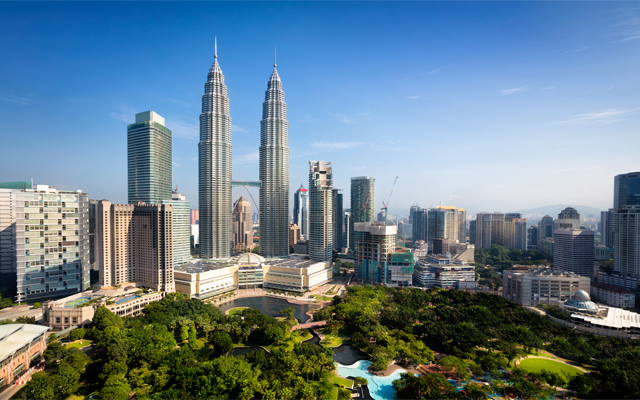
Kuala lumpur skyline, Malaysia

Malaysia has further extended the recovery movement control order (RMCO) to December 31, 2020, while the ban on international tourists will remain in place, as Covid-19 cases across the globe continue to surge.

The RMCO, which kicked in on June 10, was slated to end on August 31. Speaking at a televised address on Friday (August 28), prime minister Muhyiddin Yassin said: “Our country is still facing challenges in curbing the spread of Covid-19, which is still actively spreading around the world.

Malaysia extends movement control curbs till year-end due to a global surge in Covid-19 cases; skyline of Kuala Lumpur in Malaysia pictured

“We cannot risk taking this super-spreading virus lightly in the country. Therefore, stricter quarantine rules at certain locations will continue to be enforced.”

While most economic sectors have been allowed to operate, nightclubs and entertainment centres remain closed as new norms would be difficult to implement in these venues.

Muhyiddin also said that foreign tourists will not be allowed to enter Malaysia for now to prevent imported cases into the country.

In a press conference on Friday, senior minister (security cluster) Ismail Sabri Yaakob echoed this further. He was quoted by The Star as saying: “For now, Malaysia is not ready to open our borders to foreign tourists. Even between Malaysia and Singapore, we only allow people from two categories (to travel), including our citizens who had been stranded in Singapore.

“The other category is for those (from Singapore) who are permitted to enter Malaysia for business-to-business purposes, such as attending meetings in Kuala Lumpur.

“Opening our border to tourists from other countries is the last thing we will look into. Apart from requests from restaurant workers from Thailand and domestic workers from Indonesia (to enter the country), we also received a request from AirAsia (to allow commercial air travel).

“At the moment, Malaysia will not grant approval to any of the requests.”

TTG Conversations: Five questions with Subhas Menon, Association of Asia-Pacific Airlines

0

Airlines are resuming some flights in the region but these are not enough to lift the beleaguered travel and tourism industry out of the woods, opines Subhas Menon, director general of Association of Asia-Pacific Airlines.

In this debut episode of TTG Conversations: Five questions video series, Subhas talks about how the resumption of flights will look in the near future, progress on the airline industry’s advocacy for evidence-based health and safety measures to support travel resumption, and why travel bubbles are so difficult to establish.

Double leg-up for Mekong’s tourism with new platforms

0

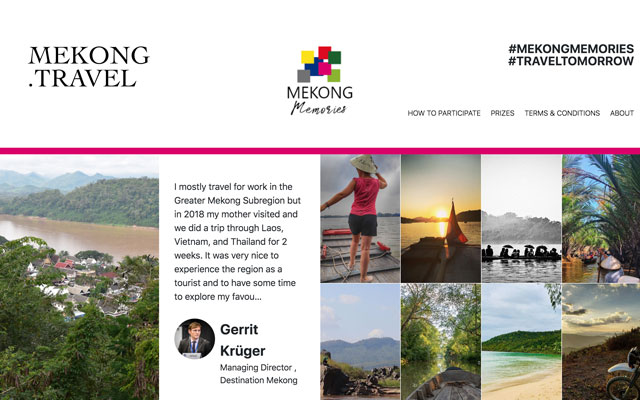
To breathe life into Mekong’s battered tourism industry, Destination Mekong has rolled out two new platforms, Mekong Memories and Mekong Deals, designed for travel trade players to engage with travellers and to ensure that the destination stays top of mind among tourists.

The Mekong Memories platform allows travel providers across Mekong to connect with their past guests and invite them to share photos and stories of their past travel experiences, so as to inspire travel to the destination post-Covid, according to Jens Thraenhart, executive director of Mekong Tourism Coordinating Office, which endorses Destination Mekong.

“It is a collaborative and inclusive campaign where everyone can join and work together. On one hand, they promote the region together, and on the other hand, they create revenue for businesses, especially small businesses struggling to survive right now,” he said at the Virtual Destination Mekong Summit on August 25.

Photos on the Mekong Memories platform are linked to the Mekong Deals website, where Mekong trade players offer special deals to woo tourists.

A Three Lakes Trekking tour package, for instance, is priced at US$447, a discount of 25 per cent from the original price. Offered through December 15, 2021, the four-day trekking package lures tourists to explore the three lakes of the Shan state by boat and on foot, visit tribes and villages along the way, and enjoy an intimate homestay experience in the Pa-Oh village.

The website is still in its initial stages, and more tourism players are set to come on board with special deals and promotions.

Citing an example, Jens shared that if a user browsing the Mekong Memories website were to click on a photo of Sofitel Bangkok shared by another user, and the hotel has an ongoing promotion, the user would be able to view the deal. “It is basically combining storytelling and relevant deals to get money directly to the businesses,” he said.

Willem Niemeijer, chairman of Yaana Ventures/Khiri Travel, hailed the new platforms for showcasing not just big brand hotels, but also SME operators, across the entire Mekong region.

Believing that travel is a shared experience, Ianic Menard, Accor’s vice president of sales, marketing and distribution for Upper Southeast Asia, is also in favour of an inclusive, user-generated platform like Mekong Memories.

“Peer-to-peer content was a strategy before the pandemic, but it is even more important today because it is typically viewed as more trustworthy and relevant,” he said.

Ianic said that the platforms are not only a great way for travellers to discover new experiences in the Mekong region, such as unique shops or off-the-beaten-path tours, but also encourages greater collaboration within the community.

He said: “Collaboration has always been important, but probably even more so with the pandemic situation… (There are) two areas where collaboration is key: content creation and destination marketing… By collaborating deliberately, we are able to create content effectively and quickly… and make sure that there is a consistent message going quickly across the market, whether it is domestic or international.”