The HealthCert arrangement is applicable to travellers from Indonesia flying to Singapore. What significant changes will this mean for both companies and travellers along this route?
(HealthCert is) recognised by Singapore Airlines, Scoot and Changi Airport. Upon arrival, (travellers) can show their unique HealthCert QR code to be scanned by a universal verifier at any immigration counter, thereby, saving time for airlines and immigration authorities on health status verification and providing travellers exclusive access to the fast lane facility at the airport.
The major challenge being addressed is that without the HealthCert tamper-proof swab result, airline staff and immigration authorities will have to manually verify the document which otherwise would have made it a time-consuming process.
There has been much concern about the veracity of travel certifications in the market. What are your thoughts about authenticity and enforcement?
There have been multiple incidents of Covid-positive travellers doctoring fake Covid-negative swab results to travel overseas. Accredify is a government-authorised service provider, and HealthCert was developed by Accredify to resolve the issue of fraudulent Covid-19 swab results that is prevalent across the world and in black markets. Considering the major challenge of fake medical and test reports being used across the world, travellers can be assured that Covid-19 swab results issued will be recognised by immigration authorities upon their arrival in Singapore.
Which other countries will this arrangement be extended to?
Effective March 23, we have started issuing HealthCerts for Singapore-bound travellers (from) Indonesia. Through this partnership with Accredify, we plan to extend this service to other locations like Cambodia, China, Hong Kong, India, Japan, Malaysia, South Korea and Thailand in the coming months.
In the realm of travel bubbles and green lanes, how significant is adopting certification programmes and applications like HealthCert?
Travel bubbles will become an important (element of) safe travel, at least in the initial phases of resumption. They come with the reassurance that the governments collaborating on these corridors have achieved a certain amount of success in battling and lowering the Covid-19 outbreak in their country.
As an added layer of security to the bubbles, testing pre-departure remains key and only negative-tested travellers can board a plane. A verified test as a security blanket will be key in bolstering the travel spirit and be an effective advocate for both regional and international travel.
If there is a silver lining in this crisis, governments and companies can think much more boldly and expansively about the future, and perhaps act on a once-in-a-generation idea that can be extended across the world to ensure a safe resumption of travel.
Whatever demand looks like, it’s important to carefully monitor the evolution of the pandemic, especially its impact, and align ourselves to cater to any new demands across regions or countries, which will make the paradigm shift in travel a comfortable experience for travellers.
Where do we stand now in terms of standardising Covid testing certifications? How many programmes are being developed, and in your opinion, are there too many or too few?
As Covid-testing certifications are a relatively new segment that is very dynamic, it will be interesting to see who takes the lead, and the interoperability between the governments, technology companies and various organisations will ensure which can become a standard.
While some governments have already made Covid-19 tests mandatory before entering their respective countries, it is important to make these tests hassle-free, easily accessible and (able to deliver) fast results. This could be done either at airports or at certified medical laboratories, in association with a visa services provider like us. Technology like the blockchain based-health passport app CovidPass – developed by WEF Young Global Leaders – will also go a long way in reassuring travellers of their safety.
How is VFS Global responding to ever-changing travel regulations, especially the emerging trend towards digital health passports?
Now that digital solutions such as health passports and certificates are becoming more prevalent, we are helping to digitise authentic test results. We have already partnered with Accredify for a smart and hassle-free travel solution to Singapore to help travellers save time on arrival. We want to support any solution that helps travellers and are actively looking into integrating with several other platforms, IATA’s Travel Pass included.
As vaccination picks up around the world, does VFS Global have plans to develop a vaccination certification programme for inoculated travellers?
The next solutions developed will be around vaccine certification programmes to ensure travel resumption continues for the already vaccinated. Most programmes under development are geared towards facilitating travel and come in the form of smartphone apps with varying criteria for a clean bill of health. Vaccine passports, for example, are a popular way to approach proof of immunity with jab rollouts underway across the globe. Some apps accept positive antibody tests as proof of immunity for those who have had the virus and recovered.
One of the top challenges we see is the authenticity and the verification of these documents – be it vaccination certificates or test certificates – through the interoperability between two governments or the airline community in the near-term.
However, a lot of work is going on in the background with discussions between airlines, governments and technology-enabled companies. One classic case in point is the air bubble concept as it shows how a government can verify the credentials of the traveller, keeping well in mind concerns on data privacy and legal legislations in the respective countries.
How do you envision vaccination certifications will influence the formation of travel bubbles?
From vaccination certificates to digital or health passports, government, airlines and technology-driven companies across the globe are taking steps to relaunch travel by letting people prove their Covid-free status. But vaccine access around the world and mounting concerns over data privacy are some of the key concerns with how the measures will work in the formation of travel bubbles.
Making health passports stricter or requiring them for travel could invite legal challenges. A major worry is that banning unvaccinated people from travelling would exacerbate inequality and discrimination since access to jabs is far from universal. There are also concerns over how applications would access personal data of users.


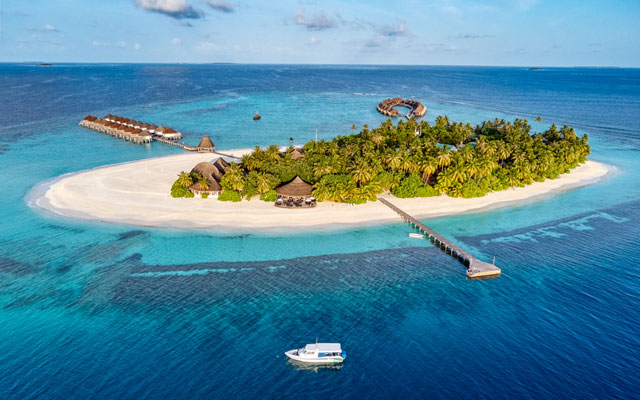














Rosewood Hotels & Resorts will open its first property in Japan on Mikayo Island in the Okinawan archipelago come 2024.
The 55-villa, ultra-luxury resort Rosewood Miyakojima will occupy a secluded peninsula surrounded by white sand beaches, rock formations and ocean vistas. Each of the resort’s villas will feature private pools, landscaped gardens and unobstructed sea views.
Four restaurants and bars will showcase fresh seafood, island-raised beef, locally distilled spirits and craft beer. With a stunning seascape as a backdrop, the resort’s indoor and outdoor event venues will play host to destination weddings and private celebrations.
On-site recreation will include a standalone Rosewood Explorer’s Club, Rosewood’s programme for younger guests designed to inspire creativity and imagination, as well as encourage adventure, discovery and social responsibility through unique experiences attuned to the destination. Asaya, Rosewood’s integrated wellness concept, will offer treatment rooms set amid private gardens, indoor and outdoor hydrotherapy facilities and a menu of programmes and services influenced by local healing traditions.
The property will be situated within a 20-minute drive from Miyako Airport and 30-minute drive from Shimojishima Airport which receives direct flights from Hong Kong and major cities in Japan.