Taiwan’s ezTravel adopts Amadeus’ Travel API
Taiwan’s online travel agency leader, ezTravel, is implementing Amadeus’ new NDC-enabled Travel API to gain access to both aggregated NDC and non-NDC content.
It is the first agency in the market to adopt an NDC-enabled web services solution for OTAs.
With this adoption, ezTravel also benefits from the main servicing capabilities that an agency typically requires once a booking via NDC has been made, such as changes, cancellations, or adding ancillaries.

Commenting on the move, Norma Lai, general manager of ezTravel, said: “In a diverse content environment, it is critical to have one single end-to-end process for booking and servicing NDC and non-NDC content. With Amadeus’ NDC-enabled Travel API solution, ezTravel will have richer airline content for our customers at their fingertips, ultimately helping us drive more tailored and differentiated travel experiences.
“With Amadeus as our preferred technology partner, we are excited to be part of its industry-leading NDC [X] journey to drive recovery and growth for the travel agency community in Taiwan and Asia-Pacific.”
Brian Chien, head of online travel agencies, Greater China and managing director, China, Amadeus, said: “This multi-year strategic NDC technology agreement is testament to our strong long-standing partnership with ezTravel. We are pleased to work hand-in-hand with ezTravel to jointly drive a clear future-proof NDC strategy, solid airline implementation roadmap and forge stronger collaboration with all industry stakeholders in Taiwan, Greater China and beyond.”
The Travel API, which integrates with travel agencies’ existing systems and allows them to build their own customised travel booking applications, is being rolled out globally.
WorldHotels elevates Asia-Pacific leadership team
Olivier Berrivin now leads WorldHotels Asia Pacific as managing director, while company veterans Roland Jegge and Melissa Gan have assume expanded responsibilities in their new roles as senior advisor and chief commercial officer respectively.
Berrivin has decades of experience in the hospitality industry and is a fourth generation hotelier who grew up in his family’s hotel business that included four properties. He has extensive industry experience having started his career with the Lucien Barrière Hotel Group in France and having held various positions with Accor Asia.

Berrivin joined BWH Hotel Group, WorldHotels’ parent company, in 2015 as managing director – Asia, and has played a pivotal role in dramatically growing the company’s presence with particular success in driving development of upscale brands across the region.
Jegge will continue his 25-year tenure with WorldHotels as he migrates from his current role of president – APAC to become the senior advisor to the CEO of WorldHotels.
Gan has been with the company since 2005.
Thailand welcomes first tourists on villa quarantine scheme
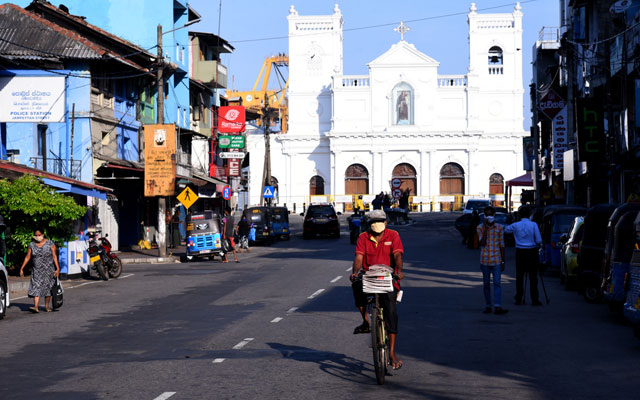
Fifty-nine tourists from the UK, US, France and Finland have arrived in Phuket, becoming the first participants of Thailand’s villa quarantine scheme.
They arrived in two batches, via chartered flight from Indonesia, and are staying at the Sri Panwa Hotel, according to authorities as reported by The Bangkok Post.

Under the scheme, these tourists are required to complete immigration and customs procedures before undergoing Covid-19 screening at the X-Terminal building inside the airport complex. Afterwards, they are conveyed to the hotel where they will serve the first five days of their 14-day quarantine within their room.
After that, they can make use of the facilities within the grounds of the hotel, according to Phuket’s deputy governor Pichet Panapong.
Last Thursday, Thailand welcomed its first batch of tourists participating in a golf quarantine. The group of 41 tourists from South Korea are staying at Artitaya Golf & Resort in Nakhon Nayok, under arrangements made by the Tourism Authority of Thailand’s office in Seoul, South Korea after their disease control measures were approved by Thailand’s Centre for Covid-19 Situation Administration (CCSA).
Similar to villa quarantine, under golf quarantine tourists must stay at approved golf resorts for 14 days, during which they can play golf and engage in other outdoor activities under strict disease control measures, explained CCSA assistant spokeswoman Apisamai Srirangson.
IATA’s Travel App to go live next month

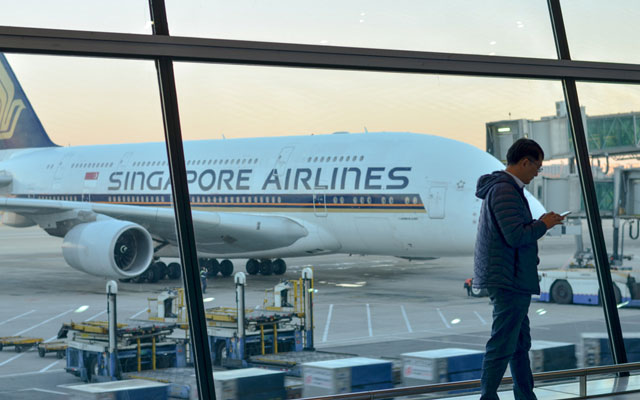
After several months of rigid testing with Singapore Airlines, IATA is on the brink of rolling out its Travel Pass, projecting that it will go live in the next few weeks.
This comes as countries that are looking to open their borders will have to manage and verify the secure flow of necessary testing or vaccine information among other governments, airlines, laboratories and travellers, and avoid the risk of fraudulent paper certs.

“People want to travel. However, the long-term solution to reopening borders to and reducing quarantine requirements will be a combination of testing and vaccination,” said Conrad Clifford, IATA’s regional vice president, Asia Pacific.
The IATA Travel Pass incorporates four open sourced and interoperable modules which can be combined for an end-to-end solution.
The first module covers a global registry of health requirements, which enables passengers to find accurate information on travel, testing and eventually vaccine requirements for their journey.
The second covers a global registry of testing / vaccination centres, enabling passengers to find testing centres and labs at their departure location which meet the standards for testing and vaccination requirements of their destination.
The third module takes in the Lab App, which enables authorised labs and test centres to securely share test and vaccination certificates with passengers.
Lastly, the Contactless Travel App enables passengers to create a digital passport; receive test and vaccination certificates that meet the regulations for their itinerary; and share testing or vaccination certificates with airlines and authorities to facilitate travel.
Aside from merely providing verification, the IATA Travel Pass can also be used to manage travel documentation digitally throughout a passenger’s journey, which may enable biometrics and contactless travel in the long-term, after the pandemic is over.
So far, IATA’s regional director, airports and external relations, Vinoop Goel, has confirmed that both airlines and governments globally have been receptive to the app.
It also helps that the app can be integrated with the airline’s own app, making it more convenient and seamless for a passenger. Airlines that are in the process of trialling include Emirates and Qatar, with Air New Zealand set to join the list.
Meanwhile, IATA is also in talks with governments to work on a global framework and standardisation of verification across borders.
Clifford added: “We are confident that governments and airlines will adopt a mechanism to ensure verification of Covid-19-related health. IATA is aiming to create a global standard, and we hope that others will use the same framework (so that there won’t be too many differing digital health verifications across countries).”
When asked about data privacy, Goel stated: “IATA does not have a central database holding passenger information, as (an individual’s) information stays on the app. The passenger is in control of their data and can choose who to share it with. Users can also delete their data anytime on the app.”
As for costs, IATA has reiterated their stand to keep costs to a minimum in the implementation of the Travel Pass, as the association understands that airlines are currently facing cashflow issues.
Sala Bang Pa-In reveals executive team ahead of opening
Volkert Geertsen and Jitti Sukee have been tapped to head up Sala Bang Pa-In, Sala Boutique’s soon-to-open hotel in Thailand.
Volkert Geertsen will oversee sala bang pa-in as cluster general manager of Sala Boutique, alongside his current responsibilities for Sala Rattanakosin Bangkok, Sala Lanna Chiang Mai, Sala Ayutthaya and sala Khaoyai. The Dutch has over 20 years of experience in the hospitality industry, where 15 of which were spent in Thailand and South-east Asia.

Joining Geertsen as cluster hotel manager is Jitti Sukee, currently the hotel manager at Sala Rattanakosin Bangkok. The Thai national is a seasoned industry professional with over two decades of experience, and specialises in F&B.
The 24-key Sala Bang Pa-In is scheduled to start welcoming guests in March 2021.
IHG builds presence in Brisbane CBD
Mercure Brisbane and ibis Brisbane will shed their labels to join the IHG Hotels & Resorts family as voco Brisbane City Centre and Hotel Indigo Brisbane City Centre respectively.
Both hotels will undergo extensive refurbishment.

voco Brisbane City Centre, which will overlook the Brisbane River and some of the city’s best cultural institutions, promises to bring the brand’s vibrant, reliably fun vision to life. Besides refreshed guestrooms, the hotel’s bar will get a complete makeover and boast sweeping river views. It will open in late-2021.
Slated to welcome guests in 2022, Hotel Indigo Brisbane City Centre will bring the essence of the neighbourhood into the guestrooms, restaurants, meeting facilities, design and service offering. The hotel’s restaurant, bar and café will be completely reimagined.
The opening of these hotels signals strong growth in the Brisbane market for both Pro-invest and IHG Hotels & Resorts, sitting alongside Pro-invest’s Holiday Inn Express Brisbane Central, which opened in 2017, and Hotel X, which IHG and Pointcorp are opening in the Fortitude Valley precinct in February 2021.
Abhijay Sandilya, IHG’s vice president, development – Australasia, Japan & Pacific, said: “We are absolutely delighted to build our presence in Brisbane with the signing of two of our most colourful, dynamic and boutique brands. The personality that will be injected into the properties is going to be quite unlike anything the city has seen and we’re incredibly excited to bring the community on the journey with us. With a prime CBD location that puts both hotels within walking distance to everything the city has to offer, voco and Hotel Indigo Brisbane are undoubtedly going to be the hotels of choice for both leisure and business travellers.”
Jan Smits, Co-CEO of Pro-invest, said: “The location of these two hotels couldn’t be better for business and leisure travellers. With the power of the IHG distribution and loyalty systems, coupled with rich and exciting brands, we are confident that guests will enjoy all that these hotels have to offer.”
Mandarin Oriental signs on Danang project
Mandarin Oriental Hotel Group will manage a new luxury resort and residences in Danang come 2024, making it the second property to join company’s new portfolio in Vietnam.
Mandarin Oriental, Da Nang will sit on a 30km stretch of beach that links Danang in the north with Hoi An in the south. Its location will put guests in easy reach of surrounding attractions, such as the UNESCO World Heritage sites of Hoi An, My Son and Huế.

There will be 69 villas and 18 residence units across the property, each set in their own landscaped gardens with private pools, as well as a host of resort experiences that could be customised for guests. The Mandarin Oriental Spa will offer the group’s signature wellness therapies and treatments with a focus on local nature-inspired programmes.
Dining variety is offered at five restaurant and bars, all with waterfront settings.
Business and social events will be supported by indoor and outdoor venues, including a beachfront pavilion.
The project is owned by Dinh Ba Thanh, a Vietnamese businessman, entrepreneur, and the founding chairman of DatVietVAC and The Nam Khang Corporation.
Besides Mandarin Oriental, Da Nang, the hotel group is counting down to the opening of Mandarin Oriental Saigon in 2022.
Navigating a global shift
As the pandemic laid its claim between 1H2020 to 2H2020, what did crisis management look like for Swire Hotels? How did your concerns evolve as well?
At the start of the outbreak, nobody knew the scale of the pandemic or what was to come. Swire Hotels has a big presence in Mainland China, which was initially the focal point of the virus, so our first concern was on our people in these properties – both colleagues and guests – and ensuring their health and wellbeing.
In Mainland China and Hong Kong, many of us had the muscle memory from SARS, so reverting to social distancing and mask-wearing, as well as increasing hygiene and sanitation practices, happened somewhat smoothly.
Then, our attention turned to focusing on the business and maintaining communication with our guests to keep things ‘ticking’ as best we could. I truly believe that one of the main reasons why Swire Hotels has been able to navigate this period somewhat smoothly is that we empower our people to take control. While we implemented standard operating procedures around the pandemic, we likewise believe in our people to make well-informed decisions based on the situation they find themselves in. I was, and remain, truly impressed by the spirit and positivity shown by my colleagues.
Can you give us some examples of this global team spirit?
I’m blown away by the exceptional attitude of our colleagues throughout the last 12 months; everyone has really taken the time to look out for one another, be kind, and continue to create incredible experiences across the Swire Hotels properties. The lesson that has been reiterated to me in the past year is that building and maintaining a strong team is vital.
What does the path towards recovery look like for Swire Hotels, as well as for your brand of luxury?
Continuous creativity and innovation across all areas of the business is key. Our team has been incredible in learning from one another to create unique experiences through pop-up events, brand collaborations and continuing to create amazing experiences for our guests.
On the overnight stay front, the domestic market is a huge focus, now more than ever. In Mainland China specifically – where we currently have four properties – we were witnessing increased appetite for domestic travels even prior to Covid-19, and (have since been) growing a community of brand advocates.
Over in the US, business has returned quite quickly to EAST Miami, albeit with softer rates and reduced restaurant capacity. The hotel’s online presence and creative communications have generated solid occupancy and satisfactory results, which is especially pleasing for what is still seen as an independent brand in the US.
While it’s true that different countries have taken different approaches to dealing with the pandemic, our dedication to our guests is consistent across all Swire Hotels. With new restrictions in place, we have had to rethink the way we do things. Our operations have been adjusted to incorporate enhanced hygiene practices, social distancing measures and so on; however, we pride ourselves on our guest experience, which has always been personalised and hands-on.
How do you envision Swire Hotels can move forward in 2021? What are your key objectives and goals for this year?
Our properties in Mainland China and EAST Miami are already experiencing stronger occupancy levels. This is driven by the domestic market, so in the meantime, our focus will be on stimulating local demand with attractive packages until international borders have reopened.
We are confident that once this happens, we will see a strong surge in demand and our team will be ready to welcome our guests back. Other key initiatives keeping us busy over at The Upper House in Hong Kong is the renovation of the penthouse and a new dining concept that will be revealed this spring.
We also have ambitious growth plans for The House Collective and EAST Hotels. As we continue to grow, it is vital that we do not dilute our brands, and as managing director, my focus will be on operations and brand, ensuring that the Swire Hotels teams continue to act with intuition and spontaneity to create meaningful experiences and connections with guests.
Let retirees rejuvenate Thai tourism
Thailand is in trouble. The economy is shrinking, unemployment is rising and tourism is crumbling. According to data released by Thailand’s Ministry of Tourism and Sports, foreign visitor arrivals are down 83 per cent from 2019. Any hope of a quick rebound evaporated in late 2020 with a fresh outbreak of Covid cases, triggering a new round of lockdowns and more business shutdowns.
Once bursting at the seams with tourists, resort destinations like Phuket, Pattaya, Krabi and Samui are now ghost towns. Thai authorities talk incessantly about revitalising tourism and pivoting the industry to attract ‘high value tourists’, but the reality is Thai tourism has always been a churn and burn, volume-based game. Size over sustainability.
To stem the bleeding, the government devised a Special Tourist Visa (STV) scheme designed to lure tourists back to the country. The catch, of course, is a mandatory 14-day quarantine. Having gone through this experience myself, I describe it like going through a Rube Goldberg contraption – you are tossed and turned through bureaucratic twists and turns only to end up hermetically sealed in a hotel room paying business class prices for an economy class product.
To be fair, Covid-19 presents a massive challenge for governments around the world and puts authorities in a no-win situation. Open the borders and risk widespread infection or keep them closed and suffer economic strangulation. Thailand has done a great job battling the spread of the virus, but it is losing the war in lost jobs and wages. The longer this Mexican standoff between live and livelihoods continues, the harder it will be to resuscitate the economy back to health.
One area where Thailand can focus attention is retirement living. No country in Asia is better positioned to attract seniors looking for a first or second home. The 50+ market represents a multi-billion dollar opportunity impacting virtually every sector of the economy, and demographics ensure that it will be a growth market for many years to come.
According to a 2018 K-Bank report on aging, Thailand is already home to around 70,000 middle to high income seniors from high wealth source markets like the US, Germany, Switzerland and Japan. These long stay seniors bank, invest, buy property, travel, (play) golf and use medical services – all high value activities that boost foreign direct investment and support key industries.
Thailand has everything it needs to become The Retirement Capital of Asia; yet it is woefully incapable of developing a product that is coherent, customer friendly and market competitive. Arcane immigration policies, restrictive property ownership rules and convoluted banking regulations are just some of the many disincentives that make long-stay living in Thailand onerous and investing in the country a gamble. As a permanent resident in Thailand, I know all too well the frustrations that expats face getting visas and mortgages.
Covid-19 presents the country’s leaders with a once-in-a-decade opportunity to rethink its strategy on retirees and retirement living, like it did with medical tourism after the Asian financial crisis in 1997. As the marketing director for Bumrungrad International Hospital from 2001-2007, I saw Thailand transform itself from a local player to a global healthcare heavyweight in the span of five years.
Medical tourism is a perfect example of how Thailand can create opportunity out of crisis. Thailand’s private hospitals and health resorts gained market share and pole positioning by being at the right place at the right time with the right product at the right price. Thailand wasn’t the first mover in medical tourism; it was the fast mover. Speed to market made all the difference, and now this segment attracts over three million international high value tourists annually and contributes 45 billion Thai baht (US$1.5 billion) to the economy.
The moral of this story is simple. Hope is not a strategy and waiting for the return of mass market tourism is folly. Thailand has a clear competitive advantage in retirement living and should use this downtime to develop smart strategies to gain fast mover advantage in high value, niche segments that are less fragile and more sustainable.
As the saying goes, “Never let a crisis go to waste”.


Singapore’s Ministry of Transport will drop a S$870 million (US$659 million) lifeline to support the country’s aviation sector, as part of its 2021 Budget. This scheme, coined the OneAviation Support Package, comes on top of the existing Job Support Scheme paid out by the Singapore government.
The OneAviation Support Package comprises two key components. The first will provide manpower support totalling S$330 million, comprising 30 per cent in support for wages paid from April to June 2021, and 10 per cent in support for wages paid from Jul-Sep 2021. Furthermore, an Aviation Workforce Retention Grant will dole out 50 per cent in support for wages paid to local employees from Apr-Sep 2021, capped at S$4,600 of gross monthly wages.
This is in addition to the existing Job Support Scheme, which took effect last year. Qualifying companies in the aviation sector can also receive 50 per cent in support for Jan-Mar 2021 wages, 30 per cent for Apr-Jun 2021 wages and 10 per cent for Jul-Sep 2021 wages.
Manpower support also comes in the form of the Enhanced Training Support Package, which funds and subsidises employee downtime training by up to 90 per cent and has been extended to December 2021. Singapore-based airlines will also receive support to train some existing pilots to operate multiple aircraft types in anticipation of eventual recovery.
The second component of the OneAviation Support Package comprises cost relief amounting to S$540 million. Existing rebates on fees and charges at Changi and Seletar Airport – such as landing and parking fees, rental for lounges and offices, as well as licence fees for ground handling and catering services – will be extended for another year. The rebate on fees payable by pilots, air traffic controllers and aircraft maintenance engineers will also be extended for another year.
Singapore’s minister for transport, Ong Ye Kung, said: “Aviation is one of the hardest hit sectors during this pandemic, if not the hardest hit, as Changi and its stakeholders have lost 97.5 per cent of its customers. Yet, for a city-state like Singapore, the air hub is essential to connect us with the rest of the world and continues to be our lifeblood. This support will help Changi tide through the crisis, while we explore ways to reopen borders safely.”
Deputy prime minister and finance minister Heng Swee Keat had said during his budget speech on February 16 that he expected the aviation sector to use this lull period to improve its capabilities and prepare for the recovery, particularly by investing in travel safety, reported CNA.