

Singapore will be negotiating air travel bubbles with safe countries and regions that have comprehensive public health surveillance systems as well as low rates of Covid-19 infection.
This arrangement is meant for general travellers and does not require a controlled itinerary. They are also different from reciprocal green lane arrangements meant for business and official travellers.
Travellers will have to apply for Air Travel Passes before their journeys, to allow Singapore to plan for their arrival and lower numbers if the epidemic situation changes.
Hong Kong has announced its intention to establish such bubbles with several countries, including Singapore.
The announcement by transport minister Ong Ye Kung comes on top of other recent measures such relaxed border restrictions, and are part of Singapore’s plans to revive her air hub and bring back jobs.
The minister also addressed other steps the country has to take to open up its borders and revive air travel.
Singapore will continue to pursue reciprocal green lane arrangements, which will come with compulsory swab tests before departure and on arrival to ensure travellers do not carry the virus, as well as controlled itineraries to minimise risk of community spread.
Countries currently under this arrangement are China, Japan, Malaysia, and South Korea.
Changi Airport will also continue to facilitate transfers. There are now about 2,500 transfer passengers weekly, according to The Straits Times.
Also, Singapore should also be prepared to lift her border restrictions to countries and regions that are deemed safe. As a precaution, these travellers will be tested for Covid-19.
Singapore unilaterally opened its borders to travellers from Brunei and New Zealand last month, and more recently to those from Vietnam and Australia – excluding the state of Victoria.
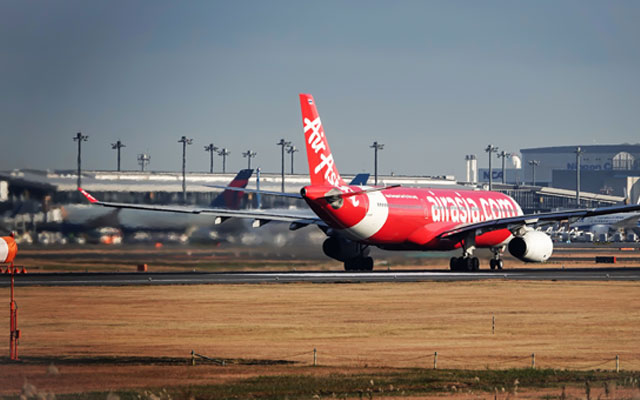














The persistent slow restart to air travel has resulted in AirAsia Japan’s demise yesterday as well as Philippine Airlines’ (PAL) decision to slash up to 2,700 jobs.
Established at Chubu Centrair International Airport in July 2014, AirAsia Japan is the latest business casualty of the Covid-19 pandemic.
In a press statement, AirAsia Japan said travel restrictions and the uncertainties it created have severely curtailed demand for business and leisure travel, resulting in flight reductions, cancellations and grounding of aircraft. These factors have weighed heavily on the company’s ability to continue operations.
Representative director and COO of AirAsia Japan, Jun Aida, said: “Despite our unrelenting efforts to sustain operations through successive and wide-ranging cost reduction initiatives, we have concluded that it would be an extremely challenging feat for us to continue operating without any visibility and certainty of a post-pandemic recovery path.
“I would like to express our deepest gratitude and appreciation to our loyal guests and other stakeholders who have supported us all along. This painful decision to cease operations was decided neither in haste nor taken lightly. It was agreed upon after conducting a thorough business review.”
AirAsia Japan’s exit will be carried out in accordance with the applicable laws and regulations including the Japan Civil Aeronautics Act.
Meanwhile, PAL will cut up to a third of its workforce as it continues to struggle with suppressed demand. It is running less than 15 per cent of its normal daily flights eight months after the Philippine government imposed travel curbs.
“The collapse in travel demand and persistent travel restrictions on most global and domestic routes have made retrenchment inevitable,” PAL said in a statement.