Kimpton Maa-Lai Bangkok Hotel
Location
The hotel is located in Langsuan, a leafy, tree-lined soi close to prime districts such as Sukhumvit and Chidlom, and to Bangkok’s most famous park, Lumpini. Its elite neighbourhood ensures a good mix of trendy cafes, bars and restaurants at the hotel’s doorstep.
If you’re fit, it’s a good walk to Chidlom or Rajdamri BTS stations. Otherwise, use the hotel shuttle to either Chidlom and Silom station, although this would start when international tourism or business levels pick up.
Rooms
I didn’t want to go anywhere when I saw my ultra-spacious and sleek room. It dawned on me this was what I needed: to be enveloped in wide-open space that is serene and spotless. In our current crisis, this is ever more inviting.
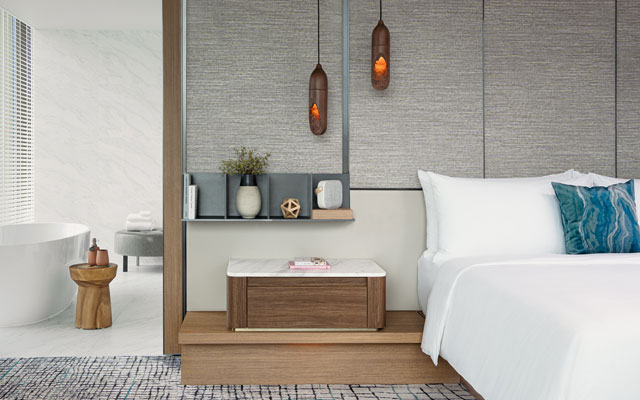
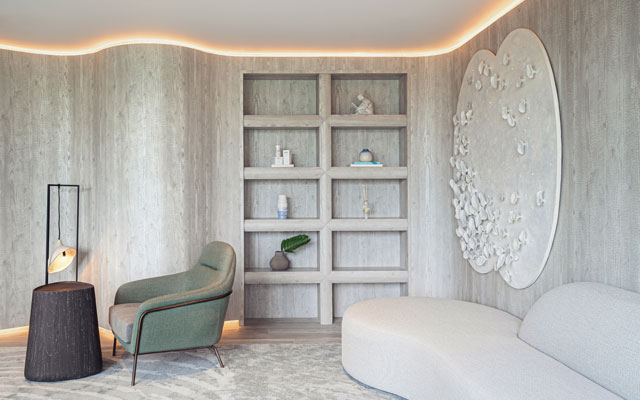
I couldn’t believe how bold the hotel was to put just a sofa and a king bed in an elongated bedroom of a unit that is 84m2 in size. Yet, the room didn’t appear cold, which minimalist rooms often do. This is thanks to the contemporary Thai textures, tasteful furniture and furnishings, great lighting and a soothing colour palette of whites, greys and browns.
From the 24th floor, an endless view of Bangkok’s central district skyline and the sprawling gardens of the US Embassy only expanded the openness, which I soaked in with gratitude.
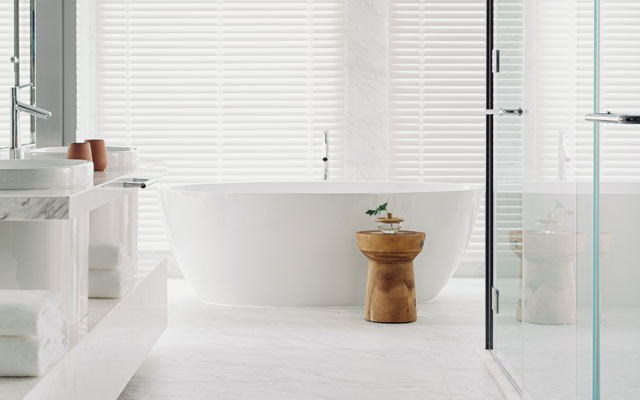
The other thing to soak in was the by-the-window bathtub in the super-sized bathroom. I also loved the luxurious amenities such as bathrobes designed by Christian Develter.
Room sizes and categories at the hotel start from a 48m2 Deluxe Room to a 320m2 Celebrity Suite. My 84sqm Grand Premium was enough! One idea I thought was smart is a small workspace area with a round table that seats two, rather than the usual by-the-wall workspace. This allows a couple to work together, have a game of backgammon or dine in if they wish.
F&B
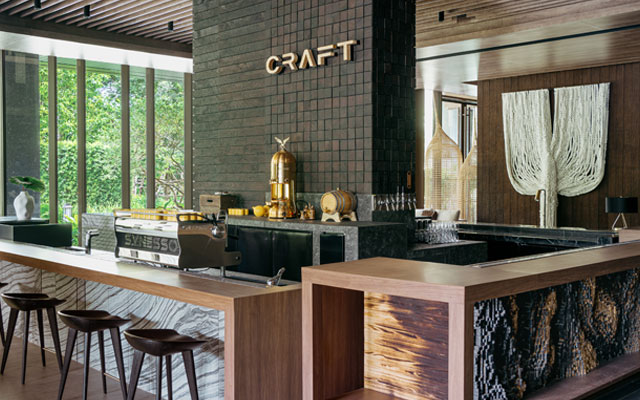
I was surprised to see how bustling the cafe in the lobby, CRAFT, was on a late Monday morning and considering the hotel just opened. The reason, I soon realised, were exceptional brews at affordable prices. I had an espresso that included medium roasted beans from southern and northern Thailand, in cooperation with the Royal Thai project, for 90 baht (US$2.90). Alternative bean selections from Indonesia and Vietnam could also be had.
I would return just for the pistachio croissant.
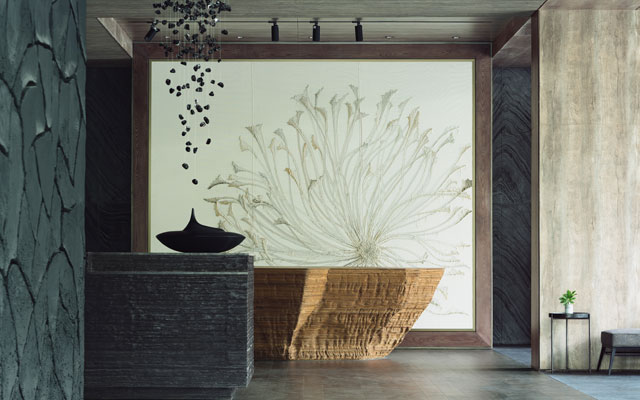
Surrounding the hotel are lush gardens, with people enjoying a coffee or a drink outdoors throughout the day. I was struck by how the hotel brings nature into it, or itself out into nature. Inside, there is a lot of art that depicts nature, such as a “waterfall” installation and a check-in counter carved from wood with a wall-to-wall backdrop of art depicting a huge white flower.
There was a lot of energy, playfulness and style, be it by the hotel or its guests. A lady walked past me with two furry, beautiful cats, each looking a million-dollar in a transparent, round cat-stroller. That’s the kind of unexpected head-turners you would see at this hotel, which is so pet-friendly it has separate floors for cats and dogs.
I checked out the rooftop bar and barbecue restaurant, Bar.Yard, for a possible pre- or after-dinner drink, but it was being set up for a private function. For dinner, I went to Ms. Jigger, an elegant Italian restaurant draped in a curtain with its own sophisticated bar that serves Ms. Jigger’s favourite cocktails. So who’s Ms. Jigger? She’s a personality created by the hotel – again, this hotel is full of fun and surprises.
Ms. Jigger also likes great Italian – the food was divine. No wonder the restaurant was nearly full.
The hotel has another restaurant, Stock.Room, which will serve among others Thai street eats on-site or take home. But this had not opened on my stay on October 19.
Facilities
There’s so much to do that I wished I had stayed more than a night. I wanted to fit in a yoga lesson, a work-out class at the gorgeous gym on the 41st floor, swim in the pool nearby which overlooks a green park, and go to the Amaranth Spa by HARNN.
The spa won. It was another of the hotel’s beautiful spaces, and the aromatherapy massage was excellent.
Service
Service began at the top, with general manager Patrick Both welcoming me warmly on arrival. The staff were enthusiastic and relaxed but watchful to meet needs.
Verdict
So what did this stay tell me about brand Kimpton?
First, it’s not just a boutique hotel brand but a trendy restaurant operator. Second, it is about modern luxury – full of vigour, is sociable, creative and fun.
The brand was founded in 1981 by William (Bill) Kimpton and was in 2011 the largest boutique hotel group in the US. InterContinental Hotels Group bought the chain for US$430 million in 2014. Asia is now a key expansion area, with two Kimptons in operation in Taipei and Tokyo, and future openings in Hong Kong, Sanya, Shanghai, Bali and Kuala Lumpur.
Kimpton Maa-lai Bangkok translates the key aspects of the brand flawlessly. What grand entrance in South-east Asia.
Number of rooms 362 (131 of which are serviced residences)
Rate 8,830 baht nett (US$283; the opening offer for Grand Premium Room at time of stay)
Contact details
Tel: 66 2 056 9999
Email: book.KimptonMaaLai@ihg.com
Website: www.kimptonmaalaibangkok.com

















More than a hundred million travel and hospitality jobs will be lost in 2020 due to Covid-19. The devastating impact of that number can only be upstaged by the profound loss of life, globally.
Here in Phuket – where I moved in 1988 as the opening general manager for Amanpuri, Aman’s first-ever resort – we have seen as many as 60,000 job losses in the hotel sector alone, and it’s a similar story on other island destinations around the world.
More than four months have passed with no local infections on Phuket. Yet passenger arrivals have plunged and there are no imminent signs of recovery, despite the country opening up to domestic air travel and guests from Bangkok becoming our “weekend warriors”.
Thailand – the first country to detect the coronavirus outside China – deserves high praise for its decisive actions in late March that successfully stopped the spread of Covid-19. But by closing the tourist-friendly kingdom to all non-resident foreigners, the country’s leading resort island now finds itself at an inflexion point. Local demand cannot stem the dramatic losses on Phuket with its 86,000 registered hotel rooms, nor reverse the rapidly escalating financial and social crisis across Thailand, where the World Bank estimates tourism accounts for 15 per cent of GDP.
What I know – from leading Amanpuri through the 1997 Asian financial crisis, then helping create and operate Trisara resort for 20 years through SARS and the 2004’s Boxing Day tsunami – is that we cannot continue to stand still indefinitely and we need to get safely back to business.
From the very earliest days at Amanresorts, the founder Adrian Zecha schooled his general managers to personally engage with every guest as though they were friends in our own homes. These relaxed, informal conversations led guests to feel more relaxed and trust that the entire experience wasn’t purely transactional.
I learned that ours is a business built on meaningful human connections, and as we emerge from this Covid-19 crisis, creating even more exceptional and surprising moments will be even more important as travellers start to move again in 2021.
Now as president of the Phuket Hotels Association, I work with our 78 members to prepare for the inevitable return of international arrivals. After several aborted plans, the Thai government is currently discussing ‘green bridges’ that may allow entry to foreigners from countries or regions with little or no Covid-19 infections, hopefully from countries such as New Zealand, Singapore, Taiwan as well as parts of China and Australia.
As we face these hurdles in the race towards a new normal, I believe those of us in this incredibly complex business of making people happy should consider a more compassionate and thoughtful guest-centric approach to policies.
Whether or not the Thai government’s trial run to relaunch tourism works – and I hope it does – it’s going to be a buyer’s market for years as we already had an oversupply of hotel rooms in many areas.
With this in mind, I propose we offer a new Guest Bill of Rights.
Our industry’s humble beginnings offer valuable lessons for any hotel’s future success. What was not optional for a medieval innkeeper should guide the 21st-century hotelier: buy local, being supportive of our local communities, engagement with and protection of the local environment.
Are you checking in?