TTG Asia
Asia/Singapore Sunday, 28th December 2025
Page 890

SiteMinder, AsiaPay partner to drive digital payments across Asia hotels

0

Hotel guest acquisition platform SiteMinder has joined forces with AsiaPay, a digital payment service provider, to simplify the online payment process for consumers booking a hotel room in Asia.

Through the partnership, which comes amid rising consumer demand for choice and contactless experiences, AsiaPay’s payment gateways – PayDollar, PesoPay and SiamPay – have been integrated into SiteMinder’s online booking engine to provide an automated and secure way for hotel customers to make an upfront payment when booking on their desktop or mobile.

From this month, hotel users across 12 destinations can accept their customers’ digital methods of payment securely to eliminate the need for costly terminals and manual payment processing during customer check-in. Upfront payments will also reduce cancellations or no-shows for hotels in those 12 locations, namely, China, Hong Kong, Indonesia, India, Japan, Macau, the Philippines, Singapore, South Korea, Thailand, Taiwan and Vietnam.

Joseph Chan, CEO of AsiaPay, said: “More Asian travellers make and pay for their hotel bookings online, via desktop or mobile, than through any other channel. For hotels in the region to stay competitive, it is important for those millions of travellers to find the online booking and payment process simple and convenient.”

Bradley Haines, regional vice president of Asia Pacific at SiteMinder, added that the partnership allows its hotel customers to “offer greater choice to their guests, so they can increase booking conversions online and save time by not having to manage payments manually onsite”.

SiteMinder’s partnership with AsiaPay comes at a critical time for hotel businesses in Asia, which are plagued by credit card declines, daily payment reconciliations and increased data security standards. The companies’ partnership means eligible hotels can now reduce the time, cost and risk involved with handling payments manually, by giving their customers the ability to book ahead through a process that complies with the latest Payment Card Industry Data Security Standard.

Headout tracks Covid travel restrictions

0

Qantas-Accor alliance gives members two-fold reward

0

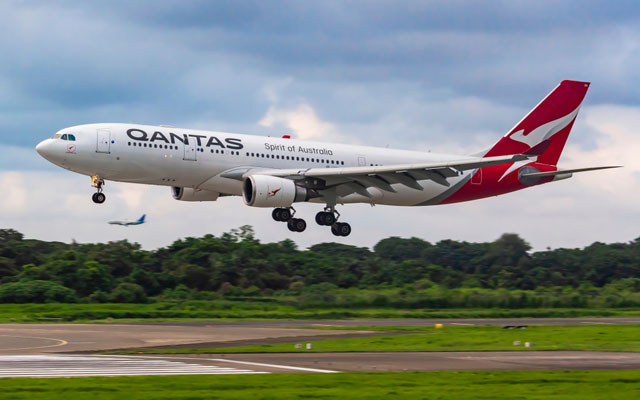
A partnership between Qantas and Accor will allow eligible members of both brands’ loyalty programmes to simultaneously earn both Qantas Points and ALL – Accor Live Limitless Reward Points on both Accor hotel bookings as well as Qantas flight bookings.

Scheduled to launch mid-2021, it will be the first partnership of its kind between an airline and hospitality group in the Asia-Pacific region.

From next year, eligible members of both Qantas’ and Accor’s loyalty programmes will earn twice the reward points when they fly or stay with the two brands

Members will also enjoy more opportunities to redeem points as well as a suite of exclusive benefits for top-tier members.

The reward scheme will apply for hotel stays across Accor’s 1,240 hotels, apartments and resorts in the Asia-Pacific region and across Qantas’ domestic and international flights.

Qantas Loyalty CEO Olivia Wirth said: “This is an entirely new way to recognise the loyalty of our frequent flyers which we know will be very popular. Although our members haven’t been flying much lately due to border closures, we know there is huge pent-up demand, and we’ve been looking at how we (can) provide even more value when their travel resumes – whether that’s for business or leisure.”

Full details of the new partnership will be revealed early next year.

Pushing sustainability forward amid Covid-19

0

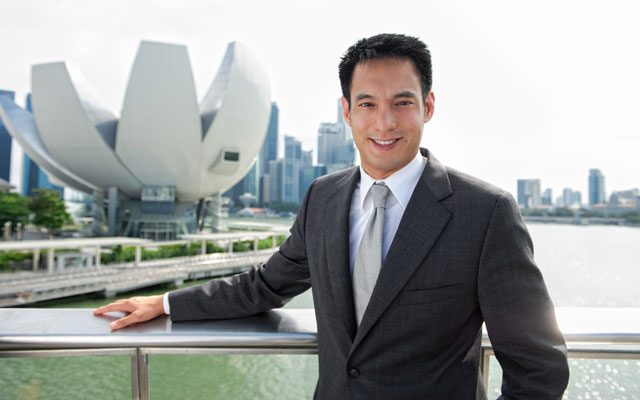
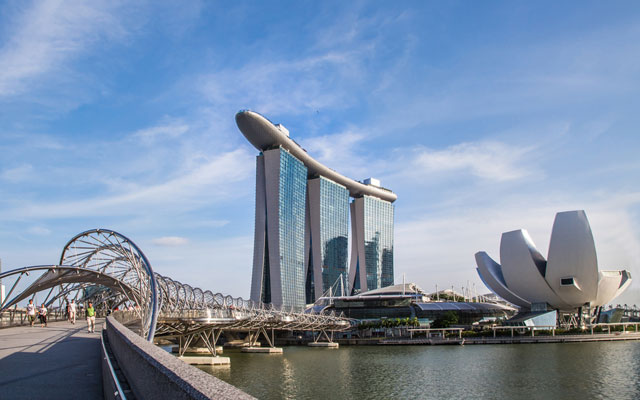
Marina Bay Sands was built around its sustainability features. What consideration led to the construction of these elements?
As a Sands property, Marina Bay Sands is guided by its global sustainability strategy Sands ECO360 to minimise environmental impact and lead the way in sustainable building development and resort operations.

During the design and construction phase, energy conservation and efficient water usage were high on the agenda. To reduce the need for additional lighting, the building was designed to introduce abundant natural daylight to illuminate indoor areas. Specially designed convex and concave roofs reduce heat gain into the podium interior. Sun shading across the glass façade in the form of balconies, vertical fins and canopies were also installed.

The property features large-scale art installations which dynamically integrate with the building’s architecture to create an Art Path at Marina Bay Sands. Some of the art pieces such as Rain Oculus, Wind Arbor and Tipping Wall around the property are designed with sustainability in mind.

How were the types of measures and equipment decided upon?
Our practice is to adopt an evidence-based, impact-first approach when introducing any sustainability initiatives on property. We also constantly find new ways to make our operations more resource efficient. For instance, we introduced five anaerobic digesters in the third year of our operations after studying what the industry was doing and how we could do better. We conducted extensive research and piloted different solutions before we landed on the right one for the company.

To continue making our business even more sustainable, we constantly talk to peers in the industry and are always looking to embrace new technologies. For instance, we have now enhanced our food waste minimisation efforts, using food waste technology in selected kitchens to help chefs monitor and reduce the amount of food waste produced.

What difficulties did the resort face in going green?
The main challenge for any organisation implementing and maintaining its sustainability efforts is how well it engages its stakeholders and rallies them towards a common vision. From suppliers and vendors to team members, we actively engage stakeholders in the sustainability journey, sharing our goals and encouraging them to make business decisions that reduce environmental impact wherever possible.

What are some examples of such responsible business decisions?
(Our) sustainable purchasing policy provides guidelines to vendors, encouraging them to (adopt) solutions, materials and goods that minimise environmental impact. The purchasing policy covers a wide range of supplies, such as responsible food sourcing and earth-friendly packaging materials.

Procurement teams are also guided by this policy and consciously review procurement decisions. Chefs collaborate closely with vendors and procurement teams to plan dishes made with sustainable ingredients. Overall, advocating a culture of sustainability empowers over 10,000 team members to create a positive impact not only at Marina Bay Sands, but also in their personal lives.

How does the Marina Bay Sands’ team keep to its sustainability commitment amid this pandemic, as the higher hygiene standards increase demand for single-use packaging and resources for sterilisation?
Like any other business, we have been trying to navigate the ongoing pandemic. Hygiene and sanitisation priorities are higher than ever, but we continue to stay focused on the goal to decouple our environmental footprint from our business growth.

We are scrutinising the chemicals in cleaning products and choosing those that are enzyme-based, PH neutral, safe and non-toxic to sanitise all high-touch surfaces. Our restaurants also provide all diners with a paper mask-holder made from Forest Stewardship Council-certified paper. While these are a few examples of what we have been doing, the team at Marina Bay Sands is proactively looking for solutions to continue minimising our impact on the environment even in the midst of this pandemic.

As we step into the new normal, what initiatives are the team currently working on to further the company’s sustainability accomplishments?
One key partnership we’re really excited about is our investment in the Drop by Drop Project with Seven Clean Seas, a Singapore-based social enterprise tackling plastic pollution in our oceans. Our support will go towards the development of the River Plastic Recovery System, a floating plastic collection system that captures river plastic before it reaches the ocean.

We’re also looking for more ways to diversify our sources and increase support for local food producers. Marina Bay Sands currently procures 63.5 per cent of our food within Asia-Pacific, and we are making steady progress towards our 75 per cent target. To minimise food waste, we’re looking at expanding our existing unserved food donation partnerships with local food banks, and also plan to halve our food loss and waste by 2030.

Perth’s incentive offering continues to grow nearly a year on from Dreamtime

0

Brought to you by Business Events Australia

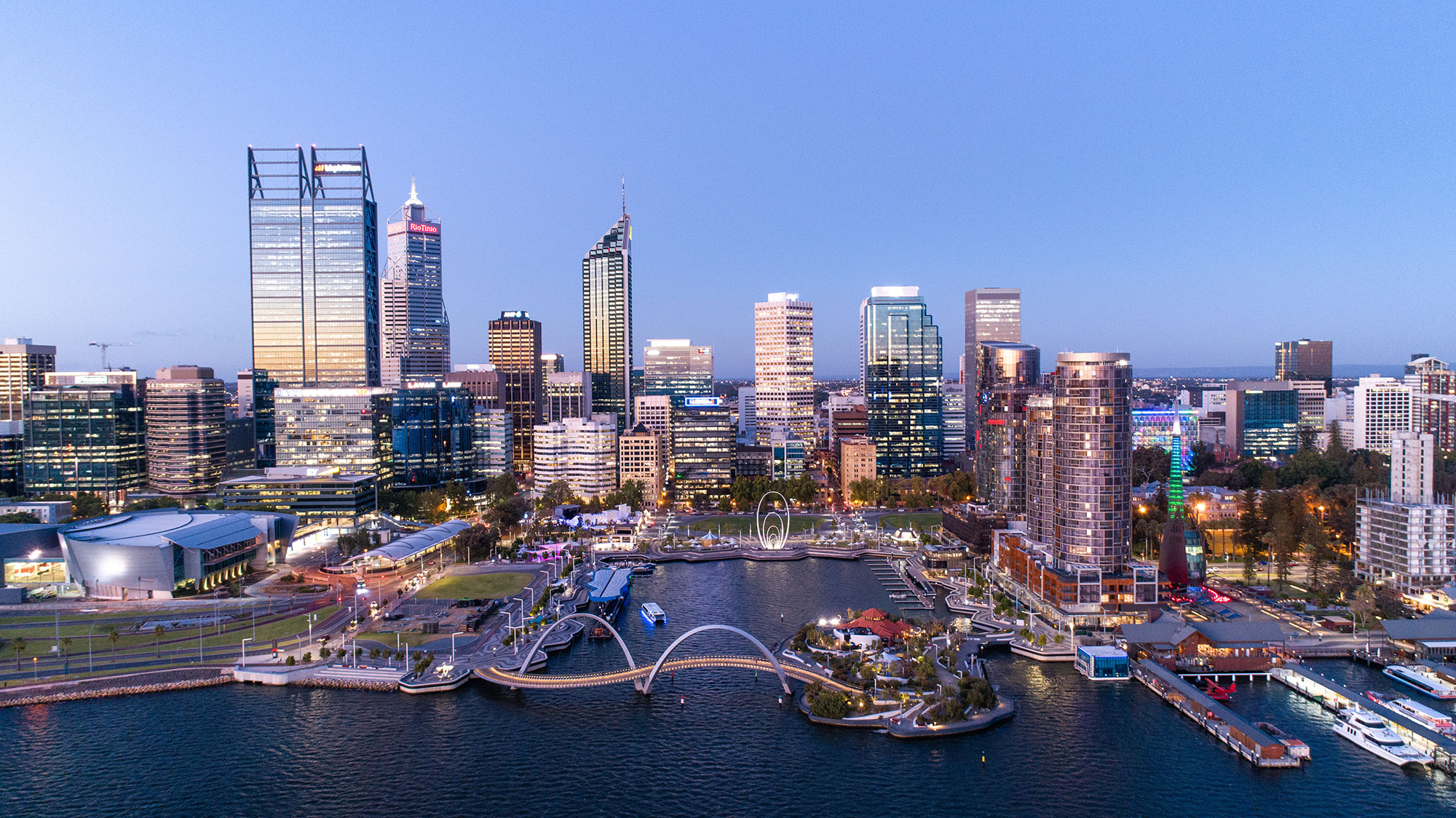
At Tourism Australia’s signature incentive showcase Dreamtime in December 2019, delegates had an opportunity to see firsthand how Perth has come into its own as an incentive destination, after significant investment in infrastructure. Fast forward almost a year – through the world-stopping spread of coronavirus – and with the city currently tracking over 120 days without a local transmission case of coronavirus, Perth has restarted business events of up to 900 people.

The city’s incentive offering continues to grow too, with several new venues and experiences recently opened or set to debut in early 2021.

The Raft

Perth’s first permanent floating open-air venue launched in October 2020 on the city’s central Swan River, drawing inspiration from Western Australia’s stunning coastal landscape. With capacity for up to 250 people for cocktail events or 180 for seated dinners, The Raft is proving popular, with the venue fully booked for the rest of 2020.

Samphire Rottnest

A laidback beachside luxury addition to the accommodation offering on Perth’s Rottnest Island – home of the impossibly cute and exceptionally photogenic quokka – is the 80-room Samphire Rottnest. The hotel has six event spaces from the Poolside, which can host 80, to the Bayside Room and Bar with capacity for 200. Available for exclusive use, Samphire is right on the beach, a short walk from boat charter drop-offs from Perth. Staff also work with groups to tailor itineraries to make the most of the idyllic surroundings.

Want more of what’s new in Australia? Business Events Australia’s new incentive magazine Australia Next, curated just for South and South East Asian customers, is packed with ideas to keep you dreaming of Australia and have you overflowing with ideas for Australian incentives when travel restarts.

Matagarup Bridge Climb and Zip Line

A thrill-seeking experience is set to open in Perth by the end of the year, when a bridge climb and zip line debuts on the Matagarup Bridge, which connects central Perth with the Burswood Peninsula, home to Optus Stadium, crowned the most beautiful stadium in the world in 2019. Participants will take 314 steps up the bridge’s main arch for a view over the Swan River to the city’s skyline and be able to combine the climb with a 400m zipline over the river, travelling at up to 100km per hour, landing in Burswood Park.

AGWA Rooftop, Art Gallery of WA

Available for events from February 2021, the new rooftop space at the Art Gallery of Western Australia in the centre of Perth will be the largest commercially available rooftop space in the city, with capacity for up to 500 people. The space will feature an inside gallery space, an open-air sculpture park and two outdoor event spaces, with views of the city, the Perth hills and the new WA Museum. The centrepiece of the rooftop will be a new 34-metre-long contemporary Aboriginal art piece by Noongar/Minang artist Christopher Pease, which will wrap around one third of the wall of the rooftop.

Diethelm Travel Thailand releases non-core staff to find other jobs until business returns

0

Diethelm Travel Thailand has signed an order to release all non-core staff indefinitely from January 2021 until business returns, in a move to give staff legal opportunities to find other jobs while borders remain closed.

According to an internal memo given to staff, that was released on November 16, 2020 and signed by Diethelm’s top executives, all staff will receive a 50 per cent salary in December 2020. After which, from January 2021, all non-core local staff will still get to keep their employment contract with Diethelm, and will be paid a salary of 10,000 baht (US$328) per month, along with health insurance and other applicable benefits.

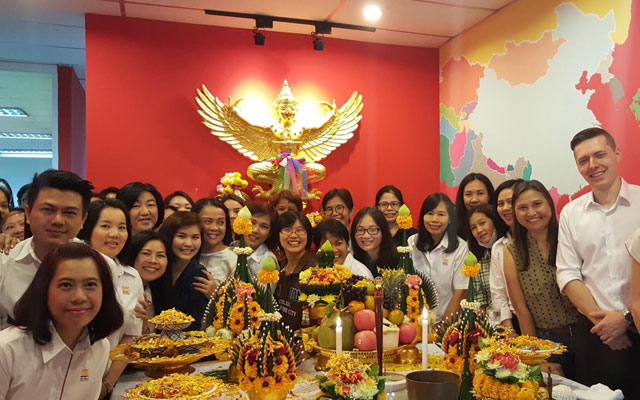
Diethelm Travel Thailand team in front of Royal Garuda

Stephan Roemer, CEO of Diethelm Travel Group, told TTG Asia that the move frees up the staff to legally seek for other, additional work.

“(Many) staff have asked us if they could accept other jobs legally. We want to give them the legal possibility to accept temporary jobs, and we encourage them (to do so),” he stated.

Releasing the staff in this manner will also allow Diethelm to reduce its cash flow while keeping the employment contract with all staff, as the travel giant is not banking on international tourist arrivals resuming in any substantial capacity before the summer or fall of 2021.

In the internal memo seen by TTG Asia, Christian Stoeckli, general manager of Diethelm Travel (Thailand), wrote: “Unfortunately, there is still no improvement for inbound tourism to Thailand. Our efforts to create new sources of income with products on the local market or other alternatives like our Diethelm online market have not been successful.

“We said goodbye to our last international customer at the beginning of April and since then, we have had almost no income… The new Special Tourists Visa was and is completely useless, the new 60-day visa will only help to a very limited extent. As long as there is still a quarantine and a lot of bureaucracy to be done, the tourists will not return.”

He concluded: “We can only hope for your understanding and support, this is all about securing our jobs in the long run. The companies that survive this global crisis will return as winners.”

During the lull, Diethelm will maintain a very small full-time core team in each of its cities in Asia. Roemer explained: “To have a core team 100 per cent in the office is better than having people working in the office part-time. With this arrangement, we can ensure that the core teams will be better able to adapt when we resume services in full.”

Some Diethelm expats will return home to try and find temporary work, under a no-pay leave, until business resumes.

Concluded Roemer: “We will continue to accept bookings for next year… As soon as business picks up again, hopefully in the summer of 2021 the latest, all of us will be able to return to our regular jobs.”

New hotels: Banyan Tree Krabi, ibis Styles Nagoya, and more

0

Banyan Tree Krabi, Thailand
The 72-key luxury resort nestled on a verdant hillside has opened at little-known Tubkaek Beach, a 45-minute drive from Krabi International Airport. Launched by Banyan Tree Group, the five-star hotel is owned by Thailand-based Asset World Corporation (AWC).

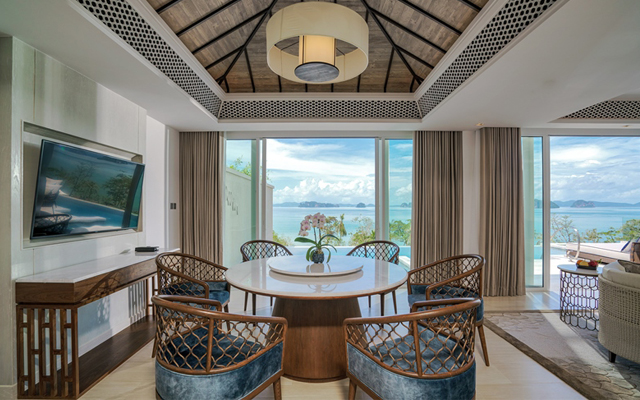
The new resort grants three beachfront pool villas, 10 beachfront pool villas, and 59 pool suites – each of which has its own private pool. Eight suite and villa types are on offer. The most modest accommodation type, coming in at 99m², is the Deluxe Pool Suite, which boasts a private terrace, plunge pool and jet pool surrounding the bedroom. The largest is the seven-bedroom Presidential Villa, spanning 1,335m², is ideal for multi-generational family vacations and intimate wedding celebrations.

All suites and villas have private saltwater pools and water features. Mod-cons include a lavish bathtub and jet pool, high-speed Internet, IPTV with multiple-device connectivity, a full range of multilingual channels on flat screen TVs, and a premium coffee machine.

Facilities include two restaurants and a beach bar, a kids’ club, a fitness centre, a meeting centre, and a rainforest-themed spa. For in-room dining, novelties include a floating breakfast, floating sunset tapas set or a sizzling poolside barbecue. The centerpiece of the resort is a circular water feature in the lobby that cascades into a cavernous meeting room area below.


ibis Styles Nagoya, Japan
ibis Styles, a design driven brand within the Accor group, has unveiled the 284-room ibis Styles Nagoya in the Chūbu region of Japan. Conveniently located within walking distance from Nagoya Station, the hotel offers the compact 18m² Double Room and 20m² Twin Room. All rooms feature 49-inch 4K televisions, air purifiers with plasma cluster function, night tables equipped with power outlets and USB connectors, and rain showers. Interconnecting rooms are available for families and groups. Market St., a café style restaurant offering freshly brewed coffee and all-day dining, features a multi-purpose area that can be used as a co-working and meeting space for up to 20 guests.


Hilton Goa Resort, India
Located atop the scenic, terraced slopes of Saipem Hills, overlooking the Nerul River, the opening of the full-service resort marks Hilton’s third property in Goa. The hilltop resort offers 104 guestrooms, four swimming pools, suites with private plunge pools and signature curated experiences. There are three F&B options: @Saipe, the all-day dining restaurant; Doce, the coffee lounge; and Coco, the bar and restaurant featuring a Mediterranean-inspired menu. Other facilities include four outdoor pools with a whirlpool, kids’ pool, an aqua-themed kids’ club, soon to open full-service spa and salon and 1,635m² of event space.


Four Points by Sheraton Seoul, Myeongdong, South Korea

Ideally located within walking distance to Myeongdong, Seoul’s largest shopping district, Four Points by Sheraton Seoul, Myeongdong offers 375 guestrooms, each fitted with 55-inch TVs and complimentary high-speed Wi-Fi. The hotel features two dining venues: Evolution, the all-day dining restaurant, as well as the Lounge & Bar serving cocktails and light bites. There is also a fitness centre equipped with advanced cardio and weight equipment. With 155m² of event space, the hotel features four multipurpose areas and facilities for seminars, meetings, discussions, corporate training and other events for up to 60 attendees. A 24-hour Business Center is located at the lobby offering convenient workstations.


Holiday Inn Express Sydney Airport, Australia

Opened in partnership with Pro-invest Group, the new-build hotel is located on the doorstep of Sydney’s domestic airport terminal and minutes away from the international terminal. The 247-room, eight-storey hotel is inspired by the jet-setting ambiance of the local surrounds, featuring aeronautically-themed motifs throughout the hotel. The gym and meeting room walls are reminiscent of runways, while the business lounge is inspired by the classic airport concept. The hotel also features two meeting rooms, flexible workspaces, free business centre, self-service laundry and on-site carparking. Guests can also avail of Grab & Go breakfast options, snacks, and beverages, and barista-made coffee 24/7.


Singapore, France join forces to develop tourism start-ups

0

Singapore rolls out Covid-19 insurance for inbound travellers

0

Travel demand bubbling over in China

0