

Delayed payments to hotels hosting OFWs woeful

Philippine hospitality, including hotels, are turning out to be one of the biggest casualties of the tourism lockdown the past nine months and counting. Banks have cut their credit lines. Loan default and restructuring aren’t unexpected. Financial and stimulus assistance being sought from government aren’t forthcoming.
To add to their laundry list of woes, a government agency has been making local news headlines for its delayed payments to hotels that are being used as quarantine facilities for returning overseas Filipino workers (OFWs).
To date, the Overseas Workers Welfare Administration (OWWA) has chalked up a debt of roughly $5 million owed to members of the Hotel Sales and Marketing Association (HSMA), some incurred as early as July. It is safe to assume that there are non-HSMA quarantine hotels caught in the same situation. That’s tantamount to borrowing from an industry that has wound up in a catatonic state from zero business. The government should never have allowed it to happen in the first place. As of press time, OWWA should have paid off its debt in full to HSMA hotels as promised.
The least the government can do when it cannot lend ailing hotels a financial hand is to avoid adding to the hotels’ burden. OWWA should hasten to pay back the full amount, not by instalments, to hotels. It should also take measures to ensure that, henceforth, hotels are all paid on time as more OFWs continue returning to the Philippines.
Truth is, without the cooperation of quarantine hotels, it would be tough for the government to troubleshoot the accommodation needs of hundreds of thousands of returning OFWs.
Running a hotel during the pandemic is costlier due to the enforcement of stringent health protocols such as frequent disinfection of premises and wearing of masks and PPEs, while having to observe limited occupancy and limited services.
Quarantine hotels, most of which offer affordable negotiated rates, need income on time lest employees’ salaries are affected. Staff working in quarantine hotels should be considered health frontliners as they take high risk in attending to Filipinos returning from all parts of the world as they wait for swab test results.
Surely, there is a better way to treat one’s partners even, or especially, in times of crisis.
Rosa Ocampo is correspondent, Philippines for TTG Asia Media. She reports for the company’s stable of travel trade titles, including TTG Asia and TTGmice.
APAC region with most closed borders: UNWTO
The number of destinations closed to international tourism has continued to fall, with 70 per cent of all global destinations having eased restrictions on travel introduced in response to the Covid-19 pandemic, according to the eighth edition of the UNWTO Travel Restrictions Report.
In comparison, just one in four destinations continue to keep their borders completely closed to international tourists.
The report, which tracks measures implemented in 217 destinations worldwide, shows that, as of November 1, a total of 152 destinations have eased restrictions on international tourism, up from the 115 recorded on September 1. At the same time, 59 destinations have kept their borders closed to tourists, a decrease of 34 over the same two-month period.
UNWTO secretary-general Zurab Pololikashvili said: “The lifting of travel restrictions is essential to drive our wider recovery from the social and economic impacts of the pandemic. Governments have an important part to play in giving data-led and responsible travel advice and in working together to lift restrictions as soon as it is safe to do so.”
Looking further into current Covid-19-related travel restrictions, the report sheds new light on the factors connecting those destinations which have eased restrictions and those where borders remain closed. The study found that destinations with higher scores in health and hygiene indicators as well as on the environmental performance index are among those which have eased restrictions faster. Moreover, these destinations are increasingly applying differentiated, risk-based approaches to implementing travel restrictions.
In comparison, destinations choosing to keep their borders closed tend to be within emerging economies with relatively low scores in health and hygiene indicators and environmental performance index. The majority of these destinations are in Asia and the Pacific, with many belonging to the SIDS (small island developing states), LDCs (least developed countries) or LLDCs (landlocked developing countries).
Breaking the destination analysis down by regions, Europe continues to lead the way in lifting or easing travel restrictions, followed by the Americas, Africa and then the Middle East. Meanwhile, Asia and the Pacific continues to be the region with the fewest travel restrictions eased and more complete border closures in place for international tourism.
Looking ahead, the report highlights the important role governments can play in restarting tourism. Out of the ten biggest tourism source markets, four (representing 19 per cent of all outbound trips in 2018) have issued guidance advising against all non-essential international travel. The other six (representing 30 per cent of all outbound trips in 2018), however, have issued more nuanced travel advisories, basing their guidance on evidence-based risk assessments.
PATA Beyond puts digital at heart of tourism recovery

With Covid-19 accelerating the digital agenda among travel and tourism organisations keen to stay ahead of the game, the Pacific Asia Travel Association (PATA) is set to organise PATA Beyond: Travel Recovery Solutions from February 8-11, 2021, giving travel and technology solution providers a platform to showcase their innovative products and services in the Asia-Pacific region.
The fully virtual experience will allow buyers and exhibitors from across the globe to connect and access the full event programme.
PATA CEO Mario Hardy said: “Before the outbreak of Covid-19, the travel and tourism industry was on the cusp of a technological revolution, however, the pandemic has greatly accelerated the shift to industry 4.0 with the rise of virtual events and meetings, contactless payments, contact tracing software, etc.
“Furthermore, the pandemic has greatly shifted travellers’ behaviours, travel-planning habits and expectations, while creating a new set of protocols and guidelines for the industry to implement.
“In the post Covid-19 era, the businesses that will dominate the landscape will be those that are agile and efficient, embrace technology, have a distributed workforce, and offer a mix of physical and digital assets in their service offerings.”
The four-day event will showcase organisations whose products, platforms or services – both tech and non-tech solutions – can play a role in the next evolution of the travel and tourism landscape. In addition, the event will include panel discussions, live pitch sessions and other opportunities for participants to connect with key decision-makers of tourism organisations from both the public and private sectors, drawing from the vast network of PATA members, chapters and online community around the world.
Organisations providing travel recovery solutions in data, insights and analytics; payment technology; health/hygiene; consulting/advisory; security management; technology infrastructure; smartphone/mobile; sustainability/social responsibility; virtual experiences, and artificial intelligence/AR/VR, are invited to exhibit at the event.
In support of its members and industry colleagues, PATA is offering exhibition fees at significantly below market rates. PATA members can take advantage of the complimentary exhibitor package, while the fee for PATA Chapter members is US$250 and US$500 for non-members. Visitor registration is complimentary for all.
“Whether you work in digital, operations or marketing within the travel sector, PATA Beyond provides you with the perfect opportunity to meet with leading solution providers of key technologies and innovative approaches to embrace the next evolution of the travel and tourism industry,” added Hardy.
For more information about exhibiting, registration or sponsorship opportunities, click here or email events@PATA.org.
Montara Hospitality reveals details of Thai wellness project

Set to open in 2022, Montara Hospitality Group’s newest development, Tri Vananda, will reveal a holistic health and wellness residential community and resort on the southern Thai island of Phuket.
Backed by an investment of over 6.6 billion baht (US$220 million), Tri Vananda will comprise three main zones spread across 93ha of land: the wellness residential community, the wellness resort, and a wetland nature reserve. The development will offer 263 residential villas, a wellness resort, and a medical and wellness centre specialising in integrative and functional medicine and cognitive well-being.

Fully furnished and equipped residential villas, ranging from one- to four-bedroom configurations, start from 360-660m² plots of land.
Functional and integrative health take centerstage at Tri Vananda’s medical centre which will feature consultation rooms, physiotherapy and TCM treatment rooms, a cognitive health centre, and facilities for health diagnostics aimed at treating residents and guests with tailored programmes. These medical facilities will be complemented by experiential offerings including a tea lounge, fragrance courtyard, and apothecary.
A mindfulness centre on the lake will have an indoor hall and outdoor areas for meditation. Also situated on the lake is a spa with separate-sex thermal rooms, relaxation areas, and private spa suites. A fitness centre will house a 50m swimming pool, sauna, juice bar, and lake pier for recreational water sports.
Among Tri Vananda’s most significant areas are the enso-shaped reception, mindfulness zone, community house, and the botanical garden. Encircled by a sand dune, the community house will have a bar and lounge, gym, swimming pool, community garden, outdoor playground, and function areas, as well as club areas designed for teen and pre-teen members of the community. To cater to multiple generations of families, a dedicated club will foster a wellness-led lifestyle for the younger set.
The wetland nature reserve will feature a variety of tropical plant species, lily ponds, pedestrian trails, bike routes, and more, encouraging families to learn about the local flora and ecosystem.
Tri Vananda’s signature restaurant concept will source ingredients locally through the development’s own organic farm, which will supply produce and herbs to the resort’s kitchen, spa, and wellness facilities. The restaurant will also cater to guests on specific nutrition programmes.
New hotels: Dusit Thani Laguna Singapore, Novotel Hanoi Thai Ha, and more

Dusit Thani Laguna Singapore, Singapore
Thailand’s Dusit International has expanded into Singapore with the opening of Dusit Thani Laguna Singapore in the heart of the Laguna National Golf & Country Club, one of the island nation’s premier golf and country clubs. Comprising 198 rooms and suites, plus eight pavilions with private pools, and located just 10 minutes by car from Jewel Changi Airport and 15 minutes from Downtown, the resort is the first in Singapore to offer direct access to a pair of championship golf courses.
Opening initially to domestic guests on December 4, 2020, the resort has been designed to cater to avid golfers, local families, and business and leisure travellers. Current dining facilities include Greenhouse all-day dining, Tee Deck alfresco pool bar and grill, Legends Bar, and Dusit Gourmet.
Guests also have access to a 24-hour gym, three tennis courts, three swimming pools, a nine-hole putting green, Laguna Practice powered by Toptracer driving range, and Devarana Wellness. Alongside providing traditional Thai massage and health and beauty therapies, the latter facility also offers a range of wellness activities, such as meditation, yoga, active stretching, and breath-work exercises. For corporate functions and events, the resort boasts a boardroom, three meeting rooms, three event lawns, and a pillarless ballroom with capacity for 520 guests, depending on distancing requirements.

Novotel Hanoi Thai Ha, Vietnam
Located in the heart of the bustling Dong Da District, Novotel Hanoi Thai Ha is Accor’s seventh property in the Vietnamese capital. The hotel offers 338 rooms, studios, apartments and suites, providing guests with an ideal home away from home for both short and extended stays.
For dining, all-day restaurant Food Exchange offers a breakfast and lunch buffet alongside a la carte options, while Gourmet Bar serves up healthy sandwiches, salads and light snacks. Overlooking the skyline, Rooftop Bar presents a selection of cocktails, mocktails and wines with light dishes. Snacks and beverages are also available at the poolside bar, Aqua. Leisure facilities include a kids’ room, fitness centre, outdoor heated swimming pools, sauna and Jacuzzi. For events and conferences, the property boasts eleven meeting rooms that can host up to 480 guests.
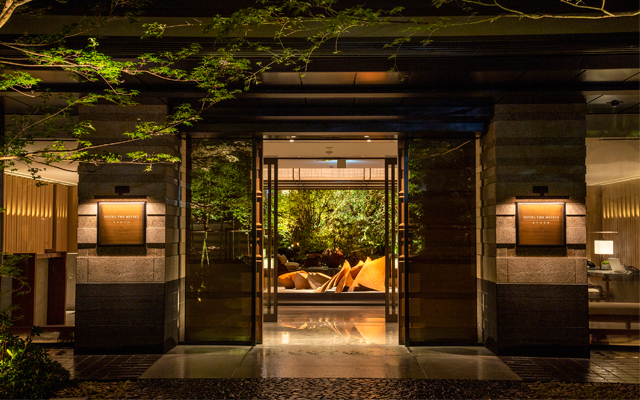
Hotel The Mitsui Kyoto, Japan
The Luxury Collection, part of Marriott International, has opened the Hotel The Mitsui Kyoto, A Luxury Collection Hotel & Spa in the heart of Japan’s ancient capital. Once the private residence of the aristocratic Mitsui family, the property’s 300-year-old main entrance, the Kajiimiya Gate, still stands today to welcome modern global explorers. Hotel The Mitsui Kyoto is the only luxury hotel in the city centre with its own natural hot spring drawn from the thermal waters deep below ground.
The hotel offers 161 guestrooms and suites, including a pair of Onsen Suites featuring separate living rooms, private gardens and outdoor hot spring baths. F&B venues include signature teppan restaurant Toki, Italian restaurant Forni, The Garden Bar offering afternoon tea and cocktails, and Shiki-no-ma for an exclusive dining experience. Spanning over 1,000m2 of space, the hotel’s Thermal Spring Spa houses a thermal onsen spring, two private onsen facilities, four spa treatment rooms and a gym.

Adina Apartment Hotel Melbourne Southbank, Australia
Standing out for its green credentials, the Bates Smart-designed Adina Apartment Hotel Melbourne Southbank – owned and developed by independent investment house Hume Partners and operated by TFE Hotels – will appeal to eco-savvy travellers seeking a city escape. For starters, the usage of 5,300 tonnes of cross-laminated timber to build the property helps off-set about 4,200 tonnes of carbon dioxide from the atmosphere.
Situated at the intersection of Southbank Boulevard and City Road, the 10-storey, 220-room property offers 70 studio apartments, 140 one-bedroom apartments, and 10 two-bedroom apartments – all with fully-equipped kitchen and laundry facilities and lounge/dining areas. Guests also benefit from full hotel services including 24-hour reception, meeting facilities and leisure amenities such as a 20m indoor lap pool and gym.

The Connaught, New Delhi, India
The Indian Hotels Company, which runs the Taj Group of luxury hotels, has opened The Connaught, New Delhi. Situated in the capital city’s prime area, Lutyens, The Connaught is a part of the SeleQtions brand – a named collection of hotels and resorts. The hotel houses 104 rooms conceptualised by Swedish designer, Christian Lundwall, of LWA. F&B options include all-day diner, The Hub, serving global and local cuisines, including some of Delhi’s legendary favourites. The restaurant opens into an al fresco dining venue, and also extends into a cocktail bar. Spaces for business conferences or social events include a 185m2 open air terrace.
TTG Asia goes on festive break

TTG Asia will be taking a long-awaited break from December 4 after a year of unprecedented challenges. We’ll be back on January 4, 2021, but in the interim, we’ll continue to bring you the most breaking news in the travel trade.
The entire TTG Asia Media team wishes all our readers a happy and healthy holiday!
Norwegian Cruise Line readies inspiring campaign for 2021
Norwegian Cruise Line (NCL) is set for a new “emotion-driven” campaign come 2021, which will motivate Asian travellers towards a cruise holiday.
This comes on the back of an intense customer sentiment study that started in April 2020, which found that consumers were determined to return to travel and wanted to begin planning for future trips during the government-imposed lockdown, explained Ben Angell, vice president and managing director, APAC, during a hybrid press conference for select media on December 2.
That strong desire for travel was reflected in forward booking spikes in markets such as the UK, Australia and the Asia region despite pandemic challenges, Angell said.
“Customers told us that they want to stand by us and see us succeed,” shared Angell, adding that Asian markets are now contributing 80 per cent of advance bookings for NCL’s 2022 and 2023 sailings.
According to Angell, the new advertising campaign, bearing the slogan “Break free” and accompanied by British rock band Queen’s I Want to Break Free song, will be a “departure from NCL’s usual style of advertising” and aims to inspire consumers to “get excited now about their next holiday experience”.
The video advertisement accompanying the new campaign will project NCL’s key selling points – a young fleet that is rich in onboard experiences.
Angell said NCL has “not done enough” in the past years to convey the cruise line’s unique propositions, and the latest campaign will strengthen its market presence.
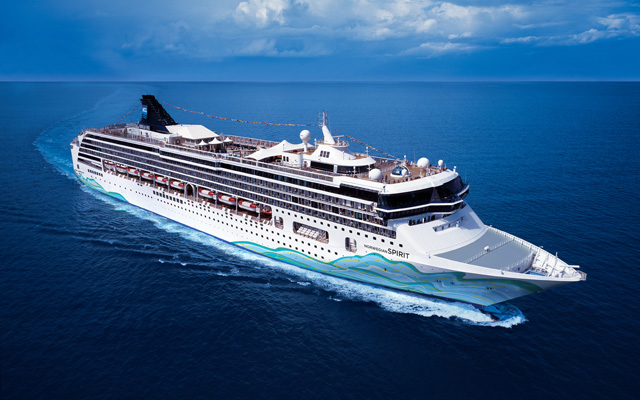
Backing the campaign’s promise is an Asian deployment of the newly-refurbished Norwegian Spirit and Norwegian Sun in end-2021.
Angell expressed particular excitement over Norwegian Spirit, emphasising its “adult-centric and laidback luxury” appeal, with an “upsized spa” among its many highlights.
He also expressed a deep commitment to the Asian cruising market, which the company expects to fill its Asian sailings in a post-lockdown era. To tap “significant growth opportunities” in the region, NCL recently brought travel and tourism industry veteran, Nicholas Lim, into the role of general manager, sales Asia.
Based in Singapore, Lim was last president (Asia) of Trafalgar Travel and managing director of The Travel Corporation, where he played a crucial role in boosting the company’s Asian presence while mapping out growth strategies for all market segments in the region.
Angell added that Lim has “extensive experience” in Asian markets that NCL is keen on developing.
Sustainable tourism a big drawcard for luxury travellers

Tourism players are being urged not to forget sustainability amid the pandemic as research reveals it remains a top priority for luxury travellers.
Speaking at the virtual ILTM World Tour Asia Pacific, Meryam Schneider, vice president of marketing and partnerships at luxury and wealth researcher ALTIANT, said the Covid-19 crisis has highlighted the importance of tackling climate change, propelling the issue to the forefront of affluent travellers’ minds.
Said Schneider: “While Covid-19 has impacted most of our lives, improved air quality and thriving wildlife have been two of the few upsides. This has raised concern for some luxury consumers, and as such, there are more demands being made for brands to acknowledge and act to alleviate climate concerns.”
Research carried out in 3Q2020 by ALTIANT reveals on a scale of one to five, 56 per cent of overall respondents, comprising high-net-worth individuals (HNWIs) and ultra-high-net-worth individuals (UHNWIs), rate sustainability as four or five in importance. Across Asia and Europe, this figure rose to 63 per cent.
Schneider added: “This indicates many consumers do recognise the ongoing need for environmental focus and that it remains important, despite other priorities and concerns. Specifically, for travel, there are opportunities to tap into this green mindset.”
Despite the economic instability arising from Covid-19, the survey reveals many high-spenders are prepared to pay more for sustainable luxury. Overall, 49 per cent said they are willing to spend up to 10 per cent more for sustainable and ethical luxury. In Asia, this sits at 38 per cent and 29 per cent in Europe.
Sustainability has been ranked a top priority for Myanmar once travel resumes. Home to the abundant open spaces and untapped nature travellers are predicted to desire, the destination’s stakeholders are working together to push sustainability.
A white paper titled Tourism and Covid-19 in Myanmar: Priorities for Restarting Tourism outlines a series of measures to stimulate the industry once borders reopen, with the country positioning itself as a leading sustainable destination. The paper also recommends Myanmar targets valuable visitors, including high-end travellers.
May Myat Mon Win, Myanmar Tourism Marketing advisor, said: “The focus on reopening tourism is very much centred on opening in a steady and sustainable way. The Covid-19 period meant national parks were closed and nature had time to rebound. We even made worldwide news with the discovery of a new monkey species in Popa National Park – the Popa langur.”
The country’s Ministry of Hotels and Tourism has also been working with several organisations to equip the industry with the skills needed to service affluent clients. Said Win: “I’m sure the level of service clients will experience when visiting Myanmar will be unparalleled to any other luxury destination.”
Willem Niemeijer, CEO and founder of Khiri Travel and Yanna Ventures, said the tourism industry has been a huge game-changer with regard to tackling environmental issues and it is essential the importance of sustainability is not forgotten in the wake of Covid-19.
Said Niemeijer: “The tourism industry has been a massive influencer to make changes in issues such as tackling single-use plastic and food waste. It now needs to step up to proactively contribute to reforestation, carbon reduction in operations, and so on.”
Luxury travellers are willing to splash their cash on elements such as “organic, healthy food and remote locations that allow them to unplug and declutter”, he added.
However, Niemeijer advised tourism suppliers to ensure that weaving sustainability into their product line does not dilute the quality and experience. “As with plastics and hygiene measures, travellers will expect organisations to do all these things, and (still) deliver on a high-quality product. No corner-cutting,” he said.
Echoing this sentiment, Schneider stressed: “It’s important that (sustainability) is done with credibility as these customers are often aware of green-washing and are looking for authenticity and real social and ethical responsibility.”
She added that if done properly, investing in sustainability will be offset as luxury travellers are willing to pay more to reach their desired standards. Noted Schneider: “The importance of sustainability is ramping up and professionals in the luxury travel industry, booking agents as well as hotel and resorts, will be well rewarded by finding ways to integrate it into their strategy.”
Arnfinn Oines, social and environmental conscience for Soneva Group, said costs spent on being more sustainable come with financial rewards. For example, in 2019, three of the sustainable luxury resort operator’s properties generated more than US$500,000 through innovative waste management strategies. This includes leftover food being transformed into compost and turning Styrofoam packing into lightweight construction blocks.
Said Oines: “Simply eliminating plastic bottles by bottling your own water and serving it to guests reduces costs and looking at waste as a resource rather than something to throw away saves money. A lot of sustainable practises are financially much better.”
GTEF 2020 to bring tourism innovation into focus

The Global Tourism Economy Forum (GTEF) – Macao 2020 will be held in a hybrid format on December 9, with a focus on the strategies for restoring travellers’ confidence and reinventing the tourism industry devastated by the pandemic.
Under the theme of Solidarity and Innovation: Reshaping Tourism in the New Global Economy, this year’s edition of GTEF will lead a confluence of online and offline engagement for the first time.
Into its ninth edition, GTEF will bring together some 30 mainland, local and international government and industry leaders as well as international tourism organisation leaders to proffer creative insights and strategies on tourism development, tourism and economic recovery, destination marketing and business operation, and more.
The Forum’s programme will encompass special keynotes, sessions and dialogues alongside featured interviews. Topics include Public Private Partnerships for Restarting Tourism Economy, Air Travel under the New Normal and Solidarity to Reshape the Tourism Economy. The session on Public Private Partnerships for Tourism Economic Revival will highlight Macau’s success story.
Held in partnership with the Pacific Asia Travel Association, a special session will feature the best practices from across the Asia-Pacific region to drive the recovery of the global tourism economy. During this session, the best practices collected will showcase optimal crisis communication plans, strategies to support SMEs, as well as strategies adopted by tour operators and hospitality businesses to achieve sustainable business renewal. The session will also feature a discussion with experts on the sentiment of Chinese outbound travellers and how a greater understanding of this market’s preferences can help in global tourism’s recovery.
The World Tourism Organization and GTEF’s coordinator, the Global Tourism Economy Research Centre, will deliver the 7th joint report on Asia Tourism Trends. The publication not only analyses the latest tourism trends and outlook in Asia-Pacific, but also unveils how countries in Asia have adopted various measures to mitigate the impact of Covid-19 and stimulate economic recovery, including a special case study on Macau. The report also highlights the significance of tourism and community development and points to the potential of rural tourism.
The Forum will also feature a special keynote session, titled China Story: This is Hubei; This is Wuhan, where Hubei will share the heartening story of the province’s road to recovery in the wake of the pandemic.
Another highlight of GTEF is the Business Matching Session hosted by the Macao Trade and Investment Promotion Institute. The session will debut its one-stop online business matching platform that enables business introduction, matchmaking, appointment making and meeting online.







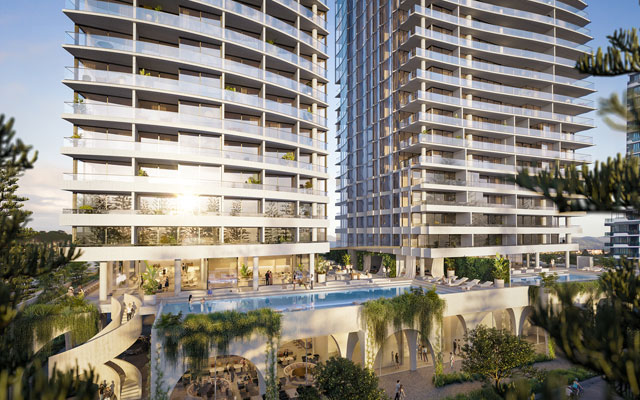
Accor and sbe have partnered with Australian developer Vitale Projects to deliver Mondrian Gold Coast on an expansive 4,037m² beachfront site at southeast Queensland’s tourism and lifestyle destination Burleigh Heads.
Slated to commence construction in 2021 and be completed by mid-2023, the property will be Australia’s first five-star Mondrian hotel and branded private residences. Set to be built at 50 The Esplanade on the Burleigh Heads Beach on the Gold Coast, it will comprise a private residential tower of 89 apartments and a separate hotel tower with 208 guestrooms.
The buildings will be united by a three-level podium that acts as the property’s common space and hub of activity, including a fitness centre, spa, restaurant, and swimming pool, all overlooking the Burleigh Heads Beach.
Mondrian Gold Coast Private Residences’ luxury two-, three- and four-bedroom apartments feature beach views, balconies, living spaces, butler’s pantries and wine cabinets. Residents enjoy full access to hotel amenities and services, including a 24-hour concierge and 24-hour room service, valet carparking and personal drivers, while also enjoying the privacy of residents-only amenities in their own building.
Mondrian Gold Coast is one of nine new Mondrian properties that sbe plans to open globally by 2022, with six more to be announced. It follows the company’s recent opening of Mondrian Seoul Itaewon, and the announcement of Mondrian Shoreditch London set to open in 2021.