

Malaysia Airports to study feasibility of air taxi services
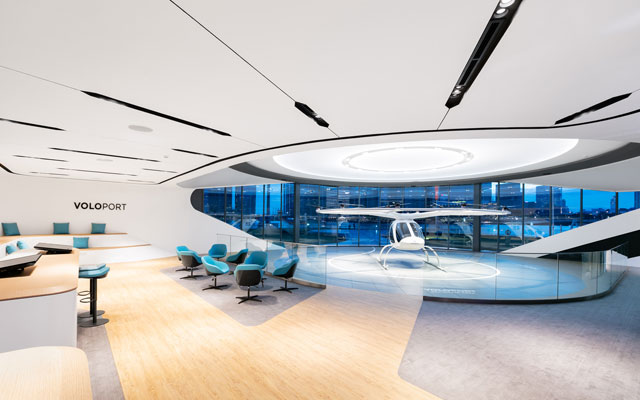
Malaysia Airports has signed a tripartite MoU with vertiport company Skyports and urban air mobility (UAM) pioneer Volocopter to explore the deployment of electric air taxi services in Malaysia.
As a first step, the parties will conduct a feasibility study examining suitable vertiport solutions to enable the safe take-off and landing of passenger eVTOL vehicles, considering factors such as demand, customer flow, and how to integrate UAM operations.
The collaboration forms part of the five-year Sultan Abdul Aziz Shah Airport, Subang (LTSAAS) Regeneration plan. It will explore the deployment of electric air taxi services at LTSAAS as well as other locations throughout Malaysia.
Malaysia Airports’ Group CEO, Mohd Shukrie Mohd Salleh, said: “Air taxi technology and revolution is the next big thing that we want to see happen in Malaysian aviation. With LTSAAS offering a synergistic ecosystem within the aviation and aerospace sectors, it is timely for us to explore this new service as it complements other key developments of the regeneration initiative.
“Volocopter and Skyports are both leaders in their respective fields of advanced air mobility and we hope to further future-proof LTSAAS’s position in Asia-Pacific by catering to research, assembly, manufacturing, maintenance, repair and overhaul, in addition to air taxi operations. Our objective is to provide end-to-end, mid- to high-value capabilities and solutions that are anchored by top-tier operators.
“LTSAAS Regeneration will offer various development opportunities to aviation and aerospace players worldwide, thus, echoing the government’s original intent to turn LTSAAS into both an international aerospace centre and business aviation hub.”
Australia’s Brisbane to host 2032 Olympics

The Australian city of Brisbane has been picked to host the 2032 Olympics, the inevitable winner of a one-city race steered by the IOC to avoid rival bids.
Brisbane will be the third Australian city to host the Games, after Sydney in 2000 and Melbourne in 1956. It will mark the return of the Games to Australia 32 years after the 2000 Sydney Olympics.

“It’s a historic day not just for Brisbane and Queensland, but for the entire country. Only global cities can secure the Olympic Games – so this is fitting recognition for Brisbane’s standing across our region and the world,” prime minister Scott Morrison said.
“It also marks an important leap forward for Australia as we look toward major events that lock in economic growth and social benefits that will echo for years to come.”
Several candidates had publicly expressed an interest in staging the 2032 Games including Indonesia, Hungary’s capital Budapest, China, Qatar’s Doha and Germany’s Ruhr valley region.
But in a new process adopted by the IOC that does not openly pit candidates against each other, Brisbane had already moved ahead of any rival back in February, having been selected as a “preferred host”.
Tokyo is hosting the postponed 2020 Olympics this week and Paris will stage the 2024 Games. Los Angeles has been awarded the 2028 summer Olympics.
Domestic buyers snapping up properties in Thai resort destinations

Resort properties in Thailand’s leisure destinations are seeing surging interest from domestic home buyers over the course of the pandemic.
According to new data released by Thai property portal FazWaz, the popular Thai seaside resort area of Hua Hin has seen buying interest grow significantly in year-to-date online inquiries.

FazWaz co-founder and CEO Brennan Campbell said: “By tracking the data from 2Q2020 to mid-2021 on buying motivation of either a holiday home or for investment purposes, we can see a change in behaviour towards lifestyle purchases in Phuket, Koh Samui and Pattaya, with the sharpest uptick being Hua Hin.”
In Phuket, where resort grade real estate over the past decade has been highly leveraged by foreign buyers, Boon Yongsakul, chairman of Boat Pattana, said that “our Shambala luxury pool villa project in Bangtao Beach initially targeted legacy overseas buyers in the Laguna Phuket area. But by the middle of last year, we saw a strong influx of Bangkok buyers and this has continued to drive sales momentum to date”.

“One of the most notable characteristics in Thai buyers that has changed is the desire for resort living, quality of life, and outdoor areas. If you look back five years, island real estate was focused on investment-type condominiums, but today, it’s single-family homes or second residences,” he added.
Weighing in on the changing buyer profiles for Thailand’s resort property market, C9 Hotelworks managing director Bill Barnett opined: “Bangkok’s worsening pollution problems play a part in real estate purchase values. Another is the pandemic ‘Zoom-factor’ that has created what we expect to be a longer-lasting trend of working from home. Real estate developers are now facing changing consumer tastes for flex-specs and recreational areas.”
The trend for buyers seeking a lifestyle reset is clear in Hua Hin where property developer Tjeert Kwant, CEO of Banyan Residences, said there has been a significant rise in buyers looking to escape the city and enjoy a more healthy, active lifestyle. “This for us has been the key driver with families and couples looking for spacious second homes outside of Bangkok.”
Campbell noted that based on FazWaz’s data for Hua Hin, 64 per cent of transactions are now from the domestic market. He said: “The impact of the pandemic is going to have a lasting impact on what drives Thais to purchase property and there is one thing for certain, the times are changing fast, and (Thais are) moving out of the city at a pace we have not seen before.”
IoT set to play bigger role in post-pandemic travel: GlobalData

Internet of Things (IoT) technology can help to ease traveller concerns regarding personal health and safety, while allowing travel and tourism companies to collect a wealth of data for a range of internal and external benefits, according to GlobalData.
As a result, this technology will have a bigger role to play in post-pandemic travel, noted the data and analytics company.
GlobalData’s latest thematic report, IoT in Travel & Tourism, stated that wearable tech devices at airports and other transport terminals can allow travellers to adhere to Covid-19 health and safety guidelines including social distancing procedures, thereby helping them to feel safe.
Ralph Hollister, travel and tourism analyst at GlobalData, said: “Connected applications can make tourism flows safer throughout a smart city or destination, by providing real-time warnings about crowding. These warnings can be sent to a traveller’s mobile device through beacon technology, advising them to take an alternative route, which minimises the risk of virus contraction during a city break.”
Connected applications can also ease apprehensions in privately-owned areas, GlobalData said, citing the example of Hilton’s Connected Room technology which allows guests to use the Hilton Honors app to manage most things they would traditionally have to do manually in a guestroom. From controlling the temperature and lighting to the TV and window coverings, IoT technology allows guests to reduce the number of times they have to touch surfaces that may be contaminated.
Hollister highlighted that tourism’s slow recovery in the wake of the pandemic is partly due to “ongoing health and safety fears among consumers, which is reinforced by governments”. According to a GlobalData survey, 85 per cent of consumers were still either ‘extremely’, ‘quite’ or ‘slightly’ concerned about their health due to the pandemic.
Internally, operations and business costs can be streamlined with the use of IoT technology. The collection of data from IoT sensors could allow for tourism attractions to analyse if employees are spread evenly across a theme park, for example, reducing the chance of certain employees being overworked which may improve organisational commitment.
This internal benefit also creates an external advantage as customers will receiver quicker service. Additionally, IoT can help companies to improve energy efficiency and combat climate change by monitoring and optimising temperature, lighting, and overall energy consumption.
Externally, IoT can help to create personalised experiences for customers in two main ways. The first is by enabling travellers to control more appliances or services through a centralised device, such as a tablet or mobile application. Secondly, by companies storing data gathered from IoT enabled devices to create targeted personalised marketing campaigns or by remembering their preferences for return visits.
Hollister concluded: “With 82 per cent of travel and tourism executives expecting efficiency improvements in the coming years when utilising IoT technology, combined with the ability the technology holds to make travel experiences more Covid-secure, IoT’s role in tourism is set to grow.”
Malaysia bids to attract travellers to Perlis through new online directory
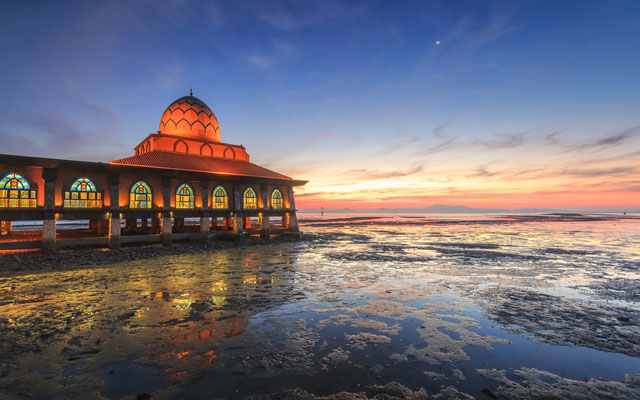
Tourism Productivity Nexus (TPN), supported by the Malaysia Productivity Corporation (MPC), is building an e-directory for tourism products and services in Perlis, in anticipation of the reopening of the state to domestic and international travellers in the near future.
TPN is in the midst of compiling information on all the tourism products and services in the northern state. The e-directory is expected to be completed by end of October and onboarded to B2B portal Universal Pass, an initiative by industry players supported by Malaysia Tourism Council and Malaysian Inbound Tourism Association (MITA), shared Uzaidi Udanis, chairman of TPN and president of MITA.
The Universal Pass platform is targeted at both international and domestic trade players, featuring niche product offerings that are not easily available to overseas wholesalers and are not sold by OTAs. This includes products such as homestays, white water rafting and glamping.
Uzaidi said: “The government is looking at reopening Langkawi to foreign travellers soon as part of its pilot project. We hope that in time, Perlis will also benefit due to its close proximity. Also, Perlis has a small population and has a low number of Covid-19 positive cases. That will also count as a reason to reopen the destination in the near future for domestic travellers.
“We want to see those travelling to Langkawi by land via Kuala Perlis to spend a day or two, or at least half a day, in Perlis before proceeding to Langkawi or on their way back. The e-directory will assist tourists to choose the best places for food and leisure activities that suit their interests.”
Sofitel Singapore City Centre celebrates National Day with two staycation packages
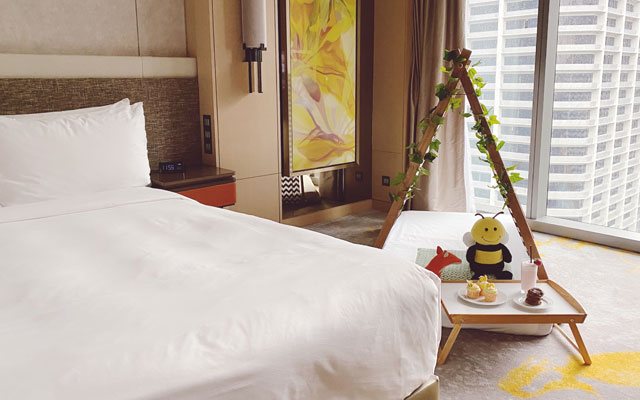
In conjunction with Singapore’s 56th birthday, Sofitel Singapore City Centre has launched two locally-inspired staycation packages designed for couples and families.
The staycation experiences include gourmet culinary offerings highlighting local heritage flavours, as well as exclusive merchandise from Autism Resource Centre, a not-for-profit charity based in Singapore.
Curated for couples, the Stay for Good staycation package includes a 2D1N stay for two in a luxury room complete with breakfast, afternoon tea with a local twist, and exclusive Autism Resource Centre merchandise for keeping, comprising a dessert bowl and tea towel.
The afternoon high tea will feature quintessential French favourites and local interpretations of salted gula melaka macarons, pandan coconut scones, sambal salmon roll with caviar and fresh herbs, and chilli crab mayonnaise on sandwich.
Room rates start from S$409 (US$300) nett for weekdays and S$479 nett for weekends.
Perfect for a kid-friendly getaway, the Do Good with the Family staycation package includes a 2D1N stay for two adults and one child in a luxury room. The experience includes a tent for the child, breakfast, and gourmet sharing dinner featuring Singaporean flavours such as egg fried rice, sweet and sour chicken as well as sautéed seasonal vegetables with garlic and Chinese wine.
This staycation also includes exclusive Autism Resource Centre merchandise comprising a set of one lanyard, one silicone colouring mat and one cutlery set.
Room rates start from S$419 nett for weekdays and S$489 nett for weekends.
For these staycation packages, Sofitel Singapore City Centre has purchased exclusively designed merchandise by students from The Art Faculty, a social enterprise by Autism Resource Centre. A portion of the proceeds will be used to support Autism Resource Centre (Singapore).
The Stay for Good and Do Good with the Family staycation packages are available for bookings via Klook for stays from now until August 15, 2021. Due to the current Covid-19 heightened alert phase, meals will be served in-room from now until August 18, 2021.
ACI World’s new tool assists airports to plan capacity increases
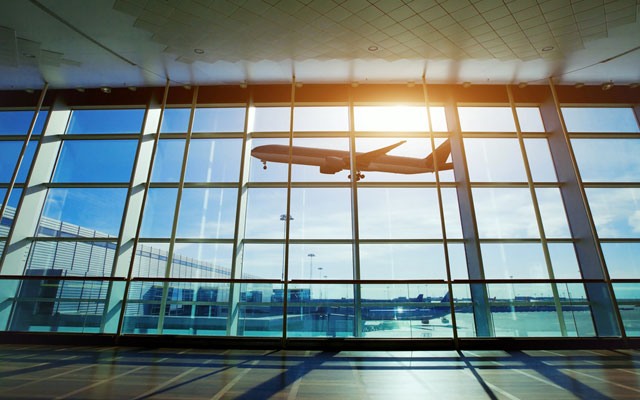
Airports Council International (ACI) World has released a new tool to assist airports in terminal planning to increase capacity as the global recovery from the pandemic continues.
The new Static Capacity Tool – developed by ACI World Business Partner Redwater Consulting Group – will assist airports in evaluating the level of resource and equipment needed throughout the airport passenger journey.
It will also help assess queue length, queue time and breaking points with a particular focus on the challenges arising from physical distancing.
The tool has been designed to evaluate any additional space or queuing requirements needed as a result of Covid-19 physical distancing measures and the impact of adding more process points to address additional health checks that have been introduced at many airports.
The user-friendly tool allows non-technical airport employees to make use of the model through simple inputs and a painless user interface in order to assist airports in providing a safe and seamless passenger experience.
The tool focuses on terminal process points including check-in (online, bag drop, traditional desks), security, emigration, immigration, boarding, and baggage reclaim. It uses average cycle times throughout each process point to generate an overall queue time for that process point.
ACI World director general Luis Felipe de Oliveira said that the low-cost solution will “assist even small and medium-sized airports to prevent bottlenecks in the airports and improve the passenger experience”.
Hotelbeds to grow SE Asia portfolio with RedDoorz deal
Hotelbeds has signed a preferred partnership with RedDoorz that will give the bedbank’s clients access to a range of preferential rates and offers at nearly 900 RedDoorz properties across South-east Asia.
The new deal will also allow Hotelbeds to expand its portfolio for both international and domestic offerings in key destinations such as Indonesia and the Philippines.
In return, RedDoorz will be able to expand its global reach by gaining access to Hotelbeds’ network of 60,000 travel trade buyers in over 140 source markets worldwide. This includes high value channels such as travel agents, tour operators, airlines and points redemption programmes.
Hong Kong Airlines puts inflight items on sale
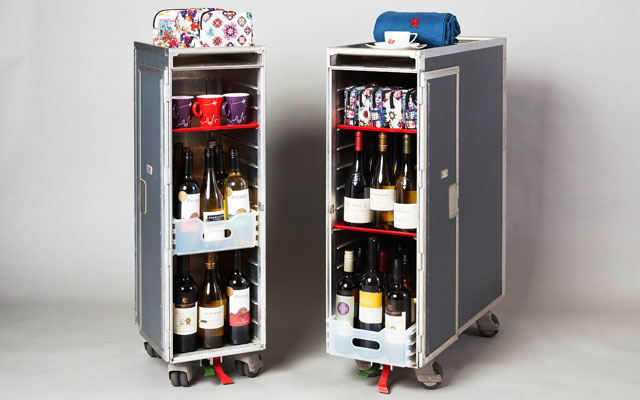
Hong Kong Airlines (HKA) has put a range of inflight items up for sale, including crockery, limited-edition amenity kits, pillows and duvets, as well as wine.
These items are mostly obsolete as they haven’t been in service in recent years, according to a release.
HKA director of service delivery Chris Birt said the initiative is a win-win for both the carrier and its customers given that the pandemic continues to upend travel plans.
“To prevent wastage and disposal of obsolete or surplus items we have in storage, we have decided to put them up for sale after seeing how favourably the public has responded to similar airline inflight product sales,” he said.
“These items can be used or consumed at home or over a picnic with family and friends. We also hope that they will bring back fond memories of past travels with Hong Kong Airlines and build excitement as we all wait patiently to step onboard again soon.”
Items will be bundled to offer a mix of inflight products to cater to everyone. For example, a half-size trolley will be packed with business class tableware, cutlery, amenity kits, blanket and pillow with cover, plus 24 bottles of wine. A full-size trolley will include a greater quantity of the same items offered in the half-size trolley bundle, with 36 bottles of wine.
Depending on the product mix, the sale price for bundles will start from HK$1,788 (US$230) for home sets and from HK$8,888 for a fully stocked half-size cart. Prices include free delivery in Hong Kong.
The exclusive sale will be hosted on bespoke e-commerce platform Epix Products (www.epixproducts.com) on Friday, July 23, 2021.

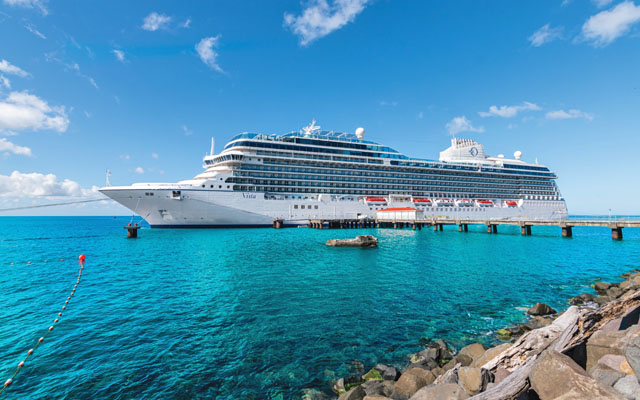






Thirty-four individuals and organisations which have shown extraordinary resilience by adapting their business models and products to the changing landscape of tourism amid the Covid-19 pandemic were recognised at the Singapore Tourism Awards 2021, which took place virtually for the first time on Friday (July 23).
Organised by the Singapore Tourism Board (STB), this year’s ceremony was graced by minister for trade and industry Gan Kim Yong. There were 77 finalists nominated across the award categories of Experience Excellence, Enterprise Excellence and Customer Service.
Xperience DMC’s Fascinating World of Aviation PLUS Exclusive Hangar tour was one of two winners of the Outstanding Tour Experience under the Experience Excellence (Leisure) award category, for presenting Singapore’s unique aviation history with a special focus on Seletar Aerospace Park.
The other winner was Tribe Tours, whose Chinatown Murders tour was recognised for its use of gamefication and storytelling to bring a precinct tour to life.
Messe Berlin and Milken Institute Asia Center were both named Outstanding Event Organiser under the Experience Excellence (MICE) award category. The former was recognised for testing the hybrid event prototype for safe business events with TravelRevive, while the latter for combining virtual and holographic components with an in-person event at the Milken Institute Asia Summit 2020.
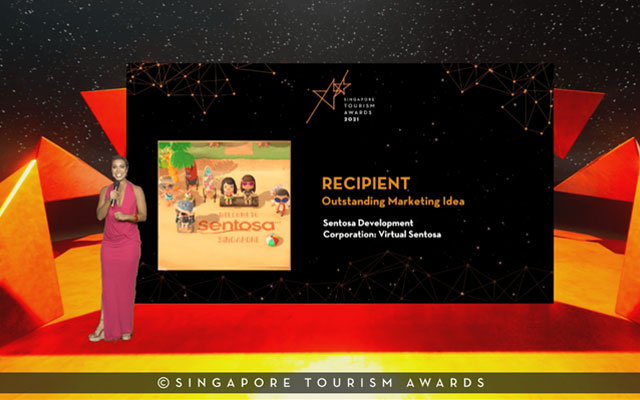
Sentosa Development Corporation (SDC) was one of two winners for the Outstanding Marketing Idea under the Enterprise Excellence award category, which recognised businesses that displayed agility and innovation with new marketing campaigns to engage audiences despite the challenging environment.
SDC’s Virtual Sentosa campaign allowed homebound travellers to digitally explore Sentosa island through Sentosa Crossing, a digital reimagination of the holiday island, its own version of the popular Nintendo Switch game, Animal Crossing. The campaign became Sentosa’s top-performing campaign in 2020.
The other winner, Skypark Sentosa by AJ Hackett (Bungy Holdings Singapore), was recognised for its No Scream Challenge campaign, where participants who resisted a scream got their next jump free, and those who screamed received an ice-cream treat.
This year’s ceremony also featured three new awards – Special Award for Sustainability, Special Award for Most Exemplary Employer, and Special Award for Community Care (Business and Individuals). Seven organisations and two individuals were honoured under the Special Recognition category.
Mandai Park Holdings and Resorts World Sentosa were each awarded the Special Award for Sustainability for their contributions to environmental sustainability.
Wildlife Reserves Singapore and Gardens by the Bay were each conferred the Special Award for Most Exemplary Employer for developing and implementing impactful policies to retain and retrain employees during the pandemic.
Marina Bay Sands, Resorts World Sentosa and SATS-Creuers Cruise Services & Star Cruises received the Special Award for Community Care (Business) for stepping up as leaders for positive change during the pandemic and displaying care and selflessness for the wider community.