TTG Asia
Asia/Singapore Thursday, 25th December 2025
Page 856

IATA’s Travel App to go live next month

0
IATA Travel Pass will facilitate secure exchange of information among government agencies, airlines, laboratories and travellers

After several months of rigid testing with Singapore Airlines, IATA is on the brink of rolling out its Travel Pass, projecting that it will go live in the next few weeks.

This comes as countries that are looking to open their borders will have to manage and verify the secure flow of necessary testing or vaccine information among other governments, airlines, laboratories and travellers, and avoid the risk of fraudulent paper certs.
The IATA Travel Pass will facilitate the secure exchange of information among government agencies, airlines, laboratories and travellers

“People want to travel. However, the long-term solution to reopening borders to and reducing quarantine requirements will be a combination of testing and vaccination,” said Conrad Clifford, IATA’s regional vice president, Asia Pacific.

The IATA Travel Pass incorporates four open sourced and interoperable modules which can be combined for an end-to-end solution.

The first module covers a global registry of health requirements, which enables passengers to find accurate information on travel, testing and eventually vaccine requirements for their journey.

The second covers a global registry of testing / vaccination centres, enabling passengers to find testing centres and labs at their departure location which meet the standards for testing and vaccination requirements of their destination.

The third module takes in the Lab App, which enables authorised labs and test centres to securely share test and vaccination certificates with passengers.

Lastly, the Contactless Travel App enables passengers to create a digital passport; receive test and vaccination certificates that meet the regulations for their itinerary; and share testing or vaccination certificates with airlines and authorities to facilitate travel.

Aside from merely providing verification, the IATA Travel Pass can also be used to manage travel documentation digitally throughout a passenger’s journey, which may enable biometrics and contactless travel in the long-term, after the pandemic is over.

So far, IATA’s regional director, airports and external relations, Vinoop Goel, has confirmed that both airlines and governments globally have been receptive to the app.

It also helps that the app can be integrated with the airline’s own app, making it more convenient and seamless for a passenger. Airlines that are in the process of trialling include  Emirates and Qatar, with Air New Zealand set to join the list.

Meanwhile, IATA is also in talks with governments to work on a global framework and standardisation of verification across borders.

Clifford added: “We are confident that governments and airlines will adopt a mechanism to ensure verification of Covid-19-related health. IATA is aiming to create a global standard, and we hope that others will use the same framework (so that there won’t be too many differing digital health verifications across countries).”

When asked about data privacy, Goel stated: “IATA does not have a central database holding passenger information, as (an individual’s) information stays on the app. The passenger is in control of their data and can choose who to share it with. Users can also delete their data anytime on the app.”

As for costs, IATA has reiterated their stand to keep costs to a minimum in the implementation of the Travel Pass, as the association understands that airlines are currently facing cashflow issues.
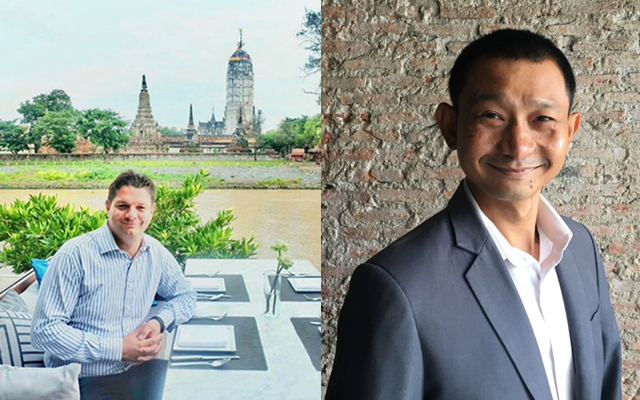
Sala Bang Pa-In reveals executive team ahead of opening

0
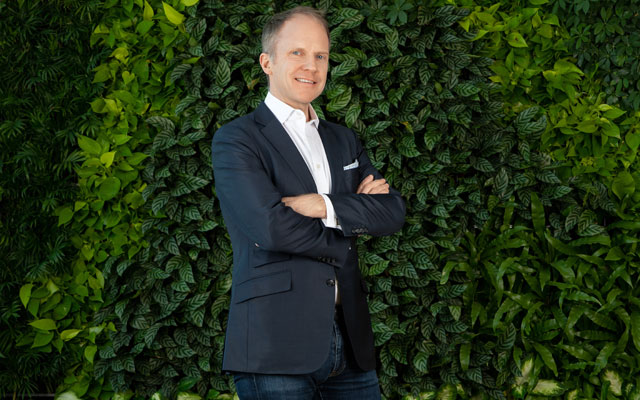
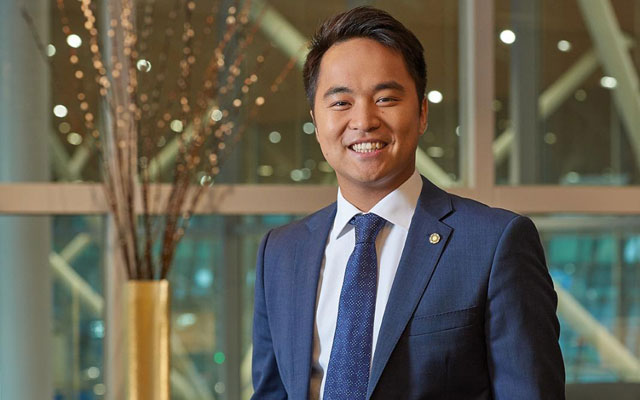
From left: Volkert Geertse; and Jitti Sukee

Volkert Geertsen and Jitti Sukee have been tapped to head up Sala Bang Pa-In, Sala Boutique’s soon-to-open hotel in Thailand.

Volkert Geertsen will oversee sala bang pa-in as cluster general manager of Sala Boutique, alongside his current responsibilities for Sala Rattanakosin Bangkok, Sala Lanna Chiang Mai, Sala Ayutthaya and sala Khaoyai. The Dutch has over 20 years of experience in the hospitality industry, where 15 of which were spent in Thailand and South-east Asia.

From left: Volkert Geertse; and Jitti Sukee

Joining Geertsen as cluster hotel manager is Jitti Sukee, currently the hotel manager at Sala Rattanakosin Bangkok. The Thai national is a seasoned industry professional with over two decades of experience, and specialises in F&B.

The 24-key Sala Bang Pa-In is scheduled to start welcoming guests in March 2021.

IHG builds presence in Brisbane CBD

0

Mandarin Oriental signs on Danang project

0
Danang's Golden Bridge pictured

Mandarin Oriental Hotel Group will manage a new luxury resort and residences in Danang come 2024, making it the second property to join company’s new portfolio in Vietnam.

Mandarin Oriental, Da Nang will sit on a 30km stretch of beach that links Danang in the north with Hoi An in the south. Its location will put guests in easy reach of surrounding attractions, such as the UNESCO World Heritage sites of Hoi An, My Son and Huế.

Mandarin Oriental, Da Nang wil open in 2024; Danang’s Golden Bridge pictured

There will be 69 villas and 18 residence units across the property, each set in their own landscaped gardens with private pools, as well as a host of resort experiences that could be customised for guests. The Mandarin Oriental Spa will offer the group’s signature wellness therapies and treatments with a focus on local nature-inspired programmes.

Dining variety is offered at five restaurant and bars, all with waterfront settings.

Business and social events will be supported by indoor and outdoor venues, including a beachfront pavilion.

The project is owned by Dinh Ba Thanh, a Vietnamese businessman, entrepreneur, and the founding chairman of DatVietVAC and The Nam Khang Corporation.

Besides Mandarin Oriental, Da Nang, the hotel group is counting down to the opening of Mandarin Oriental Saigon in 2022.

Navigating a global shift

0

As the pandemic laid its claim between 1H2020 to 2H2020, what did crisis management look like for Swire Hotels? How did your concerns evolve as well?
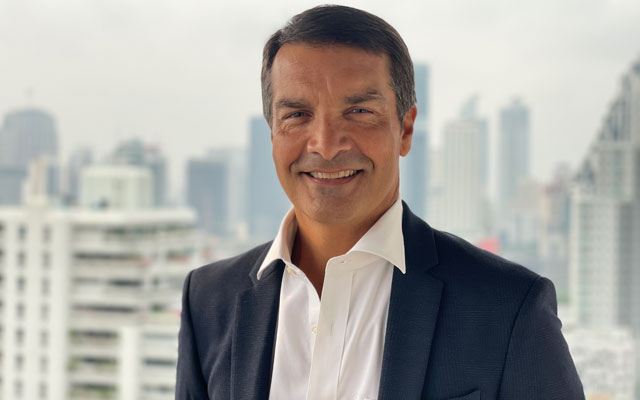
At the start of the outbreak, nobody knew the scale of the pandemic or what was to come. Swire Hotels has a big presence in Mainland China, which was initially the focal point of the virus, so our first concern was on our people in these properties – both colleagues and guests – and ensuring their health and wellbeing.

In Mainland China and Hong Kong, many of us had the muscle memory from SARS, so reverting to social distancing and mask-wearing, as well as increasing hygiene and sanitation practices, happened somewhat smoothly.

Then, our attention turned to focusing on the business and maintaining communication with our guests to keep things ‘ticking’ as best we could. I truly believe that one of the main reasons why Swire Hotels has been able to navigate this period somewhat smoothly is that we empower our people to take control. While we implemented standard operating procedures around the pandemic, we likewise believe in our people to make well-informed decisions based on the situation they find themselves in. I was, and remain, truly impressed by the spirit and positivity shown by my colleagues.

Can you give us some examples of this global team spirit?
I’m blown away by the exceptional attitude of our colleagues throughout the last 12 months; everyone has really taken the time to look out for one another, be kind, and continue to create incredible experiences across the Swire Hotels properties. The lesson that has been reiterated to me in the past year is that building and maintaining a strong team is vital.

What does the path towards recovery look like for Swire Hotels, as well as for your brand of luxury?
Continuous creativity and innovation across all areas of the business is key. Our team has been incredible in learning from one another to create unique experiences through pop-up events, brand collaborations and continuing to create amazing experiences for our guests.

On the overnight stay front, the domestic market is a huge focus, now more than ever. In Mainland China specifically – where we currently have four properties – we were witnessing increased appetite for domestic travels even prior to Covid-19, and (have since been) growing a community of brand advocates.

Over in the US, business has returned quite quickly to EAST Miami, albeit with softer rates and reduced restaurant capacity. The hotel’s online presence and creative communications have generated solid occupancy and satisfactory results, which is especially pleasing for what is still seen as an independent brand in the US.

While it’s true that different countries have taken different approaches to dealing with the pandemic, our dedication to our guests is consistent across all Swire Hotels. With new restrictions in place, we have had to rethink the way we do things. Our operations have been adjusted to incorporate enhanced hygiene practices, social distancing measures and so on; however, we pride ourselves on our guest experience, which has always been personalised and hands-on.

How do you envision Swire Hotels can move forward in 2021? What are your key objectives and goals for this year?
Our properties in Mainland China and EAST Miami are already experiencing stronger occupancy levels. This is driven by the domestic market, so in the meantime, our focus will be on stimulating local demand with attractive packages until international borders have reopened.

We are confident that once this happens, we will see a strong surge in demand and our team will be ready to welcome our guests back. Other key initiatives keeping us busy over at The Upper House in Hong Kong is the renovation of the penthouse and a new dining concept that will be revealed this spring.

We also have ambitious growth plans for The House Collective and EAST Hotels. As we continue to grow, it is vital that we do not dilute our brands, and as managing director, my focus will be on operations and brand, ensuring that the Swire Hotels teams continue to act with intuition and spontaneity to create meaningful experiences and connections with guests.

Let retirees rejuvenate Thai tourism

0

Thailand is in trouble. The economy is shrinking, unemployment is rising and tourism is crumbling. According to data released by Thailand’s Ministry of Tourism and Sports, foreign visitor arrivals are down 83 per cent from 2019. Any hope of a quick rebound evaporated in late 2020 with a fresh outbreak of Covid cases, triggering a new round of lockdowns and more business shutdowns.

Once bursting at the seams with tourists, resort destinations like Phuket, Pattaya, Krabi and Samui are now ghost towns. Thai authorities talk incessantly about revitalising tourism and pivoting the industry to attract ‘high value tourists’, but the reality is Thai tourism has always been a churn and burn, volume-based game. Size over sustainability.

To stem the bleeding, the government devised a Special Tourist Visa (STV) scheme designed to lure tourists back to the country. The catch, of course, is a mandatory 14-day quarantine. Having gone through this experience myself, I describe it like going through a Rube Goldberg contraption – you are tossed and turned through bureaucratic twists and turns only to end up hermetically sealed in a hotel room paying business class prices for an economy class product.

To be fair, Covid-19 presents a massive challenge for governments around the world and puts authorities in a no-win situation. Open the borders and risk widespread infection or keep them closed and suffer economic strangulation. Thailand has done a great job battling the spread of the virus, but it is losing the war in lost jobs and wages. The longer this Mexican standoff between live and livelihoods continues, the harder it will be to resuscitate the economy back to health.

One area where Thailand can focus attention is retirement living. No country in Asia is better positioned to attract seniors looking for a first or second home. The 50+ market represents a multi-billion dollar opportunity impacting virtually every sector of the economy, and demographics ensure that it will be a growth market for many years to come.

According to a 2018 K-Bank report on aging, Thailand is already home to around 70,000 middle to high income seniors from high wealth source markets like the US, Germany, Switzerland and Japan. These long stay seniors bank, invest, buy property, travel, (play) golf and use medical services – all high value activities that boost foreign direct investment and support key industries.

Thailand has everything it needs to become The Retirement Capital of Asia; yet it is woefully incapable of developing a product that is coherent, customer friendly and market competitive. Arcane immigration policies, restrictive property ownership rules and convoluted banking regulations are just some of the many disincentives that make long-stay living in Thailand onerous and investing in the country a gamble. As a permanent resident in Thailand, I know all too well the frustrations that expats face getting visas and mortgages.

Covid-19 presents the country’s leaders with a once-in-a-decade opportunity to rethink its strategy on retirees and retirement living, like it did with medical tourism after the Asian financial crisis in 1997. As the marketing director for Bumrungrad International Hospital from 2001-2007, I saw Thailand transform itself from a local player to a global healthcare heavyweight in the span of five years.

Medical tourism is a perfect example of how Thailand can create opportunity out of crisis. Thailand’s private hospitals and health resorts gained market share and pole positioning by being at the right place at the right time with the right product at the right price. Thailand wasn’t the first mover in medical tourism; it was the fast mover. Speed to market made all the difference, and now this segment attracts over three million international high value tourists annually and contributes 45 billion Thai baht (US$1.5 billion) to the economy.

The moral of this story is simple. Hope is not a strategy and waiting for the return of mass market tourism is folly. Thailand has a clear competitive advantage in retirement living and should use this downtime to develop smart strategies to gain fast mover advantage in high value, niche segments that are less fragile and more sustainable.

As the saying goes, “Never let a crisis go to waste”.

Singapore gets visibility through hit reality show

0

Safe bubble for business travellers to Singapore materialises

0

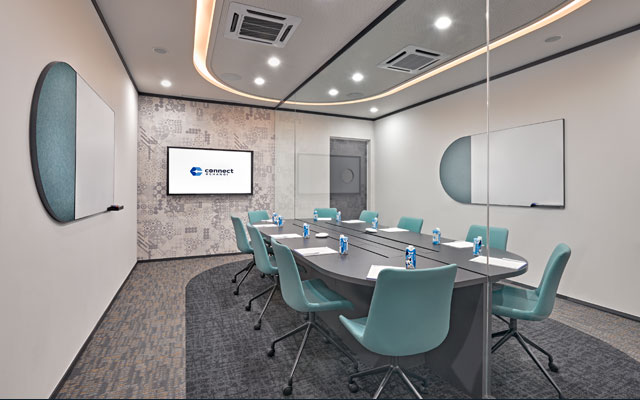
The Phase 1 launch of the four-star hotel and meeting facility Connect@Changi (C@C) on February 18 has kicked off the Connect@Singapore scheme to reopen Singapore’s borders by providing a “bubble” environment for high-level executives to do business face-to-face once they touch down in the city and test negative for Covid-19.

C@C, which offers an integrated “test-stay-work-meet” experience for Singapore residents and international travellers, occupies the former Singapore Expo Hall 7 which was repurposed into a Covid-19 care facility. C@C opened with 150 hotel rooms and 40 meetings rooms which can accommodate between four and 22 participants.

Connect@Changi is the first facility to open under Singapore’s safe travel Connect@Singapore scheme

There will be 660 guestrooms and 170 meeting venues when Phase 1 is completed by May 2021, and the facility can host 1,300 business travellers at any one time when it is fully completed later this year.

Billed as the first of its kind in the world, C@C room rates start at S$384 (US$290) inclusive of three meals daily, mini-bar, room amenities, Wi-Fi, airport transfers and Covid-19 tests required during the stay, according to its press release.

The pilot purpose-built accommodation to facilitate safe meetings between business travellers from across the globe is being developed by a local consortium led by Singapore-headquartered global investment company Temasek and includes The Ascott Limited, Changi Airport Group, Sheares Healthcare Group, SingEx-Sphere Holdings and Surbana Jurong.

Aloysius Arlando, chief executive, venues of SingEx-Sphere, told TTGmice, demand is expected to come from senior official meetings, MNC corporate meetings, business negotiations, document signing, legal consultations and wealth advisory service companies.

He said Singapore-based heads who have not met critical overseas staff face-to-face in a year, one-on-one or in a “board meeting environment” would be potential customers.

The consortium is bullish about demand from the US, Europe and Asia for the facility, which took 14 weeks to be repurposed again between Christmas and the Lunar New Year.

Arlando said: “Phase two details are now being worked out and all options are being looked at to determine what we can cater for as more people get vaccinated.”

C@C, he added, offered a “new advantage” to Singapore Expo to be the vehicle to restart the economy, revive the country’s aviation hub position and provide an “overnight” solution to hold high-value business meetings with border restrictions still in place.

Unlike air travel bubbles, green lanes and reciprocal travel corridors which broke down due to subsequent waves of Covid-19 infections and new virus variants, C@C was a permanent bubble and safe meeting venue, Arlando noted.

Advanced MedTech Holdings, a global medical technology leader, will be one of the first companies to conduct business activities at Connect@Changi.

Lee Weikang, senior director, business development, said the Singapore-headquartered firm plans to hold its first in-person global senior leadership meeting of up to 30 business executives at the facility – its first since the pandemic began early last year.

Additional services for C@C guests include tax and duty-free shopping, food delivery by Changi Eats and a personalised online shopping concierge service.

Bookings can be made at www.connectatchangi.sg/ or through the Connect@Changi mobile app.

TTG Conversations: Five Questions with Rashid Al Ardha, Emirates

0

Enhanced safety measures, contactless travel, pandemic preparedness and flexible air tickets are expected to take root in the future of air travel and transform the passenger journey, predicts Rashid Al Ardha, country manager for Singapore & Brunei with Emirates.

In this new episode of TTG Conversations: Five questions video series, Rashid also discusses how the airline is responding to these projected aviation trends, the critical need for airlines and governments to work together to reopen air routes to facilitate travel recovery, and how airlines have a positive contribution to the global fight against Covid-19.

Plaza Premium Group improves on products through fresh partnerships

0

Hong Kong-based airport services specialist, Plaza Premium Group (PPG), has entered into new partnerships that allow it to improve customer experiences at the airport lounges it operates.

Speaking to TTG Asia on its operational and strategic change, PPG’s global business development director, Jonathan Song, said the company’s move was encouraged by its consumer survey where 83 per cent of respondents said airport lounges and in-terminal hotels would be essential when travel resumes, due to the need for private spaces. Respondents also identified hygiene and safety in the airport as their highest priority.

Plaza Premium Group is expanding its global services network through partnerships and bringing O2O duty-free shopping possibilities to lounge guests

Bearing in mind new travel needs that have been shaped by new normals, Song said PPG has enhanced safety and hygiene protocols for its operations; brought in new digital initiatives such as self check-in capabilities, digital reading materials and smart F&B ordering processes; established a flexible refund policy for guests; and launched the Smart Traveler loyalty programme. For the latter two initiatives, PPG allows customers to convert unused lounge access purchased ahead of time into points that can be used to redeem for meet-and-greets, hotels and other services it offers.

It has also “embraced strategic partnership with various stakeholders”, added Song, citing collaboration examples with Dnata’s Marhaba to provide meet-and-greet services as well as airport lounges in markets that are not already on PPG’s network; and with UK-based YQ Now to further augment PPG’s airport meet-and-greet as well as airport concierge capabilities.

For airlines that are finding it hard to justify running their own airport lounges at the moment, PPG has struck contracts to help manage their premium passengers.

Song added: “Another interesting initiative is to integrate duty-free shopping and airport hospitality experiences by collaborating with travel retailer using O2O e-commerce. Instead of physically hopping around shops, guests come stay in our lounges and (access merchandise) at their fingertips. Their shopping is then delivered to the lounge or at the gate.”

Song told TTG Asia that PPG is keen on partnerships across a broad spectrum, from travel retailing, carparking and even currency exchange.

“(We want to provide a) one-stop-shop solution that will enhance the airport experience or help (our airport partners make) non-air revenue. From there, we will be able to sell and bundle lounge and hotel access with meet and assist services across different airports, extending our ability to take care of travellers throughout the airport journey,” he elaborated.