Launching on March 9, a new video series under the TTG Conversations banner will cast the limelight on tourism businesses that have found creative solutions to navigate disruptions caused by the pandemic.
TTG Conversations: Innovator Chat peeks behind the curtain to explore how industry players – both big and small – have turned to innovative or even unorthodox means to ensure business continuity amid travel standstill.
Guest speakers for the debuting March season include Jane Goh of Xperience Singapore Travel & Events, as well as Byron Koh of Lion Heartlanders and TY Suen of Woopa Travels
From gamifying virtual tours to ‘adopting’ wildlife, these unique programmes have proved a critical lifeline that could eventually influence the way travel products are consumed when leisure tourism revives.
Catch weekly rollout of new episodes of TTG Conversations: Innovator Chat on ttgasia.com, and on TTG Asia Media’s YouTube channel.
Demand for air travel has continued to fall, due to increased travel restrictions by governments to combat new Covid variants.
According to the IATA, passenger traffic fell in January 2021, both in comparison to pre-Covid levels (January 2019) and the immediate month prior (December 2020).
The aviation industry is expected to burn through US$75-$95 billion in cash this year, according to IATA
Total demand in January 2021 (measured in revenue passenger kilometers or RPKs) was down 72% compared to January 2019 (2020 statistics are distorted due to the impact of Covid-19). That was worse than the 69.7% year-over-year decline recorded in December 2020.
Total domestic demand was down 47.4% versus pre-crisis (January 2019) levels. In December, it was down 42.9% on the previous year. This weakening is largely driven by stricter domestic travel controls in China over the Lunar New Year holiday period.
International passenger demand in January was 85.6% below January 2019, a further drop compared to the 85.3% year-to-year decline recorded in December.
“2021 is starting off worse than 2020 ended and that is saying a lot. Even as vaccination programmes gather pace, new Covid variants are leading governments to increase travel restrictions,” said Alexandre de Juniac, IATA’s director general and CEO.
“The uncertainty around how long these restrictions will last also has an impact on future travel. Forward bookings in February this year for the Northern Hemisphere summer travel season were 78% below levels in February 2019.”
Asia-Pacific airlines’ January traffic plummeted 94.6% compared to the 2019 period, virtually unchanged from the 94.4% decline registered for December 2020 compared to a year ago. The region continued to suffer from the steepest traffic declines for a seventh consecutive month. Capacity dropped 86.5%, by far the lowest among regions.
Middle Eastern airlines saw demand plunge 82.3% in January compared to January 2019, which was broadly unchanged from an 82.6% demand drop in December versus a year ago. Capacity fell 67.6%.
China’s domestic traffic was down 33.9% in January compared to January 2019, dramatically worsened compared to the 8.5% year-over-year decline in December. The fall was owing to stricter traffic controls ahead of the Lunar New Year holiday period amid several localised Covid-19 outbreaks.
Australia’s federal government has extended by another three months the emergency travel ban through to mid-June, amid concerns that the pandemic continues to pose a public health threat to the country.
The emergency directive, initially slated to end on March 17, 2021, has been pushed back to June 17, with federal health minister Greg Hunt saying that the move was due to the “unacceptable risk” of Covid-19 outbreaks in other countries.
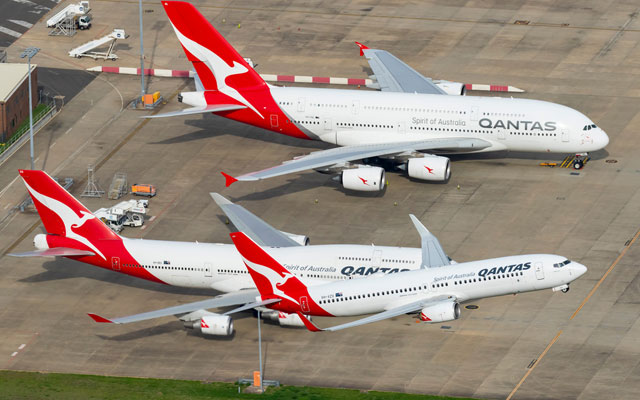
Qantas delays reboot of international flights to end of October
The international travel ban first kicked in on March 17, 2020 under the Biosecurity Act 2015, with the initial outbreak of Covid-19. The ban was due to expire in December, but was extended for three months, and now once again.
Hunt said: “The Australian Health Protection Principal Committee has advised the Australian government (that) the Covid-19 situation overseas continues to pose an unacceptable public health risk to Australia, including the emergence of more highly transmissible variants.
“The extension of the emergency period for a further three months is about mitigating that risk for everyone’s health and safety.”
During the emergency period, precaution measures that will prevail include pre-departure testing and mandatory mask-wearing on international flights, and restrictions on international travel for Australians leaving the country. Trading restrictions on retail stores at international airports will also continue, while cruise ships are banned from operating within Australian territory.
However, Hunt said, the Australian government continues to work closely with relevant authorities and the cruise industry “to develop a framework for the staged resumption of cruise ships in a manner that is proportionate to the public health risk”.
Meanwhile, Qantas has pushed back by four months its plans for the restart of international flights to end of October, when the country’s vaccination programme is expected to conclude.
Veganism’s influence in the tourism space is growing, with vegan-friendly tours, excursions and digital travel apps emerging as another tool for travel companies to attract eco-focused travellers, according to GlobalData.
As tourism companies look to recover from Covid-19, they see greater personalisation as key in helping to ensure customer satisfaction. Consequently, accommodating every traveller type – vegan included – will be critical in the future of travel.
Veganism’s influence on the travel industry will grow, says GlobalData
Johanna Bonhill-Smith, travel and tourism analyst, commented: “A common objective across the entire travel and tourism sector is to deliver a ‘seamless’ traveller experience for each customer along every touchpoint, on an individualised, trip-by-trip basis.
“Vegan travellers can often encounter problems ranging from where to stay to a lack of suitable meal choices. Language barriers and cultural differences can often exacerbate these problems. This creates an opportunity where personalised recommendations are lacking and catering for a growing vegan consumer base could soon be a key differentiator.”
Unique apps have emerged, with Veg Visits and Air Vegan identified as key innovators. Veg Visits, for example, is a vegan home-sharing platform providing individuals with ‘vegan hosts’ across 80 countries. Air Vegan rates how vegan-friendly an airport is, giving users insights into the best vegan food spots within it.
Some lodging providers also commonly provide for the vegan tourist – for example, Hilton opened its first vegan hotel suite in 2019. Tour operators are also capitalising on this market with smaller companies such as Responsible Travel promoting 34 vegan holidays across destinations worldwide including Greece, Ethiopia, India and Costa Rica.
Bonhill-Smith said: “The view that a vegan diet reflects a more sustainable form of lifestyle is gaining increased traction and is no longer considered a market niche.”
In a GlobalData survey conducted in December 2020, 76 per cent of over 5,700 global respondents say they were influenced by how ethical/environmentally friendly/socially responsible the product/service is. Prior to Covid-19, only 46 per cent of global respondents say they actively buy products that are ‘better for the environment or animal friendly’ in GlobalData’s 3Q2019 consumer survey, which polled more than 29,000 respondents.
“This suggests travellers’ perceptions are changing during Covid-19 and many may decide to make more environmentally-friendly decisions – including going vegan,” Bonhill-Smith said.
“Servicing a traveller’s every need is going to be critical in post-pandemic recovery to both restore confidence and ensure satisfaction. With a greater level of satisfaction, there is, in turn, a higher chance to attract loyal customers – a promising prospect in light of Covid-19 and the detrimental losses it has inflicted on company revenues,” he added.
“As travel companies aspire to personalise each individual’s experience, ‘veganism’ should be an area to be acknowledged and acted upon, not ignored across the tourism sector.”
Turespana, or Tour Spain, in Guangzhou is the first European NTO to partner COTRI (China Outbound Tourism Research Institute) in its Advantage: Tourism (A:T) programme to reboot business from China.
COTRI CEO, Wolfgang Georg Arlt, said: “With the progress of testing and vaccination, the easing of restrictions can be expected in the coming months. What is important is to prepare now for the new wave of Chinese outbound tourists to stay ahead of the competition.”
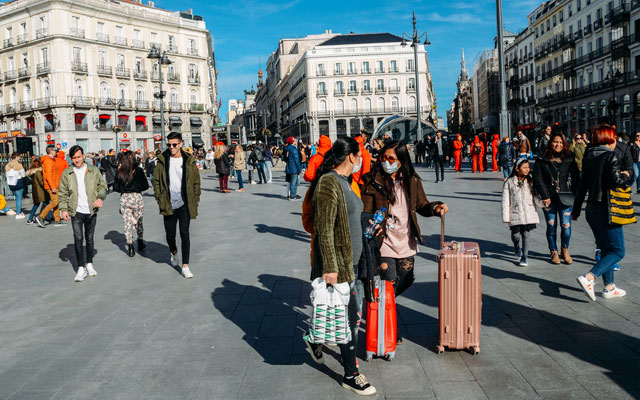
Spain expects 300,000 visitors from China this year; tourists at Puerta del Sol in Madrid, Spain pictured
Spanish stakeholders participating in A:T include DMOs and NTOs that support tourism, food, and others, he added.
According to COTRI, only a trickle of Chinese living within the Schengen Area are crossing into Spain, but is predicting “a deluge once virus-related restrictions are lifted”. As for Greater China, Spain is already receiving visitors from Macau, Arlt noted.
China sent 700,000 visitors to Spain in 2019. That number dropped to 100,000 in 2020 – mostly in January and February – due to travel bans implemented amid the pandemic.
With the vaccine rollout globally, Spain is expecting 300,000 visitors from China this year. Most are expected to arrive in the second-half of the year, and will originate from first- and second-tier cities like before.
Arlt said content for Tour Spain’s pilot project focuses on gastronomy and shopping for local products, and is in line with the overall plans for tourism development in 2021 and steps for further digitalisation. Technology partners in A:T are Planet, Tencent Cloud International and TCI Research.
Meanwhile, another European partner will join the A:T programme this month and COTRI is in discussion with several other partners, including big attractions, international hospitality and transportation companies.
The aim of A:T, launched late last year, is to focus on delivering quality, bespoke products to different Chinese source market segments to create new demand in different parts of a destination at different times of the year; and to recommend management practices to promote sustainability.
The programme audits and analyses existing and possible new offers with stakeholders learning via online China Tourism Training and accessing a private-public sector partnership task force to match bespoke offers and source market segments.
A:T solutions, according to COTRI, are based on sustainable, long-term development approaches to benefit guests, the host community and those working in the industry to improve yield and market share, and to minimise the ecological footprint.
Qantas is set to operate a series of mystery flights for domestic travellers keen to satisfy their wanderlust amid international travel restrictions.
The national carrier last operated mystery flights in the 1990s when travellers would turn up at the airport and be allocated seats on a scheduled flight to any of the airline’s destinations where they spent a day at their leisure before flying home.
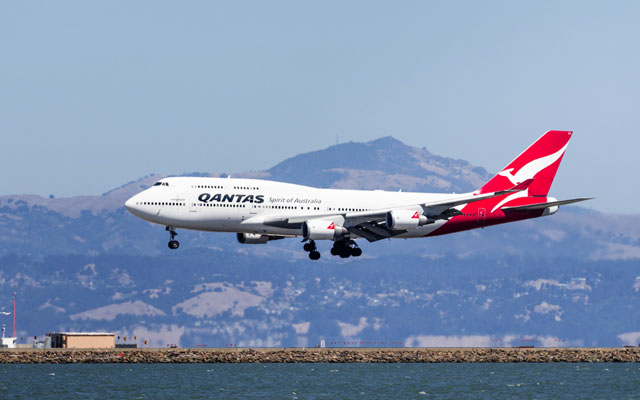
Qantas mystery flights will take passengers to an unspecified destination outside major capital cities
Building on that concept, Qantas will offer three mystery flights onboard Boeing 737 planes that will include not just the flight, but an entire day of activities in a mystery destination that will be outside major capital cities.
Qantas Group CCO, Stephanie Tully, said the mystery flights were about giving Australians memorable travel experiences and promoting domestic tourism.
“Our customers tell us that where they can and can’t travel within Australia has been a bit of a mystery lately,” she said.
“The vaccine rollout is bringing a lot more certainty and domestic border restrictions should soon be a thing of the past. In the meantime, these flights turn that mystery into a positive by creating a unique experience for the many people keen to start travelling again.
“As well as helping bring more of our people back to work, these mystery flights are another way to support tourism operators in regional areas especially, who have been hit particularly hard by several waves of travel restrictions.”
The airline’s mystery flight experience is the latest in its series of concept flights to boost domestic tourism amid the ongoing pandemic, following its flights to nowhere (when domestic border closures were at their peak) and flights to somewhere (when initial reopening began last year).
The mystery flights will depart from Sydney (April 18), Brisbane (March 27), and Melbourne (May 1) to a destination within approximately two hours. As part of creating a unique onboard experience, the flights will include some low-level scenic flybys of key landmarks en route.
Experiences on the ground could include anything from a winemaking course in a premier Australian wine region to a gourmet lunch with musical entertainment on the shores of one of Australia’s tropical island wonders.
For each mystery flight, the airline has provided clues for customers to pick their preferences and to assist with baggage packing.
Seats on the mystery flights go on sale on Qantas.com at midday today. The all-inclusive fares, which include meals and alcoholic and non-alcoholic beverage plus activities on the ground, are A$737 (US$574) for Economy and A$1,579 for Business. All three flights will operate with net zero emissions, with 100 per cent of emissions carbon offset.
Location
Overlooking the sprawling grounds of the Laguna National Golf & Country Club is Dusit Thani’s latest gem, offering a retreat from the busy city centre and neighbourhoods of Singapore. Here, life slows to a calm ebb, where the breeze flows unobstructed and the eastern waters lap against the coast in the distance.
As an urban resort in a secluded part of town, Dusit Thani Laguna Singapore provides a fuss-free coach service to and from the nearest mall, Changi City Point, as well as train station, Expo. Visitors coming in from Changi Airport will find it just ten minutes away by car.
Rooms
Of 198 rooms in total, the hotel currently has 77 – occupying two levels – available for booking. I stayed in the Deluxe Laguna Pool View, which peered out over the calming pool and private pavilions, backed by the sprawl of the golf course. It afforded the standard comfort and sleek design familiar to high-end hotels, with split shower and washroom.
A more notable talking point would be the Prestige Verandah Suite, a 115m2 treat perfect for couples and families, as they come with an adjoining option. Here, guests can enjoy a relaxing outdoor bath or an indoor rain shower, and unwind on the private patio over champagne. One can envision an even more elevated experience in this space, such as a private chef’s table or wine-and-cheese pairing session.
Another room with potential for a fun stay is the Deluxe Laguna Patio Pool View, with sliding doors that open to a private patio with direct access to the pool. While this direct access has been temporarily closed due to current crowd management measures, this room type will likely be more attractive when restrictions ease.
For guests with accessibility needs, the hotel also offers select rooms fitted with smart conveniences, such as sensors for automatic room doors.
F&B
The culinary centrepiece of Dusit Thani Laguna Singapore is the charming, forest-themed Greenhouse, an all-day dining, multi-ethnic restaurant that feels as lush and cosy as it sounds. Our lunch here ran the gamut of familiar and well-loved flavours, including Hamachi sushi, stir-fried beef and mango with sticky glutinous rice.
Breakfast, served in a la carte-buffet style, was similarly abundant, allowing us to enjoy a range of classics, from Thai omelette to dim sum and even matcha pancakes. Greenhouse also whips up Punjabi Tandoor and Mediterranean cuisine. Ultimately, the clean, balanced meals were a stark showcase of Dusit Thani’s commitment to wellness.
Scattered around the property are four other F&B outlets. For guests looking to relax with a tipple by the pool or a healthy bowl of greens, Tee Deck is a fine option that offers a beautiful experience, especially at dusk. For members of Laguna National, The Nest is now an exclusive hang-out with panoramic views of the Masters Course, though it is also available for evening events and private functions.
The hotel will welcome its last two dining options in March 2021: Legends Bar & Lounge and Dusit Gourmet.
Facilities
With direct access to a pair of 18-hole championship golf courses, Dusit Thani Laguna Singapore’s biggest sell are its luxurious golfing facilities. Members check in at a dedicated lobby, which leads to a clubhouse and expansive VIP locker and changing rooms. It also runs the Leadbetter Golf Academy, and will this year open Laguna Putting powered by Nicklaus Design.
Guests can also work up a sweat at the sprawling 369m2 fitness centre, go for a refreshing dip in one of the three swimming pools – including a lap pool and a wading pool – or get their game on in one of the three outdoor tennis courts due to launch this year.
The Devarana Wellness team also offers sports and wellness activities, including yoga, breathwork exercises, active stretching and personal training.
Still, nothing completes an urban resort like a pampering spa, and the Devarana Spa is a welcome oasis within an oasis. With seven treatment rooms, each fitted with an en suite bathroom, this customisable experience was the cherry on top of a soothing stay.
Service
Dusit Thani’s signature Thai hospitality shone through its staff, who warmly greeted us the moment we set foot into the lobby, and continued showering us with unwavering attention and care throughout our stay.
Verdict
Whether you’re in search of a sporting retreat or just a quiet stay, Dusit Thani Laguna Singapore is a rare find that will transport you into the heart of a Thai oasis.
Radisson Hotel Group has lined up 30 hotel openings, with more than 5,000 rooms, across the EMEA (Europe, Middle East, and Africa) this year.
Radisson Collection Hotel, Palazzo Nani Venice
Building on its 2020 growth momentum, 2021 expected openings include seven new properties under the group’s premium lifestyle Radisson Collection brand in France, Italy, Spain, Turkey, and Saudi Arabia.
Elie Younes, executive vice president and chief development officer EMEA, Radisson Hotel Group, said: “2021 will likely be a transition year with a challenging first half and an expected recovery thereafter, and I see it as a year of further opportunities for a better future.”
Fairmont Ambassador Seoul, South Korea
Fairmont Hotels & Resorts has opened the brand’s first hotel in South Korea. Nestled in the Parc. 1 Complex, a new landmark in the city’s Yeouido district, Fairmont Ambassador Seoul features 326 guestrooms and suites. Four dining venues are on offer, including Spectrum focusing on South-east Asian and Western cuisine; and Mariposa featuring a modern European fare of tasting courses, and gourmet creations. M29, the hotel’s signature rooftop bar, serves up bespoke cocktails and panoramic vistas of the Han River and Seoul skyline. Meanwhile, the Atrium Lounge offers artisanal coffees, curated teas and champagnes.
The hotel boasts one Grand Ballroom and ten meeting rooms, comprising a total of 1,995m2 of event space. Gallery 7 spans an entire hotel floor that offers a selection of spaces for functions, ranging from family celebrations to upscale business meetings. Wellness facilities comprise an indoor swimming pool, fitness centre, and a spa – all complemented by a range of personalised training programmes by dedicated fitness professionals.
Hotel Indigo Adelaide Markets, Australia
IHG Hotels & Resorts’ boutique lifestyle brand, Hotel Indigo, has debuted in Australia with the opening of Hotel Indigo Adelaide Markets. Located next to the Adelaide Central Market, the 145-room hotel will champion local producers in its two restaurants – all-day dining venue Market & Meander Eatery and Bar, as well as rooftop raw food bar, Merrymaker. In addition to a 24/7 fitness centre, the property will have a 13m outdoor infinity pool, two boardroom-style meeting rooms and the option to hold events on the mezzanine level and rooftop.
Holiday Inn Chandigarh Zirakpur, India
IHG Hotels & Resorts marks its first opening of 2021 in India with Holiday Inn Chandigarh Zirakpur, in association with ABC Sites. Featuring 131 keys with scenic city views, the hotel is located on the Chandigarh-Ambala highway connecting the city of Chandigarh to all famous landmarks and attractions in the Northern belt. The property boasts a gym, an all-day dining restaurant Viva and the Lounge Bar, overlooking the city. For corporate and social gatherings, there is a 774m2 poolside terrace and 2,415m2 of banqueting space – the latter comprising of 668m2 of pillarless grand ballroom, 412m2 of pre-function area, and rooftop pool terrace on the 14th floor that gives a 360-degree view of the city.
La Quinta by Wyndham Bur Dubai, UAE
Wyndham Hotels & Resorts has debuted its La Quinta by Wyndham brand in the Middle East with a new 100-room property in Dubai. Expected to open this month, La Quinta by Wyndham Bur Dubai will be centrally located in the historic Bur Dubai district. The newly refurbished hotel will offer a 100m2 event and meeting space, an outdoor pool with pool deck, a spa with sauna and steam room, and a fitness centre. Other features will include all-day dining, a lounge, coffee shop, 24/7 room service, and speciality restaurants serving Indian delicacies and international menus. A 24-hour business centre, children’s play area and pool, dedicated retail space, ample parking, and a local shuttle add to the hotel’s positioning as ideal for business or leisure.
Several international tourism companies in Thailand have launched a campaign aimed at getting the government to reopen the country’s borders from July 1.
Launched on Tuesday, the #OpenThailandSafely campaign is led by Bangkok-based travel companies YAANA Ventures, Minor Group and Asian Trails; with the support of major companies like Capella Hotels and Resorts, and EXO.
Inbound international tourism players in Thailand say vaccines are a game-changer that allow for the reopening of the country and for quarantine requirements to be dropped
The Open Thailand Safely campaign has laid out its arguments in a petition which will underpin a formal request to the Thai government to respond favourably to the rollout of Covid-19 vaccination programmes underway in Europe, the US, and other Thailand tourism source markets.
The petition is open to anyone in Thailand or around the world who would like to see the country reopen on July 1.
The campaign lists five reasons for proposing July 1 as the reopening date, including that the majority of citizens in many source markets will have been vaccinated by then, and gives time for Thai medical authorities to vaccinate both frontline staff in hospitality settings in Thailand and/or vulnerable citizens around the country.
The date will also give international travellers time to make travel plans and bookings; while allowing airlines, hotels, tour operators and others to start marketing and sales and get ready for tourism operations to commence. Lastly, it is expected that it will take Thailand at least a year, and maybe longer, to return to the large numbers of international visitors that it had before the Covid-19 crisis.
To ensure the safe reopening of Thailand, the petition argues that “international tourists can be asked to satisfy any safeguards the Thai government may require”. Examples cited include showing officially recognised proof of a Covid-19 vaccination from their home country, purchasing health insurance, and showing proof of a negative Covid test taken within 72 hours of departure.
YAANA Ventures CEO, Willem Niemeijer, said: “The 1 July reopening would be a strategic opportunity for Thailand to show a leadership role among Asian countries and prepare the way for a solid recovery of the Thai economy in 2022.”
In the coming days, the Open Thailand Safely campaign will also send the July 1 reopening request to Thailand’s prime minister General Prayut Chan-o-cha; the minister of tourism and sports, Phiphat Ratchakitprakarn; and the governor of the Tourism Authority of Thailand, Yuthasak Supasorn.
According to the Bank of Thailand and official sources in Thailand, tourism, pre-Covid, was worth about 2.9 trillion baht (US$96.5 billion). Some 39.7 million international visitors in 2019 helped sustain up to 8.3 million jobs. However, arrivals fell to 6.7 million in 2020, making between two and four million people unemployed.














Demand for air travel has continued to fall, due to increased travel restrictions by governments to combat new Covid variants.
According to the IATA, passenger traffic fell in January 2021, both in comparison to pre-Covid levels (January 2019) and the immediate month prior (December 2020).
Total demand in January 2021 (measured in revenue passenger kilometers or RPKs) was down 72% compared to January 2019 (2020 statistics are distorted due to the impact of Covid-19). That was worse than the 69.7% year-over-year decline recorded in December 2020.
Total domestic demand was down 47.4% versus pre-crisis (January 2019) levels. In December, it was down 42.9% on the previous year. This weakening is largely driven by stricter domestic travel controls in China over the Lunar New Year holiday period.
International passenger demand in January was 85.6% below January 2019, a further drop compared to the 85.3% year-to-year decline recorded in December.
“2021 is starting off worse than 2020 ended and that is saying a lot. Even as vaccination programmes gather pace, new Covid variants are leading governments to increase travel restrictions,” said Alexandre de Juniac, IATA’s director general and CEO.
“The uncertainty around how long these restrictions will last also has an impact on future travel. Forward bookings in February this year for the Northern Hemisphere summer travel season were 78% below levels in February 2019.”
Asia-Pacific airlines’ January traffic plummeted 94.6% compared to the 2019 period, virtually unchanged from the 94.4% decline registered for December 2020 compared to a year ago. The region continued to suffer from the steepest traffic declines for a seventh consecutive month. Capacity dropped 86.5%, by far the lowest among regions.
Middle Eastern airlines saw demand plunge 82.3% in January compared to January 2019, which was broadly unchanged from an 82.6% demand drop in December versus a year ago. Capacity fell 67.6%.
China’s domestic traffic was down 33.9% in January compared to January 2019, dramatically worsened compared to the 8.5% year-over-year decline in December. The fall was owing to stricter traffic controls ahead of the Lunar New Year holiday period amid several localised Covid-19 outbreaks.