Radisson Hotel Group (RHG) has appointed Evelyn Wong Soo Pin as vice president, finance, tax & IT, Asia Pacific, to drive the company’s transformation strategy.
In her new role, Wong will be responsible for all financial and accountancy matters in the region, including overseeing business transactions and strategic investments, developing financial strategies and leading the regional finance team.
She will also spearhead the group’s digital transformation, which is centered around Emma, RHG’s new advanced global technology platform, which integrates property management systems, reservations, distribution, sales, loyalty programmes and more.
A Singaporean with more than 20 years of professional experience, Wong is a registered chartered accountant in Singapore, and joins RHG from SGX-listed Amos Group, where she held the role of CFO.
Wong’s career commenced in 1997 with KPMG, one of the world’s leading financial services companies. Since then, she has held senior positions with companies in various sectors, from oil and gas, freight and logistics to security management, recruitment and more.
Her regional experience encompasses multiple countries, including Australia, Egypt, Greater China, Kazakhstan, Malaysia, Pakistan, Singapore, South Korea and Vietnam.
Wong will be based at RHG’s Asia Pacific regional head office in Singapore, and she is a member of the company’s Asia Pacific Executive Committee.
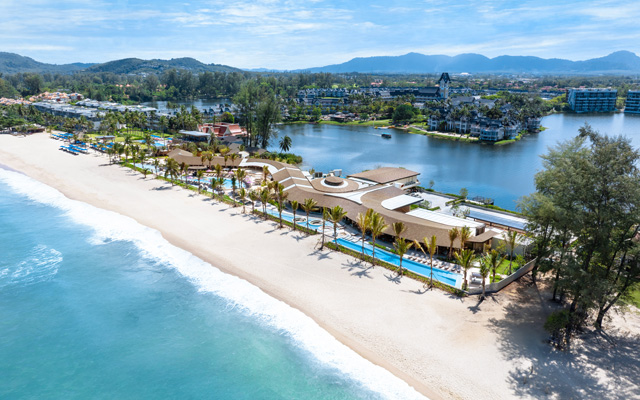
The Slate, a beachfront resort on Phuket’s northwest coast, has appointed Claude Sauter as its new general manager.
A Swiss national, Sauter is a consummate hospitality professional, with 24 years of industry-specific managerial experience in Phuket. Most recently, he was general manager of The Surin Phuket for over six years.
Sauter first arrived in Phuket in 1997, where he held the role of resident manager of Impiana Resort Patong. Following five years with Impiana, he achieved his first general manager role with Cape & Kantary Hotels, leading the Cape Panwa Hotel in south-east Phuket.
He has since headed up several major properties in Phuket and neighbouring Phang Nga province for international hotel groups including Wyndham and Marco Polo.
The hotel industries in seven key Asia-Pacific markets reported profitability levels well below pre-pandemic levels, with only Beijing above 40 per cent of the 2019 comparable, according to STR‘s September 2021 monthly P&L data release.
Beijing’s gross operating profit per available room (GOPPAR) of US$29.91 was 70 per cent of September 2019 levels. Singapore (US$39.99) came in at 35 per cent using the same time comparison, while Hong Kong (US$6.22) was at just 10 per cent.
Of seven key Asia-Pacific markets analysed by STR, Tokyo hotels saw the biggest profitability decline over the past several months
Sydney, Bali, Bangkok and Tokyo were all in negative GOPPAR territory; with Tokyo having seen the biggest profitability decline over the past several months.
“Only three of the region’s key markets reported positive profit conversion in September 2021: Singapore, due to quarantine demand; and Beijing and Hong Kong, which have remained resilient despite the Delta variant outbreak,” said Jesper Palmqvist, STR’s area director for the Asia Pacific region.
“Sydney, of course, has been limited due to lockdowns, but with the reopening and allowance of international travellers underway in New South Wales, the market should soon return to positive profitability. Bali and Bangkok, on the other hand, remain further behind in the recovery cycle, with negative profit conversion at -55 per cent and -44 per cent, respectively.”
• Enquiries dominated by couples and families for the year-end
• Costly swab tests, Covid insurance keep some travellers away
• Tourism Australia shifts to flexible conversion marketing campaigns to drive bookings
Holiday enquiries on destination Australia are up for some leading travel agencies in Singapore, as Australia prepares to reopen her borders to all vaccinated Singaporeans on November 21 without need for quarantine.
Australia’s close proximity to Singapore and popularity as a holiday destination for Singapore residents pre-pandemic are said to play a key role in spurring the quick return in travel interest.
Some travel agents in Singapore have seen an uptick in inquiries for year-end travel to Australia; Great Ocean Road pictured (Photo Credit: Tourism Australia)
ASA Holidays has received “a fair bit of enquiries” for year-end departures to Australia, said spokesperson Shannon Hee.
Dynasty Travel International has about 80 enquiries for year-end trips on record, most of them by couples and families – in line with Australia’s strong appeal among families with young and teenage children, thanks to the destination’s “natural playgrounds and activities”, shared spokesperson Alicia Seah.
Customers are keen on small group arrangements with personalised service and flexible booking terms and conditions.
Most of Dynasty’s enquiries came through the company’s hotlines and social media channels, and many have registered their interest in receiving further updates on Dynasty’s Australia tour packages.
According to Chan Brothers Travel’s spokesperson Jeremiah Wong, enquiries via social media channels streamed in even before the official announcement was made on October 31.
“Although Europe may have had a head start on Singapore’s Vaccinated Travel Lanes (VTL), we are confident that interest in Australia holidays – including departures for the year-end season and beyond – will continue to rise, as Australia has always been a popular destination, with diverse tourism assets that appeal to a wide range of Singaporean travellers,” remarked Wong.
To tap travel opportunities, Costsaver Tours, a brand of The Travel Corporation, is launching a nine-day trip to Sydney and Melbourne that “matches up with existing VTL regulations”, said Wong Yan Kit, senior sales manager, AAT Kings and Inspiring Journeys.
Quarantine-free travel to Australia is presently only possible to three jurisdictions: New South Wales (NSW), which Sydney is part of; Victoria, which Melbourne is part of; and the Australian Capital Territory (ACT).
When asked if the limited destination options would hamper a strong resumption of travel from Singapore this holiday season, Seah said the “mega cities of Sydney and Melbourne” are enough of a draw.
However, the same optimism is not shared by all travel agencies.
Cathy Loh, director, Aveson Travel, said: “We are not expecting leisure travel to (rebound) as yet because of the cost of tests plus insurance, which will amount to S$600 (US$446.40) per pax. So far, we are only getting bookings for those going back to visit their parents and relatives.”
Australia’s strict Covid curbs on activities are also dampening holiday dreams, as there are more restrictions compared to other VTL destinations, observed Loh.
A limit of 4,000 travellers per day arriving into Singapore on designated VTL flights adds to travellers’ challenges, opined travel agents.
Ramping up destination promotions
Now that quarantine-free leisure access for fully vaccinated Singaporeans is certain from November 21, Tourism Australia’s marketing efforts will focus on profiling the locations that are welcoming.
A two-phase campaign will commence on November 12 with the release of We’re Excited to Welcome You Back – an invitation directed at Singaporeans, featuring destination imagery of NSW, Victoria and the ACT. The second phase of the campaign is designed to drive desire and urgency for an Australian holiday and to remind Singaporeans of all the incredible experiences that await them in Australia for their next getaway.
Australia’s tourism landscape has changed for the better during the international travel freeze. New experiences include two additional climbs at the Sydney Harbour Bridge; luxurious eco-friendly accommodation pods in a wildlife refuge near the Great Ocean Road, where guests can get up close with some local animals; and a hot air balloon ride above Canberra, offered by the National Museum of Australia, which rounds off with a curated museum tour and champagne breakfast. Hotel openings have also continued to take place this year, with more to come in 2022.
Tourism Australia’s shift to conversion marketing campaigns is built upon a foundation of continued content initiatives in the Singapore market throughout 2020 and 2021, which were carried out with the single aim of keeping travellers “dreaming and planning for future travel in Australia”, shared Ann Lim, Tourism Australia’s country manager Singapore.
Pre-Covid, Australia welcomed 479,000 visitors from Singapore, the country’s sixth largest source market: Lim
Outreach spans public relations, social media and paid content across key media channels, while trade engagements are kept up by Tourism Australia alongside state and territory tourism organisations through the Aussie Specialist community via virtual channels.
Lim shared that the Aussie Specialist programme and community network have proven to be “pivotal in ensuring that travel agents possess the relevant health and safety knowledge to help travellers navigate the ongoing impacts of the global Covid-19 pandemic on leisure and business travel”.
The programme was recently upgraded and now offers greater personalisation, faster qualifying times, as well as shorter and more interactive training modules.
“Even with borders closed, Singapore outbound travel agents in the Aussie Specialist network have been continually engaging with Australian content through platforms such as the Aussie Specialist website, e-newsletters and virtual trade events,” said Lim, adding that there are now 330 qualified Aussie Specialists in Singapore.
Lim emphasised the importance of the Singapore travel market – one with an average 479,000 visitors who used to spend A$1.53 billion (US$1.15 billion) in Australia each year pre-pandemic.
“Singaporeans house a strong desire for travel to Australia, which is widely known as Singapore’s closest Western tourism destination,” she said, adding that Singaporeans consider Australia to be one of the safest international travel destinations, online travel searches by Singaporeans for September to November 2021 have been higher than in 2019, and airlines are responding to strong demand by ramping up operations to 80 flights collectively for more than 15,000 passengers by December 2021.
“As Australia’s sixth largest source market for international visitation and seventh most valuable for spend, Tourism Australia anticipates that the resumption of travel from Singapore will provide a huge boost to an industry currently in the grips of an economic crisis,” she told TTG Asia.
She added: “The travel arrangements between the two countries serve as an important step towards resuming inbound travel to Australia from other key international markets, when and where safe and practical to do so.”
However, she also acknowledged that the “resumption of travel between Singapore and Australia will not fill the void of lost international tourism business during the end-of-year summer holiday season”.
In the initial months of travel resumption, Tourism Australia anticipates the return of High Value Travellers (HVTs) as well as Australian expatriates to the country.
“Spending two to three times more on international travel than the average traveller, there are an estimated 1.4 million HVTs in Singapore, half of which are considering Australia as their next travel destination. We hope these travellers will select Australia as their summer holiday vacation of choice. While in Australia, HVTs will seek out enriching food and drink, aquatic and coastal, self-drive and nature and wildlife experiences that can be discovered across the country,” Lim elaborated.
Returning Australian expatriates are also expected to unleash their pent-up travel desires on longer adventures in and around the country. – Additional reporting by Therese Tan
Editor’s note: A previous version of this story included statements by Ong Han Jie, director, EU Holidays, which have since been retracted on the basis of accuracy.
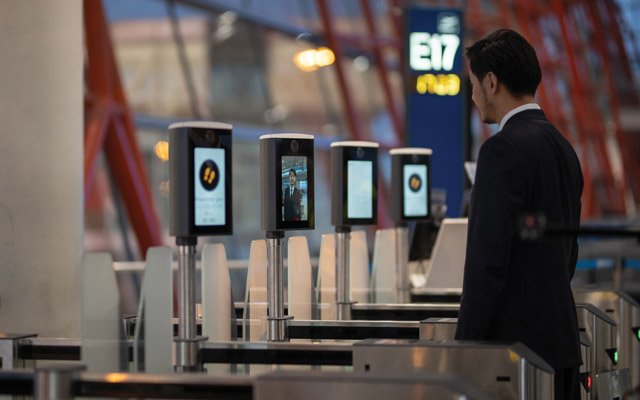
Imagine walking through airport security gates to the departure hall and boarding your flight without ever using your passport or plane ticket. There is no waiting in line at long, snaking queues at checkpoints. Instead, your identity is verified through facial biometrics as you glide through the terminal.
Such is poised to be the reality in the post-pandemic world, where automation and biometrics will reshape air travel. Airports, airlines and regulatory authorities are working to redefine the air passenger experience by harnessing touchless and automated solutions that will reduce bottlenecks and ensure traveller safety.
SITA has partnered with NEC Corporation to enhance the touchless travel experience at airports around the world
As the aviation industry starts to rebuild following the pandemic, SITA has played a key role in supporting governments, airports and airlines in the recovery process by delivering frictionless passenger processing through technology and automation.
SITA earlier this year rolled out Health Protect, an industry-wide solution that allows passengers to safely and securely share Covid-19 test results or vaccination history with airlines, airports and governments.
The technology can seamlessly integrate with multiple travel pass or health passport schemes, bridging the gap between these schemes and aviation and border processes.
By incorporating Advance Passenger Processing, the solution enables authorities to make an informed decision on whether a passenger can travel ahead of check-in, improving the safety of all passengers and avoiding costly return flights.
Since last November, the Australian government has used SITA technology to enable travellers to supply digital contact and journey information, and complete an electronic health declaration in advance of travel.
Biometric boarding takes off
While the deployment of smart solutions like biometric technologies has been well underway at international airports in recent years, its ability to facilitate a more touchless travel experience has fast-tracked its adoption in the pandemic’s wake.
According to SITA’s 2020 Air Transport IT Insights report, while airlines and airports have significantly curtailed their spending, touchless technology remains a high investment priority between now and 2023.
SITA has seen some of its biggest high-technology rollouts in the past two years, as it helps turn touchless passenger journeys into a reality for airports in Asia-Pacific such as Beijing Capital International Airport (BCIA) and Sydney Airport.
In what it calls its “most extensive biometric deployment to date”, SITA has outfitted BCIA with its Smart Path facial recognition solution to create a fully contactless experience for passengers at the world’s second busiest airport.
The technology allows passengers to enrol once during check-in, and then use their biometric ID across multiple touchpoints, with their face as a boarding pass.
BCIA’s deployment included the installation of over 600 biometric checkpoints across the airport, comprising 250 lanes of automatic gates, 80 kiosks, 30 self-bag drop stations to process passengers from international flights, and more.
Smart Path has been activated across multiple checkpoints at BCIA including manual check-in, self-service check-in, bag drop, security and boarding. The technology can significantly speed up passenger flows, processing over 400 passengers boarding an aircraft in under 20 minutes.
Improved efficiency means shorter queues that help maintain social distancing. The process also minimises physical contact, reducing the risk of Covid-19 transmission.
Similarly, Sydney Airport has deployed SITA technology to support its post-Covid recovery. Through a five-year technology deal signed with SITA in March, Sydney Airport will gain 600 common-use touchpoints across its two terminals to enable a smarter passenger experience and operational efficiency for the airport.
SITA Flex, one of the technologies being employed at the airport, is a mobile-enabled, common-use platform that facilitates contactless passenger processing through cloud technology.
The solution also includes SITA Bag Message, doing away with the need for multiple baggage system interfaces between airlines and airports. The hub-and-spoke solution eliminates the cost of implementing multiple airline interfaces to connect to airport baggage system vendors. SITA provides similar services to five of the largest seven airports in the Australia Pacific region.
In July, SITA sealed a partnership with Japanese technology firm NEC Corporation to develop digital identity solutions that enable a walk-through experience at airports, leveraging NEC’s I:Delight identity management platform together with SITA Smart Path and SITA Flex.
The partnership will allow passengers to use their biometric digital identity on their mobile phone at every step of their travel journey by simply scanning their face.
Although technology investments can add agility to an airport’s operations, the significant costs involved in deployment might stand in the way of greater adoption, especially with the pandemic pushing many airports into the red.
In this regard, for airports looking to automate operations, SITA is not looking at “reinventing the wheel” but rather implementing a “hybrid solution” that builds on the current system, SITA president Asia-Pacific, Sumesh Patel, noted during an online media roundtable organised by the company.
For instance, SITA Smart Path can be easily integrated with existing airport and airline infrastructure.
“So, if (the airport) has a check-in counter, we just augment that with an additional facial camera, so (passengers) can have a walk-through experience. And (the airport) doesn’t need to build or…buy hundreds of new kiosks,” said Patel.
He added that even if airports can only automate 50 per cent of their processes, it would still make a difference in terms of improving their operational efficiency and reducing costs in the long run.
Qatar Airways brings touch-free entertainment onboard
Airlines joining the fray
As touchless technology takes off, airlines like Etihad Airways and AirAsia are also boarding the digital bandwagon.
Since September, AirAsia has made self-check-in mandatory for all guests via the AirAsia Super App, an all-in-one app that allows guests to manage their entire travel journey – from flight and hotel bookings, check-in, and health document verification through to boarding and inflight services onboard.
The Malaysian airline has also partnered with analytics company GrayMatter to deploy an AI-based technology solution, dubbed Scan2Fly, that allows passengers to upload their relevant health documentation during online self-check-in for real-time verification of their eligibility to fly before heading to the airport. The system has been deployed on routes from Kuala Lumpur to Singapore, Surabaya and Jakarta.
AirAsia has also collaborated with Vision-Box to deploy several enhancements, including automated bag drop services; roving technology for temperature checks; and biometric facial recognition technology FACES (Fast Airport Clearance Experience System).
Japan’s airlines are also using facial recognition technology to streamline passenger processing. Since July, Japan’s two major airlines, All Nippon Airways and Japan Airways, have implemented Face Express, a new boarding procedure using facial recognition technology developed by Narita International Airport Corporation and Tokyo International Airport Terminal.
Upon registering a photo of their face at the airport’s automatic check-in machine, passengers can proceed with boarding procedures without presenting their boarding ticket or passport.
Meanwhile, Qatar Airways is set to become the first global airline to bring the touchless experience to its in-flight entertainment system across its Airbus A350 fleet.
The zero-touch technology, introduced in partnership with the Thales AVANT IFE system, will enable passengers to pair their personal electronic devices with their seatback IFE screen by connecting to Wi-Fi and scanning a QR code on the screen.
They can then use their devices to choose from more than 4,000 options on offer through the airline’s Oryx One in-flight entertainment system, limiting the frequency of onboard surface contact and providing greater peace of mind during the journey.
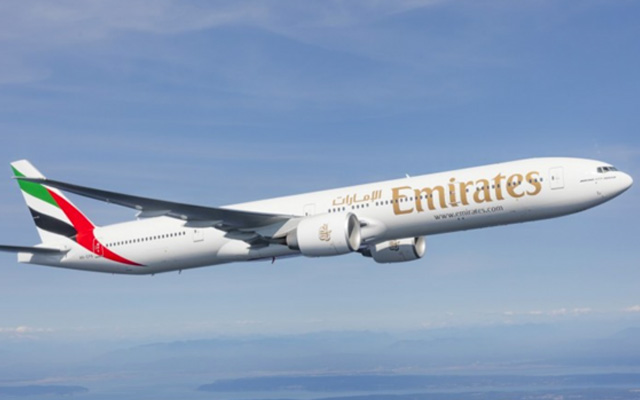
Emirates and TAP Air Portugal have further expanded their codeshare arrangement with 23 more destinations since November 2, bringing their customers seamless connectivity to over 90 points.
TAP Air Portugal places its code on popular Emirates flights to four additional Asian destinations – Vietnam’s Hanoi and Japan’s Narita, Osaka and Haneda.
Emirates customers can travel to more destinations in the Americas and Africa through codeshare flights with TAP Air Portugal
Emirates places its code on TAP Air Portugal operated flights to 19 additional destinations via Lisbon, such as Rio de Janeiro, Sao Paulo and Salvador.
The latest exercise follows on from both airlines’ inking of an MoU in March 2021 to expand their codeshare partnership. Back then, the expansion saw TAP Air Portugal placing its code on Emirates’ flights to Taipei, Tokyo, Osaka, Mumbai, Delhi, Dhaka, Male, Jakarta, Denpasar, Manila, Hanoi, as well as Barcelona and Mexico City, while Emirates did the same for TAP Air Portugal’s flights to cities in the Americas and Africa.
Adnan Kazim, chief commercial officer, Emirates Airline said: “By leveraging our mutual networks through codeshare flights, we enable our customers to travel to more places on a single ticket with a one baggage policy and fare conditions. We look forward to bringing more benefits to our customers through this partnership”.
Silvia Mosquera, chief commercial & revenue officer of TAP Air Portugal said: “TAP Air Portugal is pleased to be able to implement this expanded partnership with Emirates, allowing our customers greater geographic access, with particular emphasis on destinations in the Middle East and Asia.”
Emirates and TAP Air Portugal are also exploring ways to enhance co-operation on their respective frequent flyer programmes, including reciprocal earning and redemption opportunities and popular benefits such as lounge access.
Shopee has teamed up with Agoda and Booking.com to launch Shopee Hotel, enabling users to search, book and get instant confirmation for more than one million accommodation properties worldwide, all through the Shopee app.
Consumers will benefit from greater savings and exclusive travel deals, while being able to discover top landmarks near their chosen hotels, which can inspire exploration of local enclaves, neighbourhoods and attractions.
Shoppee Hotel will list more than one million accommodation properties worldwide for bookings
Meanwhile, hotel partners can take advantage of wider reach and greater visibility on the Shopee app.
Shopee Hotel will be rolled out across seven markets – Singapore, Malaysia, Thailand, Taiwan, Indonesia, Vietnam and the Philippines – just as domestic and international travel begins to resume in most markets across the Asia region.
Agoda’s search data in September 2021 revealed that searches for domestic stays have risen by over 57 per cent compared to May. There has also been an increase of 37 per cent more users in South-east Asia searching for international destinations.
Terence Pang, chief operating officer at Shopee, said the company is eager to support the recovery of local travel and tourism businesses by promoting staycation ideas with hotel partners.
Damien Pfirsch, chief commercial officer at Agoda, said: “Travellers know and trust Agoda and Booking.com to help make travel easier, because we are passionate about using our technology to connect people with the widest choice and greatest value deals, whether they are in Asia or across the world. This partnership with Shopee, the first with a regional e-commerce partner, will conveniently bring these great deals to Shopee customers, on a platform they are familiar with.
“At the same time, we can better support our hotel partners and tourism operators by connecting them to the biggest online community of shoppers in South-east Asia. Such partnerships will help accelerate the recovery of the domestic and global travel and tourism industry in the long term.”
Layan Green Park Group’s first property in Phuket, Thailand will be managed by WorldHotels, under its Distinctive collection.
The four-star, 403-key property, set to open in December 2022, is the first new-build in Thailand to receive the EDGE (Excellence in Design for Greater Efficiencies) certification.
Layan Green Park, Phuket will join WorldHotels’ Distinctive collection
According to a press statement, the hotel will “provide eco-life with upscale facilities” and a range of recreational experiences for families and children. Two restaurants are planned, and they will rely on locally sourced products and seasonal ingredients. A lounge bar, pool bar, spa, gym, and landscaped grounds with jogging paths, yoga terrace and three freshwater swimming pools round off the hotel’s range of guest facilities.
It sits 700 meters from Bangtao Beach and 20 minutes away from Phuket International Airport by car.
Olivier Berrivin, managing director, Asia Pacific, WorldHotels, said: “WorldHotels is always seeking strong and professional partners to work with, and the Layan Green Park Group has shown its skill and vision by developing its first property in Phuket. I have no doubt that this remarkable new resort will delight our guests and enhance the entire destination.”
DMC Discova has appointed Susan Ogden as its global director of supply and distribution, a new role that integrates three key departments, Product, Connectivity, and Business Solutions, with the expertise of technology and business systems.
Ogden’s appointment sheds light on the company’s expansion plans, through the implementation of global solutions and processes to streamline product to market capability.
Prior to the appointment, Ogden helmed Discova’s worldwide expansion strategy, laying the foundations for the company’s ambitious plans for growth since 2020. A year prior, she was global product and strategy leader, and had joined the company from Flight Centre Travel Group, where she was a celebrated leader for over 20 years.
She said: “Discova has always been a forward thinking organisation with a bright future, so I’m really excited for the opportunity to build on our strategy for expansion. We’ve had some very interesting projects bubbling away during the travel hibernation period and I can’t wait to start bringing them to life as the world re-opens.“
She revealed that technology will be an important focus, and the aim is to “provide our partners with access to a world-class product range for their tailor-made or group customers, and enable them to transact and collaborate with us in any way they prefer – whether that’s by email, phone, online booking portal or direct API integration”.
Discova’s managing director Suyin Lee, emphasised that “the future for Discova is expansion”, and plans have been defined over the last 18 months.
“(Ogden) is an expert in this field, and having already established our path into many more destinations, she is the perfect person to lead us forward in the product-to-market space,” Lee added.
More than 300 tourism stakeholders have signed up to the Glasgow Declaration on Climate Action, which recognises the urgent need for a globally consistent plan for climate action in tourism.
Signatories, which include Accor, Asian Ecotourism Network, Intrepid Travel, and Skyscanner, commit to measure, decarbonise, regenerate and unlock finance. Additionally, each signatory commits to deliver a concrete climate action plan, or updated plan, within 12 months of signing.
Tourism stakeholders supporting the Glasgow Declaration on Climate Action will deliver a concrete climate action plan, or updated plan, within 12 months of signing
Speaking at the ongoing 2021 United Nations Climate Change Conference (COP26), UNWTO secretary-general Zurab Pololikashvili stressed that “while many private businesses have led the way in advancing climate action, a more ambitious sector-wide approach is needed to ensure tourism accelerates climate action in a meaningful way”.
He added that “the Glasgow Declaration is a tool to help bridge the gap between good intentions and meaningful climate action”.
The Glasgow Declaration was developed through the collaboration of UNWTO, the United Nations Environment Programme (UNEP), Visit Scotland, the Travel Foundation, and Tourism Declares a Climate Emergency, within the framework of the One Planet Sustainable Tourism Programme committed to accelerate sustainable consumption and production patterns.
“WTTC is delighted to be a supporter and launch partner to the Glasgow Declaration and thereby add our voice, the voice of the global private sector, to this important collective call for heightened ambition in the travel and tourism sector. The Glasgow Declaration is a real opportunity for travel and tourism to unite and show true leadership as we strive towards Net Zero”, said Julia Simpson, president and CEO, WTTC.
“Through the Glasgow Declaration, the One Planet Network‘s Sustainable Tourism Programme offers a common platform to catalyse climate action in tourism. This Initiative is fundamental to create the right momentum to accelerate climate action in tourism through sustainable consumption and production”, said Jorge Laguna-Celis, head of the One Planet Network Secretariat, economy division, UNEP.
The launch event at COP26 featured a panel discussion underscoring the importance of increased climate action and ambition in the tourism sector, with contributions from David W Panuelo, president of the Federated States of Micronesia; Iván Eskildsen, tourism minister for Panama; Jan Christian Vestre, minister of trade and industry for Norway; Patrick Child, deputy director general for the Environment at the European Commission; Darrell Wade, co-founder and chairman, Intrepid Group; Jeremy Smith, co-founder of Tourism Declares a Climate Emergency; and WTTC’s Simpson.











 DMC Discova has appointed Susan Ogden as its global director of supply and distribution, a new role that integrates three key departments, Product, Connectivity, and Business Solutions, with the expertise of technology and business systems.







The hotel industries in seven key Asia-Pacific markets reported profitability levels well below pre-pandemic levels, with only Beijing above 40 per cent of the 2019 comparable, according to STR‘s September 2021 monthly P&L data release.
Beijing’s gross operating profit per available room (GOPPAR) of US$29.91 was 70 per cent of September 2019 levels. Singapore (US$39.99) came in at 35 per cent using the same time comparison, while Hong Kong (US$6.22) was at just 10 per cent.
Sydney, Bali, Bangkok and Tokyo were all in negative GOPPAR territory; with Tokyo having seen the biggest profitability decline over the past several months.
“Only three of the region’s key markets reported positive profit conversion in September 2021: Singapore, due to quarantine demand; and Beijing and Hong Kong, which have remained resilient despite the Delta variant outbreak,” said Jesper Palmqvist, STR’s area director for the Asia Pacific region.
“Sydney, of course, has been limited due to lockdowns, but with the reopening and allowance of international travellers underway in New South Wales, the market should soon return to positive profitability. Bali and Bangkok, on the other hand, remain further behind in the recovery cycle, with negative profit conversion at -55 per cent and -44 per cent, respectively.”