Into Cambodia’s wild
Experience Cambodia’s rugged wild on one of Sam Veasna Conservation Tours’ (SVC) birding and wildlife adventures. The award-winning eco-tour operator has been running since 2003 and is continually adding new itineraries that venture into relatively untouched areas.
With the aim of sustaining Cambodia’s wildlife and communities through ecotourism, SVC has also formed a unique partnership with the Wildlife Conservation Society to access some of their unique sites in protected areas. These include overnight trips to six-day adventures across Siem Reap province and the Northern Plains that take in camping next to waterfalls, staying at lodges, safari camps and treehouses. Wildlife highlights include the critically-endangered Giant Ibis and feathered friends at Prek Toal bird sanctuary.
Another outstanding option takes visitors into Keo Seima Wildlife Sanctuary where they can spot gibbons in the conservation area, trace black-shanked douc langurs and Asian elephants, and visit Jahoo Gibbon Camp.
Hardcore adventurers can indulge in the legendary SVC Birding Super Tour. The 21-day excursion takes in Cambodia’s most important nature sites, home to critically-endangered and endemic species.
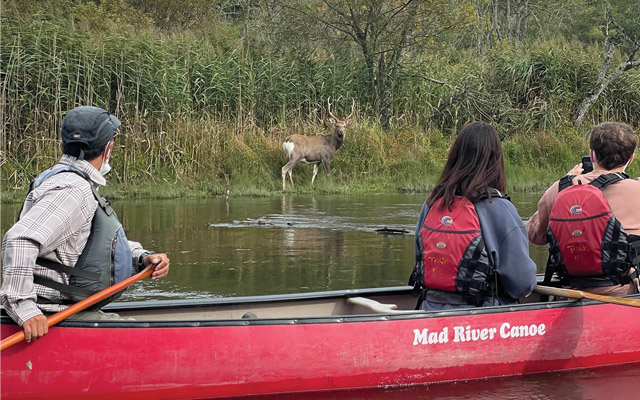
Cut a trail in Kushiro River
Kushiro-Shitsugen National Park is home to Kushiro Marsh, Japan’s largest wetland. The vast landscape remains untouched, and canoeing through it provides visitors with access to nature that is not possible by other means.
The 9km course from Lake Toroko to Hosooka along the gentle Kushiro River takes two to three hours at an easy pace and passes through a scenic area rich in biodiversity. An expert guide can share insights on the geography and environment while pointing out wildlife on the banks.
There are about 40 species of mammals and 200 species of birds including the Ezo red fox, Yezo deer and red-crowned crane, which is revered by the Ainu, Hokkaido’s indigenous people, as “the deity of the marsh.” So rare is the marshland and red-crowned crane that they are both designated special natural monuments by the Japanese government.
The park is home to 700 alpine and cold-climate plant varieties including a species of the phlox family thought to be a relic of the Ice Age. Stone Age artefacts have been found in hundreds of locations around the marsh.

Floral delight
Tropical Montane Orchidetum is a new attraction that opened this year within Singapore Botanic Gardens, a UNESCO World Heritage Site. Part of the National Orchid Garden, the attraction simulates the experience of ascending through a tropical montane forest and showcases a diversity of orchids and other plants, such as bromeliads and gingers.
A highlight at the Tropical Montane Orchidetum is the Sembcorp Cool House, home to orchids from five biogeographical regions – Malesia, Continental South-east Asia and South Asia, Australasia, Afrotropics and the Neotropics. The temperature here is maintained at 16°C to 23°C, to emulate a high elevation forest. With some 1,000 orchid species and hybrids exhibited in the Cool House, this space brings pleasure to both floral enthusiasts and botanists.

Walk with giants
Cambodia’s Elephant Valley Project presents nature-lovers with a unique elephant experience in the remote mountainous province of Mondulkiri. The ethical sanctuary is home to both the country’s largest remaining wild and working elephants. It offers respite to overworked, injured or retired elephants belonging to indigenous bunong communities that populate the area. The elephants and their mahouts can freely roam the 1,500-hectare site.
While elephant riding is prohibited, visitors can stroll though ancient jungles alongside the giant beasts, watching as they forage for food, tear out young trees with their trunks, and wallow in natural mud baths. Options range from a half-day visit through to more than a week. Depending on the itinerary, guests can embark on a jungle hike to view elephants in their natural habitat and learn about elephant behaviour and forest ecology.
There is also the opportunity to meet bunong people to discover their rich culture and unique relationship with elephants and the forest, and their efforts to protect both from extinction.

Multimedia Ainu journey
An enchanted night walk around the shores of Lake Akan in eastern Hokkaido, Kamuy Lumina retells a traditional song of the indigenous Ainu people, via an immersive experience.
Multimedia entertainment creators Moment Factory and Akan Adventure Tourism combine the natural beauty of the forest, which is located in Akan Mashu National Park, with cutting-edge projection mapping, scenography and interactivity to create an otherworldly showcase of sound and light.
Akan is home to Hokkaido’s largest Ainu settlement and Kamuy Lumina is Moment Factory’s first multimedia production with indigenous people. It is also the first in a national park, making it a truly unique way to get up close to nature.
In the story, the kamuy (spiritual beings in Ainu mythology) have stopped sending deer and fish for hunting because mankind no longer respects the land. Two leaders of the forest, the owl and jay, are determined to give mankind a second chance by delivering a musical message to the kamuy on mankind’s behalf. Visitors take the role of rhythm keeper to help the jay deliver his lyrical song.

Rizal’s regal reserve
Masungi Georeserve conservation area in Baras, Rizal – a few hours drive from Manila – invites city dwellers to commune with nature and enjoy sunshine and fresh air.
Set across 2,700 hectares of rainforests are 60 million year-old limestones that spike the tranquil landscape, 400 species of documented fauna and flora, and 40,000 native trees.
Highlights here are the sawa, snake-like hanging bridges that connect to limestone peaks; sapot, giant cobweb viewing platform; duyan, giant hammock of white braided ropes connecting the mountains; huts suspended in the air; and the meditation area called Liwasan. The Silayan Dining Room atop a hill is a fine dining, farm-to-table concept with menu that changes according to the local harvest season.

Deep dive
Tubbataha Reefs Natural Park is an extraordinary dive sites at the heart of the Coral Triangle, the global centre of marine biodiversity.
This 100,000-hectare marine protected area in Palawan, in the middle of the Sulu Sea, is one of the oldest ecosystems in the Philippines.
It treasures 10,000 hectares of coral reefs that support key marine species, among them 360 coral species or half of all the world’s coral species, 600 fish species, 11 sharks and rays species, and 13 species of dolphins and whales.
Accredited dive operators have a slew of activities for divers, while non-divers can take dive courses, snorkel, or watch birds – a new product that has been developed.
Tubbataha has 100 bird species, including endangered seabirds species, apart from two species of endangered green turtles and hawksbill turtles.
Tubbataha Reefs is open only three months a year – March to June – due to its remoteness and unpredictable weather. Tourists stay on the yacht or boat since there are no accommodations in the reserve. The gateway is the Puerto Princesa airport in Palawan before guests are taken to the nearby pier for the trip to the reefs.
Not your usual home
Akan Yuku no Sato Tsuruga on the shores of Hokkaido’s Lake Akan combines resort and ryokan.
The jewel in this hot spring inn’s crown is the collection of 33 public baths, including pools of hot, warm and tepid temperature, waterfall and whirlpool baths, and even a bath in a cave. The suite of outdoor baths on the eighth floor rooftop offers a commanding panorama of the lake, which is particularly striking in fall and winter. A secluded bath on the first floor sits along the shore and forested area.
Guests can choose from Japanese or Western-style rooms or opt for a suite that features a private outdoor bath overlooking Lake Akan.




 Singapore’s Gardens by the Bay has welcomed a new 15,000m² nature sanctuary, Kingfisher Wetlands, along its waterfront. It features more than 200 native true mangrove trees and mangrove associates planted amid newly-created water cascades and streamlets, as well as a wildlife lookout that bird-watchers and nature photographers will enjoy. Educational signage helps visitors gain a greater understanding of frequently-spotted wildlife in the area.
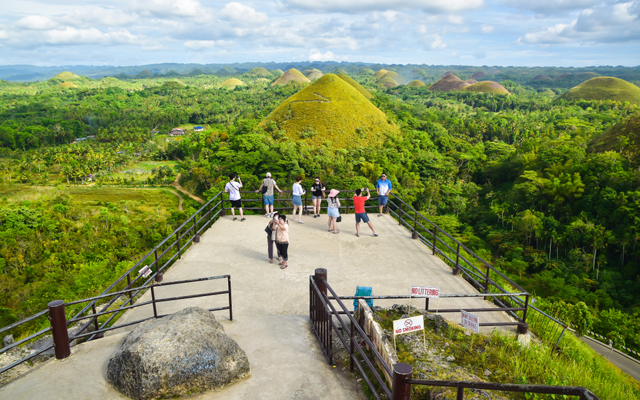













Talks are underway for a quarantine-free travel bubble between the Philippines and the South Korea, as the South-east Asian country looks to gradually reopen its borders to revive its pandemic-hit tourism industry.
If the plan goes through, it would be the first travel bubble arrangement for the Philippines since the start of the pandemic.
Philippines tourism secretary Bernadette Romulo-Puyat told Bloomberg in an interview that the two countries are in the midst of discussing the quarantine requirements for when the visitors return to South Korea.
While South Korean travellers are keen to arrange chartered flights to Bohol, the quarantine requirement for when they return to their home country poses an issue, she said.
Romulo-Puyat expressed hope that with increasing vaccination rates and declining Covid-19 cases, that governments will scrap the quarantine requirement for people returning to their countries.
She added that while the government is considering travel bubble arrangements with other destinations, it is South Korea – the Philippines’ top source market – that has shown interest in travelling to the country.