

Leading hotel groups unite to build sustainability framework
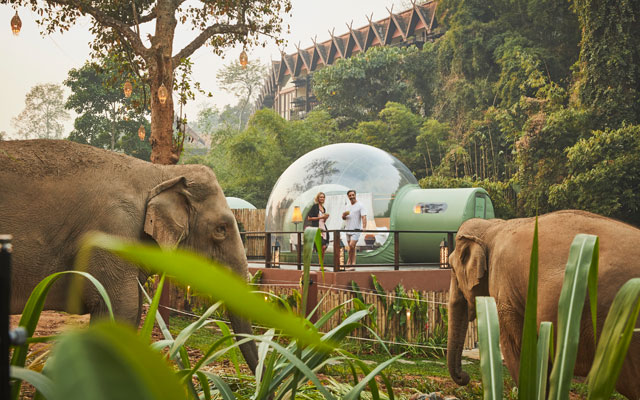
An initiative to set a common definition of hotel sustainability to drive responsible tourism has been launched by several leading hotel companies, in cooperation with the WTTC and Sustainable Hospitality Alliance.
Developed in consultation with distribution partners and key tourism and travel stakeholders, the Basic Sustainability framework aims “to raise the global basic level of hotel sustainability in a clear and transparent manner for all travellers and stakeholders”.
The framework will critically deliver on a common starting point for hotel sustainability accessible to all hotel actors worldwide – whether they are part of a large international group or independents. It will encompass four clear stages and practical tools that guide the industry towards a regenerative impact on our planet.
In the coming months, the hotel groups in this initiative will work in close alignment with the WTTC, the Sustainable Hospitality Alliance and key stakeholders on finalising the essential sustainability actions with demonstrable positive impact. They will also collaborate to share tools and best practices with each other and the wider industry to ensure all hotels start on a pathway towards the targets of the COP 21 Paris Accord.
The sustainability basic framework is aligned with the main aspirations such as the UNWTO Glasgow Declaration and the UNSDG’s decade of action.
Current partner hotel groups include Minor Hotels, NH Hotel Group, Barceló Hotel Group, Huazhu including their affiliate Deutsche Hospitality, Accor, Indian Hotels Company, Jin Jiang International (Holdings) Co. including their affiliate Jin Jiang Hotels, Meliá Hotels International, Louvre Hotels Group and Radisson Hotel Group.
Currently in the development phase, the Basic Sustainability framework will be launched in March 2022.
Seeding a promise of growth for all
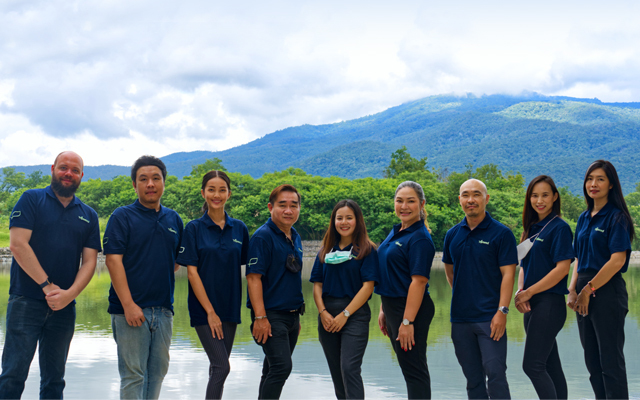
Four travel industry veterans with over two decades of combined experience in destination management have come together to rebuild Thailand’s tourism industry in a manner that will benefit new or smaller travel sellers, local tourism workers, and the wider community.
The product of their vision is Tripseed, a destination operator and distributor that specialises in curated tourist experiences across Thailand which support locally owned businesses and communities.
Itineraries feature opportunities – some of which are exclusive to Tripseed – for travellers to engage with natives, learn local cultures and traditions, and have their spend channelled directly to local communities.
An example is the Cooking with a Local Family tour in Chiang Mai, where travellers will interact with the Yong ethnic group; partake in various activities with the people, such as making flower bouquets; visit a Yong cultural museum; and join a local family for a home-cooked meal.
As well, a tour to a lesser-known, rural village puts travellers on a unique mode of transport known as etak etan and brings them around to fruit orchards and various craftwork houses for activities, such as mud cloth production and silk weaving. Revenue goes directly to members of the community.
Ewan Cluckie, founder of Tripseed, told TTG Asia: “Communities like these have few other means of income, so working with the villagers to create (tourist) experiences introduces a vital additional revenue stream for the community. It is about getting the money to where it is most needed in the most direct way possible.”
Cluckie, a marketing professional with travel and hospitality experience, is joined by partners Suphawadi Cluckie, a German language specialist who previously oversaw the German inbound market for one of Asia’s largest DMCs; Narissara Wongmahawan, a ground expert in northern Thailand, with experience in leading operations for a key industry player; and Richard Ludwig, who led critical product development for two of Asia’s largest DMCs.
Tripseed also achieves an environmental regeneration goal, as a tree is planted for every customer that travels with the company. The programme is enforced through Plant with Purpose, an organisation with 35 years of experience working with local communities to reverse deforestation through a sustainable, pro-farmer approach.
“We were very careful about our choice of partner here, as it needed to be environmentally sustainable and not just a tree farm, but also provide jobs and income. So, it’s a win for the planet and a win for the local community,” commented Cluckie.
For smaller travel sellers Tripseed supports, services are available to help them market and compete more efficiently. Dedicated account managers ensure equal access to highly personalised service for agents and operators of all sizes, while in-house marketing agency, Tripseed Studio, provides partners with marketing know-how.
“We’re trying to even the playing field for smaller travel sellers,” said Cluckie, who noted that competition is stiff in a marketplace dominated by big players.
Another critical direction of Tripseed is to improve equality in tourism employment. One of the normalised discriminatory hiring practices that the company is determined to break is the different set of employment terms for local and expatriate staff. A common feature of this is unequal annual leave terms, revealed Cluckie.
“It is very common for local employees to be given the minimum annual leave required by the government, which is six days after one year of service. In contrast, expatriates are given around 20 days of leave from their first day of employment. It would take a local employee 15 years of service to (get the same leave days as) their expatriate counterparts. At Tripseed, everyone is given 20 days of annual leave,” he said.
He added: “This is just one example. In our industry, we are always discussing responsible tourism in the context of climate change and wildlife protection, and even gender and racial discrimination, but there has been a failure to give local employees a voice and address their concerns when they face discrimination of their own. It is our goal to lead by example and deliver an alternative to the status quo that provides a greater level of equality for local employees.”
In line with Tripseed’s promise to “grow travel back better”, the company prioritises partnerships with suppliers that “align closely with our own values”. Such suppliers are given preference in Tripseed’s marketing and sales pitches.
However, Cluckie takes a practical view on this and acknowledges that the tourism landscape is very diverse and it is impossible to only work with suppliers that share the same beliefs.
“The big part of our promise, and the key word on which we focus is ‘grow’. For our partners, our suppliers and even ourselves, our belief is that we should be better than we were the day before, whether that means driving more of our profits to offering better wages for our staff or providing resources and solutions to suppliers so they can operate in a more conscientious fashion. As long as our partners are willing to constantly improve, we feel there is value to the relationship,” he added.
With Tripseed’s official launch just days ago on November 1, Cluckie said it is hard to define how the marketplace is taking its presence. The company will, for a start, specialise in Thailand as a destination and work with agents and operators in the UK, Germany and the US.
Ahead of launch, Tripseed operated some tours for Thai travellers, which Cluckie said drew strong praise. The customers have gone on to become “strong advocates, raising a lot of interest in our upcoming Tripseed affiliate programme”, which is an agent monetisation platform to give independent sellers a route to grow into an established travel retailer.
“(The affiliate programme) is in tune with our goal of helping new travel businesses grow and flourish,” he said.
Positive word of mouth has also generated interest from the UK, the US and Germany, and many agents have reached out to Tripseed to learn more.
To raise awareness, Tripseed is offering a 11.11 special offer on November 11, targeting agents in its key markets. Agents are eligible for 11 per cent off their first three confirmed bookings made between November 11 and January 30, 2022 when they subscribe to Tripseed’s newsletter and connect on LinkedIn and Facebook.
“This is to celebrate our launch, and also the gradual reopening of Thailand, but also provide a way for agents and operators to try out our services at very little risk,” he said.
Indian tourists to be highly sought-after, says GlobalData

Indian tourists will be some of the most desirable travellers, given India’s growing economy, young population and rising middle class, according to GlobalData.
The analytics company noted that the country is projected to reach record levels of 29 million outbound trips by 2025 – a buoyant outlook considering the strains of Covid-19.

Craig Bradley, associate travel & tourism analyst at GlobalData, said: “Before the pandemic, India was one of the most important and sought-after tourism source markets globally, and was a key target for major players such as VisitBritain and Tourism Australia. While the Covid-19 crisis put considerable strain on the country’s economy and tourism industry, Indian travellers are expected to be ready to travel once more.”
India’s economy will continue to build on its success, after an initial lull in 2020. Current projections show the national GDP of India will reach US$4 trillion, 50 per cent higher than 2021 levels, according to GlobalData’s Macroeconomic database.
The growth within India’s economy will directly contribute to a boost in the middle-class population, resulting in increased wealth and disposable income for years to come.
“Tourism development typically thrives in developing economies, and India’s future looks bright – providing it can avoid further Covid-19 outbreaks and subsequent lockdowns,” Bradley commented.
Destination marketers can capitalise on the country’s growing population, comprising about 51 per cent of Gen Z and millennials, who are inclined to travel, he said, adding that India’s improving infrastructure and developing LCC market has made outbound travel both affordable and accessible.
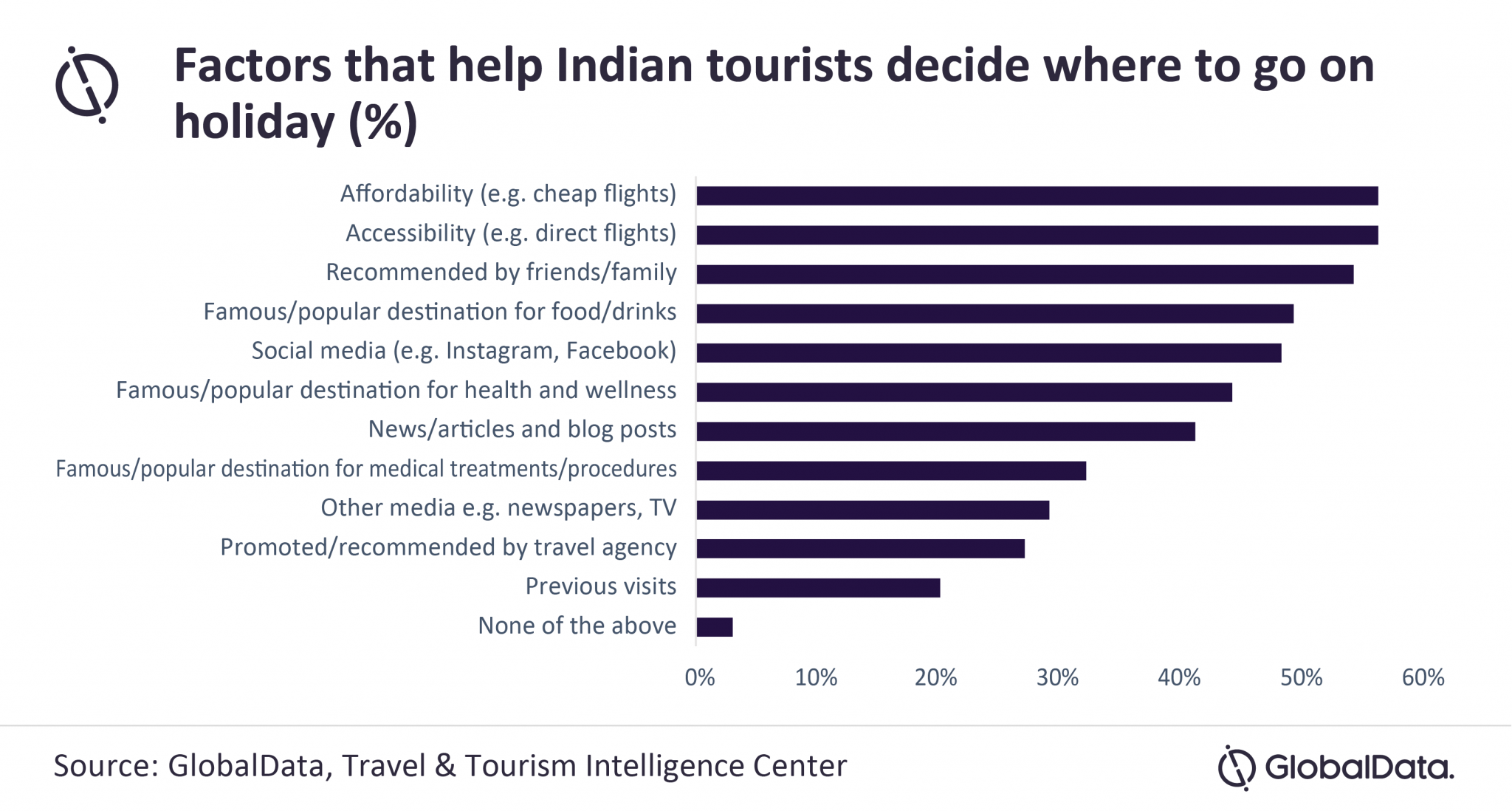
According to a 3Q2021 Global Consumer survey by GlobalData, 56 per cent of Indians said that ‘affordability’ and ‘accessibility’ were key considerations when purchasing a holiday. This underlines that simple, cost-effective travel solutions are the way forward, said GlobalData.
Bradley added: “India’s increased investment in budget airlines, as well as improving airport infrastructure, means better connections from regional and major airports. Therefore, international travel will be more straightforward and cheaper for Indian travellers. This will be essential to India’s success in the post-pandemic era.”
He observed that India’s budget airline industry has increased drastically over the past decade alongside its economy – in 2016, it surpassed full-service carriers by the number of passenger seats sold, and accounts for 51 per cent of all of India’s passenger traffic as of 2021.
Tripadvisor CEO Stephen Kaufer to step down in 2022

Tripadvisor’s co-founder and long-time CEO, Stephen Kaufer, will step down from his position at the company next year.
“We come to the close of 2021 in a strong position – travellers are returning as we exit the pandemic, exciting new initiatives are well on their way, and we continue to leverage our strengths as we evolve Tripadvisor for the future,” said Steve Kaufer, CEO, in a statement.

“Given our strong position, the talented teams driving our plans forward, and after over 20 years at Tripadvisor, I believe now is the best time to announce my plans to step away from the company next year. I have such respect and appreciation for all the teams over the years who have made this company what it is today, and remain devoted to continuing to guide the Tripadvisor family as CEO until the transition is complete.”
Kaufer co-founded Tripadvisor in 2000 with the mission to help travellers around the world plan and book the perfect trip. Over the past 21 years, under his leadership, the company has grown into the largest travel site in the world, with employees in more than 20 countries and operating localised travel sites in over 40 markets.
The board of directors has initiated an open search for Kaufer’s successor.
Wild wonders
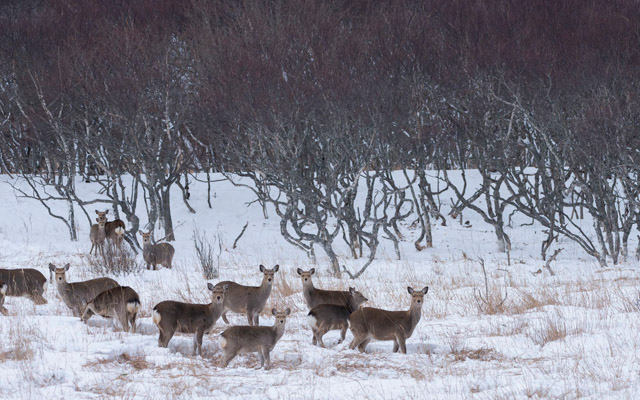
Hokkaido’s luxury travel sector is eyeing post-pandemic growth from Europe, North America and Australasia in hopes that these travellers are eager to experience outdoor adventures after months of staying home due to anti-Covid restrictions.
Hokkaido is well known for its high-quality powder snow, top-end onsen (hot spring) ski resorts as well as the Sapporo Snow Festival, which turns the prefectural capital into a winter wonderland every February. However, the travel industry is now hoping that an increased appetite for spending time outdoors and being active physically will put Hokkaido on the international travel map as “Japan’s northern frontier”.
Much of the central and eastern parts of the prefecture are rugged wildernesses largely untouched by man, including Daisetsuzan National Park. It is possible to see red-crowned cranes, among the rarest birds in the world, in the Kushiro marshlands or to spot whales and dolphins in the Sea of Okhotsk. One can even walk on the ice floes that gather there in winter.
It is these kind of experiences, unique to Hokkaido, that M Mizutani of the Hokkaido tourism board believes will attract a new kind of luxury traveller: someone who prioritises travel of immense value over lavish hotel rooms or fine dining.
“Hokkaido is unlike other parts of Japan,” Mizutani declared, pointing out its clearly defined seasons, wild scenery, adventure offerings, extremely high proportion of food sourced from within the prefecture, and cultural fusion of the Japanese and the indigenous Ainu people.
While Japan’s hosting of the Rugby World Cup in 2019 saw a record number of European tourists to Hokkaido, the tourism bureau’s Kaori Inoue said more is being done to raise awareness among the Western markets of everything the prefecture has to offer. Efforts include promoting places like the colourful Furano flower fields to show Hokkaido’s potential as a summer destination as much as a winter one.
Infrastructure is set to keep pace with promotion. March 2023 will see the opening of the Hokkaido Baseball Park, which will feature glamping facilities, hotels, hot springs and concert halls.
The Shinkansen line will also be extended from Shin-Hakodate Hokuto Station to Sapporo by fiscal 2030, reducing travel time from Tokyo to Sapporo to about five hours.
Festival season heats up
Brought to you by Macao Government Tourism Office (MGTO)
The holiday mood lifts as the year comes to an end. Here in Macao, the sense of fun radiates even stronger, thanks to festivals that span from November until the start of the new year.
A festival of vibrant races
Recognised as Macao’s most important sports event, the Macau Grand Prix returns this year with its 68th edition. Held from November 19 to 21, the event will feature six races: SJM Formula 4 Macau Grand Prix; Sands China Macau GT Cup; Galaxy Entertainment Macau Guia Race; Melco Macau Touring Car Cup; MGM Greater Bay Area GT Cup; and Wynn Porsche Carrera Cup Challenge.
Made possible through the sponsorship of six major integrated tourism and leisure enterprises in Macao, the event will broadcasted across mainland China and overseas, spreading the word on Macao’s ever vibrant and safe living conditions.
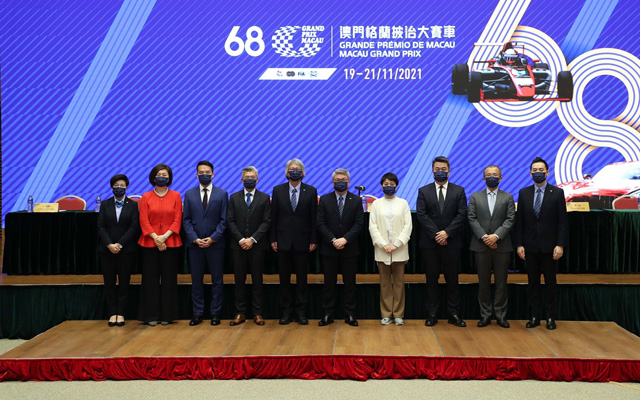
To bring the races to everybody, the Macau Grand Prix will feature numerous public engagements.
The 68th Macau Grand Prix Family Carnival at Tap Seac Square from November 6 to 7 will feature a miniature Guia track, allowing little ones to live out their dreams of being the next world racer and to learn more about the event and racing activities in a lively and interesting way.
From November 13 to 14, Tap Seac Square morphs into the 68th Macau Grand Prix Car Show, where vehicles involved in the races are put on display. The Macau Grand Prix opening ceremony will be held here on November 13 at 15.00.
Furthermore, large-scale screens broadcasting the event will be set up at various locations throughout the local community and Macao residents can participate in the 68th Macau Grand Prix Photo Contest.

Over at the relaunched Macao Grand Prix Museum, 16 Little Racer DIY workshops will be held over the weekends in November. Parents and their little ones can come together to craft a wide range of car-inspired souvenirs, such as clay toy cars, hand-painted bags, handmade soap, puzzles, mosaic film artworks and more.
A festival of fun
Tour Macao FUN Fair kicks off on November 6 with a line up of festival markets, cultural performances, creative workshops and interactive games every weekend throughout the month. Hosted at Taipa Houses, the fair is not to be missed for anyone wishing to get acquainted with the destination’s unique culture and customs in entertaining ways.

A festival of delicacies
The annual Macau Food Festival returns to please hungry bellies from November 19 until December 5 at Sai Van Lake Plaza, with a range of gourmet favourites rounded up from across Asia, Europe, mainland China and Macao. Live entertainment, games and beer competitions bring even more flavour to the much-loved food festival.
Organised by the United Association of Food and Beverage Merchants of Macao, the 21st Macau Food Festival also aims to provide an international marketing platform for local catering businesses and ensure that tourism activities achieve a spill over benefit to economic development.
A festival of arts
Macao’s art scene appears to be most boisterous this year-end, with numerous major events and public activations marked for the concluding months of 2021.
Throughout November and December, the third Encounter in Macao – Arts and Cultural Festival between China and Portuguese-speaking Countries gathers a series of events to promote heartwarming cultural exchanges. Highlights include the Lusofonia Festival, the Traditional Music and Dance Performance in the Community, the China and Portuguese-speaking Countries Film Festival, the Annual Arts Exhibition between China and Portuguese-speaking Countries, and The Belt and Road Culture Talk Series on Samba and Dance, among others.
Music lovers and aspiring musicians rejoice, for the Hush! 2021 Concerts returns this month with free performances across Macao’s many scenic and iconic locations as well as workshops where participants can learn from accomplished musicians, composers and producers, such as Aricalangi, Pun Kuan Pou, Joao Marcos Gomes Mascarenhas and Joe Lei.

Meanwhile, tourism mascot MAK MAK makes an artistic statement through a series of four art installations at the Portuguese-styled Taipa Houses, set up with the support of the Cultural Affairs Bureau and the Macao Government Tourism Office. The Having Fun with Mak Mak series features the mascot dressed in Portuguese costumes and becoming a travelling companion for visitors.
In addition, Taipa Houses’ participation in the Art Macao: Macao International Art Biennale 2021 also welcomes the exhibition Global City by Argentine artist Leandro Erlich. The artwork is made of steel and resin, and conceptualised around the idea of a global village. It inspires visitors to reflect on land development and the application of information technology, exploring in depth the Internet and the convenience in life as well as the ways of communication and interaction between people.
A festival of lights
The Light up Macao Drone Gala will take place on December 4, 11, 18, 20 and 25, during which some 300 drones will light up the evening sky, with each performance lasting 10 to 15 minutes.
Through the themes The Art of Love for Motherland, Build Your Dreamland, Charm of Macao, Embrace Your Journey in Macao, and Passion for Macao, the presentations utilise a symphony of technology, integrated 2D and 3D design, light and sound effects – all orchestrated by five talented teams from Shenzhen, Guangzhou, Tianjin and Beijing.
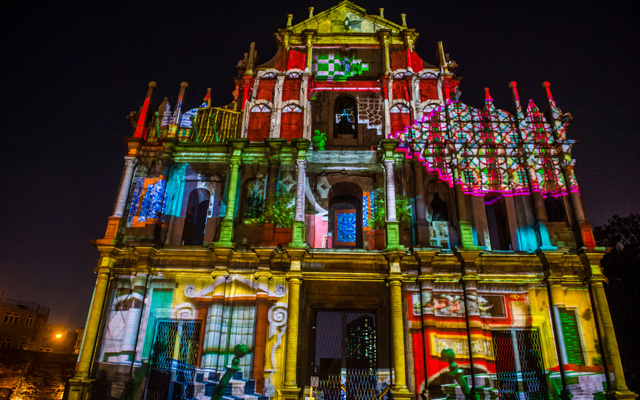
Set along the same theme of lights, the Macao Light Festival will be held from December 4, 2021 to January 2, 2022, and promises a line-up that will rival past years’ programmes. First launched in 2015, the annual event brings in projection mapping and light installations to conjure stunning visuals across the destination’s iconic zones and landmarks.
For more travel updates and inspirations, follow Mak Mak Macao (on Instagram), Stopover Macao (on Facebook), and Macao Moments (on Twitter), or visit the Macao Government Tourism Office website.
Future of hotel franchising in APAC shines bright

Hotel franchising will become an increasingly attractive and important business model in the Asia-Pacific region – which is home to a large group of independent hotels – as hoteliers navigate a post-pandemic future.
Joon Aun Ooi, Wyndham Hotels and Resorts president Asia Pacific, said that “the franchising model allows hotels to tap into the power of a global brand to support their recovery while at the same time giving them a strong degree of operational flexibility – whether it is a trusted and established brand that consumers are familiar with or a soft brand that enables them to maintain their individuality”.
“It will enable hoteliers to enjoy the benefit of a global scale and support and provides exclusive benefits through a loyalty programme,” Joon said at the recent ITB Asia.
Having access to brand guidelines on best practices will also give them the peace of mind that they have support to navigate recovery from the pandemic, he added.
C9 Hotelworks managing director Bill Barnett said that Asia lags behind Europe and North America in franchising or white label management, “but Covid-19 has simply accelerated what was going to happen anyway”.
Hotel groups are likely to focus more on their upscale and luxury brands, while pushing their economy and mid-scale brands into white label management or franchises, Barnett told TTG Asia.
“We’ve seen global hotel chains like Accor and IHG resize their Asian business models and downsize regional corporate offices significantly. Something has to give as a result, and for hotel groups, they are likely to focus more on their upscale and luxury brands that produce more fee revenue,” he explained.
“One issue of franchising in Asia, however, is that the cost gap for owners or developers is not enough to push them to franchise so that has to change,” said Barnett.
Loyalty programmes, on the other hand, “matters most in business hotels, and while we see stronger short-term demand in resort or leisure markets, independents can still compete,” he added.
“The question is what will happen to business travel now – with less trips and more business and leisure combined trips, it is (now) a fragmented space that certainly will see the onus on hotel groups to redefine loyalty and make it relevant post-pandemic,” Barnett shared.
Fliggy partners DidaTravel on accommodation supply
Chinese travel service Fliggy, part of the Alibaba ecosystem, has named DidaTravel its preferred accommodation partner for sourcing and distribution, a move that allows both companies to expand their accommodation portfolio and network of users.
Fliggy’s portfolio of hundreds of thousands of hotels across China and the wider Asia-Pacific region will be able to connect with more than 23,000 travel trade buyers on DidaTravel’s network, while DidaTravel’s hotel and tourism product partners around the world can access Fliggy’s 320 million users across China.
The partnership follows on from Alibaba’s series B financing in DidaTravel earlier this year, with a sum valued at hundreds of millions of yuan.
Rikin Wu, founder & CEO of DidaTravel, said the partnership with Fliggy would benefit both companies once the Chinese outbound market opens up in 2022.
Wu also added that Alibaba’s series B financing has enabled his company to invest in technology and expansion into Europe and North America, “where we will make new announcements shortly”.
The financing round was led by Alibaba and joined by Shenzhen Venture Capital and Guolong Capital, both of which had previously invested in DidaTravel’s 2018 fundraising.
Founded in 2012, DidaTravel now has over 300 staff in seven offices worldwide. The company transacted more than US$700 million worth of hotel bookings in China and Asia-Pacific in 2019.
Pan Pacific to open two Kuala Lumpur properties
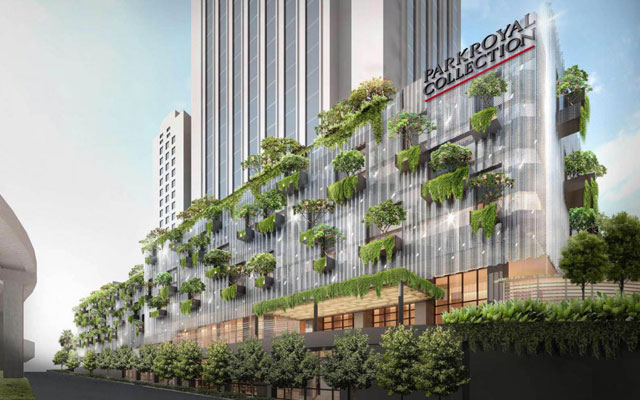
Pan Pacific Hotels Group (PPHG) is taking its Parkroyal Collection brand beyond the shores of Singapore with the launch of Parkroyal Collection Kuala Lumpur in June 2022.
This will be followed by the opening of the 210-key Pan Pacific Serviced Suites Kuala Lumpur in October 2022, yet another first with the group’s signature Pan Pacific flag in Malaysia.
Located in the heart of Bukit Bintang, both properties will open in a mixed-use complex owned by the UOL Group, PPHG’s parent company.
The 535-room Parkroyal Collection Kuala Lumpur will showcase a lush green façade of 78 sky planters on its frontage and roof terraces showcasing 1,207m² of plants and trees.
In tandem with the brand’s design for sustainability, the hotel will also feature motion sensors across public areas and rooms, a food waste digester, no single-use plastics, and an urban farm. It will also have a wellness floor comprising a spa, gym and fitness studio, as well as a pool.







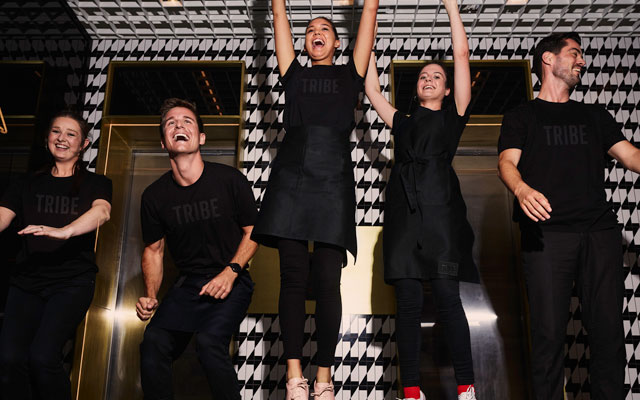
Lifestyle hotel group Ennismore, a joint venture between founder Sharan Pasricha and Accor, has launched Tribe hotels in South-east Asia, with properties set to open in Cambodia, Thailand, Indonesia, Singapore and the Philippines in the coming years.
Tribe’s expansion to South-east Asia forms part of Ennismore’s global growth of its lifestyle brands. Ennismore has already signed 50 Tribe hotels and is aiming for rapid expansion with up to 150 to open globally within the next five years, including in Phnom Penh, Bali, Singapore, Phuket and Manila by 2025.
Launched in 2019, Tribe is an alternative lifestyle brand “that is shaking up the rules of hospitality to fulfil the wants and needs of the modern traveller, without compromising on sophistication, style or functionality”.
A key feature of Tribe hotels are multifunctional spaces that encourage connection between guests, such as collaborative workspaces, decompression zones and social destinations.
François Leclerc, deputy brand COO at Ennismore, said: “Tribe is all about reshaping the traditional hotel experience into something that enables guests to stay, work and socialise in a truly contemporary environment.”
From the music selections to the choice of local coffee roasters, each Tribe element is meticulously curated. Tribe collaborates with different creative designers at each location, selecting elements to reflect the brand’s philosophy and unique vibe.
Guestrooms feature high quality linens, intuitive connectivity, rain showers, signature robes, and Nespresso coffee machines.