Strong interstate travel has surfaced in Malaysia since October 11 when the government lifted movement restrictions that were in place for three months, and tourism stakeholders are seeing a change in booking patterns.
Demand for off-the-beaten-track destinations is strong, along with a preference for online bookings.
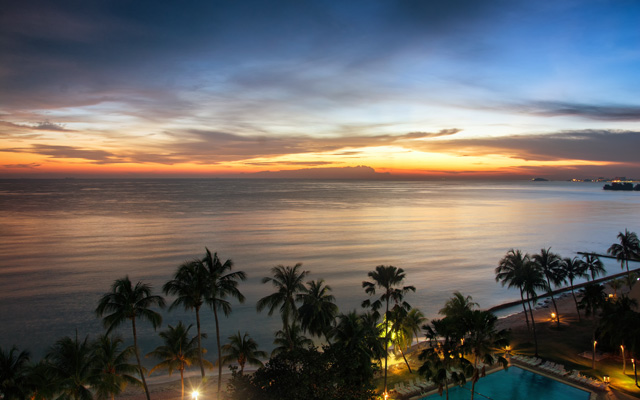
Port Dickson is attracting local beach lovers and sunseekers
Angelica Chan, country market manager, Traveloka, noted that unique destinations that offer seclusion and tranquillity are preferred over crowded, popular tourist destinations. Port Dickson, for instance, is winning over beach lovers although it was lesser-known among locals in the past.
Short staycations lasting one or two days in Kuala Lumpur and Selangor are gaining popularity among Klang Valley residents who desire a “quick escape” from their long lockdown.
Sherzede Datu Salleh Askor, CEO of Sarawak Tourism Board, said the state government had also been encouraging local tourism stakeholders, including homestay operators in the rural areas, to go digital since last year by offering financial incentives, in line with the change in domestic and global travel booking patterns.
She believed Sarawak ticked the right boxes with its offerings for international travellers once the border reopens, as travellers would be looking for eco-friendly destinations that were not congested, soft adventure and rich cultures.
Both Chan and Sherzede were speaking at the inaugural virtual discourse, X-Change Malaysia ’21, curated by Ab & Artho Tourism Marketing & PR on October 21. The event was aimed at rebuilding confidence and assurance of the Malaysian tourism industry.
Another speaker, Noredah Othman, CEO of Sabah Tourism Board, stressed that the board was engaging and guiding community-based tourism players and best practices that comply with the ASEAN community-based tourism standards.
Community-based tourism, with its simple concepts of back-to-nature and sustainable living, would be at the forefront for both local and international travel once borders reopen. As such, Sabah Tourism Board is planning roadshows in Peninsular Malaysia for now, and overseas interaction with foreign counterparts later on when international travel is made possible.
Anthony Wong, managing director, Cottage by the Sea by Frangipani Langkawi, shared that the Covid-19 pandemic had also raised awareness of sustainable practices. Since the resumption of domestic travel, Cottage by the Sea has been offering its guests farm-to-table dining experiences, and organic farm tours within the property.
He said: “Our rates are not that cheap, but people don’t mind paying for the experience.”
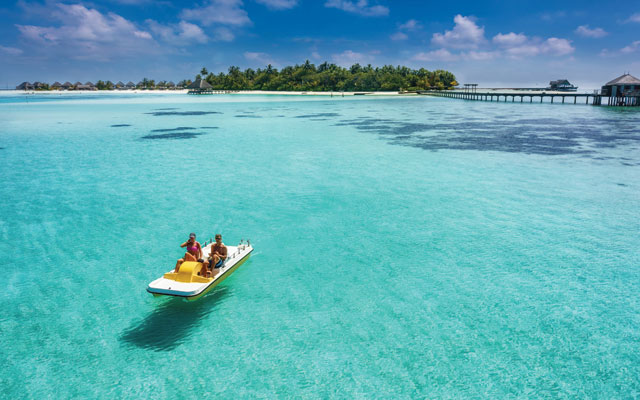
Visit Maldives has launched a campaign with one of Germany’s largest leisure airlines, Condor, as part of efforts to grow German arrivals to the leisure destination.
The six-month long campaign will target German travel enthusiasts and travel trade members through paid searches, advertisements, YouTube, webinars, newsletter and Condor’s social media platforms.
Visit Maldives steps up destination promotions facing the German market
Over 2.5 million impressions are estimated to be generated through this campaign each month.
The campaign will promote the Maldives as a safe destination and emphasise the natural safety bubble offered by the unique ‘one island one resort’ concept, thanks to the geographic formation of the islands.
According to Visit Maldives, Germany is a critical tourism source market, one that ranks as the third top market to the Maldives. As of October 13, the Maldives recorded 923,146 German arrivals. German is expected to play an instrumental role in the revival of the Maldivian tourism industry.
Besides the partnership with Condor, Visit Maldives is conducting several activities in the German market to engage consumers. Ongoing activities in Germany include FVWe-learning programme, which will be conducted till November 2021; a campaign with Connoisseur Circle to be held till next year; familiarisation trips, and more.
Trip.com Travel Singapore has inked an agreement with Raffles Medical Group (RMG) to provide pre-departure swab and serology services for its outbound travellers, allowing customers to schedule an appointment at the time of flight booking.
RMG will provide three types of services: PCR and IGM test; PCR; and PCR – Express.
Trip.com Travel Singapore is simplifying the pre-departure test procedure for outbound travellers with the help of Raffles Medical Group
Travellers may take their pre-departure tests at any of the 36 clinics in the Raffles Medical clinic network.
This service will come into effect from October 22.
This is the first agreement that RMG has signed with an online travel agency to provide pre-departure tests for outbound travellers.
Director of commercial for RMG, Morrison Loh, said: “The partnership builds on the deep expertise in curating travel experience and products at Trip.com and RMG’s extensive experience in healthcare and support for Singapore’s Covid-19 initiatives.
“RMG’s operations extends air-border screening and pre-event testing to include vaccination centres, on-site Covid testing services, pre-departure swabbing, traveller arrival testing, tests for those exposed to new Covid-19 clusters as they emerge, and the entire gamut of healthcare services in accordance with the prevailing pandemic advisory in Singapore,” Loh added.
Ru Yi, general manager of Trip.com Travel Singapore, noted that the company has seen a spike in enquiries and bookings since the launch of the first Vaccinated Travel Lane (VTL) in September.
“With the expansion of the VTL scheme, coupled with more countries finalising preparations to reopen their borders to fully vaccinated tourists, we anticipate a strong demand for flight bookings in the coming months,” said Yi.
“Through this collaboration (with RMG), Trip.com users will enjoy the seamless convenience of booking a bundled deal that includes flight tickets, accommodation and the required outbound pre-departure tests – with the click of a mouse, and within minutes. In addition, our customers will also benefit from having instant access to the travel and specific testing requirements for their destination,” she added.
Trip.com is looking to expand health and safety services for customers through RMG, and will continue to launch new campaigns and products that enable safe and convenient travels.
Six Senses Fort Barwara, India
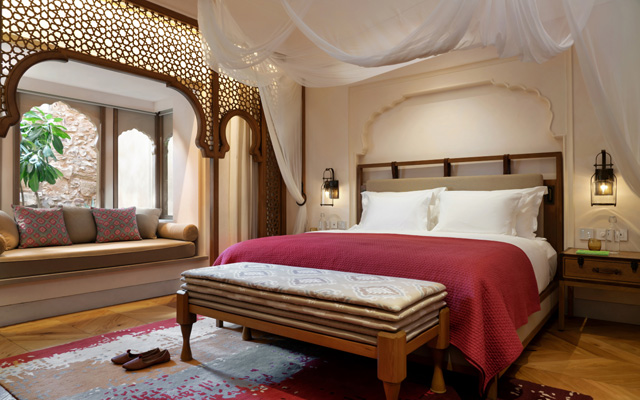
The 14th-century Six Senses Fort Barwara has been sensitively transformed into a 48-suite resort in a conservation effort that has taken more than a decade to complete.
Once owned by a Rajasthani Royal Family, the hotel property incorporates two original palaces and two temples within the walled fort. Suites in the East Wing overlook the countryside and those in the West Wing offer views to Barwara village and beyond. Each suite is designed in a contemporary Rajasthani style to complement the historic backdrop of the fort while subtly incorporating state-of-the-art in-room technology along with the groundbreaking Sleep With Six Senses standards. These include handmade mattresses, cotton bedding, and additional sleep amenities to promote a good night’s sleep.
The hotel features the 2,800m2 Six Senses Spa and fitness centre, where signature massages, Ayurvedic treatments, nurturing facials, mindfulness practices, and personalised wellness programmes are offered.
Guests can go on a culinary journeys through Roohani, the hotel’s flagship dining destination where local produce are used to create Rajasthani-inspired dishes.
The Barwara Royal Ballroom is ideal for weddings and other celebrations.
Hyatt Place Beijing Shiyuan, China
The 136-room Hyatt Place Beijing Shiyuan sits in the Chinese capital’s Yangqing district, which is regarded as the Summer Capital of Beijing. The district is known for its remarkable natural landscapes, and is close to Badaling Great Wall and the Beijing Garden Expo Park.
The hotel features the Hyatt Place brand’s intuitive design, casual atmosphere and practical amenities, such as free Wi-Fi and 24-hour food offerings.
Breakfast is served at Gallery Kitchen, while Gallery Lounge features specialty coffees and premium beers, as well as wines and cocktails.
Club Wyndham Flynns Beach, Australia
Club Wyndham Flynns Beach has doubled its size following an expansion, and now features an additional 53 one- to four-bedroom villas, with 20 designated as Deluxe, 25 as Grand and eight as Presidential.
The four-bedroom Presidential villas are designed as an unparalleled product within New South Wales’ Port Macquarie region, featuring four spacious bedrooms, four bathrooms, full kitchen, laundry facilities, a private ground floor deck with outdoor spa, and a large upper balcony.
The project also saw the creation of a new café, games area, kids’ pool, common area pavilions and car parking, as well as a refreshed gym and refreshed reception.
The resort has also enhanced its offerings further by including complimentary bike hires, fishing equipment, body boards and a beach cricket set for Club members.
The Orient Jakarta, Indonesia
The new boutique hotel opens in Central Jakarta with 153 guestrooms across 32 floors. It is designed to bring guests on a nostalgic journey inspired by a bygone era of Asia.
Seven room categories are offered, ranging in sizes 32m2 to 265m2. Each room promises panoramic views of the Jakarta skyline.
Guests have various F&B destinations to enjoy: Caspar Spanish restaurant, Furusato Izakaya Japanese diner, The Library Lounge, and The Pool Bar.
The hotel also features an infinity swimming/hydrotherapy pool, and a gym and spa will soon open.
The Orient Jakarta is designed by landscape architect and maximalist interior designer, Bill Bensley, who has brought in traditional art form with a pop art twist.
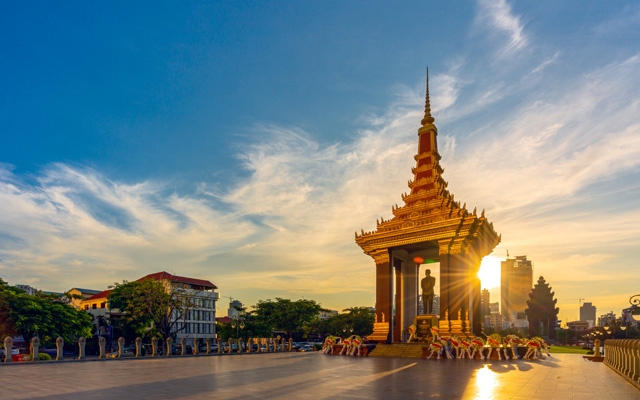
Leading tourism players in Cambodia are urging a drastic rethink on a snap decision made to start re-issuing e-visas to vaccinated tourists with a mandatory seven-day quarantine.
On October 18, Cambodia’s entry restrictions were loosened with the announcement that quarantine will be slashed from 14 days to seven for vaccinated Cambodians and foreign business visa holders. This has been further reduced to three days for visiting business travellers and investors with an invitation letter.
Cambodian tourism stakeholders are worried that a new mandatory seven-day quarantine will disrupt recovery
However, an announcement in local media on Tuesday said the government’s e-visa portal is now re-issuing visas for vaccinated tourists. Travellers will have to undergo a seven-day quarantine and pay US$1,000 to cover quarantine costs, PCR tests and other requirements, with excess refunded at the end of isolation.
Industry players are waiting for an official statement, and urging greater clarity on the decision.
“Cambodia still remains very much closed to international tourists as far as we can see,” one agent for an international tour operator said. “We need transparency and clarity, which we have not seen for 1.5 years.”
Ronni Dalhoff, managing director of Diethelm Travel Cambodia, said while a seven-day quarantine remains in place Cambodia is not a viable option for tourists.
“You would have to be a die-hard fan of Cambodia to come and do seven days’ quarantine. As a tourist destination, Cambodia is still deep in the worst-case scenario,” he added.
Dalhoff expects no cross-country travel in the first year of regional borders reopening. With Thailand and Vietnam already announcing clear re-opening plans and both able to offer more diverse itineraries, he fears Cambodia will be left behind.
He predicts even after a full reopening, the percentage of people visiting Cambodia while in the region will significantly decline if there is testing at the borders.
Virginie Kury, general manager of Asian Trails Cambodia, said with the average length of stay sitting at five to seven days, tourists will reject the seven-day quarantine.
Noted Kury: “People have been confined for too long and now that they’ve been fully vaccinated, they crave freedom, interesting itineraries and places to discover. They will choose a destination that allows them this liberty.”
Sinan Thourn, chairman of B2B Cambodia, added as global travel resumes, it is essential destinations remain competitive. “The world is changing. Countries that wish to have back tourists must come up with something attractive. Tourist won’t come if they still have quarantine and a deposit.”
Booking.com latest study to predict how travel will continue to be redefined in the year ahead has shown what it termed “an indefatigable sense of hope”.
The extensive research conducted with more than 24,000 travellers across 31 countries and territories, including Singapore, also utilised proprietary data and insights.
Majority of Singaporeans regard going on vacation as a form of self-care, and are determined to take a proper break in 2022 that is not interrupted by work
Findings have led the company to believe that 2022 will be the year that consumers will make the most of unpredictability and start making up for lost vacation time in a big way, with the number of travellers who feel they need to do so having increased by 52% since last year.
In analysing the results from the Singapore traveller market, Booking.com has identified seven travel predictions:
Vitamin vacay
More than daily exercise or mindful meditation, going away on vacation will become the form of self-care in 2022, with most people in Singapore (85%) affirming that travel improves their mental and emotional well-being more than other forms of rest and relaxation.
After over a year of ever-evolving travel restrictions, the important benefits that travel has on health and well-being are now being acknowledged, with more than two-thirds (70%) saying they did not realise how important travel was to their well-being until it was no longer an option, and 86% saying that having a vacation planned has a positive impact on their emotional well-being.
Mental well-being in Singapore has seen a sharp decline since the pandemic began with restrictions impacting all aspects of life from work to socialising. This makes the announcement of the Vaccinated Travel Lanes a promising one, where many will be able to finally break away from their restrictive routine over the past one year to simply relax and rejuvenate.
What makes travel the ideal form of wellness? For one quarter (29%), stepping outside of their comfort zone is the key reason why getting away enables them to reset. Of these individuals, two-thirds (68%) say that staying somewhere with a different scenery from what they are used to helps them to recharge, alongside two-thirds (68%) stating that it is experiencing a new way of life. For some, it is trying new cuisines (65%) or hearing a new language (38%) that helps them feel rejuvenated.
Resetting the out-of-(home) office message
When the pandemic hit, homes across the globe became offices too, and the novelty of working remotely was realised. Come 2022, however, there will be a significant rise in people wanting to take back control of a healthy work-life balance.
For three-quarters of Singaporean travellers (80%), vacation time itself will be strictly work-free, which was not always the case in 2021 with home and remote work lives blurred.
Despite the flexibility to work remotely, 54% of them would rather spend less time on vacation if it meant they could completely switch off in 2022 than to spend more time in the destination, but having to mix business and leisure.
With 70% of people claiming to have worked more hours and using less vacation days during the pandemic, more people will want to set their well deserved out-of-(home) office messages in 2022.
All the first-time feels
While many have forgotten where their passport is, or even just how to pack, all that out-of-practice travel awkwardness will give way to a genuine sense of delight for even the most routine aspects of trips in 2022.
After feeling ‘stuck’ for so long, rather than rushing through the journey, travellers will be relishing every moment, from fine-tuning the playlist for the rental car to browsing the delicacies duty-free has to offer, with a fifth (22%) most looking forward to the pure excitement and anticipation as the journey begins.
The formerly mundane daydreaming out the train window as the scenery whizzes by or getting lost in a maze of winding cobblestone streets to pick up the keys for their vacation apartment will be sheer bliss for the three-quarters (80%) of people who say travel is more enjoyable when the journey feels like part of the trip itself.
A majority of travellers say that simple pleasures such as feeling the sun on their skin (71%) or seeing a body of water of some kind instantly improves their mood for the better (81%). Even the uncertainty of navigating public transportation in a new city in a foreign language is something two-thirds (65%) say they will enjoy.
After such a long period of limited options, recapturing those first-time feels and leaning into every single moment will be a hallmark of trips in 2022.
Community first
Border closures forced many to look to home to quench their travel-thirst and also to support independently owned businesses that rely heavily on tourists. In 2022, this desire to put the local community first will continue as people start exploring the world again, including the desire to leave a positive impact on the places they visit and the people who live there.
About two-thirds (63%) of people agree it is important that their trip is beneficial to the local community at their destination, and 61% would appreciate an app or website that provides recommendations on destinations where an increase in tourism would have a positive impact on the local community. Furthermore, 68% want the money that they spend when traveling to go back to the local community and 73% want to have authentic experiences that are representative of the local culture.
In 2022, travellers will do more research into how well the place they are staying supports local businesses (35%) or how their tourism spend will affect or improve local communities (28%), signifying a new desire to do right by the people who call their favourite vacation destinations home.
Swipe right on new places and faces
For many, the pandemic meant spending an extended and intense period with closest friends and loved ones, but vacations in 2022 will be an opportunity to branch out and make some new connections.
With two-thirds (61%) wanting to meet new people while away, Singaporeans will be using their vacations as an opportunity to expand their usual social circles. In fact, 70% of Singaporean travellers look forward to socialising while on vacation, and 57% want to stay somewhere close to plenty of nightlife options so that they can meet new people.
Tired of swiping through the same faces for the past year and a half, people will also be making use of their favourite dating apps while on vacation in 2022 with travel providing an exciting opportunity to find love. A resurgence of holiday romances can be expected, with two-thirds (61%) hoping for one on their next trip.
Just say yes
After so long of being told “no”, travellers are reclaiming a more positive way of thinking for 2022. In fact, 57% will be shirking all of the structure they have been contending with, preferring a vacation where they stay flexible and just go with the flow, instead of having a well-planned itinerary full of activities. The coming year will bring the very best of improvisation to travel, with us responding to each unexpected twist and turn in the trip with an emphatic “yes, and…”
To that end, over three-quarters (81%) agree they will say yes to any vacation opportunity if budget allows. And for the 57% that have been saving their pennies by not taking any big trips since the pandemic started, money is no object for the trips they will take in 2022.
Close to two-thirds (70%) are more open to different types of vacations than before the pandemic and 64% do not mind where they go on vacation as long as it is the type of trip they want; they are just happy to be away from home.
In 2022, technology will play a key role in supporting spontaneity with increased optionality to book on the go and the flexibility to adapt plans and follow where the adventure leads. In fact, 58% are looking to the latest travel technology innovations to offer a ‘wildcard’ or surprise option of a completely new travel experience that is suggested based on their past preferences or budget to help them seize every new potential opportunity.
Embracing the unpredictable
Uncertainty will continue to be a constant in travel in 2022. Having leaned on technology in a variety of ways to stay connected and inspired over the past year and a half, favourite apps will continue to help travellers navigate the unknown, with three quarters (79%) agreeing that technology helps alleviate the anxiety around travelling.
From AI-powered instant translation services that make it easier for travellers to negotiate last-minute changes of plan directly with accommodation hosts and rental car providers who do not speak the same language, to machine learning models that automatically inform our
host about a late arrival to their beach cottage due to a delayed flight, technology will continue to smooth out the unforeseen bumps in the road with increasing finesse and proactivity.
Because of this, Booking.com expects to see even wider adoption of predictive technologies which can help travellers make more informed decisions, especially considering that three in four travellers would be interested in an innovative service that could predict which countries will be safe to travel to (73%), even months in advance, or automatically suggest destinations which are easy to travel to now based on their country’s and the destination’s current Covid-19 requirements (74%).
No matter how accurate any machine learning predictions might be, in order for everyone to truly embrace our new unpredictable normal, the broader travel industry will continue to prioritise flexibility, as travellers rank reassurance that they would not lose money (41%), the ability to cancel (34%), and ability reschedule free of charge (31%) as the top three most important priorities.
Nuno Guerreiro, regional director South Asia Pacific at Booking.com, said: “As we look towards the year ahead, we’re seeing a lot of excitement and anticipation for Singaporeans to return to travel, whether it’s abroad, the trip of a lifetime or just saying yes to whatever travel opportunity comes their way, and it’s our mission to make it easier for everyone to do just that.
“We will be there for travellers – offering the widest choice, great value and the easiest experience from anywhere and on any device – so people can reclaim their travel mojo and enjoy all of the unforgettable experiences this world has to offer.”
More insights from Booking.com’s travel predictions for 2022 is available here.
To many of us in the travel industry, it sometimes feels like it was a lifetime ago when the World Health Organisation (WHO) declared the Covid-19 outbreak a pandemic in 2020. For almost two years now, the tourism industry has had to make stark choices: adapt or become irrelevant.
Even though we now see countries and cities reopening their borders cautiously, the realm of travel has changed significantly. Here in Singapore, the evolution of safe management measures also illustrates that the leisure sector and businesses in general will have to continue to stay agile.
While challenging, we need to look beyond today’s situation and push forward. As we journey towards a new future of travel and live with Covid-19 as an endemic disease, it is timely for organisations to reassess and take stock before looking ahead to tap on new areas of opportunities. I offer some examples from Sentosa.
The need for sustainability
A critical area to be addressed by our industry is sustainability. In many ways, the Covid-19 pandemic has been a wake-up call for more action to build a sustainable future, and is set to catalyse a shift in travel desires and leisure preferences.
For instance, Booking.com’s 2021 Sustainable Travel Report has highlighted the increasing emphasis that travellers are placing on sustainable travel, with 83 per cent of respondents indicating that sustainable travel is vital, and 61 per cent sharing that the pandemic has influenced them to want to travel more sustainably. This means we can expect sustainable leisure offerings to become increasingly important to our guests, and that sustainability is essential – from both an environmental and business perspective.
Already, at Sentosa, we have seen a stronger spotlight on health and wellness, as well as an increasing demand for sustainable and responsible leisure options. For instance, we see our guests increasingly being drawn to our island’s heritage and nature offerings, from where they can better understand the importance of conservation. Elsewhere, Google has also begun to offer information on eco-certified hotels and carbon emissions of flights.
This higher consciousness of sustainability is a welcome shift. With the multiple guest touchpoints in the leisure industry, we are in a great position to tap on this consciousness, to lead and inspire the global community to take action. To tap on this demand, we will also progressively launch a series of new sustainability-themed tours by the end of this year, where guests can immerse themselves in the unique heritage, biodiversity and nature in our surroundings, and gain a deeper appreciation of conservation and sustainability.
Collaboration elevates the industry
Another important factor in the industry’s growth is collaboration, as the old notion of “competition” may no longer be valid today. The pandemic has shown how it is important for our industry to collectively leverage on each other’s strengths and expertise to navigate these uncertain times.
The Sentosa community, for instance, has come together to launch unique insider experiences and curate various bundles and deals across dining establishments, attractions and hotels, which could also be adapted for tourists and MICE audiences at a later stage. We have also teamed up with like-minded brands, such as Brewerkz to launch four destination-inspired carbon-neutral beers, bolstering our decarbonisation efforts and extending our reach to the retail audience on mainland Singapore.
Collaboration goes beyond such leisure offerings too. As part of our Sustainable Sentosa strategic roadmap, Sentosa Development Corporation and diverse business establishments in Sentosa have collectively launched the Sentosa Carbon Neutral Network, harnessing each other’s networks and knowledge as we transform Sentosa into a carbon neutral destination and a globally recognised sustainable tourism destination.
Continue to invest in understanding consumers
Ultimately, with the ups and downs in the trajectory of the pandemic, consumer perceptions and expectations will change. Businesses therefore need to continue adapting and investing in understanding consumers even better, so as to develop well-informed, insights-driven solutions. Such consumer insights provide a basis for businesses to rethink and redefine products and services, while identifying growth opportunities.
With mass international travel resuming in fits and starts, it is also timely for leisure and tourism players to innovate, experiment, and seize new opportunities, to drive repeat visits and consumption among locals.
Apart from pushing ahead with new developments on the island, Sentosa, for one, has rolled out an array of smaller-scale programmes – in view of restrictions on large-scale events – at more frequent intervals throughout the year. These range from intertidal walks and heritage tours, to a series of archery, yoga and Muay Thai by the beach experiences – which were fully booked within days. Among business establishments on the island, the Royal Albatross tall ship has also launched a cruise specially designed for dogs and their fur-parents, complete with customised meals, making it a world’s first. We have also seen the advent of “daycations” all across Singapore.
Extending such new and refreshed experiences can help boost consumers’ curiosity, to entice more to venture out and explore what Sentosa and Singapore have to offer.
If there is anything the pandemic has shown the tourism industry, it is that adaptability and being agile are fundamental to our sector’s survival. The recent challenges in Singapore’s reopening has signalled to us that the road to recovery will be a long and winding one. We must therefore continue to collaborate, innovate, and keep up with evolving consumer behaviours as we reimagine the future of travel and leisure together.
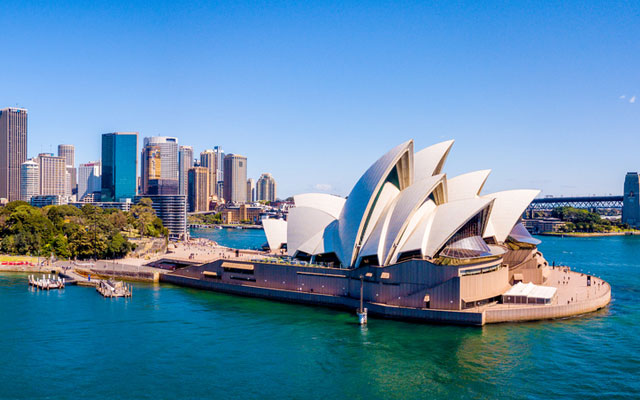
New South Wales’ (NSW) decision on October 15 to lift quarantine requirements for overseas arrivals from November has made clear Australia’s imminent full opening of international borders, however the country’s export tourism industry is still short of a clear date for the reopening.
The Australian Tourism Export Council (ATEC) has urged the federal government to provide a date and framework for reopening that tourism businesses across the country can use to plan, rebuild distribution partnerships, lock in bookings for 2022, and “help breathe life back into our A$45 billion (US$33.7 billion) industry sector which was crippled by the pandemic”, said ATEC managing director Peter Shelley in a press statement.
Shelley: Australia cannot miss critical booking windows and lose out to other competing destinations
ATEC noted that the country’s export tourism industry has suffered 18 months of no revenue.
“Since the announcement by the NSW government last Friday, our members have been fielding enquiries from intending travellers looking to book an Australian holiday or visit their family, but they still can’t make these bookings with any certainty,” said Shelley.
“We simply can’t afford to continue to keep our borders closed to high spending international travellers and miss critical ‘booking windows’ as these people simply will choose to holiday in other competing destinations, putting Australia at the bottom of their bucket list,” he added.
New South Wales will lift quarantine requirements for overseas arrivals from November; capital Sydney pictured
Booking season for the northern hemisphere is fast approaching, with travellers from the US, Europe and the UK looking to escape winter by heading to warmer destinations.
“If we miss this booking window, it will not surface again for another 12 months,” Shelley warned.
He reflected that Australia’s tourism players have a “hard road ahead” to rebuild connections with international markets and reestablish the destination’s presence. A certain “date for the reopening of our international border is therefore both urgent and critical”, he emphasised.
“Now is the time to provide clarity about Australia’s reopening to the world, and offer certainty to our industry, providing a much-needed opportunity for our financially fragile and work-depleted industry to commence the long road to rebuilding what was once Australians second largest export industry,” he said.
Low cost carriers Air Seoul, Jeju Air and T’way Air are readying for a ramp up in service as travel confidence improves and restrictions ease.
Asiana Airlines’ Air Seoul will resume service from Incheon to Guam on December 23, operating twice weekly flights every Thursday and Sunday. It is also contemplating service resumption to Saipan.
Air Seoul’s first service activation since its suspension of operations in March 2020 will be to Guam from Incheon
According to The Korea Herald, the service to Guam is Air Seoul’s first activation since flights were suspended in March 2020 due to the pandemic.
An Air Seoul official said the airline would work towards resuming international flights “at the appropriate time, especially to countries that sign travel bubbles with South Korea”.
Meanwhile, Jeju Air will commence a charter flight between Incheon and Thailand’s Chiang Mai in November for golf tourists. There are also plans to reinstate other key services, including between Incheon and Bangkok, before the end of 2021.
Back in June, Seoul-based T’way Air announced its leasing of three mid-sized A330-300 aircraft, which would be deployed for medium- and long-haul flights to destinations such as Sydney, Honolulu and Singapore – subject to pandemic developments. Personnel training for A330-300 operations commences this month.
As competition for staycationers in Singapore heats up, hotels are roping in well-known lifestyle brands or leveraging popular festivals to create thematic accommodation experiences.
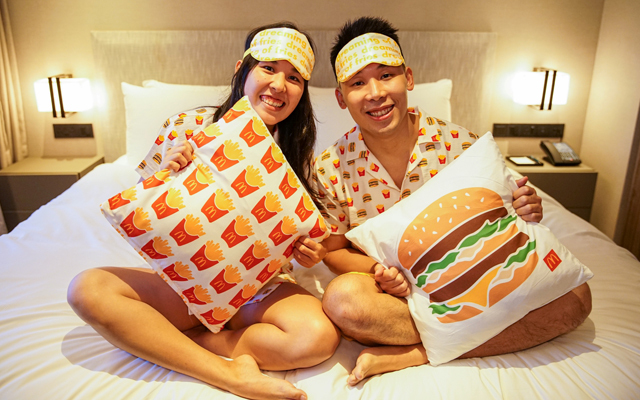
Thematic staycations that have hit the market include experiences tied up with Häagen-Dazs and McDonalds, where guests can also take home not-for-sale memorabilia and unique merchandise from their stay.
Oakwood Premier AMTD Singapore’s McDonald’s staycation deals with Klook were sold out within an hour
Hoteliers told TTG Asia that such themed staycations are well-received by travel-starved Singapore residents, as they offer an alternative type of entertainment in the current pandemic.
Roy Liang, general manager of Oakwood Premier AMTD Singapore, recalled how the property’s McDonald’s staycation deals, created in partnership with Klook and launched earlier in April 2021, were sold out within the first hour.
Fifty studios and apartments were allocated for each of three reservation windows, and the public interest was “immense”, said Liang.
Guests had a choice of a night’s stay in a Studio Deluxe Room, or a two-bedroom apartment for families. Guests were given exclusive McDonald’s merchandise as well as food vouchers.
More recently, Pan Pacific Hotels Group (PPHG) launched the Stay, Hide and Seek with Otah & Friends staycation package in partnership with KKday. Cinn Tan, chief sales and marketing officer of the hotel company said response was “especially boisterous” during the school holidays and National Day weekend in August.
Otah & Friends is a popular local family entertainment brand featuring characters inspired by Singapore’s wildlife, such as otters, hornbills, and wild boars.
Guests can collect limited-edition Otah plush toys dressed in traditional costumes of Singapore, take home a welcome pack that includes a pair of Otah & Friends cushions, and join a hide-and-seek game in the guestroom to uncover hidden snacks using a clue kit provided.
Fans of Häagen-Dazs’ icy treats benefitted from a themed staycation at two Shangri-La hotels in Singapore. The spokesperson for Shangri-La Group said interest in the packages were unaffected by social gathering restrictions that were imposed a week after the campaign launch.
By the end of this month, Andaz Singapore will roll out a Halloween themed package, which includes spooky treats and mystical experiences such as a tarot reading session, put together with local bookstore and café The Moon, shared the hotel’s director of sales and marketing, Federica Brugnara.
When it comes to themed staycations, both Tan and Liang highlighted the strength of social media as a powerful driving force.
Limited edition memorabilia offered by Pan Pacific Hotels Group’s Otah & Friends staycation package in partnership with KKday drew character fans
“In the case of Otah & Friends and LINE, these brands have great fan bases. Limited edition memorabilia are also a big draw for many. They give our guests something tangible to take home and remember the good times by,” commented Tan.
Liang added: “Such items (like the not-for-sale McDonald’s loungewear) make for great Instagram-worthy shots and have driven a domino effect among people who want to be seen with the latest trends in the market or get their hands on these items.”
More ideas in the pipeline
Hoteliers are not about to put the brakes on thematic staycations, even as Singapore gradually lifts travel restrictions. In fact, plans are underway for even more themed offerings.
The Shangri-La Group spokesperson said the properties are “exploring more themed staycations with complementary brands”, following the “encouraging response and buzz” brought on by the Häagen-Dazs tie-up.
Tan shared that PPHG has just launched an afternoon tea-themed staycation. The Tea-cation Relaxation comprises a stay at a participating hotel, and includes a decadent and unique afternoon tea crafted by the hotel. At Parkroyal Collection Marina Bay, for instance, Tea-cation Relaxation takes garden picnics to the next level with a nature-inspired set enlivened with herbs, edible flowers and vegetables freshly picked from the hotel’s urban farm.
In tandem with themed staycations, PPHG has also rolled out other promotions such as workcation day passes, dining credits, and staycations that utilise the SingaporeRediscovers vouchers.
“We are also working with premium apothecary Appelles to develop sustainability-themed initiatives and offerings for guests in Singapore. We look forward to announcing more details later this year,” she said.
Over at Oakwood Premier AMTD Singapore, a Bike & Chill package was newly launched. It builds on the hotel’s proximity to Marina Bay and Coastal Park Connector, and offers an overnight accommodation, dining credit or one-way bike transfer, and partner vouchers.
Liang is on the lookout for more of such collaborations.
When asked if staycation demand would falter as overseas travel is possible once more through the Vaccinated Travel Lanes (VTL), Tan expressed confidence that it would not.
“We believe that for 1H2022, local staycations will continue to be in demand because there is still some consumer wariness surrounding the VTLs – factors such as paying for Covid-19 testing, flight fares, and overall uncertainty about hygiene and safety may hamper demand for vaccinated travel,” she explained.
This sentiment is echoed by Brugnara, who agreed that regardless of whether its for “financial or safety reasons”, there are individuals who are “wary of international travel” and “choose to exercise caution when it comes to holiday plans”.
She is certain that staycations will remain a great option for a local holiday, as the hotel industry here has built up a reputation over the past two years as a “safe, hygienic, and trustworthy choice”.
Liang posited: “There are two camps – one is ready to travel despite costs and lowered risks, while the other prefers to wait and see, patiently holding out for the opportune time to kickstart travels without having to risk their health.
“The latter are the people we hope to reach out to, as they are more likely to continue with staycations for vacations (for the time-being).”





 To many of us in the travel industry, it sometimes feels like it was a lifetime ago when the World Health Organisation (WHO) declared the Covid-19 outbreak a pandemic in 2020. For almost two years now, the tourism industry has had to make stark choices: adapt or become irrelevant.








Six Senses Fort Barwara, India
The 14th-century Six Senses Fort Barwara has been sensitively transformed into a 48-suite resort in a conservation effort that has taken more than a decade to complete.
Once owned by a Rajasthani Royal Family, the hotel property incorporates two original palaces and two temples within the walled fort. Suites in the East Wing overlook the countryside and those in the West Wing offer views to Barwara village and beyond. Each suite is designed in a contemporary Rajasthani style to complement the historic backdrop of the fort while subtly incorporating state-of-the-art in-room technology along with the groundbreaking Sleep With Six Senses standards. These include handmade mattresses, cotton bedding, and additional sleep amenities to promote a good night’s sleep.
The hotel features the 2,800m2 Six Senses Spa and fitness centre, where signature massages, Ayurvedic treatments, nurturing facials, mindfulness practices, and personalised wellness programmes are offered.
Guests can go on a culinary journeys through Roohani, the hotel’s flagship dining destination where local produce are used to create Rajasthani-inspired dishes.
The Barwara Royal Ballroom is ideal for weddings and other celebrations.
Hyatt Place Beijing Shiyuan, China
The 136-room Hyatt Place Beijing Shiyuan sits in the Chinese capital’s Yangqing district, which is regarded as the Summer Capital of Beijing. The district is known for its remarkable natural landscapes, and is close to Badaling Great Wall and the Beijing Garden Expo Park.
The hotel features the Hyatt Place brand’s intuitive design, casual atmosphere and practical amenities, such as free Wi-Fi and 24-hour food offerings.
Breakfast is served at Gallery Kitchen, while Gallery Lounge features specialty coffees and premium beers, as well as wines and cocktails.
Club Wyndham Flynns Beach, Australia
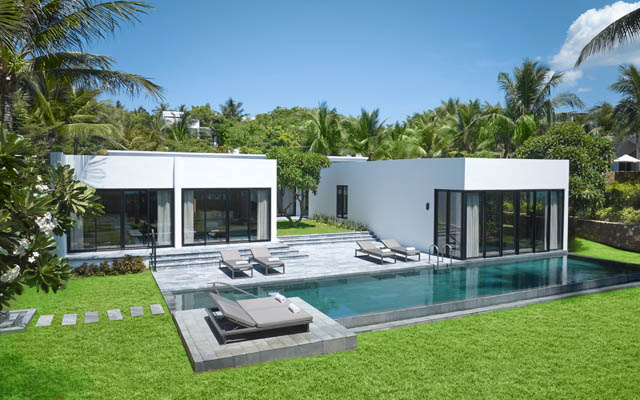
Club Wyndham Flynns Beach has doubled its size following an expansion, and now features an additional 53 one- to four-bedroom villas, with 20 designated as Deluxe, 25 as Grand and eight as Presidential.
The four-bedroom Presidential villas are designed as an unparalleled product within New South Wales’ Port Macquarie region, featuring four spacious bedrooms, four bathrooms, full kitchen, laundry facilities, a private ground floor deck with outdoor spa, and a large upper balcony.
The project also saw the creation of a new café, games area, kids’ pool, common area pavilions and car parking, as well as a refreshed gym and refreshed reception.
The resort has also enhanced its offerings further by including complimentary bike hires, fishing equipment, body boards and a beach cricket set for Club members.
The Orient Jakarta, Indonesia
The new boutique hotel opens in Central Jakarta with 153 guestrooms across 32 floors. It is designed to bring guests on a nostalgic journey inspired by a bygone era of Asia.
Seven room categories are offered, ranging in sizes 32m2 to 265m2. Each room promises panoramic views of the Jakarta skyline.
Guests have various F&B destinations to enjoy: Caspar Spanish restaurant, Furusato Izakaya Japanese diner, The Library Lounge, and The Pool Bar.
The hotel also features an infinity swimming/hydrotherapy pool, and a gym and spa will soon open.
The Orient Jakarta is designed by landscape architect and maximalist interior designer, Bill Bensley, who has brought in traditional art form with a pop art twist.