TTG Asia
Asia/Singapore Thursday, 2nd April 2026
Page 81

Accor upgrades loyalty game with roll out of ALL Accor+ Explorer

0

Accor Plus, Accor’s subscription business, has launched a new global premium travel subscription, ALL Accor+ Explorer, the first subscription to feature the new ALL Accor+ global brand, as the business looks to expand into new key markets next year.

The ALL Accor+ Explorer subscription is priced at US$229, and is projected to deliver an average of US$712 in additional savings per member each year.

From left: Belinda Lee (moderator); Accor Plus’s Emilie Couton; and Pullman’s F&B ambassador for F&B in Asia-Pacific Nat Thaipun discussing traveller trends during a fireside chat; photo by Rachel AJ Lee

The benefits, developed after extensive research with over 7,000 members and 200 hotel stakeholders, include up to 50 per cent off hotel stays in Asia-Pacific, and a guaranteed 15 per cent off the public rate with Access More at over 4,500 Accor hotels and 30+ brands worldwide.

The subscription also offers 30 per cent discount on dining and a 15 per cent discount on drinks at 1,600+ restaurants and 1,200+ bars across Asia-Pacific. Furthermore, members are guaranteed ALL Accor Gold Status or higher instantly, which includes a bonus of 30 Status Nights each year, providing perks like room upgrades, early check-in, and late check-out (where available), plus priority access to exclusive member-only events and offers.

This new offering leverages the success of Accor Plus, a travel subscription business that has operated in Asia-Pacific for over 30 years and currently boasts over 450,000 members.

Earlier on Wednesday during a lunchtime media event at the Pullman Singapore Orchard’s Eden Restaurant, Emilie Couton, CEO, Accor Plus, shared that the ALL Accor+ Explorer has been in the works for the “past 18 months”.

Couton explained the timing, noting that while “subscription models have grown 400 per cent over the past decade”, the travel sector remains largely underrepresented. Launching the new programme is a direct move to capitalise on the rapidly expanding global subscription market, which analysts project will exceed US$2 trillion by 2034.

She added: “According to a Travelport study (released in January 2025), 35 per cent of travellers surveyed said they would consider purchasing a travel subscription.”

The programme is fully integrated with the existing ALL Accor platform and app for a seamless member experience. All existing Accor Plus members have been automatically upgraded to the new premium subscription.

Aman brings urban sanctuary to Singapore with new Skywaters development

0

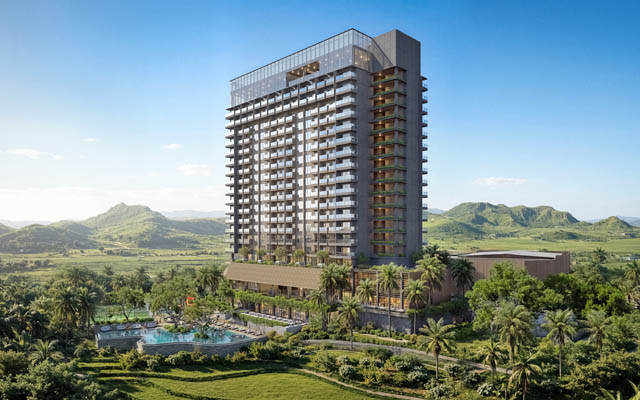
Aman will open its first property in Singapore, bringing the brand’s signature focus on privacy, design and service to the city-state. The development, named Aman Singapore, will include a hotel, a limited collection of branded residences and a private members club.

The property will be located within The Skywaters, a new skyscraper set to be Singapore’s tallest. The tower, developed by a consortium led by Perennial Holdings and designed in part by Skidmore, Owings & Merrill, occupies a site at the convergence of the CBD, Marina Bay, and the future Greater Southern Waterfront.

Aman Singapore will feature a hotel, residences and private members club in the city’s tallest upcoming skyscraper

Aman Singapore will feature a dedicated floor of hotel suites offering views across the city and the South China Sea. The property will also provide a global Aman Club for members, Aman Residences, and facilities such as a full-floor Aman Spa with an infinity-edged pool, and dining venues featuring Aman’s signature concepts.

The branded residences, ranging from one to five bedrooms, will offer city and botanical views and access to the property’s amenities and services, providing an elevated urban sanctuary for long-term residents.

Vlad Doronin, CEO and chairman of Aman Group, said: “The launch of Aman Singapore, within the landmark The Skywaters development, marks an exciting chapter for our brand and is something our devoted community has long anticipated. With a robust pipeline including Dubai, Riyadh and Beverly Hills, and established properties in Bangkok, Tokyo and New York, Aman Singapore will embody all the hallmarks of our urban sanctuaries including intuitive service, serene design, privacy, and exceptional locations. It will also serve as a key connection point to our Aman destinations across Asia for our global guests.”

Pua Seck Guan, executive chairman and CEO of Perennial Holdings, added: “Partnering with Aman for its first project in Singapore at The Skywaters is a testament to the exceptional quality of the integrated development. It also further elevates the status of the upcoming tallest building in the country as we create an extraordinary sanctuary in the heart of the Garden City, delivering an experience that redefines urban luxury living.”

Darwin Airport Resorts enhances guest experience with new villas and dining

0

Darwin Airport Resorts, Australia’s first airport resort, is undergoing a A$41 million (US$26 million) upgrading programme that includes new villas and executive suites, refurbishment of existing rooms, and the launch of a Californian-style poolside restaurant.

The property is owned by Airport Development Group (ADG) and managed by Accor. ADG has invested in integrating the three hotels – Novotel, Mercure and ibis – into a single resort destination. The redevelopment links the three hotels around a central area that features a 65-metre lagoon pool, a consolidated reception and lounge, and the alfresco Splash Café.

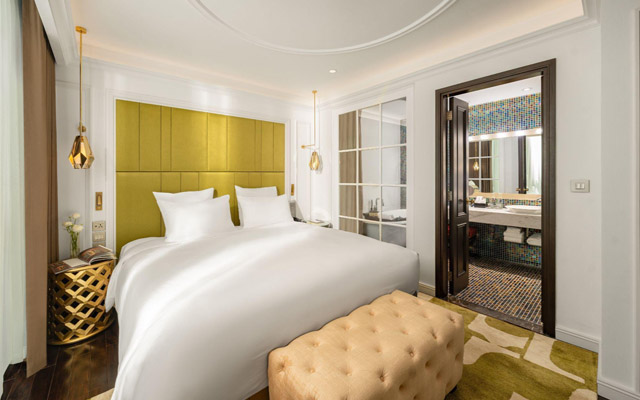
The resort-style redevelopment at Darwin Airport Resorts adds new stays and leisure options for visitors

The project includes Indigenous artwork and theming, along with an Indigenous Training Academy, to reflect the property’s connection to Larrakia Country.

Eight new Rapid Creek Villas have been built, including three two-bedroom and five one-bedroom villas with private parking. The villas, measuring up to 49m², include king size beds that can be split into singles, a lounge, kitchen facilities and a covered deck with bushland views. They overlook Rapid Creek Conservation Reserve, which features Darwin’s only natural freshwater creek. A walking trail in the reserve provides information on bush tucker, medicinal plants and the cultural and environmental significance of the area.

Five new executive suites have been added to the Novotel following a full refurbishment. Each suite measures 55m² and includes a king size bed, lounge and entertaining area, double glazing, and either lagoon pool or airport views.

A new restaurant, the Poolhouse Bar and Kitchen, has also been launched. Seating 170 diners, it overlooks the lagoon pool, playground, beer gardens and murals by Larrakia artists. The menu, designed by head chef Laurence Lochouarn, features local seafood with Californian influences, with local beers, cocktails and wines also offered. Graduates and trainees from ADG’s Indigenous Training Academy will work in the restaurant.

Raymond Bragg, general manager of Darwin Airport Resorts, said: “The creation of an airport ‘resort’ has not only captured the imagination of visitors, but also locals who are utilising the restaurants and leisure facilities because of the resort-style ambience and convenience of our location.”

He noted that the new accommodation is part of a wider refurbishment that will upgrade all existing rooms and add facilities for the growing conference and events market. The new restaurant, opening this week, will offer a menu designed to reflect Darwin’s lifestyle and enhance the resort’s dining options, while the overall upgrades aim to provide a high-standard experience within the airport.

Adrian Williams, chief operating officer of Accor in the Pacific region, shared: “These three resorts aren’t just places to stay; they’re launch pads for adventure, culture and unforgettable experiences. It’s about giving travellers a reason to fall in love with Darwin and explore everything the Northern Territory has to offer.

“This investment isn’t just about rooms and restaurants, it’s about creating moments that inspire journeys, spark discoveries, and help Darwin shine as a world-class destination.”

Shenzhen launches Huafa Snow Bonski to boost winter sports in Greater Bay Area

0

Shenzhen will open one of the world’s largest indoor ski domes on September 29, when Huafa Snow Bonski begins operations. The 100,000m² facility includes competition-standard slopes, training systems and recreational areas, positioning the city as a new centre for year-round winter sports in the Greater Bay Area (GBA).

Huafa Snow Bonski integrates professional venues, coaching, structured training, school partnerships and the capacity to host international competitions. The project adopts a model linking snow sports, athletics and tourism to support industry development and winter sports training in the GBA, which includes Hong Kong, Shenzhen, Macau and Guangzhou.

The new Huafa Snow Bonski dome adds year-round skiing to Shenzhen’s sports facilities

At the opening event, a snow performance combining skill, staging and audience participation marked the launch of the venue.

The dome has five ski slopes stretching a combined 1,569 metres. It offers a maximum vertical drop of 83 metres, a maximum slope of 18 degrees, and a single run extending 463 metres. Two terrain parks are included, and both the advanced and intermediate slopes meet International Ski Federation standards, enabling alpine parallel and slalom competitions.

In addition, a 4,000m² Ice and Snow Wonderland offers 14 attractions for visitors. Activities include parent-child participation and youth competitions.

Huafa Snow Bonski aims to attract international visitors and professional athletes through events, training programmes and recreational facilities.

Interhill Hospitality appoints new leadership for two Pullman properties

0

Interhill Hospitality has made a series of leadership changes across its Accor-branded hotels.

Sunardi Song is appointed general manager of Pullman Kuching. With over 15 years of hospitality experience, he will oversee the multi-million-ringgit relaunch of Pullman Kuching.

From left: Sunardi Song, Adrian Ng, Randy Nickcolas Constantine, and Alan Tham

Adrian Ng is promoted to vice president of operations at Pullman Kuching. He will provide strategic oversight across the group’s portfolio, including Pullman Kuching, Pullman Miri Waterfront, and ibis Melaka.

Randy Nickcolas Constantine is now general manager of Pullman Miri Waterfront, bringing with him more than 17 years of international experience with Hyatt, Pullman, ibis, Song Saa Private Island, Swissôtel, and Royal Tulip.

Alan Tham has been named vice president of F&B and will oversee all F&B operations across Interhill Hospitality.

Jati names new GM

0

Stephan Rohrer has been appointed general manager of Jati, the private island retreat developed by the creators of Shinta Mani Hotels.

He brings more than 20 years of experience in hospitality and will oversee operations as Jati enters its first full high season.

Niall Cowan leads Carlton Hotel Singapore as GM

0

Carlton Hotel Singapore has appointed Niall Cowan as its new general manager, where he will oversee all hotel operations.

He brings over 20 years of international experience in luxury hospitality across Asia, Africa and Europe, having held senior positions at The Savoy and The Berkeley in London, Fairmont Mount Kenya Safari Club, and Fairmont Sanur Beach Bali.

MTF calls for stronger tourism budget ahead of Visit Malaysia Year 2026

0

The Malaysian Tourism Federation (MTF) has urged the government to provide a comprehensive tourism budget ahead of Visit Malaysia Year 2026 (VMY2026), emphasising that the industry needs stronger and broader support to be fully prepared.

MTF president Sri Ganesh Michiel said that while current schemes such as the Cultural Sector Support Grant and the Tourism Sector Support Grant help industry players participate in fairs and cultural programmes, they are not sufficient to ensure readiness.

Ganesh said that fairs cannot succeed if players lack the funds to prepare effectively

He explained in a press statement: “Organising or joining fairs is good, but these platforms cannot succeed if players do not have the promotional materials, digital content, or quality products to showcase. Smaller operators, such as budget hotels and local tour agents, often lack the funds to prepare effectively. Without direct assistance, their potential remains under-utilised.”

The federation has proposed a Direct Promotion Grant for licensed tourism operators to help them develop branding, create promotional materials, and enhance their visibility in both local and international markets. It also underlined the urgent need for stronger digital marketing, including social media campaigns and e-marketplace presence, describing online exposure as “no longer optional but essential to reach global travellers”.

MTF also called for incentives for tourism associations, highlighting their role in mobilising members and coordinating promotions. Associations ensure compliance, coordinate collective promotions, and drive nationwide participation in tourism campaigns.

At the same time, it urged tougher enforcement against unlicensed operators, stricter measures to prevent revenue leakage, and full reinvestment of tourism tax collected at airports and other entry points into the tourism ecosystem.

“Malaysia must go further by empowering registered players, associations, media, and workforce with direct support, digital exposure, infrastructure development, and incentives,” said Ganesh.

The federation further proposed a Media Promotion Grant covering both traditional and digital platforms, to empower media partners as key allies in promoting Malaysia’s image worldwide, building international awareness, and ensuring the success of VMY2026.

It also stressed the importance of investing in human resources through training and certification of frontline staff such as hotel workers, guides, and drivers, as well as upgrading airports, transport systems, and facilities to create seamless travel experiences.

Indonesia broadens tax relief for tourism workers beyond Jakarta

0

Indonesia has extended tax relief for tourism workers beyond Jakarta to the rest of the country.

The relief, available until the end of 2025, shifts personal income tax payments to the state, allowing employees to retain more of their salaries while easing hotel cashflow. It applies to staff earning up to US$610 dollars per month and will run from October to December 2025.

Industry groups note that the new policy offers limited help as hotels continue to face weaker demand; Pangandaran in West Java, pictured

Airlangga Hartarto, coordinating minister for economic affairs, said the measure was aimed at easing pressure on hotels while protecting workers’ income as the industry adjusts to weaker demand.

“Tourism is still under strain, and this relief is meant to help sustain purchasing power while businesses manage through a fragile recovery,” he added.

Although industry players welcomed the tax relief, many remain cautious about how much impact it could deliver. The Indonesian Hotel and Restaurant Association (IHRA) reported that national hotel occupancy slipped 3.5 per cent in 1H2025 and has yet to recover in the following months.

Lower demand has translated into weaker income for staff, as hotels rely heavily on service charges to supplement wages.

“When occupancy falls, service charges disappear. Many staff are left earning only minimum wage, which already falls below the taxable threshold. For most employees, the relief does not really apply,” noted IHRA secretary general Maulana Yusran.

Dody Ahmad Sofiandi, IHRA chairman chapter West Java, said the policy largely benefits senior staff at high-end properties. “At present, the relief is mainly felt in five-star hotels where salaries exceed the taxable limit. For four-star hotels and below, it is usually only department heads who qualify,” he explained.

Dody stated that the value of the incentive remains modest compared with the earnings staff lost from service charges, which have largely disappeared.

Andhy Irawan, CEO of Mora Group, said the industry would benefit more from policies that drive demand than from temporary tax breaks. “Hotels need a replacement market, and international travellers can provide that,” he said.

He proposed reallocating state funds toward destination marketing to help revive secondary cities still struggling with low occupancy.

“Fiscal relief only scratches the surface. Without sustainable demand, hotels will continue to struggle. A stronger push for inbound tourism would offer the sector a lifeline that lasts beyond the current incentive,” added Andhy.

Writing Singapore’s next chapter in global tourism

0

Singapore’s tourism industry is at a pivotal moment. 2024 saw record receipts of S$29.8 billion (US$21.7 billion), with that number further projected to hit S$50 billion in the next 15 years, the city is now undergoing a bold transformation – evolving from a destination known for its iconic cityscapes into one that continually reinvents itself to attract travellers looking for fresh, premium experiences.

To shape its next chapter of tourism growth, Singapore is doubling down on innovation, sustainability, and partnerships, while ensuring that same growth continues to benefit both people and planet. This means going beyond building robust infrastructure to cultivate talents, deepen collaboration, as well as utilising tourism as a strategic tool to continue building the Singapore brand.

From transit hub to destination of choice
Over the past two decades, Singapore has transformed from a transit hub into a vibrant destination for immersive travel. The introduction of the Formula 1 night race in 2008 was a turning point, showcasing the city to a global audience and redefining its image as a cosmopolitan centre for business, culture, and entertainment. Today, Singapore is home to a dynamic calendar of concerts, festivals, and international sporting events that attract visitors from around the world.

This momentum is supported by a robust pipeline of infrastructure projects. The upcoming Terminal 5 at Changi Airport and the expansion of the Marina Bay Cruise Centre will enhance connectivity, while new entertainment venues including the Immersive Media Theatre at Gardens by the Bay and Marina Bay Sands’ 15,000-seat arena, will further elevate Singapore’s appeal as South-east Asia’s premier hub for live events.

Attracting major events to shore up tourism demand during lull seasons
Like most global markets, Singapore’s tourism industry experiences peaks and troughs throughout the year. Entertainment and MICE events are an opportunity to smooth out these fluctuations. By scheduling major events during traditionally inbound tourism lulls, Singapore can attract visitors with more competitive rates, helping to combat the perception of being an expensive city while ensuring hotels and airlines maintain healthy occupancy and load.

This approach is a win-win for all. Travellers benefit from better value, while the industry fills rooms, seats, and venues that might otherwise lay idle. More importantly, these events contribute to Singapore’s evolving brand as a destination that offers not just business efficiency, but also cultural richness, entertainment, and culinary excellence. This brand-building effect encourages not only first-time visits but repeat tourism turning one-time attendees into long-term fans and ambassadors.

Building the foundations for sustainable growth
To fully realise this vision, Singapore needs to address four key areas that will shape the future of its tourism sector.

1. Building and empowering a skilled tourism workforce
Singapore’s new facilities and elevated offerings demand a workforce that can deliver consistently exceptional service. As traveller expectations rise, the human touch becomes a critical differentiator.

Investments in hospitality education and upskilling are therefore essential. Partnerships with leading institutions can nurture a pipeline of talent equipped to meet the needs of modern travellers. Incentives for career progression and service excellence will also be key to attracting and retaining top professionals. By fostering a culture of lifelong learning and professional pride, Singapore can ensure that every visitor experience reflects its commitment to quality.

2. Differentiation in a competitive region
Across Asia, cities like Bangkok and Tokyo are stepping up their tourism game with new attractions and luxury offerings. To stand out, Singapore must focus on what makes it unique.

This includes curating signature events that showcase its multicultural heritage, embracing sustainability through eco-tourism initiatives, and leveraging technology to create seamless, personalised travel experiences. Hyper-local experiences such as neighbourhood food tours, community-led workshops, and heritage trails can offer travellers a deeper connection to the city and its people.

Singapore’s strength lies in its ability to blend innovation with authenticity. By doubling down on this formula, it can continue to attract discerning travellers seeking meaningful and memorable journeys.

3. Deepening industry ecosystem for heightened growth
Tourism is not a solo endeavour, it’s an ecosystem. Collaboration between companies and across sectors is essential to deliver integrated, resilient, and innovative experiences.

Singapore can lead by fostering partnerships between airlines, hotels, tech platforms, and local communities. Joint marketing campaigns, integrated booking systems, and shared sustainability standards can help create a more cohesive and compelling tourism offering. Public-private taskforces can also play a role in aligning goals and driving coordinated action across the industry.

By working together, stakeholders can unlock new opportunities and ensure Singapore remains agile in the face of global shifts.

4. Making tourism sustainable and inclusive for all
Finally, long-term tourism growth must be inclusive and environmentally responsible. Singapore has already made strides in this area, but there is room to go further.

Setting ambitious sustainability targets, such as expanding green certification for venues and incentivising low-carbon travel, will help position Singapore as a leader in responsible tourism. Supporting local businesses and community-based tourism initiatives can ensure that growth benefits all segments of society. Accessibility must also be prioritised, so that Singapore remains welcoming to travellers of all backgrounds and abilities.

By embedding sustainability and inclusivity into every aspect of its tourism strategy, Singapore can ensure that its success is both enduring and equitable.

A shared vision for the road ahead
Singapore’s tourism story is one of transformation, ambition, and resilience. But the next chapter will require more than infrastructure. It will demand bold ideas, strategic collaboration, and a deep commitment to people and planet. By investing in talent, differentiation, and sustainability, and by using events to balance demand and build brand equity, Singapore can set a new global standard for tourism.