

New hotels: Meliá Phuket Mai Khao, Renaissance Bali Nusa Dua Resort, and more

Meliá Phuket Mai Khao, Thailand
Meliá Phuket Mai Khao, a 30-suite and 70-villa resort, is situated on 3.2ha of Phuket’s northwestern coastline overlooking the Andaman Sea. Fronting Phuket’s longest stretch of sand, the resort on Mai Khao Beach features saltwater swimming pools, private villa pools, a reflection pond with sunken seating areas, water gardens, and vertical falls.
The Mediterranean-inspired accommodations comprise 30 one-bedroom suites and 70 one-bedroom villas that each cater for up to two adults and two children. All feature outdoor bathtubs, open-air showers and outdoor terraces. The 78m² suites are complemented by cabanas and the 85m² one-bedroom villas have private plunge pools. Fifteen wellness villas feature an open-air Vitamin C shower, daily massage, ultrasonic essential oil diffuser, air purifier, Tempur-Pedic pillows, fit ball and yoga mat.
The hotel will explore a diverse culinary landscape from four outlets. Near the beach pool with its cabanas and sun lounges, Gaia Beach Club showcases Mediterranean and fusion cuisine, along with a cocktail selection. All-day dining restaurant Sasa specialises in South-east Asian cuisine, while Elyxr Café serves juices and liquors. Leisure amenities include a spa, fitness centre, and kids’ club; while conference facilities comprise of a grand ballroom and two additional multifunctional rooms.
Renaissance Bali Nusa Dua Resort, Indonesia
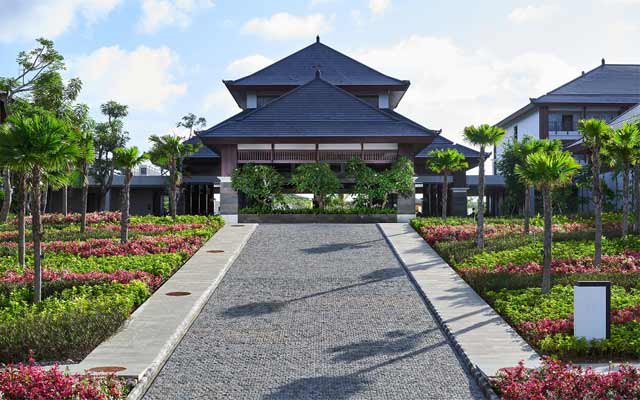
Perched on the hills above Nusa Dua and overlooking views of the Indian Ocean, Renaissance Bali Nusa Dua Resort features 310 guestrooms and suites. Anchoring the six F&B experiences at the resort is Backstage, an all-day dining restaurant offering local and international favourites. There is also contemporary Chinese restaurant Lion X and Indonesian restaurant Nusantara by Locavore. A pottery atelier and cooking lab by day, Tanah Liat transforms by evening into a restaurant featuring seasonal seafood and plant-based cuisines. Atomic 17 is the resort’s resident pool bar which serves fresh juices and smoothies as well as purist cocktails. Integrating the lobby and lounge, R Bar offers crafted cocktails and cold-brew coffee.
Leisure amenities are a spa, 24-hour gym, and four thematic pools including a lagoon-like jungle pool where The Cove is located, a wedding venue with an aisle stretching right to the heart of the pool. The resort also offers 1,119m² of flexible function space, including the Grand Ballroom which can accommodate up to 1,100 persons, five event rooms and seven breakout rooms.

The Tasman, a Luxury Collection Hotel, Hobart; Australia
The Luxury Collection has debuted in Australia with the opening of The Tasman, a Luxury Collection Hotel, Hobart. Located within the restored heritage area of Parliament Square overlooking Hobart’s waterfront, The Tasman offers 152 guestrooms and suites. The hotel’s three epicurean experiences is led by Peppina, showcasing authentic Italian cuisine with a local Tasmanian twist. Mary Mary is a craft cocktail bar and spirit library, while The Deco Lounge offers afternoon tea or a light lunch in a residential setting that spills out onto a terrace overlooking Parliament Square.
Additionally, the hotel offers 769m² of meeting space spread over seven customisable rooms. The Cumulo Room features floor-to-ceiling windows framing an outdoor terrace overlooking the St. David’s Park, while Parco is an underground warehouse-style events space that can hold up to 400 people. Guests also enjoy complimentary access to a 24/7 fitness centre.
Conrad Shanghai, China
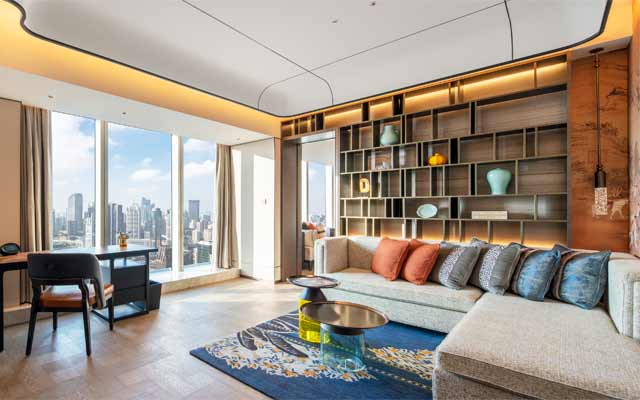
Located in the heart of People’s Square, Shanghai’s tourism and business district, Conrad Shanghai boasts 728 rooms across 66 floors, including 60 luxury suites. Each guestroom features smart connectivity and floor-to-ceiling windows that frame views of Puxi and the Bund. Conrad Shanghai’s selection of restaurants take guests on a culinary tour, from the Mediterranean seaside and the artisanal bistros of Paris to the banquet halls of China. The hotel also offers a 2,500m² pillarless event space with views of East Nanjing Road. The versatile space includes a 864m² ballroom which can accommodate up to 600 guests, 13 meeting rooms, as well as the Hu’s Penthouse and Hu’s Atelier spaces on the 64th floor.
ATF 2023 to focus on collective recovery
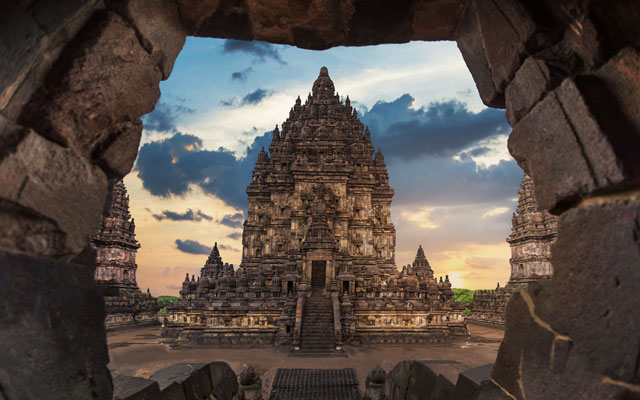
ATF 2023 will bear the theme, Empower Talents, Embrace Technology, Recover Tourism, when Indonesia takes over chairmanship of ASEAN Tourism in 2022-2023.
Sandiaga Uno, minister of tourism and creative economy, said the theme is in line with this year’s G20 Indonesia summit – Recover Together, Recover Stronger. It also signals the region’s tourism recovery.
“Indonesia will foster the resurgence of the tourism sector and the opening of jobs to spur (recovery of) both national and ASEAN economy,” he said.
Pauline Suharno, chairman of Association of the Travel Agencies in Indonesia, said ATF 2023’s vision of togetherness must be reflected in implementation, through applicable programmes such as common health passport measures, border controls and returning policies across the region.
Herman Rukmanadi, CEO of Bhara Tours, called for collective facilitation of travel within ASEAN member countries and intra-ASEAN travel promotions.
ATF 2023 will be held in Yogyakarta.
TUI ready to bring back Germans, but with conditions
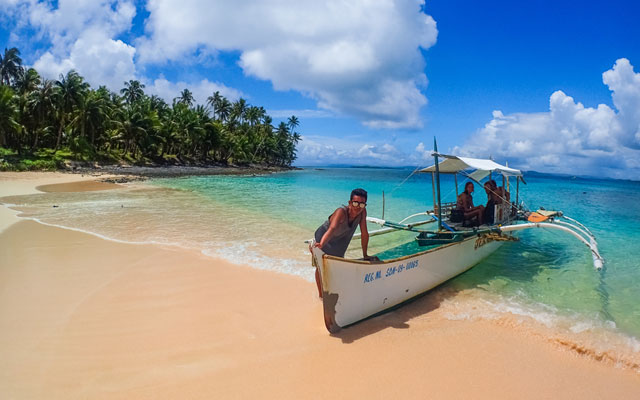
One of South-east Asia’s biggest European buyers, TUI Group, says the region’s recovery depends not only on the easing of entry rules and availability of flights, but on the reopening of Thailand and Vietnam.
This reflects the bloc’s dependence on each other and the need for destinations to work in unison to bring back arrivals to pre-pandemic 2019 levels.
Senior product & contracting manager, Christiane Thoma-Ratnasiri, who travelled from Germany to attend ATF 2022, explained that many clients enjoyed a combination of South-east Asian destinations.
“So, not having those (combination) possibilities is a big disadvantage for the region at the moment,” she added.
Thoma-Ratnasiri does product and contracting for brands Airtours and TUI, covering Indochina, Myanmar, India, Nepal, Hong Kong, China, Taiwan, South Korea and Japan.
She described the impact of the pandemic on German travel to Asia as “immense” and said that recovery is still difficult.
“Travel restrictions are very strict and they change very often, as seen in Thailand. So, clients don’t feel confident to travel, as what’s valid today may be overturned the next day,” said Thoma-Ratnasiri.
Demand is further weakened by poor flight connectivity to ASEAN member countries, she said. This, however, goes back to the need for “reliable rules which can be handled easily”.
Asia, with a long list of requirements to satisfy before a visitor is allowed in, is widely seen as a mini China fortress, especially to Europeans who largely enjoy hassle-free travel within the Schengen Area since the European Union standardised entry protocols.
Organisations such IATA in Asia-Pacific and the ASEAN Tourism Association have been urging for a similar standardisation effort within South-east Asia.
Thoma-Ratnasiri said Germans are “desperate” to travel and will come back once the barriers are removed. In South-east Asia, Thailand is its most important destination, followed by Indonesia/Bali, while Vietnam has potential. The only ASEAN destination that’s not likely to recover in 2022 is Myanmar.
TUI is ready to handle a return of business immediately, she said. Despite the barriers, contract negotiations with partners have continued as before so that everyone’s prepared in case the business restarts. Most of the negotiations were done via email or virtual calls, although she prefers a personal meeting where a contract can been signed within 1.5 hours and everyone feels “good and satisfied”.
During her time at ATF 2022, Thoma-Ratnasiri explored island destinations in Cambodia such as Koh Rong, in the Sihanoukville province. The luxury 67-villa Royal Sands Koh Kong Resort is hosting 90 ATF delegates on the island this week.
“Actually I am mostly fascinated by the friendliness of the Cambodian people, and I love the southern islands. Of course Angkor is outstanding, however, there is much more to discover in Cambodia. I am excited to reconnect with my business partners after two years of no personal contact,” she said.
Kimpton Kitalay Samui welcomes Michael Janssen as GM
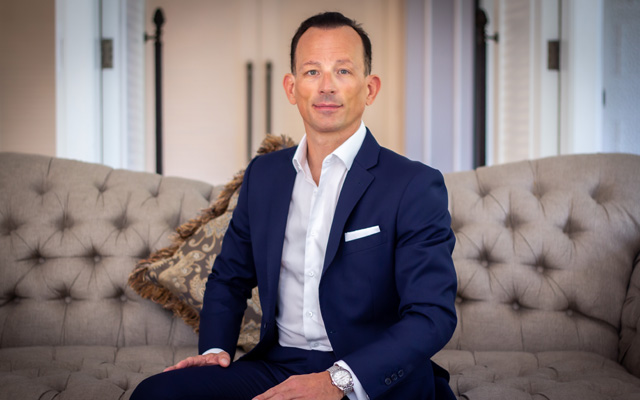
As general manager at Kimpton Kitalay Samui, Michael Janssen will spearhead strategy and development to successfully establish the resort in Koh Samui and drive its continued growth.
His other responsibilities include overseeing all resort operations and ensuring excellence in all functions of the hotel, from guest service and sales to profit performance.
Janssen has been with IHG Hotels & Resorts for more than 20 years and has worked in a range of roles and across geographies including EMEA, China, Thailand and Indonesia.
He was previously the area general manager based at InterContinental Hua Hin Resort. There, he was responsible for managing a portfolio of south Thailand’s luxury resorts including Holiday Inn Vana Nava Hua Hin, InterContinental Koh Samui Resort and InterContinental Phuket Resort.
Previously, he successfully managed hotels in Mauritius and Indonesia after leading sales and marketing teams in hotels across Asia and Europe.
Studio M presents chocolate making and resin workshops
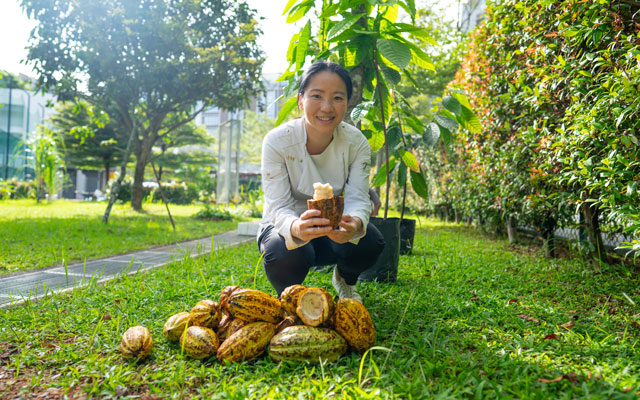
Studio M has launched two curated experiential staycation packages in collaboration with pastry chef Janice Wong and resin workshop Resin Play.
Sweet escape to chocolate wonderland
Together with architect of the 2am: dessertbar restaurant chain, Janice Wong, Studio M has designed a chocolate bar-making workshop where guests will be guided through the transformation from “bean to bar”.
In this 60-minute workshop, guests will learn the secrets of chocolate bar making – from roasting, winnowing, grinding to conching. They will also get to create their own chocolate profiles by taking reference from Wong’s secret chocolate recipes. Adventurous tasters are also welcomed to taste the cocoa nibs during the workshop.
The Chocolate Temptation Staycation package is priced from S$240++ (US$177) per night.

Get creative with resin pouring
In collaboration with Resin Play, a 10-year experienced resin school, Studio M will be hosting a 40-minute resin workshop for in-house guests.
Priced from S$185++, the Resin Play package includes all the materials guests require to mould their own coaster, which they will be able to take home as a memento.
Global tourism grows 4% in 2021 but remains far below pre-Covid levels
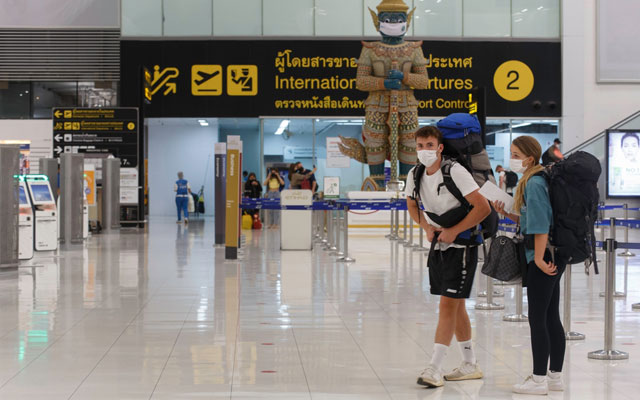
While global tourism experienced a four per cent upturn in 2021 compared to 2020 (415 million versus 400 million), international tourist arrivals (overnight visitors) were still 72 per cent below the pre-pandemic year of 2019, according to preliminary estimates by UNWTO.
This follows on from 2020, the worst year on record for tourism, when international arrivals decreased by 73 per cent.
The first 2022 issue of the UNWTO World Tourism Barometer indicates that rising rates of vaccination, combined with easing of travel restrictions due to increased cross-border coordination and protocols, have all helped release pent-up demand.
International tourism rebounded moderately during 2H2021, with international arrivals down 62 per cent in both 3Q and 4Q compared to pre-pandemic levels. According to limited data, international arrivals in December were 65 per cent below 2019 levels. The full impact of the Omicron variant and surge in Covid-19 cases is yet to be seen, said UNWTO.
The pace of recovery remains slow and uneven across world regions due to varying degrees of mobility restrictions, vaccination rates and traveller confidence. Europe and the Americas recorded the strongest results in 2021 compared to 2020 (+19 per cent and +17 per cent respectively), but both still 63 per cent below pre-pandemic levels.
By subregion, the Caribbean saw the best performance (+63 per cent above 2020, though 37 per cent below 2019), with some destinations coming close to, or exceeding pre-pandemic levels. Southern Mediterranean Europe (+57 per cent) and Central America (+54 per cent) also enjoyed a significant rebound but remain 54 per cent and 56 per cent down on 2019 levels respectively. North America (+17 per cent) and Central Eastern Europe (+18 per cent) also climbed above 2020 levels.
Meanwhile, Africa saw a 12 per cent increase in arrivals in 2021 compared to 2020, though this is still 74 per cent below 2019. In the Middle East, arrivals declined 24 per cent compared to 2020 and 79 per cent over 2019. In Asia and the Pacific, arrivals were still 65 per cent below 2020 levels and 94 per cent when compared to pre-pandemic values as many destinations remained closed to non-essential travel.
Industry players urge coordinated border controls
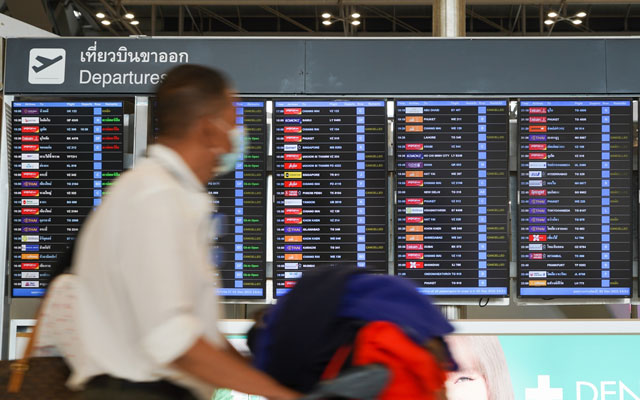
Tourism stakeholders reiterated the urgent need for a coordinated approach to cross-border travel in order to support a stable travel and tourism recovery.
Speaking at Booking.com’s inaugural roundtable, The Travel Edit: Embracing the Unpredictable on January 18 in Singapore, Campbell Wilson, CEO of Scoot, called for a common list of vaccines recognised across all countries as well as unanimous usage of a single QR code across borders.
Wilson said these should be available at the very least, despite a near “impossible task” for governments to agree on Covid-19 responses.
Fellow speaker, Kerry Healy, CCO, South-east Asia, Japan and South Korea at Accor, expressed frustration over differing state of border openings within South-east Asia, and emphasised the need for “harmony” in regulations.
Wilson added that government agencies, associations, medical community and economic divisions should work together to ease administrative processes to make regional travel less cumbersome.
Philippines lays groundwork for the return of South Koreans
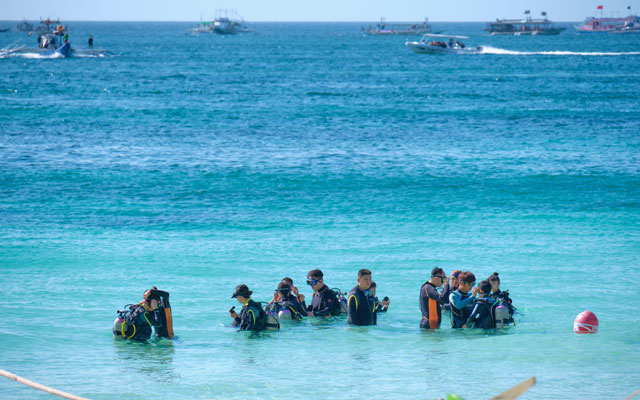
South Koreans, the perennial biggest inbound market of the Philippines, are interested to travel again to the destination, as gleaned from results of a month-long pre-selling of tour products.
The Online Pre-Booking Campaign from November 5 to December 4, 2021, initiated by the Department of Tourism (DoT) in tandem with seven major travel agencies in South Korea, listed fresh tour products in popular destinations pre-pandemic: Bohol, Boracay, Cebu, Clark and Manila.
Maria Corazon Jorda-Apo, tourism director South Korea, said 3,707 bookings were made and 8,940 enquiries received during the campaign. “One agent even had several incentive groups departing in 2022; with 2,013 passengers in total,” she revealed.
Jorda-Apo told TTG Asia that while the volume of bookings was “insignificant” compared to pre-pandemic, the number of bookings and enquiries made while Philippine borders are still shut demonstrated encouraging interest from the market.
“For us, this is a very good indicator and will somehow help us in jumpstarting travel when restrictions are lifted,” she said.
Under the Online Pre-Booking Campaign, which Jorda-Apo intends to repeat this year, tour packages (excluding airline tickets) are valid for one year after the start of flights to the destination, while other suppliers have included DOT-established safety protocols and compulsory PCR tests upon arrival.
Jorda-Apo said the packages were priced more attractively than pre-pandemic, and the destinations were selected by South Korean tour operators based on their popularity before the travel freeze.
For instance, South Korean agents expect Boracay to attract younger travellers when access returns, as the destination has been popular among this segment before and even during the pandemic.
She added that pre-pandemic, South Koreans visited the Philippines mainly for beach holidays, weekend getaways, diving, learning English as a second language, and golfing, especially in winter. Families with children, couples and millennials with their friends/work associates came to enjoy natural attractions, top hotels and resorts, and shopping facilities.
Commenting on the quarantine-free travel bubble being looked into between South Korea and the Philippines, possibly benefitting Bohol, Jorda-Apo said airlines and charterers were still waiting for the Omicron wave to pass. With stability, charterers and airlines will return to destinations other than Manila.
India demand for SE Asian vacays stay strong
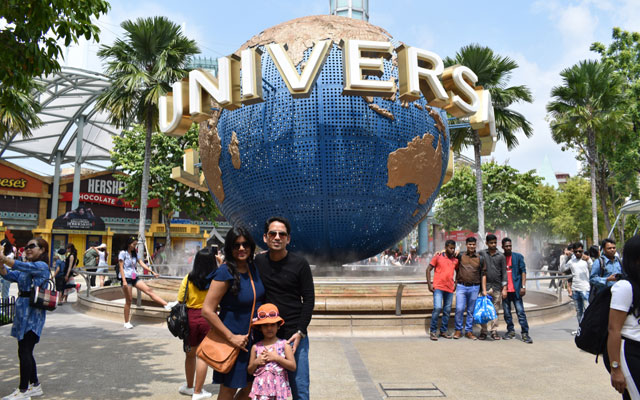
South-east Asia’s myriad destination appeals and close proximity to India are keeping Indian holidaymakers spell-bound, travel agents told TTG Asia.
In fact, many expect buoyant demand for South-east Asia to play a critical role in reviving India’s outbound tourism business.
Bookings rebound hinges on the resumption of commercial flights, opined Rajeev Kale, president & country head – holidays, MICE, visa with Thomas Cook (India).
“Our data indicates high interest across a range of consumers – both the small and multi-generational family segment, couples and honeymooners, young working professionals/millennials, and those seeking ‘bleisure’ trips, said Kale.
Counting the region’s many appeals, which include gastronomic variety, wide range of outdoor activities including water sports and jungle adventures, and excellent diving locations, Kale said cruising is another strong business opportunity for Indian outbound specialists.
Other Indian travel consultants expect South-east Asian demand to return with the onset of the summer holidays.
Aditya Tyagi, founder of Luxe Escape, is confident of a good summer showing, as the current Omicron variant has had a less fatal and severe impact on communities compared to earlier variants.
Although Tyagi expects favourable leisure demand, he is less optimistic of destination weddings.
“As far as weddings are concerned, I think Indians will not choose South-east Asian destinations, as that involves charter flights and we don’t have many options due to restrictions on international services,” he explained.
Offering an alternative view, Meera Charnalia, senior vice president & head of MICE & events, Thomas Cook (India), said there has been pent-up demand for destination weddings, along with pre- and post-wedding ceremonies and celebrations. Such celebrations have so far been taking place in India, but clients are looking forward to hosting their life’s milestone in South-east Asia, particularly Thailand and Malaysia.
Given the large expenditure on destination weddings, Charnalia said the return of such overseas events is vital to the revival of India’s outbound tourism sector.







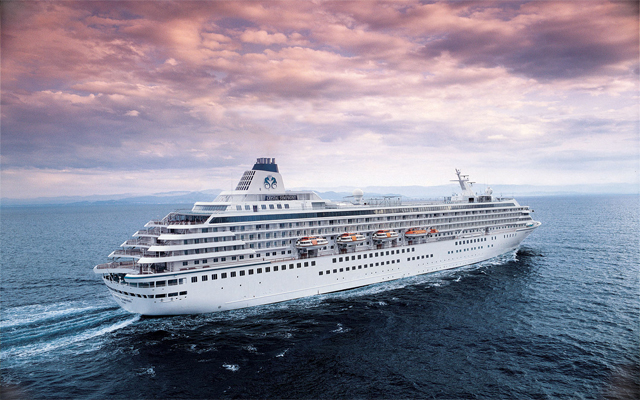
Crystal Cruises has suspended operations for its ocean and expedition ships through April 29, and river cruises through the end of May.
The move comes after its parent company, Genting Hong Kong, filed to wind up its operations after failing to secure funding to pay its debts.
“Suspending operations will provide Crystal’s management team with an opportunity to evaluate the current state of business and examine various options moving forward,” said the cruise line in a statement.
Crystal’s three ships currently in operation – Crystal Serenity and Crystal Symphony sailing in the Caribbean and Crystal Endeavor in Antarctica – will complete their current voyages.
Crystal Symphony’s current voyage ends in Miami on January 22, Crystal Serenity in Aruba on January 30 and Crystal Endeavor in Ushuaia, Argentina, on February 4.
“This was an extremely difficult decision but a prudent one given the current business environment and recent developments with our parent company, Genting Hong Kong,” said Jack Anderson, Crystal’s president.
“Crystal has been synonymous with luxury cruising for more than 30 years and we look forward to welcoming back our valued guests when we resume operations. We wish to thank our guests and travel advisors for their incredible support during these ongoing challenging times.”