 Is the Singapore-Riau Safe Travel Bubble sparking joy?
We are happy that the borders for Bintan are open, and that’s a welcome response to all the hard work that we have put in, in terms of communications with the local authorities to reopen Bintan for tourism.
But that’s just one portion. The Indonesia side is very clear about what will happen when travellers enter Bintan through the Safe Travel Bubble. The protocols are in place. However, we have yet to receive a written directive from Singapore authorities on how travellers from Bintan will return to Singapore.
It is not clear how Singapore intends to implement this, although Singapore prime minister Lee Hsien Loong acknowledged the Singapore-Riau Safe Travel Bubble announcement during RISING (Singapore-Indonesia Leaders’ Retreat on January 25, 2022), and said that he is working with president Joko Widodo on expediting the arrangement.
We can only be truly happy when Singapore announces reciprocal quarantine-free arrivals from Bintan.
The Singapore-Riau Safe Travel Bubble still requires a lot more work to be done, especially on the Singapore side. The current regulation for travel into Singapore from Bintan requires a seven-day quarantine.
Compulsory quarantine on return will continue to be a major obstacle to Bintan’s tourism recovery, so we are hoping hard that the Singapore authorities can agree on a Vaccinated Travel Lane with Bintan, just like the ongoing arrangement with Jakarta which is very convenient and successful.
Working from home has become a norm for many, and the returning quarantine in Singapore can be served at home. Will this help to encourage Singapore residents to still go ahead with a Bintan vacation?
I don’t think so. Not everybody can work from home, and most people value the freedom of movement – they don’t want to be confined after coming home from their holiday.
The returning quarantine is another layer of inconvenience, considering how travellers wanting to go on the Singapore-Riau Safe Travel Bubble will have to pay for PCR tests in Singapore and Indonesia (once prior to departure and again upon arrival at Batam’s Nongsapura ferry terminal or Bintan’s Bandar Bentan Telani terminal). If it is required by Singapore authorities, travellers will also have to take another PCR test in Bintan and Batam before they can board the ferry home, and then another PCR test on arrival in Singapore.
Imagine this: a single traveller taking a two-night break in Bintan would have to complete four PCR tests. In Singapore, a PCR test costs about S$120 (US$89), while in Bintan S$30. That’s S$300 on tests alone.
While cost is a concern for some, compulsory quarantine is a concern for most.
Would these travel regulations change the way people holiday in Bintan?
We will see fewer day-trippers. People will stay at least two or three nights to make the procedures and costs worth it.
That’s a good point. Singapore residents typically view the island as a quick getaway for spa and golf. Can Bintan convert day-trippers or short-stay regulars into longer staying guests?
Definitely. Firstly, we have more than enough accommodation. We have 2,000 hotel rooms in operation now within the Lagoi travel bubble. These are from seven hotels that have remained open, out of a total 17 hotels in Lagoi. Hotels are required by law to take only 50 per cent of capacity, but daily arrivals through the travel bubble are capped at 500 pax.
Secondly, we have four signature golf courses in operation along with so many other recreational and tourism facilities, all of which are spread over an area that is 15 to 20 times larger than Singapore’s Sentosa island. There are plenty of activities for travellers looking to stay in Bintan for three or four nights.
We are expecting leisure travellers to return, as well as weddings and business events. Bintan hotels, resorts and venues are authorised to host events of up to 300 pax in a single area with safety measures in place.
For almost two years, Singapore residents have had to stay home. Now that Bintan is reopened for tourism, we believe that Singapore residents will return to their favourite backyard over weekends and during the school holidays.
Is Bintan Resorts planning festivals or events to encourage longer stays?
We (used to) organise a lot of sports events annually – five or six pre-pandemic. We have started to speak to our event organiser partners about reviving some of these events. I think we can do the minimum safely – that is to bring back a few sports events such as triathlons and marathons, which can be conducted within the Lagoi area. It is possible to do a 40km race within Lagoi.
As for Tour de Bintan (a premier bicycle race) which usually extends across the island, perhaps we will have to do a smaller variation called Tour de Lagoi or Sprint – a shorter distance in loops but more intense.
Some of these sporting events can be modified and kept within a particular resort, such as Nirwana Gardens.
At the same time, we are also appealing to local authorities to allow us to conduct races that go beyond the Lagoi boundaries. Race participants do not stop and mingle with the locals; they are focused on completing their race. So we think that races that extend out will not pose any risk of infection to the local community. I think we can find a way to do this.
Bintan used to have concerts too. I think these will only come back later in 2022.
I remember those sports events were a crowd magnet for Bintan. How do you think interest in them has held up over the past two years?
When we cancelled our Tour de Bintan (due to the pandemic and lockdown), we had more than 1,200 registered participants. These people have told us that they will come back to Bintan once we resume the race.
However, I must say that sports tourism is not our biggest revenue generator. The traditional holiday segment is still the biggest consumer of accommodation and F&B in Bintan. Sports tourism travellers make up about 30 per cent of Bintan’s total arrival and revenue.
Still, every potential event or activity that can attract travellers matter, especially as Bintan tourism recovers.
In general, Bintan hotels need about 38 per cent of room occupancy to break even. Now, they are only allowed to fill 50 per cent of their room inventory. If these hotels can achieve a 50 per cent occupancy rate, they will be able to make some profit.
The travel bubble gives us hope, even though there are still many restrictions. It is also a clearer signal to the hotels for them to begin ramping up operations.
Has Bintan been able to curb tourism losses with the domestic travel market?
Domestic arrivals in 2021 were 15 per cent, up from 10 per cent pre-pandemic. That is not enough for hotels to break even.
You mentioned earlier that there are only seven out of 17 hotels open for tourists in Lagoi. Now with the travel bubble underway, will the remaining hotels reopen for business?
Once Singapore can confirm there is no compulsory returning quarantine for travellers coming from Bintan, hotels that are now closed will gear up for reopening. Some of the hotels that have closed during the travel freeze are Club Med Bintan, Nirwana Gardens and Angsana Bintan. They will need three weeks to a month to reopen.
Hotels have been maintaining their hardware regularly despite the pause in operations, but they will need time to bring back manpower. During the travel freeze, most hotels placed their staff on unpaid leave. Some staff left their jobs completely. A large part of Bintan’s tourism workforce comes from outside of Bintan, so recruitment will take time.
Can they ramp up in time? I’m sure they can, since the hotels will not be reopening with 100 per cent of room inventory (due to government safe measures). They only need manpower to run 50 per cent of capacity at their facilities.
You held a forum for Singapore travel agents on February 3. Will there be even more travel trade engagements now that travel to Bintan is possible again?
Our doors were never closed. Communications with our travel trade partners have been constant throughout the travel freeze, via Zoom meetings and other online channels. We have been doing this every month, and more frequently for some operators. Going forward, we will have even more engagements for sure.
Once we are certain that a reciprocal travel arrangement is in place, the first thing we would want to do is to organise a fam trip with all our stakeholders and bring our travel trade partners, event organisers, trade journalists and travel bloggers over to Bintan. This will be a chance for them to experience Bintan after two years of tourism break. For the travel agents, a firsthand experience will help them sell Bintan. We will also support them in sales and marketing to the general public.
Travellers continue to be most concerned about procedures when they travel, especially if they are infected during their trip. How can Bintan support travellers should they need Covid-19-related medical attention?
Falling sick during travel is nothing new, and Bintan has always been prepared for ill travellers. The system has been in place for the past 25 years, since the day Bintan Resorts established its first property.
Should a traveller from Singapore fall sick in Bintan, we usually refer them back to their home country. If medical attention in Bintan is preferred, we have a general hospital here in Tanjong Pinang (the largest town in Bintan and the capital city of the Riau Islands) that is fully-equipped with Covid-19 treatment facilities. Travellers can be quarantined in this hospital if they so desire.
If the traveller prefers to return to Singapore, we have a boat dedicated to medical repatriation. We have a long-term partnership with Singapore-based Hope Medical Services for such incidents. The Singapore government is obliged to receive Covid-19-infected Singapore residents home for medical treatment.
Travellers to Bintan will require insurance coverage of up to S$30,000, and that amount is more than enough to cover medical treatment or repatriation.
What sort of Covid-19 safe measures will travellers experience in Bintan?
Besides the on-arrival PCR tests, travellers will have to collect a BluePass token once they are cleared for entry (with a negative test result). The BluePass token is similar to Singapore’s TraceTogether token, and is used for tracking and tracing in the case of Covid-19 exposure. Access to public facilities, such as restaurants, will require the token.
Like all public facilities across Indonesia, hotels and facilities in Lagoi are certified under the country’s Clean, Health, Safety, and Environment (CHSE) programme. We have also engaged a Singapore-based health and safety consultant, Optimus Consulting, to advise us on meeting SG Clean (a quality mark established by Singapore’s National Environment Agency to safeguard public health during the pandemic) health and safety standards.
All staff are trained on SG Clean protocol, and leaders are aware of what needs to be fulfilled.
We have modelled our pandemic response protocols after Singapore, from the use of the BluePass token to our public hygiene measures, because 90 per cent of our international arrivals come via Singapore. Of that, 30 per cent are Singapore residents.
Does modelling pandemic response protocols after Singapore include drinking restrictions in public spaces from 22.30 to 07.00?
No, no! Travellers to Bintan are welcome to enjoy their drinks – but responsibly and with conscious safe distancing (laughs).
Bintan is a resort island, so it is natural for travellers to expect to be able to relax and enjoy themselves.
In fact, we encourage them to drink, because that contributes to our F&B revenue!





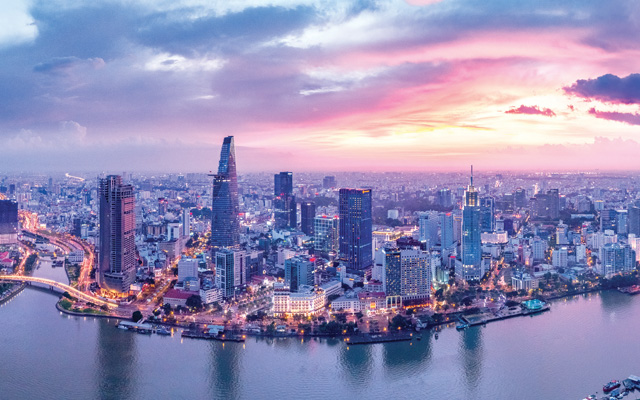
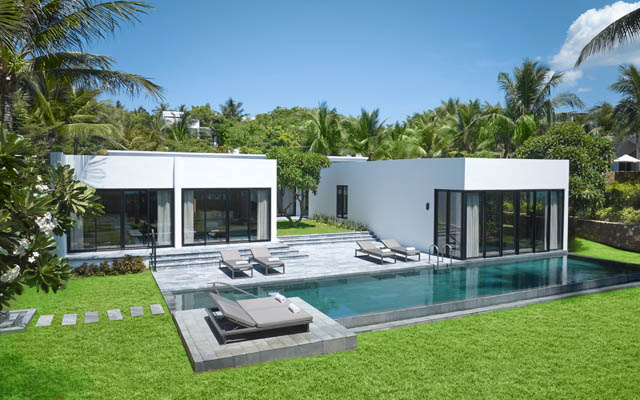
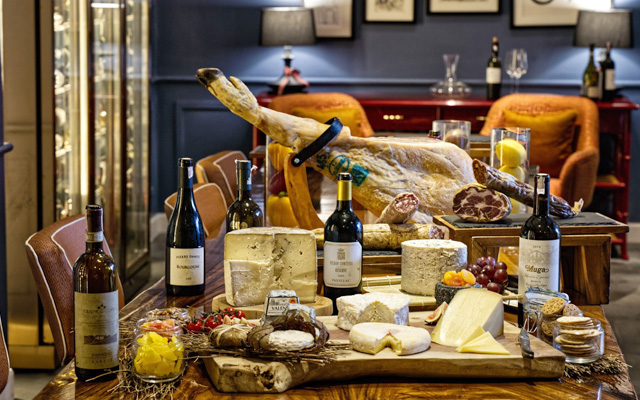






Vietnam is working towards a full reopening of her borders to international tourists by April 30, 2022.
This is a major step forward in reopening since the government allowed five localities – Phu Quoc Island, Quang Nam, Da Nang, Khanh Hoa, and Quang Ninh – to join a pilot programme to welcome again foreign tourists since November last year. Ho Chi Minh City and Binh Dinh were the latest two localities to join the programme.
The country has welcomed about 8,500 international tourists from South Korea, Russia, Singapore, the UK and the US to date.
When Vietnam fully reopens her borders, all arrivals will have to present a Covid-19 vaccination certificate, issued at least 14 days before entry, or show proof of recovery from Covid-19 within six months prior to entry. They must also present a negative PCR test certificate issued no more than 72 hours prior to entry, and ensure that their travel insurance provides at least US$50,000 of Covid-19 treatment coverage.
There will be separate requirements for partially vaccinated or young children.
Under the current protocols, vaccinated individuals and those who have recovered from the virus would still be required to self-isolate for three days at their place of residence. Unvaccinated or partially vaccinated individuals are required to self-isolate for seven days.