Vietnam will remove pandemic restrictions on international passenger flights from all markets starting February 15, with the intention to restore flight frequency to pre-pandemic levels.
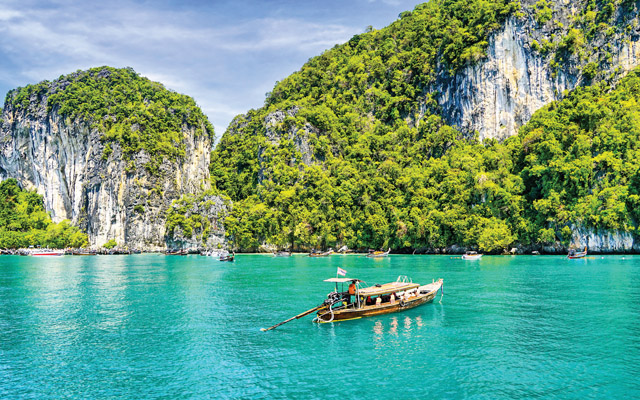
Vietnam will lift all Covid-19 restrictions on international flights to aid the country’s tourism recovery; Hang En cave pictured
According to state-run Tuoi Tre newspaper, Dinh Viet Son, deputy director of the Civil Aviation Administration of Vietnam, said Vietnam has informed her partners about the new policy and only China has yet to agree on commercial flight resumption with Vietnam.
Vietnam has begun her travel and tourism restart, with gradual international flight resumption with 15 markets from the start of 2022 as well as an intended full border reopening to international tourists by April 30.
Emirates and Maldivian have signed a Memorandum of Understanding (MoU) to explore codeshare, interline, and joint holiday package opportunities.
Emirates and Maldivian will explore opportunities to develop their routes and enhance travellers’ connectivity
The two carriers are reviewing a codeshare agreement that will enable Emirates’ customers to conveniently book and connect from Male to more than 15 domestic destinations and all international destinations served by Maldivian, the flag carrier for the Maldives.
They will also explore opportunities to cooperate on their respective tour operating arms, to offer customers tailor-made packages including hotel stays and exclusive tours.
Adnan Kazim, Emirates’ chief commercial officer, said: “Maldives is one of the most popular leisure destinations in Emirates’ network and we are very pleased to be exploring a partnership with the nation’s local carrier. A codeshare and interline agreement will immensely benefit both carriers. For Emirates customers, it is enhanced connectivity to and from the Maldivian archipelago; for Maldivian travellers, it’ll ease access to our extensive network of more than 120 destinations, via Dubai.”
Ibrahim Ameer, minister of finance of the Republic of Maldives, acknowledged the Emirates’ significant impact on the Maldives’ tourism industry – the airline is a top producer of international passenger traffic for the destination.
“The possible partnership between the two airlines will benefit the Maldivian economy and strengthen economic ties between the Maldives and the United Arab Emirates,” Ibrahim added.
Despite progress in Bali’s reopening, which saw direct flights being announced by two airlines and the 10-day quarantine period being cut by half with a new travel bubble system last week, Indonesian inbound players are losing faith in the policy.
Their source of woe is the Bubble Quarantine Policy’s continued requirement of quarantine for arriving travellers.
Indonesian inbound players say Bali’s new Bubble Quarantine Policy is too restrictive to aid recovery
Sugeng Suprianto, managing director of Top Indonesia Holidays, told TTG Asia that travellers today are gravitating towards destinations that are easy to access, particularly those without mandatory quarantine.
“Europeans are not interested (in Bali). I’ve lost many clients who have turned to the Philippines, the Maldives and other countries that have dropped their quarantine requirement,” he added.
Ricky Setiawanto, Panorama Destination’s director of business development, hopes the government will have the confidence to remove the quarantine requirement, as many destinations have. He said the quarantine requirement inflates the cost of travel, making the destination less competitive than those without compulsory on-arrival isolation.
“Tourists have to spend at least US$700 on the Warm-Up Vacation package (a 5D/4N arrangement with select hotels that is part of the Bubble Quarantine Policy). This burdens tourists, which pushes them to choose other destinations,” said Ricky.
Under the new rules, tourist visas will also no longer be available on arrival. Instead, travellers will need to obtain an e-visa from sponsoring travel companies before they fly. This worries Adjie Wahjono, operations manager of Aneka Kartika Tours, as the procedure adds to the cost and complexity of planning a trip to Bali.
“We hope that visa-on-arrival can be reinstated, at least for residents of ASEAN member countries,” Adjie said.
With the Philippines easing international border restrictions, including the removal of returning quarantine, outbound players in the country believe that Philippine residents are ready to explore the world once again.
However, Filipinos still lack the confidence to travel abroad, said Matt Poonin, general manager of Cebu-based Travelite Travel and Tours in Cebu.
Thailand’s destination branding and supportive traveller schemes have led to outbound interest from groups in the Philippines; Phuket pictured
To help stoke outbound travel demand, Travelite has partnered with Divaishnavi Travel and Tours as well as iTravel, iExplore Tours & Services to organise the 7th Edition of the International Travel Fair (ITF). The largest B2C travel show – back after a two-year hiatus – in the Visayas and Mindanao will take place from February 18 to 20 at the Ayala Mall Cebu.
During the tradeshow, the companies will promote both domestic and overseas destinations, shared Poonin.
Among the ITF exhibitors will be Turkish Airlines, which currently flies direct from Turkey to Manila, and has recently added a connecting flight to Cebu on January 4, 2022.
But without destination promotion support from the Turkey tourism board, Eric Papa, president and CEO of Kasel Travel Solutions, said the route “is not appealing for both leisure and incentive travel at the moment”.
“The prospect and potential of (Filipinos choosing) an outbound destination depend on the marketing activities of its NTO during this pandemic. It is noteworthy that Japan – despite closed borders – has been conducting continuous promotions in the Philippines, as well as webinars that started last November,” Papa elaborated.
A successful marketing strategy is also required. He cited Thailand as an example, where the Test & Go Thailand Pass and Sandbox programmes in holiday locations like Phuket have both enabled him to receive an outbound enquiry from a small incentive group for May.
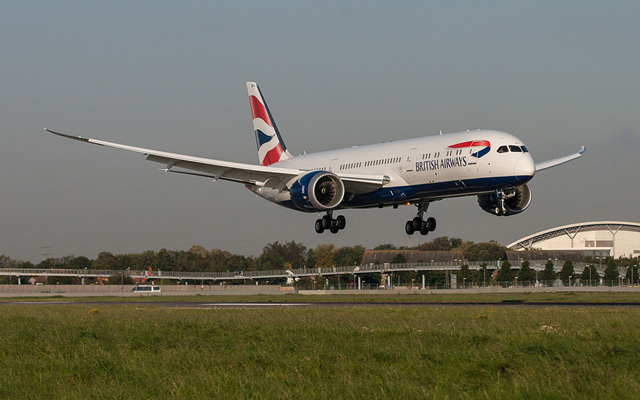
British Airways’ first passenger flight between Sydney and London since April 2020 will take to the skies on March 29, 2022, following news of Australia’s reopening to fully-vaccinated international travellers.
Flight BA15 is scheduled to touch down in Sydney on March 29 at 06.10, while returning flight BA16 is to depart at 15.50.
British Airways has also introduced a number of measures at the airport and onboard to look after the safety and well-being of its customers and colleagues.
Prior to travel, travellers will receive details of how they can prepare for their journey, including information on discounted test providers. They are also encouraged to download the VeriFLY app – which allows travellers to combine their travel verification documents and Covid-19 test
results in one place – before departing for London.
The airline offers a flexible booking policy, where customers can exchange their bookings for a voucher or move their dates without incurring a change fee.
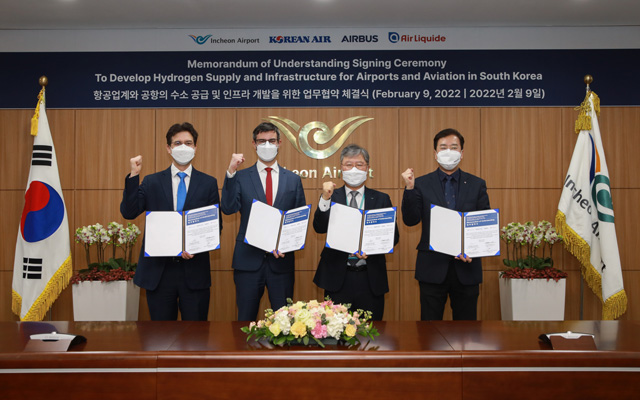
From left: Air Liquide Korea's Guillaume Cottet; Airbus Korea's Fabrice Espinosa; Incheon International Airport Corp's Jeon Hyoung-wook; and Korean Air's Lee Soo-keun at the MoU signing
Airbus, Air Liquide Korea, Korean Air and Incheon International Airport Corporation have signed a Memorandum of Understanding (MoU) to explore the use of hydrogen in the decarbonisation of the aviation sector in South Korea.
The collaboration will also study the development of South Korean domestic airport infrastructure to support the deployment of hydrogen-powered commercial aircraft. This partnership reflects a shared ambition to drive the emergence of an aviation sector dedicated to supporting the South Korean government’s goal of carbon neutrality by 2050.
From left: Air Liquide Korea’s Guillaume Cottet; Airbus Korea’s Fabrice Espinosa; Incheon International Airport Corp’s Jeon Hyoung-wook; and Korean Air’s Lee Soo-keun at the MoU signing
Anand Stanley, Airbus president Asia-Pacific, elaborated in a press release: “Under the MoU, Airbus will provide characteristics of hydrogen-powered aircraft ground operations, as well as aircraft characteristics and fleet energy usage. Together, we will prepare a roadmap to first develop hydrogen usages at and around Incheon Airport and then build scenarios to support the deployment of hydrogen ecosystems connected to other (South) Korean airports.”
The partnership will also focus on carrying out studies aimed at defining and developing the required liquid infrastructure at Incheon Airport to prepare for the arrival of the first hydrogen-powered aircraft.
Each partner will leverage their expertise to define the potential opportunities that hydrogen offers. Air Liquide will bring its expertise in mastering the entire hydrogen value chain (production, liquefaction, storage and distribution), in particular, liquid hydrogen supply, while Korean Air will provide expertise on ground aircraft operations and aviation management and operations.
Lastly, Incheon International Airport Corporation will provide an airport development plan outlook, along with air traffic characteristics and distribution among terminals.
Come February 14, India will toss out mandatory quarantine and pre-arrival Covid PCR tests for all international travellers coming into the country.
In place of a pre-arrival negative PCR test result, the new requirement only calls for international travellers to submit their primary vaccination schedule completion certificate. This exemption is available to vaccinated travellers from 82 countries that also extend quarantine-free access to Indian nations. Such countries include Australia, Malaysia, Hong Kong, Philippines, the US and the UK.
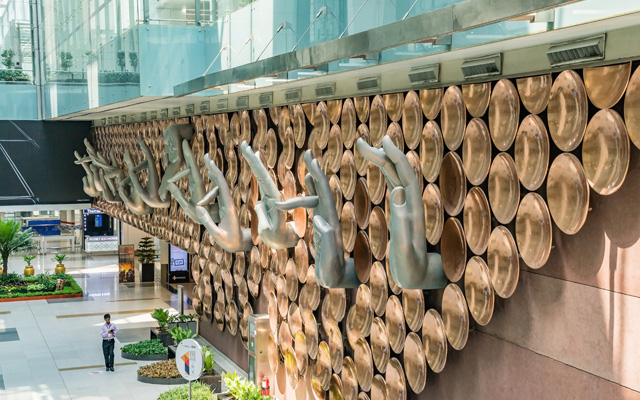
India removes more barriers for international travel into the country; Indira Gandhi International Airport pictured
The announcement, made yesterday on February 10, is met with jubilation across India’s tourism and hospitality industry, with stakeholders confident that the move will send a positive signal in international travel markets.
Gaurav Bhatia, executive director, Bird Group, told TTG Asia that he was glad to see the exit of mandatory quarantine, as the requirement had “resulted in many international travellers avoiding India”.
He now hopes that the government would resume scheduled international flights “as soon as possible to make the most of the relaxation of earlier curbs”, adding that “a significant improvement in inbound tourist arrivals this year” could be expected with both ease of entry and air accessibility in place.
Vishal Lonkar, general manager, brand development, Renest Hotels & Resorts, expects the new waivers to spur international business and leisure travel to India.
“We hope that our properties in Bangalore and Kolkata, which are near the international airport, will gain (business) momentum,” he added.
India’s easing of border restrictions would see the return of travellers from shorthaul markets first, opined Lally Mathews, managing director, Divine Voyages, as “travellers in Covid times have reservations about travelling long distances”. He added that inbound recovery would be more prominent in the next inbound season, starting October.
Latest findings from global air travel analytics firm, ForwardKeys, reveal that domestic travel within South-east Asia in the Lunar New Year (LNY) week is edging towards pre-pandemic levels, while intra-regional travel recovery is disrupted by Omicron.
The study looks at all air tickets issued as of January 29, 2022 for Indonesia, Malaysia, the Philippines, Singapore, Thailand and Vietnam, where there are LNY public holidays. Comparison is made between domestic travel during this year’s festive period from January 29 to February 6 and 2019’s February 2 to 10.
Lengthy LNY public holidays in Vietnam and pent-up travel desire in Malaysia push festive domestic travel traffic up the charts
Despite spiking Omicron cases within local communities, domestic flight bookings within Malaysia and Vietnam have returned to almost 95 per cent and 108 per cent of 2019 levels respectively.
ForwardKeys’ Asia-Pacific vice president for sales, Bing Han Kee, said the numbers were uplifting, and demonstrated the yearning to reunite and unwind when local conditions allow for travel.
Domestic travel in Indonesia and the Philippines, however, are still below pre-pandemic levels.
Explaining the results, Nan Dai, ForwardKeys’ insights expert, said: “Vietnam’s high numbers are probably because the country has one of the longest Lunar New Year public holidays among her South-east Asian neighbours. Tet Nguyen Dan (Vietnamese New Year) holidays stretch over nine days this year while (most of the LNY holidays elsewhere) are just one to two days.”
Meanwhile, Malaysia’s strong domestic traffic over the first week of LNY celebrations is likely due to pent-up travel demand, according to Dai, as the country had only permitted interstate travel in October last year, after more than 90 per cent of the adult population is fully vaccinated.
Aiding an improved LNY travel mood is the absence of intensified Covid restrictions in most South-east Asia countries, remarked Kee.
He said: “Most of the South-east Asia countries have (chosen instead to) maintain moderate restrictions or ease restrictions prudently until the end of the festive period. This year’s Lunar New Year will see a big improvement in terms of celebrations with loved ones, compared to the previous two challenging years. Pent-up celebrations in this part of the world is translating into domestic travel back home as well as staycations.”
A deeper analysis of flight bookings for travel within South-east Asia reveals the disruptive impact of the unfolding Omicron wave on intra-regional travel recovery.
Flight bookings for South-east Asia into Singapore lag far behind pre-pandemic levels, standing at 34 per cent of 2019’s performance. Similar sluggish trends are observed out of South-east Asia into the Philippines at 28 per cent, Malaysia 20 per cent, Indonesia 15 per cent, Thailand eight per cent, and Vietnam seven per cent.
However, when comparing the same period against pre-Omicron outbreak (January 29 to February 6, 2022 versus December 18 to 26, 2021), the trends are more encouraging, with South-east Asia into Malaysia flight bookings peaking at 90 per cent of pre-Omicron outbreak levels, the Philippines 86 per cent, Singapore 84 per cent, Indonesia 58 per cent and Thailand 43 per cent.
Dai said: “Thailand was among the first in South-east Asia to reopen to international visitors but tourism performance is not recovering as strongly probably due to the suspension of the quarantine-free Test & Go programme from December 22, resuming only on February 1. Until then, inbound travel was only possible via the Sandbox Programme which requires visitors to stay for a minimum of seven days in stipulated Thailand destinations.”
Kee concluded that intra-regional travel within South-east Asia was heading for a rebound, but recovery is being hampered by Omicron.
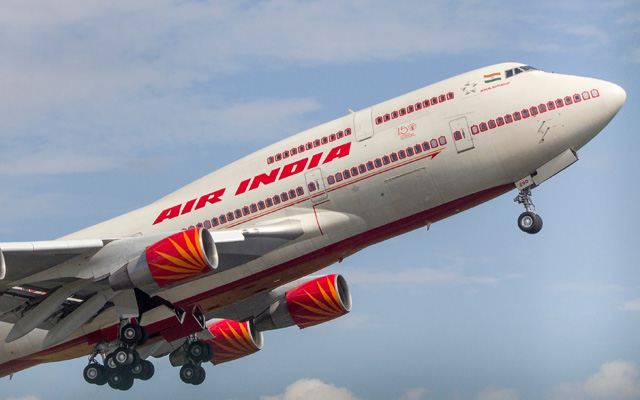
Air India in Hong Kong has withdrawn its January 11 verbal instruction to ticketing agents that only the American Express credit card will be accepted as the Form of Payment (FOP).
This follows Hong Kong’s Society of IATA Passenger Agents (SIPA) seeking “formal notice” and clarification from the airline on January 17.
Hong Kong’s Society of IATA Passenger Agents said sincerity was lacking in Air India’s remedial efforts
Air India replied on February 4 that “the concerns are appreciated and escalated to the highest level” and that “it is pertinent to note that due to an urgent development, certain decisions were taken at appropriate level to safeguard Air India’s interest”.
Air India also expressed “regret” for inconveniences and assured ticketing agents of a “continuous and mutual beneficial relationship with us”.
While SIPA acknowledged Air India’s position, association chairman Tommy Tam said the unprecedented action and “very poor handling of the communications surrounding this dramatic halt of the IATA BSP reporting/remitting process” had frustrated members.
Tam also pointed out that “no effort was made to seek the understanding of agents” or “any hint given that this was a temporary measure pending a resolution”.
SIPA also expressed disappointment that Air India delegated the serious matter to subordinates “who gave no assurances or comfort to agents, implying “Air India has scant regard for its IATA agency customers and places little or no value on our members’ support”.
A senior SIPA member commented: “Given Air India’s transition to new owners, this unprecedented action should have been better managed. Tata’s biggest challenge is the indifferent staff culture both in India and abroad.”
He continued: “Air India needs to reach out to IATA agents, sincerely apologise for this nonsense and build bridges especially, in the face of stiff competition from IndiGo, Spice Jet, Vistara and Cathay Pacific plus sooner or later, Greater Bay Airlines.”
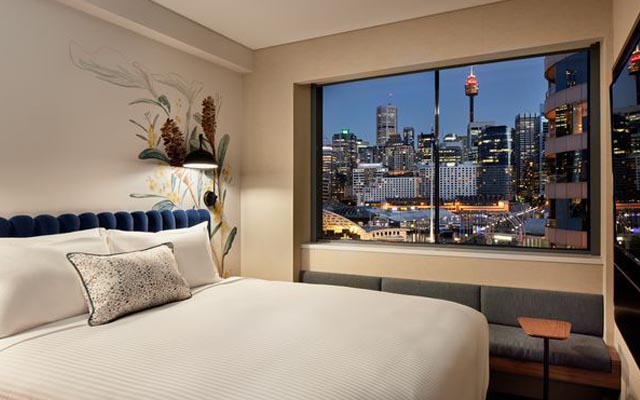
Aiden Darling Harbour, Australia
The inaugural opening marks the debut of the Aiden by Best Western brand in Australasia.
Rooms within the 88-key property in Pyrmont boast locally-made furnishings as well as complimentary Wi-Fi and chromecasting. Some rooms also boast private open-air balconies.
In the ground floor lobby and Wayfarer’s Bar & Café, guests can discover the hotel’s signature botanical fragrance from candles handmade by Pyrmont local Em Cook, while enjoying croissants from Pyrmont’s PiOiK Bakery, Staves Beer brewed next door in Glebe, wine from an all-Australian list, and bottled Aiden by Best Western signature cocktails mixed with local spirits.
Lyf one-north Singapore, Singapore
Positioned as a coliving property, the 324-key Lyf one-north Singapore in the city-state’s research and innovation hub offers One of a Kind studios with ensuite bathrooms as well as Level Up lofts that can accommodate two.
A range of vibrant and green social spaces both indoors and outdoors are available here. At Meet, an outdoor amphitheatre, guests can gather for live performances. They can break a sweat in an exercise class at To-Gather, a flexible outdoor activity area, or take a Dip at the 25-metre outdoor lap pool complete with a BBQ pit for an intimate get-together.
Events and market fairs are planned at Hangout, the property’s rooftop social clubhouse and terrace. Huddle & Collab convertible function rooms are suitable for a variety of events, from mini brainstorm sessions to larger-scale business functions.
Alongside these social spaces, lyf one-north Singapore will feature the brand’s signature communal spaces. There are Connect social zones for coworking and collaboration, as well as a Bond social kitchen for guests to prepare and share meals. There are also a gym and laundromat on-site.
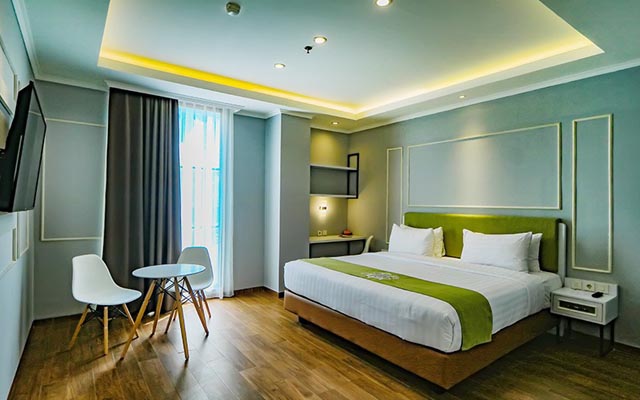
Dafam Enkadeli Thamrin Jakarta, Indonesia
The 50-room mid-scale Dafam Enkadeli Thamrin Jakarta is a Muslim-friendly property, with praying outfits and necessities in guestrooms and a dedicated praying room in the lobby.
Other facilities include a restaurant serving an Indonesian and international menu, while corporate planners may avail three meeting rooms with a capacity of between 50 and 150 people or the rooftop outdoor venue.
The hotel is located on Jalan Sunda, off Jakarta’s main business district of Jalan Thamrin, close to offices, shopping centres and restaurants.
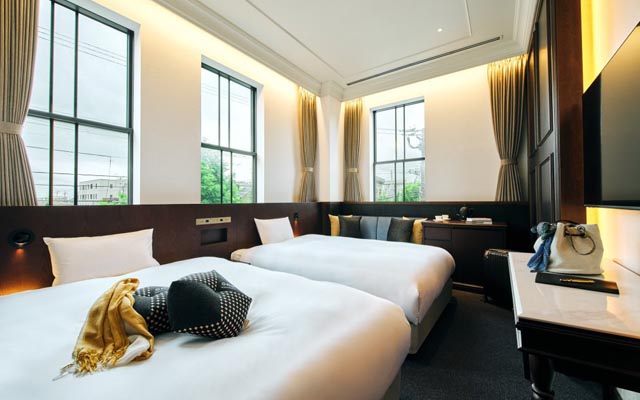
OMO5 Otaru, Japan
Located a 10-minute walk from JR Otaru Station, OMO5 Otaru by Hoshino Resorts offers 92 rooms across two buildings. The south wing is a renovation of the former Otaru Chamber of Commerce and Industry, while the north wing is a new-build.
Amenities on-site include the OMO Cafe & Dining, public bath and sauna. Guests are provided with the GO-KINJO Map, an original map of the neighbourhood with activity recommendations by staff members, and have the option of joining a Local Guide Tour that will take them on a morning walk at the Rinyu Morning Market.
















British Airways has also introduced a number of measures at the airport and onboard to look after the safety and well-being of its customers and colleagues.
Prior to travel, travellers will receive details of how they can prepare for their journey, including information on discounted test providers. They are also encouraged to download the VeriFLY app – which allows travellers to combine their travel verification documents and Covid-19 test
results in one place – before departing for London.
The airline offers a flexible booking policy, where customers can exchange their bookings for a voucher or move their dates without incurring a change fee.