TTG Asia
Asia/Singapore Saturday, 20th December 2025
Page 792

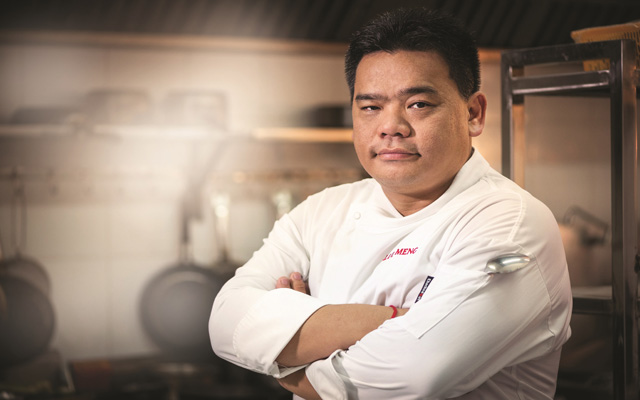
Catalysing Cambodia’s new tourism future

0

Tourism is a key economic driver for Cambodia but Covid has devastated tourism. How are CTF members affected?
Last year, we saw more than 50 per cent of businesses disappear when the pandemic started, as all international arrivals stopped in April. But Phnom Penh, the coast, Kampot and Siem Reap were able to do some business as locals could travel domestically. That continued into January and February.

Then the February 20 Community Event happened (when Covid spread across the country) and most domestic tourism disappeared (due to ongoing restrictions). When you break that down, almost every tour agent had nothing to do. Some have closed for good, some have been spending their savings and extending loans. Those unable to get more loans have been unable to continue.

For hotels, apart from quality hotels, there is almost nothing happening as well, although Kep and Kampot still have a bit of business. Official reports have also shown the restaurant sector has decreased by more than 30 per cent. The restaurant business was already competitive before Covid so it became even more difficult.

Did Covid present any positive opportunities for your members?
Before Covid, Cambodia was always linked to our neighbouring countries. Travellers would visit those countries, and then stay a few nights in Cambodia to visit Angkor Wat only.

The pandemic has given Cambodia the best opportunity to become a destination on its own. We have the beaches, culture, countryside, incredible cuisine, and the charm and hospitality of our locals. Cambodia is full of experiences, and has more than enough to provide travellers who are keen to stay longer.

The private sector is working closely with the government to newly brand and market Cambodia (as a mono destination) and encourage tourists to spent 10 days or two weeks here (as opposed to being a destination in a multi-destination itinerary).

How has the pandemic impacted the strength of CTF’s voice?
Before the pandemic, every association worked on their own and each had difficulty getting members to join. This was because traditionally, many people in the hospitality and tourism industry in Cambodia operate solo and don’t believe in belonging to a group. They didn’t understand the concept of belonging to an association which offered one unified voice, and that their issues and concerns will be represented and taken to the top level.

With the pandemic, people started to realise they needed help from the government and be able to raise issues with them. This is when we realised more people are interested in joining. Rather than Cambodian operators being very independent as they were previously, they are now more united.

What support have you provided members since the start of the pandemic?
We usually have at least one meeting a month, which has so far been held online. We have also invited people from different ministries to attend so we can all stay engaged. We have a Telegram group to make sure everyone stays informed and to give members a place to raise any issues and concerns.

Advocacy has been the main element and it works both ways. If you provide the right channel to raise concerns, it’s also much easier for the government to work with the private sector. Collectively, we have been able to come up with suggestions and options for the government, as choosing between health and safety or the economy is a huge challenge.

The pandemic has brought up many issues within the sector. We have issues spanning compliance, human resource and labour, social and business and marketing. This means we have to work with many different ministries. In good times, there was no chance to take a look at these things but during the last 18 months, we have been working with the government to develop a strategy to have an idea where the tourism and hospitality in Cambodia is going to be in the next five, 10, and 20 years.

Cambodia has excelled in the roll-out of the vaccination programme compared to other countries in South-east Asia. What role does this play in reopening to tourists?
Our CTF members and partners recognise and appreciate our prime minister has done a very good job since the government decided to start vaccinations.

In South-east Asia, Cambodia is second in terms of the percentage of vaccinations given – after Singapore – and we are comparing two countries with populations of six million versus 16 million. More than 90 per cent of adults in Phnom Penh are vaccinated, and this is not something that many cities in the world have yet achieved, so this is a great step for us.

We have been in discussions with the Ministry of Tourism about allowing vaccinated travellers in with minimal or no quarantine. We hope that will become a reality, and on our end, we hope to complete the country’s vaccinations by 4Q2021 so vaccinated tourists can also safely visit.

Cambodia’s tourism industry has lost a lot of skilled people. What needs to be done to build back the sector’s manpower resources?
We need to start preparing now. The Ministry of Tourism is currently unable to conduct any in-person training because of Covid restrictions, but has been holding online programmes on certain issues to retrain the people.

We are also requesting that the government creates a fund as soon as possible that will go towards retraining and refreshing the skills of previous tourism employees who have left the sector. Most of them wanted to remain in the hospitality sector, but have been away for more than a year now working in the agriculture and construction sectors as there is still work to be found there.

What has Cambodia capitalised on this downtime and what differences can visitors expect when they return?
The 38 Roads project has started in Siem Reap. The project comprises huge infrastructure improvements that are being carried out while no tourists are there. There is also a lot of effort being put into developing eco-tourism and new experiences related to that.

Meanwhile, the capital is changing quickly in a positive way, the coastline is developing and we have new airports planned. But the charm of the people has not changed, and that’s what makes Cambodia so attractive; it’s in our DNA.

This feature was first published on www.ttgassociations.com.
APAC sees bright spots in domestic travel recovery

0

A new report by Mastercard has found that while global travel recovery remains uneven, one-fifth of countries have returned to at least 90 per cent of pre-pandemic levels for domestic flight bookings.

The fourth report in Mastercard’s Recovery Insights: Ready for Takeoff? series, which examines key global travel trends in the air and on the ground, also found that when it comes to domestic flight bookings, Australia surpasses the global average with bookings at 116 per cent.

One in five countries approach pre-pandemic domestic fight levels: Mastercard study

The report draws on aggregated and anonymised sales activity across the global Mastercard network, along with third-party data sets and proprietary analysis by the Mastercard Economics Institute, to better understand the next phase for travel, its drivers and challenges.

“Although many markets in Asia-Pacific are yet to see international borders open, there are some early bright spots in domestic travel recovery,” said David Mann, chief economist, AP & MEA of the Mastercard Economics Institute. “As travel corridors continue to open and flourish across the US and Europe, Mastercard believes the pent-up demand in Asia-Pacific, exacerbated by extended lockdowns, will follow a similar trajectory in both business and leisure travel, as the region cautiously reopens its borders.”

Among key findings from the report are that business travel lags behind leisure travel by approximately four months globally. Business travel is showing recovery signs worldwide, with Australian domestic business travel bookings at nearly 80 per cent of pre-Covid levels, and US domestic business travel back up to just over half of its 2019 average level.

Australia, Malaysia, and the Philippines are all seeing business travel bookings outstripping leisure bookings, offering a glimmer of hope for a strong recovery once travel corridors open up.

Globally, fuel spending is up 13 per cent from its previous peak in 2019. Road trips – the big trend of 2020 – are still holding their course. The report shows a robust demand for domestic ground travel, with fuel spending up in Singapore, Hong Kong, the Philippines, and Australia, where areas such as Margaret River and Dunsborough are seeing a swell in local visitors.

Monster Day Tours rolls out National Day deals

0

Sabre releases new airline network planning white paper

0

Sabre Corporation has released a white paper outlining the new methodologies it is creating to enable its airline partners to create more holistic, accurate network plans as their focus shifts from short-term planning to long-term recovery in the wake of the pandemic.

“From an aviation perspective, the latter half of 2021 is the time to change our outlook from crisis mode with a focus only on the immediate term to again taking on a more strategic view; analysing market and fleet adjustments for the seasons and years to come,” said Cem Tanyel, chief services officer, Sabre Travel Solutions.

Sabre releases new insights into how airline network planning is adapting for travel industry recovery

“However, shifting from a purely short-term scheduling focus back to a full timeline network planning view will not be easy in the current environment. In addition to difficulties caused by reduced passenger numbers and revenue, and resulting reductions in crew for some airlines, there are additional challenges given that the data airline managers could previously rely on to estimate future demand beyond the next few weeks is no longer reliable.”

As such, Sabre is developing the robust new airline network planning methodologies described in its new white paper, The Art & Science of Airline Network Planning to Ramp up for Recovery.

These new methods can leverage its GDS shopping data in conjunction with historical global demand data and industry capacity data to predict demand in a manner that works effectively even when prior year results become less representative. Using these new approaches, Sabre has developed alternative 2021 schedules and demand estimations that are more reflective of what is likely to occur.

The white paper sets out the new methodologies created by Sabre to take a more holistic view of airline network planning at a time when it is not possible to rely on previous years’ data alone.

The paper also contains latest industry data that can help airline managers in their decision-making process. As well, it highlights why airlines need to place a deeper focus on segmentation in both the leisure and business segments, the destinations and segments that are seeing above average capacity rebound, and how Covid-19 has accelerated network planning innovation.

The full white paper can be viewed here.

Qatar reopens for fully vaccinated international travellers

0

Cathay Pacific launches eponymous lifestyle brand

0

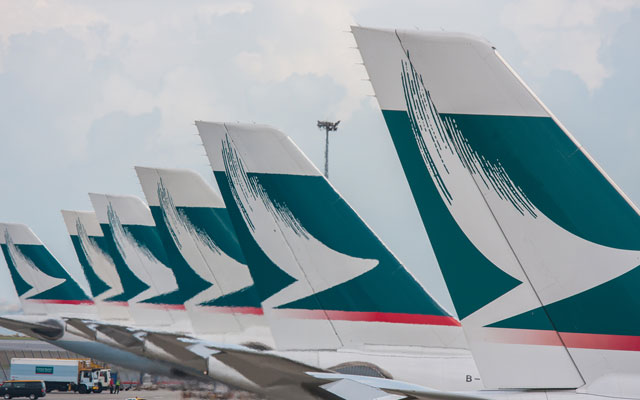
Hong Kong-based airline Cathay Pacific has rolled out a new eponymous travel lifestyle brand that will bring together the Cathay Pacific, Marco Polo Club and Asia Miles schemes.

The “premium” brand, Cathay, will also unveil a range of new offers in spending, dining, shopping, hotels, and wellness over the coming months.

Cathay’s new travel lifestyle brand will bring a wider range of products and services to the airline’s customers

The first of these – a new Cathay co-branded credit card – will be launched in Hong Kong soon. These will all culminate in a refreshed customer relationship programme to be launched in 1H2022. While the airline has made the Cathay brand initially only available in Hong Kong, it plans to gradually expand the brand to other markets.

The global airline also stated that the Cathay branding will help to simplify how their customers interact with them, including how they earn status and make use of miles.

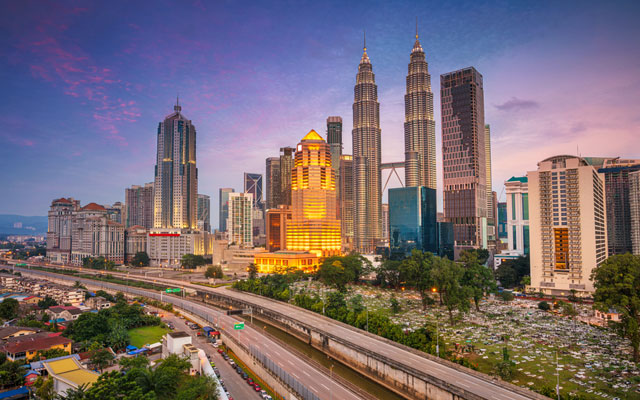
Malaysia hotels draw growing investor interest amid pandemic

0

The pandemic has exacted a toll on the hospitality industry, with more hotel owners putting their properties up for sale at below market rates, providing an opportune time for investors to make their move. Amid such a climate, hotels in Malaysia have attracted growing interest from investors.

Listings of Malaysia hotels for sale on Zerin Properties has increased by 40 per cent year-to-date, with rising interest from investors, both local and overseas.

More investors are looking to acquire hotels assets in Malaysia at below market rates amid pandemic

Zerin Properties managing director and CEO, Previndran Singhe, shared that one of the reasons for the uptick in investor interest for hotel assets in Malaysia is that asking prices for these properties have dropped between 10 to 35 per cent as compared to pre-lockdown. As well, he added, the ringgit is very competitive in comparison with Singapore and US dollars.

He said: “Our investors are also strongly looking at Vietnam and the Philippines. Ownership structures in Thailand and Indonesia make investments a bit more challenging as compared with Malaysia.”

Previndran added that Malaysian-based investors are eyeing properties and making offers on hotels in Kuala Lumpur, Penang and Langkawi. Meanwhile, foreign buyers who have always shown interest in properties in Kuala Lumpur and Langkawi are now also looking at Kota Kinabalu and Johor, especially Johor Bahru and Desaru.

He said: “Interest is driven by the strong domestic rebound after the movement control order 1.0 last year, as well as robust markets overseas that have proven travel is still in demand. In Malaysia, travel recovery might take awhile but they are prepared to wait. Once 70 to 80 per cent of the population is vaccinated, I anticipate travel bubbles will be formed within South-east Asia first before extending beyond.”

Previndran: Growing investor interest in Malaysia hotels driven by strong domestic rebound post-lockdown

The number of new Covid-19 cases has been increasing rapidly in the country to the point that the healthcare system is on the verge of collapse. This has resulted in the government imposing a ban on interstate travel nationwide since early 2021.

Insufficient assistance and support from the government coupled with harsh lockdowns that prevent hotels from accepting leisure guests, offering dine-ins at their restaurants and renting event spaces to organisers, have threatened the survival of hotel businesses this year.

Previndran shared: “We are seeing more and more hotel owners approaching us to sell their hotels over the past two months.”

Istana Hotel Kuala Lumpur had given notice to its associates last month that it would close on September 1. With the current harsh business environment, Previndran anticipates more hotel closures this year, across all locations in the country.

Malaysian Association of Hotel Owners executive director, Shaharuddin M Saaid, concurs with Previndran’s view and reveals two possibilities – hotel owners may choose to close temporarily and reopen when the business environment improves, or they may close for good and look for a buyer if the lockdown and ban on interstate travel continues indefinitely with no certainty of business recovery.

He has seen an increased number of enquiries from overseas investors seeking information on hotel properties, especially three- and four-star hotels in Kuala Lumpur.

He said: “Some property owners that have listed their properties for sale last year, but were unable to dispose of them, have lowered their asking prices. This is a good time for investors looking for a good deal.”

According to the Hotel Industry Survey Report by the Malaysian Association of Hotels (MAH), as of mid-June, out of 320 hotel respondents, two have permanently closed and 91 have shuttered temporarily. By percentage, almost 71 per cent are still operating, most of which are dependent on quarantine needs, while others are catering to guests from essential service sectors.

MAH’s CEO, Yap Lip Seng, said: “With (Covid-19) cases breaking new records these past two weeks and insufficient assistance and support from the government, I don’t see things improving anytime soon.”

He shared that the key to moving forward is highly dependent on the National Immunisation Programme, aimed at achieving herd immunity in the country.

Safe and Fun Travels: Adventure Awaits You in the Philippines

0

There may be over 300,000 square kilometers of coastline boasting some of the world’s best islands and dive sites but there is still so much more to the Philippines than its postcard-worthy beaches. Make your trip extraordinary with a different kind of adventure. Here are just a few of the must-do experiences you should include in your itinerary to this Southeast Asian archipelago.

HIKING
Mt. Pulag, Benguet

Step foot into what is known as the Philippines’ “Playground of the Gods”. Mt. Pulag, the third highest in the country,  is a popular trek in Luzon for professional climbers and even for non-hikers due to its famous sea of clouds.

SANDBOARDING
La Paz/Paoay Sand Dunes, Ilocos Norte

Sand dunes in a tropical country? Yes, the Philippines has that and you can experience it only in Ilocos Norte. Slide down the sandy cliffs using a concave board and get on a bumpy ATV or 4×4 ride in La Paz for its steeper drops or Paoay for an excellent view of the beach.

CAVING
Sagada, Mountain Province

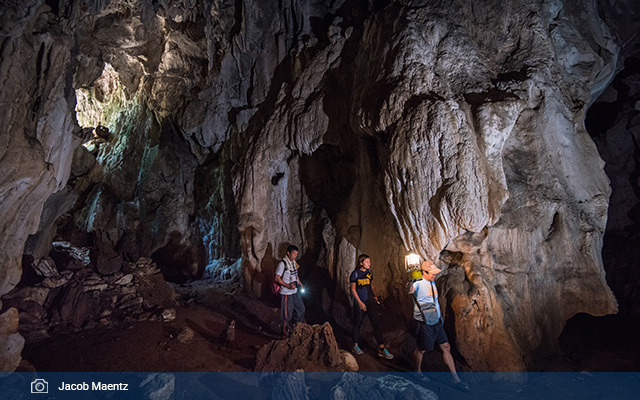
An adventure like no other  awaits you in Sagada. Explore secret chambers and wade through ice-cold waters of the Lumiang Cave to Sumaguing Cave. This 3-4 hour spelunking activity is not for the faint of heart. 

SKYDIVING
Bantayan Island, Cebu

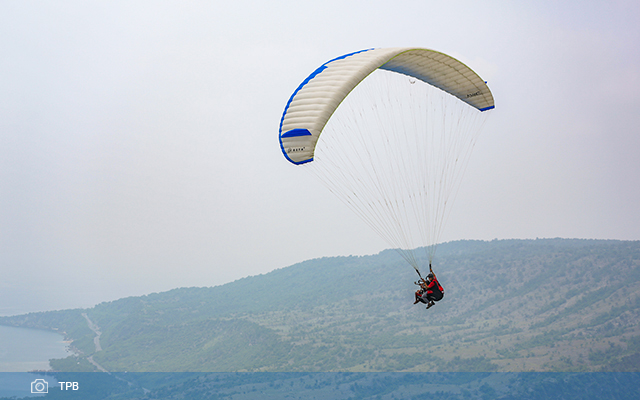
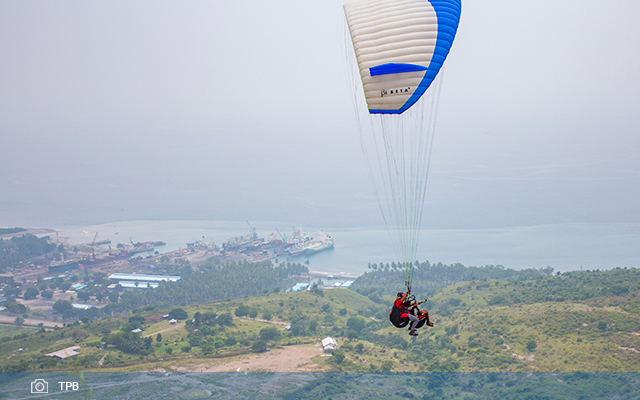
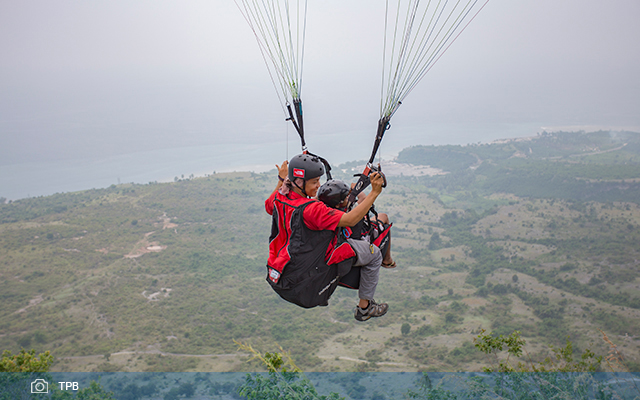
Adrenaline junkies get an awesome perspective of the Philippines with skydiving in Cebu. But if this is too extreme for you, paragliding is a good alternative. Head over to either Sarangani, Carmona in Cavite or Narvacan in Ilocos Sur.

SIGHTSEEING
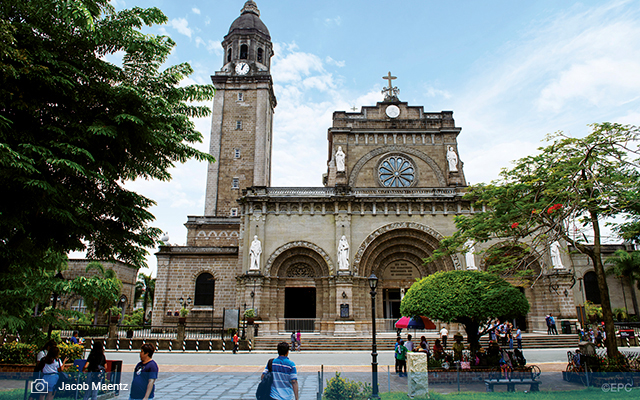
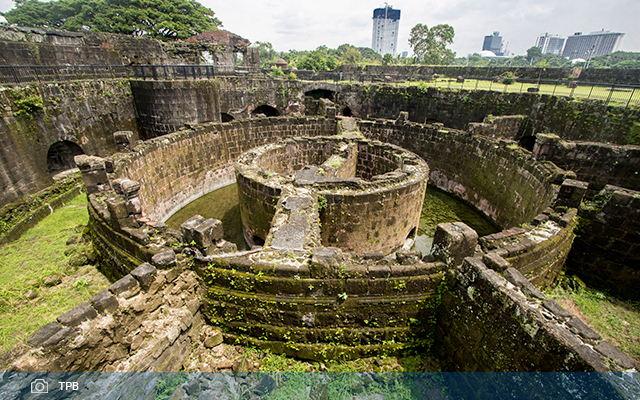
Intramuros, Manila

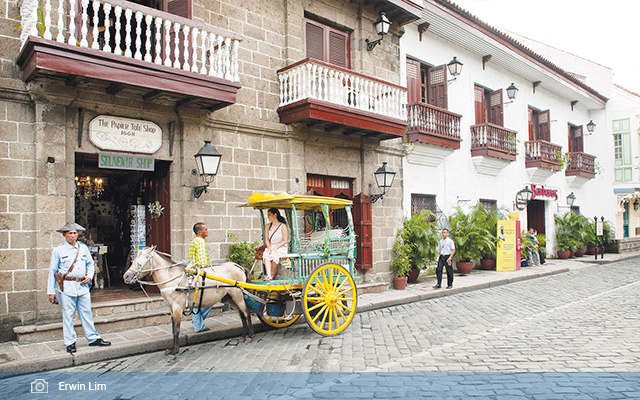
One of Southeast Asia’s most exciting capitals, Manila is a good starting point to discover the colonial history and the hustle and bustle of the Philippines. Take a kalesa (horse-carriage) ride to tour Intramuros, once the seat of Spanish power, then explore the city’s huge malls and taste a variety of Philippine cuisine.

Look forward to experiencing new things and making memories of a lifetime in the Philippines without worry. Your ultimate getaway is a recipient of the World Travel and Tourism Council (WTTC) Safe Travels Stamp! As a globally recognized ‘safe travels’ destination, traveling to the Philippines can be safe and fun in the new normal. Currently, there are restrictions on travel. Check the latest guidelines before departure and always follow local health advice.

Get the most out of your upcoming vacation and fly to the Philippines soon! From water, land or high-altitude adventure, this Southeast Asian destination has it all. To guide your travel plans, visit www.philippines.travel now.

ph-logos

For more information, visit tpb.gov.ph

#itsmorefuninthephilippines #WakeUpinPH #tpbgovph

National Day Parade gives Singapore bayside hotels a staycation boost

0

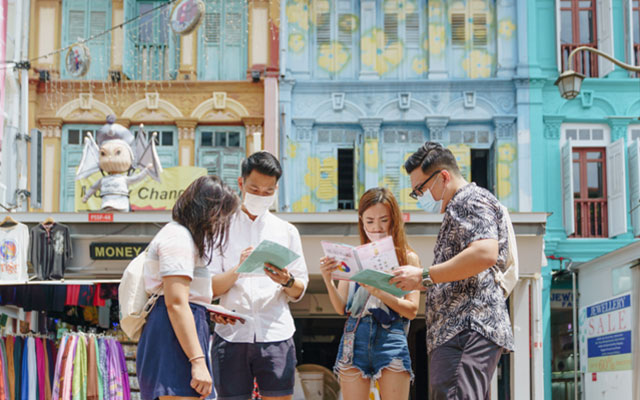
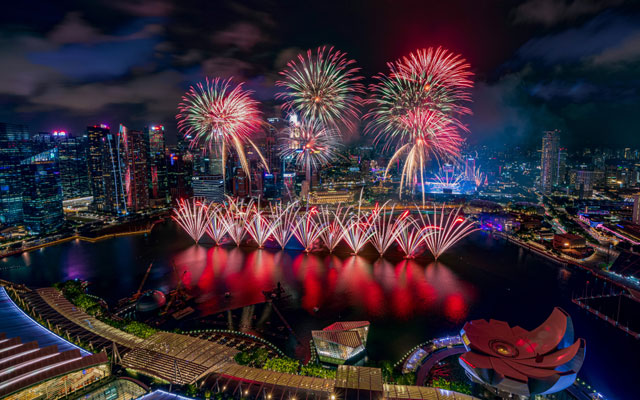
Bayside hotels in Singapore have seen an uptick in occupancy rates for the National Day long weekend, with this year’s National Day Parade (NDP) having a centralised physical event at The Float@Marina Bay.

The highlight of the annual extravaganza is the spectacular fireworks, and hotels near the show venue will provide a vantage point for guests who wish to catch the awe-inspiring display live and in person.

Hotels around the Marina Bay area have seen a boost in enquiries and bookings for the long National Day weekend

Parkroyal Collection Marina Bay, Singapore saw an increase in its staycation bookings following the announcement of the NDP live show. To date, the hotel’s NDP Skyline National Day Celebration package with guaranteed fireworks view over the Marina Bay has boosted bookings by approximately 20 per cent, according to general manager, Melvin Lim.

The hotel’s in-house mixologist will also be serving up special cocktails at the Skyline Bar, located at the rooftop of the hotel. Lim elaborated: “It (Skyline) is an open space, and guests who prefer to have a drink at our Skyline Bar will have full views of the fireworks.”
Federica Brugnara, director of sales & marketing at Andaz Singapore, said that bookings have doubled on the back of the NDP hype. The hotel will be rolling out special in-room picnic baskets for guests to enjoy the parade and fireworks display from the comfort and safety of their rooms.

Usha Brockmann, director of communications at Mandarin Oriental, Singapore, also told TTG Asia that they have seen a rise in booking enquiries for the long weekend period.

The hotel is located within close proximity to the venue set for the NDP, with a selection of rooms and suites facing the Marina Bay area, allowing guests to catch the National Day action from the comfort of their room, Brockmann said.

Some hotels near the bay area will remain as dedicated government quarantine facilities over the National Day period and will not be able to capitalise on the spike in interest as they are unable to accept any leisure bookings.

Radisson Blu heads to China’s Changyuan

0