Thailand’s Centara Hotels & Resorts is moving towards its goal of 200 hotels and resorts by 2026, with eight new properties set to launch this year and more in the pipeline.
The eight new hotels and resorts, comprising 1,066 keys, will emerge in Thailand’s Bangkok, Korat and Ubon; and international destinations such as Laos, Oman and Qatar.
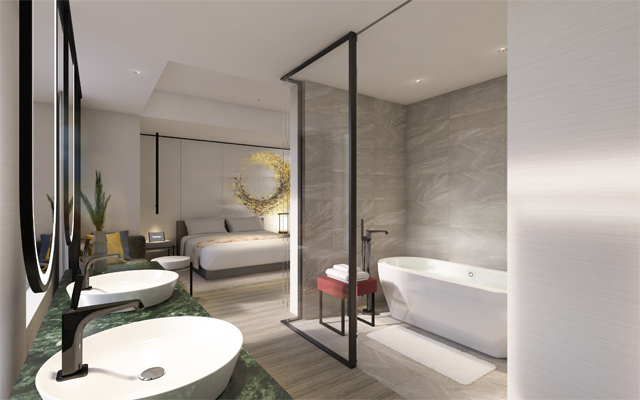
Centara Grand Hotel Osaka will open in mid-2023
A core component of the company’s growth strategy will be through collaboration with a strong development partner, specifically to launch new projects within Thailand, under both existing and new brands. The luxury Centara Reserve concept, which debuted in December 2021 with Centara Reserve Samui, will be enhanced with a second property in Krabi. The company is also considering projects in up-and-coming local destinations such as Koh Lanta and Cha Am.
Come 2023, an Osaka hotel as well as COSI Phu Yen Hotel in Vietnam are set to launch. In 2024 and 2025, the company will welcome two new upscale resorts in the Maldives.
Furthermore, Centara is exploring a new opportunity in the medical wellness segment with an established operator from Europe. Koh Tao and Samui are potential locations under discussion.
The company said its international growth focus would be centred on South-east Asia, the Indian Ocean, Japan, China, and the Middle East.
At an operational level, Centara will continue to invest in technology. It recently revamped its website, booking, property management and reservation platforms, and is now concluding the rollout of its CRM solution.
Talent development and sustainability will take centrestage too. The company has committed to staff training and a target of reducing energy and water usage by 20 per cent within the next decade as well as certifying its entire portfolio by respected environmental accreditation bodies by 2025.
Despite pandemic challenges, Centara posted 1.09 billion baht (US$33 million) in revenue for 4Q2021, an increase of 54 per cent year-on-year. The growth is expected to gain momentum this year, with the acceleration of global travel and hospitality recovery, Thailand’s further easing of travel restrictions, and strong performance of Centara’s key international destinations such as the Middle East and the Maldives.
Destination Gold Coast has launched a month-long campaign, titled Press Play, to lure Australians travellers and make up for two years of domestic travel disruption.
The NTO is particularly keen on courting high-spending travellers and working adults from around Australia, particularly Melbourne and Sydney.
The Press Play campaign aims to encourage Australians travellers to visit the Gold Coast
Destination Gold Coast CEO Patricia O’Callaghan said Press Play is a tactical-led campaign that builds on “creating urgency around travelling now” and that encourages Australians to “embrace the spontaneity” in booking a Gold Coast getaway.
To drive immediate visitation, Press Play pulls together attractive fares and holiday packages from 4,400 tourism businesses.
“We know that while travel remains high on the agenda for Australians and short lead times continue to be a trend, there is still some hesitancy to book interstate as we re-emerge from Covid-19,” she said in a press statement.
“With aviation connectivity now largely restored and over 100 deals on offer from tours, attractions, dining, and accommodation, we are coming out of the gate strong to position the Gold Coast as a stress-free and memorable holiday destination for families, couples and multi-generational travellers.”
O’Callaghan said the campaign will be bolstered by two aviation partnerships to ensure the Gold Coast is in the minds of interstate travellers. Both airlines will offer competitive airfares that are set to generate up to 20,000 inbound seat sales to the region.
Jetstar’s role in Press Play is funded by the Australian government, as part of the Recovery of Regional Tourism Program, an initiative of the country’s COVID-19 Relief and Recovery Fund.
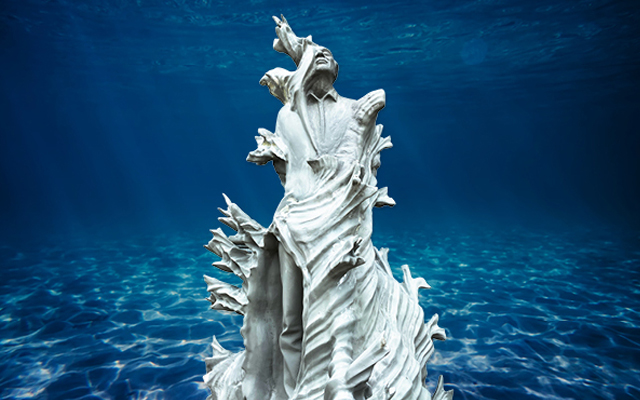
Ultimately destined as micro reefs in the Great Barrier Reef, five of the Museum of Underwater Art’s (MOUA) sculptures will be put on display at the Museum of Tropical Queensland before being installed in their final underwater home.
Museum of Tropical Queensland presents the Museum of Underwater Art’s Ocean Sentinels above the surface exhibit provides a unique opportunity for visitors to connect with the artworks and learn about the Great Barrier Reef and its future.
See the world-class MOUA sculptures at the Museum of Tropical Queensland
MOUA board director, Paul Victory, said: “The chance to see the world-class sculptures in the flesh and learn about their stories, promoting reef conservation and the link between art and science to a wider audience, is incredible.”
“This unique exhibit allows the public to enjoy and experience the next stage of the Museum of Underwater Art and learn about the important work we’ve been doing with coral planting, reef health surveys, providing education and work opportunities for Indigenous guides, and more,” he added.
The sculptures have been created to highlight the important work of world-leading marine scientists. World-renowned artist Jason deCaires Taylor designed and created the hybrid form sculptures that celebrate the work of eight marine scientists and community members, who have been influential in reef protection studies.
“I hope that in years to come a variety of endemic species such as corals, sponges and hydroids will change the sculptures’ appearance in vibrant and unpredictable ways,” deCaires Taylor said. “Like the Great Barrier Reef itself, they will become a living and evolving part of the ecosystem, emphasising both its fragility and its endurance.”
The second stage of the MOUA project offers a unique tourism experience in Townsville North Queensland, and is expected to generate more than A$22 million (US$15.9 million) each year for Townsville’s visitor economy, said member for Mundingburra Les Walker.
“The Palaszczuk government has invested A$4 million in the Museum of Underwater Art because we know how important it is to invest in projects to bring visitors to Townsville. We know the Museum of Underwater Art has great potential to attract divers and snorkelers from across Australia and the world,” said Walker.
“The timing of this new investment in tourism is welcome after the economic impact of Covid-19. This is a fantastic addition to the region’s tourism attractions as we show North Queensland to the world ahead of the 2032 Olympic and Paralympic Games,” he added.
It is envisaged that the sculptures will be installed by June 2022, with the final location to be decided by the Great Barrier Reef Marine Park Authority. They will be installed in shallow depths, allowing snorkellers to get up close to the sculptures.
Streamlined Covid-19 safety measures announced last month that were soon postponed due to a surge in daily infections, will finally come into effect today (March 15).
The easing of measures, according to Singapore’s Ministry of Health, includes the removal of safe distancing requirements for mask-on settings and the application of a single safe distance of 1m for all settings.
Mask-wearing remains compulsory even as Singapore eases other Covid-19 safety measures
Smaller events and group settings with 1,000 or fewer people can proceed without being subject to any capacity limit. For events and group settings involving more than 1,000 people, such as cruises, live performances and tourist attractions, only 50 per cent of the venue’s capacity may be utilised.
Travellers entering Singapore on Vaccinated Travel Lanes or from Category 1 areas China, Taiwan and Macau can also now choose to submit an unsupervised self-swab antigen rapid test (ART) result within 24 hours of entry, instead of undergoing a supervised self-swab rapid test at a test centre in the city-state. The advanced submission must be made through the Sync website before proceeding with their activities in Singapore.
MOH said the easing of the Covid-19 testing regime for arriving travellers is view of the low imported infection numbers – around one per cent of total daily infections – as many countries have already passed the peak of their Omicron infection waves.
“These are important steps to take to prepare ourselves for a new Vaccinated Travel concept in the coming weeks, where fully vaccinated travellers generally need not apply for approval to enter Singapore, and will undergo simplified test requirements,” MOH said in a statement.
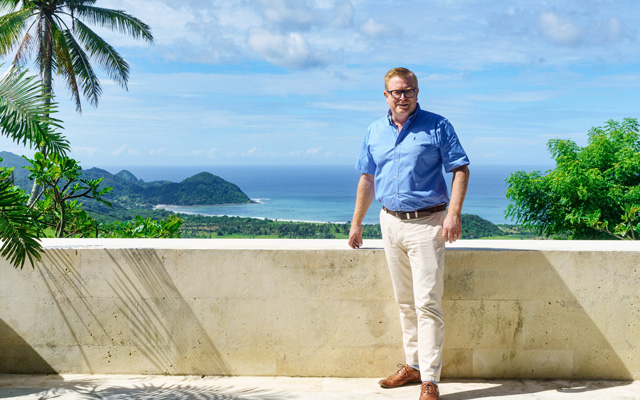
Andrew J Leith has joined Selong Selo Resort & Residences in Lombok, Indonesia as general manager.
Leith brings more than two decades of international hospitality experience with him. His hospitality background includes private resorts in the Caribbean, branded luxury resorts in the Maldives, luxury villa retreats in Bali and Heron Island Resort in Australia. He has also held senior management positions at Angsana Ihuru in the Maldives, and Point Grace on Turks and Caicos.
A New Zealand native, Leith has been living and working in numerous leadership roles in Bali for the past 10 years.
Prior to this appointment, he was general manager at The Layar Designer Villas and Spa, and a partner with S.E.I.N.A. Management, a hospitality management and consultancy company on the island that supports villas, hotels and restaurants.
Although Chinese outbound travel sentiments have fluctuated with waves of Covid-19 variant infections around the world, the intention to travel has been increasingly positive, observed George Cao, co-founder and CEO of Dragon Trail International.
In this episode of TTG Conversations: Five Questions, Cao shares findings from his company’s regular Chinese travel sentiment studies and discusses what that means for Chinese outbound business travel and events, how Chinese incentive events could be conducted, and how destinations should prepare for the return of the Chinese travel market.
Various studies over the course of the travel freeze have found a strong inclination to travel once again. While findings inspire hope in travel and tourism stakeholders, it is difficult to ascertain how many of those intentions will become reality due to the pandemic’s fluidity. Travellers now have more considerations and hurdles to cross when planning for a trip post-lockdown.
Staying visible
Despite the uncertainty, most destinations have continued to campaign with zeal, with a number remaining active throughout the travel freeze to ensure they stay top-of-mind among their target travellers.
Campbell Wilson, CEO of Scoot, noted that many destinations have been “playing up the element of wanderlust” and “invoking nostalgia or a desire to escape the everyday norm”, all of which are “relevant and resonant messages”.
Laura Houldsworth, managing director & vice president, Asia Pacific, Booking.com, agreed. “Many destinations made the shift from conversion-focused campaigns that actively encouraged travel, to campaigns that evoked the emotions and memories they were best known for, for when travel could once again happen,” she said.
Two campaigns, in particular, caught Houldsworth’s attention. The Messages From New Zealand campaign by Tourism New Zealand, reminded travellers of the bonds waiting for them when the time comes, through a series of emotive videos that brought to life a “see you later” text from an old friend.
The other is the Rhythm of Korea campaign by Korean Tourism Organisation, which embraced the power of hallyu and created hashtags like #MeetYouLater.
Booking.com itself also sought to keep travel dreams alive by inspiring individuals through its Booking Explorers campaign in Asia.
Kerry Healy, chief commercial officer, Accor South-east Asia, Japan & South Korea, opined: “I think travel operators and destinations across South-east Asia have done a good job in keeping people dreaming throughout the pandemic.”
Healy pointed out Tourism Authority of Thailand’s Even More Amazing campaign, which showcased the country’s cultural and natural sites; Department of Tourism Philippines’ Wake Up In The Philippines campaign which highlighted pristine island destinations; and the Indonesia Tourism Office’s series of activities under the It’s Time For Bali campaign.
“We have seen the pristine nature and renowned cultural sites of these destinations take centrestage within these campaigns, which is very relevant in today’s context. People want to get back out there and it’s very important that they have something to dream about as border restrictions ease,” she added.
Despite having one of the most stringent travel restrictions in Asia-Pacific before her recent reopening on February 21, Australia remained active in destination marketing. In October 2020, Tourism Australia rolled out Australia in 8D across multiple markets including Singapore, Malaysia and Indonesia. The campaign blended cinematics with 8D audio technology, and created a 360-degree dreamlike soundscape for travellers stuck at home to experience Australia through their headphones.
Tourism Australia’s regional general manager of South & South-east Asia, Brent Anderson, said: “Australia in 8D was a way to engage people with travel and ease their tensions at the same time; during that period, we knew many consumers were turning to online content to alleviate anxieties, with the rise of meditation apps and ASMR content.”
The campaign performed “extremely well”, Anderson noted, driving 1.6 million clicks to Australia.com and leading to a 176 per cent increase in month-on-month website traffic.
Wake Up in the Philippines campaign highlights the best tourism spots all over the country
Removing barriers
However, there are numerous challenges in enticing people back to travel. Current roadblocks include expensive Covid tests, quarantines, varying entry requirements, and other cumbersome border restrictions. Obtaining the most updated travel information is also another challenge, as the situation continues to fluctuate.
“A globally-recognised list of vaccination requirements, as well as the digitalisation of health records, will also facilitate fuss-free travels and go a long way in restoring customer confidence to travel,” Wilson stated.
Houldsworth stated that although governments have advanced the concept of digital vaccine certificates, it would be more helpful if countries could agree “on criteria that meet the needs of testing and vaccinations”.
Aside from ensuring the ease of travel, Healy said destinations must resume key sporting, entertainment or business events to regain travellers’ interest.
One bright spot on South-east Asia’s events calendar, according to Healy, is Singapore’s Formula One night race, which the destination will continue hosting for another seven years until 2028.
“Events like these are vital for recovery as they persuade people to travel again, which is such an important lever for economic growth within South-east Asia,” she added.
Anderson pointed to three key factors that would encourage travellers to move again – peace of mind (with regards to hygiene and safety, and seamlessness of the full travel process); confidence that there are great experiences awaiting that hold up to pre-pandemic standards; and value for money.
“Confidence and reassurance are key,” said Wilson. “Giving travellers confidence in health safety was an early focus, as was ensuring people had confidence that they had flexibility to change plans should government policies change. This is an ongoing task.”
Continuous dialogue
Industry stakeholders also highlighted the need to work closely with government agencies and health experts on a coordinated approach towards travel and tourism resumption.
Wilson said government policies “played an important role” in providing “stability and predictability”.
Healy said it was imperative that governments across the region “consult with us, work with us and allow us to share our expertise”.
She also hoped that more countries would change policies to accept rapid antigen tests – instead of the more costly PCR tests – and align their entry applications.
As more people returned to travel and share their experiences, while processes become simpler or disappear, Wilson said travel confidence would build.
He is confident that once customers have taken their first flight, “any lingering doubts will likely dissipate and subsequent travel plans will naturally fall into place”.
“We have seen a huge demand on routes where pandemic restrictions on quarantines have been relaxed, as well as for Singapore’s Vaccinated Travel Lanes with many countries. This gives us great confidence that it is just a matter of time until full recovery,” he said.
And until that day comes, Anderson said Tourism Australia sees “a strong opportunity to appeal to (travellers’) innate desire to experience new cities and showcase our offerings to them”.
Does the tourism industry not deserve any joy? It sure feels that way. Our battle with Covid-19 is not yet over, and travel is only just starting to pick up, but there goes Russia mounting an invasion into Ukraine, scuppering plans by Asian destinations to rebuild arrivals through the long-staying, sun-loving Russian holidaymakers.
My correspondent, Raini Hamdi, wrote a lengthy analysis on how the Ukraine-Russian conflict is hurting Asia’s tourism. ForwardKeys data showed a spike in flight cancellations to and from Russia following the attack.
But it is here that I arrest my negativity. You see, it is far easier to see the bad side of things – humans are hard-wired this way, unfortunately, according to psychologists.
Amid the frustrations and despair arising from the Ukraine-Russian conflict, the travel and tourism industry has offered a sliver of light and love to affected communities and colleagues.
Since February 26, Royal Caribbean International has been helping an estimated 500 Ukrainian crew members to return home or get close to home should they wish to leave their contracts early, as well as with counselling. The same help is extended to its Russian crew who are emotionally affected by the conflict.
US-headquartered Sabre, one of the major global travel distribution systems, donated US$1 million to the Polish Red Cross, while Singapore-based Frasers Property has done the same with a contribution of S$100,000 (US$73,332) via Singapore Red Cross. In addition, the latter has called on employees, partners and friends to join its fundraising campaign to gather more financial aid.
It isn’t just the big corporations that are coming forward with help. Individuals are too.
PKF Hospitality Group’s Michael Widmann and Christian Walter as well as Bench Events’ Jonathan Worsley have formed the Hospitality-Helps.org to secure room contributions from hotels operating in Austria, Germany, Hungary, Moldova, Poland, Romania, Slovakia, and the Czech Republic to house fleeing Ukrainians.
Poland-based Insight Vacations tour guide Tim Pendlebury has joined in too, donating his time and energy to pick up Ukrainian families crossing the Poland-Ukraine border into safety. He has also set up a fundraiser on Facebook to support Polish charity, Caritas Polska, which is helping Ukrainians arriving at the border.
I’m sure there are far more heart-warming stories like these out there, as the travel and tourism industry has shown throughout the pandemic – the one crisis that has spared nobody – that selflessness prevails even when individuals and organisations are struggling for survival themselves.
Railway operator Fuji Kyuko has resumed Fujisan Express services on March 12 after a two-year hiatus effected by the pandemic.
Fujisan Express resumes service after two-year break
According to Asahi Shimbun, Fujisan Express will operate two daily round trips on weekends and holidays, and increase the total number of round trips of express trains on those days from six to eight.
Fujisan Express is a sightseeing train that connects Otsuki and Kawaguchiko stations. Its carriages are illustrated with Mount Fuji-inspired characters.
Travel to the Philippines will be made even smoother with the removal of an arrival cap at all ports of entry across the country from April 1, 2022.
The Department of Tourism (DoT) made the announcement on March 11, following the decision of the Inter-Agency Task Force for the Management of Emerging Infectious Diseases (IATF-EID) to lift the arrival quota for unvaccinated passengers.
The Philippines will open to fully vaccinated tourists from all countries, without arrival limits, from April 1; Coron, Palawan pictured
Arriving passengers will submit a negative laboratory-based antigen test result taken within 24 hours from departure. This replaces the initial requirement of a negative RT-PCR test taken 48 hours prior to departure from point of origin.
The resumption of visa issuance by Philippine embassies and consulates will also start on April 1 to coincide with total removal of arrival quotas.
“This latest development opens the country to all fully vaccinated tourists from all countries, and means the country’s tourism industry is well on its way to recovery,” said tourism secretary Berna Romulo-Puyat.
“We at the DoT thank our colleagues in the IATF for approving such measures that will help sustain the recovery of the sector in the coming months. We have high hopes that all of these will result in an uptick in international travelers visiting the country during the summer season,” Puyat added.
The IATF Resolution 164-A also allows the entry of passport holders from Hong Kong and Macau for a period not exceeding 14 days.
There will also be reciprocal recognition of Covid-19 vaccination certificates from Croatia, Cyprus, and Nepal which are among the 157 countries whose citizens can enter the Philippines without a visa.
“While our domestic tourists have been the pillar of our recovery, we are also excited to welcome more foreign visitors in the weeks ahead. Such a move to further ease our borders and recognise the vaccination certificates of other countries is very important, noting that our top foreign markets were part of the visa-free countries,” she added.
Since reopened the borders to foreign travellers from visa-free countries on February 10, the Philippines has recorded 76,736 arrivals at the main airports. Of these, 43,249 were foreign tourists.