In celebration of World Oceans Day, S.E.A. Aquarium at Sentosa, Singapore is bringing back Ocean Fest with an exciting and educational line-up including interactive art installations, upcycling workshops, beach clean-ups, a children’s summer camp and more.
Activities will run from May 27 to August 16, 2022.
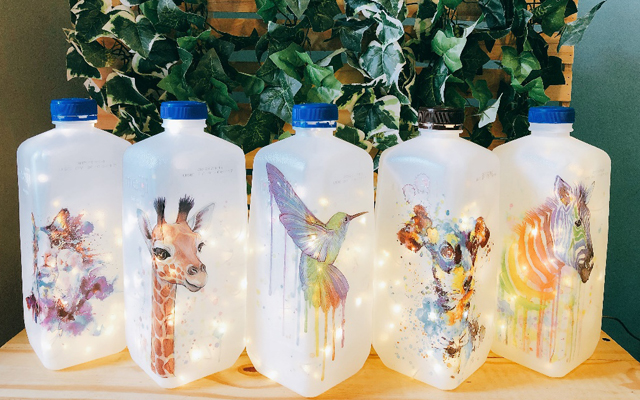
Make upcycled LED design lamps from plastic cartons as part of Ocean Fest’s Upcycling Workshop
The Ocean Fest Bundle Deal is priced at S$48 (US$35) per adult and includes a S.E.A. Aquarium admission ticket, S$5 meal voucher, and S$5 retail voucher; child entry is at S$38 and includes an educational worksheet.
At S.E.A. Aquarium’s Junior Ocean Protector Camp, children between seven and 12 years old are invited to learn about the oceans and marine biodiversity through fun and enriching activities during their mid-year school holidays.
Taking place every Friday, Saturday and Sunday from May 28 to June 26, participants will embark on a guided Ocean Protector Trail comprising various missions to help them learn about marine animals at the aquarium, encounter selected marine animals, and learn to reduce waste by upcycling.
For S$248 per child, parents will also receive a complimentary dining voucher worth S$30, and S$80 if enrolling two or more children.
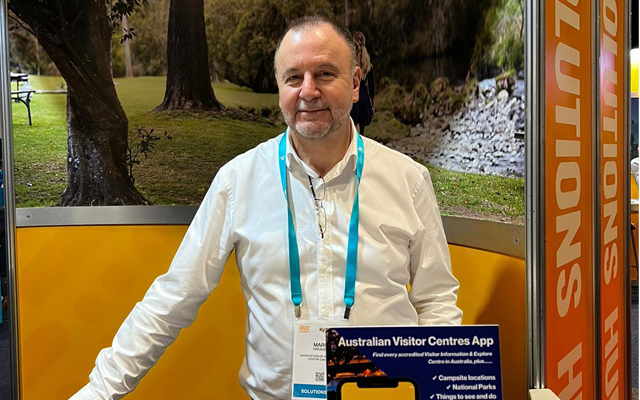
Greaves: fresh opportunities abound for the recently-formed association
Visitor centres across Australia have formed a professional association, and together launched an app to help domestic travellers and international visitors explore Australia with greater confidence.
Commenting on the need for a formal grouping, Mark Greaves, head of the Association of Australian Visitor Centres and director of The Tourism Group, said: “Accredited visitor centres have been around for a while in Australia. While the accreditation is fairly new, there is a growing awareness of the need to have a collective voice and single touchpoint for the tourism industry. It was a logical step forward and all stakeholders – such as local associations and Tourism Australia – were supportive of this concept.”
Greaves: fresh opportunities abound for the recently-formed association
Currently, more than 450 accredited visitor centres are spread across Australia, and these are open seven days a week. Pre-pandemic, some 13.5 million international and local travellers utilise these visitor centres, said Greaves.
The association’s new app directs visitors to the nearest accredited visitor centre – a necessary product “when there are often hundreds of kilometres between towns”, Greaves explained.
“It is reassuring to know there is someone up ahead who can assist in an area, town or region new to the visitor,” he said.
The app also provides an offline map that is useful in locations with no telecommunication coverage.
Speaking to TTG Asia at the recently-concluded Australian Tourism Exchange (ATE) in Sydney, Greaves regarded the event as a “watershed moment” for the association – it was the first time the association participated in a B2B tradeshow.
Aside from providing value to ATE visitors, Greaves said the association’s presence was a way to show airlines, coach companies, car hire companies and inbound tour operators the “value of local town and regional contacts looking to find unique and differentiated products for their clients”.
“This is the first time visitor centres have been brought under one umbrella, and we are excited about the opportunities.”
As to how these physical visitor centres stand against the convenience of online destination searches, Greaves said: “Face-to-face interaction is still appreciated, more so after the pandemic. The visitor centres offer a friendly face, and knowledgeable and up-to-date local recommendations about nearby attractions and places of interest. Sometimes, travellers also come in to verify information they found on Google!”
Greaves is confident that the association will grow from strength to strength as more travellers return to Australia. Future plans include building relations and partnering with key industry bodies such as Tourism Australia and the Australian Tourism Export Council for various outreach activities, as well as working closely with travel agents to add the app to clients’ pre-travel general information.
Inbound players across Malaysia are seeing a more encouraging summer travel season for Indian travellers, with forward bookings showing reduced price sensitivity and a return of both FIT and corporate incentive interest.
India is among the top five tourism source markets for Malaysia.
Amritha: the weak ringgit against the US dollar is an added advantage
Despite higher airfares as a result of limited air capacity, A Aruldas, managing director of Tourland Travel, said demand has been “encouraging” ever since the start of the Indian summer holidays. He noted that Kuala Lumpur, Genting and Langkawi remain hot favourites among his Indian customers.
Tourland Travel has also just completed an incentive travel group from India – a 220-pax event hosted by a travel insurance company. The group visited Kuala Lumpur, Genting and Port Dickson.
Comparing this Indian summer season with pre-pandemic times, Amritha Dijith, CEO, Apollo Asia Travel Group, said there is now a larger FIT segment. This year, 90 per cent of the agency’s Indian customers are FITs, while pre-pandemic there was a more balanced split between FITs and group travellers, with the latter making up around 40 per cent of the company’s clientele.
Amritha also gladly noted that Indian travellers were also not as price sensitive as they used to be.
“The weak ringgit against the US dollar is an added advantage, as most B2B agents quote their packages in US dollars,” she added.
Indeed, despite many travel agents raising their package rates this year due to escalating operating costs, Ganneesh Ramaa, vice-president, Destination Explore, said Malaysia remains an affordable and attractive destination for Indian travellers.
Thus far, forward bookings are looking promising for Destination Explore. Ganneesh recalled that his agent partners in India had responded positively to news of Malaysia’s reopening and the removal of pre-departure and on-arrival Covid-19 tests and quarantine requirements.
However, for Malaysia to rebuild Indian travel demand, Ganneesh said air capacity and frequency of flights must improve, while the process of obtaining a visa should be shortened to 24 hours and fees lowered. Meanwhile, he also urged authorities to address the challenge of manpower shortages at hotels and restaurants in Malaysia.
The lengthy visa processing time, which could take several days, has resulted in two FIT tour booking cancellations for MVT Travel. Managing director V Kunaseelan said individuals could not get their visa on time, which is a problem since travellers from India tend to book very last minute.
To reengage this critical source market, Tourism Malaysia recently led a delegation of 15 tour operators, three hoteliers, three product owners and three airlines to South Asia’s Travel & Tourism Exchange, commonly known in the trade as SATTE.
The inaugural Wellness Festival Singapore (WFS) from June 3 to 12, 2022 will feature over 120 offerings such as fitness classes, meditation workshops, arts and lifestyle experiences that boost physical, emotional and mental well-being.
As a key part of the Singapore Tourism Board’s strategy to position the city-state as a leading urban wellness haven as more international visitors return, WFS is backed by Enterprise Singapore, Health Promotion Board, National Arts Council (NAC), Sentosa Development Corporation, and Sport Singapore.
The inaugural Wellness Festival Singapore will run from June 3 to 12, 2022
Several large-scale activations in popular locations across Singapore include The Wellness Sensorium, a multi-sensory pop-up at The Meadow at Gardens by the Bay; Zentosa Fest; a transformed Sentosa as a wellness island retreat, organised as part of Sentosa’s 50th anniversary celebrations; and three Merli Wellness Trails, a hybrid race platform launched by 42Race, across the Singapore Botanic Gardens, HortPark-Harbourfront and Fort Canning Park, where participants can explore the parks and garden, and answer questions in exchange for exclusive Merli and Friends virtual badges.
There will also be island-wide arts offerings in the heartlands and city centres. National Gallery Singapore will offer experiences such as somatic movement workshops like qigong, silat and more; a slow art programme and an immersive sound bath experience designed for 10 to 14-year-olds; programmes by NAC’s Arts and Culture Nodes featuring visual arts workshops to enhance self-discovery and mindfulness; Chinese percussion and Latin dance workshops; and a 10-metre art mural accompanied by a meditative soundscape.
COMO Shambhala Urban Escape will host a full-day open house on June 12 where guests young and old can experience mindfulness-based art and movement, yoga, Pilates classes as well as nutrition and fertility talks. CapitaLand will also hold its first wellness and community festival called Live It Up! across its malls and workspaces.
Additional highlights include complimentary fitness and health classes at Jewel Changi Airport on June 11 to 12; a special ‘six-hands’ collaboration at 1-Arden bringing chefs and farmers together to prepare a wholesome meal; and free virtual fitness and wellness classes conducted by ClassPass at Gardens by the Bay and the scenic Civic District, coupled with a mini virtual tour of each location so that everyone can experience Singapore and the wellness offerings from afar.
For enterprises in the wellness sector, the inaugural Wellness Symposium will bring together business leaders, industry experts and professionals to share insights on the market opportunities and consumer demand in spiritual, mental and preventative health; while the Wellness Industry Roundtable will allow enterprises across sectors to network and discuss growth opportunities, explore innovation ideas and potential collaborations.
Attendees at both events will also be able to experience wellness at the Wellness Sensorium located at Gardens by the Bay.
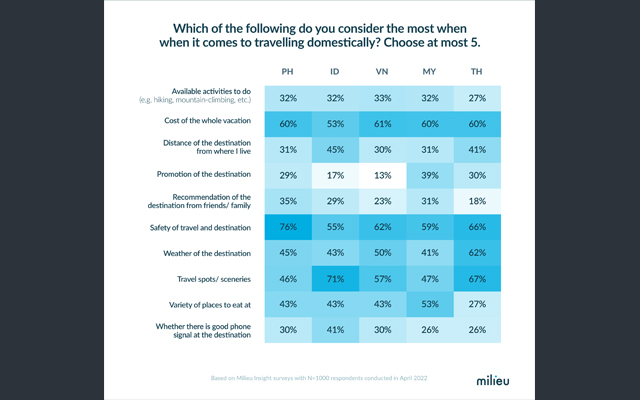
Milieu Insight announced findings of domestic travel plans for summer vacation across The Philippines, Indonesia, Vietnam, Malaysia, Thailand as Covid-19 restrictions ease.
With much of the movement restrictions across Asia being lifted, the travel industry is finally opening up. Over 80% of domestic travellers in The Philippines, Indonesia, and Vietnam have indicated a likelihood to engage with travel agency services for their domestic travel and vacation plans.
Domestic travel has shown to be widely accepted by travellers
Domestic travel has shown to be widely accepted by travellers – the reasons is because travellers do not wish to be unwittingly stranded from home and work in case of a pandemic resurgence.
Travellers from Indonesia (89%), Vietnam (83%) and Thailand (79%) have expressed the least concern for themselves when it comes to domestic travel. This willingness to travel is also reflected in the domestic travel policies of these countries as there are minimum restrictions involved in their domestic movements.
In February 2022, Vietnam saw a total of 9.6 million domestic travellers. In The Philippines, 40% of respondents remain highly concerned for their safety even towards domestic travel, which is still limited to selected destinations and with restrictions (as of May 11, 2022).
When planning for their upcoming summer vacation, most travellers across all five countries are looking to unwind and reconnect with their family after two years of pandemic isolation: The Philippines 83%, Indonesia 82%, Vietnam 78%, Malaysia 81%, Thailand 79%.
In April 2022, Indonesia saw mudik mass migration for the end of Ramadan, where the Indonesian Transport Ministry estimated 31% of the population travelled back to their hometown to spend time with their extended family.
Hotels remain the top choice for accommodation across all five countries, with 50% of travellers in Vietnam showing a preference for resorts, and 54% from Thailand preferring pool villas.
Family friendly destinations should look to see high popularities this summer, especially places that are inclusive towards multigenerational groups. Activities may include road trips neighbouring states, visiting a beach resort, or unwinding in a tranquil village.
Despite only travelling within their home countries, most South-east Asian travellers will still engage with a travel agency to plan for their domestic travel and vacation plans – Indonesia (85%), The Philippines (82%) and Vietnam (83%). Engaging with a travel agent may ensure a less stressful trip, creating more time and leisure for travellers to enjoy their first post-pandemic vacation.
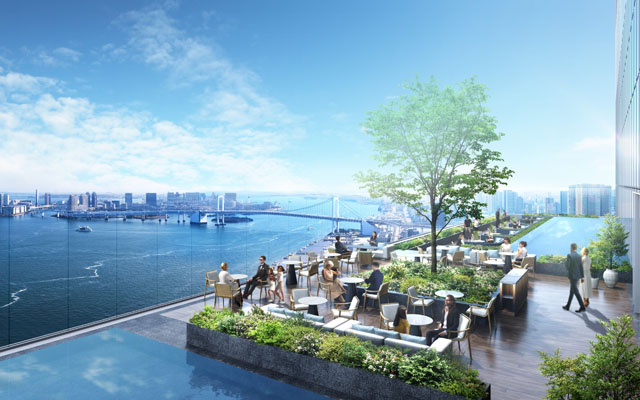
Accor and Nomura Real Estate Development Co. will land the Fairmont Hotels & Resorts brand in Japan with the opening of Fairmont Tokyo in 2025.
The first Fairmont in Japan will offer 219 guestrooms, and occupy the upper floors of the South Tower of the Shibaura Project, part of a development designed under the National Strategic Special Zone Program.
Fairmont Tokyo to open in 2025
The hotel will also offer a host of facilities, from F&B and fitness centre to meeting and banquet spaces.
Garth Simmons, CEO, Accor Southeast Asia, Japan & South Korea, said: “Like all Fairmont properties around the world, the hotel is set to become the epicentre of Tokyo’s social scene and will bring a new level of personalised service and thoughtful luxury to the city.”
Thailand-based ground operator and travel specialist Tripseed has announced a range of new services to provide local and online representation for operators wishing to tap into the US$14.9 billion Thai outbound travel market.
Tripseed’s new market representation services will include the localisation of sales and marketing to appeal to Thai audiences, consultation on market penetration and product development to align travel packages with market demand, and on-the-ground representation at travel fairs and exhibitions around the country.
Tripseed has announced a range of new services to provide local and online representation for operators
The company has already been operating domestic and outbound trips over the past six months for Thai travellers to Australia and the US, with Western Europe and the UK as the most popular longhaul destinations.
It has been building strong partnerships over the past year as the leading ground operator of choice for travel agents and tour operators that are sending travellers to Thailand. As the market gradually recovers, Tripseed seeks to align its domestic success with inbound travel services for its international partners.
According to the UNWTO, European Travel Commission, and Thailand’s Ministry of Tourism & Sports, the Thailand outbound tourism market was one of the fastest growing in the region prior to the pandemic. In 2019, the outbound tourism expenditure of Thai travellers reached a record peak just shy of US$15 billion, surpassing its close competitors Malaysia and Indonesia, and placing the country behind only China and Singapore in regional outbound expenditure.
Confident that the strong resurgence in demand for outbound travel makes the perfect opportunity for international agents and operators to consider tapping into new markets and diversifying their businesses, Tripseed’s co-founder Narissara Wongmahawan said: “At Tripseed, we’ve always been centred around a single goal – to grow our partners’ businesses. The launch of our market representation services is just the natural progression of how we continue to achieve this.”
Tripseed’s initial focus will be on extending its partnerships with operators and agents in key longhaul outbound markets, which are already collaborating with Tripseed as their ground operator in Thailand.
“This aligns with the demand we have received from within our domestic Thai market, to provide outbound travel services to the UK, Europe, the US and Australia,” added Narissara.
“Following this, we’ll also be expanding the offering of these services out to suppliers and partners in popular short-haul destinations for the Thai market including hotels and operators in Japan, South Korea and China.”
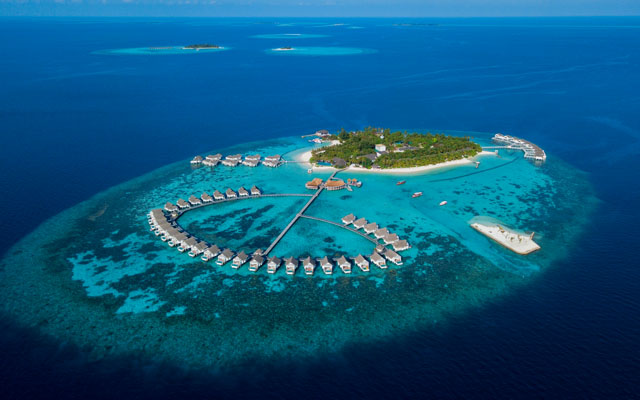
Centara Grand Island Resort & Spa Maldives offers stunning accommodation such as the Family Overwater Villa, Premium Deluxe Sunset Overwater Villa, and a collection of beachfront villas that include private pools and access to the powder-soft sand. Facilities include a spa, fitness centre, kids club, and a variety of restaurants, bars and lounges.
Families can bond over activities like tennis, volleyball, water sports, snorkelling and scuba diving, or explore the beauty of the Maldives with excursions including snorkelling adventures, semi submarine rides, as well as whale shark, turtle or manta sighting cruises.
Summer holiday at Centara Maldives
Lovebirds can head to Centara Ras Fushi Resort & Spa Maldives, an exquisite adults-only island retreat in the North Malé Atoll, less than 20 minutes away by speedboat from Velana International Airport.
Housing a collection of beachfront and overwater accommodation, such as the Deluxe Spa Overwater Villa that comes with an outdoor spa bathtub and direct steps down to the reef – perfect for swimming or snorkelling around the lagoon; and the Premium Deluxe Sunset Overwater Villa with an ocean-facing deck, outdoor spa bathtub and access to the sparkling lagoon.
There are seven restaurants and bars, spa, and water sports facilities available at Centara Ras Fushi Resort & Spa Maldives.
DidaTravel has entered an agreement with Leonardo Hotels Central Europe, allowing DidaTravel’s B2B buyers to gain real-time inventory to Leonardo Hotels Central Europe’s 15,000 over rooms across 88 properties.
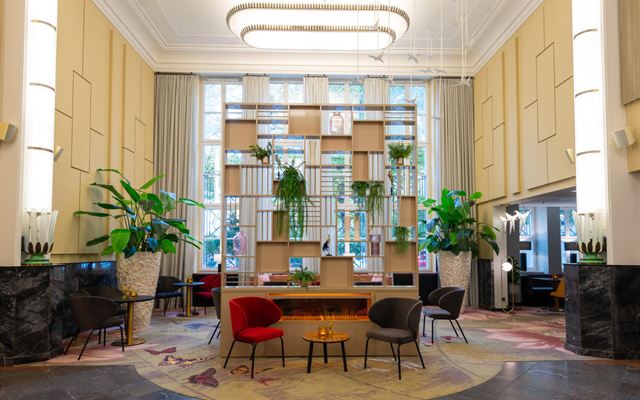
Leonardo Hotels Central Europe’s brands include Leonardo Hotels, Leonardo Royal Hotels, Leonardo Boutique Hotels and NYX Hotels by Leonardo Hotels in destinations like Germany, Austria, Switzerland, Poland, Czech Republic, Hungary, Romania, Spain and Italy.
The partnership with DidaTravel will significantly expand the global B2B reach of Leonardo Hotels Central Europe
This partnership will significantly expand the global B2B reach of Leonardo Hotels Central Europe, giving it access to DidaTravel’s 23,000 B2B buyers comprising travel agencies, tour operators, airlines and TMCs based in more than 50 source markets worldwide. Over half of the buyers are based outside of Asia-Pacific.
DidaTravel had announced plans to increase the number of directly contracted hotels to 74,000 by the end of 2022, with over 30 hotel chains already in pipeline.
Rikin Wu, DidaTravel founder and CEO said: “Leonardo Hotels Central Europe is one of the leading hotel chains in the region and we are very pleased to partner with a chain known for its high quality and service standards. We are confident that DidaTravel’s technology, experience and extensive global B2B network will help them attract incremental high-value, international travellers now that safe travel has returned.”
Sandra Dreher, vice president sales & marketing at Leonardo Hotels Central Europe added: “Leonardo Hotels Central Europe is looking forward to the new cooperation with DidaTravel and extending our distribution reach across a wider international pool. We are convinced that our portfolio is an attractive new addition for the extensive network of travel buyers and believe that this agreement will produce further synergies for both partners.”
The Chedi Katara Hotel & Resort in Doha, Qatar has a new director of sales and marketing.
Ali Moussa, who has more than a decade of senior sales and marketing experience opening luxury hotels in the Gulf Cooperation Council (GCC) region, will play a strategic role in the brand’s debut and commercial success in Qatar’s luxury hospitality landscape.
Prior to his new appointment, Ali was a key member of the pre-opening team of Dream Doha, as director of sales, for Dream Hotel Group’s flagship luxury hotel in Qatar.







 Prior to his new appointment, Ali was a key member of the pre-opening team of Dream Doha, as director of sales, for Dream Hotel Group’s flagship luxury hotel in Qatar.