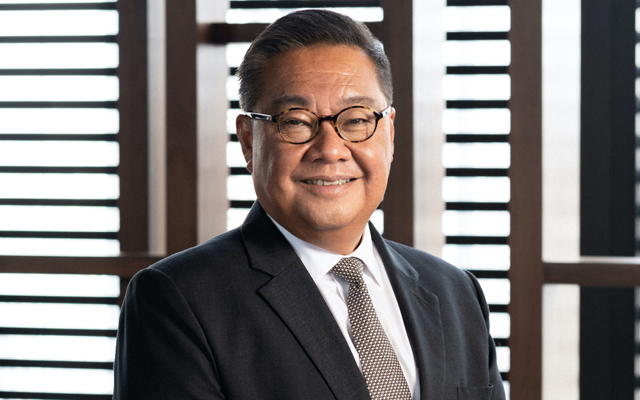
A continued rise in demand for wellness and holistic travel experiences, blend of work and leisure during travels, contactless interaction and many other trends will shape the hospitality industry in 2022 and impact the hospitality profession, opines Jenny Ang, managing director of
EHL Campus (Singapore).
In this episode of TTG Conversations: Five Questions, Ang also shares her observations on the types of human expertise the travel and hospitality industry will increasingly need to respond better to new travel trends and traveller expectations, and how EHL is evolving its professional and executive curriculum to deliver on talent needs.
Airbus International has projected a need for 17,620 new aircraft across Asia-Pacific as passenger traffic continues its growth of 5.3 per cent per annum over the next 20 years and retirement of older, less fuel efficient aircraft sets in.
In a press statement, Airbus said 30 per cent of these new aircraft will replace older, less fuel efficient models. Of the total expected demand, 13,660 will be in the Small category, such as the A220 and A320 family, while 2,470 will be Medium and 1,490 Large.
Airbus International expects the bulk of new aircraft needed in Asia-Pacific to be in the Small category, such as the A220 and A320 family
“We are seeing a global recovery in air traffic and as travel restrictions are further eased, the Asia-Pacific region will become one of its main drivers again. We are confident of a strong rebound in the region’s traffic and expect it to reach 2019 levels between 2023 and 2025,” said Christian Scherer, chief commercial officer and head of Airbus International.
Airbus said the region’s middle class, who are the likeliest to travel, will increase by 1.1 billion to 3.2 billion by 2040, and the propensity for people to travel is set to almost triple by 2040.
Scherer said the Airbus portfolio is well-positioned to enable sustainable aviation. “Our modern portfolio offers a 20 to 25 per cent fuel burn and therewith CO2 (carbon dioxide) advantage over older generation aircraft. We pride ourselves that all our aircraft products are already certified to fly with a blend of 50 per cent SAF (sustainable aviation fuel), set to rise to 100 per cent by 2030.
“In addition, our newly launched A350F offers efficiency gains of 10 to 40 per cent compared to any other large freighter, existing or expected, both in terms of fuel consumption as in CO2 emissions.”
In view of further ongoing innovations, product developments, operational improvements as well as market based options, Airbus aims to achieve the air transport sector’s target to reach net-zero carbon emissions by 2050.
Ease of entry into Sri Lanka is returning, with visa-on-arrival service being reinstated on February 8 following a long suspension since early 2020 due to the Covid-19 pandemic.
State-owned Sri Lanka Tourism said the move would help tourists who “experience difficulties when obtaining the online ETA (electronic travel authorisation) due to the time constraints of arranging their journey to Sri Lanka”.
Sri Lanka ends suspension of her visa-on-arrival facility, a move the trade expects to aid tourism recovery; Galle Fort pictured
Inbound players in the destination expects the return of visa-on-arrival to boost arrivals, as it eases entry procedures.
Dilip Mudadeniya, head of branding at John Keells Holdings, which has a string of resorts in Sri Lanka and the Maldives, said travellers would choose destinations that offer easy access.
The move would improve arrivals from India in particular, Sri Lanka Tourism chairperson Kimarli Fernando told a weekend newspaper.
India was Sri Lanka’s top source market for arrivals in 2021, contributing 56,268 visitors. The destination’s total for the year was 194,495.
CBRE Hotels Japan has appointed Tomotsugu Ichikawa as senior director to head the investment side of the business, strengthening the company’s brokerage services for hotel-related assets.
Ichikawa brings a wealth of knowledge and expertise that are complementary to that of CBRE’s existing team, said a statement from the company.
Prior to this appointment, Ichikawa led the hotel brokerage team at Savills Japan Co.
The recently published 2022 ACI Report on Salary & Employment Trends highlighted an improving hiring confidence with 45 per cent of HR and hiring managers expecting new headcount this year. However, that positivity is met by the worrying reality of talent shortages across roles and resulting higher salary expectations, states Andrew Chan, founder and CEO of ACI HR Solutions.
In this episode of TTG Conversations: Five Questions, Chan dives deep into recruitment and retention challenges for travel, tourism and hospitality organisations in the coming years.
Tour operators in Malaysia are getting ready for the possible reopening of the country’s international borders, with efforts being ploughed into staff training, itinerary revisions and reconnection with business networks.
This follows the National Recovery Council’s (NRC) recommendation last week to the Malaysian government to reopen borders as early as March 1, 2022 to spur economic recovery. However, the final decision remains with the Cabinet, and on February 11, prime minister Ismail Sabri Yaakob said the Cabinet had yet to discuss the NRC’s recommendation. The Health Ministry too had yet to provide its feedback on the recommendation to the Cabinet for evaluation.
Malaysian tour operators are ramping up operations to be ready for a possible reopening soon; Cameron Highlands pictured
While policymakers decide on their stand, Asian Overland Services Tours & Travel is preparing to renew permits for its coaches and vans, which have been out of service for the past two years. Managing director Yap Sook Ling said there are also plans to increase operations manpower as well as begin staff training.
Ping Anchorage Travel & Tours is revising its itineraries to feature more open-air dining venues, accommodation in small island resorts, as well as off-the-beaten-track destinations in Pahang, Kelantan and Terengganu. CEO Alex Lee believes that travellers will favour less crowded destinations when they return.
Expecting the FIT segment to expand, Lee intends to lease more vans to supplement his own fleet of five when demand picks up.
Over at Universal Holidays Travel and Tourism, founder and CEO Zahira Tahir has been reconnecting with agents and partners overseas, and is now contracting with hotels and suppliers in Malaysia.
She told TTG Asia that agents in India and Pakistan wish to bring incentive groups to Malaysia in 1H2022, but materialisation would depend on the government’s decision on when borders will reopen as well as standard operating procedures (SOPs) for travellers.
Zahira opined that the government should give at least a month’s advance notice on the reopening date as well as instructions on what is needed from travellers in terms of Covid-19 tests.
Yap added that it was important for arrival SOPs to not be too restrictive, as that would turn potential travellers away. Citing an example, she said daily Covid testing requirements was a hassle to travellers.
Tour operators also view the coordinated return of scheduled flights with the reopening will determine the success for Malaysia’s tourism recovery.
Meanwhile, Malaysian Association of Tour and Travel Agents president KL Tan has called for the government to develop a recovery roadmap for the industry as well as implement travel bubbles with more countries.
Following a successful trial in December in the Philippines, Indonesia, Vietnam and Cambodia, PATA will now launch the Tourism Destination Resilience Programme to help industry stakeholders at both the national and sub-national level build their destination resiliency against the Covid pandemic and other future challenges.
The online and in-market training programme offers 10 modules, available on PATA’s Crisis Resource Center website. The modules are open-sourced and available for any tourism professional that wishes to boost their business or destination’s Covid recovery, increase competitiveness and become more resilient and sustainable.
PATA’s latest training programme aims to help tourism professionals and destinations recover from Covid-19 business disruptions and prepare for future crises
Users can expect a comprehensive guide to post-crisis planning, which involves responding to the crisis, rethinking tourism models and, finally, strategising for recovery.
Tourism Destination Resilience is implemented by PATA with support of the Deutsche Gesellschaft für Internationale Zusammenarbeit (GIZ) on behalf of the German Federal Ministry for Economic Cooperation and Development (BMZ).
Vietnam will remove pandemic restrictions on international passenger flights from all markets starting February 15, with the intention to restore flight frequency to pre-pandemic levels.
Vietnam will lift all Covid-19 restrictions on international flights to aid the country’s tourism recovery; Hang En cave pictured
According to state-run Tuoi Tre newspaper, Dinh Viet Son, deputy director of the Civil Aviation Administration of Vietnam, said Vietnam has informed her partners about the new policy and only China has yet to agree on commercial flight resumption with Vietnam.
Vietnam has begun her travel and tourism restart, with gradual international flight resumption with 15 markets from the start of 2022 as well as an intended full border reopening to international tourists by April 30.
Emirates and Maldivian have signed a Memorandum of Understanding (MoU) to explore codeshare, interline, and joint holiday package opportunities.
Emirates and Maldivian will explore opportunities to develop their routes and enhance travellers’ connectivity
The two carriers are reviewing a codeshare agreement that will enable Emirates’ customers to conveniently book and connect from Male to more than 15 domestic destinations and all international destinations served by Maldivian, the flag carrier for the Maldives.
They will also explore opportunities to cooperate on their respective tour operating arms, to offer customers tailor-made packages including hotel stays and exclusive tours.
Adnan Kazim, Emirates’ chief commercial officer, said: “Maldives is one of the most popular leisure destinations in Emirates’ network and we are very pleased to be exploring a partnership with the nation’s local carrier. A codeshare and interline agreement will immensely benefit both carriers. For Emirates customers, it is enhanced connectivity to and from the Maldivian archipelago; for Maldivian travellers, it’ll ease access to our extensive network of more than 120 destinations, via Dubai.”
Ibrahim Ameer, minister of finance of the Republic of Maldives, acknowledged the Emirates’ significant impact on the Maldives’ tourism industry – the airline is a top producer of international passenger traffic for the destination.
“The possible partnership between the two airlines will benefit the Maldivian economy and strengthen economic ties between the Maldives and the United Arab Emirates,” Ibrahim added.
Despite progress in Bali’s reopening, which saw direct flights being announced by two airlines and the 10-day quarantine period being cut by half with a new travel bubble system last week, Indonesian inbound players are losing faith in the policy.
Their source of woe is the Bubble Quarantine Policy’s continued requirement of quarantine for arriving travellers.
Indonesian inbound players say Bali’s new Bubble Quarantine Policy is too restrictive to aid recovery
Sugeng Suprianto, managing director of Top Indonesia Holidays, told TTG Asia that travellers today are gravitating towards destinations that are easy to access, particularly those without mandatory quarantine.
“Europeans are not interested (in Bali). I’ve lost many clients who have turned to the Philippines, the Maldives and other countries that have dropped their quarantine requirement,” he added.
Ricky Setiawanto, Panorama Destination’s director of business development, hopes the government will have the confidence to remove the quarantine requirement, as many destinations have. He said the quarantine requirement inflates the cost of travel, making the destination less competitive than those without compulsory on-arrival isolation.
“Tourists have to spend at least US$700 on the Warm-Up Vacation package (a 5D/4N arrangement with select hotels that is part of the Bubble Quarantine Policy). This burdens tourists, which pushes them to choose other destinations,” said Ricky.
Under the new rules, tourist visas will also no longer be available on arrival. Instead, travellers will need to obtain an e-visa from sponsoring travel companies before they fly. This worries Adjie Wahjono, operations manager of Aneka Kartika Tours, as the procedure adds to the cost and complexity of planning a trip to Bali.
“We hope that visa-on-arrival can be reinstated, at least for residents of ASEAN member countries,” Adjie said.
Tour operators in Malaysia are getting ready for the possible reopening of the country’s international borders, with efforts being ploughed into staff training, itinerary revisions and reconnection with business networks.
This follows the National Recovery Council’s (NRC) recommendation last week to the Malaysian government to reopen borders as early as March 1, 2022 to spur economic recovery. However, the final decision remains with the Cabinet, and on February 11, prime minister Ismail Sabri Yaakob said the Cabinet had yet to discuss the NRC’s recommendation. The Health Ministry too had yet to provide its feedback on the recommendation to the Cabinet for evaluation.
While policymakers decide on their stand, Asian Overland Services Tours & Travel is preparing to renew permits for its coaches and vans, which have been out of service for the past two years. Managing director Yap Sook Ling said there are also plans to increase operations manpower as well as begin staff training.
Ping Anchorage Travel & Tours is revising its itineraries to feature more open-air dining venues, accommodation in small island resorts, as well as off-the-beaten-track destinations in Pahang, Kelantan and Terengganu. CEO Alex Lee believes that travellers will favour less crowded destinations when they return.
Expecting the FIT segment to expand, Lee intends to lease more vans to supplement his own fleet of five when demand picks up.
Over at Universal Holidays Travel and Tourism, founder and CEO Zahira Tahir has been reconnecting with agents and partners overseas, and is now contracting with hotels and suppliers in Malaysia.
She told TTG Asia that agents in India and Pakistan wish to bring incentive groups to Malaysia in 1H2022, but materialisation would depend on the government’s decision on when borders will reopen as well as standard operating procedures (SOPs) for travellers.
Zahira opined that the government should give at least a month’s advance notice on the reopening date as well as instructions on what is needed from travellers in terms of Covid-19 tests.
Yap added that it was important for arrival SOPs to not be too restrictive, as that would turn potential travellers away. Citing an example, she said daily Covid testing requirements was a hassle to travellers.
Tour operators also view the coordinated return of scheduled flights with the reopening will determine the success for Malaysia’s tourism recovery.
Meanwhile, Malaysian Association of Tour and Travel Agents president KL Tan has called for the government to develop a recovery roadmap for the industry as well as implement travel bubbles with more countries.