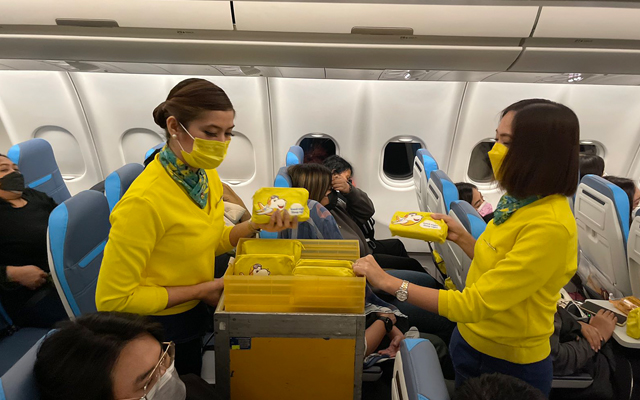
Cebu Pacific (CEB) restarted its direct flights to Sydney, Australia and Seoul, Korea on July 1 and July 3, 2022, respectively.
Following the easing of travel restrictions both in the Philippines and Australia, CEB will operate the Manila-Sydney service thrice-weekly on every Monday, Wednesday and Friday.
Cebu Pacific has restarted its direct flights to Sydney and Seoul
The flight will depart Manila at 23.20 and arrive at Sydney Kingsford Smith Airport at 09.50 the following day. Its return flight flies from Sydney at 11.20 and arrives in Manila at 17.50 every Tuesday, Thursday and Saturday.
The Cebu-Seoul service will operate twice-weekly on every Thursday and Sunday.
The flight will depart from Mactan Cebu International Airport at 12.25 and arrive at Incheon International Airport at 18.10; its return flight is scheduled to leave Seoul at 18.55 and arrive in Cebu at 22.50.
The Philippines’ new tourism secretary, Christina Garcia Frasco, said collaboration between the national government, local government units (LGUs) and all tourism stakeholders from the private and public sectors is the best way forward to revitalise tourism.
“It is this inclusive, sustainable, innovative, and collaborative tourism governance that I intend to bring to the Department of Tourism,” Frasco, told the media and the Department of Tourism (DoT) officers and employees.
Frasco: practical knowledge of frontlines officers are critical in crafting national policy
Frasco’s perspective is honed by her local government experience as two-term mayor of Liloan in the province of Cebu. Her third term was cut short by her appointment to the DoT.
A lawyer by training and profession, she believes “that national and local government cooperation is imperative for our tourism plans and programmes to succeed”.
“If we uplift the status of one LGU, and translate that to the over 1,400 plus municipalities, 81 provinces, hundreds of cities across the country, uplifting each of their economies will uplift the economy of our nation as a whole,” she said.
“What I intend to bring to the Department of Tourism, is the perspective of valuing the input of LGUs in the crafting of national policy, considering that the policies that are crafted nationally will be implemented by the LGUs on the ground. And so it is imperative that in crafting national policy, we must seek the practical knowledge of those that are in the front lines,” she added.
Frasco also noted the importance of spreading tourism development to the countryside by giving “equal opportunity for promotion and product development” to the countryside and lesser-known tourist destinations, “the idea being that we improve the overall tourist experience, not only to bring back the tourism numbers that have been lost, but also to harness potential markets to further increase the number of tourists that will come into the country.”
She plans to take a “multidimensional approach to tourism”, where the focus is not only on natural resources but also on developing and promoting people and products.
Seeing how domestic tourism was a lifesaver for the industry when international travel was absent, Frasco will develop this sector to drive vast opportunities to small businesses and improve livelihood.
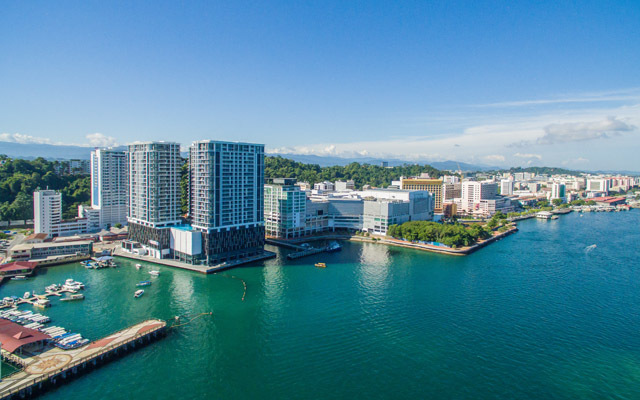
Five foreign carriers have returned to Sabah, with the most recent being Jeju Air which restarted operations on June 29 between Incheon and Kota Kinabalu.
Kota Kinabalu is on track to rebuilding international air connectivity
Other international carriers that have resumed their direct flight operations to Kota Kinabalu include Scoot, Royal Brunei Airlines, Jin Air and Air Busan, while local LCC Air Asia now flies direct from Singapore and Manila to Kota Kinabalu.
According to the Sabah Tourism Board, improvements in air connectivity are helping the Malaysian state to “become a well-connected South-east Asian destination”.
In line with re-established accessibility, the Sabah Tourism Board has conducted destination promotional trips to a number of countries, while continuing to maintain engagement with airline and tour operators partners and its presence at tourism exposition events.
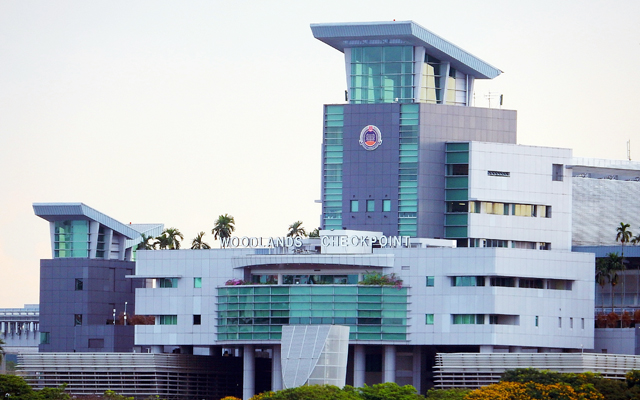
A new Automated Passenger In-Car Clearance System (APICS) is being trialled at Singapore’s Woodlands Checkpoint on the Singapore-Malaysia border, a process that is expected to improve immigration clearance.
Trial of the Automated Passenger In-Car Clearance System at Singapore’s Woodlands Checkpoint seeks to improve immigration clearance at land checkpoints
Drivers to Singapore via the Woodlands Checkpoint will drive up to a self-help kiosk under a light-controlled canopy, and scan their passport as well as their facial and iris biometrics on scanners located outside each car window. Passengers in the vehicle will no longer need to crane their necks out of the window for immigration clearance.
In the pilot phase, APICS is operational on weekday evenings and limited to cars where there is a single driver. This will be progressively offered to cars with more travellers.
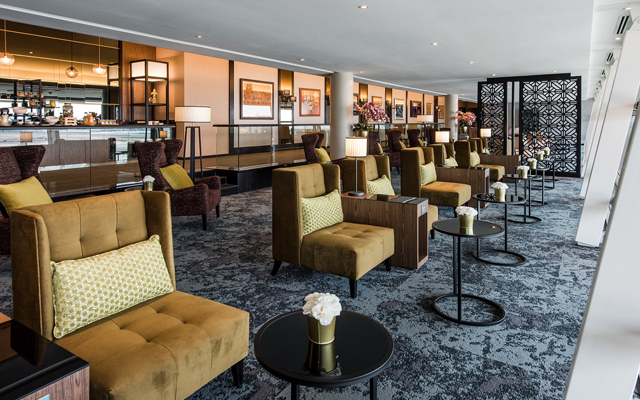
Malaysia Airlines’ Platinum Lounge at Kuala Lumpur International Airport (KLIA) is back in business to support the flag carrier’s ramped up international services.
The reopening of the airline’s flagship Platinum Lounge also marks the full restoration of its lounges at KLIA, including its domestic, regional and Satellite Golden Lounges, following two years of pandemic-associated restrictions.
Malaysia Airlines reopens its Platinum Lounge at Kuala Lumpur International Airport
Passengers and frequent flyer members travelling via Business Suite, Enrich Platinum, Enrich CIMB World Elite, First Class on codeshare flights operated by Malaysia Airlines, oneworld First Class, and oneworld Emerald can enjoy end-to-end premium services offered by the airline, including access to the Platinum Lounge.
The Platinum Lounge offers guests exclusive fine dining experiences and spacious facilities to refuel before their flight.
The 24-hour lounge is equipped with private shower suites, nap rooms and serene seating areas.
Desaru Coast Destination Resort is celebrating the commencement of new ferry services between Singapore and the destination with a series of daycation and stay packages inclusive of return ferry tickets.
Daycation packages are priced from RM378 (US$86), and includes Desaru Coast experiences such as golf on the fairways of its world-class courses, resort-style dining at any of the destination’s restaurants, play day on pristine beaches or at the waterpark.
Daycation and staycation packages that pack in plenty of Desaru Coast activities and return ferry tickets are up for grabs
For more days of fun, staycation packages packs in hotel stays, an array of Desaru Coast activities and return ferry tickets. These are priced from RM2,379.
Further to the newly introduced packages, The Els Club Desaru Coast has rolled out a three-month promotion for its popular Golf Privilege Pass. For RM10,800, pass holders can enjoy daily rounds on the greens at both the Ocean and Valley Courses.
More activity-driven day packages will be introduced, and travellers can look forward to spa, brunch and cycling escapes.
IHG Hotels & Resorts and Siam Sindhorn has designated Sindhorn Midtown Hotel Bangkok – previously an independent property – as the first Vignette Collection hotel to open in Asia.
Vignette Collection is IHG’s newest luxury & lifestyle collection brand, where each hotel has its own distinct outlook and story to tell.
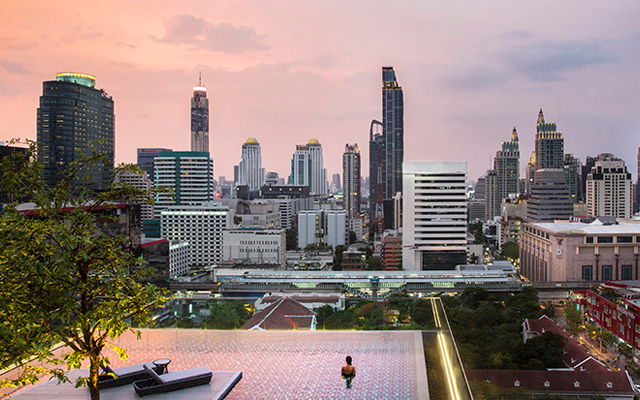
Hotel pool
Daily complimentary rituals at each Vignette Collection property create a sense of anticipation and connection and meet growing demand for more thoughtful travel experiences.
A complimentary Lao Khao shot is served with a mixed selection of pickled fruits from 1700 to 1800 daily at The Black Cat. Younger guests can dial the Emergency Popsicle Line located on the hotel’s second floor to receive a complimentary iced treat, delivered promptly by a dedicated Popsicle Butler.
Each of Sindhorn Midtown Hotel Bangkok’s 393 rooms feature bathroom amenities from Karl Lagerfeld and modern comforts such as Fritz Hansen’s iconic Drop chairs. The Fitness Centre offers panoramic city views, as does the Horizon Pool, which is located on the 18th floor.
The hotel also recently introduced three new dining offerings; The Black Cat is an atmospheric Thai Liquor bar, with a live band playing on selected evenings. Inspired by the golden age of Thailand, Bangkok’78 presents the city’s greatest culinary hits in a retro-inspired concept, while Sip & Co. adds to Langsuan’s flourishing café culture.
Sindhorn Midtown also partners with Kuvanant Foundation, which aims to provide educational opportunities for local students and those living with disabilities in rural areas of Thailand. The hotel will provide internship opportunities for the foundation’s students to earn first-hand work experience and offers career opportunities and insights into the hospitality industry.
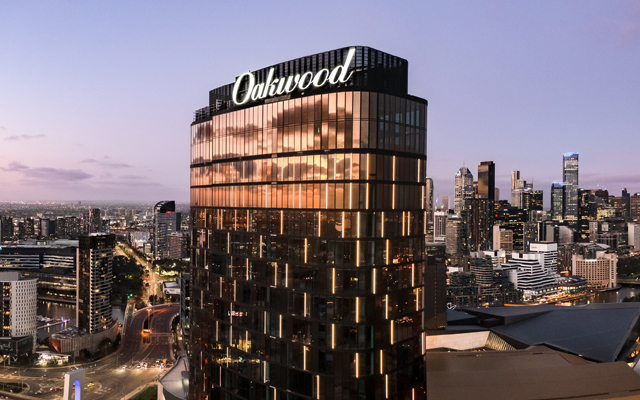
Oakwood Premier Melbourne recently opened in Melbourne
CapitaLand Investment Limited’s (CLI) wholly owned lodging business unit, The Ascott Limited (Ascott), has acquired Oakwood Worldwide (Oakwood), a global serviced apartment provider, from Mapletree Investments
The acquisition increases Ascott’s global portfolio by 81 properties and about 15,000 units. Oakwood’s approximately 8,500 operational units will immediately contribute to Ascott’s recurring fee income streams upon completion of the transaction slated in 3Q2022.
Oakwood Premier Melbourne recently opened in Melbourne
Ascott’s acquisition of Oakwood will leapfrog Ascott’s global presence to more than 150,000 units in about 900 properties across over 200 cities in 39 countries. It will add new markets which include Cheongju in South Korea; Zhangjiakou and Qingdao in China; Dhaka in Bangladesh as well as Washington DC, US.
Kevin Goh, CLI’s CEO for lodging, said: “We intend to build on the strong reputation and heritage of the Oakwood brand, especially in markets across South-east Asia, North Asia and North America. Oakwood will continue to grow alongside Ascott’s current portfolio of global brands as we continue to build growth momentum for our lodging business.”
“Besides strategic alignment… Ascott’s acquisition of Oakwood brings about an immediate boost to our units under management and franchise contracts. The Oakwood portfolio will accelerate the growth of our asset-light business, with added recurring fee income streams, expanded lodging offerings and increased customer base,” added Goh.
Eastern Chinese cities have tightened Covid-19 curbs on July 3 in response to new infection clusters, setting fresh delays to the country’s tourism and economic recovery.
Cities impacted by China’s latest restrictions include Wuxi, a city near Shanghai; Si county in Anhui province; and Yiwu in Central Zhejiang Province.
Yiwu city (pictured) and other cities in Eastern China have suspended public activities as new Covid infections emerge
In Wuxi, operations at public facilities, such as restaurants and shops, are halted, while flights between Yiwu and Beijing are cancelled.
Si county, which contributes the bulk of infections in the latest wave, has locked down its 760,000 residents and suspended public traffic.
This comes as China announced on June 28 the decision to cut quarantine period for international travellers by half, to one week, and reduce the post-quarantine home monitoring period from seven days to just three.
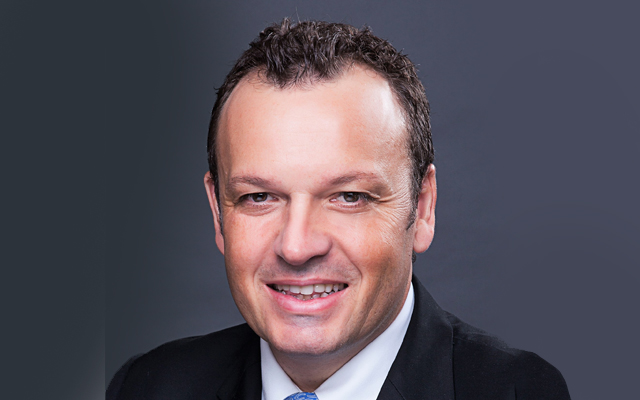
Dusit International has appointed Gilles Cretallaz as its new chief operating officer, replacing Lim Boon Kwee, who retired from the position in May 2022.
In this new role, Cretallaz will be responsible for overseeing the financial and operational responsibilities of Dusit’s hotel business unit, including all Dusit Hotels and Resorts, ASAI Hotels, Elite Havens, White Label properties, and condominiums/residences under Property Management, at both corporate and property levels.
The French national brings to the role more than 30 years of experience leading hotels for the Accor group across Turkey, China, and South-east Asia. Before moving to Dusit, Cretallaz served as senior vice president operations – South-east Asia where he headed Accor’s Bangkok Office and oversaw the operations of 150 hotels.





 The French national brings to the role more than 30 years of experience leading hotels for the Accor group across Turkey, China, and South-east Asia. Before moving to Dusit, Cretallaz served as senior vice president operations – South-east Asia where he headed Accor’s Bangkok Office and oversaw the operations of 150 hotels.







Five foreign carriers have returned to Sabah, with the most recent being Jeju Air which restarted operations on June 29 between Incheon and Kota Kinabalu.
Other international carriers that have resumed their direct flight operations to Kota Kinabalu include Scoot, Royal Brunei Airlines, Jin Air and Air Busan, while local LCC Air Asia now flies direct from Singapore and Manila to Kota Kinabalu.
According to the Sabah Tourism Board, improvements in air connectivity are helping the Malaysian state to “become a well-connected South-east Asian destination”.
In line with re-established accessibility, the Sabah Tourism Board has conducted destination promotional trips to a number of countries, while continuing to maintain engagement with airline and tour operators partners and its presence at tourism exposition events.