I’M Hotel Group, known for its aquatic-themed hotels and attractions, is expanding in the Philippines with plans to open a 381-key all-inclusive resort in Boracay in 1Q2026.
Country general manager Melissa Lim said I’Msignia Beachfront Resort Boracay will feature distinctive elements, including underwater rooms and integrated entertainment facilities, to increase demand in Boracay and compete with other island destinations.
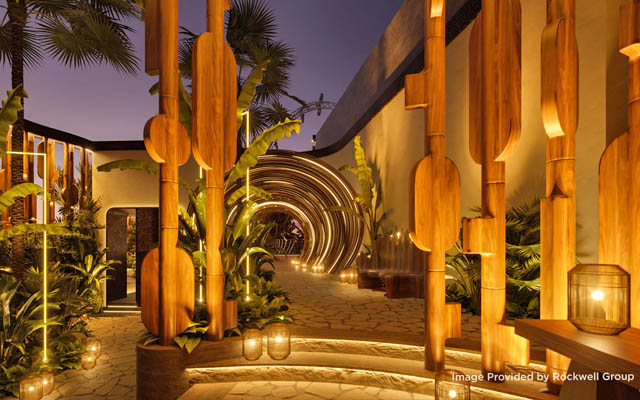
I’M Hotel Group will debut its first beachfront resort in Boracay, featuring underwater rooms and family-friendly amenities; artist’s rendition of the I’Msignia Beachfront Resort Boracay pool
The resort, the only one on Boracay’s Puka Beach, will cover over two hectares. It will offer six room categories, with the smallest measuring 45m² (the Department of Tourism standard for a five-star hotel is a minimum of 30m²). Some rooms will include mini-playgrounds, targeting families, young adults and leisure travellers.
I’Msignia will include an Ocean Park and a large water park focusing on leisure and entertainment. This will set it apart from I’M Hotel Group’s Manila Ocean Park and Cebu Ocean Park, which have an educational emphasis popular with school field trips.
Lim said the resort’s concept will draw inspiration from Bali’s mega day clubs and beach clubs with international DJs, as well as diving resorts in the Maldives.
On the food and beverage side, Lim plans to collaborate with Michelin-starred chefs to introduce new culinary concepts to Boracay.
Health and wellness will be a major focus, with plans to offer an enhanced version of the I’M Onsen Spa, a key feature of the I’M Hotel in Makati, alongside the latest technologies such as red light therapy.
Headquartered in Singapore, I’M Hotel Group’s Philippine portfolio includes Hotel H2O and Manila Ocean Park, I’M Hotel (above which are the Oakwood Makati Avenue serviced apartments), I’M Onsen Spa in Makati, Cebu Ocean Park, and a building in Makati currently being renovated into serviced apartments. The group has also acquired land in San Vicente, Palawan, and aims to develop a property in South Korea within the next five years.
Seibu Prince Hotels & Resorts will open the Prince Hotel Da Nang in Vietnam in October 2025, marking a step in its renewed focus on international expansion. The move extends the company’s presence beyond Japan and reflects its plan to grow its global portfolio.
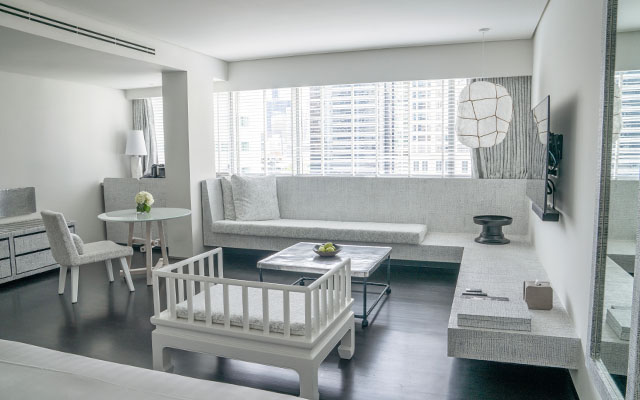
The 164-room hotel features minimalist designs, with each room offering a private balcony overlooking either the city or the beach. Facilities include several on-site restaurants and bars, among them a rooftop bar, The Speakeasy, with 360-degree views.
Seibu Prince Hotels & Resorts will open Prince Hotel Da Nang in October 2025, marking a key step in its global expansion
Additional amenities include a gym, an infinity rooftop pool on the fifth floor, and a hotel spa. The property also houses flexible meeting rooms equipped with audio-visual systems.
Located near My Khe Beach, the hotel provides access to Danang’s city nightlife in An Hai and the Son Tra Peninsula. It is also close to tourist sites such as Dragon Bridge, Marble Mountain, the Ancient Town and the Golden Bridge.
Lee Richards, CEO of the International Division, Seibu Prince Hotels & Resorts, said: “This new hotel marks an exciting chapter in our commitment to hospitality excellence, reinforcing our dedication to setting the highest standards in the world’s most thoughtfully curated destinations. Guests can look forward to experiencing our unique blend of Japanese warmth and genuine hospitality, ensuring an effortlessly elegant and deeply memorable stay.”
Duong Tien Thanh, of Thien An Thanh Trade Service Company, the owner of Prince Hotel Da Nang, added: “Our collaboration with Seibu Prince Hotels & Resorts is a natural fit. We firmly believe that our two organisations align perfectly in the shared endeavour to bring esteemed hospitality to the rest of the world, and we are excited for Prince Hotel Da Nang to be a shining example of this synergy.”
Emirates adds third daily flights to Dublin and Mauritius Emirates will increase capacity to two key destinations with the launch of a third daily flight to Dublin from October 26, 2025 and to Mauritius from December 1, 2025.
The third daily service to Dublin will operate as EK165/166, using a Boeing 777-300ER in a three-class configuration.
This added Dublin service provides an early morning departure option from Dubai, complementing Emirates’ existing afternoon and evening flights. It also enhances connections to destinations across the airline’s network, including Sydney, Melbourne, Singapore, Kuala Lumpur and Bangkok.
The additional service to Mauritius will operate as flights EK709/710 also using a Boeing 777 aircraft. It will complement Emirates’ existing two daily A380 services (EK701/702 and EK703/704). Operated under a codeshare agreement with Air Mauritius, the new flight will offer improved connectivity for travellers from the Middle East, Europe, the Americas, and Far East markets such as Japan, China, Malaysia and Hong Kong. First Class, Business Class and Economy Class will be available on board.
La Première suites on Air France; photo by Air France
Air France unveils new La Première Suites on Singapore-Paris route Air France is now operating its newly refurbished Boeing 777-300ER aircraft on its daily flight between Singapore Changi Airport and Paris-Charles de Gaulle Airport. The aircraft features the airline’s latest cabin products across all classes, including the introduction of its new La Première suites on this route for the first time.
Singapore becomes the second destination, after New York JFK, to offer Air France’s upgraded La Première experience. Each aircraft features four suites, alongside 60 Business Class seats, 44 Premium Economy seats, and 204 Economy seats.
The new La Première suite includes fully flat beds, adjustable seating, floor-to-ceiling privacy curtains, and in-flight entertainment on dual 32-inch screens. Passengers also benefit from Bluetooth pairing, wireless charging, and personal device holders.
Air France plans to gradually expand the La Première product to more destinations, with Los Angeles joining in summer 2025, and Tokyo-Haneda in winter 2025/2026.
The newly retrofitted aircraft also offer enhanced comfort across all classes, with upgraded Business, Premium Economy, and Economy cabins now featuring lie-flat seats, Bluetooth connectivity, larger entertainment screens, and redesigned seating for added comfort.
Jetstar
Jetstar to launch direct flights from Brisbane to Cebu Jetstar will launch a new seasonal service between Brisbane and Cebu from December 3, 2025, marking the airline’s seventh international route from Brisbane Airport.
The new route will operate three times a week on Wednesdays, Fridays and Sundays, using Jetstar’s Airbus A321LR aircraft. It will be the first direct service between Australia and Cebu and is scheduled to run until May 16, 2026.
The addition forms part of Jetstar’s ongoing expansion in Asia and supports growing demand for direct, low-cost international travel from Brisbane. The Cebu route also contributes to Brisbane Airport’s network growth, bringing its total number of direct international destinations to 34 — the highest in its history.
Delta Air Lines
Delta to commence daily non-stop service between Hong Kong and Los Angeles Delta Air Lines will introduce a new non-stop daily service between Hong Kong International Airport and Los Angeles International Airport from June 8, 2026, further expanding its Asia-US network.
The new route will be operated using Delta’s Airbus A350-900 aircraft, offering four cabin classes: Delta One suites, Delta Premium Select, Delta Comfort+, and Main Cabin. Delta One features lie-flat seats with sliding doors, premium bedding, and seasonal four-course meals, while Premium Select offers wider seats, greater recline, and upgraded amenities.
The service provides direct access to Los Angeles, with onward connections to over 30 US destinations. It also strengthens the Delta-Korean Air Joint Venture partnership, enhancing connectivity across the Pacific.
Travellers flying in Delta One to or from Hong Kong will have access to Delta’s new Delta One Lounge at LAX, featuring nearly 200 seats, chef-curated menus, a sushi bar, wellness room, and concierge check-in.
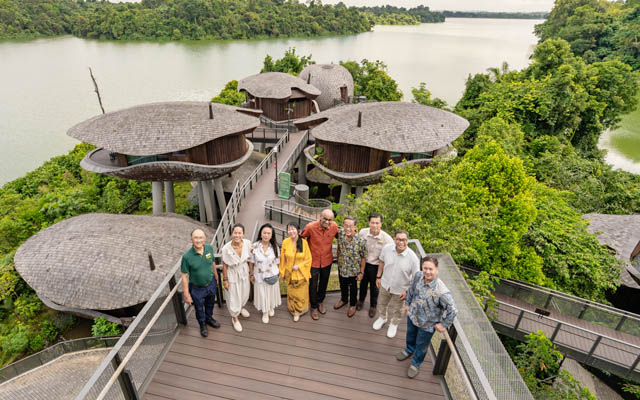
Mandai Rainforest Resort by Banyan Tree is marking Singapore’s 60th anniversary with a room package that includes resort credits, a buffet dinner at Planter’s Shed, and commemorative items available at Banyan Tree Gallery.
The resort is located within the Mandai Wildlife Reserve and offers access to attractions such as the Singapore Zoo, Night Safari and the recently opened Rainforest Wild Asia.
Guests can celebrate SG60 with a stay at Mandai Rainforest Resort by Banyan Tree, complete with dining offers, spa credits and exclusive merchandise
Banyan Tree Gallery will feature the SG60 Collection, which includes two Blooming in Harmony gift sets – each decorated with a motif of six Vanda Miss Joaquim orchids. The mini set, priced at S$60 (US$45) includes a crystal stone diffuser and aromatherapy oil. The full set, at S$160 adds an upcycled cassava wireless charging tray.
Dining accessories featuring the orchid motif are also available, including a linen table runner at S$260, a set of four linen table placemats at S$160, and a set of four ceramic coasters at S$60.
Planter’s Shed will offer a dinner buffet from August 4 to 10, 2025, priced at S$60++ per adult and S$30++ per child aged six to 12. Usual prices are S$68++ and S$34++ respectively. The buffet will feature local dishes such as laksa and prawn noodles, prepared at live cooking stations.
Guests staying at the resort between August 1 and 31, 2025 will receive S$60 in resort credits per room, per stay. The credit can be used for dining at Forage and Planter’s Shed, treatments at the Banyan Tree Spa, or purchases at Banyan Tree Gallery.
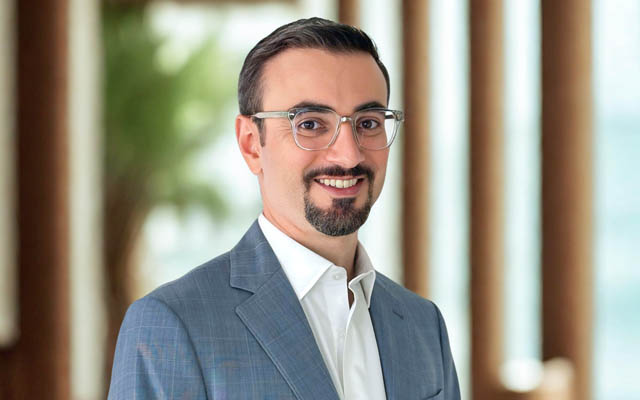
Helen McCabe-Young has been appointed senior vice president, global products at Virtuoso. She takes on the role following the departure of Thatcher Brown, who is now CEO of Crescent Seas. McCabe-Young has been with Virtuoso for five years as senior vice president, global marketing.
Two other recent appointments are Amy Logan as vice president, global network product, and Lucy Lieberman as vice president, global digital experience.
From left: Helen McCabe-Young, Amy Logan and Lucy Lieberman
Logan joined Virtuoso in May, having previously worked at Classic Vacations, Expedia, and Amazon, while Lieberman joined in June, and was formerly CEO of Hotels at Michelin and held senior roles at Ogilvy and Mather.
McCabe-Young starts her new role immediately and will help with the handover as Virtuoso looks for a new marketing head. Both Logan and Lieberman will report to McCabe-Young.
If slowing down is the new luxury, Tasmania may be Australia’s best-kept secret. The air is crisp, the food hearty, and mobile phones often lose signal – which is the point. For Asians prioritising off-the-beaten-path travel, Tasmania offers a quiet appeal.
“I’ve watched it develop from a struggling industry to a blossoming one,” said Annabelle Sweetman, a 20-year Tasmanian tourism veteran and guide. “We used to be seen as a bit backward, but Tourism Tasmania has done a lot of work, so now we’ve grown up. Operators are working together to combine experiences, products are maturing, and people are really proud.”
Battery Point’s vibrant cottages bring Hobart’s layered history to life; photo by Mick2770
Many who have watched tourism here blossom point to the “MONA effect” for its beginnings, referring to the debut of the Museum of Old and New Art 14 years ago, drawing global attention for its curious and edgy exhibitions.
“People were coming just for the weekend and the airlines were seeing more demand,” said Sweetman, also noting that tourism has surpassed forestry as Tasmania’s leading industry.
For the record, the island welcomed 254,000 international visitors in 2024, a 24.8 per cent increase from 2023, with visitor spending rising 47.7 per cent. Compared to pre-Covid numbers, recovery is almost complete, with mixed performance from various markets.
About 20 per cent of international visitors come from Asia, with significant traffic from Singapore and Hong Kong, while the key China market is being encouraged to return and India emerges as a market to watch.
“The Asian market not only plays a very strong role in year-round visitation for us, but also a strong role in spending. We try really hard to make sure that the visitors we’re attracting to Tasmania are an audience who will understand what we offer but also respect our place,” said Lindene Cleary, chief marketing officer of Tourism Tasmania.
The tourism bureau promotes its offer around six key pillars: F&B, nature and wildlife, experiences, history and heritage, positive impact, and culture and creativity. It is also keen to show that it has just as much to offer in the winter season, if not more.
“There are a lot of events and festivals that are very creative and different to what you’d find anywhere else across our seasons but particularly in wintertime,” she said, in addition to whisky tastings and more aurora sighting opportunities due to longer nights.
She also noted the rise in hot and cold therapy experiences “all over Tasmania”. These include saunas on the beach, seconds from the cold plunge of the ocean, or saunas on a boat 20 minutes from Hobart, from where one can dive straight into the cold river water.
“That’s an interesting trend in Tasmania because we’re not seen as a typical wellness destination in terms of day spas and the traditional definition of wellness, but our version of wellness is more about taking time or pausing,” said Cleary.
Regardless of how wellness tourism is defined, the trend aligns with Tasmania’s immersive landscape, where unique wildlife thrives and geographic isolation helps preserve its pristine environment.
Visions of campfire meals also lend to masterful storytelling in Tasmanian tourism, from its defining history of convict settlement tangling with Aboriginal resistance to the 114 luxury rooms in MACq 01 hotel, each of which identifies with a local historical character.
Tasmania is also the kind of place that inspires the self-driving tourist, with itineraries that can be co-designed from scratch.
“We suggest that you plan at least five to seven days, and you can travel from Hobart, along the East Coast, Maria Island, Freycinet, Launceston, and possibly up to Cradle Mountain,” said Daniel Schoedler, owner and managing director of Premier Travel Adventures Tasmania.
“If you have 10 days, that’s even better, because you don’t have to change hotels every night. You can explore more of this seafood capital of Australia and spend time stargazing, which is a tour that’s really popular with the Asian market as we have several enquiries daily,” he added.
The luxury accommodation scene is also evolving. In addition to the premium but intimate old-world charm that properties like Islington Hotel offer, newer entrants such as The Tasman (named in the world’s top 50 hotels), Mövenpick, and Crowne Plaza are expanding Tasmania’s higher-end proposition.
“We used to have a waitlist for our rooms and now have to compete more, but that’s good. It keeps standards up,” said Karen Ann, general manager of Islington Hotel.
“I’m still in awe. There’s just such a huge variety for visitors… the outdoors, clean air, beautiful sightseeing, and restaurants that are to die for. Tasmanians really know how to look after their guests, who love the laid-back approach. Every guest has said to me, ‘I wish we had more time’,” she added.
If most visitors leave wishing they had stayed longer, the tip for tourists is evident – give yourself the time. And don’t say we didn’t tell you so.
The Board of Directors of Club Med Holding has appointed Stéphane Maquaire as president and CEO, effective immediately.
The French national will be based in Paris and is tasked with leading the next phase of the company’s growth while maintaining its French identity and values.
Maquaire brings extensive leadership experience with French companies operating internationally. He has a background in premium brand transformation and commercial real estate, with a record of driving growth and operational performance. He joins Club Med from Carrefour, where he was executive director for Brazil and Latin America.
The recent border clashes in Cambodia and Thailand have had a significant impact on the tourism industry, even though these incidents are geographically distant from the main attractions. Such events tend to create a ripple effect because they influence the perception of safety among potential travellers.
Tourists often rely on information and impressions rather than detailed knowledge of the situation, and news of conflict – even if it occurs in remote regions – can generate concern about overall safety and stability. This can lead to a decline in visitor numbers, as travellers may choose to postpone or cancel their trips, or opt for alternative destinations perceived as safer.
Furthermore, the negative publicity can tarnish the country’s image as a peaceful and secure travel destination, which is critical for tourism-dependent economies.
If the situation persists or escalates, it could have longer-term repercussions, including reduced bookings, lower hotel occupancy rates, and diminished revenue for local businesses and communities reliant on tourism.
It is also important for Thailand to uphold the rule of international law and accept the jurisdiction of the International Court of Justice (ICJ) in resolving border disputes. Demonstrating a commitment to international legal processes can help restore confidence and show the world that Thailand is dedicated to peaceful and lawful resolution of conflicts.
Moreover, lasting peace can only be achieved through dialogue, diplomacy, and adherence to international law. These are essential pathways to resolving disputes and fostering stability in the region.
Going forward, the sector may face challenges in restoring traveller confidence, especially if there are ongoing security concerns or if the media continues to highlight the conflict. To mitigate these effects, effective communication, reassurance of safety measures, and targeted marketing emphasising the country’s stable and attractive regions will be essential.
In summary, even conflicts in remote areas can influence the broader tourism sector by shaping perceptions and traveller behaviour. The key will be how quickly and effectively the situation is managed, communicated, and addressed through peaceful means – namely dialogue, diplomacy, and international legal frameworks such as the ICJ – to foster trust, stability, and long-term peace.
Ongoing military clashes between Thailand and Cambodia – both popular travel destinations – across disputed border zones have prompted travel and tourism organisations to take safety measures and issue advisories.
The Tourism Authority of Thailand (TAT) issued a travel advisory on July 24 evening, detailing the closures of several border checkpoints and nearby tourist areas for public safety and national security.
Travel caution rises as border tensions between Thailand and Cambodia escalate
Travel restrictions apply to seven provinces in eastern and north-eastern Thailand: Ubon Ratchathani, Surin, Si Sa Ket, Buri Ram, Sa Kaeo, Chanthaburi, and Trat. Affected attractions include Phu Chong-Na Yoi National Park (Na Chaluai District) in Ubon Ratchathani, Phanom Sawai Forest Park in Surin, Khao Phra Wihan National Park in Si Sa Ket, and more.
TAT said authorities will continue to monitor the situation closely and provide updates as conditions change.
Destination specialist Asian Trails shared an update on the same day, saying that all guests in both countries are safe and located far away from the conflict zones.
“The safety and well-being of our clients is our highest priority. We are closely monitoring the situation through government sources and our local partners on the ground,” noted the company’s statement.
Thailand’s flag carrier, Thai Airways, is presently assessing the situation, according to CEO Chai Eamsiri, and is ready to evacuate staff from Cambodia should the conflict worsen. The airline is maintaining flight schedules at press time.
Thourn Sinan, chairman of PATA Cambodia Chapter, affirmed Cambodia’s continued state of welcome for travellers.
He told TTG Asia that all major tourism destinations in Cambodia – Siem Reap, Phnom Penh, Battambang and the coastal zones – are fully secure and operating normally.
Although tourists are safe, destination reputation is at risk. Sinan warned that such conflicts “tend to create a ripple effect because they influence the perception of safety among potential travellers”.
“Tourists often rely on information and impressions rather than detailed knowledge of the situation, and news of conflict – even if it occurs in remote regions – can generate concern about overall safety and stability. This can lead to a decline in visitor numbers, as travellers may choose to postpone or cancel their trips, or opt for alternative destinations perceived as safer,” he said, adding that a country’s image as a peaceful and secure destination is critical for tourism-dependent economies.
For now, the clashes have resulted in “irreparable harm to cultural heritage and inflicted hardship on local communities living along the frontier”.
“Some of the world’s most treasured temples – symbols of human history and spiritual identity – have sustained damage from shelling and military activity,” he said, adding that continued aggressions would erase “centuries-old cultural treasures that belong to all of humanity, not just Cambodia”.
Various news outlets have reported civilian fatalities as well as displacement of civilians on both sides of the border.
“If the situation persists or escalates, it could have longer-term repercussions, including reduced bookings, lower hotel occupancy rates, and diminished revenue for local businesses and communities reliant on tourism,” he said. – Additional reporting by Marissa Carruthers
India passport-holders will be subjected to an additional US$250 Visa Integrity Fee for travel into the US starting October 1, 2025, a requirement that some Indian outbound travel specialists say could deter price-sensitive travellers as well as those considering the US for the first time.
Indian travellers at present have to fork out US$185 for a US visa.
The new US$250 visa fee may put the brakes on budget travel from India to the US
Harjit Singh, founder and chief of guest experience, Travel Twist in India, said: “For many Indian leisure travellers, particularly families and groups, the total cost of travelling to the US is already considerable when factoring in airfare, visa fees, insurance, and required documentation. This new additional fee may serve as a deterrent, especially for middle-income travellers and first-time visitors exploring the US as a holiday destination.
However, the soon-to-come Visa Integrity Fee may have limited impact on premium travellers and the visiting friends and relatives (VFR) segment, opined Singh, as these travellers’ motivations tend to be more resilient and less influenced by cost fluctuations.
Rasika Mathur, CEO and co-founder, RAS Travels in India, told TTG Asia that while the Visa Integrity Fee would “add a significant cost to the already expensive US visa”, the price is worth it. Not only would Indian travellers be able to check off their bucket list, as the US is regarded as a “dreamland for Indian travellers”, they could also benefit from free visa-on-arrival at many countries with the US visa in hand.
“Furthermore, India is a cash-rich market. It looks difficult that the demand will drop,” Mathur added.
Vinay Arora, director, ATG Holidays, expects some initial concerns among Indian leisure travellers, especially among budget travellers, but overall demand for travel to the US will remain.
“When compared to countries like the UK where a 10-year visa can cost around US$1,450 for the Indians, the US visa still offers better long-term value,” Arora remarked.
However, Singh warned that the perception of the new Visa Integrity Fee could have a stronger impact on travel decisions. If the new fee was regarded as being part of a broader trend of increasing entry barriers for Indian nationals, travellers from India may gradually shift preference towards destinations that are more accessible and offer cost-effective visa processes, such as Europe, South-east Asia and Australia.
Singh said: “The US travel and tourism industry must remain aware of this potential shift and collaborate with relevant authorities to ensure such measures do not discourage one of the world’s most dynamic outbound travel markets.”