TTG Asia
Asia/Singapore Thursday, 25th December 2025
Page 71

Sri Lanka to allow visa-free entry for 40 nationalities

0

Sri Lanka has reintroduced plans to offer visa-free entry to nationals from 40 countries, though an implementation date has yet to be confirmed.

This marks a renewed effort following a similar proposal in August 2024 to extend visa-free travel to 35 countries, which was approved at cabinet level but never came into effect.

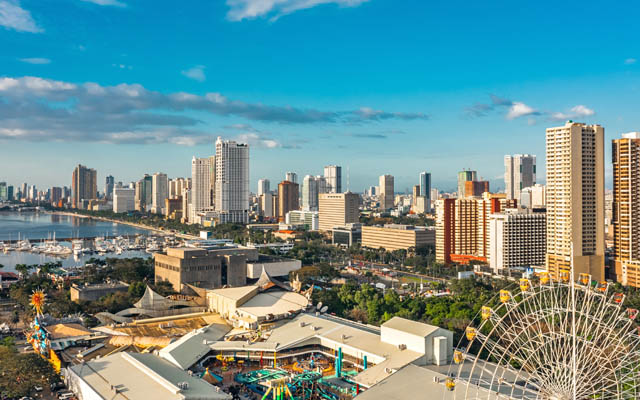
Visa-free access for 40 nationalities is expected to boost Sri Lanka’s tourism, pending final government approvals; Colombo in Sri Lanka, pictured

The latest announcement was made by Vijitha Herath, minister of foreign affairs, foreign employment and tourism, at the opening of the Hotel Show in Colombo. While full details were not disclosed, a list of eligible countries has since been released by the ministry.

The 40 countries include the UK, Germany, Netherlands, Belgium, Spain, Australia, Poland, Kazakhstan, Saudi Arabia, the UAE, Nepal, China, India, Indonesia, Russia, Thailand, Malaysia, Japan, France, the US, Canada, Czech Republic, Italy, Switzerland, Austria, Israel, Belarus, Iran, Sweden, Finland, Denmark, South Korea, Qatar, Oman, Bahrain, New Zealand, Kuwait, Norway, Türkiye and Pakistan. Nationals from India, China, Russia, Japan, Malaysia, Thailand and Indonesia are already eligible for visa-free travel.

The tourism industry has welcomed the move. Hotels Association of Sri Lanka president, M Shanthikumar, said the decision provides a welcome boost to the sector, which has been growing steadily. Sri Lanka is aiming to attract three million visitors in 2025, up from two million in the previous year.

Nishad Wijetunga, immediate past president of the Sri Lanka Association of Inbound Tour Operators, also supported the announcement but noted that the industry is still awaiting clarity on when the policy will take effect. Other industry sources suggest it could take up to two months to implement.

One industry source noted that although cabinet approval has been granted, parliamentary approval is still required due to the potential impact on government revenue, and expressed concern that the announcement was made before all necessary authorisations were secured.

Japan courts global travellers with local flavours

0

Japan is stepping up efforts to promote its culinary culture to international visitors in a bid to enhance gastronomy tourism and better support local economies.

The government is targeting annual F&B spending by inbound tourists of 4.5 trillion yen (US$28.6 billion) by 2030. The initiative, led by the Ministry of Agriculture, Forestry and Fisheries (MAFF), promotes rural trips, farm stays and agricultural experiences, in collaboration with the Japan Tourism Agency and Japan National Tourism Organization.

Farm visits and hands-on experiences, like strawberry picking, offer a deeper taste of Japan’s diverse culinary culture for visitors

With 1.6 trillion yen in F&B spending recorded by international visitors in 2023, there is still some way to go to reach the goal. However, a 21 per cent year-on-year increase in arrivals in the first half of 2025 is fuelling optimism.

Savor Japan, a website launched by MAFF to encourage travellers to “explore regional flavours” aims to showcase lesser-known culinary experiences, especially in regions less frequented by international tourists. Users can search by region or by category, including food, scenery, activities and sightseeing.

In Shizuoka Prefecture, visitors can pick and grill shiitake mushrooms at Shiitake Mushroom Village, or explore the Amagi mountains of Izu, home to Japan’s largest cultivated area for water wasabi and designated a Globally Important Agricultural Heritage System.

For the more adventurous, activities include electric kick scooter tours in the port town of Abashiri, eastern Hokkaido, where participants can observe fishermen unloading salmon and scallops while learning about local fishing traditions.

Opportunity blossoms further for Indian weddings in Thailand

0

At ASEAN-Indian Forum hosted by the Tourism Authority of Thailand (TAT) on July 23, the topic of Thailand’s robust Indian weddings market took centre stage, with industry leaders noting Thailand’s draws as a top-of-mind destination for Indian weddings, thanks to cultural affinity, affordability, and ease of doing business.

“With over 300 destination weddings from India annually, it’s a tremendous opportunity. I’ve heard stories where people find it cheaper to host a 300-500 guest wedding in Thailand or Malaysia than in India,” commented Santosh Kumar, country head for India & Indonesia at Booking.com.

Panellists at the TAT’s ASEAN-India Forum discuss trends in outbound Indian travel to ASEAN countries at the Royal Orchid Sheraton Riverside Hotel Bangkok on July 23; photo by Anne Somanas

Shreyash Shah, commercial director at Destination Hospitality Management group – which owns and operates six hotels across Hua Hin, Phuket, and Pattaya including Radisson Resort & Spa Hua Hin – shared a similar perspective.

“Flying from Delhi to Bangkok is often less expensive than travelling to Goa. Hotels here are also more affordable,” he said, noting that most Indian weddings include four to five elaborate functions, making them highly lucrative for the local hospitality sector.

He noted that the three-hour drive from Bangkok to Hua Hin does not deter guests – in fact, the group has seen the seaside resort town leading as the most popular Indian wedding destination, followed by Phuket, Khao Lak and Pattaya.

Ram Sachdev, president of the Thai Indian Wedding Association, credits Thailand’s free visa policy for “giving wings” to the Indian wedding industry in Thailand.

“This is a sunrise market. We have everything you need – fantastic hospitality, exotic venues, local planners, decorators, make-up artists. Thailand is very self-sufficient. We don’t need to rely on anyone else,” he opined.

The country’s Thai-Indian diaspora also plays a crucial role.

“If you want Indian tourists, go to your Indian diaspora. They are the ones recommending hotels and wedding planners across their networks,” Sachdev recommended.

To meet surging demand, Shah revealed that companies like Destination Hospitality Management are reorganising.

“We’ve seen a 225 per cent increase in top-line revenue from Indian guests. We now have a dedicated vertical for Indian weddings and MICE; it’s the only market outperforming while China and Russia remain slow,” Shah explained.

Still, Sachdev cautioned: “Don’t think it’s easy. You’re feeding five meals a day to guests with strict dietary preferences. It’s complex.”

Sachdev called for a strategic repositioning of Thailand in the global wedding arena.

“We need to rebrand Thailand. Right now, we’re only attracting mid-tier weddings. The big fat Indian weddings are going to Europe,” he stated.

He pointed out that limited capacity is holding the country back, prompting many weddings to shift to Vietnam, Malaysia, and Bali.

“Capacity is our biggest challenge. This is a huge market, and there’s even more growth coming. So, why don’t we pull together as a region and seize the opportunity?”

Beyond weddings, Sachdev flagged a rising adjacent segment: “If our research is correct, anniversaries and celebrations could match 50 per cent of wedding revenues in the next two years. This is bigger than the international conventions market. There’s massive room to grow.”

Agoda taps rising demand with SG60 Celebration Campaign

0

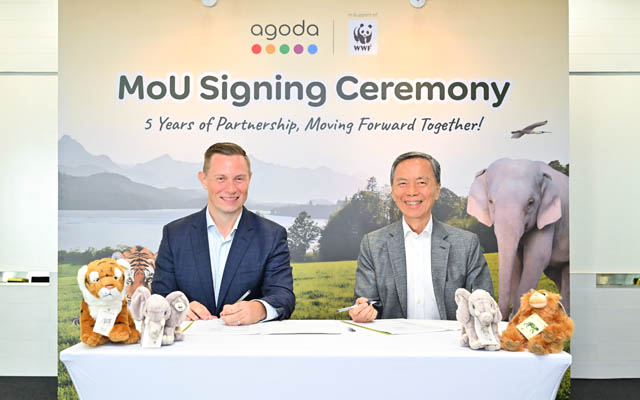
Agoda has launched its SG60 Celebration Campaign to promote tourism to and from Singapore as the country marks its 60th year of independence.

Running from August 1 to 15, 2025, the campaign will offer discounts of up to 20 per cent on inbound and outbound bookings. It aims to tap into heightened travel demand during this national milestone, with participation from major partners including Resorts World Sentosa, Furama Hotels International, Singapore Airlines, Malaysia Airlines, and Firefly.

Agoda marks Singapore’s 60th year with special travel deals and growing global interest

According to Agoda’s search data from April to June, key source markets for Singapore include Indonesia, Malaysia, the Philippines, Thailand, and South Korea, with Thailand recording a 10 per cent year-on-year increase in interest. Search volumes have also risen from longhaul markets such as Austria, Spain, and Denmark, underscoring Singapore’s growing global appeal.

On the outbound front, Singaporeans are searching for travel across more than 100 countries in 2025, with China showing a 40 per cent increase in interest year-on-year. Malaysia, Japan, and Indonesia continue to lead as the top destinations.

“As Agoda celebrates 20 years in Singapore, the SG60 Celebration Campaign is a special celebration for us,” said Andrew Smith, senior vice president of supply at Agoda. “Through our close collaboration with Singapore’s tourism authority in past years, we are using innovative, data-driven campaigns to showcase the city’s unique appeal to global travellers during the nation’s 60th year of independence.”

Mathew Chan, regional director of revenue at Furama Hotels International, added: “We’re truly excited to be part of the SG60 Celebration Campaign. This collaboration allows us to connect with both new and returning guests from around the world. We look forward to sharing the warmth of our hospitality and creating memorable experiences for every traveller who walks through our doors.”

Regent Seven Seas Cruises launches 2027-2028 Voyage Collection

0

Regent Seven Seas Cruises (RSSC) has unveiled its 2027–2028 Voyage Collection, featuring 234 new itineraries across Africa and Arabia, Alaska, Asia, Australia and New Zealand, Canada and New England, the Caribbean and Panama Canal, the Mediterranean, Northern Europe, South America, and the South Pacific.

Highlights include 19 new ports of call, five Grand Voyages, and the 133-night 2028 World Cruise aboard Seven Seas Splendor. New offerings include three overnight-only European itineraries, six round-trip voyages from Tokyo, one from Hong Kong, and a 32-night circumnavigation of Australia aboard Seven Seas Mariner. Also featured are 10 transoceanic crossings and 60 overnight stays in cities such as Lima, Reykjavík, and Rio de Janeiro.

Explore the world in ultra-luxury with Regent’s 2027–2028 Voyage Collection, featuring 234 immersive sailings to destinations including Rio, Tokyo, and Venice, pictured

The season also marks the full debut of Seven Seas Prestige, RSSC’s first new ship class in a decade. Launching in late 2026, the 77,000-ton vessel will operate 44 cruises across Northern Europe, the Mediterranean, and the Caribbean. Though 40 per cent larger than previous ships, Prestige carries just 822 guests, offering enhanced space and personalised service. All-balcony suites span 12 categories, including the new 817m² Skyview Regent Suite – the largest all-inclusive ultra-luxury suite at sea. Dining options include 11 venues, among them a new Mediterranean speciality restaurant, Azure.

RSSC’s all-inclusive experience features unlimited shore excursions, fine dining, premium beverages, in-suite mini-bars, valet laundry, gratuities, Wi-Fi, onboard entertainment, and a pre-cruise hotel night for guests in Concierge Suites and above – all delivered with generous space and a high guest-to-crew ratio.

The collection spans the globe with diverse itineraries. In Africa and Arabia, Seven Seas Mariner visits Namibia, Angola, Madagascar and Réunion, with overnight stays in Cape Town and Port Elizabeth. Alaska is explored on seven-night cruises aboard Seven Seas Explorer and Splendor, featuring glacier viewing and ports such as Skagway and Juneau.

Asia offers 22 sailings aboard Explorer, Mariner, and Splendor, with highlights in Japan, Vietnam, and new ports in Indonesia and South Korea. Six cruises cover Australia and New Zealand, including fjord cruising and the full Australia circumnavigation. In Canada and New England, Seven Seas Grandeur sails five fall foliage voyages.

The Caribbean and Panama Canal collection includes 30 cruises, five festive sailings, and new stops in Cabo Rojo and San Andrés. The Mediterranean is covered in 48 sailings, with immersive overnights and new ports in Croatia, Italy, and Greece. Northern Europe features 31 voyages through the Baltics and Norwegian fjords, plus new stops in Scotland, Ireland, and Finland.

In South America, Seven Seas Voyager explores the Amazon, Antarctica and Chilean fjords, with overnights in Buenos Aires and Rio. Splendor heads to the South Pacific on four cruises visiting Tahiti, Fiji, Tonga and Hawaii. Ten transoceanic sailings round out the season with relaxed sea days and scenic island stops.

For more information, visit Regent Seven Seas Cruises.

Singapore Night Festival lights up with island heritage theme

0

The Singapore Night Festival (SNF) returns from August 22 to September 6, 2025, under the direction of HeritageSG, a subsidiary of the National Heritage Board. Themed Island Nights, the 16th edition explores Singapore’s heritage as an island nation, with over 80 experiences across the Bras Basah.Bugis precinct.

This year’s festival coincides with the 60th anniversary of Singapore’s independence and features stories of connection and cultural exchange.

The Sky Castle installation by ENESS will transform Cathay Green into a colourful, interactive space that responds to movement with light and sound; photo by ENESS

The programme includes projection mapping on the façades of the National Museum of Singapore and CHIJMES, light installations across six locations, live performances, and festival villages. Visitors can explore Cathay Green, where the Sky Castle installation by ENESS responds to movement with light and sound, and Capitol Singapore, where Kampong Chill offers workshops and spaces for rest.

As part of its efforts to support the creative sector, SNF 2025 will also host the third edition of The Listening Biennial, alongside the inaugural ALIGHT Conference, which brings together artists and industry professionals from across South-east Asia. Local artists trained in the SNF Projection Mapping Masterclass will present works at CHIJMES.

Performances include LED shows by Starlight Alchemy, a community singalong of xinyao and folk songs, puppet theatre by Ombak Potehi from Penang, and a classic novel adaptation by Paper Monkey Theatre. The SMU Arts Fest: 2560 returns at Campus Green, and two festival villages – Paradise Island at Armenian Street and the new Retro District at Bugis Street Art Lane – will host a variety of experiences.

National Day activations begin on August 1, featuring monuments and hidden spaces reimagined as experiential zones. These reflect on Singapore’s food, flora, fauna, places and traditions, with a focus on Sungei Beras Bassa, a river once vital to nutmeg plantations in the area. This marks the first collaboration with LASALLE College of the Arts and Nanyang Academy of Fine Arts for this activation.

The Singapore Night Festival 2025 is organised by HeritageSG and supported by the Ministry of Culture, Community and Youth.

Admission is free, with selected ticketed events.

For more information, visit Singapore Night Festival 2025.

Explora Journeys to return to Monaco Grand Prix with Explora I in 2026

0

Following its debut in 2025, Explora Journeys, the ocean travel brand of the MSC Group, will return to Port Hercule for the Formula 1 Grand Prix de Monaco 2026.

From June 3 to June 8, 2026, Explora I will be docked 150 metres from the track and serve as accommodation for guests attending the event.

Experience Monaco Grand Prix weekend in all-suite luxury aboard Explora I, just steps from the circuit

The 2025 edition saw Explora II positioned near the circuit, offering guests views of the racing activity in Port Hercule from the deck. Onboard, a mix of exhibitions and cultural programming was offered alongside access to the event. In 2026, the company plans to replicate and expand on this model.

Guests on Explora I will be able to stay in suites with sea views or outlooks towards Monaco. Dining options will include six restaurants, and beverages will be provided. The ship will also offer spa and fitness facilities and high-speed Wi-Fi. A series of Formula 1-related activities will take place onboard, including appearances by past and current drivers, as well as other entertainment. Race tickets and hospitality packages will be available for those reserving suites.

In 2025, the vessel hosted events such as the Vanity Fair Club and included experiences ranging from a virtual reality race simulator and racing-themed activities to jewellery showcases by brands including Buccellati, Panerai and Piaget. Appearances by figures such as Sir Jackie Stewart and David Coulthard were also part of the programme. Similar programming is planned for 2026, with the aim of offering an experience centred on the Monaco Grand Prix weekend from a location within walking distance of the circuit.

For more information, visit Explora Journeys.

Holiday Inn Johor Bahru City Centre names new GM

0

Holiday Inn Johor Bahru City Centre has appointed Jacky Kok as its new general manager.

With more than 20 years of experience in hospitality, he has held leadership roles across hotel operations, food and beverage strategy, and large-scale events in both Malaysia and China.

Before joining Holiday Inn Johor Bahru City Centre, he was instrumental in delivering major international events, including high-security summits and large-scale conventions—demonstrating his expertise in managing complex, fast-paced hospitality environments.

In his new role, Kok will lead the hotel’s overall operations, drive commercial strategy, and spearhead initiatives to enhance guest satisfaction.

Reinventing hotel distribution

0

What’s the impact of the sale of Sabre Hospitality Solutions on Sabre Lodging?
It’s very much business as usual for the LGS side of our business, which is what I lead across Asia-Pacific. In fact, we’re actually doubling down on our efforts in this space.

I think it’s important to clarify that Sabre Hospitality Solutions and LGS serve different but complementary roles in the travel ecosystem. Hospitality Solutions provides operational and retailing technology to hoteliers, helping them manage day-to-day operations and execute their retail strategy. By contrast, our focus in LGS is on lodging distribution – connecting hotel suppliers with travel sellers through our global SabreMosaic Travel Marketplace.

So, just as Sabre enables airlines to distribute their fares and offers to travel sellers, we help hoteliers make their properties more visible, bookable, and competitive in the global ecosystem. Our marketplace provides access to more than two million property options. In fact, Hospitality Solutions is one of our most valued supply partners, and that relationship remains unchanged. They will continue to distribute their hotelier partner content through Sabre, helping ensure broad visibility and global reach for their customers.

While Hospitality Solutions embarks on a new chapter as a standalone entity, for LGS, our direction is clear: we’re doubling down on investment and innovation that helps hoteliers and travel sellers connect, grow, and win together for the benefit of their travellers.

Why is Sabre increasing its focus on hotels’ B2B distribution?
Let me take this from a travel seller’s perspective first: the hotel B2B distribution space represents a major untapped opportunity for travel agencies.

Hotels typically offer higher margins compared to air bookings, meaning agencies can drive greater profitability without increasing customer acquisition costs – they already have the traveller booking a flight, and that traveller will almost always need accommodation. Yet, despite this natural synergy, many agencies are still leaving significant revenue on the table.

Our recent study with select agency customers found a hotel attachment rate (HAR) of only 37 per cent, meaning that for most air bookings, no hotel is being sold alongside them. For many agencies, increasing this rate could translate into millions of dollars in additional revenue, depending on their size and scale.

Our goal is to help our partners unlock this potential. Looking specifically at Asia-Pacific, our data underscores the opportunity. The average Asia-Pacific business traveller spends US$741 per trip, with 32 per cent going to hotels – the single largest share of the travel wallet. Yet hotels are only attached to air bookings about 30 per cent of the time, which shows how much room there is to grow.

How are you helping agencies to increase hotel attachment (or to sell more hotel rooms)?
Sabre Lodging AI makes selling hotels easy—seamlessly suggesting hotel options when an air seat is booked. It brings intelligent capabilities to Content Services for Lodging, which is part of SabreMosaic Travel Marketplace – serving up properties that are most likely to be booked. Using Sabre Travel AI and advanced machine-learning capabilities from Google, the new capability analyses property attributes, customer trip segmentation, and traveller and agency preferences to generate custom lodging options. If a traveller has requested a specific property that isn’t available, Lodging AI returns up to 20 alternative lodging options in an API response, providing a score based on closest match.

Lodging AI’s cross-sell functionality also allows agents to identify previously booked air segments that are eligible for hotel stays, and offers hotel options through confirmation or trip reminder emails. This feature has been crucial in boosting hotel attachment rates even after the initial booking is completed, offering a new way to generate additional revenue for agencies.

Those are the benefits for travel agencies. What are the benefits for hotels?
While travel sellers want to be able to shop, sell, and service the world’s travel content – including lodging – through one connection, hoteliers want to increase visibility, and reach travel sellers at the point they are booking. With SabreMosaic Travel Marketplace, hoteliers can reach more customers where they are shopping, with access to the widest breadth of high-value corporate and premium leisure travellers in one place.

Our global travel platform delivers higher average daily rates by connecting hotel suppliers with high-value travellers. Another key advantage is that while cancellations on other channels, such as OTAs, can reach 30 to 40 per cent, our global travel marketplace maintains a rate lower than 10 per cent because bookings are typically confirmed and committed.

How do you meet the varying hotel needs of agencies? Please explain the importance of direct connectivity.
Travel agencies are telling us loud and clear that they are facing growing pressure from fragmented content systems that are increasing operational costs and making it harder to deliver a consistent customer experience. We commissioned a new global study which revealed that more than 91 per cent of agencies operate with four or more booking systems, and over half are managing seven or more – a sprawl that is directly impacting productivity, profitability, and agent satisfaction. So, it’s clear agencies don’t want more connects and more complexity. They want to get the widest breadth of content through one connect – that’s why we developed SabreMosaic Travel Marketplace.

We have two million plus lodging options available on our marketplace through Content Services for Lodging. We have global hotel chains, direct connectivity with central reservation systems, and content from global aggregators including Booking.com, Expedia Partner Solutions, Bedsonline, and Nuitée. This breadth allows us to meet the diverse needs of agencies, whether they’re serving leisure or corporate clients.

However, it’s not just about the most content. The problem today is not the lack of content. It’s about consolidating and normalising everything to surface the most relevant, most-likely-to-be-booked, lodging options; and the best thing about this is it comes in a single API. Agencies don’t have to do all the groundwork and heavy lifting of maintaining all these different connects and aggregators.

How does Sabre’s loyalty programme for agencies work?
When an agency books hotel content through the SabreMosaic Travel Marketplace, the booking is attributed to the agency. We pass the agency’s identifiers to the hotel so the property can recognise the agency as the demand generator.

That matters for three reasons. Firstly, many hotel groups run agency-facing or loyalty programmes, meaning those stays can qualify for the agency’s rewards or commission tiers. Sabre’s rates are also generally eligible for loyalty recognition and accrual on the traveller side, subject to each chain’s rules, with commissions paid by the hotel flowing through to the agency. Also, consistent attribution can strengthen an agency’s relationship with hotels as the hotel can clearly see the business the agency is driving.

We’re actively investing in this space – on our roadmap are deeper loyalty credential passthrough, automated accrual, and richer reporting so agencies can more easily track and maximise the value of their hotel bookings. In short, booking hotels through Sabre means the agency gets the credit, the traveller gets recognised, commissions stay intact, and data strengthens the agency’s future negotiating power – benefits that can typically be lost when booking through third-party aggregators.

What other industry challenges are you addressing, having joined Sabre in October last year, after over 15 years of high-profile roles in travel and hospitality industry?
Hotel distribution remains one of the most complex areas of travel and simplifying it is a major industry challenge. Content fragmentation has been a longstanding issue, making it harder for agencies to present travellers with the best, most relevant options. One of the ways we’re tackling this is by solving fundamental problems like property and room type mapping, as part of our normalisation efforts – ensuring that a single hotel doesn’t appear multiple times under different names from various booking sources. Our proprietary mapping technology, developed with the team in our innovation lab, Sabre Labs, delivers very high accuracy with global chains – significantly higher than industry standards.

Beyond normalisation, we’re focused on future proofing hotel distribution around digital payments. Agencies want more digitalised payment solutions, but hotels also need to evolve to accept these methods, especially in Asia. Our goal is to drive transformation across the agency and hotel sides to ensure seamless, modern distribution.

Central to our vision of a more connected and intelligent travel ecosystem. We’re continuously enhancing the SabreMosaic Travel Marketplace platform to deliver richer content, smarter personalisation, and seamless integration across channels. For travel sellers, this means more relevant choices and better conversion. For lodging partners, it means greater visibility and more meaningful engagement with travellers.

In Asia-Pacific, where diversity and complexity define the market, our focus is on localising innovation – whether through more relevant content, deeper loyalty credential passthrough, or advanced analytics. It’s about creating value at every touch point.

Malaysia launches 2026 medical tourism campaign to boost international healthcare travel

0

The Malaysia Healthcare Travel Council (MHTC) has launched the Malaysia Year of Medical Tourism 2026 (MYMT 2026) at the Malaysia International Trade and Exhibition Centre on July 25.

The campaign was officiated by Malaysia’s minister of health and MHTC chairman, Dzulkefly Ahmad, who also unveiled its logo and tagline, Healing Meets Hospitality.

The campaign aims to position Malaysia as a leading destination for international patients through a blend of medical care and hospitality

MYMT 2026 aims to position Malaysia as a leading medical tourism destination by promoting its healthcare services and hospitality offerings. The initiative seeks to attract international health travellers by highlighting the country’s medical infrastructure, professional expertise and integrative wellness options. Malaysian singer Siti Nurhaliza was named as the campaign ambassador.

In 2024, Malaysia recorded 1.6 million healthcare travellers, a 14 per cent increase year-on-year, generating 2.72 billion ringgit (US$578 million) in revenue – a 21 per cent rise compared to 2023. MYMT 2026 is expected to build on this growth, in line with MHTC’s target of achieving 12 billion ringgit in revenue by 2030.

The launch also featured the Flagship Medical Tourism Hospital programme, which recognises four shortlisted institutions: Institut Jantung Negara, Island Hospital Penang, Mahkota Medical Centre, and Subang Jaya Medical Centre. These hospitals have been selected for their performance in clinical care, innovation and international patient services. The winner will be announced in December 2025.

“Malaysia is no stranger as the medical tourism destination of choice, serving an array of healing journeys for our healthcare travellers to choose from. Now, not only are we focusing on modern medicine alone, we are also exploring a more integrative healthcare – a holistic ecosystem that blends modern medicine, wellness, Traditional & Complementary Medicine and preventive care,” said Dzulkefly.