Activities in Labuan Bajo and Manggarai Barat Regency have returned to normal after the tourism businesses and individual tourism workers agreed to cease their protest as of August 3.
The decision was made after the tourism workers, who belong to 19 local travel-related associations, had a discussion with the Manggarai Regional government and other related authorities.
Tourism businesses and individual tourism workers have called off the strike against the new entry tariff; Komodo Island pictured
Shana Fatina, president director of the Labuan Bajo Flores Tourism Authority Agency (BOP), said her office monitored the destination’s development and activities in a number of facilities, such as the airport and seaport, had resumed as per normal.
“Basically, everyone has agreed to keep the safety and security in Labuan Bajo intact and lifted their declaration to strike issued on July 30. (Activities) have started again as of August 3,” Shana said in a statement.
While the travel industry workers have accepted the increase on the new tariff, they will independently monitor the performance of Flobamor, which manages the tourism operation at the Komodo National Park, to make sure that everything is on target and run according to plan.
Vietnam may be a relatively new destination for the Indian market but is seeing strong travel demand – the number of visas issued daily by the embassy in India has grown 24 times compared to the pre-pandemic period.
At the Outbound Tourism Summit organised by Federation of Indian Chambers of Commerce and Industry (FICCI) last week in New Delhi, Vietnam’s envoy to India, Pham Sanh Chau, said: “Prior to the pandemic we used to issue 250 visas per day in India. However, recently we issued 6,000 visas in a day.”
More Indian travellers are keen to visit Vietnam; Ba Na Hills in Danang pictured
Four years ago, direct air connections were absent between the two countries. Indian travellers had to take connecting flights from Singapore or Thailand to access Vietnam.
Direct flights and Indian travellers’ desire to explore new destinations in proximity are some of the reasons behind this spurt in demand, opined Pham.
In light to rising interest in Vietnam, the destination will also court Indian weddings and business events.
Presently, three Indian cities – New Delhi, Mumbai and Kolkata – have direct connectivity to Vietnam via Vietjet. The airline recently announced plans to offer more direct connections to Ahmedabad, Bengaluru and Hyderabad in 4Q2022.
Rajeev Kale, president & country head, Holidays, MICE, Visa with Thomas Cook (India), said: “Vietnam is seeing an uptick (in interest) not just from corporates, but also families, young professionals, millennials and couples. Indians are open to a shift in destinations to those that offer convenient short-haul access and (are) easier on the wallet.”
According to travel consultants, outbound travel sentiment in India is at an all-time high after the Covid-induced lull. However, Schengen visa processing delays in India at present are pushing Indians to favour alternative, less cumbersome destinations like Vietnam.
“Reopening of air travel has resulted in (an) uptick in consumer confidence and we are witnessing significant travel appetite. Given the current visa challenges for Europe, our internal data indicates definitive uptick for our closer to home and easy visa destinations – with demand up by 30 to 35 per cent month-on-month,” said Daniel D’Souza, president & country head – Holidays, SOTC Travel.
Have a one-of-a-kind vacation at Anantara Desaru Coast Resort & Villas with its new jungle explorer package, Jungle Picnic.
Available to all resort guests, Jungle Picnic is an opportunity for nature-lovers and those looking for a break from urban rush to discover the richness of Malaysia’s biodiversity in Panti Forest Reserve while enjoying a gourmet meal in a secret location.
Enjoy a jungle picnic in Panti Forest Reserve with Anantara Desaru Coast Resort & Villas
Spot over 25 species of mammals, including the White-handed Gibbons, Pig-tailed Macaques and Banded Langurs, and over 100 species of birds, particularly the Rail Babbler – an enigmatic, ground-living species that is hard to spot in the wild.
Guests will be picked up at the resort at 06.30 and driven to Panti in a car, where they first ride in an open pick-up truck to explore the wildlife, before hiking to a secluded picnic spot in the jungle to indulge in a full gourmet picnic prepared by the Anantara team.
The Jungle Picnic is priced at US$130 for two persons, including transfers.
Radisson Hotel Group (RHG) will boost its portfolio of properties in Vietnam by adding 30 properties by 2025. The group currently operates four properties in the country, with six more in the pipeline.
Tapping into Vietnam’s rapidly rebounding tourism industry, RHG has launched a business unit and representative office in Ho Chi Minh City. This dedicated office will offer expert on-the-ground support to owners in Vietnam, developing long-standing relationships based on trust, responsibility, and accountability.
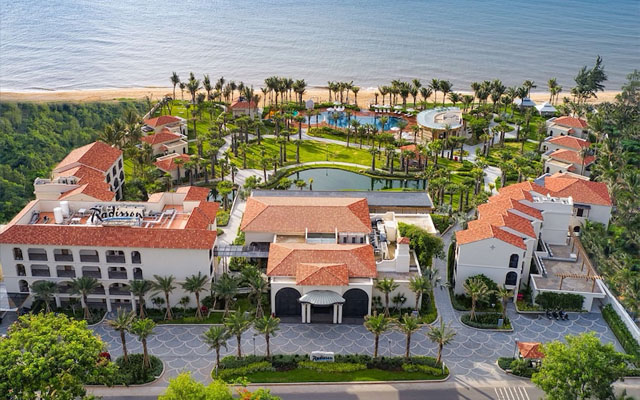
Radisson Hotel Group plans to add 30 more properties to it’s Vietnam portfolio by 2025; Radisson Resort Phan Thiet pictured
RHG’s revitalised brand architecture, which now encompasses nine distinct brands ranging from midscale to luxury, will allow its partners to cater to the specific requirements of various guest segments.
Along with a defined brand architecture with clear segmentation and a robust global network, RHG can customise its development strategy and partnerships to suit the unique needs of its owners and investors, while also creating outstanding options for its guests.
In addition, RHG remains committed to its corporate responsibility targets of being net-zero by 2050, and is driving eco-sensitive operations and creating sustainable experiences to help owners achieve greater efficiencies.
Commenting on the plans in Vietnam, Ramzy Fenianos, chief development officer, Asia Pacific, Radisson Hotel Group, said: “Vietnam is a dynamic destination that has offerings for all types of travellers.
“Looking ahead, we expect visitor numbers to increase significantly in the coming months and we look forward to working with our partners to bring new experiences to life for travellers from around the region and globally.”
Serge Cuypers has been appointed as the new general manager of Anantara Mai Khao Phuket Villas.
Bringing over 22 years of experience in high-profile international luxury hospitality properties to the role, Cuypers has been a part of the Anantara family for years – his most recent position was general manager of Anantara Golden Triangle Elephant Camp and Resort since 2021.
Meanwhile in Chiang Rai, Arnaud Béril will head Anantara Golden Triangle Elephant Camp and Resort as its new resort manager.
Prior to his new role, Béril was director of operations (executive assistant manager) with Avani+ Samui Resort and the newly-opened Avani Chaweng Samui Hotel & Beach Club.
The Datai Langkawi presents The Photography Workshop, led by three distinguished personalities in their field of expertise: award-winning photographer SC Shekar, Langkawi naturalist Irshad Mobarakand, and digital imaging expert Wesley Wongto.
The three-day photography workshop will be held from October 26-30, and guests can explore the beauty of Langkawi and learn how to capture its magic with their lenses from these experts.
Guests can explore the beauty of Langkawi and learn from experts on how to capture the perfect shot
The exclusive package includes a four-night stay in a Canopy Deluxe room, daily breakfast, three lunches, two dinners, three photography excursions, and return airport transfers.
Rates star from 7,150 ringgit (US$1,604) per person on a double basis, and 10,700 ringgit per person on a single basis. The workshop is open for intermediate level photographers and applicants will go through a screening process.
International air passenger numbers rise to nine million in June as consumers ease their pent-up travel cravings
Air travel recovery continues to face macro environmental challenges, such as inflation and labour strain
Industry views split on the impact Europe’s airport chaos has on Asia-Pacific’s flight and demand rebound
Pent up travel demand is continuing to drive air capacity and passenger traffic improvements, find aviation industry leaders Airports Council International (ACI) Asia Pacific and Association of Asia Pacific Airlines (AAPA).
AAPA’s preliminary June 2022 traffic figures released on July 26 showed robust growth in international air passenger demand. The number of international passengers carried rose more than six-fold year-on-year to a combined nine million in June, bringing demand to 28.3 per cent of the corresponding pre-pandemic month in 2019.
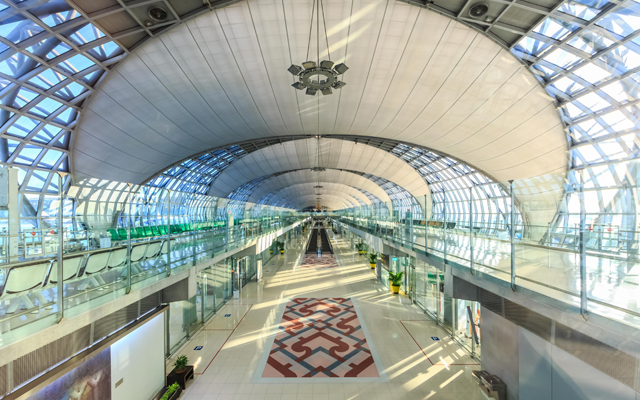
Passenger traffic at key Asian hubs had increased substantially between the end of February and early-July, found ACI Asia Pacific’s Industry Outlook for 2Q2022; Suvarnabhumi Airport, Bangkok pictured
As measured in revenue passenger kilometres (RPK), demand rose by a robust 509.3 per cent, significantly outpacing the 139.5 per cent expansion in available seat capacity. As a result, the average international passenger load factor jumped by 46.7 percentage points to reach a new pandemic high of 76.9 per cent.
Similarly, ACI Asia Pacific’s Industry Outlook for 2Q2022, published August 1, noted that passenger traffic at key hubs in countries like Singapore, India, Thailand, Malaysia, Australia and Cambodia had increased substantially between the end of February and early-July, facilitated by the easing travel restrictions.
South Asian and Middle Eastern traffic has recovered to approximately 85 per cent of 2Q2019 seat capacity, while East Asia has only reached 15 per cent of 2Q2019 levels due to the region’s reliance on the Chinese travel market.
Not a smooth ride
Although data shows promising progress, both ACI Asia Pacific and AAPA have made it clear that air travel today is still far from pre-pandemic levels.
ACI Asia Pacific’s report stated that overall international seat capacity for the period stands at 59 per cent of pre-pandemic levels in 2Q2019, as travel restrictions, quarantine and testing requirements remain in some parts of Asia-Pacific, such as China and Japan.
Subhas Menon, AAPA’s director general, said the volume of international passengers in 1H2022 may be 330 per cent higher than that of 2021, but numbers are still well below pre-Covid levels.
“Comparatively, the North American and European markets have rebounded by 90 per cent and 80 per cent of 2019 levels (respectively),” he added.
Progress also continues to face obstacles in the macro environment, from escalating fuel prices and cost inflation to labour shortages that have resulted in operational disruptions at visa processing facilities and airports.
While Asia-Pacific’s travel and tourism sector suffers from a manpower strain, the pressure is not as intense as what is seen elsewhere in the world. ACI Asia Pacific’s researchers said airports in the Middle East and Asia-Pacific have been “carefully handling the risk of deficit of workforce” by adopting a long-term view on staff retention even during the travel disruption. Furthermore, the region is seeing a slower rebound compared to other regions of the world.
These two factors have allowed airports here to escape the chaotic conditions reported at some of Europe’s important air hubs, such as Heathrow Airport in London, Amsterdam Airport Schiphol and Charles De Gaulle Airport in Paris, which were caused by a worrisome blend of staff shortages and labour strikes by both airport workers and air crew.
Airlines, such as Lufthansa, British Airways and KLM, have reportedly cut thousands of flights from their summer schedules to cope with the disruptions, while major airport have ordered passenger traffic limits. Heathrow Airport has imposed a 100,000 daily departing passenger cap until September 11, while Amsterdam Airport Schiphol announced an extension of its passenger traffic cap on August 2 – down from the current 72,000 daily departing passenger limit to 67,500 in September and 69,500 in October.
Impact on Asia-Pacific
In an interconnected world, would Europe’s air travel disruption hamper the pace of air travel recovery for Asia-Pacific?
OAG’s chief analyst John Grant does not think so, saying that Europe’s airport chaos is mostly hurting short-haul travel with high daily frequencies.
OAG data illustrates this – flight frequencies and seats operated from various European countries, such as the UK, Germany and France to Singapore shows month-on-month improvements from January (152,569 seats) to June (196,144), with the exception of a slight dip in February.
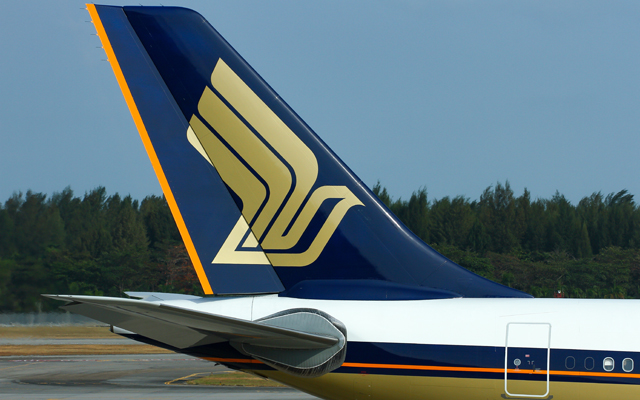
Singapore Airlines operated 106 flights to the UK in May, and ramped up frequencies to 137 and 142 in June and July respective, according to OAG data
Major Asian carriers, such as Vietnam Airlines, Singapore Airlines, Malaysia Airlines and Thai Airways, have also continued to scale up their frequencies to the UK between May and July despite strained airport conditions.
ForwardKeys data captured in the week of July 14 reflects similar momentum in international capacity improvements to Asia, with numbers reaching 35 per cent of pre-pandemic levels. The travel data and analytics company identified Singapore Airlines, Emirates, Cathay Pacific, IndiGo and Scoot as the top five airlines operating to Asia in terms of seat numbers.
AAPA’s Subhas, however, believes that passenger caps imposed by stricken European airports to curb sales can affect Asian business, especially as connecting flights are delayed or cancelled and the smooth delivery of bags is disrupted.
In a call with TTG Asia this afternoon, Adam Armstrong, global CEO of Contiki, said reporting on the airport disruptions “has been overblown in some media circles” and the situation has not prevented customers from travelling.
“We continue to advise our passengers to allow more time to transfer through airports and to get to their starting point a day or two earlier. I’ve done that myself on my trips the last few months – putting in extra hours to get through the airport and another couple of hours at the other end to avoid missing anything. That has worked well,” said Armstrong, who is based in Geneva.
Hellen Xu, CEO of Panorama JTB Tours in Indonesia, is also not seeing any negative impact on outbound travel demand.
“Demand for Europe remains high,” said Xu, adding that bookings in July was 39 per cent higher than the corresponding month in 2019. Europe is the top favourite among Panorama JTB’s clients, and bookings for travel to the region between August and December this year are expected to surpass 2019’s levels.
On the other hand, Emanuel Tzafaris, vice president, supplier relations, Asia Pacific with BCD Travel, said airport chaos have led to “considerable dialogue with our corporate customers”. While corporate travellers are not discouraged from travel, they are re-evaluating when they will travel.
Busan Tourism Organization (BTO) has made a move on critical source market Singapore close on the heels of Jeju Air’s resumption of Busan-Singapore flights in end June, through a B2B event to drive momentum for its promotional efforts.
Hosted in late-July, the Busan-Singapore Travel Connect 2022 was held under the slogan, Explore the real Busan. Participation costs for Busan tourism partners were subsidised by the Busan Tourism Business Support Center.
The Busan-Singapore Travel Connect 2022 was held in late-July to promote the city as a destination to visit; Huinnyeoul Culture Village at Janglim Harbor pictured
To forge a strong comeback, BTO will provide marketing support for overseas tourism-related industries and continue to promote Busan tourism in cooperation with airlines and OTAs which target FIT and group travellers, according to CEO Lee Jung Sil.
Other marketing efforts have leveraged the popularity of Hallyu (Korean Wave) by spotlighting Busan in productions such as Netflix’s 2021 military-drama, D.P. and SBS’s 2020 romantic-fantasy The King: Eternal Monarch.
Selected as Korea International Tourism City for the year 2021-2025, Busan City and BTO have also been upgrading its infrastructure and facilities for the past two years to the tune of a 150 billion won (US$114.5 million) investment to better cater to visitors.
New to the port city is Lotte World Adventure Busan, which opened in March 2022. Meanwhile, Haeundae Blueline Park has come up as a top attraction in Busan.
After a two-year pandemic-induced hiatus, renowned international festivals – Busan International Film Festival and Busan One Asia Festival – are ready to welcome fans back.
Eager to win the bid for World Expo 2030, Busan has enlisted K-pop biggest export, boyband BTS, as ambassadors to stage the Global Busan Concert.
To attract more tourists, plans for a second international airport are also in discussion.
The Pacific Asia Travel Association (PATA) has published the Food and Plastic Waste Reduction Standard for Tourism Businesses as part of its commitment to the European Union (EU)-funded TourLink project, under the EU SWITCH-ASIA Programme.
In collaboration with members of the Thai-EU tourism supply chain, PATA developed a series of capacity-building initiatives that promote best practices for sustainable tourism growth, with new standards, toolkits and training that empower Thai tourism professionals to embrace sustainability in their operations as the industry recovers from the pandemic.
The Food and Plastic Waste Reduction Standard for Tourism Businesses acts as a guide for all tourism businesses, professionals and communities to reduce food waste and plastic waste in their operations
PATA CEO Liz Ortiguera said: “PATA is focused on supporting the industry recovery with tangible in-market projects that can demonstrate practical, responsible and sustainable solutions. Our goal is to develop and share business models that combine sustainability with profitability. Creating strong sustainability development plans brings businesses a competitive advantage in addressing a growing consumer interest and global need.”
TourLink aims to drive Thai tour operators and suppliers – from hotels to transport companies and activity providers – towards sustainability, to achieve common standards for sustainability in the industry to transform Thailand into a leading sustainable tourism destination.
TourLink’s project manager Peter Richards said: “Strengthening tourism and hospitality businesses’ sustainability will help the sector become more resilient in the face of future crises, save critical resources and boost overall morale as we prepare for a greener tourism reopening.”
The standards act as a guide for all tourism businesses, professionals and communities to reduce food waste and plastic waste in their operations, and were developed through extensive research on food and plastic waste reduction strategies in tourism and consultations with experts and partner organisations.
Fernanda Rodak, PATA project coordinator of sustainability and social responsibility and lead author, added: “The standards can be applied as a checklist, a step-by-step guide as well as a training tool for waste prevention in the tourism and hospitality sector.”
Underpinned by the circular economy framework and the hierarchy of waste reduction strategies, the document encompasses best practices across the industry on sustainability management and tools and resources for practitioners to advance their food and plastic waste reduction efforts.
Tripseed is revolutionising how people can explore Thailand by launching a range of accessible travel programmes and experiences, including specially-designed and exclusive tours tailored for the elderly and travellers with disabilities.
“We are committed to growing travel in a direction that is open and welcoming for everyone,” said Tripseed founder Ewan Cluckie. “Tripseed has always been about breaking down barriers and creating new opportunities.”
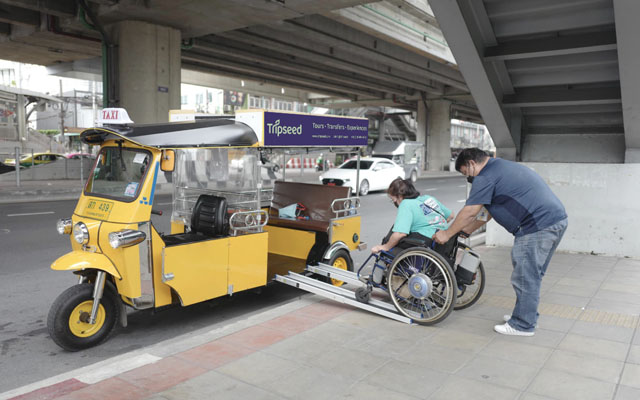
Tripseed aims to make travel inclusive for all with a range of accessible travel programmes and experiences tailored for the elderly and travellers with disabilities
Tripseed’s offerings for accessible travel in Thailand goes beyond the accommodation being wheelchair-friendly – they also evaluate everything from ramp inclinations, availability of grab bars, manoeuvrability clearance and many other important aspects. Agents and partners are advised on the most suitable travel options based on the level of assistance required.
“It’s important for us to give Tripseed’s partners a first-mover advantage to repay the trust and support they have given to us so far, and so we’ll be making all of our accessibility information, training and consultation available to them privately during our initial launch period, before making more details publicly available at a later date” added Cluckie.
Tripseed is also offering specialised guides that are trained in American Sign Language (ASL), British Sign Language (BSL) and Thai Sign Language (TSL & MSTSL), as well as guides trained to assist with other audio-visual impairments.
In addition, the company has announced a brand-new selection of experiences designed to deliver uncompromising accessible variations of top-selling tours, such as a daytime city tour of Bangkok, or an evening street food experience in a fully-electric Tuk-Tuk that has been specially outfitted with a built-in wheelchair ramp and wheelchair restraint system, a first in the industry. Tripseed has also ensured that the tour routes are accessible so that travellers are not met with difficult sidewalks to navigate at each stop.
Other experiences include a snorkelling or diving experience alongside a Dive Master fully certified by Disabled Divers International, and a private tour of the botanical gardens in an accessible vehicle. More experiences will be made available exclusively through Tripseed and their international travel trade partners.
Tripseed has also prioritised additional development on their website, making the company the first and only Thailand-ground operator that meets ADA compliance standards.





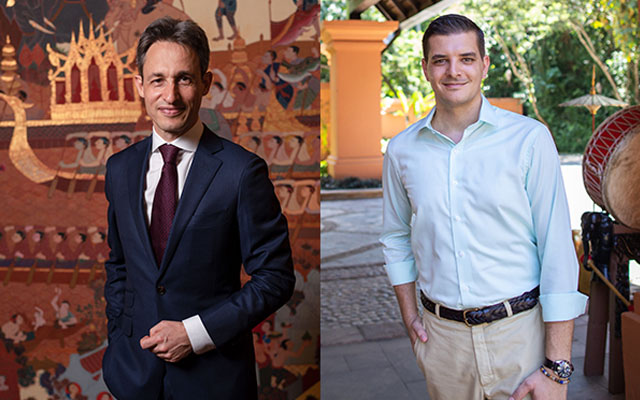
 Meanwhile in Chiang Rai, Arnaud Béril will head Anantara Golden Triangle Elephant Camp and Resort as its new resort manager.