Mandarin Oriental Hotel Group has announced three senior appointments.
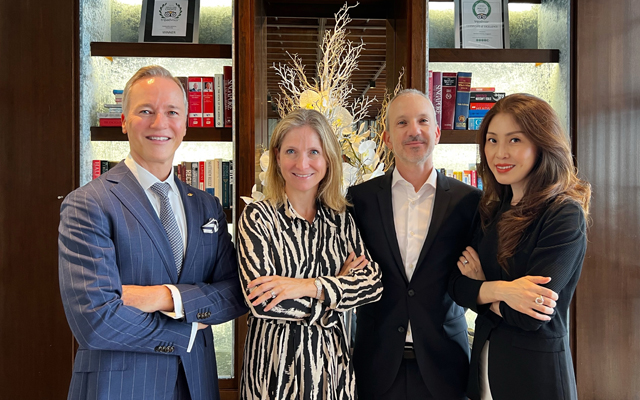
Raphael Lanfant has been appointed global vice president of channel sales and will oversee the global revenue growth and the effectiveness of the newly formed Global Channel Sales and Distribution organisation. Based in Singapore, he was previously the global head of international hotel partnerships in Alibaba.
From left: Geoffrey Webb, Joanna Flint, Raphael Lanfant and Celine Du
Geoffrey Webb is the new vice president of global sales partners and will oversee the five regional sales hubs responsible for driving revenue from travel agencies and tour operators globally. Webb joined Mandarin Oriental in 2019 as director of commercial strategy for Mandarin Oriental, Bangkok. A seasoned hotelier with over three decades of operations and luxury hospitality experience, he will be based in London.
As the new vice president of global industry partners, Celine Du will be responsible for Mandarin Oriental’s global corporate and key account revenue. With 25 years of experience in luxury hospitality, Du has held senior roles at Shangri-La and IHG prior to joining Mandarin Oriental Hotel Group. She will be based in Hong Kong.
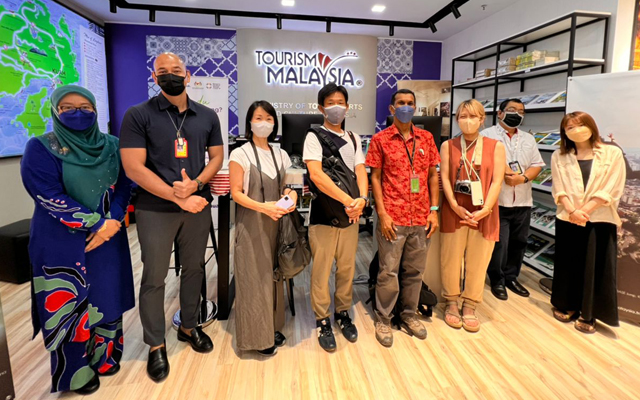
Tourism Malaysia concluded last week a familiarisation trip that brought nine travel agents and media representatives from Japan to Langkawi, Kuala Lumpur, Putrajaya and Penang for a four-day, three-night stay.
This was held in conjunction with Malaysia Airlines’ inaugural direct flight from Kuala Lumpur to Tokyo (Haneda Airport) on August 14.
Tourism Malaysia showcased the country’s offerings to travel agents and media representatives from Japan during the fam trip
Participants experienced a mangrove tour at the award-winning Kubang Badak Biogeotrail in Langkawi; jet-skied on an island-hopping tour; attended a cooking demonstration at Kunang-Kunang Heritage Villas; and immersed themselves in a conservation and sustainability programme initiated by The Datai Langkawi.
They also visited tourism landmarks such as Kuala Lumpur’s Petronas Twin Towers and Penang’s George Town UNESCO World Heritage Site.
Japan was one of Malaysia’s top 10 international tourism source markets pre-pandemic, with 424,694 arrivals from Japan in 2019. To attract more Japanese arrivals, Malaysia will participate in the upcoming Tourism Expo Japan 2022 in Tokyo this September, stated Zainuddin Abdul Wahab, director-general, Tourism Malaysia.
With the Covid-19 situation stabilised, Singapore is ready to phase out its indoor mask-wearing policy, said prime minister Lee Hsien Loong during the National Day Rally on August 21.
Details on this will be made at a later date.
Singapore will soon phase out its indoor mask-wearing policy
Currently, while masks are optional in outdoor settings, they are mandatory indoors, in places such as shopping malls and offices.
With the reduced requirements, masks will be optional in most indoor settings. However, masks will still be required on public transport, where people are in prolonged close contact in a crowded space; and in healthcare settings where there are vulnerable people, Lee said.
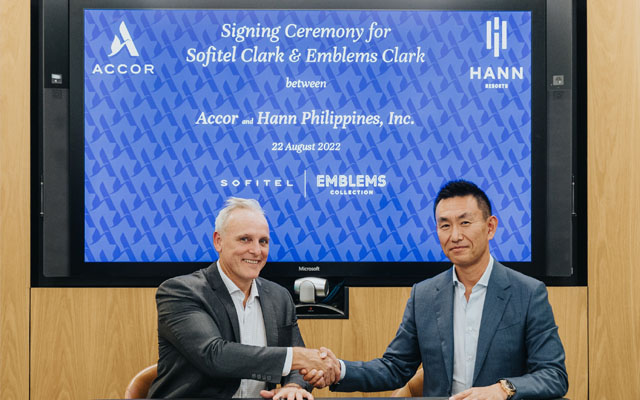
Accor and Hann have deepened their partnership with a new signing that will see the former bring its Sofitel and Emblems brands into the Hann Lux luxury integrated resort in Clark City, the Philippines.
Sofitel Clark will comprise 300 guest rooms while the Emblems Clark will feature 200 guest rooms, and both will place guests within easy reach of high-end fashion stores, French inspired cafes and convention facilities.
From left: Accor’s Garth Simmons and Hann Philippines’ Daesik Han
The new hotels will feature all-day dining and speciality restaurants, as well as swimming pools, spas, fitness centres, meetings and conferencing spaces, and executive lounges.
“We are proud to expand our strategic relationship with Hann in this landmark multi-agreement signing. This reaffirms the trust and confidence owners place in Accor, our relationship driven-approach towards partners, and the popularity of our brands powered by strong distribution and lifestyle loyalty platforms,” said Garth Simmons, CEO, Accor, Southeast Asia, Japan and South Korea, in a statement.
“We are also thrilled and extremely proud to introduce two very special properties to vibrant Clark. Sofitel Clark and Emblems Clark will both bring an iconic sense of luxury to Hann Lux, and we are delighted to be working with our valued partners, Hann Philippines, to bring their unique vision to life,” he added.
The latest agreement adds to Accor and Hann’s 2019 partnership for Banyan Tree Clark, Angsana Clark, Mercure Clark and Swissôtel Clark. The first phase of Swissôtel Clark launched in February 2022, with the broader hotel complex set to debut later this year.
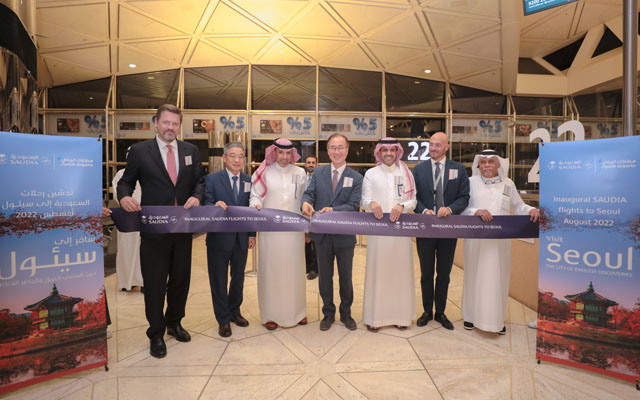
Saudi Arabian Airlines (Saudia) has commenced its first direct flight from Seoul to Riyadh in line with its strategy to expand its network of more than 100 global destinations.
Ahmed Alwassiah, chief operating officer, Saudia, said: “With this milestone route, Saudia is not only connecting the Kingdom to more of the world ‘touristic-ly’, but also helping to facilitate the transfer of knowledge and services, allowing both countries to enhance their local businesses, logistics framework, and manufacturing infrastructure.”
Saudia expands its network with the launch of the Seoul-Riyadh service
The flight schedule between the two countries will be under constant review to ensure that flights and seating capacity meet operational requirements.
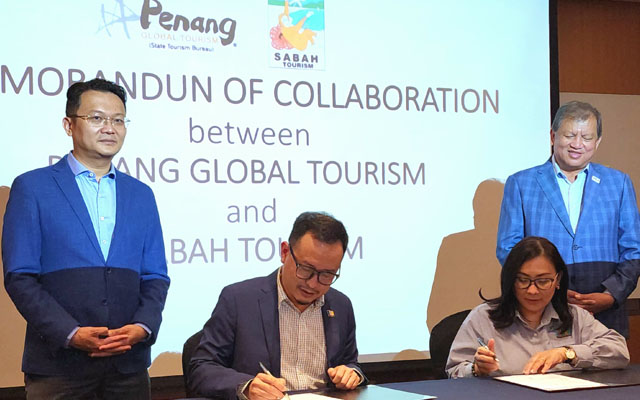
Sabah and Penang will be embarking on a cross-promotion of their respective tourism attractions after signing a Memorandum of Collaboration (MoC) on August 20.
Sabah Tourism Board’s (STB) chairman, Joniston Bangkuai, and Penang Global Tourism’s (PGT) Yeoh Soon Hin, described the MoC as a “momentous” event, noting that the two states share a similar commitment to the positive impact that tourism might have on the people and the economies of their respective states as well as the nation.
The partnership between Sabah and Penang will see better flight connectivity between both states and the development of tourism products to attract more visitors to Malaysia
Some of the partnership goals include improving flight connectivity between the two states and facilitating the engagement of key parties in relation to the development of products and tourism.
Joniston shared: “I do think that this MoC is the first step to help us realise our friendship initiatives through tourism and hopefully it will lead to a similar collaboration with other states.”
SBT and PTG should establish a key performance indicator to assess the efficacy of their partnership and adjust as needed to realise their goals, he suggested.
Yeoh was optimistic that the partnership would help to boost the economies of both states and make them more resilient in the face of future challenges. With both parties sharing tourism ideas and creating dual destination packages for domestic and international markets, it would attract more visitors to the country.
“To me, the key to tourism success is breaking down siloed approaches. To succeed, we must work together, and this important partnership is a step to achieve our common goals,” added Yeoh.
Japan is considering the removal of pre-arrival Covid-19 testing requirement for vaccinated inbound travellers, with a decision likely to be made within weeks, reported Japanese media on Monday.
Current regulations require Japan-bound travellers to show a negative PCR test result within 72 hours of departure.
Travellers bound for Japan may soon no longer need to perform a pre-arrival PCR test
The government will also consider raising the daily cap on people arriving in Japan from the current 20,000.
Japan’s stringent controls over arriving travellers has put a damper on the country’s efforts to rebuild tourism. Even with its reopening to leisure group tours since June 10, the country’s inbound recovery remains slow.
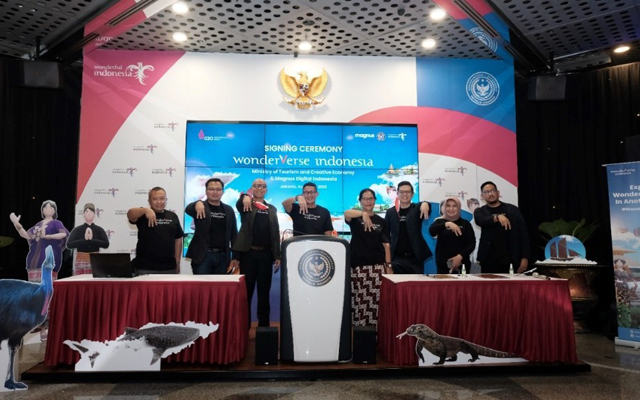
Indonesia’s Ministry of Tourism and Creative Economy and Magnus Digital Indonesia, an ad-tech marketing consultant and part of the Volare Advertising Network, have developed a metaverse channel to promote Indonesia’s offerings.
WonderVerse Indonesia aims to promote the beauty and uniqueness of Indonesia to the rest of the world as well as to encourage tourism and creative economy players to promote their products digitally.
The MoU signing for WonderVerse Indonesia
Minister of tourism and creative economy, Sandiaga Uno, said: “We are currently in a transitioning period where digitalisation becomes the driving force behind transformation and new platforms that will boost tourism promotion. We are finding ways to accelerate technology development as metaverse is a place where we can conduct activities interactively.”
WonderVerse Indonesia is divided into four parts called “lands”, with more lands to be added in the future.
The Lobby is where visitors can interact with endemic animals, and enjoy digital galleries containing works by Indonesian artists, and a wide screen showcasing a variety of upcoming excitements. WonderFun Land showcases traditional games, performances and entertainment; WonderGoods Land is an online marketplace; while WonderReal Land allows visitors to directly purchase flight tickets, hotels, and accommodation in the top five destinations they want to go to for their holiday.
“WonderVerse Indonesia can become a (source) of information and provide great benefits for Indonesia in terms of digital, travel, and the creative economy,” opined Hendra Liman, CEO, Magnus Digital Indonesia.
WonderVerse Indonesia is accessible from anywhere through its desktop site, with future plans for virtual reality (VR), creating opportunities for the tourism industry and the creative economy to reach the younger generation.
Tourism Malaysia ran its first post-lockdown sales mission last week to two major cities in Thailand, Songkhla and Bangkok to instil confidence among Thais to visit Malaysia again, and to provide a platform for the trade community to rebuild business.
Minister of tourism, arts & culture, Nancy Shukri led the group which comprised members of Malaysia-based airlines, travel agents, hoteliers, and product owners.
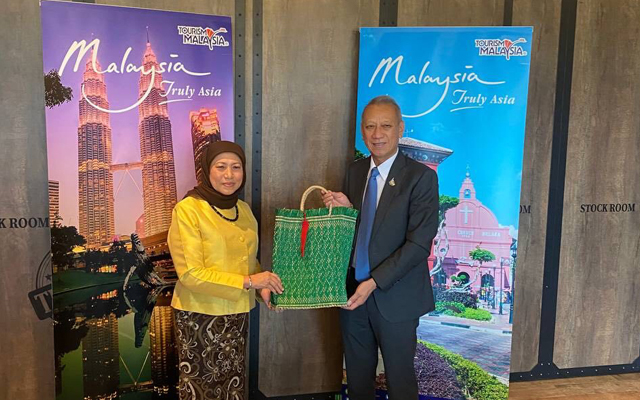
From left: Malaysia’s Nancy Shukri and Thailand’s Phiphat Ratchakitprakarn
Nancy said: “We are delighted to have Thai travellers experience our newly developed and latest attractions, including our outdoor theme park in the highlands – the newly-opened Genting SkyWorld – and the magnificent Merdeka 118 Tower in Kuala Lumpur, currently standing as the world’s second-tallest building.”
Thailand remains one of Malaysia’s essential short-haul markets, and is one of the top four origin markets for the destination since its reopening.
In 2019, Malaysia welcomed 1,884,306 arrivals from Thailand, with almost 70 per cent of Thai tourists being repeat travellers.
Europe’s early move to reopen its borders for leisure travel with minimal restrictions has left a deep imprint in the minds of many holiday-starved Singapore residents, paving the way for the region to emerge a hot favourite this year, observed outbound consultants in the city-state.
Outbound agency Super Travels told TTG Asia that bookings obtained so far this year for Europe have returned to 80 per cent of 2019 levels.
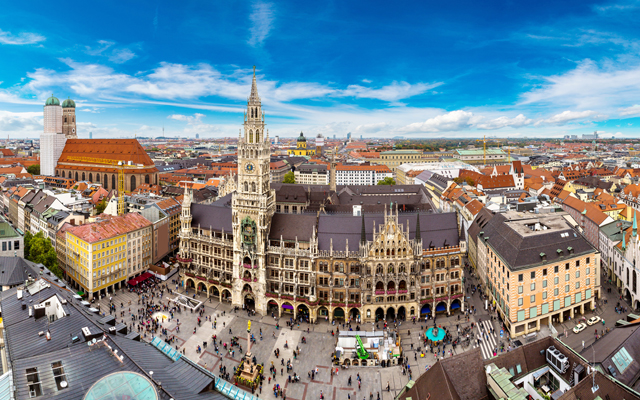
More Singaporeans are travelling to Europe now that it has reopened its borders for leisure travel with minimal restrictions; Munich’s Marienplatz Town Hall and Frauenkirche pictured
Huijuan Lim, co-founder of Wondergolander, a bespoke luxury travel agency specialising in longhaul destinations, said customers “like to feel free of Covid-related restrictions” – a freedom that Europe has offered ahead of other Asian destinations.
Most of Wondergolander’s clients have elected Europe for their next holiday, and have requested for customised itineraries.
For many Singapore residents, taking a longhaul trip may also be a momentous decision. Jess Yap, founder of Intriq Journey, a luxury tailor-made travel expert, shared that there are more requests for such trips compared to short-haul ones. “For them, it could be their first trip post-Covid, so they are excited and want to travel farther and (for a) longer (duration),” she added.
Jeremiah Wong, spokesperson for Chan Brothers Travel, rejects the idea that “longhaul destinations fare better than short-haul ones, or vice versa”, saying that popular destinations now were already a hit pre-Covid. Hot favourites then and now include Europe, Japan, South Korea and Australia.
Reflecting on the recently concluded NATAS Holidays 2022 travel fair in Singapore, Wong said most customers already have their preferred destinations in mind, and had directly enquired about them at the consumer travel fair.
With greater disposable savings, travellers are willing to spend more on their trips. In the case of Chan Brothers, packages have been upgraded with higher quality elements such as higher-end hotels and travel insurance with Covid-19 protection to reassure travellers.
In comparison with Europe, some travel consultants told TTG Asia that demand for Asian destinations has returned at a slower pace, especially since destinations such as Thailand, Vietnam and Malaysia had only gradually reopened their borders and eased regulations for international travellers in recent months. The lack of regional flight capacity, resulting in higher ticket prices, is another possible reason for the slower recovery.
William Huang, marketing manager with Super Travels, said bookings for Asian destinations are at 65 per cent of 2019.
He said: “The biggest challenge for regional travel is that some Asian destinations still have travel restrictions in place, like Taiwan and Hong Kong which require on-arrival quarantine, and South Korea which requires on-arrival PCR tests. The one Asian destination that has picked up the most for us is Vietnam, and I believe it is because the country has removed all its travel restrictions.”
Interest in Japan has also intensified, fuelled by the country’s reopening to guided tours since June 10.
Yap said travellers to Japan now could experience the destination without the usual hordes of tourists in popular cities like Kyoto. — Additional reporting by Karen Yue