

Although Japan has not set a date for its border reopening, its cities of Tokyo, Osako, and Hokkaido are trending in searches for the year-end holidays, especially among Singapore travellers.
Aside from Japan, Expedia reported that in 1H2022, destinations like Bangkok, Bali and Singapore trended month-on-month.
The online travel company observed a 470 per cent spike in inbound travel demand for South-east Asia between 1H2021 and 1H2022.
Expedia also noted that six out of the top 10 source markets for South-east Asian destinations were from Asia – Thailand, Singapore, the Philippines, Malaysia, Japan, and Indonesia – underscoring strong intra-Asia travel intentions.
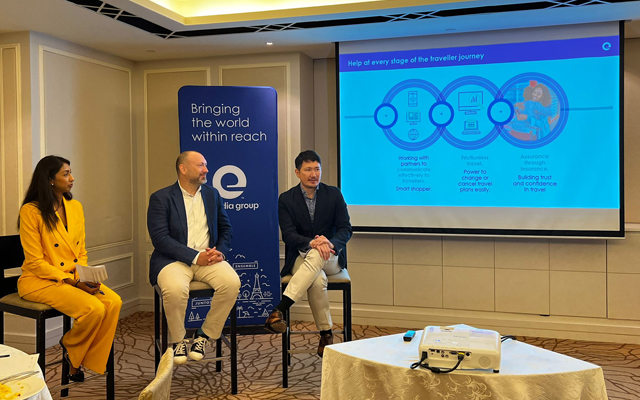
These data points, as well as current travel trends, were shared at Expedia’s Wednesday media dialogue on trends shaping travel for the Asia-Pacific region.
Expedia’s vice president of market management, Asia Pacific, Michael Dykes, said: “When Japan opens, it will really help (Asia-Pacific). We saw it from Australia when it first reopened. Domestic travel was tops, but when South-east Asia opened up, suddenly all the Australians were travelling throughout the region. When Japan reopens, it is going to help all of Asia, because there’s going to be another big wave of travel in and out.”
For example, according to Expedia data, Indonesia and Thailand took first and second spot in the top five destination ranking for Australians in 1H2022. When compared to 1H2019, demand for the two South-east Asian countries was 10 times short.
Dykes added that the “attractiveness of Japan has not dimmed”, with travellers from Singapore particularly enjoying the cuisine, varied destinations from Hokkaido’s ski destinations to Okinawa’s beach resorts, and ease of getting around.
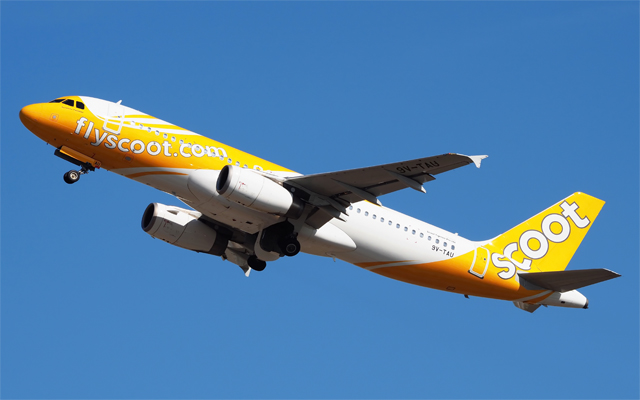
James Marshall, vice president, global air account management, Expedia Group, said: “There is a lot of speculation that by the end of the year, Japan will be open – although there’s nothing official. Yet, carriers like Singapore Airlines (Scoot) continue to add capacity and flights.”
To give travellers more flexibility in the event of Covid-related issues, Dykes pointed out that the OTA has worked with suppliers and made 70 per cent of Expedia’s rates fully-refundable within conditions.
When asked what the travel forecast is for 2023, Marshall told TTG Asia he is optimistic that the sector will continue on its upwards recovery trajectory.
Aside from helping to accelerate technology in the travel space, Covid has also resulted in pent-up travel demand and catalysed purchase intent – something that Marshall believes will allow demand for travel and experiences to take precedence over material goods at least for the next six months.
However, Marshall cautioned that there will continue to be travel hiccups due to resource shortage, surging fuel prices, and a looming recession.
















Japan’s rate of inbound tourism is yet to experience significant improvement despite the country’s relaxation of border controls on June 10 to allow entry of tourists for the first time in more than two years.
Due to high interest in Japan among international travellers, the industry was optimistic about the reopening, but a rebound remains elusive. According to Japan’s Immigration Services Agency (ISA), 252 foreign tourists entered Japan between June 10 and June 30, while 7,900 arrived in July.
Meanwhile, around 8, 500 pax have applied to arrive in Japan between August 12 and August 31, according to the Japan Tourism Agency (JTA).
The extremely low number of tourist arrivals is due to the “time-consuming process needed to travel to Japan,” according to the ISA and JTA. Keen travellers are required to secure a sightseeing visa and private health insurance, show a negative PCR test result, and be part of a tour group.
Japanese agencies also cite China’s strict restrictions on overseas travel for its citizens as another reason for the slow return of arrivals. According to the JTA, 9.6 million Chinese visited Japan in 2019, making China the top source market for Japan’s tourism industry pre-pandemic.
At the same time, group tours tend to draw weaker interest, particularly among Western travellers.
Many prospective customers are choosing to wait until Japan relaxes its tourism rules further to allow FIT travel, according to Derek Yamashita, creative director of The Hidden Japan.
The additional cost of joining a group tour is “pricing out a lot of markets,” warned Simon Gilbert, co-owner and customer relations representative of Kyushu Journeys.
Meanwhile, Pankaj Pradhan, CEO and founder of destination management company B Japan Tours, remains positive for future arrivals. He said there is a lot of “pent-up demand” for travel to Japan, thanks to the country’s “unique combination” of safety, social discipline, design, culture and culinary arts.