

Centara Anda Dhevi Resort & Spa Krabi reopens with offers
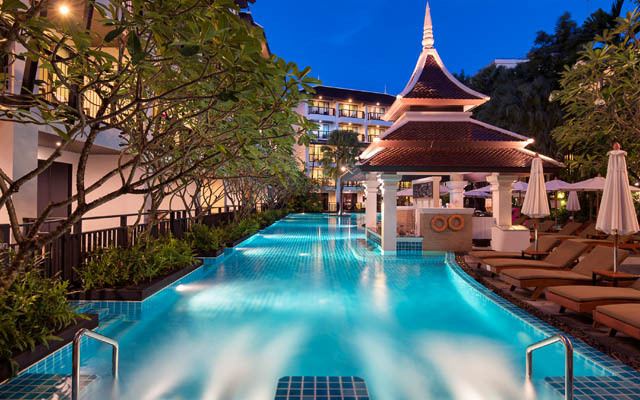
 Thailand’s Centara Anda Dhevi Resort & Spa Krabi reopens on November 15 with a variety of perks to welcome guests once more.
The Place to Be offer includes up to 30 per cent off best available room rates, 500 baht (US$14) in F&B credits, complimentary Wi-Fi, daily breakfast for two guests, free stays for up to two children, as well as late check-out and complimentary room upgrade to the next room category, subject to availability.
The offer is valid for booking and stays until June 30, 2023.
Contact ccc@chr.co.th
Asian airlines welcome China’s easing travel restrictions but no schedule changes expected

Asian airline executives have reacted positively to China’s decision to ease inbound travel procedures, but said the announcement would not trigger immediate changes to their flight schedules.
“It is always encouraging to get updates like this, especially from China which is a big market for Malaysia. We are hopeful that the reopening momentum will continue,” Izham Ismail, group CEO of Malaysia Airlines, told TTG Asia.
Malaysia Airlines currently flies twice a week to Guangzhou with limited capacity, and has long redirected operations elsewhere in response to China’s steely travel restrictions.
As rescheduling flights requires time and careful planning, Izham said Malaysia Airlines would “stick to our plans”.
“We normally plan our capacity every summer and winter season, and the next change would only come in March 2023. Even if China reopens tomorrow, it is not possible for us to redirect our flights there,” he explained.
“However, the next season will coincide with our optimistic projection that China will resume international travel in 2Q2023,” he said.
Some airlines are also choosing to hold their horses for now, as the restriction updates are regarded as too slight to inspire a spike in travel interest.
“While this is a step in the right direction, it is still not enough to move the needle for a major reinstatement of flight capacity at the moment,” opined Mayur Patel, head of Asia, OAG Aviation.
When asked if Thai Airways International would bring forward its intended commencement of services to China’s Shanghai and Guangzhou, Korakot Chatasingha, chief commercial officer of Thai Airways International, would only say that “as long as China retains its quarantine requirement for inbound travellers, it will not convince people to resume their travel to the country”.
The Thai flag carrier currently has 68 aircraft in operation this year, across THAI and THAI Smile, with two aircraft ready for activation to China when the time is right.
Japan Airlines (JAL) will not respond to China’s Friday announcement with flight changes too, but only because it has maxed out its slots to the country.
JAL, which used to operate 98 flights a week to China pre-Covid, has just announced 15 flights to the country last week, including the resumption of services to critical cities Shanghai and Beijing.
Ross Leggett, JAL’s executive officer and deputy senior vice president – route marketing, international relations and alliance, told TTG Asia: “If we could, we would fly more to China but flight capacity is not our decision to make. The Chinese government still tells us which routes and how many we can fly. We’ve already gone from the five-one rule to 15 flights.”
Although China’s travel updates are minute compared to most part of the world, where barriers to travel have largely been dismantled, Leggett said “any (reopening decision) will stimulate more traffic, especially for Japanese business people looking to go to China”.
Agreeing, Subhas Menon, director general of the Association of Asia Pacific Airlines, said airlines could consider reinstating flights to “interesting and important” Chinese metropolises, like Beijing, Shanghai and Guangzhou, where travellers would be willing to undertake a five-day quarantine and three-day home isolation just to reconnect with important business partners.
China to ease quarantine restrictions, scrap flight penalty

China will reduce the quarantine period for travellers and close contacts of infected people, as well as drop its airline penalty should infected passengers be brought into the country.
While no implementation date has been identified, the changes announced today will cut quarantine from seven days to five days at a hotel or government quarantine facility. The requirement for three further days in home isolation after centralised quarantine remains.
Travellers entering the country will now only need to take one pre-departure PCR test instead of two.
While close contacts of those infected will still be identified, the country will no longer be identifying secondary contacts.
Plans to accelerate vaccinations in China are also in development, stated the National Health Commission.
Ministers at UNWTO focus on tourism transformation
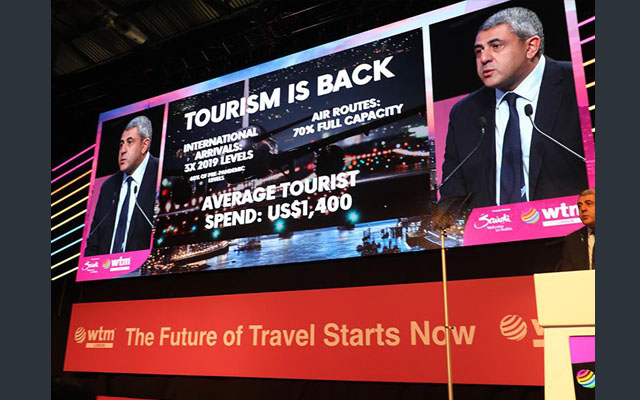
Tourism education, sustainability, and governance took centre stage at the World Travel Market’s Ministers’ Summit. With the theme Rethinking Tourism, the 16th Summit gathered ministers and high-level delegates from 19 countries, alongside business leaders.
UNWTO secretary-general Zurab Pololikashvili told tourism sector leaders that “our job is to create jobs” during this consolidated platform for public and private sector leaders that addresses tourism’s most pressing issues and sets the agenda for the years ahead.
Opening the event, Pololikashvili emphasised the unique opportunity to transform the sector. He said: “The window of opportunity will not stay open forever. We need to rethink tourism – as a provider of jobs, an economic pillar, and, against the backdrop of COP27, as a solution to the climate emergency.”
Education and jobs key to tourism’s future
Pololikashvili presented an overview of UNWTO’s work leading the transformation of tourism, with focus on investing in sustainable infrastructure and in people (through quality education and providing decent jobs).
Echoing UNWTO’s position, Juliette Losardo, exhibition director at World Travel Market, noted that “a post-pandemic world has revealed exciting opportunities, and given us a once-in-a-lifetime opportunity to reconsider tourism and ask ourselves how we can rebuild and better prepare for the future”.
Julia Simpson, president and CEO of the World Travel and Tourism Council (WTTC), which co-organises the summit with UNWTO, spotlighted the “talent, speed and capital” of the private sector.
Global expertise for common challenges
The roundtable brought together ministers of tourism from every global region, each providing unique insights from their own countries.
Ahmed Al-Khateeb, minister of tourism for the Kingdom of Saudi Arabia, stressed putting “sustainability above everything”, as well as the country’s focus on innovation and youth.
Highlighting the importance of diversifying national tourism sectors, including through domestic and rural tourism, and creating new products were Abdulla Mausoom, minister of tourism for the Maldives, the minister for Portugal, Rita Marques, and the minister for Egypt, Ahmed Issa.
Meanwhile, the deputy prime minister and minister of tourism for Mauritius, Ivan Collendavelloo, pointed out its ability to promote peace, adding that “we need to look beyond tourism to rebuild tourism”.
Also contributing to discussions were the ministers from Bahrain, Costa Rica Ecuador, Croatia, Ethiopia, Ghana, Jordan, Malawi, Malta, Mexico, Montenegro, Nicaragua, the Philippines, and Sri Lanka.
Tourism’s unprecedented political relevance
High-level participants emphasised that now is the time for the tourism sector to focus more on cooperation rather than competition.
The ministers also acknowledged Pololikashvili’s call for tourism to be mainstreamed within the political agenda and for greater collaboration between ministries of tourism and those of economy, business and environment.
The World Travel Market will also host the launch of the new Travel Trends Report 2023, produced by UNWTO in partnership with leading broadcaster Euronews.
Dao by Dorsett takes the aparthotel approach; pushes for personalisation

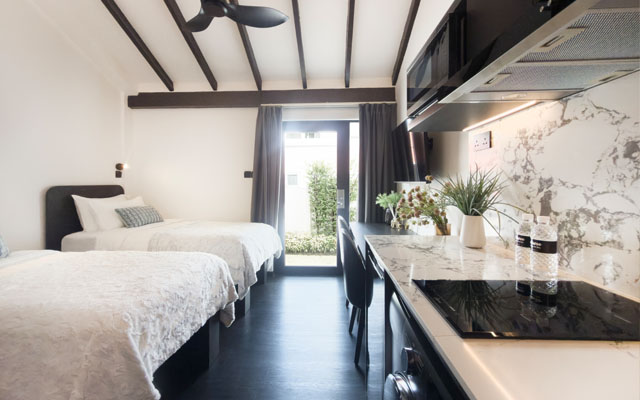
Although the new Dao by Dorsett, launched earlier this year by Dorsett Hospitality International, is currently at its infancy stage of expansion globally, the brand is confident that its aparthotel offering is the most resilient model of hotels moving forward.
Roy Liang, general manager at Dao by Dorsett AMTD Singapore and vice president of operations, Dao by Dorsett, shared: “The hybrid system of an aparthotel is a very flexible model that can ride the waves of an uncertain economy. Hotels are generally one-dimensional, travellers check in, sleep, and leave. But after Covid-19, we realised there’s a higher demand for products which are more flexible.”

For instance, during the pandemic, Asia’s first Dao by Dorsett – a conversion from Oakwood Premier AMTD Singapore – did not become a quarantine hotel. In fact, occupancy stood at around 50 per cent during the pandemic due to its aparthotel business model, having shifted its focus from transient business travellers to inbound expats instead.
“With the flexibility of being able to switch between long and short stays, the property is poised to attract the best of both worlds. This helps us to bridge the gaps either on occupancy or Average Daily Rate within a much shorter time, which has led us to be the market leader in terms of revenue per available room (RevPAR) year to date, as reflected in our STR reports. Our competitor set includes a mix of five-star hotels and serviced apartments (with hotel licenses) within the vicinity,” he elaborated.
Due to its success, the Dao by Dorsett AMTD Singapore is being used as the “blueprint” for future Dao by Dorsetts, and Liang is working with his team to fine-tune and standardise the branding, services and offerings. In addition to the Singapore property, a 74-key West London property is already in operation, with another London property to follow in 1Q2023.
Under Dao by Dorsett’s three brand values – Social, Custom-Fit, and Harmonious – the Singapore property features collaborations across the board with local companies such as fresh produce supplier Avo & Co, as well as The Botanist and Her Thieves for a custom-built plant library, and toiletries from vegan-friendly and sustainable brand Abyssian.
Liang pointed out: “The story and branding of Abyssian are very close to what Dao by Dorsett represents, even though it is not a big amenities company. It started out as a hair care company, but they have invested in R&D to develop shower gel products and conditioners. We are the first hotel company to use their products, which will be rolled out to our London hotels, and future Dao by Dorsetts.”
Although certain items or services are unable to be replicated, for instance, providing fresh produce boxes at the Dao by Dorsett West London, Liang indicated that “property offerings will definitely relate to our core values”, which means guests can expect all Dao by Dorsetts to take a hyper-local approach regardless of its location.
“The purpose of us supplying items from local partners is (reflective) of our brand value ‘social’, where the guest is supposed to integrate with the community and contribute back to the community as much as possible. By supporting local small businesses, we are also helping young entrepreneurs find their footing in society.”
Once other systems are in place, a Dorsett Loyalty Programme under Dorsett Hospitality International will also be implemented for Dao by Dorsetts.
For now, Liang shared that the focus will be standardisation of the product offering, as well as “conversions of Dorsett-owned properties” in China, Malaysia, Hong Kong, Japan, and Australia to Dao by Dorsetts.
“Once we have stabilised our operations, we will actively look into proposing management agreements with hotel owners,” Liang said.
A challenge that Liang faces is that selling an aparthotel is not as straightforward as selling a pure hotel or pure service apartment, because he needs to have a “fine balance” in knowing the best percentage that should be allocated to long stays and short stays.
“This changes every month, and the booking period for long stays and short stays is also different,” he shared. “We aspire to have the best balance of RevPar and prove that having the flexibility of long and short stay guests allows us to compete effectively in the market.”
“Fortunately, we are not tied down by a cookie-cutter approach. We have the resources to make every Dao by Dorsett more competitive, especially with a smaller inventory. At the end of the day, it’s the service you provide to guests, not so much the hotel or room product. If guests find that the value versus the price they pay is better, they will choose to stay,” he concluded.
Booking.com, Amadeus partner to streamline payment process

Travel agencies reserving Booking.com accommodations through the Amadeus Travel Platform can now choose to process payment using a wider range of virtual cards from Amadeus’ digital wallet, across more than 1.3 million accommodation options.
The Amadeus B2B Wallet solution integrated with Booking.com reduces the demand on travellers to provide upfront payment information or to make payments at the point of check-in or out.
Travel agents paying for Booking.com hotel stays now have the choice of using 14 different card types including credit, debit and pre-paid options, provided by participating banks from across the world.
For travel agencies, the Amadeus B2B Wallet allows them to set and manage priorities for how they pay accommodation providers, with the virtual card automatically recommended for each individual stay within the booking flow, saving time and creating efficiency across the entire booking experience.
Katja Bohnet, vice president of hospitality distribution, hospitality, Amadeus, said: “By helping agents pay for stays with Booking.com’s accommodation partners, we’re removing several points of friction. Travellers no longer need to provide card details at check-in or make a payment for the room at the front desk when they check out.
“Travel agents can align how they make payments depending on their strategic priorities thanks to a wide choice of options from our issuing partners. Accommodation partners will also receive payment quickly and reliably: it’s a win-win-win.”
Jeremy Cornuau, global director for partnerships, Booking.com, added: “Our primary aim is to make every aspect of the travel experience easier and more streamlined for travellers and travel providers alike, including when it comes to payment options.
“The Amadeus Travel Platform is an important distribution channel for our accommodation partners and making virtual payments part of the reservation process is a big step forward for everyone involved.”
Radisson Hotel Group debuts Radisson Individuals project in Pattaya

Radisson Hotel Group (RHG) has launched its first Radisson Individuals hotel in Pattaya, Thailand with Lewit Hotel Pattaya. The new hotel will operate under a brand affiliation agreement with Land Able Co.
Scheduled to open in February 2023, Lewit Hotel Pattaya marks the latest development in RHG’s wider growth strategy as it targets to double its operating portfolio in Thailand by 2023.
Located less than ten minutes from Jomtien beach, the 100-room hotel features an all-day restaurant, a glass-walled infinity pool with a waterslide and sundeck, fitness centre, and event spaces.
It is also a short drive from Bangkok and Suvarnabhumi International Airport, as well as the regional hub of U-Tapao Airport, making it easily accessible for domestic and international travellers alike.
David Nguyen, managing director, Indochina and strategic partnerships, South East Asia & Pacific, RHG commented on the signing: “This is a major milestone for our company as it demonstrates how we are successfully diversifying our portfolio with new resort locations that will further accelerate our expansion in Asia-Pacific.”
“This partnership represents the start of an exciting new era for Lewit Hotel Pattaya, a member of Radisson Individuals, and we look to leverage the expertise and global scale of Radisson Hotel Group as we prepare to welcome guests from all around the world as Thailand enters its first full high season for three years,” said Sarinya Ruennuch, director, Land Able Co.
Emirates, Air Canada partner to extend global networks

Emirates and Air Canada will launch their codeshare operations, allowing customers of both carriers to enjoy seamless connectivity to 46 markets spanning three continents.
These include destinations across the Americas, the Middle East, Africa, South-east Asia, and the Indian subcontinent.
Codeshare tickets will be available for sale to 35 markets for travel effective December 1 with 11 additional markets to be added pending final regulatory approval. There is potential for more markets to be included in the future.
Customers can purchase tickets from both carriers’ websites and via major GDS systems and travel agencies.
Emirates customers will be able to book codeshare flights to and from Canadian points beyond Toronto, including Calgary, Edmonton, Halifax, Montreal, Ottawa and Vancouver; while Air Canada will expand its reach across the Indian subcontinent and unlock more destinations, including Colombo, Dhaka, Islamabad, Karachi, and Lahore.
Air Canada’s customers will enjoy seamless connectivity to South-east Asian destinations including Bangkok, Hanoi, Phuket, Kuala Lumpur and Singapore; the Middle Eastern cities Jeddah and Muscat; as well as destinations in Africa, namely Addis Ababa and Dar Es Salaam.
Both airlines will soon introduce a reciprocal frequent flyer offering, allowing members of Aeroplan and Skywards to earn and redeem points on flights operated by Emirates and Air Canada, respectively.
In addition, eligible passengers will also be able to take advantage of reciprocal lounge access, along with select benefits for Aeroplan Elite and Skywards members when travelling on the partner airline.
Fili Hotel
 Location
With a reclaimed area connecting the island to mainland Cebu, the resort is situated on Kawit Island off the coast of Cebu City in the South Road Properties, closer to the Mactan Cebu International Airport via the new Cebu-Cordova Link Expressway.
Rooms
Fili Hotel has 379 sizeable rooms: 318 deluxe (41-49m²), 27 premier deluxe (61-70m²), 31 suites (89-231m²) and three villas (421-942m²). The suites and villas have butlers or mayordomos.
My deluxe seaview room featured relaxing earth tones, with paintings by local artists in summer-y colours and splashes of turquoise decor completing the tropical feel.
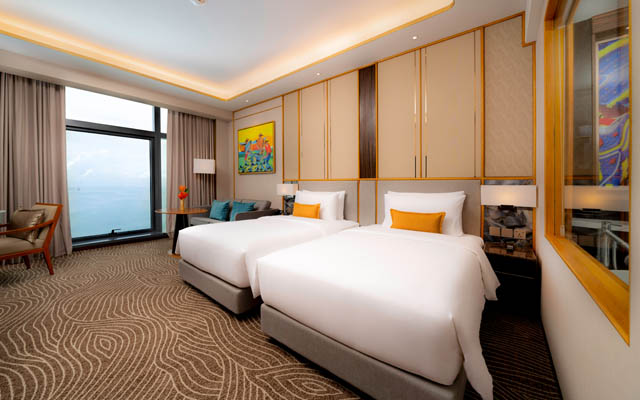


It is tastefully luxurious with quality beddings and amenities, top-of-the line bathroom fixtures including smart toilet and huge bathtub, a user-friendly working table, and high-speed internet access for multiple devices.
Little details of generosity warm the heart, like the four complimentary big (not medium-sized) bottles of mineral water and a sumptuous welcome tray of artisanal chocolate concoctions with Cebu’s famous dried mangoes and pineapple.
F&B
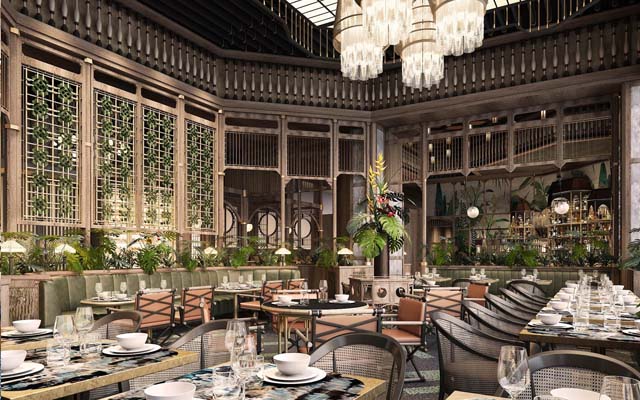
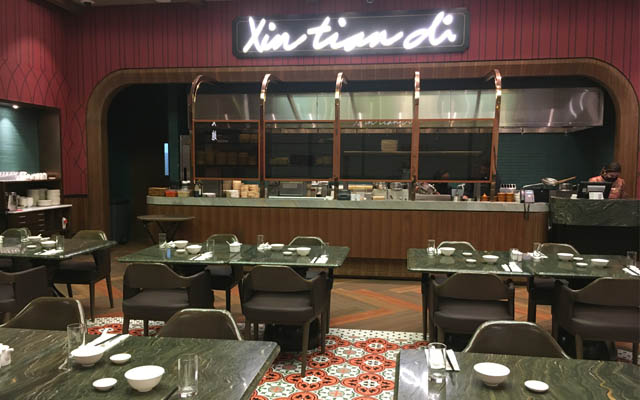
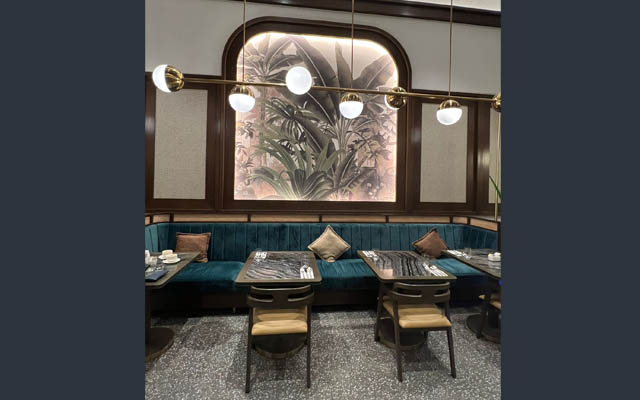
Five restaurants were open as of press time, including the first franchise in the Philippines of Mott 32, with Michelin-awarded executive chef Lee Man Sing at the helm. While I did not try this strictly-by-reservation-only restaurant, a journalist friend, who is used to eating in the world’s finest restaurants, gave high marks to Mott 32’s modern approach to Chinese cuisine.
At Il Primo Steakhouse, chef Luca Angioletti’s potato gnocchi is delectably smooth, almost melting in the mouth. Done medium well on the Josper grill, the steak is just right and succulent.
Facilities
Services available include concierge, limo and car rental, baby-sitting and childcare. However, the pool and function rooms were not yet available during my stay.
Despite ongoing construction work, our room was well sound-proofed against the noise.
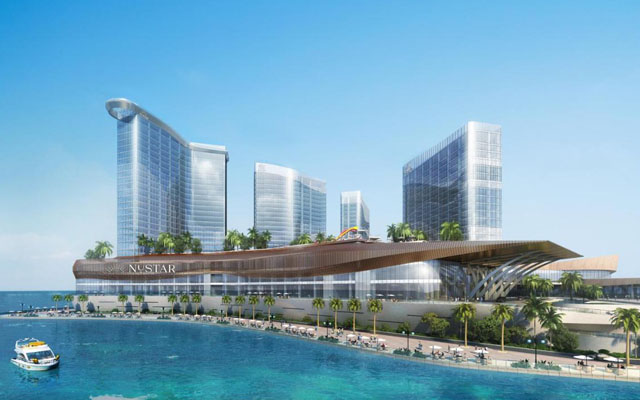
Opening next year apart from Fili Hotel’s facilities, are NUSTAR Convention Center, The Stage NUSTAR stage theatre, The Boardwalk which connects NUSTAR to Cebu on the 580m scenic walk, The Wharf for boarding yachts, and the 116m Skywalk with stunning views of the sea and cityscapes.
Service
From check in to check out, the hotel staff are friendly with chirpy greetings and warm smiles. They are also conversant, typical of Filipino hospitality.
Part of their training must have included photography – not only did they seem to expect to be asked by guests to take photos, given the elegance and opulence of the hotel, the photos also always turned out great!
Verdict
Whether by day or night, NUSTAR Resort & Casino stuns. I arrived at night and the integrated resort was like a palace with its shimmering lights reflected in the waters surrounding the island. Came morning, it boasted a lovely and full view of the sea, mountains and the city.
Once more facilities open next year, it will certainly be an awesome place to visit over and over.
Contact details
Tel: +63 32 888 8282
Email: fili@nustar.com.ph
Website: https://www.nustar.ph/







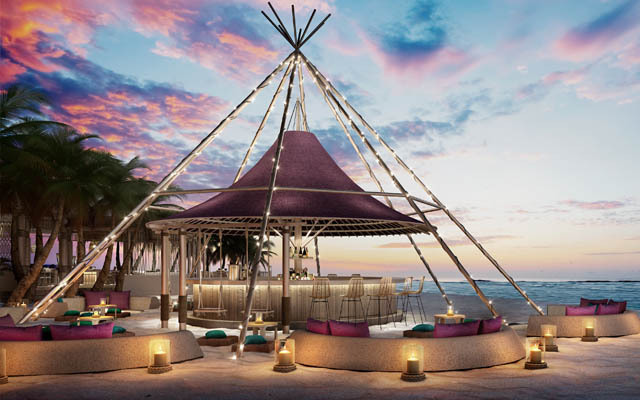
Minor Hotels is set to launch Avani+ Fares Maldives Resort in early 2Q2023, the first property for the brand in the destination and the first new hotel development in more than three years in the coveted Baa Atoll UNESCO Biosphere Reserve.
The new-build private island resort promises a premium Maldivian escape through a variety of accommodation options, from beach pool villas and four-bedroom beach pavilions to three-bedroom over-water villas.
Avani+ Fares Maldives Resort will appeal to couples, families and friends with an array of dining, fitness, water sport recreation and spa treatments.
The resort will provide easy access to the world renowned Hanifaru Bay, home to what is regarded as the Indian Ocean’s best biodiversity and underwater ecosystem and one of the best places to see manta rays. With twelve individual dive sites off the beach at Fares, divers are spoilt for choice. In addition, guests will have access to the Avani house reef, a 220-metre reef teeming with marine life including turtles and dolphins and the nearby Fares reef which is 600 metres off the shore.
“The arrival of Avani+ Fares in the Maldives meets a growing niche in demand for guests seeking alternatives to traditional luxury by providing a contemporary new offering, enabling a wider audience to experience one of the world’s most exclusive destinations,” said William Costley, Minor Hotels’ senior vice president of operations for Asia.
“Avani+ Fares will continue to highlight Avani as a trailblazing hotel brand, filling a gap in the Maldivian hotel landscape and delivering exceptional products in a fresh and accessible manner,” he added.