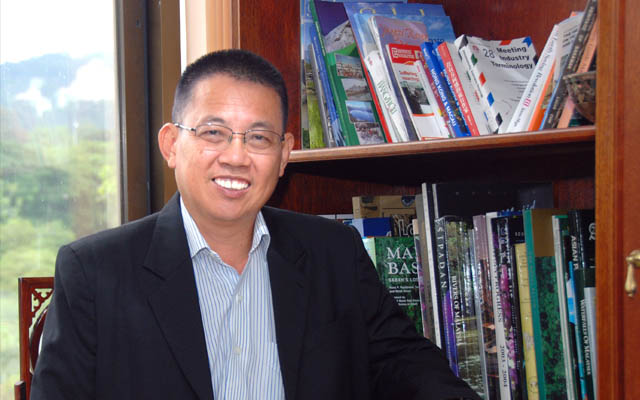
 How far are you from your goal of turning the resort into a carbon negative hotel, offsetting more carbon than it emits?
Cottage by the Sea by Frangipani is almost a net-zero carbon emission property. I have planted thousands of plants and trees around the 4.65-hectare land located on a 325m stretch of beach – only 30 per cent of our land is developed.
We have many green practices to save on water, energy and we produce our own food onsite. Earlier in the year, we had buried 100 tonnes of biochar to be used together with compost. Biochar is carbon negative.
We believe that in the coming years, we shall have better technology to produce renewable energy and will become more affordable. We will invest and leverage on such technology to reach our goal to be a carbon negative at our property by 2030.
How do you currently offset carbon emissions?
We have put into practice more than 200 ways to offset carbon emissions. In fact, I had very recently produced a book entitled Sustainable Hotels in the Tropics: The How of Achieving the UN 17 SDG & Climate Change, Circular Economy, Sustainability, Water & Food Security. There is also a soft copy which I am giving away for free in the hope that other hotels and organisations can emulate our practices.
Among our green practices, we have an edible landscape where vegetables are grown. This increases food production in the resort as well as reduces ambient atmospheric temperature. We also have an organic farm where fruits and vegetables are grown, local honey is produced, and poultry is kept. We rear fish, such as tilapia, catfish and snakehead, in the constructed wetlands.
We also look into ways to maximise sunlight, which is an energy source, in a manner that is comfortable to guests. We have opted for larger windows and open spaces to allow light and air to flow through the resort. Doing so has indirectly reduced our energy consumption.
We recycle as much as possible. For instance, empty paint and chlorine containers are recycled. We place them under air conditioner compressors to collect condensation, and the water is then used to irrigate the landscaped gardens.
We recycle old bottles we find on the island and turn them into works of art. Very recently, a fallen large old tree was made into six tables in our dining area. With a little imagination, almost anything can be recycled. This is the value I wish to impart onto others.
Do your guests appreciate the sustainable practices at your resort, and are their expectations today different from a decade ago?
Many of our guests join our daily organic farm tours organised by our environment and education officers, and that’s where they learn about our green practices. They appreciate our efforts. With our weather becoming more erratic and unpredictable in the last few years, people are becoming more aware of climate change and are wanting to change their lifestyle and habits. We offer them ways to go green. The buy-in today is easier than what it was a decade ago.
What drives your passion for the environment?
I have been an environmentalist and a naturalist for close to half a century, starting since I was a student. Like most people, I am concerned about climate change and its harsh impact on our environment. I would like to share with other hoteliers and organisations best practices we have developed.
For instance, I have developed an efficient system to clean polluted water – (turning) raw sewage and waste cooking oil (into) drinking water in three or four days – (through) desalination using special bio-engineered constructed wetland, all without using any energy. I believe that through the exchange of knowledge and sharing best practices with others, we can do our bit to make this a better place for our children and generations to come.
You have seen Langkawi grow over the years. Do you think Langkawi’s branding as a UNESCO Global Geopark helped to change attitudes towards sustainability in a positive manner?
Langkawi’s branding as a UNESCO Global Geopark has certainly helped. Every four years, Langkawi Geopark has to undergo UNESCO revalidation. Evaluators will assess Langkawi’s compliance according to submitted documents as well as look at Langkawi’s efforts in nature conservation.
Over the years, the community in Langkawi has taken stewardship of the geopark status and (has personal) pride in protecting Langkawi’s resources. Over time, Langkawi Development Authority (LDA) has managed to change attitudes.
Initially, people in the tourism industry were sceptical about the geopark branding and whether tourists would be interested in ancient rock formations that go back more than 550 million years. LDA has created many initiatives to educate the community about the geopark and it is now the community who champions this. I believe they will come together again in July 2023.
To get revalidation, we have to show that we have made improvements in sustainable development on the island and that there is community engagement.
What more should the state government do to protect its natural assets, which is also a tourism draw?
We should make it compulsory that every major development here on Langkawi gets certified Green under Malaysia Green Building Index and work towards getting more hotels recognised under the ASEAN Green Hotel Standards.
The government should use more renewable energy and work towards being self-reliant on food production and water security, and have better waste water management systems on the island so that the sea is not polluted.
For Langkawi to be water sufficient, I suggest that the state constructs a coastal reservoir to collect river water before it flows out to the sea.