Air Busan is the latest airline to recommence flights to Kota Kinabalu since the pandemic, with the first flight back to the Malaysian city in Sabah on July 14 bringing 220 passengers.
The airline now flies twice weekly between Busan and Kota Kinabalu.
Welcoming the passengers on Air Busan’s first flight back to Sabah from Busan
State assistant minister of tourism, culture, and environment, and Sabah Tourism Board chairman, Joniston Bangkuai, who was part of the welcome entourage, said the ramping up in international direct frequency indicates significant demand for travel to Sabah, as well as airline interest in the Kota Kinabalu route.
Since the reopening of Malaysia’s borders on April 1, five foreign carriers have returned to Sabah. To date, there are 40 weekly direct international scheduled flight frequency into Sabah, with South Korea having the highest frequency.
LCCs have led the way in the travel recovery and will continue to do so, riding on their strength and reach in domestic and regional markets, finds Mike Barrera, vice president for product management, LCC segment at Sabre.
In this episode of TTG Conversations: Five Questions, Barrera talks about an increasingly competitive LCC landscape as a result of emerging start-ups and expansion of operations by existing players, diversification of Asian LCCs into businesses beyond flights, and how LCCs can disrupt themselves in this new era of travel.
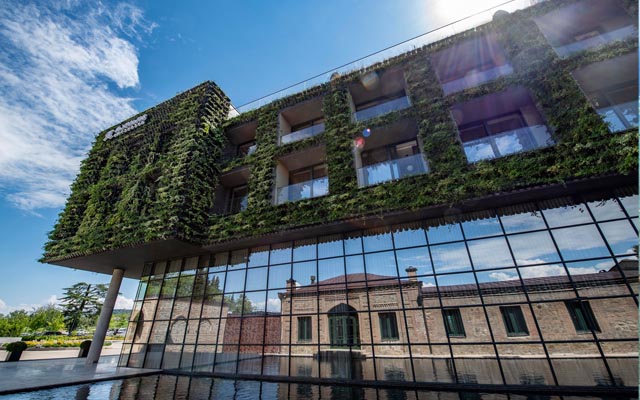
Fusion Original Saigon Centre, Vietnam
The first Fusion Original, Fusion Original Saigon Centre, is situated in Saigon Centre, atop the Takashimaya Shopping Mall.
The property boasts 99 bespoke units over 10 floors in one of the city’s largest mixed-use developments, while facilities include a pool, garden, and lounge area. On every floor, there is the Reload Pantry & Barista Station which is refilled daily with a selection of goodies for guests’ convenience.
Wyndham Garden Sapporo Odori
Wyndham Garden Sapporo Odori, Japan
Wyndham Garden Sapporo Odori is the second Wyndham Garden hotel to open in Japan and is located in Sapporo’s central business district.
The 132-key hotel features a restaurant and cocktail bar on the ground floor. Meanwhile, attractions nearby include the Sapporo TV Tower, Sapporo Clock Tower, Sapporo Beer Museum, Chitosetsuru Sake Museum and Hōheikyō Hot Spring. For winter sports enthusiasts, there are nearby ski slopes such as Sapporo Teine and Sapporo Kokusai Ski Resorts.
Mövenpick Hotel Wellington
Mövenpick Hotel Wellington, New Zealand
Mövenpick Hotel Wellington is located on The Terrace, overlooking the Cuba Quarter.
With 114 guestrooms and suites, amenities include a pool, on-site and virtual gyms, library and conference rooms. The hotel is also home to Forage restaurant and bar, where its locally-crafted menu focuses on sustainable dining.
The brand also brings to New Zealand’s capital city signature hotel experiences such as the daily Chocolate Hour – decadent chocolate experience with live demonstrations staged every afternoon in the hotel lobby – and a 24-hour sundae service for kids throughout their stay.
Park Hyatt Jakarta
Park Hyatt Jakarta, Indonesia
Park Hyatt Jakarta is located in the Menteng area in the heart of Jakarta’s CBD. The hotel occupies the top 17 floors of the 37-storey Park Tower, and has 220 rooms – including 36 suites – on offer. Guestroom sizes start from 57m², and go up to the 300m² Presidential Suite.
F&B options include the all-day Dining Room on level 22; the Conservatory for high-tea on level 23; and Kita Restaurant & Bar serving up authentic Japanese fare in tatami rooms. Other facilities include a pool, spa, fitness centre, and 10 indoor and outdoor event spaces.
The Thai government recently floated plans to introduce a split pricing structure for the country’s hotels.
If enacted, this scheme means that foreign travellers to Thailand will see hotel rates surge back to pre-Covid 19 levels, while domestic tourists will continue to receive discounted fees introduced during the height of the pandemic.
Foreign travellers to Thailand will see hotel rates surge back to pre-pandemic levels, while domestic tourists continue to receive discounted fees
Government spokeswoman, Traisuree Taisaranakul, outlined the administration’s reasons for introducing dual pricing.
“This is to maintain our standards of rates and services for foreign tourists, which affects the perception of the country’s tourism brand. Rates that have been reduced during Covid-19 will be maintained for Thais to sustain the momentum of domestic tourism,” she said.
Although Thailand’s tourism and sports minister Phiphat Ratchakitprakarn’s indicated that the directive is not compulsory and the government merely wants to encourage hospitality firms to shift room rates based on the market, the industry is apprehensive.
Marisa Sukosol Nunbhakdi, president of Thai Hotels Association, pointed out that the move was not pragmatic, stating that “hotels in each tier also use different strategies to set prices”, and “if demand increases to support hotel occupancy, then rates will automatically increase”.
“Every hotelier would like to operate with higher and fair rates to gain a larger margin, but it is difficult to do so because of heated competition and oversupply. Operators have to use pricing strategies to gain cash flow,” added Marisa.
Following the removal of the Thailand Pass on July 1, many hotels in Thailand have reduced their room rates to help lure foreign tourists back to the country and shore up their bottom line. Yet despite these offers, occupancy remains low, and is not expected to return to peak levels until 4Q2022 at the soonest.
Indonesia’s Ministry of Tourism and Creative Economy and online travel marketplace Wego have combined forces to help revive tourism to Bali, via the latter’s vast user base in Middle East and North Africa.
The tourism board will use Wego to promote Bali and drive more bookings to the destination, starting with the launch of an exhibition with the theme It’s Time for Bali.
Indonesia tourism board will work with Wego to promote Bali and drive more bookings to the destination
Mamoun Hmedan, chief commercial officer and managing director, Middle East, North Africa (MENA) and India, Wego, said: “We are expanding our partnerships to cover more destinations and offer our users more choices. Indonesia and particularly Bali is a hot spot for many travellers, especially from the MENA region. We look forward to working with the Indonesia Tourism Board to bring more travellers to the country.”
A recent study showed that Indonesia is set to welcome over 900,000 tourists by 3Q2022, and minister of tourism and creative economy Sandiaga Uno shared that the country has been synchronising and aligning future promotion plans to ensure Bali remains a top-of-mind destination.
He said: “With a new economic era through digital marketing, it is necessary to innovate in our patterns of promotion. There are several approaches to achieve the target of tourist numbers, namely by joint cooperation with our strategic partners in the market and organising various international-class events in Indonesia.”
Such programmes include sports tourism, business events, international meetings and tourism villages, he added.
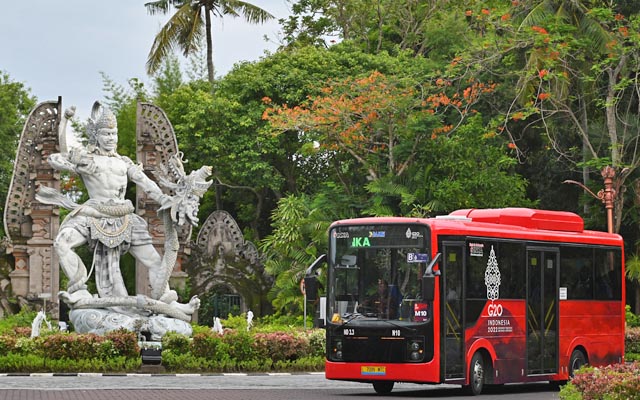
This November, Indonesia will host the international G20 summit in Nusa Dua, Bali. Under the theme Recover Together, Recover Stronger, the event will be attended by the European Union and 19 countries, and will focus on progressing in a post-lockdown era.
To build international visitor confidence in the destination, Laos has implemented LaoSafe, a nationwide initiative designed to create a world-class health and hygiene system within the tourism and hospitality industry.
This initiative by Laos’ Ministry of Information, Culture and Tourism, and approved by the Ministry of Health, comprises sector-specific standards developed for accommodation, F&B, tour guides, and drivers, to raise the benchmark of hygiene provision throughout the country.
LaoSafe is already in place in popular locations, such as the city Luang Prabang, pictured
LaoSafe is already in place in popular locations, such as the UNESCO World Heritage city Luang Prabang, and is gradually being rolled out to other destinations across the country.
To date, LaoSafe has certified over 50 restaurants, 60 hotels, 500 tour guides, 180 drivers, and two airlines.
Darany Phommavongsa, director general, tourism management department, Ministry of Information, Culture and Tourism, said: “The LaoSafe certification programme has used the time of Laos’ closure to prepare for an influx of tourists post-Covid. Now that the country is open again, the tourism industry is more prepared than ever to welcome travellers.”
The LaoSafe programme is supported by the Skills for Tourism Project (LAO/029), which is co-financed by the governments of the Lao PDR, the Grand Duchy of Luxembourg and Switzerland, and implemented by the Ministry of Education and Sports of Laos, and LuxDev, the Luxembourg Development Cooperation Agency.
Luxury ocean cruise line Regent Seven Seas Cruises has released 2023 Voyages to the Mediterranean & Northern Europe.
From March 28, 2023, through November 13, 2023, every booking of Regent’s European Indulgence includes US$500 Shipboard Credit per suite, plus a one-night Post-Cruise Hotel Package. This offer is valid on 60 voyages sailing to the Mediterranean and Northern Europe.
Regent Seven Seas Cruises’ European Indulgence includes shipboard credits to be used onboard and on excursions
European Indulgence is available for sailings with Seven Seas Mariner, Seven Seas Splendor, Seven Seas Voyager and Seven Seas Navigator, and guests can spend their US$500 Shipboard Credit on spa and wellness treatments or on heightened destination exploration with Regent Choice excursions.
The Post-Cruise One-Night Hotel Package, which includes a one-night luxury hotel stay with breakfast and private transfers from ship to hotel and hotel to airport, can be enjoyed in destinations such as London, England; Copenhagen, Denmark; or Istanbul, Turkey.
Plus, guests can enjoy a low refundable deposit of 7.5 per cent on European Indulgence sailings by booking before August 31, 2022.
Before setting foot into the tour business, Thiam Wei Toh, founder and chief storyteller of Indie Singapore Tours, said he was a “local boy” who neither saw beyond the borders of Singapore nor thought much about travel.
A career with the Republic of Singapore Navy gave him his first taste of travel, where assignments took him around the world.
Toh founded Indie Singapore Tours to provide free and immersive walking tours to backpackers
“My first trip was to New York and it was an eye-opener. As we sailed from port to port, we would get some time off and that allowed me to join tours to see the destination,” recalled Toh.
The travel bug kept its grip on him even after Toh concluded his employment with the Navy, so he and his wife-to-be embarked on a six-month-long plan to backpack around the world. That plan extended to three good years.
“Our backpacking experience planted some business ideas in our mind,” Toh said. “Cities that matter most to us were those that we got to know very intimately. We had locals as our guide, and they brought us to places they grew up in and showed us what they used to do and how they lived. The more we learnt about the cities, the more we fell in love with them.”
At the end of his journey around the world, Toh returned to Singapore with a determination to present Singapore – his home and country – in the same manner to visitors.
In 2015, Indie Singapore Tours was formed upon a simple business direction – to provide free and immersive walking tours to backpackers.
“When we started in 2015, there was a strong perception among travellers that Singapore is a very expensive destination. Since backpackers travel cheaply, few would consider joining tours to learn about Singapore. They would just come for a few days and then hop off to other destinations in South-east Asia. So, we kept our tours fuss-free to be appealing – travellers would just sign up and show up,” he said.
Toh’s free walking tours gained traction “quite fast”, with demand fuelled by numerous positive reviews left on social media sites.
“We started to see increasing participation over the following years. We didn’t advertise, and had only communicated our free walking tours to backpackers staying at the hostels around Singapore. Despite that, social media reviews led many non-backpackers to us. We even had cruise passengers signing up for our free walking tours,” he shared.
As Indie Singapore Tours saw its customer mix changing, Toh and his tour guide partners started to get requests for private tours. That led the company to go down the bespoke tour route, earning it paying customers.
With the arrival of the Covid-19 pandemic, which snuffed out international arrivals, the need for survival forced Indie Singapore Tours to pivot to programmes that would interest Singapore residents who thought they knew all there is to know about their own backyard.
Furthermore, to benefit from the Singapore government’s SingapoRediscovers programme, where vouchers were issued to residents to use and support local travel and tourism businesses during the travel disruption, Toh had to move away from free walking tours to paid content.
“We have a soft spot for Chinatown, as that is where our first free walking tours were born. Foreigners are keen on cultural tours to Chinatown, Kampong Glam and Little India, but try selling those to Singapore residents!” he said.
To reel in the locals, Indie Singapore Tours created the Whimsical Walk through the Blair Plain Conservation Area tour, a 2.5-hour exploration of a hidden gem in modern Singapore. It pointed out conserved architecture, old school eats, gorgeous contemporary art, and beautiful hole-in-the-wall cafés.
“There was nothing like that when we started, so the tour gained a lot of attention from both customers and the media,” he recalled fondly.
Unusual spins on city tours continue to be a central focus, and Toh told TTG Asia that he often finds his sparks at kopitiams – local coffee houses in the neighbourhoods.
“I’d drink with the old folks and they will share their growing up stories. These tales inspire tour ideas and give us unique content,” he said.
Today, Toh also makes it a habit to visit local businesses and talk to the owners about potential collaboration.
“Tours have to evolve to be more immersive and experiential. Collaboration with varied businesses will help to add depth to the tour experience, and this is something that has become so important during Covid,” he stated.
“Often, before the pandemic, I would have an occasional idea to do something different but business was so brisk that most of us had little time to stop and talk through details. When Singapore imposed the Circuit Breaker (lockdown on non-essential activities) and then tourism got disrupted, we finally had time to give all our ideas attention and turn them into experiences that will be valuable and insightful for our customers,” he said.
Conversations with business owners have led to the creation of even more fancy tours. The latest in Indie Singapore Tours’ portfolio is the Whis-Kueh tour, which takes guests through some of the oldest traditional pastry shops in Chinatown, and concludes with a craft whisky-pairing experience at Furama City Centre hotel.
“Kuehs have a special place in Singapore heritage but they get so little attention compared to the main dishes, like chilli crab and chicken rice. I often say kuehs are the underdog of Singapore food. So, the Whis-Kueh tour spotlights these bite-sized treats, which allows us to talk about the history and heritage of Singapore, while adding in the unusual idea of pairing craft whiskies with these food items,” he detailed.
Looking ahead, Toh sees an exciting future for tours in Singapore, as experiences continue to evolve and improve, allowing the city-state to gain more fans.
He now hopes that corporate group enquiries would return soon, and is eager to curate tours that weave in hands-on experiences for participants.
Paul Flett has been appointed general manager of Pan Pacific Perth.
He was previously general manager at Parkroyal Parramatta, a position that followed a two-year appointment at Pan Pacific Sonargaon Dhaka. Prior to this, Flett held the general manager position at Parkroyal Darling Harbour, as well as senior positions for InterContinental Hotels Group across the Northern Territory and Queensland.
In total, Flett brings over 30 years of hospitality experience to his new role, while his tenure with Pan Pacific Hotels Group spans 10 years, across Australia and South Asia.
Recovery of international travel from Europe has slowed down as queues and cancellations grow due to airlines failing to adequately prepare for the great travel comeback.
Travel and tourism analyst at GlobalData, Hannah Free commented: “International departures from European countries are expected to reach 69 per cent of 2019 figures in 2022, according to GlobalData forecasts. While destinations are eager to welcome visitors, supply simply cannot meet demand following extreme staffing deficits and industrial disputes, which has coincided with a rebound in international travel.”
Queues and cancellations grow in Europe due to airlines failing to adequately prepare for a rebound in travel demand
Other than the chaos and cancellations at several European airports, the travel industry’s recovery is also contending with other challenges including inflation, the rising cost of living, and the Russia-Ukraine conflict – all of which are likely to significantly dampen travel demand.
Free said: “Airports like London Heathrow and Amsterdam’s Schiphol have been forced to ask airlines to cut flights, while many carriers have had to pre-emptively cull their schedules by the thousands, affecting millions of holidaymakers.”
Due to staff shortages, airlines have had to cut their flights from their summer schedule. easyJet has reportedly culled more than 11,000 flights while British Airways has cancelled 13 per cent, including another 10,300 short-haul flights up to the end of October 2022 to be axed.
Looking at British Airways’ hiring trends, however, the airline may have failed to adequately prepare for a rebound in travel demand this summer. In November 2021, British Airways had announced increasing its workforce by 15 per cent, adding around 4,000 personnel including pilots, cabin crew, ground staff and back-office roles as part of a recruitment drive to prepare for Covid-19 recovery.
However, the recruitment drive has fallen short after British Airways reportedly cut as many as 10,000 jobs during the pandemic. Furthermore, GlobalData’s Job Analytics Database hiring trends data showed that the airline had not increased the number of active job postings on its career pages until at least March 2022. Instead, job postings had declined by 18.4 per cent between November 2021 and February 2022.