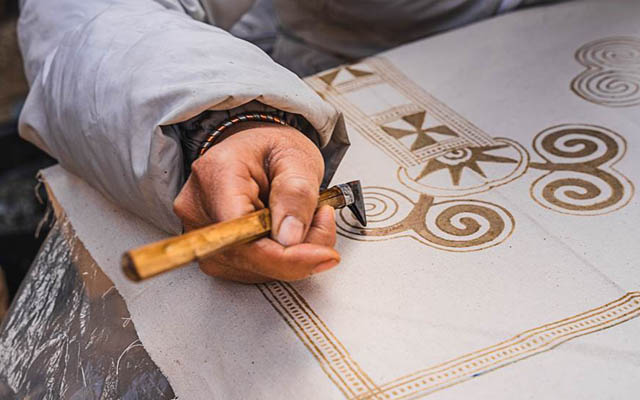
Set amid the homelands of the Hmong community, Avana Retreat is featuring new Batik (traditional painting and dyeing) classes led by a local Hmong artist.
The classes will be held at Avana Retreat’s 50-year-old Stilt House, an on-site museum, to help guests connect with the local customs and traditions.
Learn the art of Batik conducted at Avana Retreat’s Stilt House museum
The sessions will introduce to participants a beeswax art and indigo-dyeing technique that has been used for generations in the surrounding highlands.
Complimentary 60-minute sessions are held every Monday, Wednesday and Friday with guests learning about the beeswax painting process – each participant will get to create their own unique patterns or use traditional Hmong designs.
There is a paid option for a 2.5-hour comprehensive class that is more hands-on and only available by reservation.
Avana Retreat also offers a tour of a nearby Hmong craft village where guests can watch this intricate art being created with a deeper knowledge of the story behind it.
Private workshops cost from US$50-75 per person and are only available to in-house guests.
Jeremie de Fombelle has been named as The Lux Collective’s chief sales and marketing officer.
With over two decades of leadership and operational experience in luxury hospitality management, he will focus on awareness-driving strategies for the company’s portfolio of brands globally across channels.
Based in Mauritius since 2014, he was most recently regional general manager for Mauritius and Reunion Island for Lux* Resorts & Hotels.
Dusit International has appointed Makoto Yamashita as pre-opening general manager of ASAI Kyoto Shijo and area general manager – Kyoto, Japan.
Bringing more than 30 years of marketing and operational experience to the role, he will be responsible for spearheading the opening of ASAI Kyoto Shijo and Dusit Thani Kyoto, ensuring both properties meet their financial and operational objectives.
Prior to joining Dusit, Yamashita was area general manager of Mori Trust Hotels & Resorts in Tokyo and Nagano.
Continued destination marketing under the ASEAN banner as well as the progressive relaxation and removal of travel restrictions by member states throughout 2022 have yielded more positive tourism numbers for the South-east Asian region.
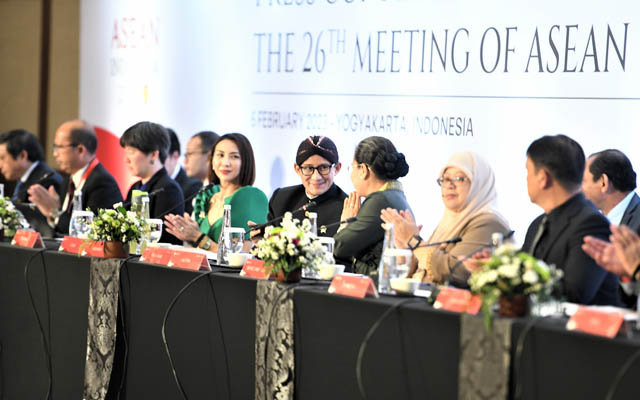
At the February 5 press conference concluding the 26th Meeting of ASEAN Tourism Ministers (26th M-ATM) in Yogyakarta, Indonesia, meeting chair Sandiaga Uno, minister of tourism and creative economy, Indonesia, noted that destinations in the economic grouping have altogether achieved a 1,706.61 per cent year-on-year increase in tourism receipts based on preliminary figures for 2022.
Tourism ministers of the 10 ASEAN member states and their economic partners met in Yogyakarta, Indonesia last week during ATF 2023
ASEAN member states have also recorded 1,222.99 per cent year-on-year increase in international arrivals, while hotel rate occupancy has improved by 16 per cent over the same period.
Destination marketing efforts fuelling the return of tourists to the region include social media content, digital campaigns and activities bearing the new brand and tagline, A Destination for Every Dream.
The Meeting emphasised the need for member states to deepen their collaboration with relevant partners in the areas of destination marketing. It also commended initiatives that were supported by external partners, such as the Intra-ASEAN Tourism Recovery Campaign, which received support from the Canadian Trade and Investment Facility for Development, as well as ASEAN’s collaboration with regional travel trade publisher and event organiser TTG Asia Media and the Sub-Regional Secretariats to amplify the call to visit South-east Asia.
Focus ahead will be on accomplishing even more key measures under the Post-Covid-19 Recovery Plan for ASEAN Tourism. These include developing regional cruise tourism and the promotion of new and lesser known destinations in the region.
Sandiaga recognises that connectivity improvements – not just within South-east Asia but also from markets outside of the region – are crucial for ASEAN member states to achieve these joint tourism goals.
In the case of Indonesia, direct flights to and from India are still lacking despite the latter being the “lowest of the low-hanging fruits” for tourism.
Philippine Tourism secretary Christina Garcia-Frasco said tourism heads have agreed to work on boosting air lift by identifying airports that can be used to operate additional direct flights for the purpose of driving tourism flow into both key and emerging destinations.
She added that some of the new flights – either scheduled or chartered – may be launched this year for routes within South-east Asia as well as to and from ASEAN-Plus Three partners China, India and South Korea.
Tourism development across the region will also consider responsible and inclusive growth for all, and the need for greater digitalisation.
Laos, a landlocked country traversed by the Mekong River and known for its natural beauty, French colonial architecture and Buddhist monasteries, will play host to ASEAN Tourism Forum (ATF) from January 15 to 19, 2024.
TRAVEX meetings between buyers and sellers will be held at Laos ITECC Exhibition Centre in capital city Vientiane. Meetings among ASEAN tourism government bodies and private sector tourism organisations will also be hosted in Vientiane but the venue has not been finalised at press time.
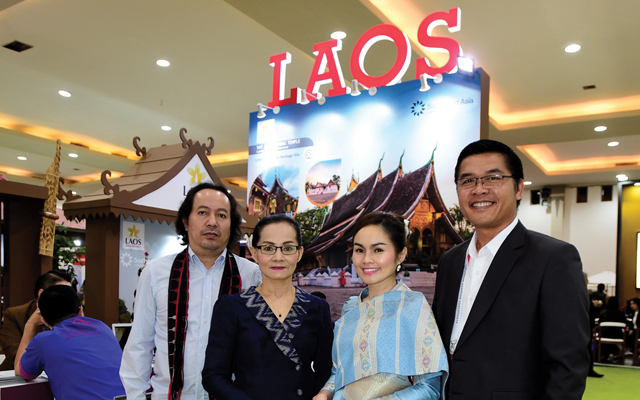
Sengsoda (second from left): many new discoveries in Laos
There will be organised tours for buyers and media to Vientiane, Vang Vieng and Luang Prabang.
Sengsoda Vanthanouvong, deputy director-general of Tourism Marketing Department, shared that approximately 350 sellers from South-east Asia and 200 foreign buyers are expected next year.
Sharing excitement about her country playing host next year, she said: “It will be an opportunity for Laos to showcase new products and services in Vientiane and elsewhere, as well as our local hospitality to tourism professionals.
“So much has changed in Vientiane since we last hosted ATF, also in the capital, back in 2012. This will be an opportunity for overseas tourism operators to see what Laos has to offer as well as to network with our tourism players.”
The Philippine travel trade is in support of an e-visa platform that is being studied for top inbound markets.
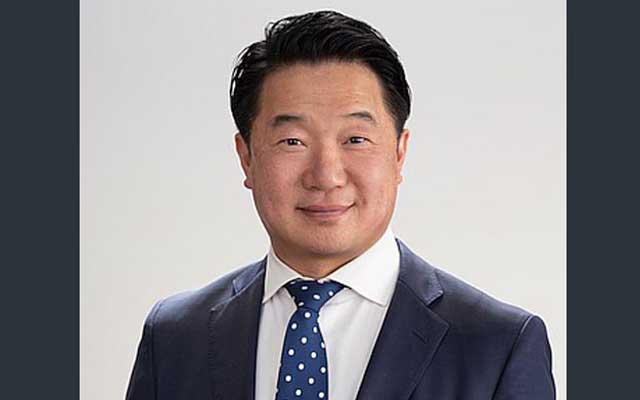
This came as Philippine president Ferdinand Marcos Jr instructed government agencies to act on the proposal by the Private Sector Advisory Council (PSAC) Tourism Sector to extend e-visas to Chinese, Indian, South Korean and Japanese travellers in order to attract them to visit the country.
Philippines to consider extending e-visas to Chinese, Indian, South Korean and Japanese travellers
Mary Ann Ong, inbound general manager of Bridges Travel and Tours, specialises in Chinese inbound and has suggested having a visa-upon-arrival (VUA) for Chinese nationals, just like Thailand, Vietnam and Indonesia.
While there is already a VUA for certain Chinese nationals entering the Philippines, the process is quite complicated. Ong commented that in other countries, travellers had to simply pay a fee at the counter before gaining entry.
“That’s the VUA that we are looking for (in the Philippines),” she said.
However, when applying for a Chinese client years ago, Ong discovered that in the Philippines, the client still had to submit papers that she had already sent to the immigration for approval before departure. When her client arrived, he had to pay a fee in Philippine peso – the only currency acceptable – which meant going to another counter to convert the currency. This process can be difficult for a tourist who cannot speak English.
Ong said VUA is not the same as e-visa, however, e-visas for Chinese visitors are “already an improvement” since the required documents can be submitted online and immigration issues the visa to them directly – unlike pre-pandemic when the documents had to be submitted through an agent to immigration.
Rajah Travel’s president and chairman, Arleen Clemente, believed “that recognising machine-readable passports and cooperation with foreign authorities in terms of interfaced database is the first step to having visa-upon-arrival or even visa-free.”
Clemente added: “The e-visa requires the passage of law or administrative order to effect this and must be vetted. This means that it should be a long-term plan for implementation. Having said that, they also have to lay the groundwork for that.”
The Department of Tourism is targeting 4.8 million foreign arrivals this year which Ong said is achievable if Chinese travellers start arriving in July.
China has approved group travel to 20 countries including the Philippines, however, negotiations for mounting charter flights and updating the rates for both countries need to be settled in order for China to start selling.
Brian Ong, public relations head of Hotel 101 Management Corp in the Philippines, said they are expecting Chinese travellers to pick up: “Since pre-pandemic, we have worked towards building awareness for the Hotel 101 brand in China, even in the second-tier cities.
“Being the master franchise owner of Jinjiang Inn Philippines, it also helped with brand recognition among the Chinese travellers. It will be easy for us to win back the market as we once again offer competitive rates and services.”
Cruise tourism is making an overwhelming comeback in the Philippines this year, with 30 cruise ships scheduled to call at the country’s ports this year.
Records from the Department of Tourism (DoT) showed that these cruise ships will carry up to 200,000 pax and make 139 port calls spanning 46 Philippine destinations.
Buensuceso: revenge travel is for real
Cruise throughput for 2023 represents a 56 per cent increase from 128,000 pax recorded in 2019.
At the recent PATA Philippines Chapter business assembly, Verna Buensuceso, assistant secretary for product and market development and OIC-undersecretary, tourism development, said: “It certainly looks like revenge travel is for real.”
Seabourn Cruise Line will send the first cruise ship – Seabourn Encore – to the Philippines since the pandemic disruption, arriving February 9 with a 600-pax vessel. It will call at Puerto Princesa and Coron in Palawan before arriving in Manila for shore excursions, and then onwards to Boracay.
Silversea Cruises is returning too, with Silver Shadow calling at Kalanggaman Island, Romblon and Bohol before Manila.
While fewer ships will sail to the Philippines this year compared with 2019, a number will be expedition ships making repeated calls at various ports and island destinations throughout the year.
New destinations this year include Ilocos Sur, Kalanggaman Island in Leyte and Romblon. Bohol is also getting popular among cruise ships.
Another positive note is the development of the Salomague port in Cabugao, Ilocos Sur which can take in large ships of 3,000 pax or more.
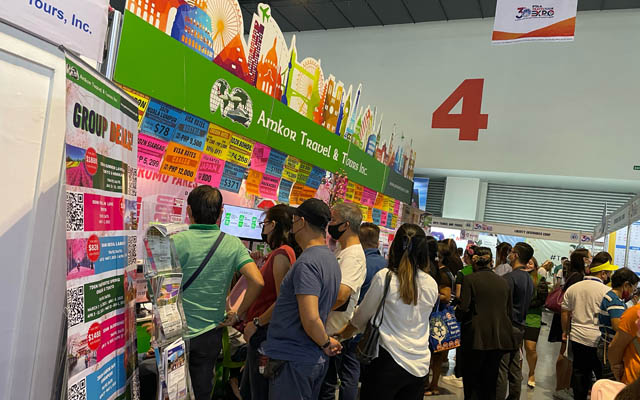
Filipinos slake their thirst for travel with brisk demand this year for certain destinations in Asia and beyond, as gleaned from the huge crowd on the first day (February 3) of the Philippine Travel Agencies Association’s (PTAA) three-day Travel Tour Expo 2023.
South Korea and Japan are on top of most people’s list, but South Korea’s dazzle has dimmed due to tighter visa application rules.
The overwhelming response during the PTAA Travel Tour Expo 2023 shows how much Filipinos are eager to travel
“Japan has always had a close affinity with the Philippines and mostly, whatever purpose they have, there is always a touch of culinary experience they want to enjoy. Similarly, the association to (South) Korea is on K-pop and Telenovelas but they also want a bit of the culinary experience,” said Aileen Clemente, president and chair, Rajah Travel.
Other tour operators at the expo said that in Asia, travel to Bangkok is picking up, as well as to Singapore and Hong Kong which has opened up. Dubai is another favourite choice because, like South Korea, it always has new tourism offerings.
Mike Hain, groups manager, Corporate International Travel and Tours, Inc. (CITTI) said that travellers now prefer experiential over seeing, and that “it’s lovelier selling a tour that touches the emotions”.
Hain cited a tour to Finland where all the passengers – the elderly included – felt they had returned to their younger years when they met with Santa Claus, short of sitting on his lap.
CITTI started selling all-in Silversea cruises, mainly for expeditions to the Arctic and Galapagos, which received positive feedback – the demand comes from seasoned travellers who want to try something different. The same holds true for off-beat destinations in Scandinavia.
With many Filipinos having travelled to Asia, they now tend to go for longhaul destinations like Europe, Canada and the US. Turkey’s value packages and out-of-this-world scenery remain popular too.
Filipinos are a pro in religious pilgrimage, and although it is increasing this year, 2024 and 2025 will be much better, said Enes Esen, managing director of DB Tourism.
In Europe, Esen said the religious sites of Rome, Lourdes and Fatima are in demand. He explained that while Europe is an expensive destination, so are Japan and South Korea.
Clemente commented that Filipinos also travel more as families. Although they want to celebrate and appreciate life and love as they travel, more importantly, they want to go to destinations where they trust the “emergency response” should anything happen to them.
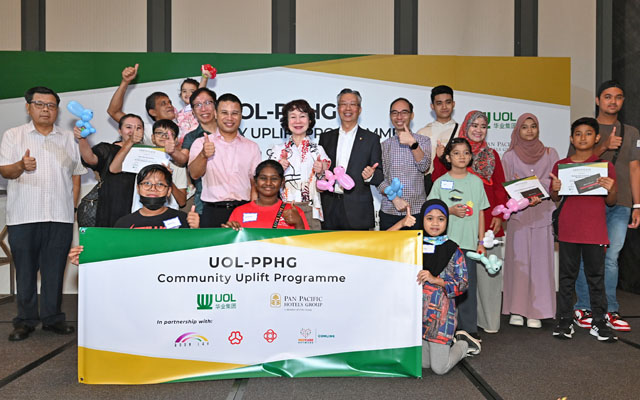
UOL Group Limited (UOL) and its hotel subsidiary Pan Pacific Hotels Group (PPHG) have teamed up with Singapore’s Ministry of Social and Family Development (MSF) to launch a programme that aids children living in rental housing.
The UOL-PPHG Community Uplift Programme is part of Community Link (ComLink) efforts to provide these underprivileged children with a range of enrichment and learning opportunities specifically tailored to meet the developmental needs of children, such as rock-climbing activities as well as arts and crafts classes.
The community uplift programme provides underprivileged children with enrichment and learning opportunities
Plans are in the pipeline for more enrichment activities to be rolled out over the next three years, with the aim of promoting learning outside of the classroom and developing well-rounded children with diverse interests and experiences.
ComLink is an initiative launched by MSF in 2019 to connect families with children living in public rental housing with community resources and government services, and to journey alongside them towards stability, self-reliance, and social mobility in their life circumstances.
Said Wee Wei Ling, executive director of sustainability partnerships, lifestyle and asset, PPHG: “We are delighted to launch the UOL-PPHG Community Uplift Programme, which gives children from underprivileged backgrounds the opportunity and exposes them to meaningful and interesting activities so that they can learn new skills that they would otherwise not have the chance or means to pursue.
“By launching this programme in collaboration with MSF and our partners, we hope our collective effort will be able to bring about a bigger impact in meeting the needs of children living in rental housing, and to build their confidence and resilience.”
UOL and PPHG will continue to co-host the activities at various retail properties and hotels under their portfolio. Their employees will also be volunteering their time to participate in the programme with the children and their families.
In addition, UOL will be contributing about S$150,000 (US$113,294) of in-kind support towards the UOL-PPHG Community Uplift Programme over the next three years and will continue to encourage the participation of UOL’s retail tenants to collaborate and provide activities for the children.
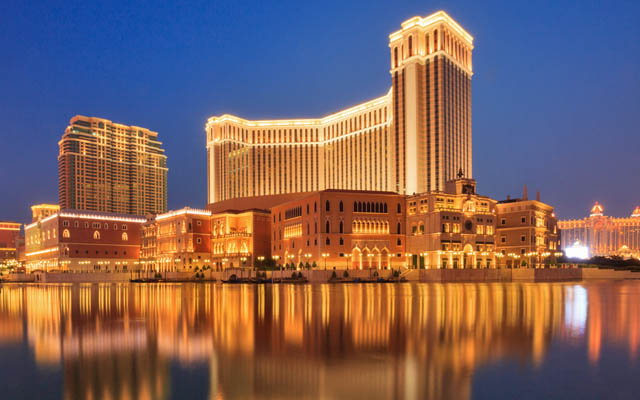
The Venetian Macao will be presenting a night of star-studded entertainment on February 18 at the Cotai Arena.
The Night of Stars Concert will give music lovers a treat with performance by popular music artistes such as Cantopop diva Sammi Cheng, William So, Pakho Chau, WeiBird, Dear Jane, and rising singers Cloud Wan and Janees Wong.
The Venetian Macao will host The Night of Stars Concert on February 18
Tickets are priced from HK$280 (US$35) and will go on sale on February 8.
BOC Sands Lifestyle UnionPay and ICBC Sands Lifestyle Mastercard cardholders can enjoy 15 per cent discount.



 Based in Mauritius since 2014, he was most recently regional general manager for Mauritius and Reunion Island for Lux* Resorts & Hotels.