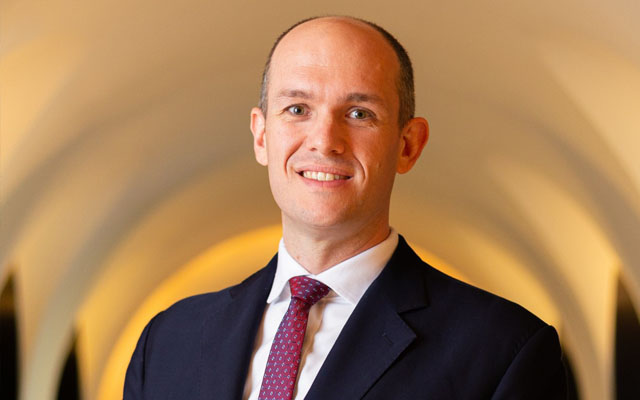
Marc Selinger has been appointed general manager of Meliá Chiang Mai which opened in April 2022.
Having been with Meliá Hotels International for the past seven years, he was previously acting general manager and hotel manager at Meliá Hanoi in Vietnam, and the director of operations at Meliá Yangon in Myanmar.
Lionel Ferrari takes on the role of general manager of Anantara Koh Yao Yai Resort & Villas in Phang Nga province in Thailand.
With more than 15 years of hospitality experience in the Seychelles, he will oversee all operations for the new property. He was previously the general manager of Maia Luxury Resort and Spa in 2017 where he overlooked the rebranding of the property to Anantara MAIA Seychelles Villas.
Ferrari is also fluent in four languages: French, English, Italian and Spanish with conversational Portuguese and Seychellois Creole also in the mix.
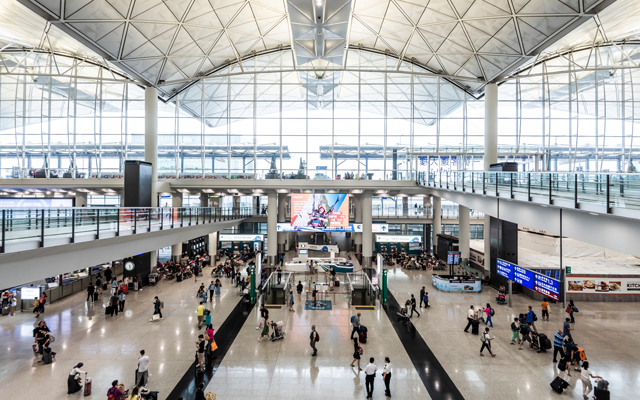
On the morning of February 6, thousands of travellers made their way to respective checkpoints as Mainland China fully resumed normal travel with Hong Kong and Macau.
Most of the travellers comprised people returning to their hometowns to reunite with family members, students going back to school, cyclists, business travellers, as well as those heading out to explore Hong Kong, Macau, and the rest of the world.
Hong Kong International Airport recorded 40,000 inbound and outbound passengers on Monday
All cross-boundary control points were operational, including Lo Wu, Huanggang, Liantang and Sha Tau Kok between Hong Kong and the Mainland China, with the latter’s travel agencies also allowed to organise group tours to Hong Kong and Macau from Monday.
Prior to opening on Monday, Lok Ma Chau/Huanggang Control Point started seeing a large number of Hong Kong residents heading to the port from the bus station in Mong Kok at 23.00 the night before.
Previously offering only freight clearance during the pandemic, the Heung Yuen Wai/Liantang Control Point started passenger services for the first time on Monday.
Meanwhile, Hong Kong Tourism Board staff greeted arriving visitors at the three checkpoints as part of Hello Hong Kong campaign, while the Macao Government Tourism Office held welcoming ceremonies at the Hengqin port and Macao International Airport.
The full resumption of normal travel and group tours will aid in the recovery of the tourism industry in Mainland China, Hong Kong and Macau. It will also facilitate business exchanges among the three countries, for example, the National Committee of the Chinese People’s Political Consultative Conference led an 80-member delegation on Monday from Hong Kong to visit the Nansha New Area in Guangzhou, Guangdong province, by high-speed train.
About 128,000 people had entered Mainland China via all ports and 114,000 arrived in Hong Kong as of 20.00 on Monday, with Hong Kong International Airport recording 40,000 inbound and outbound passengers.
The Hotel Sales and Marketing Association (HSMA) and the Philippine Tour Operators Association (Philtoa) have partnered to organise a joint B2B trade event next month to help boost inbound tourism.
Dubbed the HSMA-Philtoa Travel Exchange 2023, over 100 HSMA hotels and resorts will be in attendance to sell to more than 400 buyers consisting of Philtoa member tour operators and travel agents at the Manila Marriott Hotel on March 28 and 29.
The HSMA-Philtoa Travel Exchange 2023 helps connect both buyers and sellers
Moreover, Philtoa members will be included in HSMA’s online September On Sale (SOS) 2023, offering special rates. SOS was started at the height of the pandemic to help revive the industry.
HSMA’s president Loleth So commented: “Whenever we talk about tourism, we always look at global markets, but we always fail to look at our partners locally… so the best way to jumpstart tourism is to start talking to your local counterparts.”
So pointed out that with the HSMA-Philtoa Travel Exchange 2023, there is no need to “go out on sales call” as they will all be there for the two days.
Philtoa’s first vice president, Mary Ann Ong, pointed out that many Philtoa members outside metro Manila that rarely meet up with hotels and resorts will be given the opportunity to do so at the Travel Exchange.
Ong added that holding the Travel Exchange in late March is timely because hotels and resorts usually introduce new rates in April.
According to both HSMA and Philtoa, the B2B event will go a long way in helping out small and medium tour operators outside Metro Manila while also introducing hotels and resorts that have already opened up in secondary cities.
The spike in the number of foreigners travelling to Japan has resulted in hotel room prices climbing nearly 20 per cent in December 2022 as compared with the same month before the pandemic.
According to The Straits Times, another reason for rising hotel room rates is the high energy prices, as well as the labour crunch that has forced some hotels to limit the number of rooms on offer, which limits supply and pushes prices higher.
The high prices at Japan’s hotels are not expected to subside any time soon; Tokyo, Japan pictured
These high prices are not expected to subside any time soon.
The average price of a hotel room in Japan in December 2022 was 17,127 yen (US$130), which was 10.8 per cent higher than that of the previous month.
The highest average room price last December – about 83,000 yen – was recorded at the Palace Hotel Tokyo. The Prince Hotel brand saw the January average price rise to about 13 per cent above pre-pandemic levels, while Okura Tokyo’s average room prices fell three per cent compared with December last year.
The average in December 2022 was also 18.4 per cent higher than the average in the same period for 2019, while the occupancy rate stood at 75 per cent, just under the 2019 rate of around 80 per cent.
According to the Japan National Tourism Organisation, nearly 1.4 million foreign travellers arrived last December, which is 54 per cent of December 2019.
In January, data showed that demand remained strong despite being the low season. In addition, domestic travel has also increased due to government subsidies.
Another strong month is expected for February, with Seibu Prince’s Nagoya Prince Hotel Sky Tower already seeing reservations for February rise to 2.4 times those of the same month in 2022.
For some foreign-brand luxury hotels in the Japanese capital, room rates have risen as high as 200,000 yen per night.
Japanese hotels may see raising room rates as an opportunity to raise the wages of their workers and the financial stability of operators, which had suffered throughout the pandemic. Additionally, a sudden surge in prices could also cool demand.
However, if the prices rise too high too fast, they could offset the benefit of the government subsidy programmes for the domestic market.
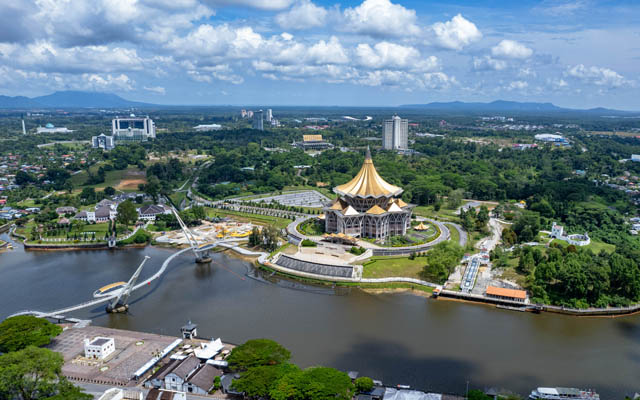
The Pacific Asia Travel Association (PATA) is set to organise the PATA Destination Experience Forum and Mart 2023 (PDFM 2023) from June 21-23 this year. The event will be held in Kuching, the capital city of Sarawak, Malaysia.
Supported by Sarawak Tourism Board, PDFM 2023 will feature four components: destination experiences, a conference, a B2B adventure travel trade show with one-to-one meetings, and various networking opportunities.
The inaugural PATA Destination Experience Forum and Mart 2023 will be held in Kuching, the capital city of Sarawak, Malaysia, pictured
The event provides an opportunity for tourism professionals to gain first-hand practical experience and knowledge in marketing and managing attractions, tourism products, and services that are relatively unknown by both trade and consumers to a global audience in a responsible and sustainable manner.
PATA chair Peter Semone said: “As the travel and tourism industry in the Asia-Pacific region is seeing positive signs of recovery, the inaugural PATA Destination Experience Forum and Mart 2023 looks to highlight the best practices in destination marketing and destination management in support of a responsible and sustainable recovery for the region.”
Focusing on Ecotourism, Gastronomy Tourism, Adventure Travel, Wellness (particularly Sensory Nature Activities), Destination Management and Digital Marketing, the three-day programme begins with a one-day destination experience through a choice of technical tours, followed by a conference and travel mart spread across two full days, as well as various networking opportunities throughout the programme.
With gastronomy tourism being one of the themes of PDFM 2023, Sarawak Tourism Board’s CEO Sharzede Datu Haji Salleh Askor said the theme suits Sarawak perfectly, as its capital city Kuching was recognised as the City of Gastronomy by the UNESCO Creative Cities Network in 2021.
Attractions at the host destination include pristine rainforests, orangutans, the world’s largest flower – the Rafflesia, the Borneo Cultures Museum, and the rare proboscis monkey endemic to Borneo at the oldest national park in Sarawak, Bako National Park.
Buyers, sellers, and conference delegates can register and enjoy early bird rates until February 15.
After PDFM 2023, delegates can also extend their stay and visit the Rainforest World Music Festival, which takes place from June 23-25 – they will receive complimentary access to the first night of the festival on June 23 and ticket discounts for the full event.
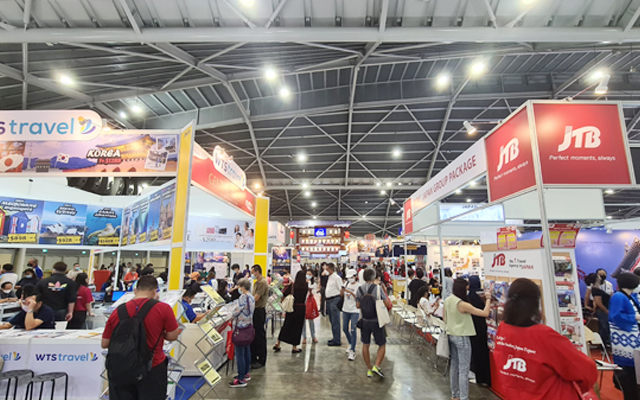
The National Association of Travel Agents Singapore (NATAS) fair returns this year from February 24-26 at Singapore Expo Hall 5.
With the theme The World of NATAS, visitors can expect a wide choice of bargains tour package deals. Exhibitors will comprise of more than 50 travel agencies, cruise operators and national tourist organisations from Thailand, Japan and Taiwan.
NATAS travel fair returns this year from February 24-26 ; NATAS 2022 pictured
Chan Brothers Travel will be offering tour packages to China to popular destinations such as Beijing, Jiangnan, Yunnan and Fujian. It will also bring back safari tours where travellers to East Africa can go on a 10-day tour to watch the migration of more than two million animals.
EU Holidays will also have package deals to China, and will feature curated theme tours like marathon, cycling and fly-cruise packages, said the travel agency’s marketing manager, Mandy Chen.
Klook has partnered Vietnam’s Sun World and VinWonders to drive demand to the country by positioning Vietnam as a top destination for international travellers.
Both partnerships will include a variety of digital marketing initiatives, promotional content and campaigns to increase awareness of the destination’s unique offerings and hidden gems.
Klook’s partnership with Sun World will help drive demand international travellers to Vietnam
With Vietnam expecting to welcome eight million international travellers in 2023, these strategic partnerships will play a key role in driving international travellers to Vietnam and enable Sun World and VinWonders to capitalise on this rising demand.
Klook is the first OTA to team up with both companies.
The partnership with Sun World will be throughout the year of 2023 and will aim to accelerate the recovery of inbound travel to Vietnam by encouraging free and independent (FIT) travellers in key inbound markets, namely South Korea, Singapore, Thailand, Malaysia, Taiwan, and India.
Meanwhile, the collaboration with VinWonders will be from March to May 2023, and will focus on driving awareness of, and consideration for, both Vietnam and VinWonders attractions among FITs in South Korea and India.
Michelle Ho, general manager of Philippines, Thailand & Vietnam, Klook, said: “These partnerships mark a new beginning of our commitment to Vietnam and will help drive tourist arrivals and showcase the beauty of the country as borders continue to reopen and travel restrictions loosen.
“Despite the current macroeconomic conditions, travel is still top of mind for consumers and Vietnam continues to be a firm fan favourite. Our partnerships with both Sun World and VinWonders come at a perfect time and we are confident that we will see strong growth in the market for 2023 as travel comes back stronger than ever before.”
Indonesian hospitality company, Plataran, has developed a carbon-offset package for its guests.
The initiative is part of Plataran’s decarbonisation programme, led by the government in association with Jejak.In, the company behind JejakApp carbon calculator.
Plataran will offset the carbon output by donating trees to be planted at the Bali Barat National Park
Through the package, Plataran will calculate the use of electricity, water and gas as well as generated food waste and other considerations using JejakApp. It will then offset the carbon output by donating trees to be planted at the Bali Barat National Park.
Anasthasia Handayani, CEO office representative of Plataran, said the effort would be documented.
For event clients, a video of the planting could also be presented to encourage event organisers and their guests to visit the national park in future.
The carbon-offset package is flexible, as it allows guests to offset their total travel emissions – not just what was incurred at a Plataran hotel, restaurant or events venue.
“A guest who has travelled from Europe to Bali, for example, can calculate his footprint (with JejakApp) and convert that into trees for us to plant on his behalf, at a fee,” Anasthasia said.
The initiative is one of many sustainable programmes maintained by the company. Plataran has programmes that advocate sustainable operations among local SMEs. It also supports local producers in its procurement, obtaining items such as mushroom crisps from the Borobudur area, palm sugar and honey from Labuan Bajo, and coffee from Bromo.
Guests are informed of Plataran’s Ecotourism Menu and the origins of the ingredients used in their meals.
Another notable community project is the provision of business management training for residents running tourism villages. In Borobudur, for instance, Plataran conducts social media marketing workshops for representatives of 20 tourism villages in the area.
“The training includes how to take interesting photographs and, in cooperation with Traveloka, we train them on e-commerce,” said Anasthasia.
Santika Indonesia Hotels and Resorts is planning to open more hotels in third-tier destinations to spur deeper tourism flow into the country.
Santika Lahat in South Sumatera, Santika Premiere Lampung City, and Santika Linggarjati, Cirebon West Java are targeted to open between May and August this year, while Santika Blitar in East Java and Santika Cibadak West Java will welcome first guests around the end of 2023.
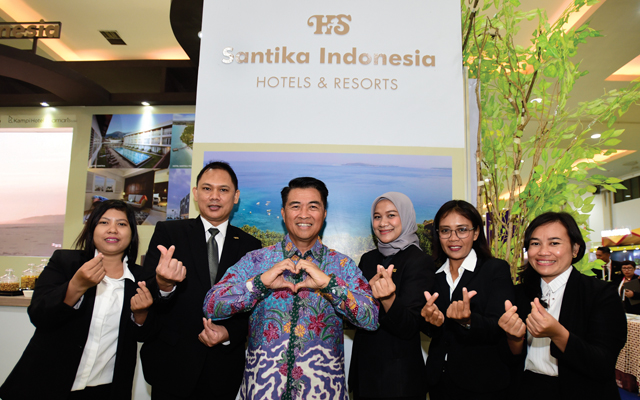
Santika’s Sudarsana (centre) believes that the right accommodation supply in lesser-known destinations can create travel demand
Sudarsana, general manager business development of Santika Indonesia Hotels and Resorts, told TTG Asia that experience have shown that the right accommodation supply in lesser-known destinations can create travel demand.
Citing Garut in West Java as an example, Sudarsana said tourism potential there used to be stifled by the lack of properly developed and managed hotels.
“As soon as we opened our hotel (Hotel Santika Garut), business came to us,” he remarked.
Similarly, Gunung Kidul Regency in the southern part of Yogyakarta boasts new tourist attractions, but accommodation is lacking.
“Travellers to Yogyakarta stay in town and take (an hour or so) to get to the attractions. The opening of (Hotel Santika Gunungkidul-Jogja) has not only attracted leisure travellers (to the destination), but also business events as we have sizeable ballrooms there,” he said.
Meanwhile, the group continues to expand its portfolio in developed and popular cities, such as Jakarta and Bandung. Amaris Kalimalang in Jakarta and Santika Pasir Kali in Bandung are scheduled to launch this March.
These 2023 openings will inject an additional 1,500 rooms to Santika’s current inventory of 17,000 keys across 112 hotels in Indonesia.


 Having been with Meliá Hotels International for the past seven years, he was previously acting general manager and hotel manager at Meliá Hanoi in Vietnam, and the director of operations at Meliá Yangon in Myanmar.
 Ferrari is also fluent in four languages: French, English, Italian and Spanish with conversational Portuguese and Seychellois Creole also in the mix.