Cruise tourism is making an overwhelming comeback in the Philippines this year, with 30 cruise ships scheduled to call at the country’s ports this year.
Records from the Department of Tourism (DoT) showed that these cruise ships will carry up to 200,000 pax and make 139 port calls spanning 46 Philippine destinations.
Buensuceso: revenge travel is for real
Cruise throughput for 2023 represents a 56 per cent increase from 128,000 pax recorded in 2019.
At the recent PATA Philippines Chapter business assembly, Verna Buensuceso, assistant secretary for product and market development and OIC-undersecretary, tourism development, said: “It certainly looks like revenge travel is for real.”
Seabourn Cruise Line will send the first cruise ship – Seabourn Encore – to the Philippines since the pandemic disruption, arriving February 9 with a 600-pax vessel. It will call at Puerto Princesa and Coron in Palawan before arriving in Manila for shore excursions, and then onwards to Boracay.
Silversea Cruises is returning too, with Silver Shadow calling at Kalanggaman Island, Romblon and Bohol before Manila.
While fewer ships will sail to the Philippines this year compared with 2019, a number will be expedition ships making repeated calls at various ports and island destinations throughout the year.
New destinations this year include Ilocos Sur, Kalanggaman Island in Leyte and Romblon. Bohol is also getting popular among cruise ships.
Another positive note is the development of the Salomague port in Cabugao, Ilocos Sur which can take in large ships of 3,000 pax or more.
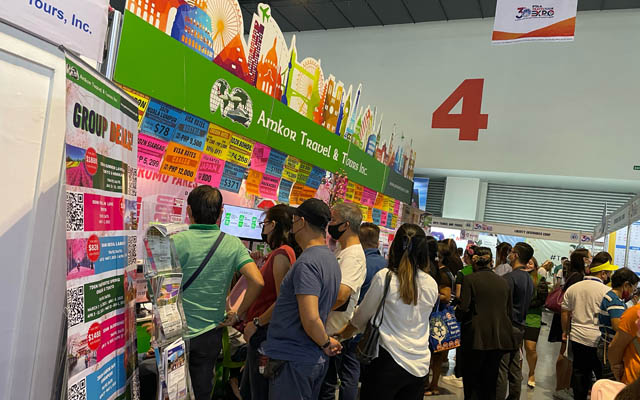
Filipinos slake their thirst for travel with brisk demand this year for certain destinations in Asia and beyond, as gleaned from the huge crowd on the first day (February 3) of the Philippine Travel Agencies Association’s (PTAA) three-day Travel Tour Expo 2023.
South Korea and Japan are on top of most people’s list, but South Korea’s dazzle has dimmed due to tighter visa application rules.
The overwhelming response during the PTAA Travel Tour Expo 2023 shows how much Filipinos are eager to travel
“Japan has always had a close affinity with the Philippines and mostly, whatever purpose they have, there is always a touch of culinary experience they want to enjoy. Similarly, the association to (South) Korea is on K-pop and Telenovelas but they also want a bit of the culinary experience,” said Aileen Clemente, president and chair, Rajah Travel.
Other tour operators at the expo said that in Asia, travel to Bangkok is picking up, as well as to Singapore and Hong Kong which has opened up. Dubai is another favourite choice because, like South Korea, it always has new tourism offerings.
Mike Hain, groups manager, Corporate International Travel and Tours, Inc. (CITTI) said that travellers now prefer experiential over seeing, and that “it’s lovelier selling a tour that touches the emotions”.
Hain cited a tour to Finland where all the passengers – the elderly included – felt they had returned to their younger years when they met with Santa Claus, short of sitting on his lap.
CITTI started selling all-in Silversea cruises, mainly for expeditions to the Arctic and Galapagos, which received positive feedback – the demand comes from seasoned travellers who want to try something different. The same holds true for off-beat destinations in Scandinavia.
With many Filipinos having travelled to Asia, they now tend to go for longhaul destinations like Europe, Canada and the US. Turkey’s value packages and out-of-this-world scenery remain popular too.
Filipinos are a pro in religious pilgrimage, and although it is increasing this year, 2024 and 2025 will be much better, said Enes Esen, managing director of DB Tourism.
In Europe, Esen said the religious sites of Rome, Lourdes and Fatima are in demand. He explained that while Europe is an expensive destination, so are Japan and South Korea.
Clemente commented that Filipinos also travel more as families. Although they want to celebrate and appreciate life and love as they travel, more importantly, they want to go to destinations where they trust the “emergency response” should anything happen to them.
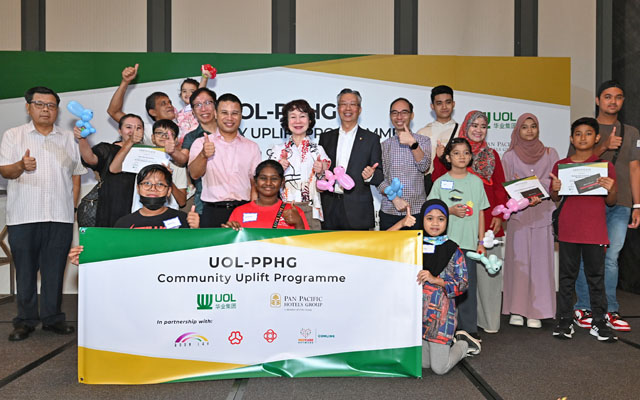
UOL Group Limited (UOL) and its hotel subsidiary Pan Pacific Hotels Group (PPHG) have teamed up with Singapore’s Ministry of Social and Family Development (MSF) to launch a programme that aids children living in rental housing.
The UOL-PPHG Community Uplift Programme is part of Community Link (ComLink) efforts to provide these underprivileged children with a range of enrichment and learning opportunities specifically tailored to meet the developmental needs of children, such as rock-climbing activities as well as arts and crafts classes.
The community uplift programme provides underprivileged children with enrichment and learning opportunities
Plans are in the pipeline for more enrichment activities to be rolled out over the next three years, with the aim of promoting learning outside of the classroom and developing well-rounded children with diverse interests and experiences.
ComLink is an initiative launched by MSF in 2019 to connect families with children living in public rental housing with community resources and government services, and to journey alongside them towards stability, self-reliance, and social mobility in their life circumstances.
Said Wee Wei Ling, executive director of sustainability partnerships, lifestyle and asset, PPHG: “We are delighted to launch the UOL-PPHG Community Uplift Programme, which gives children from underprivileged backgrounds the opportunity and exposes them to meaningful and interesting activities so that they can learn new skills that they would otherwise not have the chance or means to pursue.
“By launching this programme in collaboration with MSF and our partners, we hope our collective effort will be able to bring about a bigger impact in meeting the needs of children living in rental housing, and to build their confidence and resilience.”
UOL and PPHG will continue to co-host the activities at various retail properties and hotels under their portfolio. Their employees will also be volunteering their time to participate in the programme with the children and their families.
In addition, UOL will be contributing about S$150,000 (US$113,294) of in-kind support towards the UOL-PPHG Community Uplift Programme over the next three years and will continue to encourage the participation of UOL’s retail tenants to collaborate and provide activities for the children.
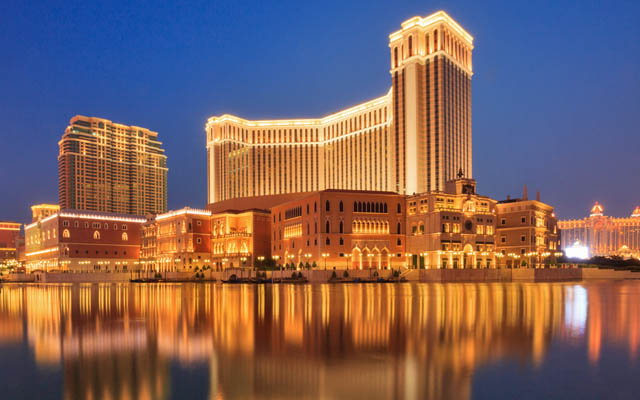
The Venetian Macao will be presenting a night of star-studded entertainment on February 18 at the Cotai Arena.
The Night of Stars Concert will give music lovers a treat with performance by popular music artistes such as Cantopop diva Sammi Cheng, William So, Pakho Chau, WeiBird, Dear Jane, and rising singers Cloud Wan and Janees Wong.
The Venetian Macao will host The Night of Stars Concert on February 18
Tickets are priced from HK$280 (US$35) and will go on sale on February 8.
BOC Sands Lifestyle UnionPay and ICBC Sands Lifestyle Mastercard cardholders can enjoy 15 per cent discount.
Onyx Hospitality Group has reinforced its expansion plan with a number of strategic promotions to achieve the group’s core business objectives.
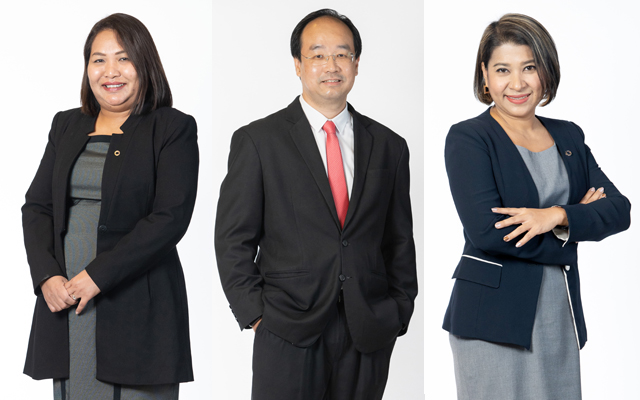
From left: Chutima Fuangkham Kennedy, Wuthivet Vetchabutsakorn, and Hathairat Naenkwaen
Chutima Fuangkham Kennedy is the new promotion – vice president, marketing, and has been with the company for 13 years. Her experience and expertise fall within the digital marketing arena, where she was responsible for building the group’s digital marketing team and successfully deliver double-digit ROI throughout her career.
With more than 20 years of experience in corporate finance, Wuthivet Vetchabutsakorn joined Onyx in 2021 and is the group head of finance. He was with Asset World Corporation Public Company Limited where he served as chief financial officer.
Hathairat Naenkwaen first joined the company in 2017 as OTA partnership director. In her new role as promotion – senior director, sales & distribution, she will drive the strategic revenue performance across distribution as well as sales and key accounts.
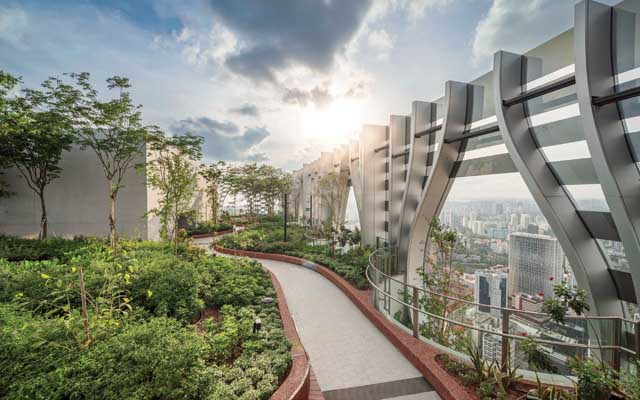
Singapore’s landscape is constantly changing, and the silhouette of the central business district now has a new sight.
CapitaSpring is a 51-storey skyscraper, designed by celebrity architects the Bjarke Ingels Group in collaboration with Carlo Ratti Associati, distinctive for its sleek aluminium façade.
Sky Garden at CapitaSpring
Intersecting it are orthogonal pin-striped fins that lend tantalising glimpses into pockets of green terraces and communal spaces at multiple elevations.
As one of the tallest buildings in Singapore at 280m, it is hard not to miss the subtext: design matters to the country.
It is not just the architecture that is eye-catching; there are interiors and landscaping created by big international names.
On a local level, there is a burgeoning made-in-Singapore scene that translates into unique retail experiences perfect for meaningful souvenir shopping, among others.
What all this means is that Singapore is increasingly becoming a destination for design aficionados.
“Design now permeates every part of the country, whether in the form of beautiful, useful products, services and experiences that elevate individual lives, or on a systems level, that yields large-scale, national impact,” pointed out Dawn Lim, executive director of the DesignSingapore Council (Dsg).
Tourists will feel this most keenly first through the architecture of the colonial, heritage, modern and contemporary styles.
Fiamma, Capella Hotel Singapore
For instance, Marina Bay Sands by Moshe Safdie is now a compulsory stop for visitors to Singapore, as is his Jewel Changi Airport on the way in or out of the country.
Lesser known but no less important is the impressive collection of modern buildings, many of which were constructed after Singapore’s independence in 1965. The equivalent of Generation X in human terms, these include Golden Mile Complex by Design Partnership and the Church of St Bernadette by Alfred Wong.
Themed tours are occasionally planned by Docomomo (Documentation and Conservation of Buildings, Sites and Neighbourhoods of Modern Movement) Singapore for tourists to explore and get acquainted with them.
“We have one of the highest concentration of modernist buildings in the world and while each has its own unique story to tell, they contribute to the broader narrative of the pioneering phase of our urban renewal,” said Ho Weng Hin, chair of its executive committee.
Tucked in between all that brick and mortar are landscape design attractions that hold their own.
There is the Singapore Botanic Gardens, which is a UNESCO World Heritage Site, and Gardens by the Bay, by architects Wilkinson Eyre and Grant Associates. The National Orchid Garden within was recently enhanced by CPG Consultants and Ramboll Studio Dreiseitl. Geometrical shapes that have fan-like forms and a similar roof incline make up the new and revamped structures that are then unified by a meandering trail.
There are also countless restaurants and bars across the city-state that wow with their interior design and compel visitors to sit, sip and feast for hours.
The multi-award-winning Andre Fu Studio from Hong Kong has just completed two: Italian restaurant Fiamma in Capella Singapore, and the cellar of steakhouse 665°F in Andaz Singapore.
Then there are the Singaporean designers gradually making their mark on the local and global stage, fronted by retail concepts that just as alluring.
Oasia Hotel Downtown
Visit the atelier of Roger&Sons, a wood specialist that creates everything from outdoor benches to refined chess sets.
Fashion label Ginlee Studio offers a Make In Shop Experience, a bag-design workshop where shoppers will learn how the brand’s signature pleats are crafted and take home their own customised pleated bag.
Furniture brand Scene Shang has a loft in the suburbs that is worth visiting to immerse in a lifestyle steeped in Asian heritage.
“The design industry has emerged as a creative force – leading Singapore’s drive towards an innovation-driven economy and playing a critical role in making the city a liveable and loveable one,” expressed Dsg’s Lim.
Serving up a slightly different type of design is Tribe Tours, which developed an itinerary focused on three architecture winners of the President’s Design Awards, the highest accolade in the country.
The Hunt for the Green Treasure, as it is called, is gamified to make it more accessible to the man on the street, and includes exclusive entry to a home at public housing project SkyVille @ Dawson.
“People have the perception that design is high-brow, intellectual and difficult to understand. But we beg to differ and want to tell the world that good design is everywhere and accessible to everyone,” said Law Yock Song, who heads partnerships & business development for Tribe Tours.
He is incredibly optimistic that design can be used as a hook to lure more tourists to Singapore.
“It might not be the main purpose of the visit, but it can inspire travel and spark curiosity about the destination,” Law said.
Beyond made-in-Singapore products, Dsg’s Lim hopes that tourists will also understand that design in the local context embodies an attitude to improve lives – given how the country wrote its own playbook in almost every aspect of governance.
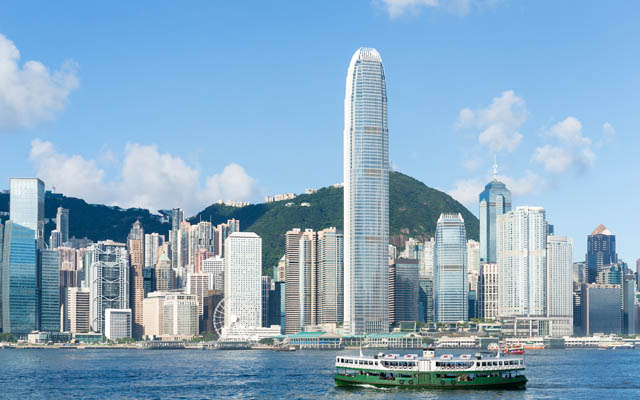
Travel restrictions between Hong Kong and China will be further eased come February 6, as the daily quota for land crossings (50,000 per day) into Hong Kong will be dropped along with PCR tests on arrival.
Three border checkpoints in Hong Kong – the Lo Wu Control Point, the Liantang/Heung Yuen Wai Control Point, and the Lok Ma Chau Control Point – will reopen on Monday.
Daily quota for land crossings into Hong Kong and PCR tests on arrival will cease on February 6
However, travellers who had been outside of China seven days prior to their visit to Hong Kong would have to present a negative PCR test result within 48 hour of border crossing.
Morning Star Travel’s managing director, Johnny So, welcomes the progressive relaxation of border controls since China reopened to visitors on January 8.
For now, his concerns lie with limited air capacity and high airfares.
“We are also worried if airlines would allocate group airfares to agents in view of tight ticket supply. We hope for more flights to fuel potential growth,” remarked So.
For Travel Industry Council, executive director, Fanny Yeung, the latest announcements signalled the “full resumption of travel to and from China”.
Hong Kong Tourism Board, chairman, Pang Yiu Kai, said the eased measures were timely, as they followed hot on the heels of the launch of Hello Hong Kong destination campaign on February 2.
“This is now the best time to step up our efforts for tourism recovery, by emphasising the key message that Hong Kong (is ready to) welcome visitors from around the world. We are confident that the new arrangements will attract both the Chinese and overseas visitors to Hong Kong to enjoy a wide range of new experiences,” he added.
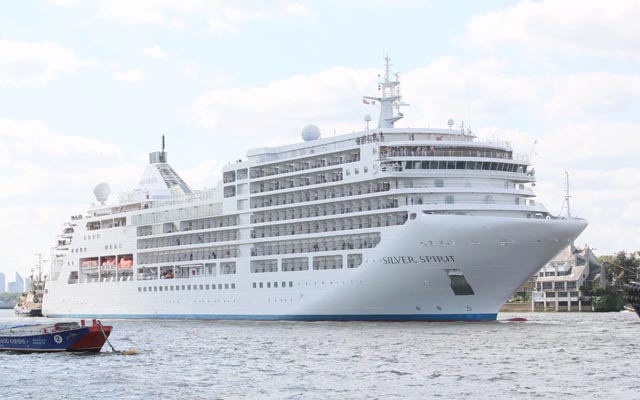
As the first global cruise line visiting and sailing out of Hong Kong since 2020, Silversea Cruises’ Silver Spirit’s sailing on January 19 sent a strong signal of recovery and a sense of normalcy for cruise business.
In fact, the Hong Kong Tourism Board (HKTB) has secured 82 ship calls from at least 16 cruise lines for 2023, including brands such as Azamara Club Cruises, Hapag-Lloyd Cruises and Windstar Cruises.
Silversea Cruises’ Silver Spirit will be making its way to Hong Kong this year
Throughout 2023, Silversea will also offer another seven voyages to Hong Kong on Silver Spirit, Silver Muse and Silver Whisper, ranging from 10 to 16 days in duration.
Silversea’s managing director for Asia-Pacific, Adam Radwanski, told TTG Asia: “We contribute to the tourism sector by buying high-end hotel accommodation for our guests (and) buying experiences, tours, and transfers from local operators as well as (flights) from Cathay Pacific.”
With seven calls in town next year, including the latest Silver Moon as well as Silver Nova, Radwanski said its first cruise will call on Shanghai in April 2024 as part of the line’s Pacific World Cruise “spanning 133 days around key Pacific Rim destinations”.
While Royal Caribbean Cruises has no update or plan on resumption of ‘cruises to nowhere’ at press time, Resort World Cruises’ (RWC) Resort World One will be deployed to the homeport at Kai Tak Cruise Terminal from March 10 onward.
Michael Goh, president, RWC, said: “We are delighted that cruises are gradually resuming in Hong Kong. The homeport deployment will further create employment opportunities from ship to shore and across the various network chain.
“It will also further open up the cruise tourism industry via cross-border travel and the Fly-Cruise sector, as well as rejuvenate and create business opportunities across the related suppliers from the cruise terminal, bunkering, provisioning, etc.”
Goh added that RWC will soon be expanding its two- and three-night high seas cruises with the re-introduction of new itineraries for the Greater Bay, as well as “explore new B2B and B2C platforms to reach a wider market segment”.
According to Worldwide Cruise Terminals (WCT) which operates Kai Tak Cruise Terminal, 2023 will mark the beginning of the cruise market’s recovery in Hong Kong, with full recovery anticipated in 2026.
WCT’s managing director, Jeff Bent, contended that Hong Kong’s reopening provides visiting cruise lines an international air hub with great “longhaul connectivity to the Americas, Europe, and the antipodes”; while homeporting lines can tap into the world’s highest per-capita tourism spending market (pre-pandemic) Hong Kong, and connectivity into the Greater Bay Area.
This year’s line-up includes TUI Cruises, Fred.Olsen, MSC Cruises, Royal Caribbean Cruises, Viking Cruises, Holland America Line, Celebrity Cruises and Princess Cruises.
Meanwhile, Azamara, Hapag-Lloyd Cruises, Windstar Cruises, Oceania Cruises, Vantage Travel, AIDA Cruises, Nicko Cruises, Seabourn Cruise Line, Regent Seven Seas, Ponant, Phoenix Reisen, The World, and Peace Boat will be calling on Hong Kong in the next two years; with inaugural calls by several ships include Mein Schiff 5, MSC Poesia, MSC Bellissima, Viking Orion, and Celebrity Solstice.
An innovative platform that helps restore privately-owned heritage homes to preen them for heritage stays is extending its reach across Asia.
Heritage Homes by Doh Eain currently operates in Myanmar, the Philippines and Georgia, overseeing about 800 rooms across about 400 properties. By the end of March, it plans to offer heritage home stays in Thailand, Malaysia and Sri Lanka.
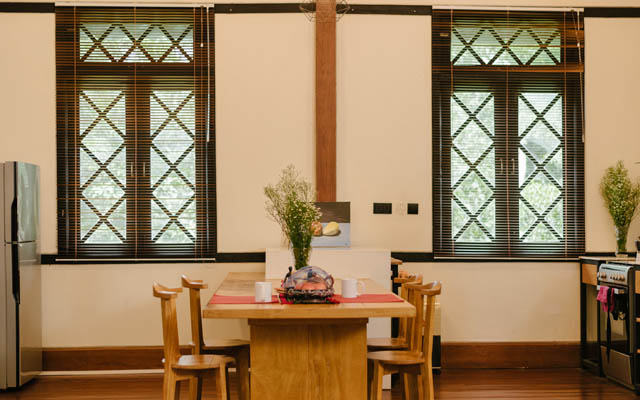
Heritage Homes by Doh Eain offers travellers meaningful travel while helping to conserve and preserve heritage
“The idea came from the observation that there are so many privately-owned heritage properties across Asia, where owners are struggling to restore and maintain them,” said founder and CEO, Emilie Röell.
Yangon-headquartered Heritage Homes by Doh Eain works with home owners to provide support on restoration and maintenance, while offering rooms and entire homes for rent via its online platform, akin to the Airbnb concept.
“We’ve seen a real increase in interest in authentic and meaningful travel, and impactful stays – people who want to immerse themselves deeper in local communities and leave behind some sort of positive impact,” said Röell. “This ticks all those boxes.”
Launched in 2015, the company is now preparing to start operations in Thailand, Sri Lanka and Malaysia, with future plans to grow a regional network by establishing properties in Laos, Vietnam, Cambodia, and Indonesia.
She shared: “These are all countries with a lot of heritage. There’s sentiment at the moment in Sri Lanka and anything that can help kickstart tourism after all the disasters has been warmly welcomed.
“We chose Thailand because it’s central and connects other markets. We’re ready now to build this into a platform that is relevant regionally, so we can build a more loyal community of travellers and partners who travel to these different markets.”
In addition, Heritage Homes has started engaging with DMCs and tour operators with a focus on sustainability and culture.
“We’re looking to link our heritage homeowners with them,” added Röell. “We’re seeing a number of DMCs interested to expand their heritage and social impact offerings while contributing to preservation. We’re helping (to) connect them to an inventory of heritage homeowners and their properties.”
The business is also starting to work with digital nomad platforms and is exploring using some of the cluster properties on the platform to create ‘workation’ (work+vacation) destinations.
“This is the perfect platform for different travel actors to offer something that is heritage and impactful, while giving back by helping to conserve and preserve heritage,” said Röell.
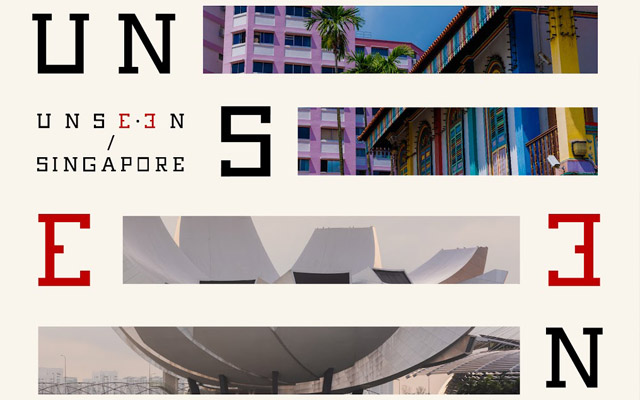
Singapore Tourism Board (STB) has collaborated with National Geographic CreativeWorks for the UNSEEN/SINGAPORE campaign that showcases Singapore as a travel destination from the perspective of intrepid photographers from South-east Asia.
As part of STB’s efforts to boost travel recovery through the SingapoReimagine campaign that highlights new, innovative and unexpected experiences in Singapore to audiences worldwide, UNSEEN/SINGAPORE hopes to encourage travellers to explore the city-state’s cultural diversity and hidden spots, by taking a moment to observe the unseen beauty of destination Singapore.
The virtual exhibition highlights lesser-known attractions in Singapore through photos
Running from February 2, UNSEEN/SINGAPORE features a collection of photographic works through a virtual exhibition. The six photographers featured include Amani Azlin from Malaysia, Tino Renato from Indonesia, Chanipol Kusolcharttum, better known as “Rockkhound”, from Thailand, Phạm Gia Tùng from Vietnam, Gab Mejia from the Philippines, and Jayaprakash Bojan from Singapore.
In curating the collection, each photographer visited Singapore in mid-2022, covering areas in Singapore that showcase nature, heritage buildings, cultural sites, and art, venturing beyond its famous attractions and skyline to discover spots equally captivating – from charming neighbourhoods, offshore wetlands to a lighthouse at the island’s edge.
John Conceicao, executive director, South-east Asia, STB, shared: “We aim to inspire travellers to Singapore to rediscover the joy of travel once again. One way is to portray our destination in a different light, by helping visitors to see it afresh through another person’s eyes.
“UNSEEN/SINGAPORE set out to do this, through the lens of talented photographers from South-east Asia, who tell their journey of discovery through photography. We hope they will inspire a new wave of visitors to discover a Singapore reimagined.”











Travel restrictions between Hong Kong and China will be further eased come February 6, as the daily quota for land crossings (50,000 per day) into Hong Kong will be dropped along with PCR tests on arrival.
Three border checkpoints in Hong Kong – the Lo Wu Control Point, the Liantang/Heung Yuen Wai Control Point, and the Lok Ma Chau Control Point – will reopen on Monday.
However, travellers who had been outside of China seven days prior to their visit to Hong Kong would have to present a negative PCR test result within 48 hour of border crossing.
Morning Star Travel’s managing director, Johnny So, welcomes the progressive relaxation of border controls since China reopened to visitors on January 8.
For now, his concerns lie with limited air capacity and high airfares.
“We are also worried if airlines would allocate group airfares to agents in view of tight ticket supply. We hope for more flights to fuel potential growth,” remarked So.
For Travel Industry Council, executive director, Fanny Yeung, the latest announcements signalled the “full resumption of travel to and from China”.
Hong Kong Tourism Board, chairman, Pang Yiu Kai, said the eased measures were timely, as they followed hot on the heels of the launch of Hello Hong Kong destination campaign on February 2.
“This is now the best time to step up our efforts for tourism recovery, by emphasising the key message that Hong Kong (is ready to) welcome visitors from around the world. We are confident that the new arrangements will attract both the Chinese and overseas visitors to Hong Kong to enjoy a wide range of new experiences,” he added.