With more travellers being focused on why they are travelling, Indonesian inbound and outbound tour operators are devoting more time to creating special interest travel products, from golf and MotoGP tours to wellness and pilgrimage experiences.
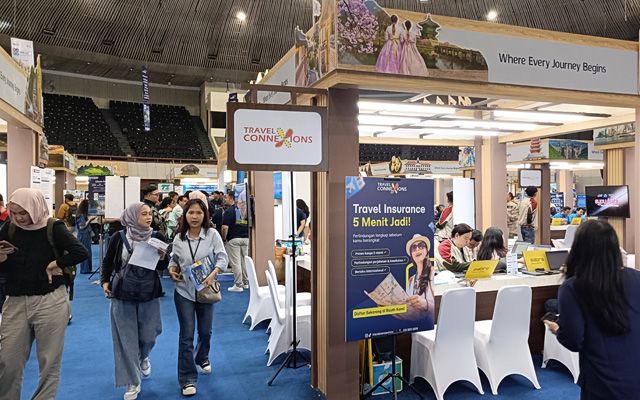
These unique products were showcased at the recent Garuda Indonesia Travel Fair (GITF 2026).
Garuda Indonesia Travel Fair 2026 features more special interest tours; photo by Dhini Oktavianti
Vincent, partner growth manager at Via.com, told TTG Asia that demand for golfing trips are up and the company has responded with the creation of a golf package this year. The product targets corporate and FITs, with domestic programmes priced from 10 million rupiah (US$570) per person. Destinations include Bandung and Yogyakarta, with trips lasting two to three days.
Aerowisata Travel’s Bali Wellness programme is priced from 2.8 million rupiah per person, and caters to younger travellers who are increasingly turning to mindful activities, shared Riyas Fathur, product development specialist.
The company is also offering MotoGP Mandalika packages, including a 4D3N option that was launched at GITF 2026.
As spiritual and heritage tourism draws steady demand, The Travel Connexions is pushing its Camino de Santiago packages across northwestern Spain.
Stephanie Gautama, operations manager at The Travel Connexions, explained that Camino de Santiago packages sell because they combine spiritual tourism with long walks, which are trending now.
The company operated two Camino groups of 15 pax each last April, with participants aged 65 and above. The two-week itinerary included five days of walking, alongside sightseeing and visits to religious sites.
However, these operators face a shared reality: the more specialised the product, the smaller the potential customer base.
“It is a very niche market,” said Gautama of her pilgrimage tours, adding that repeat business remains tough since customers are usually older.
Riyas notes strong interest in the Indonesian MotoGP races among customers, but actual booking conversions hinge on economic conditions and timing.
CP Group’s Prakash Pandey; Marriott International’s Richard Crawford; and Marriott International’s Rajeev Menon at the signing
Marriott International has signed a landmark agreement with CP Group to launch three new hotels in New Zealand, adding 335 rooms to its local footprint and debuting two brand flagships in the country.
The expansion kicks off in late 2027 with the launch of the Rotorua Marriott Hotel, following a 12-month conversion of the existing Arawa Park Hotel on Fenton Street.
From left: CP Group’s Prakash Pandey; Marriott International’s Richard Crawford; and Marriott International’s Rajeev Menon at the signing ceremony
In 2028, The Official Auckland, Autograph Collection will open as an 82-room boutique property, converting a historic building on Eden Crescent. The rollout concludes in 2029 with Fable Wellington, Autograph Collection, an 118-room hotel created through the adaptive reuse of a 1940s office building at the corner of Lambton Quay and Stout Street.
The three projects build on the partnership behind the upcoming St. Regis Queenstown, bringing CP Group’s Pacific-region Marriott portfolio to six properties.
Marriott currently operates the JW Marriott Auckland and Four Points by Sheraton Auckland, with the Sheraton Christchurch and Moxy Auckland also scheduled to join the roster in 2027.
Scat Airlines connects Singapore to Central Asia
Kazakh carrier Scat Airlines will launch flights between Singapore’s Changi Airport and Shymkent in southern Kazakhstan via Sanya, China, starting October 20, 2026.
Operating twice weekly on Boeing 737 MAX 8 aircraft, the route comprises a three-hour flight to Sanya, a two-hour layover with no passport control required, and a 6.5-hour flight onward to Shymkent.
This marks Changi Airport’s first direct connection to Central Asia since 2019.
TransNusa
TransNusa launches Bali-Phuket service
Indonesian carrier TransNusa has inaugurated non-stop flights between Bali and Phuket, converting a long travel day into a four-hour direct flight.
Flight 8B 541 departs Bali at 11.30 and lands in Phuket at 14.35, while the return flight 8B 542 leaves Phuket at 15.35 and reaches Bali at 20.35.
The service operates four times weekly on 174-seat Airbus A320 aircraft, with plans to scale up to daily flights starting October 3, 2026.
The new route strengthens TransNusa’s Bali hub, which also connects to domestic destinations like Wakatobi, Lombok, Manado, and Bima, as well as international points including Singapore and Perth.
EgyptAir
EgyptAir plans Cairo-Singapore-Sydney route
EgyptAir, Changi Airport Group, and Sydney Airport have announced plans for a new service linking Cairo, Singapore, and Sydney, targetted to start in early 2027 subject to regulatory approvals.
The route will be operated using Airbus A350-900 aircraft, establishing the first direct link to North Africa for both Singapore and Australia to serve growing point-to-point travel demand.
Visitors to Jewel Changi Airport may come across an unusual find – a Bornean restaurant that welcomes guests with an enormous tribal mask out front and cosy seats under rustic, thatched umbrellas.
The menu inspires even greater curiosity: rainforest fried rice, jungle pasta, headhunter pansuh set, wild chicken chop, Sarawak rice wine, and many more.
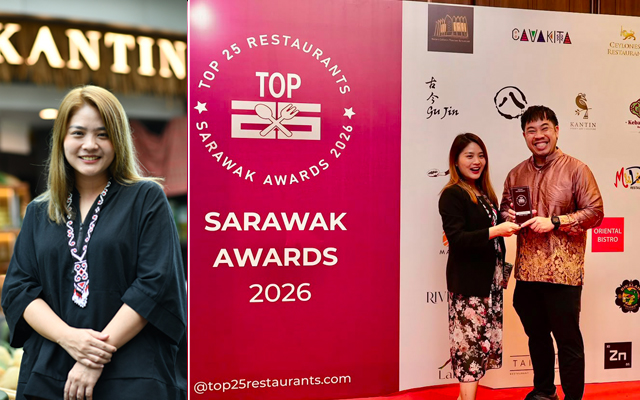
Emily Yii, co-founder of Kantin at The Granary in Kuching and Kantin at Jewel Changi in Singapore; the Kuching restaurant makes it to the Top25 Signature Restaurants Sarawak 2026
Because Bornean cuisine is a rare find in Singapore, it is a conversation-starter for many customers who come by the restaurant, shared Emily Yii, co-founder of Kantin at Jewel Changi.
That curiosity in Bornean cuisine and consequently destination Sarawak was what Emily and her partners wanted to stir when they decided to found Kantin.
Her background in film-making, content creation and branding led her to numerous corporate and government projects in Sarawak. Among her projects were education, cultural activations and tourism initiatives that allowed her to explore many parts of the Malaysian state that most people are unable to reach.
“After going through that for some time, we realised that there was so much about Sarawak that we do not know even as locals. So, we wanted to bring what we have experienced to the public. And because F&B is a great way to promote culture, we decided to use that as our platform. Hence, Kantin was borne,” Yii told TTG Asia.
The journey into F&B was not easy, as none of the six founders had experience in the business. Yet, Kantin took off, due to the unconditional support of many “ordinary people” who shared her enthusiasm in using food to convey Sarawak’s characteristic and appeal to both the domestic and international audience.
Along with the birth of Kantin, Yii and her partners also created their own tuak brewing facility and two labels, Kantin Premium Tuak and Headhunter Tuak. Tuak is a traditional rice wine and an essential element on the Sarawakian dining table.
However, Kantin was not birthed first in Singapore. At the height of the Covid-19 pandemic, in 2020, Emily and her partners threw open the doors to Kantin at The Granary in a historical part of Kuching city. No dining in was allowed due to safe distancing measures, but Kantin at The Granary sold out every day, recalled Yii.
“I think people were hungry for a brand like Kantin. We are one of the first in Sarawak to not only sell authentic kampong (village) food, but also to put a creative spin to these dishes and flavours. Kantin became a brand for everyone,” she said.
Very quickly, Kantin branched out to Singapore in 2021/2022.
“Singapore is the destination for many, so it is a place where many foreigners gather. Jewel Changi Airport, especially, is where the world comes together. We see this location as a really good place for people to be introduced to Bornean food. This cuisine is so niche, so we spend a lot of time explaining what it is about,” said Yii.
“Many of our diners would tell us after their meal at Kantin at Jewel Changi that they would be keen to pay Sarawak a visit,” she remarked.
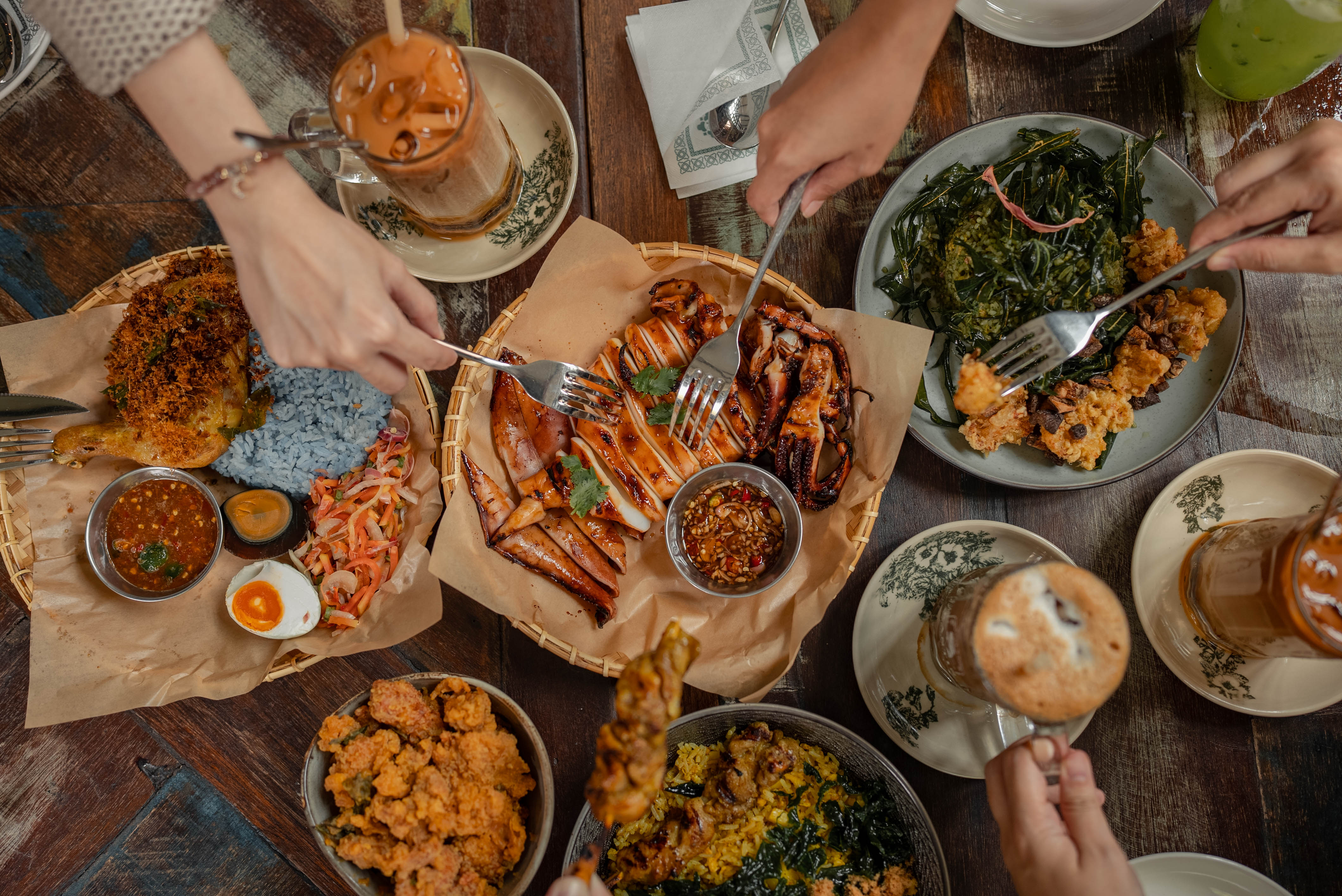
Kantin restaurants speclalise in kampong food that are given a creative spin
Both Kantin at The Granary and Kantin at Jewel have collected several awards. They were nominated at the World Culinary Awards 2025 – Kantin at Jewel Changi was nominated for the Asia’s Best New Restaurant category while Kantin at The Granary was selected as a finalist for Malaysia’s Best Restaurant.
Kantin at Jewel Changi took home the Best In-store Dining Experience title at the Jewel’s Fan Favourites Awards 2025.
More recently, Kantin at The Granary won the Top25 Signature Restaurants Sarawak 2026.
Yii expressed pride in Kantin being acknowledged by Sarawak ministers for their contribution to state promotions.
“We are very encouraged to do more for Sarawak, and hope to get more support from the tourism board,” said Yii.
Her Headhunter Tuak products were showcased at PATA Travel Mart earlier in August, where travel and tourism decision-makers in attendance were able to sample and learn about the local rice wine.
Yii and her Kantin crew will join Sarawak Tourism Board at a private destination marketing event in Singapore during the week of ITB Asia next month.
When asked she would want more people to know of Sarawak, Yii said: “I want more people to know where Borneo is. I also want more people to know that the people of Sarawak do not live on trees. Sarawak is wonderful because it is still very raw despite modernisation. It is modern enough for its people to live comfortably, yet a lot of authenticity is preserved. And there is something for everyone in Sarawak – from luxury holidays and gastronomy discoveries to nature escapes and big, lively festivals.”
Zhiqiu Kong has been promoted to regional director for Asia at Airbnb.
In this role, Kong oversees Airbnb’s business operations across China, Japan, Korea, India and South-east Asia. He joined Airbnb more than a decade ago and has held leadership roles spanning product innovation, growth and business strategy.
Reporting to Kong, Michael He will step into the role of country manager for China. He has more than nine years of experience working at Airbnb, and was most recently China’s business and growth operations lead.
Singapore-based experiential travel platform Seek Sophie has expanded into China, marking its first-time entry into the country.
The initial rollout features a curated collection of 25 authentic, community-led experiences based entirely in Yunnan province. Among them is a lesser-known hiking route in Tiger Leaping Gorge led by Nong Bu, a local Naxi guide whose grandfather was a Dongba priest. Disillusioned with shopping-led domestic tour groups, Nong Bu taught himself English to lead small groups deeper into Naxi heritage, medicinal plant lore, and the surrounding wilderness.
Seek Sophie’s entry into China will feature Yunnan-focused itineraries, such as a lesser-known hiking route in Tiger Leaping Gorge
Travellers can also explore Yunnan’s speciality coffee movement through local hosts like Phoebe, a Seattle-educated returnee whose family has worked in local coffee since 1993. Rather than adopting higher-yielding trendy varietals, Phoebe focuses on traditional Yunnan coffee beans to educate visitors on local terroir.
In Shangri-La, the company offers a modern twist on the ancient Tea Horse Road via a 3D2N mountain caravan route led by local Tibetan guides, cooks, and mule handlers, paired with high-end glamping. Wildlife enthusiasts can also connect with former hunters turned forest rangers who track and protect the rare Yunnan snub-nosed monkey.
The decision to launch in China comes after prolonged interest from Seek Sophie’s traveller network. “We received so many requests from our community to enter China. People had been asking us for at least a year, so we took it seriously and started exploring it properly,” Jacinta Lim, co-founder and CEO of Seek Sophie, told TTG Asia.
While conventional sightseeing in China remains straightforward, uncovering off-the-beaten-path, ethical, and local-led experiences in English presents a hurdle due to a lack of online visibility for small, independent operators.
“There’s surprisingly little information online about these kinds of experiences, especially in English. And a lot of the smaller local businesses and guides we love just aren’t very visible online… Often, the most meaningful experiences come when you know someone who knows someone,” Lim shared.
To ensure listings met its standard for slow, immersive travel, the Seek Sophie team made three multi-week scouting trips to Yunnan before launching.
“We deliberately wanted to start with one region and understand it properly, rather than launch all over China at once,” Lim noted, adding that future cities on her radar include Sichuan, Chongqing, and Xinjiang.
The platform’s expansion strategy reflects its broader philosophy on destination stewardship and mitigating overtourism. Rather than avoiding popular destinations entirely, Seek Sophie works closely with local hosts to spread travellers out towards lesser-known routes, off-peak timing, and community-centric alternatives.
“I think genuine overtourism is when a place has become so crowded that neither locals nor travellers are having a good time anymore. By then, you’ve probably left it too late for meaningful intervention,” Lim said.
“For us, preventing overtourism is really about shaping tourism before a place gets overwhelmed. This means working with local people who know the destination best, spreading visitors more thoughtfully, and making sure the tourism coming in is actually benefiting the communities and environment.”
Filipinos’ appetite for domestic travel is proving to be the anchor of Philippine tourism, filling in the numbers as foreign tourists shy away.
This is obvious at Philippine Tour Operators Association’s (Philtoa) Philippine Travel Mart over the last weekend where heavy thunderstorms did not deter the public from seeking discounts and new places to explore.
Emerging destinations like Quezon Province and Cotabato, Sarangani (pictured) have crafted experiential moments that domestic travellers favour
Philtoa vice president Mary Ann Ong observed that emerging destinations like Quezon Province and General Santos City in Mindanao have crafted experiential moments in a more personal way that domestic tourists now want.
The Department of Tourism reported that foreign arrivals to the Philippines inched up 3.7 per cent to 4.11 million for the period January-August this year, over the same period in 2025. That’s still far from the pre-pandemic high of 8.2 million in 2019 as well as this year’s goal of seven million.
In stark contrast, domestic trips exceeded 100 million last year. Philippine population is over 100 million.
Philtoa president Maria Lourdes Japson said “Filipinos have not stopped traveling, they have simply become more discerning” and “seeking authentic and meaningful experiences”.
Rajah Tours’ chief, Jojo Clemente, agreed that “domestic travel will always be strong but is really price-sensitive”
“In general, rates must ideally be more affordable considering the economic state of the country at the moment,” he told TTG Asia.
Clemente also said the domestic tourism campaign, Discover more to love the Philippines, recently launched by the Department of Tourism amid slow foreign arrivals, is good “but a campaign is only as good as its components”.
Aileen Clemente, president and CEO of Rajah Travel, shared that “the campaign cannot be done by one entity alone – adoption is really a major part of the game.”
She suggested: “The campaign is louder and also free if it is spread for use by everyone. If there is brand standards and terms of use, that should really be helpful. It has to be a campaign that doesn’t change regularly.”
Trip.Gourmet, Trip.com Group’s dedicated dining brand, celebrated on September 8 a decade in the industry with culinary experts, global media and award-winning chefs in a ceremony at Resorts World Sentosa (RWS) in Singapore.
Winners in its 2027 Fine Dining List, ranging across three tiers, Black Diamond (the highest distinction), Diamond and Platinum, were also announced the same afternoon.
Sunny Sun, CEO of Trip.Gourmet and vice president of Trip.com Group, hosted the launch of the 2026 Fine Dining List on September 8
This year, the Fine Dining List features winners in 40 countries, signalling a willingness for people to make dining a focal point in their travels. Restaurants spanned the globe, with cities including London, Paris, New York as well as Tokyo, Shanghai and Beijing making the list.
Singapore was recognised with 27 restaurants; Odette, Les Amis and Restaurant Labyrinth earned Black Diamond status.
Trip.Gourmet also announced two new initiatives for its members, designed to simplify and enhance bookable travel experiences. These were Global Table Booking, a new feature that compiles over 43,600 restaurants into a booking platform, and WOW Privileges, which are exclusive benefits for top-tier Black Diamond members to unlock seats at hard-to-book restaurants on the first of every month. Benefits also include priority seating, chef’s greetings, and limited-edition menus.
Recent Trip.com Group data has highlighted an increase in food-related searches over the past eight months, rising to 45 per cent, with specific interest in restaurants growing by 68 per cent.
Sunny Sun, vice president of Trip.com Group and CEO of Trip.Gourmet, said: “As cross-border travel becomes more frequent, our goal for the next chapter of Trip.Gourmet is simple: to help every traveller discover restaurants worth the trip, understand why they matter, and book with confidence.”
Japan In Japan, 17 per cent of properties advertise as pet-friendly, according to Metro-Engines Research, but with 15.9 million pet cats and dogs nationwide — more than the number of children under the age of 15 — The Japan Travel Bureau Foundation expects demand for pet-friendly accommodation to grow rapidly.
For dog owners, options range from luxury to budget, but 65 per cent fall in the mid- to high-end tiers, and the majority are in resort areas.
One established player is Hyatt Regency Hakone Resort & Spa, in Kanagawa Prefecture. Each of its six dog-friendly rooms is at least 72m2 and equipped with an enclosed balcony. Guests and their dogs can indulge in room service together; nutritionist-approved canine options include chicken sautéed with rosemary, garlic and olive oil.
The dog-exclusive floor is accessible via a dedicated route from the parking area, designed “to ensure convenient and stress-free access” for all, according to the hotel. On check-in, staff can take dogs for grooming and return them to the guest’s room on completion. Dog-sitting is available from 10.00 to 19.00.
Other accommodation are solely for guests with dogs. Dog Hotel Shirahama, in Wakayama Prefecture, which opened in 2025, is based on the concept of ‘the dog is the star’, said a spokesperson, adding that staff are “committed to creating a space where dogs can be refreshed”.
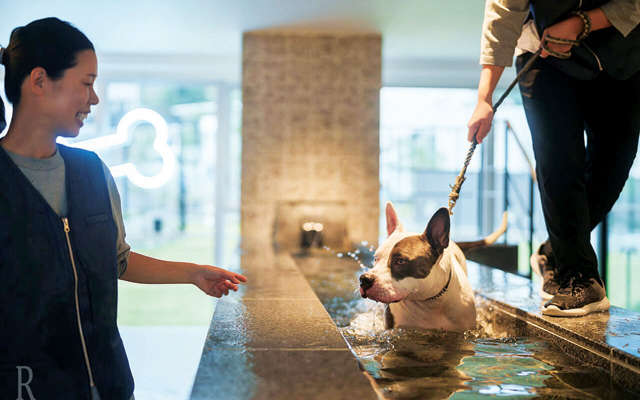
Guestrooms feature non-slip antibacterial flooring and soundproofed wall materials. Each has its own open-air bath fed by hot spring water, and dogs can experience the same water via a paw bath and aromatherapy oil treatment.
The hotel also has three dog runs, a café and laundry facilities for dogs, which are welcome throughout the property while leashed.
Another new market entrant is Doggy’s Coast Oarai, in Ibaraki Prefecture, which offers ocean-view rooms furnished with a dog bed, bowls and a toilet tray. Other items such as strollers, raincoats and crates can be rented. Owners can make use of the mini-kitchen just for dogs, complete with fridge, microwave, dog food and health-promoting drinks including strawberry goat milk. There is also a self-service grooming room.
Glamping facility Memoria Collina Izu80, Shizuoka Prefecture, meanwhile, opened in 2024 but made all of its domes suitable for dogs in May 2026. Specialising in farming experiences, campfires and stargazing, it offers a completely fenced campsite so “dogs can play freely and owners can keep an eye on their dogs at all times”, said a spokesperson.
With pet tourism a focal point of the Japan Management Association’s Hotel Restaurant Show, a B2B event scheduled for July 2026 in Osaka, pet-friendly accommodation are set to become increasingly considered by hospitality providers. – Kathryn Wortley
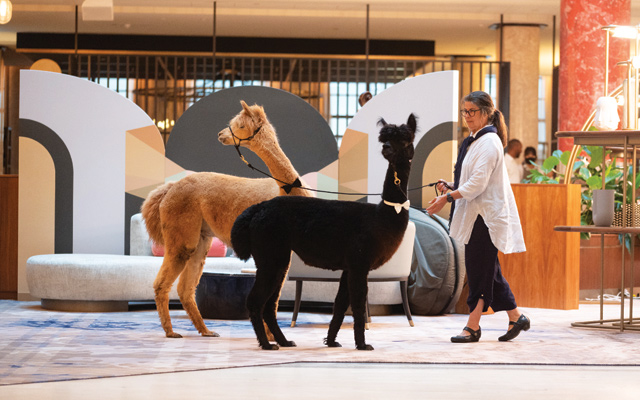
Pets at Kimpton Margot Sydney get their own in-room amenities
Australia Travelling with pets is becoming easier in Australia as hotels, transport operators and destinations increasingly redesign their products for travellers who consider pets part of the family.
Luxury hotels are moving beyond simply allowing pets to stay, creating curated experiences that welcome both owners and their companions while balancing the needs of guests travelling without animals.
For Kimpton Margot Sydney, pet-friendly hospitality is central to the guest experience rather than an extra.
“Pets aren’t simply accommodated, they’re genuinely welcomed as valued guests and part of the family,” said Christina Grasso, general manager, Kimpton Margot Sydney.
Pets receive their own plush bed, bowls, treats and concierge guide to nearby parks, cafés, groomers and boutiques, while a dedicated in-room dining menu and access to selected hotel bars ensure they can enjoy the Kimpton experience alongside their owners.
Ovolo Hotels has taken a similarly experience-led approach through its dedicated V.I.Pooch programme. Along with in-room pet amenities, the programme includes partner benefits ranging from premium pet food and grooming to pet photography, accessories and dog-friendly experiences.
The trend extends beyond accommodation to some destinations themselves. Visit Victoria has curated dedicated Victoria for Dogs itineraries showcasing pet-friendly accommodation, wineries, cafés, beaches, walking trails and attractions across the state.
Transport operators are also adapting. Spirit of Tasmania’s new vessels, expected to enter service from late October, will introduce 18 pet-friendly cabins alongside upgraded climate-controlled kennels staffed by Pet Attendants trained by the Royal Society for the Prevention of Cruelty to Animals.
“Travelling with pets is becoming increasingly important for many domestic travellers. For many passengers, pets are part of the family, and the ability to bring them can influence travel planning and destination choice,” a Spirit of Tasmania spokesperson said.
Virgin Australia has also expanded pet-inclusive travel, with Adelaide becoming the latest city to offer its Pets in Cabin service following the successful Melbourne-to-Gold Coast trial, which began in October 2025. Subject to final airport approvals, the airline intends to make the service a standard offering on eligible flights from next year.
“We’ve seen an overwhelmingly positive response to the Pets in Cabin service, with almost 1,500 pets travelling on Virgin Australia flights since the programme launched in October,” Libby Minogue, chief marketing and customer operations officer, Virgin Australia, said in a media statement. – Adelaine Ng
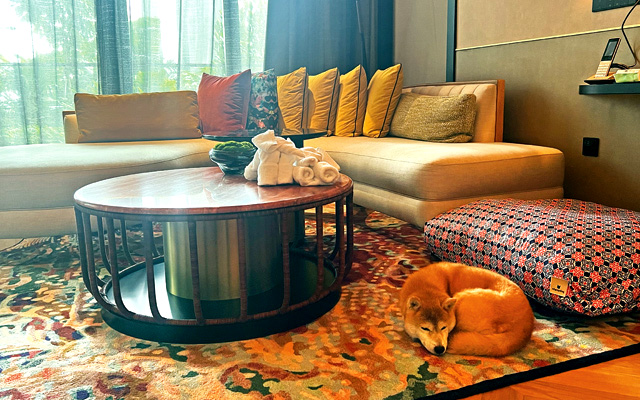
Elite stays at Artyzen Singapore; photo by Karen Tee
Singapore Welcome to the era of the VIP: Very Important Pet. As more people regard their pets as family, hotels in Singapore are extending the same warm welcome to four-legged guests as they do to their humans, with pet-friendly stays evolving beyond a simple “pets allowed” policy into thoughtfully designed experiences with plush beds, welcome treats and spaces where dogs can play.
Newer hotels such as Mett Singapore, QT Singapore, Artyzen and The Standard, Singapore are leading the pack with dedicated packages. At The Standard, for instance, dogs can romp around The Garden, a purpose-built outdoor area, while their owners relax nearby.
While most stays cater primarily to dogs, selected properties, including Capella Singapore, Conrad Singapore Orchard and Amara Sanctuary Singapore, also welcome feline guests.
Capella Singapore, one of the city’s early adopters, continues to see steady demand and repeat guests who return precisely because they can bring their furkids along. Pets receive beds, bowls and treats, and are welcome at designated alfresco dining areas at Fiamma, Bob’s Bar and Cassia, where cushions and water bowls can be arranged.
“By welcoming pets as part of the Capella experience, we helped to shift the perception that pet stays can be integrated in the overall guest journey and experience,” said Christian Westbeld, regional general manager, Southeast Asia, Capella Singapore. “Many guests value enjoying the same level of personalised hospitality with their pets.”
Conrad Singapore Orchard takes a similarly considered approach. Its Pawfect Getaway includes a personalised in-room check-in, a dedicated Pet Cubes dining menu, and access to Dolcetto’s outdoor terrace. Concierge-curated walking routes make the most of its proximity to the Singapore Botanic Gardens.
Behind the welcome lies careful operational planning, say management teams at the various hotels. At Conrad, pet stays are allocated to specific floors, animals are restricted to designated common areas, and rooms undergo enhanced cleaning and inspection after departure. Staff are trained to ask before approaching pets, recognise signs of anxiety, and respond discreetly to guests with allergies, fears or a preference for pet-free surroundings.
Thomas Hoeborn, general manager of Conrad Singapore Orchard, told TTG Asia: “A successful pet programme needs to be considerate of every guest. These boundaries allow us to welcome pets warmly without assuming that everyone is equally comfortable around them.”
The fur-loving trend extends beyond hotel stays. Dogs can cruise aboard the Royal Albatross tall ship, ride free on selected Singapore Sidecars tours, or fly with SingaPaw Air, a private-jet charter service designed for travellers with pets. Or, pet owners requiring longer stays of six nights or more could consider serviced apartments by Fraser Suites and Fraser Residences.
Meanwhile at The Standard, pet owners love the hotel’s characteristically playful spin with its Pet Obsessed package including The Standard Guide for Dogs and Scoop Dog puppy ice cream. Guests have booked stays for canine birthday celebrations and its in-house Pup Up Club has even staged pet fashion shows and animal communication sessions.
General manager Amy Lu said: “Around here, everyone deserves a good experience, including the ones with paws.” – Karen Tee
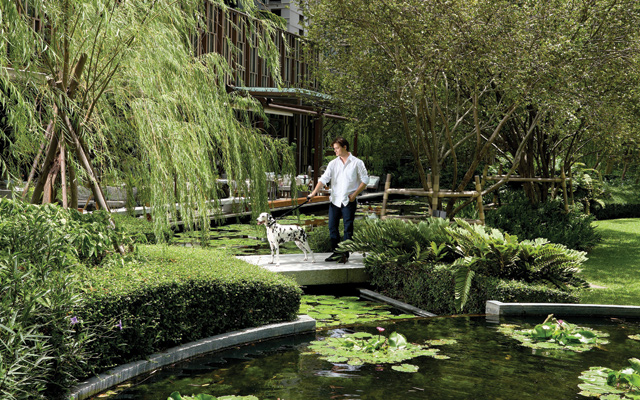
Kimpton Maa-Lai Bangkok property is home to extensive garden space adjacent to the hotel
Thailand The hospitality landscape in Bangkok is undergoing a furry transformation, with many hotels now curating memorable stays for both humans and their animal companions.
At the forefront is Kimpton Maa-Lai Bangkok, which has welcomed pets since its debut in October 2020, and whose lobby is always actively bustling with furry friends.
“We’ve been pet-friendly – as is every Kimpton property – since we opened in October 2020,” shared Patrick Both, Kimpton Maa-Lai Bangkok’s general manager, mentioning that “it was never an add-on”.
At the core of this approach is one of the most unique pet-friendly policies in the city: any pet capable of fitting inside the elevator is warmly welcomed. The property emphasises genuine openness by eliminating restrictive rules regarding specific breeds, sizes, or weight limits and entirely waiving extra pet fees.
Kimpton Maa-Lai Bangkok actively curates spaces and activities for animals, offering designated pet floors, a specialised menu that allows dogs to dine with their owners at Craft, and a dog park map highlighting nearby green spaces like the Lumpini and Benjakitti parks. It also hosts informal get-togethers from time to time to bring the pet community together.
“What’s telling is that most of that community is local – Bangkok residents and their pets – which says this is as much about the city as it is about travellers passing through,” Both said, emphasising that the operational side “comes down to thoughtful design and clear guidance”.
“When a guest is travelling with a pet, we use a door-hanger so the team knows before they enter the room. Behind the scenes, we’ve selected specific cleaning products and adjusted the cleaning schedules for those rooms, and we chose hypoallergenic nylon carpeting that’s easy to keep spotless without sacrificing the feel of a luxury room,” he elaborated, adding that the hotel staff are trained with practical guidelines for the different situations that come up with pets and their owners.
Moxy Bangkok Ratchaprasong recently introduced the Paws Stay Free #ATTHEMOXY package, available for stays through September 2026. The initiative waives the cleaning fee and provides a pet welcome set for dogs and cats weighing up to seven kilograms, allowing up to two pets per room. Moxy requires pets to be leashed or placed in carriers in public spaces, and mandates valid vaccination certificates upon check-in. The property also notes that service animals are welcome at all times without additional charges, unless damage occurs.
Meanwhile, since 2024, InnSide by Meliá Bangkok Sukhumvit has welcomed canine companions. The hotel is dog-friendly, with furry visitors receiving curated amenities such as beds, bowls, and welcome snacks, and granted access to designated areas like the Open Living Lounge and upper deck. The property charges a supplemental fee of 1,200 baht (US$36) per night for one dog in a standard room, or two dogs for 2,000 baht in a Townhouse room.
Beyond these hotels, Thailand offers many other accommodating options for travelling pets. The Standard’s Bangkok, Hua Hin and Pattaya properties are dog-friendly, and many Ibis properties around the country also actively welcome pets, such as ibis Styles Bangkok Sukhumvit Phra Khanong, which is both cat- and dog-friendly, and announced recently that it welcomes up to four pets of all sizes and breeds for only 499 baht per pet per night. – Anne Somanas
Gen Zs and Millennials across South-east Asia are poised to drive travel growth in distinct ways
Travel across South-east Asia is expected to continue to rise, with 96 per cent of travellers from the region planning a trip within the region in the next 12 months. According to Hilton’s South East Asia Pulse Check, the next phase of growth will be driven not just by greater travel frequency, but by travellers’ willingness to spend more on trips that feel worth their time and budget.
Nearly six in 10 travellers from the region (59%) plan to increase their spending on South East Asia trips, making it the strongest growth signal in the survey. By comparison, 50% plan to visit more destinations per trip, 43% expect to take more trips, and 41% anticipate longer stays. Taken together, these findings suggest that the next wave of travel growth will be driven not just by more frequent travel but also a desire to make each journey more meaningful.
Gen Zs and Millennials across South-east Asia are poised to drive travel growth in distinct ways
Growth signals are driven by different motivations across the region. While Vietnam-based travellers are most likely to travel more frequently (55%) and visit more destinations per trip (60%), Thailand (69%) and Indonesia (68%) show the strongest spending signals, with around two-thirds of travellers in these markets expecting to spend more per trip.
Meanwhile, Philippines-based travellers are most likely to take longer trips (51%), signalling a preference for deeper, more immersive travel experiences.
Youthful catalysts
Across South-east Asia, younger travellers – Gen Z and Millennials – are poised to drive travel growth in distinct ways. Fifty-four per cent of Gen Z travellers plan to travel more frequently, visit more destinations per trip (58%), and take longer trips (47%), while 63% of Millennials intend to increase their travel spending per trip.
On the other hand, older travelers plan to maintain their travels, with Gen X and Baby Boomers indicating that they plan to maintain their travel frequency (59% and 66%), trip length (60% each), and number of destinations visited per trip (50% and 62%).
In particular, Vietnam leads the region in younger travellers’ appetite for exploration, with around six in 10 Gen Z and Millennials located in the country planning to travel more frequently (61% and 59%), while nearly two-thirds expect to visit more destinations per trip (65% and 64%).
Meanwhile, Thailand-based Gen Z travellers stand out for spending intent, with 73% planning to spend more per trip; whereas younger travellers based in the Philippines look to take longer trips, with 56% of Gen Z and 58% of Millennials planning to extend their stays.
Value drivers
Even as travel budgets rise, travellers from the region remain discerning about where they spend. Value for money (51%) is the top consideration when choosing a destination in the region, followed closely by food and culinary experiences (47%), showing that travellers seek memorable local experiences without compromising on value.
Even though these priorities resonate across other surveyed markets, food and culinary experiences (49%) take precedence over value for money (36%) for Vietnam-based travellers.
Travellers from South-east Asia also seek experiences that reflect what matters to them, with respondents in Indonesia preferring nature and outdoor adventures (35%); in Malaysia, beach escapes (32%); in Thailand, wellness (35%); and in Vietnam, family-friendly destinations (32%).
Accessibility and convenience also play a bigger role in some markets. In the Philippines, 40% of travellers consider visa-free access an important factor when choosing a destination, while in Singapore, 36% prioritise short travel times, highlighting a stronger preference for destinations that are easy to reach.
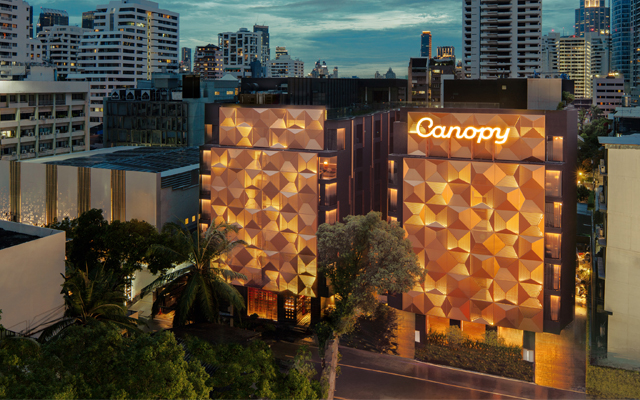
The study finds that travellers consider food, ease, comfort, and experience when selecting accommodation; Canopy by Hilton Bangkok Sukhumvit pictured
Familiarity is fine
Travellers from South-east Asia are also balancing a desire for discovery with the pull of familiar favourites, seeking out new destinations while continuing to return to places they know and love. More than half (54%) typically visit multiple cities or areas within a country on a single trip, reflecting a strong appetite to experience more destinations in one journey.
They are also not leaving familiar favourites behind. Nearly half (46%) prefer a mix of revisiting destinations while exploring somewhere new, compared to 43% who plan to focus primarily on new destinations and just 11% who intend to revisit mainly familiar places.
This appetite for exploration is particularly strong in the Philippines and Indonesia. Philippines- (70%) and Indonesia- (62%) based travellers are most likely to explore multiple cities or areas within a country on a single trip. Separately, they also show the greatest interest in exploring new destinations on future trips within the region (52% and 49% respectively).
The balance for discovery and familiarity is also reflected in the destinations travellers are choosing. Bangkok (41%), Singapore (38%), and Bali (34%) are the top three destinations that travellers from South-east Asia want to visit over the next 12 months, underscoring the enduring appeal of the region’s iconic destinations that continue to offer fresh experiences.
Beyond the region’s gateway cities, destinations such as Pattaya, Phu Quoc, and Penang also rank among the top 10 destinations of interest, pointing to traveller appetite for leisure hotspots beyond the most familiar urban centers.
Social media inspiration
Digital tools are now shaping every stage of the travel journey, from inspiration to itinerary building. Social media remains the stronger source of inspiration, with travellers from the region saying it influences where they travel (78% vs. 63% for AI) and the experiences and activities they choose during a trip (72% vs. 63%).
At the same time, AI is emerging as a meaningful planning companion, coming closest to social media when choosing accommodation (67% for social media vs. 61% for AI). This shift points to a more digitally assisted travel journey, where travellers are not only discovering destinations online, but increasingly looking for tools that help them translate inspiration into the right stay.
Reflecting this evolution, Hilton recently introduced the Hilton AI Planner, a generative AI-powered digital concierge on the group’s website that helps travellers explore Hilton’s global portfolio, compare properties and amenities, and receive curated recommendations through a conversational interface.
YouTube (75%) and TikTok (71%) are the region’s leading travel inspiration platforms, with TikTok dominating among Gen Z (84%). This suggests that even as travellers embrace AI to research and plan their trips, they continue to rely on visually rich content from creators, communities, and fellow travellers to inspire where they go and what they do.
Experience-led appeals The Hilton study also point to a more expansive role for hotels in the travel experience. While value for money (67%) and location (59%) remain the top booking considerations, travellers from the region are also placing emphasis on quality dining (47%) and family-friendly amenities (45%). This suggests that accommodation is increasingly expected to contribute to the trip itself – through food, ease, comfort, and experience, rather than simply providing a place to sleep. For families and groups, this includes practical innovations such as confirmed connecting rooms by Hilton, which allows guests to book and instantly confirm connecting or adjoining rooms, giving them added peace of mind that their party can stay close together.