Tourism stakeholders in Japan are bullish on doing business in the Philippines as Philippine president Ferdinand Marcos Jr, during his official visit to Japan, assured them of the Philippine government’s continued support for the sector.
He reiterated that tourism is vital for economic resurgence, saying the Department of Tourism (DoT) “will exhaust all our efforts to revive this extremely important industry”, and also urged airline partners present to restore their pre-pandemic routes and explore new routes to link both countries.
Ferdinand Marcos Jr (centre) during his official visit to Japan where he met with tourism stakeholders
The meeting also aimed to promote the viability and openness of the Philippines for tourism investments.
Sharing plans and programmes on the country’s developments during the meeting, tourism secretary Christina Garcia Frasco noted that Japan has “an interest in certain tourism product offerings including diving, health and wellness, and learning English as a second language”.
Hiroyuki Takahashi, chairperson of Japan Association of Travel Agents, said that with the potential resumption of tourism international exchange, the Philippines’ many tourism offerings had the potential to attract a large number of Japanese visitors.
“The Philippines (has) a mild climate all year, making it a popular destination for younger people to relax at beach resorts like Cebu and Boracay Island, and for retirees, an extended period of (vacation) time,” said Takahashi, adding that with the many Japanese companies establishing operations in the region would mean further growth as a business travel destination.
Hasebe Kento from Japan Philippine Tourism Council noted that despite the hiatus brought about by the pandemic, the organisation is eager to jumpstart its activities starting this year.
“We hope that we can share the many attractions of the Philippines to a lot of people,” he enthused.
Agoda has expanded its partnership with World Wide Fund for Nature (WWF) to support three additional WWF projects as a continuation of its Eco Deals campaign which launched in 2022.
Following last year’s donation drive in Indonesia, Malaysia, Singapore and the Philippines, Agoda’s support this year will extend to Thailand, Vietnam, Cambodia, and India.
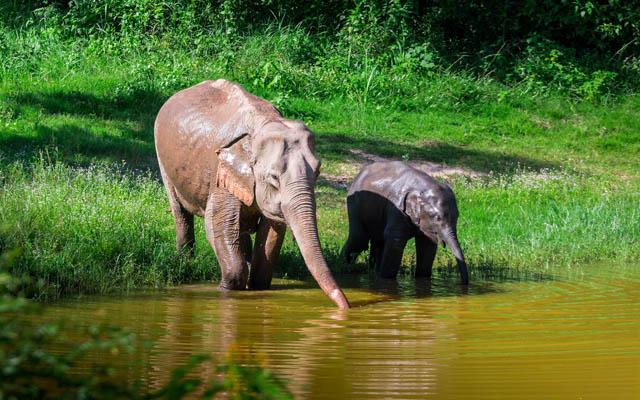
Agoda and WWF have identified important habitats for endangered wildlife, such as the elephants at Kuiburi National Park in Thailand
Agoda has donated US$150,000 to raise awareness about responsible tourism, enabling the restoration of marine habitats such as coral reefs and mangroves in South-east Asia, and protecting wildlife affected by floods in Australia.
For 2023’s campaign, Agoda and WWF have identified important habitats for internationally endangered wildlife including Kuiburi National Park in Thailand, YokDon National Park, the second biggest national park in Vietnam and Tubbataha Reefs Natural Park in the Philippines – a UNESCO World Heritage Site.
Starting from March 2, for every Eco Deals booking made at participating properties, Agoda will donate a dollar to WWF’s marine, forest and wildlife conservation programmes in popular tourist destinations, with a minimum commitment of US$160,000 and a donation target of US$250,000. The campaign will run till September 2.
The eight markets participating in the Eco Deals campaign include Singapore, to stop illegal wildlife trade trafficking; strengthening tiger conservation in Malaysia; supporting rangers in the Philippines’ Tubbataha Reefs Natural Park; restore degraded rainforest Thirty Hills in Indonesia; elephant conservation in Thailand; protecting wildlife and habitat in India; protecting elephants from poaching in Vietnam; and supporting rangers in the Eastern Plains Landscape in Cambodia.
Enric Casals, regional vice president of South-east Asia and Oceania, Agoda, said: “We believe that many of today’s travellers share the same desire to protect the world around us, and our expanded Eco Deals programme gives our customers the chance to travel to their favourite destinations with the knowledge that they are also supporting the preservation of local wildlife and environments.”
R. Raghunathan, CEO, WWF-Singapore added: “We are grateful for their support of the several conservation programmes that we will undertake to protect the rich biodiversity in Asia.
“This partnership will enable us to expand our efforts to restore and protect critical habitats, including employing more rangers and setting up camera traps to monitor wildlife populations.”
An affiliate of Hyatt Hotels Corporation has signed a management agreement with Tokyu Land Corporation for Hyatt House Tokyo Shibuya, slated to open by mid-2024.
Hyatt House Tokyo Shibuya will mark the entry of the Hyatt House brand in Tokyo, and will be the second Hyatt House-branded property in Japan.
Hyatt House Tokyo Shibuya is scheduled to open by mid-2024
The 126-room hotel will be situated in the Sakuragaoka area, just southwest of the Shibuya station and steps away from the famous Shibuya Scramble Crossing.
Each of the hotel’s guestrooms will offer home-like amenities including a kitchen, washer and dryer, and living room. Facilities include a rooftop garden, indoor swimming pool, lounge, bar, restaurant, fitness room, and communal spaces.
Sam Sakamura, vice president Japan and Micronesia, Hyatt, said: “”Shibuya is known around the world as one of the dynamic facets of Tokyo, and Hyatt House Tokyo Shibuya will play a vital role in the major redevelopment around Shibuya Station.”
“Hyatt House Tokyo Shibuya will allow international travellers and locals alike to enjoy unique and iconic Shibuya experiences,” added Tatsuaki Tanaka, director & managing officer, Tokyu Land Corporation.
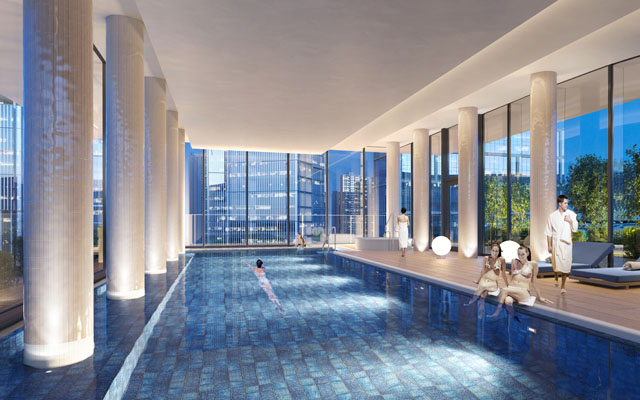
When it comes to luxury living, branded residences take this experience to the next level. Sometimes known as a “hotel and home-in-one”, these are essentially apartment projects associated with well-known brands and are typically targeted at high-net-worth individuals (HNWIs).
Such a concept is believed to have originated in the US in the 1920s, with the branded residence environment historically being dominated by luxury hotel brands from the likes of Marriott International, Four Seasons and Accor. In Asia, the first branded residence project dates back to 1988 with the development of Amanpuri in Phuket, an iconic resort in South-east Asia.
However, the branded residences environment is changing – not only is the Asia-Pacific market for such concepts growing, but we are also seeing more luxury consumer brands jumping on the bandwagon.
A bigger slice of the residential pie for luxury consumer brands
Between 2013 and 2019, the global population of HNWIs increased at a compound annual growth rate (CAGR) of 6.1 per cent, while the period between 2019 and 2021 witnessed a 7.1 per cent increase across regions. As the number and wealth of HNWIs continue to increase, consumer brands are also looking to capitalise on this growing market worldwide.
For luxury consumer brands, expanding into the residential market is a natural path for a brand to expand and diversify its income stream. Today, luxury branded apartments are no longer just about their location or design – it is the services they offer within these exclusive developments that can make all the difference. Naturally, this offers luxury consumer brands the perfect opportunity to attach an experience to their products and differentiate their design and service experiences from other hospitality brands.
Fashion brands such as Giorgio Armani and Karl Lagerfeld, as well as car manufacturers Porsche Design and Aston Martin, have already joined the mix. While such consumer branded residences have yet to debut in Asia-Pacific, they’ve since popped up in places like Dubai with the Armani Hotels & Residences and Miami’s Porsche Design Tower.
As more luxury consumer brands join hotel brands in entering the branded residences space, we are also seeing a growing trend towards standalone branded residences – in other words, residences without a hotel located within the same building or nearby. The benefit of this is that brands can collaborate with new partners and real estate developers or investors beyond those within the hospitality sector, allowing for greater product differentiation.
The opportunities for investors and developers
Even in the face of Covid-19, the branded residences sector has remained resilient, especially as the population of HNWIs continues to grow despite the pandemic. In Asia-Pacific alone, the number of HNWIs increased 4.2 per cent from 2020 to 2021, while wealth in the region grew by 5.4 per cent. This suggests strong purchasing power and potential demand for such residential concepts in Asia-Pacific.
The benefits are clear – with branded residences offering association with high profile hotels or luxury consumer brands, as well as enhanced premium services, it allows investors and developers to benefit from solid price premiums compared to unbranded, high-quality residential projects.
Additionally, residential developers and investors can also look for a brand association to further differentiate their product from the competition and increase sales velocity in markets where the supply of quality condominiums can be considered saturated. While residential developers are feeling the pressure of higher interest rates on buyers, many branded residential buyers are cash rich and are less impacted by fluctuation in rates.
Recent activity suggests that the branded residence story in Asia will continue to gain momentum as demand swells. In 2022, the Banyan Tree Grand Residences Phuket came onto the market. This year, the depth of the sector will be bolstered by the opening of Aman Niseko in Japan and in the Vietnam, the Intercontinental Residences Halong Bay and the Ritz-Carlton Residences Hanoi at The Grand.
The shift towards more flexible working arrangements post-lockdown has further supported the proliferation of branded residences in leisure-focused markets – a trend that we expect will continue long after the pandemic ends.
As interest rates and construction costs continue to rise significantly due to global economic uncertainty caused by the pandemic and geo-political tensions, branded residences have driven attractive returns for developers’ and investors’ mixed-use developments due to the premium and upfront sales proceeds from branded residential units.
Looking ahead, we expect branded residences to become an increasingly integral business model globally – especially as more consumer brands come on board and developers and investors lean towards standalone developments due to the financial benefits for all relevant stakeholders.
Take a leisurely day cruise on Halong Bay with Ambassador Cruise, onboard its new vessel featuring restaurants and bars, an outdoor jacuzzi and a glass bridge.
Catering up to 500 passengers, the day-long Ambassador Day Cruise II’s itinerary includes check in at Ambassador’s Check-In Lounge in Halong City at 9.45, before heading out to explore Sung Sot Cave. A buffet lunch is served while the vessel’s route plys a passage by Ho Dong Tien Cave, Trong Cave, Me Cung Cave and Cua Van Floating Village, and anchors off Titov Island. Before heading back to Halong International Cruise Port at 16.30, guests can enjoy an afternoon tea on the vessel’s sundeck.
The day-long Ambassador Day Cruise II includes a buffet lunch and afternoon tea
The ship features spacious sundecks across two floors and boasts 360-degree vistas of Halong Bay and its myriad limestone karsts. Onboard are two restaurants, two bars, an entertainment area for live music, and a large open-air jacuzzi, plus the five-metre glass bridge jutting from the vessel’s bow is a great place for photographs.
In addition, Ambassador Cruise is the only Halong Bay cruise line to include an elevator system for the elderly and people with disabilities.
Priced from US$112 per person, it comprises the day cruise itinerary and programme, round-trip shuttle bus transfer from and to Hanoi, a buffet lunch, onboard insurance, tax and service charges, sightseeing fees and afternoon tea on the sundeck.
Wellness tourism, particularly based on local heritage and tradition, has been one of a major draws for travellers to Bali. Now, this segment is being expanded to include medical and sports specialisation.
Sandiaga Uno, Indonesia minister of tourism and creative economy said: “Indonesia Health Tourism is one of the national focus, developed jointly between the Ministry of Tourism and Creative Economy (MoTCE) and the Ministry of Health. This includes medical tourism, wellness tourism, sports (events) tourism and health-science based business events. Bali is one of the destinations with the potential to develop these four elements.”
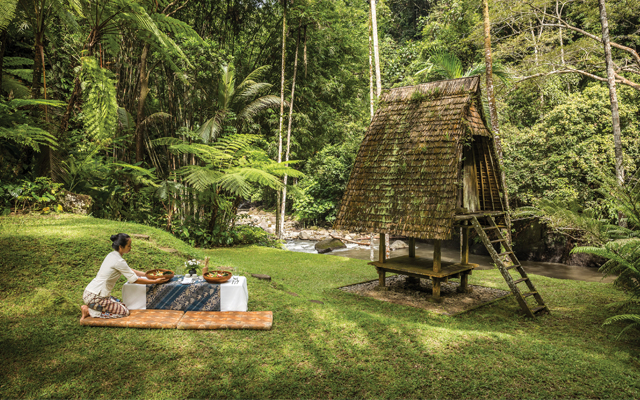
Como Shambhala Estate takes a holistic approach to wellness
Besides Bali, the government has appointed Greater Jakarta and Medan for health-based tourism development. This will potentially generate a business value of US$11 billion and 2.3 million jobs.
Apart from improving Bali’s existing health facilities, including incorporating traditional healing services, the government has carved out a 40-hectare Health-related Special Economic Zone in Sanur.
Sandiaga said: “A number of health facilities will be built there, including a hospital that will partner with well-known international institutions such as the Bio Clinics of John Hopkins University.
“With this, we hope that not only (will) Indonesians (who favour health and wellness treatments overseas) get prime health services here, but international travellers can immerse themselves in nature and enjoy quality health-related services here too,” he said.
The Indonesia Health Tourism programme has been introduced to delegates of the B20 Indonesia Summit 2022 in November 2022, while the International Wellness Tourism Conference & Festival (IWTCF) was held in Solo, Central Java as a side event of the G20 Summit.
Sandiaga said these events pioneered Indonesia’s integrated wellness tourism sector, and MoTCE would organise the second IWTCF in 2023 in Bali.
In the meantime, new wellness resorts are opening in Bali while premium hotels are expanding their programmes.
Como Shambhala Estate, for example, recently launched the Integrated Wellness Programme, which is personalised for the guest with expert consultation, nutritional guidance, daily wellness treatments and access to all group wellness activities.
The Estate’s wellness manager and Ayurvedic consultant, Prasanth Vayanakathu said: “Our Integrated Wellness Programme is designed to address varying health conditions, goals and preferences, and we get increasing number of health seekers under this programme. We are also actively planning to incorporate new wellness strategies into this.”
Como Shambhala Estate is no stranger to guest wellness. It was launched as a well-being destination in 2005, long before wellness tourism become a trend. Its holistic approach to health is renowned.
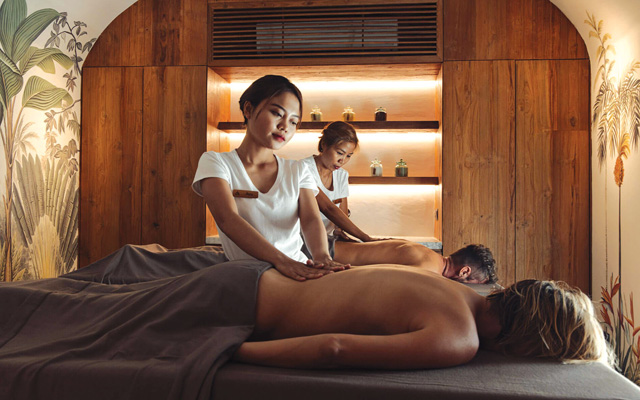
The Asa Maia offers both local treatments as well as unique wellness experiences
Prasanth said: “Our wellness philosophy aims to assist our guests to have a transformational impact on their well-being by imparting a step-by-step actionable plan during their stay with us and beyond. This allows them to create their own wellness paths and we hand them the tools to suit their health conditions and goals.”
Over the years, the estate has witnessed a growing awareness of sustainable wellness – something that the team constantly incorporates into its practices.
Wellness-focused travellers to Bali can discover new experiences at The Asa Maia wellness retreat, which opened in November 2021 in Uluwatu, and Gdas Bali, which soft-opened in Ubud in October 2022. The latter aims to be fully operational in January 2023.
The Asa Maia is a 10-suite barefoot luxury wellness retreat that promises unique holistic wellness treatments. The property also highlights local arts and culture, such as through its villas that are old wooden Javanese houses called gladak. The spa also offers an array of Indonesian treatments as well as unique experiences through its infrared Himalayan salt sauna and specially-designed hot and cold plunge pools, whose contrast therapy can help quicken muscle recovery, reduce inflammation and improve immune function.
Guests can sign up for SOMA breathwork coaching to clear negative imprints and liberate themselves from their past, releasing trauma and increasing fitness capabilities. The programme can be customised.
Axel Jehangir, general manager of The Asa Maia, said: “Breathwork is for everybody, from bankers to corporate workers; you do not need to be a barefoot walker to do this.”
The wellness retreat was founded by Martha Booke, who had health issues and was inspired to create a space where people could heal and implement live-changing transformation that they could take back home, according to Jehangir.
Over at Gdas Bali, said to be the first health and wellness resort in Ubud that is equipped with modern facilities such as Cryotherapy, LiveO2, colonic hydrotherapy, salt therapy and IV drip treatment, guests can also heal their bodies through traditional rituals.
Rini Sekarani, sales and marketing manager, Gdas Bali said a herb garden is in development to house some 200 species that will be used for healing purposes.
Gdas Bali creates programmes according to individual needs, offering options such as plant-based diet, healthy drinks and spa treatments. Guests can also pick ready-made packages centred on sleep management and emotional healing.
A highlight at this 27-room retreat is hot yoga, conducted in a dedicated space heated with infrared technology to maximise detoxification. The UV-C lights also help to keep the space sterile and safe for guests.
The owner and director, Gary Foster, is an avid yogi who birthed Gdas Bali for his yoga community.
Tourism Management Institute of Singapore (TMIS) has appointed Steven Chua as its chief executive officer.
Chua has amassed 30 years of experience and expertise in the hospitality and tourism industry. His forte in grooming and developing talents for the industry was evident during his time at Temasek Polytechnic and SHATEC.
In his tenure at Sentosa Development Corporation, he led in the development of Tourism Academy @ Sentosa to upgrade visitor experience on the resort. He was previously president & CEO of SHATEC, and established SHATEC Institutes Macau.
Starting from February 13, travellers will no longer need to show proof of vaccination upon arrival in Singapore. Those not fully vaccinated against Covid-19 will also not be required to show proof of a negative pre-departure test.
This follows the city-state’s announcement on lifting all remaining border measures that were put in place during the pandemic.
Singapore will lift all Covid-19 border measures for incoming travellers from February 13
In addition, the Ministry of Health (MOH) stated on February 9 that short-term visitors who are not fully vaccinated will no longer need to buy travel insurance that covers Covid-19 medical treatment here.
However, MOH said that these restrictions may be reactivated if new severe variants appear, or if there are signs of strain in Singapore’s healthcare capacity.
Currently, travellers may enter Singapore without testing or quarantine, with those aged 13 and above showing proof of having received the minimum dosage of Covid-19 vaccines at least two weeks before arrival in the country. Those who do not meet these requirements will have to undergo pre-departure testing before they can enter Singapore.
The authorities will continue to screen travellers for other infectious diseases of concern, such as yellow fever, Middle East respiratory syndrome and Ebola.
All travellers entering Singapore via air or sea, and short-term visitors entering via land checkpoints, will be required to submit a health declaration using the SG Arrival Card platform, which will remain a permanent feature.
With international tourism on the rebound, Amadeus has identified four new traveller profiles – named Traveler Tribes – that are likely to emerge and develop in the next 10 years.
Amadeus’ global research study Travel Tribes 2033 derived these profiles by taking a psychographic approach and examining the future forces of change transforming travel, alongside emerging traveller traits, behaviours and preferences, to understand what travellers will want in the future.
Amadeus profiles future traveller segments by looking at the forces forging them
These four Traveler Tribes are:
Excited experientialists
This group has a ‘try it and see’ approach to life and travel. 44 per cent are without children and have a mid- to high-income job with flexible working options, which enables them to readily explore the world. They have a you-only-live-once (YOLO) approach and are more likely to act on instinct, making them 2033s ‘anti-planners’, favouring less predictable and more exciting accommodation experiences. They are also open to technology that helps them ‘speed up’ certain aspects of their journey, with many expecting to use artificial intelligence (AI) in the airport environment.
Memory makers
This group takes a more simplified approach to travel – to make memories and visit places. 44 per cent are aged 42 and above, and are habitual in their travel behaviours. The future can be a daunting prospect for them. They put people first and place less value on technology and sustainability, reassured by existing methods. However, despite their scepticism about technology, they are excited about virtual reality (VR) and augmented reality (AR) preview tours with the majority expected to use VR tours before purchasing a trip.
Travel tech-fluencers
This group includes today’s young business travellers with a forward-looking perspective on life. 48% of the group are under the age of 32 and their perspective is symbolised by how much technology they own. However, there is a discord when it comes to what excites and concerns them around the future of technology and travel. While many aim to travel sustainably, it seems they are more conscious about sustainability options around their method of travel, rather than where they will be staying.
Pioneering pathfinders
Individuals in this group live a fast-paced life, always looking for their next adventure. Their life is in full swing with 82 per cent between the ages of 23 and 41. They like to plan but are not afraid of risk and are open to new experiences. This group is more willing than others to let sustainability influence their decisions. They will also be very comfortable using all forms of alternative payment methods in 2033, whether via cryptocurrency or within a VR environment.
While these classifications provide a general overview, it is nearly impossible to pigeon-hole a traveller into one tribe, as there will always be a spectrum which a traveller would tend to fall into at any point in time.
Frédéric Barou, senior vice president, customer success management, explained during the media briefing: “Unlike other industries, our consumers are very unique. Travellers have multiple personalities when they travel, depending on whether they travel with family, on their own, and even on a business trip. Every time, the needs, expectation, and level of friction is very different. This same consumer will evolve and change throughout the journey and their lifetime.”
He added that there is also a “massive emotional side” of travel, where decisions to travel are also made based on feelings, with influence drawn from peer-to-peer reviews of a destination, and through social media.
In total, 10,345 travellers from 15 countries – Australia, China, France, Germany, India, Indonesia, Japan, Mexico, New Zealand, Singapore, Spain, Thailand, the UAE, the UK, and the US – were surveyed. These travellers have travelled internationally once in the last year, and are likely to travel internationally over the next three years. In-depth interviews with 22 experts both from the travel industry and outside the industry were also conducted.
Karun Budhraja, senior vice president, marketing – Asia Pacific, said: “Many Asia-Pacific countries were included because this is a growth region, a superpower economy. (But Covid slowed things down), as we were the first in and last out (of the pandemic).”
When asked what will most likely shape the travel industry in the immediate future, Barou pointed to the increasing usage of biometrics to reduce friction, simplification of payments, and AI being present in the basic search activity and future trip planning.
This is the third in Amadeus’ Traveler Tribes research initiative. The first and second reports were launched in 2007 and 2015 respectively.
On the need for such a study, Budhraja commented: “Today’s traveller is moving from one place to another very quickly. For providers like airlines, travel agencies, or hoteliers, understanding their travellers is extremely important.”
Singapore-based co-living company Hmlet has made its foray in the short-term stay market, having opened its first hotel, the Owen House, on February 1.
Located steps from the Farrer Park MRT and a stone’s throw from Little India, the 106-key Owen House features nine room categories, where select rooms boast kitchenettes. Conceptualised as a reflection of New World Amusement Park – a popular nightlife spot in the 1930s – rooms start from the 18m² Deluxe Queens and go up to the 52m² Two-Bedroom Deluxe and Suite.
Makarachvili: catering to the new generation of travellers and renters who are seeking authentic connections and interactions
Facilities on-site include a boardroom good for up to eight people, two communal lounges – The Pembroke and The Plaza – on levels four and six, as well as Sunlight and Moonshine, a lobby-cum-speakeasy bar. There is also a current empty space good for a café or restaurant, but talks are still ongoing with potential partners.
Giselle Makarachvili, CEO of Hmlet, told TTG Asia that opening Owen House was a “natural progression” for the co-living brand, given its “track record” in already running short-term stay accommodations.
“We do not see a separation between the hotel business and co-living. Owen House happens to be a hotel that provides the co-living experience and programming. There is a room type that fits every guest depending on their needs, length of stay and purpose of travel – from transient tourists staying a night to individuals relocating to Singapore,” she opined.
When asked about whether the communal living trend might ever wane, Makarachvili stated the communal living experience has “never been more relevant” in a post-lockdown world.
She shared: “We all realise that the human connection is something that cannot be migrated fully online. This will be continued to be expressed in various types of accommodation real estate, be it residential, serviced apartments or hotels, essentially catering to the new generation of travellers and renters who are seeking authentic connections and interactions, instead of just a room to sleep in.”
As such, her future plans for Hmlet include expansion across different markets in Asia-Pacific across all of its product lines.
Hmlet currently operates three product lines – one for short-term accommodation, Hmlet Boutique; and two for residential living, Hmlet Homes and Hmlet Nest. Both Owen House by Hmlet and Hmlet Cantonment are part of Hmlet’s Boutique Collection even though they have a slightly different product offering.
Makarachvili added: “Our focus will be on gateway cities where rising home prices and income stagnation makes rental housing the only viable option. In such cities, we will also expand our boutique product line as it gives a larger flexibility to travellers across different target audiences.”




 When it comes to luxury living, branded residences take this experience to the next level. Sometimes known as a “hotel and home-in-one”, these are essentially apartment projects associated with well-known brands and are typically targeted at high-net-worth individuals (HNWIs).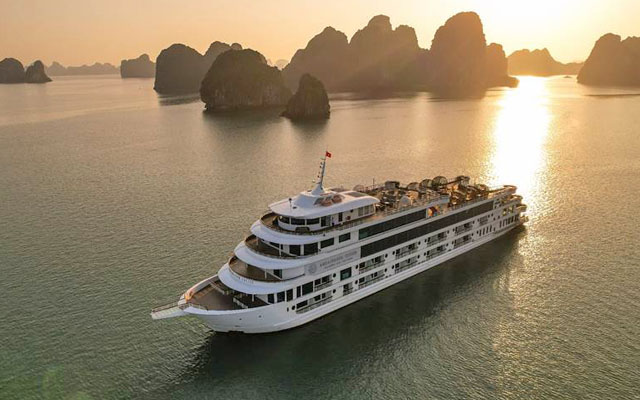

 In his tenure at Sentosa Development Corporation, he led in the development of Tourism Academy @ Sentosa to upgrade visitor experience on the resort. He was previously president & CEO of SHATEC, and established SHATEC Institutes Macau.