The Maldives is persisting in its journey to present itself as a diverse destination for different segments of travellers, not just the affluent.
According to the Maldives deputy tourism minister Naushad Mohamed, the authorities are promoting the destination for business travel, sports tourism and culture tourism.
The Maldives is courting families, sports enthusiasts, festival-goers, culture vultures, corporate groups and more
“We also want to include inclusive travel for the differently-abled,” said Thoyyib Mohamed, managing director of Maldives Marketing & Public Relations Corporation (MMPRC), adding that family travel is part of the strategy too.
Besides an altered destination marketing narrative, changes to infrastructure across the destination has helped to reposition the Maldives.
Dilip Rajakariar, CEO of Minor Hotels Group, observes that the Maldives has become very family-friendly, with an entire infrastructure built around families and their needs.
Anantara Kihavah Maldives Villas offers a kids club that comes with a trampoline park, a splash park and slides as well as a full line-up of activities from 10.00 to 18.00 daily, giving children little reason to stay indoors.
Guests looking to bond can sign up for a story-telling date with grandpa, with cookies and milk thrown in. Families can also stargaze at the resort’s over-water observatory and interact with a Maldivian astrologist.
Andy Nightingale, cluster director of sales and marketing for Anantara Dhigu, Veli & Naladhu Private Island, Maldives, said properties offer a mix of programmes unique to children and for everyone in the family because “while families are eager to go on a holiday together post-lockdown, parents are also going crazy after 24 hours with their kids”.
“They need a break, and we are happy to help,” he said. Properties under his care offer complimentary kids programmes, like movie nights, so that the grown-ups can enjoy a tranquil drink or meal for a couple of hours.
Sunny Umar, founder of Halal Travel and co-founder of Get me to Maldives Travels, said resorts are offering different experiences, from museums and craft activities to local island visits, so as to attract a wider range of travellers.
For example, Crossroads Maldives, said to be the Maldives’ first multi-island integrated resort, offers two resorts, 12 dining destinations, two spas, a shopping avenue, and a wide range of recreational activities including watersports, chartered cruises and more.
Anantara Kihavah Maldives Villas has programmes for little ones
Festivals are heating up too. Soneva Fushi hosted in May 2022 what it called “the greatest literary show on Earth”. The Jaipur Literature Festival, which is hosted at various places around the world, arrived for the first time in the Maldives in 2022, bringing together a line-up of the world’s finest authors and most acclaimed thinkers. The event will return to Soneva Fushi this year from May 12 to 21.
The expansion of destination experiences helps the Maldives to engage with younger travellers, opined the general manager of a global DMC, who declined to be named. He said younger travellers want more than just a fun holiday. They desire interaction with local people, and opportunities to appreciate local food, culture, heritage, and history.
“They want to understand more of the culture, not only luxuriate on the beaches,” he remarked.
The younger generation is observed to also want to leave a positive impact on the local economy wherever they travel, and are more carbon conscious. These travellers will discover that many resorts in the Maldives are certified with responsible tourism-driven organisations like Travelife, added the general manager.
The clearest shift away from the Maldives’ traditional affluent market is seen in the tourism marketers’ courtship of three-star travellers. There are hundreds of guesthouses that appeal to budget-conscious explorers, while homestays are newer options that are being marketed aggressively these days.
The anonymous general manager also noted that the Maldives is appealing now to “Instagrammers who are looking for something different”.
Meanwhile, with internal travel demand rising, local domestic airline Manta Air said in December 2022 that it would expand its fleet with 12 additional DHC6 Twin Otter aircraft for its seaplane service.
Efforts are paying off. The Maldives was named the World’s Leading Destination for the third consecutive year at the World Travel Awards (WTA) 2022, while MMPRC claimed the title of World’s Leading Tourism Board at the awards presented on November 11, 2022, at the WTA Grand Final Gala Ceremony in Muscat, Oman.
The destination welcomed 1.67 million tourists in 2022, up by 26.7 per cent against 2021 figures. This year’s target is set at around two million. The main source markets were India, Russia, the UK, Germany and Italy, with the US in sixth place as a growing market.
Although the Maldives is succeeding in expanding its markets, industry players expressed concerns about the country’s implementation of a higher Tourism Goods and Services Tax (T-GST). Since January 2023, the T-GST has gone up from 12 per cent to 16 per cent.
“This is not a wise move. It would severely affect businesses as Maldives is already a pricey destination and airfares are also rising,” remarked Abdulla Ghiyas, president, Maldives Association of Travel Agents and Tour Operators. – Additional reporting by Karen Yue
A call is being made for private sector investment for a US$55 million project to develop ecotourism products in Cambodia’s Cardamom Mountains and Tonle Sap area.
The Cambodia Sustainable Landscape and Ecotourism Project (CSLEP), led by the World Bank, Ministry of Environment and Ministry of Rural Development, aims to transform Cambodia into a leading ecotourism hub.
The Cambodia Sustainable Landscape and Ecotourism Project (CSLEP) aims to transform Cambodia into a leading ecotourism hub
Salimata Follea, task team leader, World Bank, said: “CSLEP is helping to set Cambodia on a course to join a select group of countries that promote ecotourism as one of their principled pillars.”
The Cardamom Mountains-Tonle Sap (CMTS) landscape spans more than 3.8 million hectares across seven provinces. Under the project, ecotourism corridors will be created to link the tourism hubs of Siem Reap and Phnom Penh with the Cardamom Mountains and Tonle Sap Lake.
CSLEP is now seeking public-private partnerships (PPP) to drive the project forward. Investment is being sought for a raft of services and activities, including eco-lodges, camp sites, small food outlets, transport options, hiking and cycling trails, visitor centres, and nature-based adventures.
“The growing emergence of the ecotourism sector in Cambodia offers some unique opportunities for PPPs and private investment in the protected areas,” said Follea.
To encourage investors, two laws have been created for small-scale development projects: 15-year renewal concession contracts for those less than 10 hectares, and up to 50 years renewal for medium-scale projects. In addition, guidelines have been drawn up detailing the prakas (official proclamations) and investment rules and regulations.
World Bank advisor Nick Ray said the project will initially focus on key areas, including Aural district, Koh Kong, and Phnom Kulen in Siem Reap.
“This is about the future and working together to develop ecotourism in these areas,” he noted, citing Shinta Mani Wild and Cardamom Tented Camp as examples of development opportunities.
Sao Sopheap, secretary of state, Ministry of Environment, added: “Now is the right time to seize this opportunity to promote ecotourism for the sake of protected area management, the sustainable management of natural resources and biodiversity, and to help boost the local economy for local communities.”
As part of the six-year project, 500km of hiking trails are being created across CMTS in the next three years. The first trail in Siem Reap’s sacred Kulen Mountain will open in May.
The Macao Government Tourism Office (MGTO) will launch the second phase of its buy-one-get-one-free Macao Treat special offer from April 10 to June 30.
This time, the offer is available to not just Hong Kong residents, but also visitors from Taiwan and international markets. With this, MGTO hopes to attract more overnight visitors from a wider variety of source markets and energise travellers’ interest in Macau for tourism and economic revival.
Visitor flows increase at different ports of entry in Macau (Photo: MGTO)
Every visitor can enjoy the special offer once from each of the five transportation service providers. They will receive free return tickets for use on another day, upon purchase of shuttle bus or ferry ticket to Macau.
Participating transportation service operators are: Hong Kong – Macao Express; One Bus Hong Kong Macau and Eternal East Cross-Border Coach Management for land transport; and TurboJET and Cotai Water Jet for maritime transport.
The first phase of the Macao Treat programme, conducted from January 13 to March 31, saw over 100,000 ferry tickets and more than 45,000 bus tickets utilised. Provisional figures indicate that Macau registered over 4.96 million visitor arrivals in 1Q2023, which include about 1.51 million Hong Kong visitors.
Hilton continues to advance towards meeting key sustainability targets by reinforcing Travel with Purpose efforts in Asia-Pacific.
Published in 2022, the Travel with Purpose report details its latest progress as the company works to meet its global 2030 environmental, social and governance (ESG) goals.
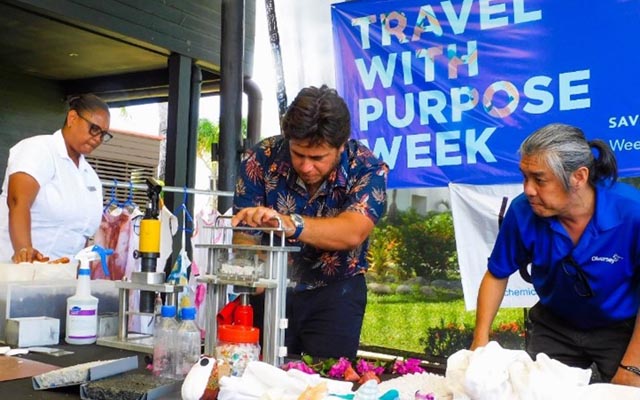
Hilton has partnered with Diversey Inc. to reduce waste by repurposing items such as plastics and linens
To date, the company has managed to cut carbon emission intensity by 44 per cent, water intensity by 38 per cent, and landfill waste by 58 per cent among hotels globally.
Hilton has created more than 677,359 learning and career growth opportunities against its five million commitments and positively impacted 2.8 million community members through local support, disaster relief efforts and economic opportunities; as well as invested in two Fifth Wall’s climate technology funds that aim to decarbonise the global real estate sector, according to the report.
Through its Meet with Purpose programme, customers have the ability to offset their event’s carbon emissions and invest in a portfolio of carbon reduction projects through its partner ClimeCo. With the Meeting Impact Calculator, customers can now choose to make their meetings carbon neutral.
In response to the global trends which showed 86 per cent of travellers want to travel more sustainably, Hilton now offers on-site EV chargers for guests in over 110 hotels across Asia-Pacific as of December 2022. As a result, Hilton Zhoushan, China’s newly-installed charging stations, for example, have already reduced vehicle emissions by 60 tonnes.
Food waste reduction is also a significant part of Hilton’s effort – Conrad Centennial Singapore, for instance, reduces food waste by procuring often-discarded “ugly vegetables”, as well as plant-based eggs and meats for their menus.
Hilton has also partnered with Winnow to leverage AI technology to help chefs accurately pinpoint food waste streams to cut costs and tailor purchasing decisions in select hotels across Asia-Pacific. To date, seven properties in Japan have implemented such technology.
Through partnership with international cleaning and sanitation company, Diversey Inc., Hilton gives discarded linen from hotels a new life. Curtains, uniforms, bed sheets and tablecloths are turned into products that are sewn, designed and sold by local communities across the region. Plastic is also recycled into gravel, and charcoal is replaced by discarded coffee grounds as a cleaner alternative.
The release of the 2022 Travel with Purpose report corresponds with the release of the inaugural Hilton Global Foundation Impact Report, which highlights the positive global impact of US$2.3 million donated in 2022 to organisations working to build a healthy, sustainable planet and resilient communities for future generations.
Some examples of regional projects include the Punlaan School in the Philippines, which sponsors scholarships and programmes for underprivileged young women, focusing on hospitality and culinary arts while equipping them with job and life skills; and the ROLE Foundation in Indonesia that provides young, marginalised women with a six-month residential programme consisting of hospitality skills training, crucial life skills and confidence building activities.
In Malaysia, Hilton supports the Kechara Soup Kitchen which supplies food aid distributions to homeless, marginalised and poverty-stricken families; the China Foundation for Rural Development in China works to alleviate poverty in China through hospitality education, cultural exchanges, social media skills and other trainings; and the Ocean Conservancy in Australia, together with its partners, create evidence-based solutions for a healthy ocean.
To date, the Hilton Global Foundation has awarded over US$8 million in grants, donated over 8.1 million kilograms of food to communities in need, meaningfully impacted over 6.7 million people, and restored over 91,054 hectares of land.
The Travel Corporation’s (TTC) portfolio of privately-owned tours are celebrating their long-term partnership with Switzerland Tourism by supporting the latter’s new ad campaign starring Roger Federer.
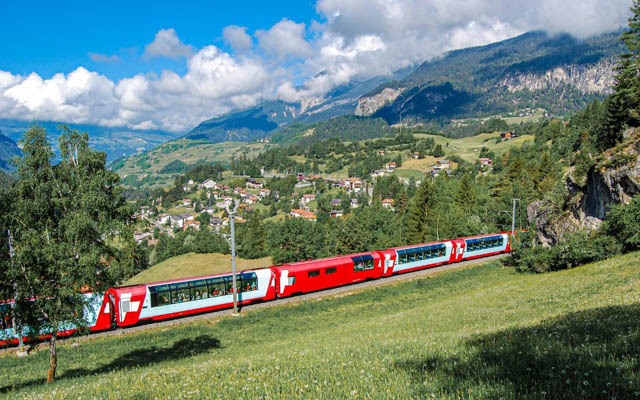
This latest ad film features celebrities Roger Federer and Trevor Noah earning the ride of a lifetime on the Grand Train Tour of Switzerland following a mix-up.
The Travel Corporation and Switzerland Tourism will work together to find new and exciting ways for travellers to experience Switzerland
The comedic angle is juxtaposed with TTC brands calling on travellers to not get lost like Federer and Noah in the Switzerland Tourism film, but to instead make the right choice and choose one of the leading global travel experts – Luxury Gold, Insight Vacations, Trafalgar or Costsaver.
Simon Bosshart, head of markets east, member of the management – Switzerland Tourism, said: “The extensive TTC tour brands offering truly does offer an unparalleled way to see our magnificent Switzerland.”
Bosshart added that both organisations will continue to work together to find new and exciting ways for travellers to experience Switzerland.
Location
This prime waterfront location is only a two-minute walk from MTR Fortress Hill Station. The well-covered footbridge links directly to the property, protecting guests from the sun and rain. Formerly occupied by Government Supplies Department, the site was redeveloped into a mixed-use development which includes both residential and hotel properties. The neighbourhood has lots to offer and is within walking distance to Oil Street Art Space, which is adjacent to the hotel, and the new East Coast Park Precinct.
Accommodation
Categorised by a playful selection of card suit names, the guestrooms can accommodate up to six people, making it ideal for couples, families, groups, long-stay guests and travellers.
With six room types to choose from, each floor features an average of 14-17 rooms, making it a short walk from the rooms to the hotel lifts. All rooms are equipped with individual ventilation systems, ensuring guests enjoy clean and fresh air.
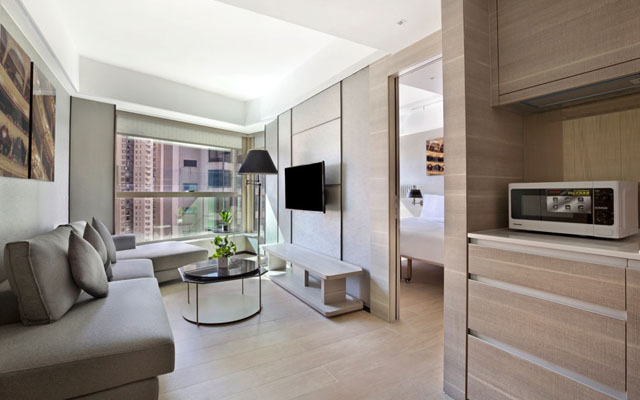
My 36m² Queen suite room on the 35th floor of the West Wing was spacious and modern, and had wood grained floor tiles instead of carpet. During the day, the room was well-lit thanks to the floor-to-ceiling windows – however the lighting in the living room needs to be better as it wasn’t conducive for reading.
The room’s double beds can also be converted into twin beds, providing some flexibility for the guests regarding sleeping arrangements.
While bathtubs are only available in the suites, all bathrooms come with wall-mounted body wash and shampoo dispensers.
Hotel Alexandra
1 of 2
Lobby
Queen Suite
F&B
Café A is the only dining outlet conveniently located on the hotel lobby level and serves up international cuisine and seasonal dishes. Apart from the semi-buffet breakfast and lunch, its afternoon tea set even offers a kid’s version. While I was there, the seasonal special was the Korean strawberry fantasy afternoon tea.
The Grand Ballroom adjacent to the café can be turned into a dining area for larger groups.
Also in the lobby is the brand-new Alice’s Corner which offers a range of grab-and-go items like sandwiches, cakes and coffee.
Despite limited dining options, guests can head out to explore the many eatery choices dotted along Fortress Hill and North Point neighbourhood, renowned for gourmet food.
Facilities
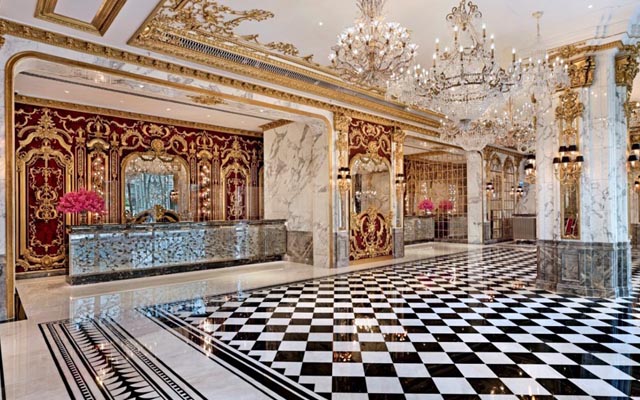
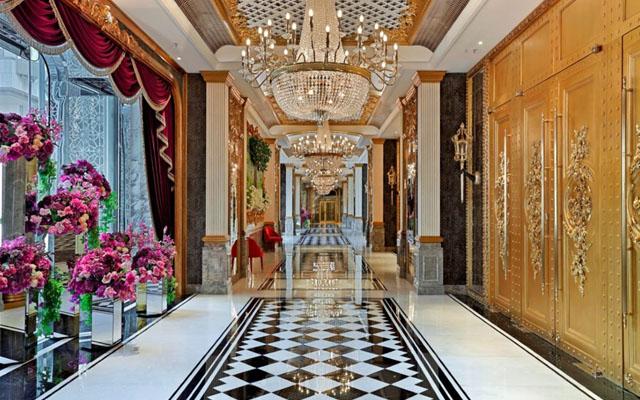
The hotel’s lobby and foyer are bright and uplifting, featuring grand chandeliers, floor-to-ceiling windows and doors, Victorian-tiled flooring and expansive mirrors – all perfect for that Instagram-worthy photo.
Meeting facilities include a 935m² Grand Ballroom for medium- to large-scale events, and five function spaces for more intimate gatherings.
Other facilities include a fitness centre, an outdoor swimming pool, and a kid’s playroom which goes by 45 minutes per session.
Service
As the lobby is a floor below the street level, I was greeted by a friendly security guard who guided me to the escalator leading to the lobby. Overall, staff were attentive and hands-on in responding to my queries. The hotel elevators may be smaller in size but are high-speed models.
Verdict
Nothing beats the location of the hotel, and its spacious interior makes it suitable for big groups. Plus, its seasonal food promotions are always something to look forward to.
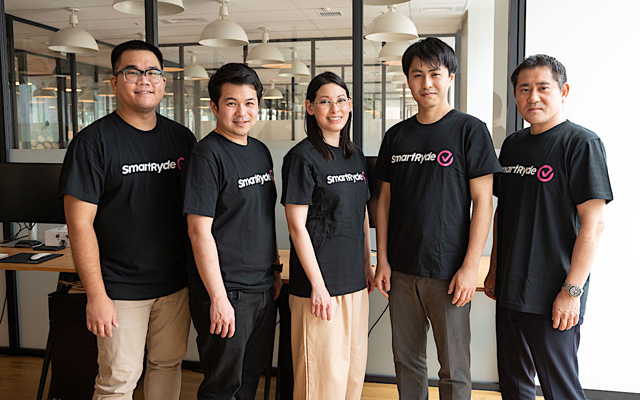
SmartRyde, the Japanese start-up behind a global airport transfer marketplace under the same name, has published a new product, Developer Portal for API, with the aim to streamline vehicle allocation systems and methods of inventory management.
The Developer Portal for API enables online travel agencies (OTAs) and airline companies to access the airport transfer network and offer their customers airport transfer services when taking hotel reservations and flight bookings, thus helping to increase their profits.
SmartRyde’s GDS connects travel agencies and travel-related service providers around the world
SmartRyde’s global distribution system (GDS) connects travel agencies and other travel-related service providers such as airlines, hotels and car rental agencies around the world, which allows their customers to make real-time reservations and enables real-time ticket issuance.
In addition, SmartRyde has raised approximately 450 million yen (US$3.3 million) through the third-party allocation of shares led by NVenture Capital as well as SMBC Venture Capital, Yamaguchi Capital, Hiroshima Venture Capital, Shigagin Regional Revitalization SD Fund, and Iyogin Capital – it also obtained the subordinated loan from Japan Finance Corporation.
With this funding, SmartRyde will invest further in expanding corporate functions and building strengths of business teams as well as in product development. It also intends to increase the number of inbound tourists to Japan by utilising the OTA network of the largest scale in the country, while supporting domestic taxi operators in the aspect of profitability and to provide them with new value including streamlining and cost reduction.
Avana Retreat has been making sure its footprint is featherweight through its many green initiatives to protect its environment and the community.
Situated amid the mountains of Vietnam’s Mai Chau province, some of the resort’s projects include extreme tree planting projects, maintaining ethnic minority traditions, organic farming, neighbourhood trash-collecting partnerships with youth groups, and turning one of its star attractions – terraced rice fields – into a source of income for the community.
Ayana Retreat has planted over 10,000 trees in the area and is seeing more wildlife returning and thriving
As a plastic-free establishment, Avana even has its own purifying and bottling facility on-site, which uses fresh mountain water and cuts CO2 emissions.
Vu Huy, founder of Avana Retreat, shared: “We have planted over 10,000 trees in the area since we started developing this land and the bird life, well, we’re seeing more and more return. In fact, the wildlife has flourished.”
Avana Retreat has prioritised re-foresting and working with the existing landscape, such as raised pathways to limit existing tree-cutting, narrow buggy and walking paths to minimise impact on the vegetation. The terraced rice paddies, within the resort grounds, are maintained by local ethnic groups who keep all the rice they harvest at Avana to eat or sell as they wish.
Earlier this year, Avana launched their own natural, pesticide-free garden, where they grow a selection of herbs and vegetables that appear on guests’ plates – there is also a free-range chicken farm of around 300 chickens which provides the resort with fresh eggs.
In addition, room amenities are refillable and made from natural ingredients and organic essential oils. The same goes for products used at the spa, as well as in the candle-making workshop available for guests.
At Avana’s museum, housed in a more than 50-year-old Thai style stilt house, guests can learn about the various ethnic groups that live in the area, and experience the culture hands-on with rattan weaving workshops, batik art classes, and more.
Huy explained: “We want to play our part in keeping those traditions and stories alive through our museum, experiences, and through classes with local artisans who are just as passionate about what they do as we are.”
More than 90 per cent of Avana’s staff are from Thai, Hmong, and Muong villages – they were provided with hospitality training, sustainable development education, and English lessons, as well as given health insurance, professional working conditions, promotion prospects, and additional job training for continual development.


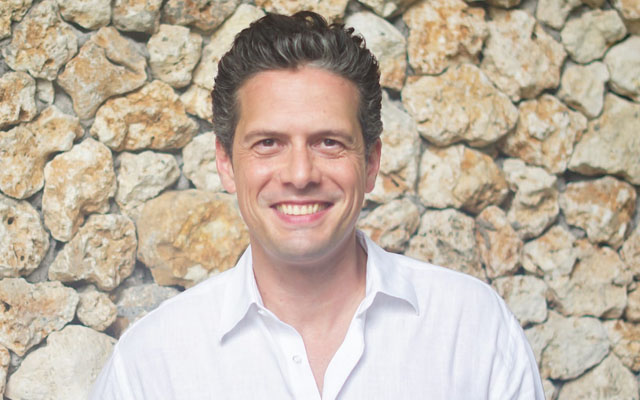
 In his new role, he will oversee the operations of both properties, comprising a total of 512 rooms, seven restaurants and nine meeting rooms.



 Location