Singapore’s ArtScience Museum’s latest exhibition is a multi-sensory experience that takes visitors on an incredible journey through the wonders of the natural world.
Running from May 27 to October 29, Sensory Odyssey: Into the Heart of Our Living World will make its Asian debut following its successful eight-month run in Paris at the French National Museum of Natural History.
Visitors can immerse themselves in nature at the Sensory Odyssey exhibition (Photo: Sensory Odyssey Studio)
The exhibition showcases the beauty of the planet’s biodiversity through up-close encounters with diverse habitats teeming with life. Visitors can join animals at a watering hole in the African Savannah, perch atop the rainforest canopy in French Guiana, take to the skies with bats as they hunt for food, experience swimming with a family of giant sperm whales in the ocean near Mauritius, float across polar landscapes in the far north of Greenland, or even shrink in size to burrow into the ground before emerging in grasslands filled with pollinating insects.
S Hotels and Resorts has appointed Ludovic Gallerne as its new vice president of global commerce.
Gallerne brings over 25 years of experience to the role, and will be responsible for all commercial activities at the group’s extensive global portfolio of hotels and resorts in Thailand, the Maldives, Fiji, Mauritius and the UK.
He was most recently the vice president of sales & marketing for Asia & Middle East at The Standard Hotels.
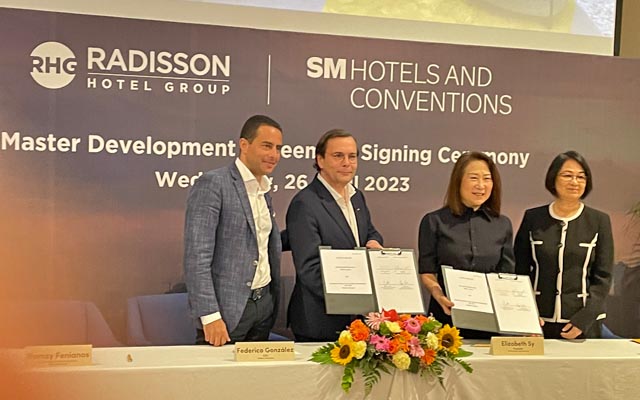
Radisson Hotel Group (RHG) and SM Hotels and Conventions Corp (SMHCC) have signed a franchise deal for 14 new hotels across the Philippines over the next five years, with a total of up to 2,500 keys.
The Master Development Agreement signed yesterday (Apr 27) gives SMHCC the exclusive development rights for the midscale to upper scale Park Inn by Radisson brand, which will mostly be outside of metro Manila.
The franchise deal will see 14 new hotels launch across the Philippines over the next five years
SMHCC has nine existing hotels, including five from RHG-Radisson Blu in Cebu and Park Inn by Radisson in Bacolod, Davao, Iloilo, Clark and Quezon City – this represents about 48 per cent of the total room inventory.
The first of the 14 new hotels are the 516-key dual-branded hotels in Cebu City, Radisson and Park Inn by Radisson. Both are scheduled to open in 2027 as part of the SMX Convention Centre and SM Seaside Arena, currently under construction, and the existing SM Seaside City Cebu Mall.
Other locations being considered are Fairview in Quezon City and outside metro Manila, Dasmarinas in Cavite, Santa Rosa in Laguna, Cauayan in Isabela, and Laoag in Ilocos Norte, shared Peggy Angeles, executive vice president of SMHCC.
She noted there is opportunity for expansion outside metro Manila in the midscale category, fuelled mostly by the domestic market.
SM hotels are not standalone properties, located as they are near an SM City or SM Mall of which 82 are spread all over the Philippines, an SMX convention centre or SMDC residential developments.
Ramzy Fenianos, chief development officer, Asia-Pacific, RHG commented that the Philippines is still “untapped” and has a “huge potential” hence the partnership with SMHCC and the opening of an RHG business unit in the Philippines.
The franchise deal benefits both companies mutually, with SMHCC ensuring financial stability and commitment to sustainability and RHG providing the network and global resources to help SMHCC properties operate and expand faster to cities outside the metro, said Angeles.
Japan has approved construction of its first integrated resort in Osaka as part of efforts to boost domestic and international tourism spending in the western Honshu city.
The complex, which was proposed by Osaka City and Osaka Prefecture, is expected to attract 20 million guests, including six million from overseas, annually, when it opens in 2029. Operators are targeting 520 billion yen (US$3.9 billion) in revenue per year.
Osaka will be home to Japan’s first integrated resort, slated to open 2029
The 490,000m2 site of the 1.08 trillion yen project is Yumeshima island in Osaka Bay, the site of Expo 2025. In addition to a casino, it will comprise hotels, a conference centre, an exhibition hall, a shopping mall, a museum and a theatre. There will also be a ferry terminal and helicopter pad to provide easy access for high-net-worth individuals.
Announcing the decision, prime minister Fumio Kishida said: “Integrated resorts are a necessary initiative in promoting our country as a tourism-based nation. They will attract a lot of visitors from Japan and abroad.”
The move by the central government follows years of controversy surrounding the introduction of casinos and the implementation of a 2018 integrated resort law to permit casino games such as poker and baccarat in Japan, where casinos and private gambling have long been illegal.
US casino operator MGM Resorts International and local partner Orix Corporation will each own 40 per cent of the facility, with the remaining 20 per cent stake held by some 20 companies including West Japan Railway, Panasonic Holdings and Kansai Electric Power Company, according to the Osaka Prefectural Government.
Meanwhile, Nagasaki Prefecture, which submitted its plan for an integrated resort at the same time as Osaka, is awaiting a decision by the Japanese government on its proposed 438 billion yen project in partnership with Casinos Austria.
Arrangements are underway to lift Japan’s Covid-19 border control measures this Saturday, ahead of initial plans to do so on May 8.
According to Japanese news reports, the decision is made in anticipation of an increase in overseas travellers during the Golden Week holidays.
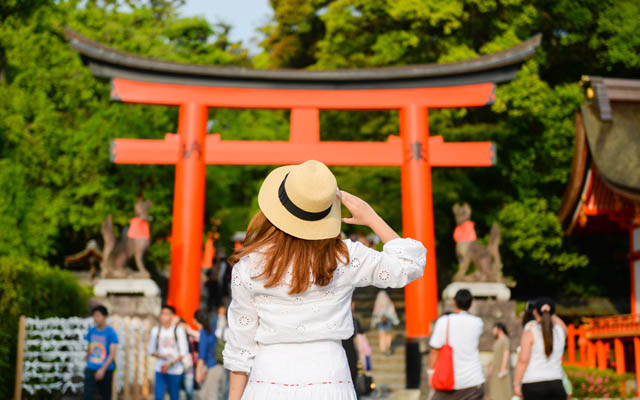
Japan will lift its Covid-19 restrictions ahead of May 8; Fushimi Inari Taisha in Kyoto pictured
The move will mean that all people entering Japan will no longer need to present certification of at least three Covid-19 vaccination doses or a negative coronavirus test taken within 72 hours of departure.
However, the government is looking to deploy a voluntary testing system at five airports, targeting travellers with symptoms such as fever, with the aim of detecting new infectious diseases.
Japan will maintain its plans to downgrade the classification of Covid-19 under the infectious disease law to Category V, the same as for seasonal flu, on May 8.
Hong Kong Airlines will undergo restructuring after securing the strategic investment fund, to expedite its business recovery and return to a healthy growth trajectory.
After three challenging years due to the pandemic, Hong Kong Airlines is ready to embark on a new chapter with its stakeholders, business partners and customers, shared Hou Wei, chairman of Hong Kong Airlines.
Hong Kong Airlines will embark on a new chapter with its stakeholders, business partners and customers
“In the year ahead, our focus remains on business recovery, supported by strategic route planning and fleet realignment. The company will strive to offer our customers more choices and top-notch service, strengthening our role in developing Hong Kong as a world-class aviation hub,” he said.
In addition, new investors will actively respond to the development of the Guangdong-Hong Kong-Macau Greater Bay Area and work towards strengthening Hong Kong’s dominant position in the aviation sector.
The new Understanding and Quantifying Mountain Tourism report released by United Nations agencies, Food and Agriculture Organization of the United Nations (FAO), World Tourism Organization (UNWTO) and Mountain Partnership (MP), has laid out the economic, social and environmental impacts of mountain tourism.
Mountains are home to around 1.1 billion people, some of them among the poorest and most isolated in the world, but they also present a wide variety of tourism possibilities. According to an earlier 2021 Mountain tourism – Towards a more sustainable path report, published by UNWTO and FAO, mountains could offer winter and sports tourism, walking tourism, adventure and sports activities, rural tourism, natural and cultural heritage, spiritual tourism, and wellness tourism.
Asia-Pacific, which contains the highest peaks in the world, has strong mountain tourism development potential; Tian Shan ranges in Central Asia pictured
Asia-Pacific, which contains the highest peaks in the world, has strong mountain tourism development potential. The Hindu Kush Himalayan region is known as the Third Pole due to its masses of ice and snow and encompasses mountain ranges in Afghanistan, Bangladesh, Bhutan, China, India, Myanmar, Nepal and Pakistan. Central Asia’s mountains extend across Kazakhstan, the Kyrgyz Republic, the Republic of Tajikistan, Turkmenistan and the Republic of Uzbekistan, where the majority of mountain communities make a living from agriculture, including pastoralism and forestry. Six mountains in South-east Asia and the Pacific are particularly rich in biodiversity. Indonesia and the Pacific Islands are recognised for the presence of many active volcanoes that attract large numbers of visitors each year.
However, in 2019, the most recent year for which figures are available, the 10 most mountainous countries (in terms of average height above sea level) received only eight per cent of international tourist arrivals worldwide, noted Understanding and Quantifying Mountain Tourism.
Managed sustainably, mountain tourism has the potential to boost the incomes of local communities and help preserve their natural resources and culture. And, according to FAO, UNWTO and MP, measuring the volume of visitors to mountains represents the first vital step towards unlocking the potential of the sector.
“With the right data, we can better control the dispersal of visitor flows, support adequate planning, improve knowledge on visitor patterns, build sustainable products in line with consumer needs, and create suitable policies that will foster sustainable development and make sure tourism activities benefit local communities,” FAO director-general Qu Dongyu and UNWTO secretary-general Zurab Pololikashvili stated.
The study, which was based around research carried out in 46 countries, shows that generating economic benefits, creating opportunities for local communities, and developing sustainable products are the main motivations for mountain tourism development.
The sustainable development of mountain tourism was also identified as a means to help to spread tourism flows, tackle seasonality and complement existing tourist offerings.
Through the report, FAO, UNWTO and MP highlight the importance of collective efforts, involving public and private stakeholders from across the value chain, to improve data collection, standardisation and delivery to gain a more comprehensive assessment of mountain tourism in terms of volumes and impacts, so that it can be better understood and developed to align with the Sustainable Development Goals.
The report also calls for concerted work to help raise awareness of the socio-economic importance of tourism in mountains and targeted policies to create jobs, support small and medium sized businesses and attract green investments in infrastructure and the digitalisation of tourism services.
Its publication coincides with the end of the International Year of Sustainable Mountain Development 2022.
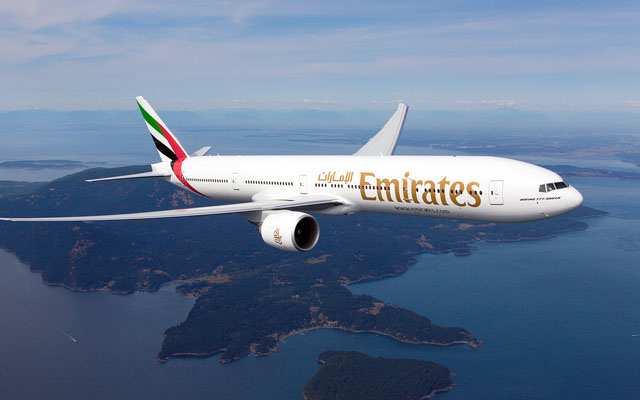
Emirates will introduce a new daily service from Dubai to Montreal from July 5, adding to its current Dubai-Toronto route and making Montreal the airline’s second gateway in Canada.
Emirates is also partnering with Air Canada to offer customers of both airlines access to an expansive network of destinations.
Emirates will commence its Dubai-Montreal service from July
In addition to over 130 destinations that Emirates flies to, its customers currently have access to 19 Canadian destinations beyond Toronto through the codeshare partnership, while Air Canada customers are able to fly on Emirates to Dubai and access 17 cities in Africa, the Indian Subcontinent, the Middle East and Far East.
Furthermore, Emirates passengers are able to choose from over 140 routes operated by Air Canada on an interline basis, including 27 points in Canada and 94 routes between Canada and the Americas, as well as 68 points from Montreal, including the US, Mexico, South America and the Caribbean.
Emirates Skywards members can earn Miles on all eligible Air Canada flights and can redeem Miles for reward tickets across Air Canada’s network.
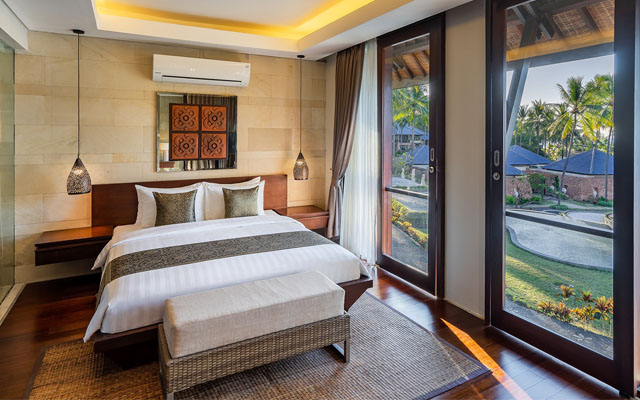
Wyndham Sundancer Resort Lombok, Indonesia Wyndham Sundancer Resort Lombok welcomes travellers back to the southwest coast of Lombok.
Now boasting one- and two-bedroom suites, seven hillside villas with private infinity pools, and more, the resort also features a large lagoon-style pool with a children’s area and swim-up bar, fitness centre, spa, and F&B options.
Activities for guests to choose from include hiking to Mount Rinjani, visiting Tiu Kelep Waterfall, and a boat ride to the Southern Gili islands for diving and snorkelling.
Lewit Hotel Pattaya
Lewit Hotel Pattaya, Thailand Lewit Hotel Pattaya is two hour’s away from Bangkok, just a short walk from the beach in Jomtien and within easy reach of the city’s upbeat attractions and activities.
The 100-key hotel offers a restaurant, fitness centre, pool, sundeck and meeting venues.
Complimentary bicycles are also available for guests to explore the local area.
Wyndham Shanghai Nanxiang
Wyndham Shanghai Nanxiang, China Located in the Central Business District of Nanxiang, Wyndham Shanghai Nanxiang is near major landmarks such as the Shanghai International Circuit and Shanghai Automobile Exhibition Center, as well as Guyi Gardens and Nanxiang Ancient Town
Featuring 315 guestrooms and suites, the hotel comes with both Chinese and Western dining options, a lobby bar, fitness centre, indoor swimming pool, parking, and event venues.
Far East Village Hotel Tokyo, Asakusa
Far East Village Hotel Tokyo, Asakusa, Japan Far East Village Hotel Tokyo, Asakusa is a 134-room hotel right in the heart of Asakusa district.
The hotel offers a range of rooms with views overlooking the iconic Sky Tree and Sensoji Temple, as well as Asakusa’s cityscape.
It is a four-minute walk from Tawaramachi Station on the Ginza Line, making it convenient for guests to explore Tokyo.
The Japanese government has approved a 2023-25 plan to become a more tourism-orientated country by focusing on sustainable travel, greater consumption and more travellers visiting its regions.
The Japan Tourism Agency’s “Basic Plan for the Promotion of a Tourism Nation”, updated for the first time in six years, addresses both inbound and domestic tourism as a means to support the country’s national growth strategy, local revitalisation and international exchange.
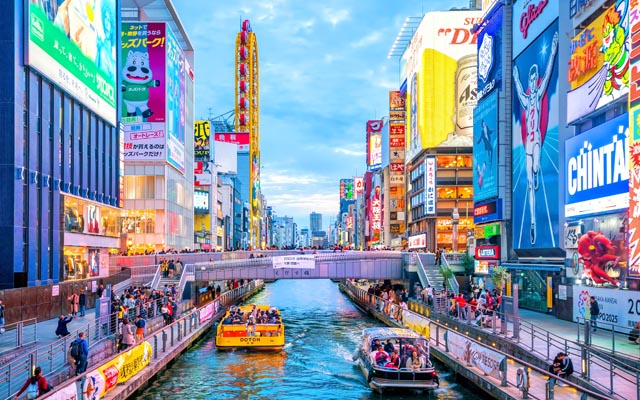
Japan is aiming for inbound travellers to increase their spending during their stay; Dotonbori in Osaka, pictured
For the overseas market, the focus is on increasing the quality of travellers rather than the number of visitors while dispersing visits to avoid over-tourism and stimulate regional development.
Developing more offerings for high-end travellers, training more tourism professionals, and employing greater use of technology are among the initiatives planned to deliver the targets. Special events and funding for local tourism resources, such as accommodation and facilities, are also in the works to create regions that are “good to live in and good to visit”, according to the report.
The plan over fiscal 2023 to 2025 (April 2023 to March 2026) aims for inbound travellers to spend 200,000 yen (US$1,495) each during their stay in Japan, up from 159,000 yen in 2019. This amounts to five trillion yen in expenditure annually by all overseas visitors, a rise from 2019’s 4.8 trillion yen. In addition, the goal is for overseas visitors to spend two nights in local areas, up from 2019’s 1.4 nights.
The plan will also encourage domestic travellers to spend more and travel widely by promoting longer trips and more off-season travel. The goal is for annual consumption to reach 22 trillion yen, up from 21.9 trillion yen in 2019, and 320 million nights spent in regions, up from 300 million nights in 2019.




 He was most recently the vice president of sales & marketing for Asia & Middle East at The Standard Hotels.