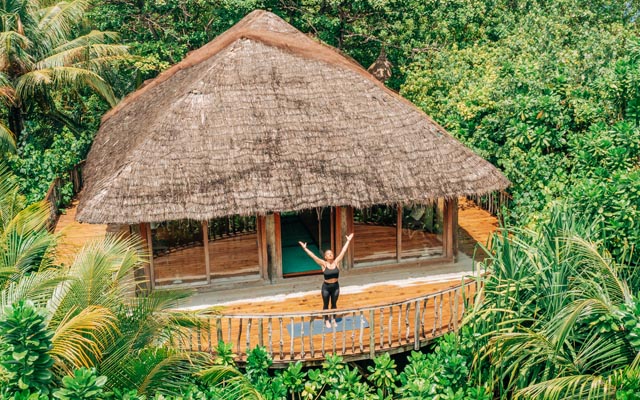
The SOUL Festival will launch for the first time in the Maldives, with Soneva Fushi hosting the event from September 29 to October 8 this year.
SOUL Festival will span 10 days and two weekends, and feature a programme comprising insightful talks, live musical performances, guided wellness sessions and hands-on treatments, as well as a global line-up of visionaries, thought leaders and wellness pioneers.
Guests can reconnect and feel renewed with daily healing rituals during SOUL Festival
Guests will get to explore the ancient healing traditions and modern science and medicine that serve individuals, communities and the planet. Highlights include sunset cocktails on the sandbank, a plant-based gala dinner on the beach, morning yoga and meditation sessions, fitness boot camps, paddleboarding, learning the art of hot glassblowing, and more.
For the festival, Soneva Fushi is offering curated three-, five- or ten-night packages, which comprises full access to the festival programme, private villa accommodation, daily meals, and round–trip domestic transfers.
Prices for a three-night stay for two start at US$7,600. Bookings made before August 31will receive an additional 10 per cent reduction on the package rate.
Proceeds from the sale of SOUL Festival tickets will go to the Soneva Foundation and Organic India Foundation to support the development of projects that have a positive environmental, social and economic impact.
Hilton Singapore Orchard has introduced a range of new experiences curated for families with children.
Upon arrival, families will be greeted by a Kids Ambassador who will lead junior guests to a dedicated kids check-in corner at the reception. During check in, each child is presented with a welcome letter, a set of wooden key cards, and a Hilton Singapore Orchard Junior Explorer Drawstring Bag containing a number of surprises every child needs for their adventure.
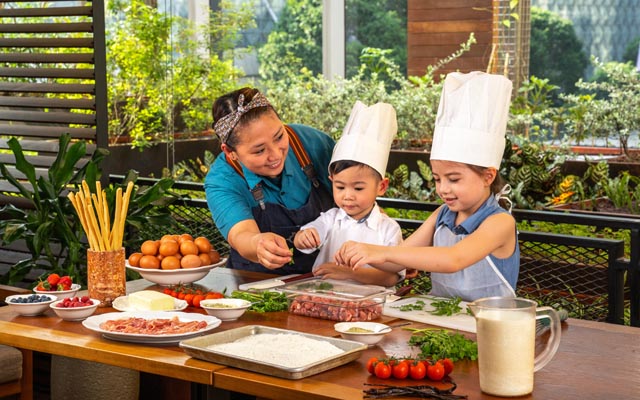
Junior guests can don their tiny chef hats in the Junior Masterclass series at Osteria Mozza
With connecting rooms available for families, the rooms feature a range of specially-designed amenities in partnership with local publisher and graphic illustrator Piqolo Kids.
Young guests will enjoy kid-friendly gourmet choices as well as specially designed placemats with activities like colouring to keep them engaged during their meals.
Little gourmands can also participate in Osteria Mozza’s new Junior Masterclass series that will be available every first Saturday commencing on October 14, where they will learn to prepare their own three-course authentic Italian meal. Each 90-minute masterclass is priced at S$78 (US$58) per child.
The hotel also has a new Kids Service Menu, which comprises a list of family-friendly itineraries created in partnership with Klook, with activities like tufting workshops and art jamming sessions within Orchard Road, to other key tourist attractions around the city.
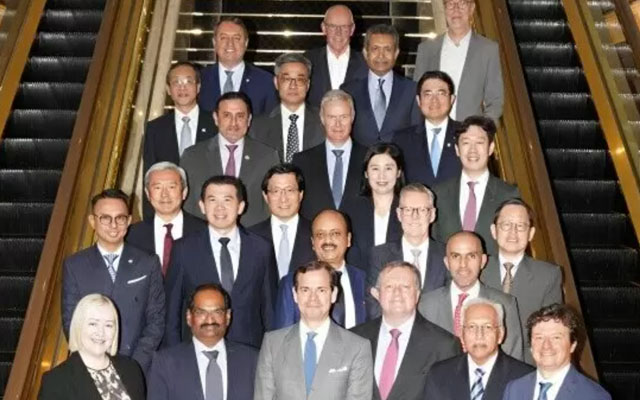
The ACI Asia-Pacific has announced the appointment of four new members into its board.
ACI Asia-Pacific Board Members at the Regional Assembly in Kobe, Japan
They are Musad Abdulaziz Aldaood, CEO, Riyadh Airport Company; Nguyen Duc Hung, deputy general director, Airports Corporation of Vietnam; Hag Jae Lee, president and CEO of Incheon International Airport Corporation; and Sarah Samuel, senior vice president, Airport & Airline Operations, ICM Airport Technics, director for World Business Partner, ACI Asia-Pacific.
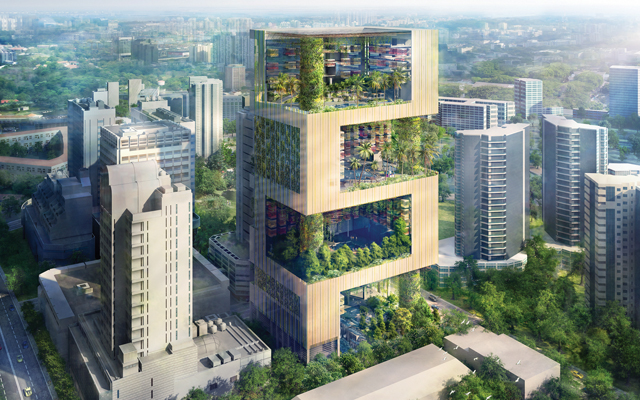
A glimpse of Pan Pacific Hotels Group’s (PPHG) Parkroyal Collection property portfolio will easily conjure visions of an alternate universe where lush, leafy giant structures dominate the skyline.
This is the result of the brand’s decision to make iconic and biophilic design a cornerstone of its architectural direction. Its first biophilic hotel, Parkroyal Collection Pickering in Singapore, is such a success that both its design and sustainable achievements have earned it numerous awards, media coverage and social media posts.
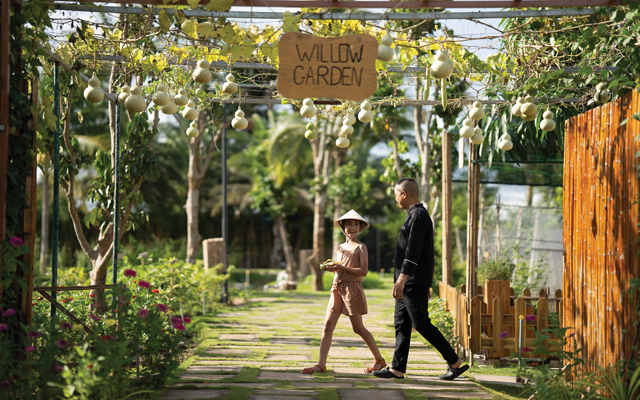
Willow Garden at Meliá Ho Tram
Parkroyal Collection Marina Bay in Singapore, the second property to open under the brand, is no shadow of its sister. Its sky-lit indoor atrium – said to be South-east Asia’s largest – is home to more than 2,400 plants, trees, shrubs and ground covers.
When Parkroyal Collection Kuala Lumpur opened in June 2022, it carried the brand’s biophilic design promise, with a vertical garden facade and roof terraces showcasing 1,208m² of plants and trees.
The fourth development to come in 2026, the Parkroyal Collection Faber House in Singapore, will be another one to watch for fans of biophilic design.
The 250-key hotel will form part of an 18-storey development in the heart of Singapore’s shopping belt. Its stellar address aside, the hotel will draw eyeballs with its façade of intense outdoor greening and cascading water features, bringing much needed greenery to the district packed with malls.
“But these are more than just aesthetics,” said Choe Peng Sum, PPHG’s CEO, during a panel discussion hosted under the Hospitality Conference 2023 by SHATEC – The International Hotel & Tourism School (Singapore) earlier in March.
“All that greenery gives these properties a different quality of air and cools the air naturally. Reducing just two degree Celsius without the use of air-conditioning means substantial energy savings,” he explained.
Furthermore, with these properties adopting stringent environmentally sustainable operations, such as waste and water management, beyond their pretty biophilic features, Choe emphasised that going green is a sensible business move.
Citing an example, Choe said securing the Green Mark Platinum certification from the Singapore Building and Construction Authority for his company’s soon-to-launch Pan Pacific Orchard resulted in a S$120 million (US$90 million) green loan, up to three per cent additional gross floor area – which he said could mean an extra floor of guestrooms, and cash incentive to lower upfront cost of energy efficiency retrofits.
Indeed, PPHG’s sustainability efforts flow through its entire portfolio. It works closely with parent company UOL Group and respective hotel owners to determine the ideal design for the property, and if possible, incorporate environmentally friendly systems.
A PPHG spokesperson told TTG Asia: “To invest in complete biophilic design with environmentally-friendly systems is not cheap, and not easy – it is crucial to have the hotel owners’ buy-in and to believe in the returns, both in long-term cost savings and in securing strong brand equity.”
Pan Pacific Orchard
Top-level commitment
At Meliá Hotels International, sustainability commitment has top-level involvement. Its sustainability directions are led by a Sustainability Committee formed in 2020, with two members of the Executive Committee holding seats.
The company’s sustainability vice president, Lourdes Ripoll de Oleza, told TTG Asia: “This fact gives it the executive impetus at the highest level necessary to ensure that decisions are passed downstream to the operation. This committee maintains a close link with our Board of Directors as it reports directly to one of its committees.”
At the same time, day-to-day operations are assumed by the Sustainability department, which reports directly to the executive vice president and CEO. Owners are also an essential part of the commitment, and they would “share their thoughts on sustainability, and address concerns and potential actions that we can promote together”.
Sofitel Singapore Sentosa Resort & Spa, which has started to establish a farm on its premises, has its sustainability strategy and goals championed by members of a task force comprising key departments such as housekeeping, engineering, human resources, culinary, purchasing, food and beverage, front office, sales and marketing communications. This task force supports the resort’s cluster general manager Cavaliere Giovanni Viterale and general manager Robert Gauer.
Vehicle for education
Hotels committed to sustainability are realising that they can play a part in educating their guests on how to be sustainable back home.
Meliá Hotels International took advantage of Earth Day on April 22 this year to offer guests at its South-east Asian properties interesting activities rooted in sustainability concepts. Sol by Meliá Benoa Bali, Indonesia, for instance, hosted a beach Cleaning Blitz with opportunities for guests to join in, along with sustainable craft activities for kids where they painted bags and for adults to make torches using waste cooking oil.
Earth Day may be over by now, but learning opportunities at Meliá properties continue. Sol by Meliá Phu Quoc offers candle-making workshops using old candles; Meliá Phuket Mai Khao offers upcycled bottle painting; Meliá Bali runs a coral reef recovery project with local non-profit, Nusa Dua Reef Foundation, and invites guests to support it with purchases of coral plantation activities.
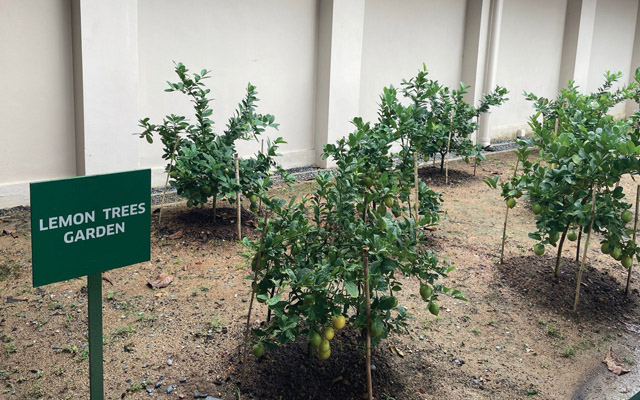
Sofitel Singapore Sentosa Resort & Spa’s farm, set up in 2022 as part of its food resiliency measures, has helped to provide more sustainable dining and cocktail options. A lemon tree garden now feeds the culinary and mixology teams. At LeBar, lemon leaves from the garden and watermelon tincture made from watermelon skin obtained from the kitchen are used to concoct a refreshing Sentosa Sling. The garden recently welcomed an Amalfi lemon plant, gifted by local Peranakan culinary doyenne Violet Oon.
“We are very much looking forward to an Amalfi lemon tree in the coming months. Additionally, our team has just planted a crop of vegetables and herbs on an adjacent plot of land facing the South China Sea,” shared Viterale.
The property is also sharpening its farm-to-table offering. In March 2023, it was awarded the Singapore Food Agency Farm-To-Table Recognition (Highest Tier) with at least 15 per cent of local produce sourced across three or more food categories (Hen Shell Eggs, Leafy Vegetables, Beansprouts and/or Fish categories).
“This inaugural award reinforces our resort’s commitment to supporting local producers and at the same time, ensures we are part of a resilient food supply chain that is in alignment with the Singapore Green Plan 2030. In addition, it ensures higher quality and fresher ingredients due to a shorter period of transportation and enables the chefs to showcase uniquely created menus that highlight local flavours,” said Viterale.
Further, it partners with food tech brands such as Very Dairy and OnlyEg to create innovative yet healthy menu offerings.
At PPHG properties, guests learn to live day-to-day with reduced environmental impact. Those staying at Pan Pacific Orchard are able to refill their bottles with fresh drinking water from in-room filtered water dispensers, while long-staying guests at Parkroyal Nay Pyi Taw can grow their own plants in a plot at the Organic Garden.
“While many of our investments and efforts run in the background and are not visible to guests, we find creative and engaging means to incorporate sustainability into the guest experience,” said the PPHG spokesperson.
Indonesia is working to develop medical tourism in rural areas as part of the country’s push to sharpen its healthcare offerings, and is doing so through the Indonesia Medical Tourism Association (AWMI).
Speaking to TTG Asia on the side line of World Tourism Network Summit 2023 in Jakarta, Taufik Jamaan, chairman of AWMI, said the association’s work had started in late-2022, and ongoing efforts include collaborating with food processing trainers to ensure hygienic food processing.
AWMI hopes to strengthen Indonesia’s reputation in herbal medicine and make it more accessible to tourists
AWMI is also embracing digitalisation through the implementation of the Community Telehealth Pavilion (ATM Health). This solution, linked to the Ministry of Health, allows travellers to conveniently check their blood pressure, cholesterol levels, blood sugar, and oxygen saturation.
“For instance, before embarking on a mountain climb, individuals can assess their health condition using ATM Health,” Taufik explained.
The portable nature of ATM Health, which resembles a suitcase, gives it mobility and ease of use in tourism villages.
Taufik explained that AWMI’s role extends beyond medical tourism promotion, as it also actively develops businesses avenues, educates the public, and conducts research on herbal resources across the country. It recently welcomed the Association of Indonesian Herbal Medicine Doctors as a partner in its medical endeavours.
Looking forward, AWMI aims to establish downstream processes to ensure that the community can benefit from research findings. By leveraging research outcomes, it plans to develop various products, such as supplements, powders, herbs, and beverages, which will strengthen Indonesia’s reputation in herbal medicine.
At present, it is collaborating with pharmaceutical companies on verification of herbal medicine by the National Agency of Drug and Food Control and to make herbal medicine more easily accessible to tourists.
Sabre Corporation has acquired hospitality e-commerce provider Techsembly to expand and accelerate its hospitality retailing solutions.
Based in the UK with offices in Singapore and Hong Kong, Techsembly offers a fully automated e-commerce solution enabling global hotels to manage multiple online property stores, products, and logistics on one centralised platform, as well as selling and fulfilling of gift cards.
Read: joining Sabre will allow us to expand and offer game-changing technology and increase our reach to more customers around the world
Sabre Hospitality’s SynXis Retail Studio enables hoteliers to retail an unlimited number of products and services with room reservations, resulting in more opportunities to create additional revenue streams beyond the room, differentiate their brand further and increase guest satisfaction.
By combining and integrating Techsembly’s e-commerce marketplace and gift card capabilities with SynXis Retail Studio, Sabre will create a single destination that offers an unlimited number of product types at all stages of the guest journey – replacing the need for hoteliers to manage multiple sites and providing a seamless guest experience while accelerating revenue.
Scott Wilson, president of Sabre Hospitality, said: “Not only will this acquisition accelerate our product roadmap via Techsembly’s marketplace and gift card capabilities, but it also enables us to come together and offer the most robust and effective suite of integrated retailing solutions designed to meet the retailing needs of today’s modern hoteliers.”
“Joining Sabre will allow us to expand and offer game-changing technology and increase our reach to more customers around the world,” added Amy Read, co-founder and CEO of Techsembly. “We look forward to bringing our knowledgeable team and deep understanding of global e-commerce technology, luxury brands, the digital customer experience as well as pricing and payments to Sabre Hospitality.”
As part of the transaction, Sabre will welcome Techsembly’s e-commerce experts and developers to the company.
Malaysia Airlines and China Southern Airlines have introduced codeshare flights between the two carriers yesterday (July 6), offering travellers seamless connections and enhanced travel options.
With this partnership, passengers will enjoy convenient flight frequencies for travel between the airlines’ main hubs in KLIA Terminal 1 and Guangzhou Baiyun International Airport, as the airlines will be placing their respective flight codes – MH for Malaysia Airlines and CZ for China Southern Airlines – on these routes.
The partnership offers travellers seamless connections and enhanced travel options on both airlines
The two carriers will also look to expand and leverage each other’s core network, to explore more cooperation possibilities, and will further expand the scope of cooperation to Beijing Daxing-Kuala Lumpur and other China-Malaysia routes.
Malaysia Airlines currently operates three times weekly flights between both airports, while China Southern Airlines flies 21 times weekly.
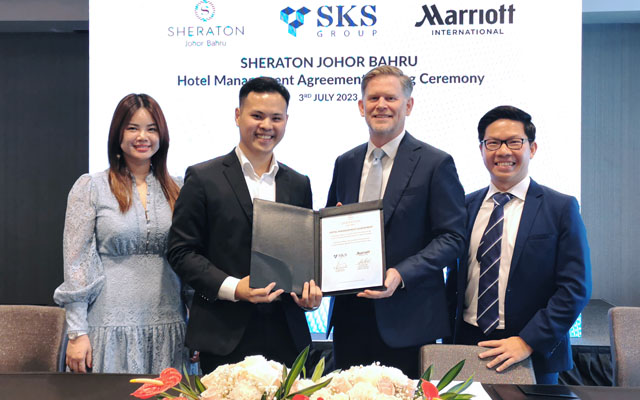
Marriott International has signed a hotel management agreement with SKS Group to introduce the Sheraton brand in the capital city of Malaysia.
Expected to open in 2025, the 345-room Sheraton Johor Bahru is Marriott’s second collaboration with SKS Group, following the Four Points by Sheraton Desaru which opened in 2021.
Sheraton Johor Bahru is scheduled to open in 2025
Part of a mixed-use development comprising a retail podium and office spaces, Sheraton Johor Bahru will be located along Jalan Storey, with direct access to Tebrau Highway that links to various parts of the state and beyond.
The hotel is conveniently located close to Johor Bahru Sentral Bus Terminal and the Bukit Chagar Johor Bahru-Singapore Rapid Transit System (RTS) Station, which is scheduled for completion by end 2026.
Guests can enjoy various dining options, an outdoor pool, children’s pool, fitness centre, spa, gym, a ballroom and meeting spaces.
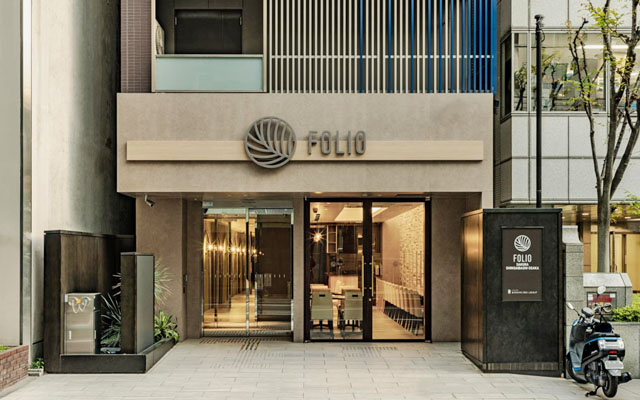
Banyan Tree Group is celebrating its 70th property milestone with the June openings of Angsana Ho Tram and Dhawa Ho Tram in Vietnam, as well as Folio Sakura Shinsaibashi Osaka and Homm Stay Yumiha Okinawa in Japan.
Angsana Ho Tram and Dhawa Ho Tram, along with the renowned Banyan Tree and Angsana in Lang Co, are strategically positioned as gateways to Vietnam. In addition, Angsana Quan Lan is slated to open next year.
Folio Sakura Shinsaibashi Osaka is a new micro-hotel that opened in June
Folio Sakura Shinsaibashi Osaka and Homm Stay Yumiha Okinawa are the first in a planned global collection of micro-hotels under the new Folio and Homm brand extension. The two properties follow the group’s debut in Japan last year with the opening of Dhawa Yura Kyoto and Garrya Nijo Castle Kyoto.
Future plans for Japan include Banyan Tree Higashiyama, Banyan Tree Ashinoko Hakone, and ski resort Cassia Niseko. More micro-hotels under the Folio brand are also marked for gateway cities and urban centres.
Other upcoming launches include Garrya Bianti Yogyakarta in Indonesia, Garrya Mu Chang Chai in Vietnam, Garrya Xianju and Dhawa Dalian in China, and Homm Chura Samui in Thailand before the end of the year.
Collinson’s new partnership with Blue Sky Group will allow Priority Pass Members to access 13 airport lounges, eight of which are exclusive to Priority Pass Members, in Indonesian airports.
These include Soekarno-Hatta International Airport, Sultan Aji Muhammad Sulaiman Sepinggan International Airport, and Sultan Mahmud Badaruddin II International Airport.
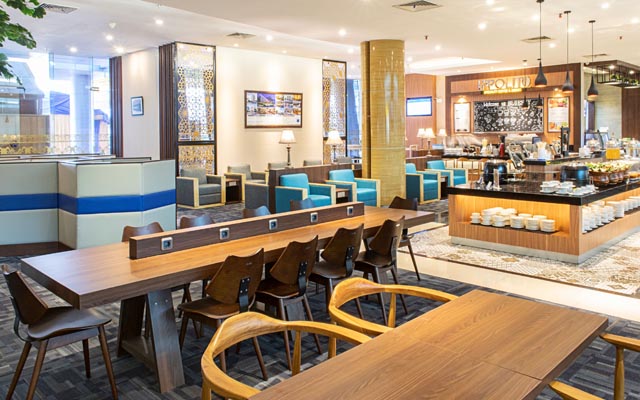
Blue Sky Group’s airport lounges provide comfortable spaces for travellers to relax before their flights
Blue Sky Group manages premium executive lounges in airports across Indonesia, alongside hotels and restaurants. Its airport lounges offer spaces for travellers to relax pre-flight, as well as VIP rooms for informal meetings.
Lounges at Balikpapan and Terminal 2 of Soekarno-Hatta airports provide complimentary buggy services that transport guests from the lounge to immigration. In addition, members will be able to enjoy Blue Sky’s in-house coffee brand and sample Indonesian cuisine.
“This is an exciting time for the travel industry in Indonesia, as the country has set a goal of attracting nearly 7.4 million international arrivals in 2023; almost double the number of arrivals when compared to last year,” said Todd Handcock, global chief commercial officer and Asia-Pacific president at Collinson.
Linan Kurniahu, CEO of Blue Sky Group, added: “This partnership represents a significant milestone for us as we continue to expand our footprint across Asia-Pacific’s travel industry.”