Regional and longhaul NTO speakers at a recent Dragon Trail International (DTI) webinar on Destination Marketing for Chinese Tourism Recovery say targeted use of social media during the pandemic and after the market opened on January 8, is bearing fruit.
Apart from WeChat, the Twitter-like Sina Weibo, short video app Douyin, Kuaishou, Xiaohongshu and Bilibili are some of the platforms used by South Africa Tourism (SAT), Switzerland Tourism (ST) and the Tourism Authority of Thailand (TAT).
The targeted use of social media during the pandemic and after the market opened has kept NTOs connected and up-to-date
Speakers claimed the use of China-specific social media platforms and livestreaming with key opinion leaders (KOLs) have helped the NTOs stay top of mind with travellers and B2B partners kept up-to-date.
Rung Kanjanaviroj, director, TAT, Chengdu Office, shared that February/March numbers were twice that of January with 300,000 Chinese travellers as of March 7. TAT is expecting five million visitors in 2023 compared to 11 million in 2019.
For ST, Daniela Chiani, director, Greater China, said China recovery, with current levels of air capacity, was at around 40 to 45 per cent.
For SAT, Mansoor Mohamed, hub head Asia-Pacific, noted luxury travellers were willing to pay top dollar for 15-day trips, but South Africa is facing a challenge as its visa office was not able to cope with the demand.
SAT is targeting travellers from Beijing, Shanghai and Guangzhou, ST on “the big cities with direct access”, while TAT is eyeing second-tier cities such as Chongqing, Shaanxi, Ningxia and Gansu.
Livestreaming experiences included ST’s fondue making and eating sessions and KOLs in South Africa have livestreamed safari sunsets while interacting with viewers in China, and TAT was “seeing results” with its livestreaming product sales.
Mansoor commented that livestreaming, with some 250,000 live views, “generated awareness and positivity” and was “very exciting” for followers of KOLs.
DTI director of marketing and communications, Sienna Parulis-Cook, observed Chinese travellers were interested to interact on social media platforms and NTOs were not just “putting information out there”.
While familiarisation trips and face-to-face roadshows have resumed, the NTOs said the resumption of more flights was necessary for the full recovery of Chinese tourism.
Travel Industry Council (TIC) is recruiting members for its newly-launched GreaterGo, a B2B tourism resources platform to help travel trade players drive more product creation in the Greater Bay Area (GBA), as well as business collaboration through the Belt and Road (B&R) Initiative.
The platform is free to join for the first year, with the option of becoming a VIP member by paying a HK$2,000 (US$254) annual fee to enjoy exclusive access to B2B exchanges and promotion of their latest tourism products and services.
Travel Industry Council is recruiting members to join the B2B tourism resources platform GreaterGo
Members will also benefit from exclusive marketing campaigns, trade events and festivals organised throughout the year.
TIC’s executive director, Fanny Yeung, shared that the platform targets travel agents, hotels, attractions, national tourist organisations and restaurant operators, among others, that are looking for business opportunities.
She added that there will be seasonal promotions to drive bookings to GreaterGo members as well as inspection tours. One such promotion was the Hong Kong International Airport’s World of Winners tickets giveaway campaign, where 35,000 tickets were allocated to TIC.
Funded by the Hong Kong SAR Budget 2019/2020, GreaterGo has attracted more than 200 corporate sign-ups over the last two months, half of which have chosen the VIP membership.
Expedia Group and OpenAI have unveiled a new plugin to simplify trip planning for ChatGPT users.
Previously, ChatGPT could only identify what to do and where to stay, but it could not help users to book trips.
When the Expedia plugin is enabled, it will bring a trip itinerary in ChatGPT to life
Now, once a traveller enables the Expedia plugin, they can bring a trip itinerary in ChatGPT to life – how to get there, where to stay, and what to see and do – all powered by Expedia Group’s 70 petabytes of travel data. When travellers are ready to book, they will be transferred to Expedia, where they can access their member discounts and rewards.
AI has transformed Expedia Group from an online travel agency to a technology platform powering travel at every step of the journey for over 154 million travellers and more than 50,000 partners globally.
From planning and shopping, booking flights and hotels, the AI capabilities offer personalised experiences by evaluating more than 360,000 permutations of a page on one of its brand sites to ensure travellers are seeing the most relevant information for them.
Its AI Virtual Agent also helps travellers quickly solve issues when things change or unexpectedly go wrong.
In addition, suspicious activity is flagged when behaviour patterns deviate from the norm, allowing Expedia Group to intervene before fraud or abuse occurs.
The Tourism Promotions Board (TPB) Philippines will be participating in this year’s Asia Diving Expo (ADEX) 2023, to be held at the Sands Expo and Convention Centre in Singapore from March 31 to April 2.
ADEX is the longest-running consumer dive and trade show in Asia, bringing together diver enthusiasts, industry professionals and marine conservationists from around the world. This year’s event is expected to draw close to 30,000 attendees.
Philippines hopes to attract more tourists and investments to the country’s dive industry at ADEX this year
The three-day trade event will feature a range of activities, including diving and underwater photography exhibitions, and a range of talks about the latest conservation efforts and initiatives of the tourism boards across the world on protecting the oceans and marine life.
There will also be networking opportunities with fellow divers and industry professionals, with opportunities to learn about the different dive operators and dive tourism packages and services as well as the latest diving equipment, gear and technology.
The TPB’s participation in ADEX this year sees its biggest contingent ever with 21 participants from the dive industry and airlines, as it seeks to further drive more tourists and investments to the country’s dive industry, and create additional collaborative developmental and promotional opportunities with dive communities and stakeholders.
TPB chief operating officer, Maria Margarita Montemayor Nograles, remarked that the Philippines is a “must-visit destination for any diver or traveller looking for an amazing, educational and unforgettable experience”.
“For our island based and archipelagic economy, pursuing sustainable tourism is the way for safeguarding our resources, and our means of livelihood. That is why we at the Tourism Promotions Board Philippines ensure that conservation and sustainable development are incorporated into every tourism activity that we craft,” she added.
Attendance at ILTM Asia Pacific this June at Marina Bay Sands Singapore is expected to inch close to 2019 levels, with some 1,000 industry specialists set to gather at the luxury travel tradeshow from June 19 to 22.
Comparing the 2022 edition with the upcoming event, Alison Gilmore, portfolio director for ILTM Worldwide with RX Global, said last year’s show “was buzzing, but this year brings the buzz to new levels of travel expertise and boundless energy”.
ILTM Asia Pacific 2023 will see some 1,000 industry specialists attending the luxury travel tradeshow
Gilmore revealed that the tradeshow has seen confirmation from “luxury travel suppliers in all shapes and sizes” – from smaller independent brands like Jawakara, a new high-end family friendly and multi-generational Maldives island, and small niche hotel chains such as Airelles, to established hospitality companies such as Hyatt Hotels & Resorts and Small Luxury Hotels of the World.
Luxury travel advisors can also expect to tour the world across a single show floor, as destinations such as Fiji, Italy, Portugal and South Korea commit to presence at ILTM Asia Pacific 2023.
Sellers will get to meet new buyers this June, with 44 per cent of luxury travel advisors in attendance being new to the Asia-Pacific event. In all, the majority representation (60 per cent) will be from Australasia. Nine per cent will hail from South-east Asia; eight per cent from China; seven per cent each from India and Hong Kong; six per cent from Taiwan; and three per cent from Japan.
Abundant opportunities for interaction have been designed for sellers, buyers and media representatives. Besides three days of pre-scheduled meetings on the show floor, there will also be networking events and parties every night as well as a VIP media programme.
Speaking to TTG Asia, Gilmore said: “As we hear continually, the success of ILTM is not just the appointments on the show floor, but the many different occasions where people can connect – often informally or unofficially, where we understand many business conversations are conducted, forming the basis of many new business relationships. ILTM Asia Pacific will continue to focus on the power of human connection to facilitate the impending boom in luxury travel business across the region.”
Other highlights at ILTM Asia Pacific 2023 include the unveiling of the event’s research, Decoding the Luxury Travellers Mindset; Spotlight China, during the Opening Forum at the Ritz Carlton Millenia Singapore on June 19; and a designer pop-up led by Design Orchard Retail Showcase, a project spearheaded by the Singapore Fashion Council, Enterprise Singapore, JTC and Singapore Tourism Board to groom new and emerging local designers for overseas business ventures.
The study is the third edition of ILTM’s research series, Buzz versus Reality, which is aimed at “separating fact from fiction when it comes to luxury travel trends”, according to Gilmore.
She added: “The last three years have seen the travel industry confronted by unique and unprecedented challenges, giving way to predictions, opinions, and forecasts. And as China moves out of a prolonged period of lockdown, the travel industry needs to understand which trends are being reflected and which are mere speculation.”
Decoding the Luxury Travellers Mindset; Spotlight China is produced in collaboration with affluent research specialist Altiant. Surveying high-net-worth individuals from across China, the research explores recent and planned travel behaviour, and seeks to answer questions regarding their key travel considerations, spend intentions, desired destinations, expectations for luxury travel experiences, and more.
“The report will be a unique and reliable barometer of luxury sentiment and will be vital reading for luxury travel professionals who want to understand the mindset of the luxury Chinese traveller today,” remarked Gilmore.
The full report will be available for download from the ILTM App and website on June 20.
Kagi Maldives Spa Island has introduced the new Say When Wellness package which comprises a variety of wellness options, culinary experiences, ocean adventures, bucket list adventures and more.
Priced from £3,509 (US$4,295) per pax, the package includes five nights’ accommodation with daily breakfast, a complimentary cocktail, two three-course dinners, and three lunches.
Water sports offered at Kagi Maldives are non-motorised to preserve the nature of the house reef
Guests can choose two Indian Ocean experiences such as scuba diving, glass-bottom kayaking, paddle boarding, and windsurfing, as well as three wellness experiences including personal training, private Pilates and yoga, one-on-one sound healing, massages, manicures, pedicures, detoxifying bath rituals and more.
The 50-villa boutique resort located in the North Malé Atoll is surrounded by one of the Maldives’ most diverse and untouched house reefs, home to over 150 different marine creatures.
All water sports offered at the resort are non-motorised, part of Kagi’s sustainability commitment to preserve the nature of the house reef.
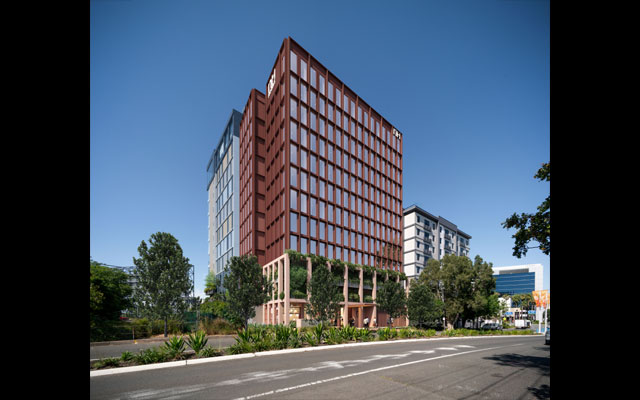
Capella Hotels and Resorts has named Marc von Arnim as general manager of Capella Sydney.
With over 20 years in the hospitality industry and various senior leadership positions, he will spearhead all pre-opening efforts for Capella Sydney, including recruitment and training, operations and curating experiences.
Before joining Capella Hotel Group, he was general manager of Park Hyatt Sydney.
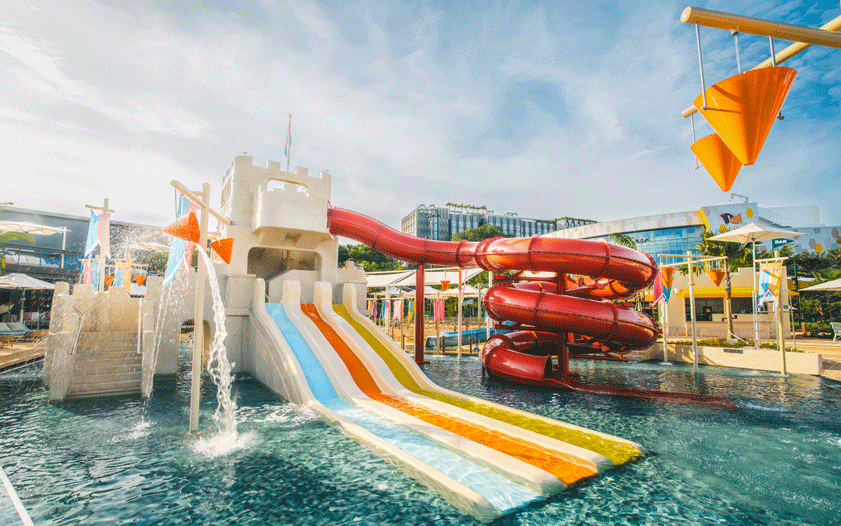
Merlin Entertainments has appointed Susan Ang as the new divisional director for Asia-Pacific, Midway, effective April 1.
With over 25 years of global experience in the tourism industry, Ang will lead the overall management, regional strategies and financial responsibilities for Merlin’s 32 attractions across region, including Merlin’s 22 attractions across Asia and 10 attractions in Australia and New Zealand.
She will be based in Singapore, with regular visits to the region, including Australia, New Zealand and China.
Green efforts are a pricey but necessary long-term commitment
Technology improvements in food waste management can help hotels reach circular economy goals
SHATEC – The International Hotel & Tourism School (Singapore) placed environmental sustainability at the core of its one-day Hospitality Conference 2023 on Friday, with industry leaders and subject matter experts brought in to discuss achievements, challenges and learning points in sustainability management.
Speakers at the two keynote panels, moderated by TTG Asia Media’s group editor, Karen Yue, were unanimous about the commercial benefits of pursuing a sustainability strategy, stating that the payback goes beyond a positive reputation.
Tourism and hospitality opinion leaders in Singapore share learnings in their corporate environmental sustainability journey
Jesper Palmqvist, senior director Asia Pacific, STR, pointed to higher chances of attracting funding from financial institutions that prioritise green projects, long-term efficiencies leading to better operating profits, stronger appeal among a generation of talents who reserve their loyalty for responsible employers, and more.
“We all know that this (being environmentally responsible) is the right thing to do, but let’s not be naïve – the world is still capitalist and businesses are out to make money,” he remarked.
Citing a business case for being environmentally sustainable, Choe Peng Sum, CEO of Pan Pacific Hotels Group, said securing the Green Mark Platinum certification from the Singapore Building and Construction Authority for his company’s soon-to-launch Pan Pacific Orchard resulted in a S$120 million (US$90 million) green loan, up to three per cent additional gross floor area – which he said could mean an extra floor of guestrooms, and cash incentive to lower upfront cost of energy efficiency retrofits.
John Timson, vice president sustainability and safety – South East Asia, Japan and Korea, Accor, believes that green hotels are going to be the norm, as travellers are now highly conscious of their actions impacting the environment, so much so that brown hotels – those lacking in environmental consciousness – will be forced to do drop rates to attract customers, ultimately denting their revenues.
“Guests will no longer notice the absence of plastic bottles on the table. Rather, they will notice that the hotel is (excessively cold), or the guestroom lights up like a football stadium and they cannot switch off all the lights. They will remember (these disappointments),” he said.
A costly commitment
However, sustaining a sustainability strategy has its challenges.
“There is so much value that sustainability can create, but it will also require many things that would cost more,” stated Eric Ricaurte founder and CEO of Greenview, a specialised provider of sustainability programmes for the hospitality and tourism industry, adding that it is therefore important for the chief financial officer to also be fully behind the company’s sustainability strategy.
Choe agrees that being sustainable is a pricey commitment.
Citing examples in his presentation, Choe said the construction of Parkroyal Collection Pickering, which features 1,393.5m2 of foliage covering over 200 per cent of hotel land area, took S$140 million to construct; the asset enhancement of the building taken over by Parkroyal Collection Marina Bay cost S$45 million, with new features being the adoption of more than 2,400 indoor plants and shrubs throughout the interior.
Without these biophilic features, construction costs would have been halved, he noted.
“But these are more than just aesthetics. All that greenery gives these properties a different quality of air and cools the air naturally. Reducing just two degree Celcius without the use of air-conditioning mean substantial energy savings,” he said.
Jeanette Ho, vice president, Raffles global brand strategy & strategic partnerships, Accor, remarked that sustainability efforts “cannot be seen as a cost element”, as they are part of a responsible business model.
For such a mindset change, leadership is required. She said Accor’s sustainability strategy is supported by its chief sustainability officer, chief executive officer and chief financial officer.
“Our leadership is behind it, and they drive excitement throughout the company (about our action plans) and filter objectives through to our front liners, business partners and guests,” she said.
Choe: environmental sustainability efforts are not to be belittled; the journey is tough
Hesitant first steps
Beyond cost concerns, Ricaurte also recognises that business owners and leaders are held back from the “unknown” surrounding sustainability.
“I’d like to cite (Albert) Einstein here: ‘As our circle of knowledge expands, so does the circumference of darkness surrounding it’. As you (embark on sustainability), you will begin to realise there are a lot of other things you need to learn and do. That’s why people hesitate,” Ricaurte explained.
Ho added that difficulties also stem from having to get multiple properties and staff aligned with all the sustainability standards and key actions in the company’s sustainability strategy.
Accor’s Planet21 programme, which spans 10 years, covers about 150 different standards. It is executed across more than 5,000 hotels worldwide and involves half a million colleagues.
According to Chen Wenjie, associate director of Building System & Diagnostics, a consultancy agency that advises on environmentally sustainable design and construction of buildings and the built environment, the best efforts are made right from the start, when a hotel building is being designed, as everything from materials used and building layout can impact the eventual green processes the hotel owner and/or operator hopes to implement in the course of business.
“Retrofitting a building for sustainability will be an even more costly and time-consuming effort,” Chen added.
However, as 80 per cent of Singapore hotels were built before sustainability and the circular economy concept became mainstream considerations, Choe said hotel owners have to invest in hardware improvements to support green goals.
Choe found convincing owners to put down millions on refurbishments tended to be easier when the outcomes were visible and would directly benefit guests, such as upgraded guestrooms and ballrooms.
“If you tell the owner that you need S$40 million to retrofit the hotel and half of the money is going into areas where guests cannot see, such as new piping, new wiring, new-gen inverter cooling systems, it is tough. These improvements are all behind the scene, but so necessary to improve energy consumption and waste,” he added.
In Singapore, hoteliers can get help from the Singapore Tourism Board (STB) in taking their first sustainability steps.
STB and the Singapore Hotel Association launched the Singapore Hotel Sustainability Roadmap in 2022 to guide lodging and accommodation businesses in the country down the green track. And to encourage industry’s participation, the NTO created the Tourism Sustainability Programme, which offers grants that hotels can utilise to trial “innovative solutions for sustainability and technology that can help them be more efficient in resource development”, detailed Tan Yen Nee director, STB’s Hospitality Division Policy & Planning Group.
“Another important function of the Tourism Sustainability Programme is its support for workforce capability development. Grants are available to support hotels in their effort to build the skillsets necessary for new and emerging sustainability roles,” said Tan.
Tan shared that industry involvement is strong, and STB will continue to help local hotels attain internationally-recognised certifications like those issued by the Global Sustainable Tourism Council.
“It is also important to close the sustainability loop by educating our visitors on sustainable practices, and that is something STB is doing too,” she added.
Tan: Singapore hotels can get funding and training support from the Tourism Sustainability Programme
Technology for circular economy
Accor’s Ho said the company’s sustainability approach has long moved from “compensation to contribution”, where efforts are focused on innovative ways to be carbon negative instead of just offsetting carbon.
“Our focus is very much on the circular economy,” she added.
One of the ways for hotels to maximise the lifecycle of its resources is through food waste management, suggested Jason Hoen, global sales & marketing director, Green Eco Technologies.
“Food waste contains as much energy and nutrients as food that is eaten. But most of that gets destroyed or put into landfills. The first-generation waste management systems also use a lot of valuable energy to cook the moisture out of food waste,” said Hoen.
Addressing the limitations of the old system, Green Eco Technologies’ star product, the WasteMaster, converts all food stuff as well as cutlery and packaging made of natural materials like bamboo and paper, into a versatile, nutrient-rich residual product.
“The uses of this residual product can vary. In Australia, we use it for green energy. In Singapore, we use some for green energy and turn the rest into fish food. In Dubai, it is used to improve the quality of its soil for agricultural purposes,” shared Hoen.
Singapore has existing tourism products that can keep travellers engaged for a longer duration
Stitching fragmented stories from individual attractions and industry collaboration to create meaningful and experiential stay may be key
Focus on travellers’ aspirations and attitudes as game plan
Singapore has much to offer to travellers, such as island-hopping experiences; Kusu Island pictured
Singapore looks on track to shedding its image as a convenient stopover option in Asia, as the average length of stay in the city-state grows, from 3.36 days in 4Q2019 to 4.81 in the same period of 2022, according to data from the Singapore Tourism Board (STB).
Dominic Ong, managing director of major inbound operator, Tour East Singapore, told TTG Asia that travellers from nearby markets are staying longer, from 3.5 nights to 4.5 on average, while those from farther away are staying put for three nights, up from just two.
Ong noted that the establishment of the two integrated resorts – Marina Bay Sands and Resorts World Sentosa – and the many cruises home-ported in Singapore were reasons for the expanding length of stay.
Most tourism and hospitality stakeholders that TTG Asia spoke to is of the opinion that stronger marketing efforts to position Singapore as an attractive mono-destination can emerge from building a riveting narrative from existing tourism products.
Benjamin Cassim, senior lecturer, diploma in hospitality and tourism management, Temasek Polytechnic, cited two key qualities of successful mono-destinations: a full-fledged resort-type experience or a large land mass where each area offers unique experiences and interactions for visitors.
Cassim believes that the city-state’s existing basket of visitor experiences can convince visitors to spend five to six days in Singapore and enjoy a range of personalised encounters, unlike anywhere else in the world.
Arthur Kiong, chief executive officer, Far East Hospitality, is also in favour of sophisticated programming by stitching together the currently fragmented stories from individual attractions, so that the Singapore story can be told in a multi-dimensional and multi-media sensory way to provide more compelling reasons for longer stays.
Translating existing tourism products into meaningful experiences can also incentivise extension, such as capitalising on the Southern Islands, Cassim added. He suggested an impactful island-hopping experience that provides fun, exploration and education about the local marine wildlife, comforts of a luxurious boat ride – all under the guidance of a well-informed and personable guide.
Ong suggested showcasing Singapore’s cultural diversity through “traditional art, music, dance, and festivals”.
Cassim: translating existing tourism products into meaningful experiences
Speaking to TTG Asia earlier at ITB Berlin, Ong also shared Tour East Singapore’s own initiatives to present Singapore as a mono-destination worth travellers’ time and money.
“We provide at least two unique activities per itinerary that offer a deeper look into the country. Some of the activities are a dim sum dinner in Chinatown, a trishaw ride through Bugis and a bumboat cruise down the Marina Bay area. These are usually things travellers will not think of doing on their own,” Ong detailed.
In a similar vein, Far East Hospitality is in the midst of working with its business partners to create a longer stay itinerary that is also experiential, according to Kiong.
Both Cassim and Ong agree that the ongoing blended travel trend, where travellers combine leisure and work for a more efficient use of their time on the road, can be harnessed for even longer stays in Singapore.
Psychographic segregation as competitive edge
Instead of segmenting by demographics, catering to the aspirations and attitudes of travellers seemed to be a common game plan to provide the competitive advantage for Singapore to differentiate itself as an engaging mono-destination.
For example, STB has developed strategies and initiatives to realise Singapore’s ambition to be an urban wellness haven to appeal to new and emerging motivations to travel such as wellness, Keith Tan, chief executive, STB, told TTG Asia.
For the immediate term, its plan is to cater to secondary wellness and corporate travellers who are already in Singapore for other purposes and looking to enjoy wellness products as part of their itinerary.
Tan explained: “Our holistic offerings and our reputation as a “City in Nature” set us apart from other destinations more traditionally associated with wellness tourism. We will also leverage Singapore’s existing strengths – accessibility, technology, and reputation as a strong business hub.”
Key initiatives to grow the city-state’s presence in the wellness tourism space and enhance the discoverability of its holistic wellness offerings among international travellers include organising the inaugural 10-day Wellness Festival Singapore in 2022, as well as entering a partnership with ClassPass to jointly drive local and international demand for said products and services in Singapore and to provide businesses a global platform to share their offerings with local and international audiences.
Singapore is one of the key markets for ClassPass and its fifth biggest city worldwide.
Far East Hospitality also segregates its guests by psychographics. For example, The Oasia brand caters to wellness advocates while The Barrack Hotel brand is for heritage seekers, Kiong shared.
Quality tourism to attract more high-yielding guests
This year, international visitor arrivals are expected to reach around 12 to 14 million visitors, from 6.3 million in 2022.
Amid the current manpower crunch, the focus on high-yielding travellers is a more sensible approach, opined Cassim, as positive visitor experiences are generally borne out of interactions visitors have with staff and sometimes other travellers and locals.
“An outcome of staff shortage will mean fewer opportunities for interactions with visitors. Given this current scenario, Singapore would be better rewarded by focusing on boosting the yield per visitor so that the visitor to staff ratio remains at an interactive level,” he said.
To overcome the current shortage of local hospitality talent, Kiong suggested redesigning jobs and upskilling to attract and retain existing talent, as well as raise the salaries of those who perform the essential functions.
Such a move will mean making travel to Singapore more expensive, so “the only way to address this situation is to shift the industry paradigm from mass tourism to quality tourism in Singapore and attract more high-yielding guests,” emphasised Kiong. – Additional reporting by Karen Yue