TTG Asia
Asia/Singapore Wednesday, 14th January 2026
Page 475

Ayana Estate crafts immersive day camps for kids

0

Ayana Estate in Jimbaran will introduce two nature-inspired programmes for kids at the resort, commencing July 4.

The Island Camps at Ayana Estate are developed with Guidepost Montessori and Green Camp Bali, and will provide an engaging and immersive learning experience for young guests.

Activities at Green Camp Ayana will encourage children to learn about sustainability

One of the two programmes, Guidepost at Ayana will offer holiday programming for short-term guests’ children aged two to six, as well as an extended programme for families staying long-term on the island. It will comprise an array of activities designed to stimulate their minds and safely challenge their bodies. The programme’s four week-long themes will nurture children’s connection to nature, the underwater world, and foster understanding and appreciation of fresh food.

Green Camp Ayana will include a series of daily activities for children aged seven to 12. The immersive range of activities will develop children’s knowledge and awareness of sustainability and encourage their creativity while fostering respect for the natural world and different cultures through experiences like exploring insect and marine life, using natural materials to create art, learning survival skills, foraging for food at Ayana Estate’s organic farm, and more.

For more information, visit Ayana Estate.

Nature at the heart

0

Langkawi, an archipelago of 99 islands, will undergo its fourth assessment by UNESCO appointed evaluators sometime in 2H2023.

This evaluation takes place every four years and Langkawi has to tick all the right boxes in terms of geo-conservation, sustainable development, and involvement of local communities in managing their geo-heritage resources.

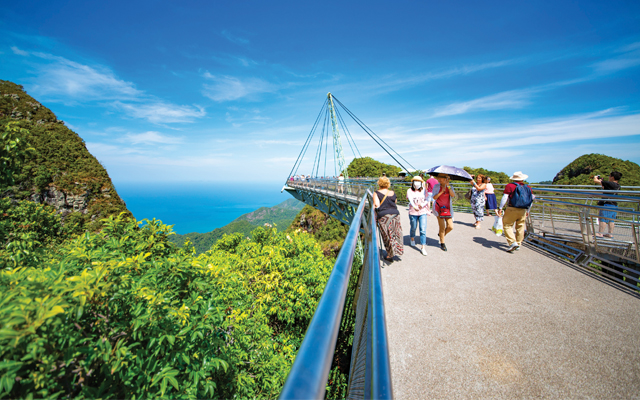
Langkawi hopes to attract more high-yield, environmentally-conscious tourists to the destination; Langkawi Sky Bridge pictured

Awarded the UNESCO Global Geopark status in 2007, Langkawi has successfully passed three UNESCO evaluations to date to retain the brand. Langkawi Development Authority (LADA) has also created many initiatives to educate the community about the Geopark branding.

Recalling the uphill battle in the early days of receiving the Geopark recognition to convince tourism stakeholders that the Geopark branding was the way forward, Azmil Munif Mohd Bukhari, deputy manager, tourism division at LADA, said: “Hoteliers and the travel trade had (the) preconceived notion that Geopark related only to ancient rock formations and doubted whether rock formations had enough allure to entice visitors to the island. Other islands, such as Phuket and Bali were also competing for tourists.”

LADA has developed a UNESCO Global Geopark Discovery Centre in Killim and four smaller galleries spread across the main island of Langkawi, offering visitors a better understanding of Langkawi’s complex and ancient landscapes and to explain its geological and environmental significance.

Through LADA’s recent efforts, 32 primary and secondary schools in Langkawi have set up Geopark Corners as a means of educating students on the unique geological formations and the importance of nature conservation.

Today, the branding is widely accepted by tourism stakeholders who say it is what differentiates Langkawi from other islands in the region.

Anthony Wong, owner and operator of Cottage by The Sea by Frangipani Langkawi, told TTG Asia: “The UNESCO branding is also not easy to obtain and all stakeholders in Langkawi are aware of this. We have to be on our toes with preserving and conserving nature to ensure that we continue to be revalidated every four years.”

Nigel Wong, director of Big Blue Holidays, remarked that the Geopark branding will help attract more high-yield, environmentally-conscious tourists and place Langkawi on the global map as one of the must-visit destinations in Asia.

Langkawi’s Global Geopark status has also motivated stakeholders to prioritise conservation and sustainable development on the island.

For instance, Cottage By The Sea by Frangipani Langkawi, has recently established itself as the Centre of Excellence in Sustainable Hospitality with support from LADA and UN Sustainable Development Solutions Network.

Langkawi’s tourism players are doing their part to preserve the environment

Wong has developed an efficient system to clean and convert polluted water, including sewage and waste cooking oil, into drinking water within three or four days, as well as a desalination process using special bio-engineered constructed wetland – all without requiring any energy consumption.

He is also a consultant for an ongoing water treatment project funded by the state government to treat waste water in the tourist hubs of Pantai Tengah and part of Pantai Chenang.

The Ritz-Carlton, Langkawi introduced the Sea Cucumber Reproduction Project in mid-2022, to counter over-farming which is hurting the local marine ecology, including the rise of coral bleaching. General manager, Ellen Franke, commented: “One of the growing trends we’re observing is how conscious people are about their impact on the environment and the destinations they visit.

“The Sea Cucumber Reproduction Project provides an excellent opportunity for our guests to connect with the environment, allowing them to give back while staying with us.”

To support the sustainability of these unique creatures while directly increasing local sea cucumber populations in the Andaman Sea, the resort’s in-house marine biologist provides guests with a hands-on educational experience to learn more about the asexual technique. There is also an opportunity for guests to release mature sea cucumbers out in the open sea.

Participants will also gain a better understanding of the importance of the sea cucumbers and its ecosystem.

Ascott appoints new VPs of business development

0

The Ascott Limited has appointed Ryan Chen and Dulaphan Amatyakul as vice presidents of business development, who will both report to Serena Lim, chief growth officer at Ascott.

Joining Ascott from Far East Hospitality, Chen will support Ascott’s business development strategies to grow the group’s current portfolio in both existing and new markets, with a focus on Japan, South Korea, the Philippines, Middle East, Africa, Turkey and India.

From left: Ryan Chen and Dulaphan Amatyakul

Based in Bangkok, Amatyakul will focus on the development of Ascott’s business strategies to drive growth in Thailand, Vietnam, Myanmar, Laos and Cambodia. He brings with him more than 15 years of experience and was previously senior vice president, investment & business development at Conduit House Holdings (Thailand).

Langham Hospitality Group welcomes new CEO

0

Bob van den Oord has been named chief executive officer for Langham Hospitality Group, stepping up from his current role as regional vice president – Europe, Middle East and North America from September 1.

Having served as a senior business leader at Langham Hospitality Group for the last 20 years, he will lead the company’s growth, enhance operational efficiencies and develop the guest experience through new partnerships and digital innovations in his new role.

Singapore rethinks hotel jobs with help of a transformation map

0

Singapore’s public and private sector have teamed up to launch a Jobs Transformation Map (JTM) for the Hotel Industry, as the country’s hotel occupancy and room rates pick up.

The JTM identifies the impact of trends and technology on job roles over the next three years and recommends strategies that businesses can adopt to transform jobs. It will guide employers and employees on the skills and talent needed to remain competitive, innovative and sustainable for the industry to seize new opportunities with a future-ready workforce.

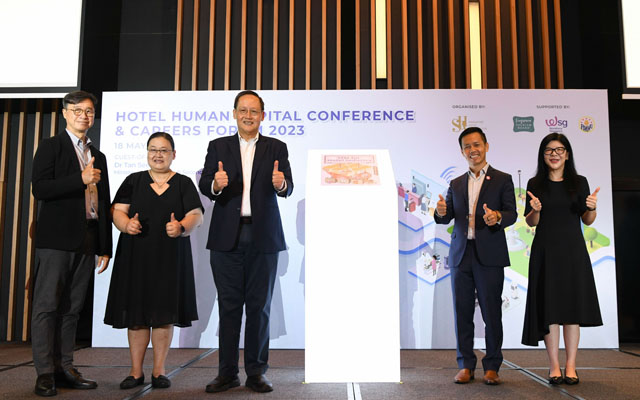
From left: Singapore Hotel Association’s Chris Teo, Food, Drinks and Allied Workers Union’s Julie Cheong Ai Hung, Tan See Leng, Singapore Tourism Board’s Keith Tan, and Workforce Singapore’s Julia Ng (Photo: Singapore Hotel Association)

At the JTM launch at Parkroyal on Beach Road on May 18, minister for manpower and second minister for trade and industry, Tan See Leng, said: “To sustain growth and meet consumer demand, the hotel industry must press on with efforts to transform and build capabilities. The government will continue to give our support.”

Four megatrends that would seriously impact the nature of hotel jobs were also identified in the map. It includes changing guest expectations as lifestyles evolve, sustainability, an increasingly competitive landscape, and changing workforce aspirations. It assessed 87 current job roles, of which 40 are likely to be redesigned.

Existing jobs can be reconfigured by “stacking” – merging job roles and equipping jobholders with new skillsets, like an sales and events associate; or merging roles within the same function, such as a reservations specialist. Jobs can also be combined horizontally across different functions, so that employees can focus on value-added tasks.

Looking at the “Hotel of Tomorrow”, the JTM advises hotels to hire talents in sustainability, create roles for technophiles who are data-driven and innovative, and offer new roles that create meaningful experiences in partnership with the community.

Altogether, 135 hotels with more than 18,000 local workers have committed to transform their jobs in line with the JTM. For instance, Pan Pacific Hotel Group will redesign roles, implement initiatives to reimagine hotel operations, and address manpower challenges.

The JTM was jointly developed by Singapore Tourism Board and Workforce Singapore, and supported by SkillsFuture Singapore, the Ministry of Manpower, Singapore Hotel Association and the Food, Drinks and Allied Workers Union, in consultation with 105 hotels and eight education institutions.

Six key trends shaping travel experiences in Asia-Pacific: Arival

0

Arival has revealed six key trends in tours and activities in its recent The Outlook for Experiences 2019-2025 research ahead of the Arival Activate conference in Bangkok from June 12 to 14.

Douglas Quinby, CEO and co-founder of Arival, said: “With many countries beginning to open travel after the pandemic, the Asia-Pacific region is seeing a surge of renewed interest in travel and tourism. Asia-Pacific travellers are spending more, travelling further and for longer.”

Quinby: the Asia-Pacific region is seeing a surge of renewed interest in travel and tourism

He noted that every creator and seller of tours, activities and attractions should be watching out for the following key essential experiences trends that are likely to shape the travel experience sector’s recovery.

1. A very uneven recovery
There are still huge variations in the pace of recovery throughout Asia-Pacific. In some markets, travellers are coming back strong – especially from South-east Asia, South Korea and Australia – while some source markets, such as China and Japan, are slower to return.

2. Intra-regional travel is first, but longhaul and Europe are not far behind
Asia’s travellers have started to travel regionally, but longhaul destinations are likely to not be far behind. Operators and resellers are reporting increased demand for Europe in particular.

3. The return of the outbound Chinese traveller remains a wild card
China has been a crucial engine of travel’s growth prior to the pandemic. While domestic travel has largely recovered, international outbound travel has been slow to return.

Operators in the region should be focusing first on other source markets in the region – and be prepared for China’s return in 2H2023.

Eric Zhuang, chief strategy officer of Asia-based DidaTravel recently commented on this shift in preference at the Arival 360 event in Berlin: “The supply chain needs to be reformed, and also a lot of clients have the change in consumer behaviours and booking patterns. The majority of people will still go to the top destinations of pre-Covid times, but the things they want to do will be quite different.”

4. Younger travellers – and their booking habits – will define the rebound
Gen-Z and younger millennials are driving the recovery across Asia, and their behaviour is already reshaping the industry. This large, experience-hungry cohort of the traveller population prioritises experiences over stuff. They are putting experiences first and willing to pay for them.

Operators should take note of this and prepare more small-group, immersive experiences that get travellers off the beaten path with unique, memorable interactions. In addition, all of it has to be bookable via mobile, with plenty of Instagram- and TikTok-worthy moments.

5. Mobile booking and online marketplaces will more than triple in market share by 2025
With younger travellers leading the rebound, operators must be ready for the mobile wave.

Wilfred Fan, chief commercial officer, Klook, remarked that they have “seen a growth of 120% above the pre-pandemic level”, which was a company record – she added that the trend will continue.

6. Small group and independent travel will lead travel’s return
Younger travellers are seeking more independent and adventure travel and experiences. This means more small group tours, independent tours, outdoor adventure activities and other unique experiences than travellers can cherish with family and friends.

The Outlook for Experiences 2019-2025 research can be downloaded here.

Minor Hotels to develop hospitality and lifestyle projects in Saudi Arabia

0

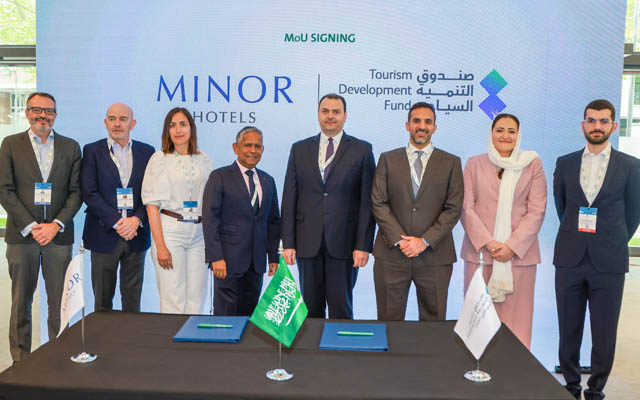
Minor Hotels has signed a Memorandum of Understanding (MoU) with Saudi Arabia’s Tourism Development Fund (TDF) to jointly develop and operate high-quality hospitality and lifestyle projects focused on mountain resorts, wellness resorts and urban hotels within the Kingdom.

The first project under this partnership is expected to be announced in 2H2023.

Minor Hotels will work with Saudi Arabia’s Tourism Development Fund to develop hospitality and lifestyle projects across the Kingdom

The partnership will see the development of multiple hospitality projects in the targeted tourism destinations specified in the National Tourism Strategy over the next couple of years. Minor Hotels will act as an operator and partner in each of the projects. Its flagship brands include Anantara, Avani, Tivoli and Oaks, which will be established in locations across Saudi Arabia.

Set up in 2020, Saudi Arabia’s TDF supports tourism investment in the Kingdom, linking private sector investors with public funding opportunities in the tourism ecosystem and tourism destinations across Saudi Arabia.

Dillip Rajakarier, group CEO of Minor International and CEO of Minor Hotels, said: “The signing of this MoU with Saudi’s Tourism Development Fund represents a significant step for Minor Hotels, enabling the group to offer a wide variety of products ranging from experiential luxury to serviced apartments, each creating a personalised product for a consumer niché.

“We look forward to working closely with TDF to bring these projects to fruition and to creating new iconic hospitality destinations within the Kingdom.”

Etihad Airways adds Osaka to its network

0

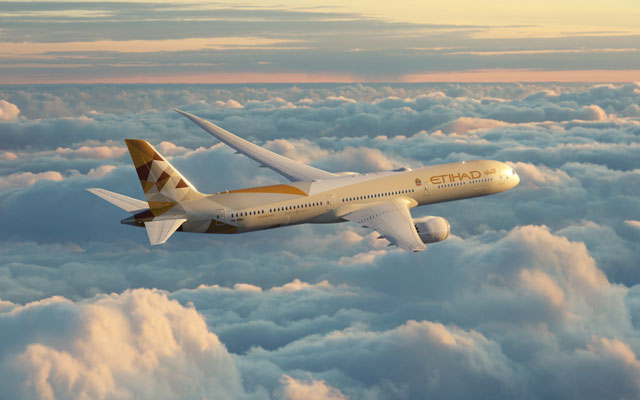
Etihad Airways is set to fly to Osaka five times per week beginning October 1, adding to the airline’s existing Tokyo service.

Etihad Airways will fly to Osaka starting from October 1

Operated on the Boeing 787-9 Dreamliner, the new route will open up Abu Dhabi to visitors from Osaka, and support the growing trade and tourism ties between the countries.

Capella Sydney

0

Location
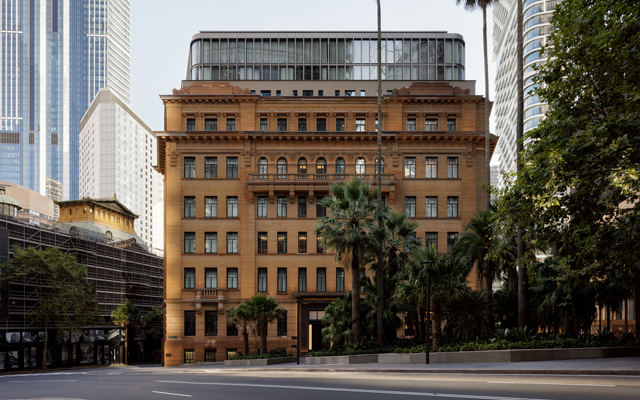
The 192-key Capella Sydney occupies an enviable city block in the Sandstone Precinct, a six-minute walk from Circular Quay. The Opera House and Harbour Bridge are also relatively nearby, around a 12-minute walk on their respective sides of the Quay. Sydney’s main airport, Kingsford Smith Airport, is just a 25-minute drive away.

Accommodation
My room was a Skyline Twin Room on the seventh floor, with views of the sky and green plants on the ledge, and not else of a view.

This is because Capella Sydney is located within a legacy building – the Department of Education’s Edwardian Baroque building to be exact – and as such, its external structure cannot be altered. Rooms also come in various shapes and configurations because of the same reason.

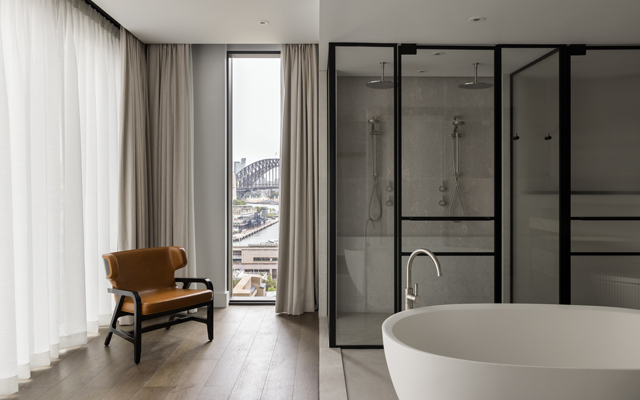
If views are important to you, then booking one of the hotel’s four Prestige Suites – Capella, Farrer, Liberty, and Macquarie – as well as the Deluxe and Skyline Suites, will offer better views of the urban sprawl and even the Harbour Bridge.

Regardless, there is no compromise on luxury at all. Upon entering my room, I was astonished at its size, plus the fact that there was a ‘living room’ complete with a two-seater couch, a round table, and an armchair; a space apt for having friends over. I loved the calming colour palette of walnut, grey and cream, which helped evoke the feeling of home.

Other mod cons include a 55-inch TV with streaming services, LG sound bar, Nespresso machine, minibar with free non-alcoholic beverages, and a desk area.

The bedsheets are Italian Frette linen, a brand known for their impeccable bedding quality and the silky-smooth feel of the sheets. I slept well – extremely well – and it was difficult to get up in the morning. The carpet surrounding the bed had pressure sensors which lit up dim night lights the moment my feet hit the carpet. The lights automatically turn off within a minute of crawling back into my comfortable cocoon; what a brilliant feature!

The spacious bathroom had a bathtub, an automatic, heated Toto bidet toilet, and a shower area with two rain showers and two showerheads. There’s also a Dyson hairdryer under the sink, while amenities are from UK-based skincare company Haeckels.

F&B
Brasserie 1930 serves modern classics – from Glazed Quail, Whipped Feta and Green Olive Salsa, to Kinross Station Lamb Rump, Carrot, Harissa, Hazelnut – where ingredients are sourced from small-batch farmers and grocers around Australia. It is open for lunch and dinner every day except for Sundays and Mondays.

Brasserie 1930 is also the location for breakfast. The choice-laden menu offered items such as warm bowls of Jasmine Rice Congee with Spanner Crab, as well as brunch items like Crumpet Eggs Benedict with Berkshire Smoked Ham and Truffle Hollandaise, and Cured Tasmanian Ocean Trout and Creamy Scramble Eggs on a Croissant. The made-to-order dishes were supplemented by a pastries and cold cuts buffet.

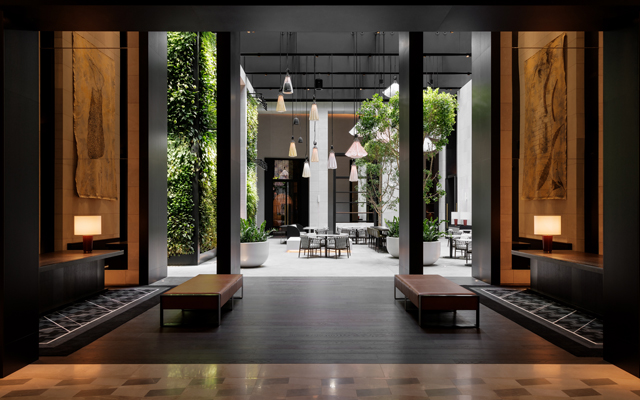
The all-day dining venue, Aperture, is located just next to the check-in area. Previously the courtyard of the heritage building, Aperture has been transformed into a light-flooded space, framed by seven-metre-high living green walls featuring 70 local species of plants.

Guests get to dine underneath Meadow – a kinetic light installation by Amsterdam’s Studio Drift – and surrounded by the calming presence of verdant trees and lush plants. A daily afternoon tea is served here, and the area is open from 07.00 to 22.00 for food.

There’s also a bar named after the building’s architect George McRae. An intimate space, the McRae Bar is a modern rendition of a Victoria-era drinking den serving an extensive selection of cocktails, beers, and wines.

Facilities
Guests can unwind or arrange to meet non-guests in the Living Room, a signature space in all Capella properties. Here, I was offered a delicious welcome drink made with smoked peach, Australian coffee, and wild citrus. It’s a good spot to work from as well, as I could tap away on my laptop in a quiet alcove.

Located on the ground level, the Living Room also serves snacks, and a happy hour with alcoholic beverages from 17.30 to 19.00 daily. Guests are also assigned a Capella culturist, and while I did not make use of this service during my short stay, I understand that these culturists will be able to arrange experiences such as a visit to the farmer’s market or a culture tour with the indigenous Australian people of the Eora Country (Sydney).

There are also six event spaces catering for groups from 10 to 80 guests, all of which have been decked out in the latest high-tech conferencing equipment. Private dining and late evening drinks can also be arranged by the Capella Sydney team.

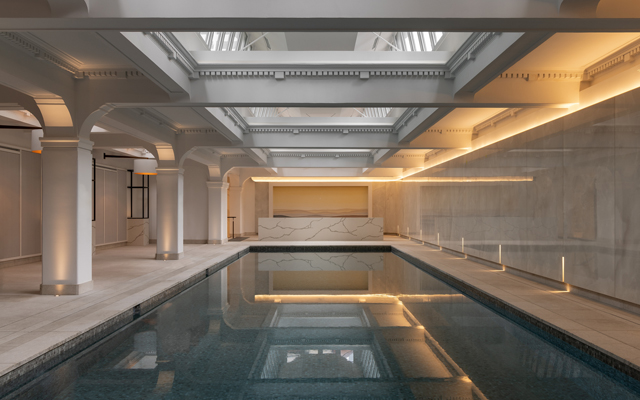
For the active, there’s a 24-hour gym, spa, a heated indoor pool for laps, and a vitality pool to soak in on the sixth level.

Service
Outstanding, inimitable hospitality from the moment a concierge saw me trying to cross the street with my large bag in tow and hustling over to help me, to the many warm greetings and smiles I encountered entering through its elegant doors.

Three individuals stood out in particular – Hamilton, who showed me around the property and my room, patiently answering all my questions; Liam, for keeping me company and chatting with me on a cold, brisk morning while we waited for my Uber to the airport; and Nicolena, for which this experience would not have been possible without.

Verdict
I was extremely privileged to have encountered hospitality at its highest level, and I do not know of any other hotel experience which can top this stay.

Contact details
Website: https://capellahotels.com/en/capella-sydney

Kids stay and eat free at Outrigger Maldives

0

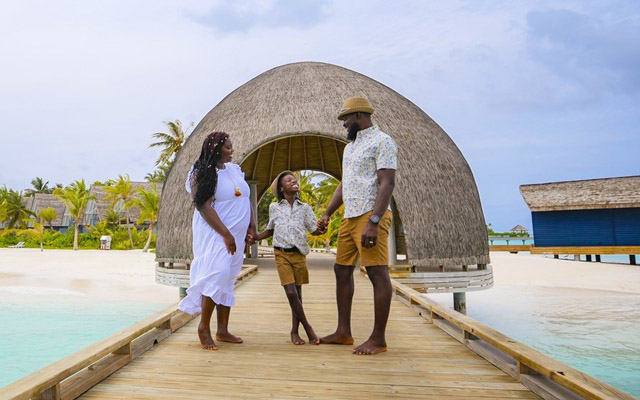
Outrigger Maldives Maafushivaru Resort has launched a Kids Stay and Eat Free promotion where children under the age of 12 travelling with their parents can stay and eat for free.

The children can choose to either dine from the buffet or from the kids’ menu in the resort’s five restaurants.

Kids travelling with their parents can stay and eat for free at Outrigger Maldives Maafushivaru Resort

Families can enjoy activities such as snorkelling, stand-up paddle boarding, kayaking and attending the marine biologist’s educational presentations on whale sharks, manta rays, coral life, as well as view the night sky with the resort’s astronomer and the aid of a powerful telescope.

The Two-Bedroom Beach Villa accommodates two adults and two children, and features an outdoor deck with a daybed, dining area and private pool. There are also villa options for families with only one child.

The resort is a convenient 25-minute seaplane ride from Male international airport.

The Kids Stay & Eat Free offer is valid for new bookings from now to October 31.

For more information, visit Outrigger Maldives Maafushivaru Resort.