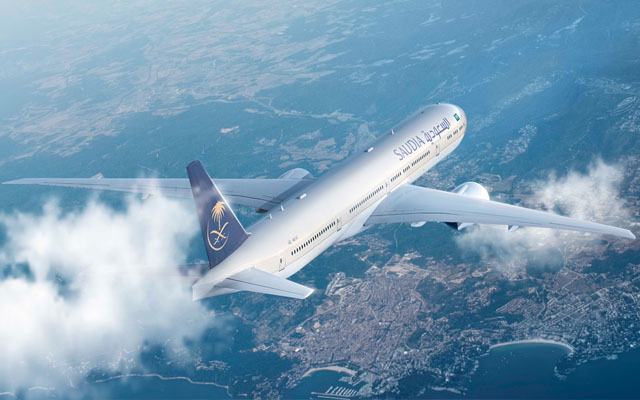
SAUDIA Group – comprising Saudi Airlines, flyadeal, and Saudi Private Aviation – has announced operational plans for Hajj season 2023.
The group will be allocating over 1.2 million seats for pilgrims from all over the world on its current fleet of 164 aircraft, plus an additional fleet of 12 aircraft.
SAUDIA Group will allocate over 1.2 million seats for pilgrims from around the world for the upcoming Hajj season
Pilgrims from more than 100 scheduled destinations and 14 seasonal destinations will be transported to six airports in the Kingdom located in Jeddah, Riyadh, Dammam, Medina, Taif, and Yanbu.
The company will also be sharing awareness messages to pilgrims in their languages through official channels in their countries, Hajj missions and organisations present in Makkah and Madinah, and across Hajj residences. The information aims to help make planning for the Hajj easier, and include details related to baggage weights and sizes, and the mechanisms at airports upon departure and after the end of Hajj.
SAUDIA will also provide services such as the issuance of boarding passes for all flights, and ensure that King Abdulaziz International Airport in Jeddah and Prince Mohammad Bin Abdulaziz International Airport will be staffed with navigators and employees fluent in various languages to help answer any Hajj-related queries.
Lastly, SAUDIA has also updated its inflight Islamic content to include religious programmes in several languages such as Arabic, English, Bahasa Indonesian, Chinese and other languages.
Accor has signed Novotel Melbourne Box Hill, a new-build hotel set to open in January 2025.
Owned by APH Holding, Novotel Melbourne Box Hill will be located in the heart of Box Hill, one of Melbourne’s most vibrant suburbs, and will feature 132 guestrooms.
Novotel Melbourne Box Hill is slated to open in January 2025
The hotel will offer facilities such as an all-day dining restaurant, lobby bar/café, rooftop bar, spa, wellness centre, gym, as well as conference and events facilities including a 200-capacity ballroom.
Accor Pacific’s CEO, Sarah Derry, said: “Box Hill is a vibrant and growing suburb, and we are excited to offer both business and leisure travellers a stylish and contemporary accommodation option in this dynamic community.”
“Novotel Melbourne Box Hill will be a flagship for the area, and we are confident that it will become a popular destination for both locals and visitors to Melbourne. The hotel will have access to public transport and retail amenities and will be an appropriate asset for Melbourne’s much needed second CBD which should promote, leisure and business,” added Johnson Zhang, CEO, APH Holding.
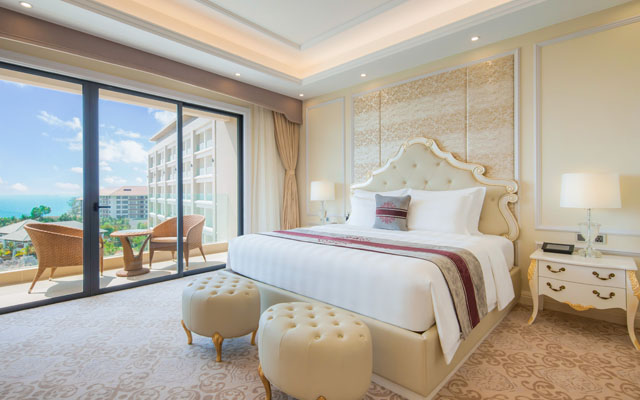
Wyndham Grand Phu Quoc, Vietnam
The 1,399-room Wyndham Grand Phu Quoc features 27 newly-constructed villas set to open later this year.
The property offers a variety of entertainment options such as a kid’s club, indoor cinema, theatre, golf course, F&B options, and even has the Phu Quoc Convention Centre onsite.
Nearby attractions include the VinWonders Phu Quoc amusement park, Grand World Phu Quoc, Vinpearl Safari Phu Quoc, and Corona Casino.
Shama Luxe Sukhumvit Bangkok
Shama Luxe Sukhumvit Bangkok, Thailand
Shama Luxe Sukhumvit Bangkok is a luxury serviced apartment located in Bangkok that offers 52 accommodation choices ranging from one- and two-bedroom suites to the two-bedroom Walton Suites.
Facilities comprise a fitness centre, kids’ playroom, and a swimming pool with city views.
BreakFree on Broadway Sydney
BreakFree on Broadway Sydney, Australia
Right in the heart of Sydney is BreakFree on Broadway Sydney, which features 47 refurbished guestrooms.
The hotel is just a 15-minute walk to Darling Harbour and Chinatown, and a short stroll to The University of Sydney and Broadway Shopping Centre.
There is also a café that serves continental breakfast daily, a reading area, and a boardroom for up to 10 delegates.
Andaz Nanjing Hexi
Andaz Nanjing Hexi, China
Located in the rapidly developing Hexi CBD area, Andaz Nanjing Hexi, together with two office towers and the luxury shopping mall, create a one-stop destination for travellers.
The 362-key hotel boasts restaurants and bars, fitness centre, indoor pool, as well as indoor and outdoor event venues.
About a 30 minute drive to Nanjing Lukou International Airport, the hotel offers easy access with the nearby Nanjing Metro Yuantong Station.
Espire Hospitality Group has appointed Sanjay Kumar as director of operations and Kunal Sabharwal as director of sales.
With over 15 years of experience in operations management, Kumar will play a crucial role in optimising operations, streamlining processes, and driving overall efficiency within the organisation.
From left: Sanjay Kumar and Kunal Sabharwal
Sabharwal will be responsible for developing and executing strategic sales initiatives and driving revenue growth in his new role.
Amassing over two decades of experience in the hospitality industry, he has worked with India’s leading hospitality brands including Accor, Hilton, ITC, Ananta Hotels & Resorts and Radisson.
Mandarin Oriental has named Amanda Hyndman as its new chief people officer, and promoted Francesco Cefalú to the role of chief development officer.
Having been with Mandarin Oriental since 2007, Hyndman will oversee the development of human resources strategies that support the growth of the brand and colleague career development in her new role.
Cefalú, who joined the company in 2016 as regional development director for EMEA, will oversee the development of the group’s pipeline of hotels and residences worldwide.
Wellington-based company, Tourwriter, is in the planning stages of eventually incorporating a carbon calculator into the itineraries that travel agents build on its software.
Tourwriter’s head of growth, Lisa Gardiner, explained to TTG Asia on the sidelines of TRENZ 2023 that the company aims to help travellers and agents “take action by understanding how their choices on different itineraries will have different carbon impacts”.
Campbell: Tourwriter hopes to bring forth an opportunity for travel companies to progress their sustainability commitments into transformative actions
“For example, slow tourism or cycling tourism, where travellers stay longer in one destination, instead of a different place every night, (will have a better carbon impact) compared to a 10-night itinerary where the traveller is in a different location or hotel every night. (Transport options) such as cycling or taking the train will also bring down one’s carbon impact,” she elaborated.
Travel agents who currently use Tourwriter’s software build itineraries with their clients, before sending booking requests to their suppliers without needing to call to confirm availability. Everything can be seen easily on the dashboard, except for the way to calculate a traveller’s carbon footprint.
When asked if this calculator is similar to what is already offered by corporate travel management companies – where carbon is immediately calculated during booking – Tourwriter’s CEO, Glenn Campbell, agreed, stating that this is something the leisure travel market needs.
At this point, the carbon calculator project is currently in its “discovery phase”, where Tourwriter is working on hypotheses and speaking with both its customers and operators. It helps that this project recently received a boost in funding from New Zealand’s Ministry of Business Innovation and Employment’s (MBIE) Innovation Programme for Tourism Recovery.
Tourwriter is one of only six recipients of the coveted Stream One funding. The software company plans to apply for a second round of MBIE funding, which Campbell is “confident” of obtaining eventually, stating that stakeholders across the board are in support of the idea of a carbon calculator for itineraries.
“We are understanding the problem first, and having conversations with customers, before we embark on the building phase. In fact, estimating a traveller’s carbon footprint is just the very top layer (of what we want to eventually offer),” he shared.
Once the second round of funding is approved, Campbell estimates it will take another six to 12 months to get the concept out and that is when the actual coding begins.
On the software end, Campbell plans to expand into Asian markets – like Vietnam, Japan, and China – which currently have “low penetration”, targeting “travellers who are used to working with someone to build an itinerary”.
Tourwriter is also working to integrate live pricing onto its platform.
Amadeus’ Demand360 data shows growing travel demand across Asia-Pacific for the second half of the year.
In 1Q2023, the region saw a hotel occupancy growth trajectory of 61.7%, surpassing 2019 levels by 3%, thanks to the recent reopening of Greater China’s border.
Asia-Pacific saw a hotel occupancy growth trajectory of 61.7% from January to March this year
Greater China is leading Asia-Pacific’s recovery growth, with 1Q2023 hotel occupancy in the region outpacing pre-pandemic levels by 5%, as compared to 1Q2019. Meanwhile, Australia and New Zealand have the highest hotel occupancy level in Asia-Pacific, trending up from 64.5% in January to 76.5% in March.
Hotel occupancy levels in major Asia-Pacific markets improved throughout 1Q2023. Tokyo showed strong performance as hotel occupancy rates reached more than 80% and exceeded records from mid-March to April during the cherry blossom season.
Sydney hotels averaged 85% occupancy from February to March, while Singapore hotels outperformed previous record highs in 2019 by 2-3% in February and March this year. In Seoul, hotel occupancy from January to March was 7% higher than the same period in 2019.
The major markets experiencing the highest regional hotel occupancies in 1Q2023 are Tokyo, Hong Kong, Seoul, Shanghai and Beijing, with rates higher than 70% during the Easter week from April 7 to 10.
“This is a hopeful sign that Asia-Pacific-based hoteliers may expect a substantial rebound in the long run as travel has picked up its pace, both domestically and internationally,” noted Maria Taylor, head of commercial, Asia Pacific, hospitality, Amadeus.
As China reopens for international outbound travel, online sharing of unique, first-hand experiences is fuelling a shift in Chinese travel preferences.
China has always been a country where consumer trends move extremely fast, and travel has not been immune in the three years since borders closed at the start of the pandemic, noted Auckland Airport’s chief customer officer Scott Tasker.
New Zealand hopes to tap into the ongoing trend of travellers sharing details of their trips to attract visitors from China; Auckland, pictured
“Although (the) Chinese have only really begun international travel in any great numbers in the past few months, there has been a definite acceleration in the move beyond group travel into taking a more independent approach travel,” he said, adding that this is a typical pattern with inbound tourism markets maturing, and was a trend before Covid.
“What’s different is the speed at which this is happening,” remarked Tasker.
While New Zealand was one of the first 20 countries accredited for group travel from China, it had seen a steady decline in group travel prior to the pandemic – from 66 per cent of Chinese tourists in 2012 to 37 per cent in 2019.
He said: “Group travel is still important for newer, less experienced travellers and can help fill in the demand gaps during our quieter seasons but we’re expecting this shift to independent travel to continue, fuelled by the internet reviews and social media content. These increasingly confident travellers tend to stay longer and spend more.”
Speaking at the New Zealand Tourism Forum at TRENZ 2023 in Ōtautahi Christchurch, Tasker commented that the return of regular, direct air connections into China’s largest metropolitan areas unlocks a major market of high-value travellers for New Zealand.
Tasker shared that air connectivity is gaining traction, with Air New Zealand and China Eastern operating daily into Shanghai, China Southern flying daily into Guangzhou, Air China restarting its link with Beijing four times a week, and Hainan Airlines starting its twice weekly service from June.
“We’ll have (a total of) 27 direct flights between Auckland and four major Chinese cities. The ease and simplicity of those direct flights helps get New Zealand on the radar of Chinese tourists,” he said.
Seat capacity between China and New Zealand is currently at 78 per cent of 2019 levels, and forecast to reach 93 per cent of pre-pandemic levels by September.
“While we haven’t seen Chinese travellers in any numbers since pre-pandemic – and that’s still really the case given the need for passport renewals and visa processing – what we do know is they are researching online, watching social media recommendations from fellow Chinese travellers, and taking a really considered approach to travel choices,” noted Tasker.
With more Chinese travellers increasingly going online to plan their next overseas trip, offline channels such as travel agents are rapidly making way for China’s social media platforms such as Wechat, Xiaohongshu and Douyin, coupled with online travel services platforms Fliggy, Ctrip and Qunar, as well as airline direct channels.
Influencers are sharing destinations and experiences in real time, which creates a demand for travel experiences and special interest travel – this shows just how vital video content is.
He opined: “Tourism operators can tap into this, not only by ensuring they have an online presence that inspires Chinese consumers as they scroll (through) travel sites, but by providing experiences for customers with a bit of ‘wow’ factor that they then share directly with their followers.”
This could have the potential to reach millions, he added.
Despite South-east Asia destinations dominating the China market, New Zealand has plenty to offer to the smaller, niché travel market.
“After several years of restrictions, Chinese travellers are now wanting to go somewhere they can escape and relax. Plus, there is a growing trend away from major tourist attractions towards destinations offering nature-based tourism and activities such as hiking, camping and water sports, like surfing,” shared Tasker.
Roomie, a hospitality digital guest engagement platform, is intensifying efforts to grow its Malaysian hotel client base, as well as expand its services into Asia-Pacific.
The company’s expansion plans will start in Thailand in early 2024 with the setting up of a representative office in Bangkok, followed by Singapore.
Roomie is a hotel mobile engagement platform which features chat technology and service requests
June Yap, senior vice-president of Roomie, shared: “Roomie’s solutions addresses budget constraints that many independent hotels and small chains face in investing and maintaining a mobile platform to engage with today’s mobile-centric guests… this is where we come in.
“Roomie delivers all the benefits of a hotel mobile engagement platform and addresses increasing labour costs and shortages at an affordable price with zero capital investment.”
Roomie starts serving a hotel guest during reservation enquiries with its consolidated chat technology that is able to bring together chat messages from multiple chat platforms including Whatsapp, Facebook, or WeChat.
This service continues in-house, such as ordering room service, requesting for a service, obtaining information about a hotel, as well as live chat and movies on demand. Roomie’s technology automates the back-end service processes to ensure efficiency.
Yap said that the platform is currently the only service provider offering outsourced shared services that reduces hotel’s operating costs, increases guests’ satisfaction and improves the hotel’s revenue.
By adopting Roomie, hotels gain access to its 24/7 outsource human chat service agents to handle all reservation chat enquiries and in-house guests’ chat communication. The platform’s Data & AI services help hotels to measure and benchmark their service performance and increase upselling revenue, while its Dynamic Remarketing database allows hotels to improve their direct bookings by tapping into Roomie’s marketing database with more than 1.8 million travellers.
Roomie currently has around 60 hotel clients in nine states across Malaysia, said Yap. Having gone live in 2019, its marketing efforts were temporarily hampered by the Covid-19 pandemic.
With the resumption of travel and tourism, Roomie is on track to reach 150 hotels in Malaysia by end 2023, and is laying the groundwork for overseas expansion.
Travelport and Adventureman, aka Jamie McDonald, have achieved a new world record (endorsed by Guinness World Records) by travelling to the Seven Modern Wonders of the World in just under seven days using only public transport.
Visiting the Great Wall of China, the Taj Mahal, Petra, the Colosseum, Christ the Redeemer, Machu Pichu and Chichén Itzá, the British adventurer travelled across four continents, landed in nine countries, flew on 13 flights, and rode in 16 taxis, nine buses, four trains and one toboggan to cover about 36,783km in six days, 16 hours and 14 minutes.
Adventureman took photos showing himself at each location and the date visited
The challenge was set to Adventureman by Travelport in order to put the company’s retail platform, Travelport+, to the test, proving the company’s technology helps its travel agency partners to plan, book and manage even the world’s most complex trip.
“This was certainly my most complex, complicated trip yet,” said McDonald. “With travel, there are just so many variables – weather, restrictions, delays, customs, traffic, cancellations, you name it. When you’re attempting to set a world record, speed and agility are absolutely key.”
Protecting the environment was also key, with carbon emissions from Adventureman’s trip were calculated by Travelport using the Travel Impact Model.
In addition, the trip was a great way for Adventureman to raise funds for his charity, the Superhero Foundation, where Travelport matched a dollar for every mile that he travelled for this challenge.








 Cefalú, who joined the company in 2016 as regional development director for EMEA, will oversee the development of the group’s pipeline of hotels and residences worldwide.












Travelport and Adventureman, aka Jamie McDonald, have achieved a new world record (endorsed by Guinness World Records) by travelling to the Seven Modern Wonders of the World in just under seven days using only public transport.
Visiting the Great Wall of China, the Taj Mahal, Petra, the Colosseum, Christ the Redeemer, Machu Pichu and Chichén Itzá, the British adventurer travelled across four continents, landed in nine countries, flew on 13 flights, and rode in 16 taxis, nine buses, four trains and one toboggan to cover about 36,783km in six days, 16 hours and 14 minutes.
The challenge was set to Adventureman by Travelport in order to put the company’s retail platform, Travelport+, to the test, proving the company’s technology helps its travel agency partners to plan, book and manage even the world’s most complex trip.
“This was certainly my most complex, complicated trip yet,” said McDonald. “With travel, there are just so many variables – weather, restrictions, delays, customs, traffic, cancellations, you name it. When you’re attempting to set a world record, speed and agility are absolutely key.”
Protecting the environment was also key, with carbon emissions from Adventureman’s trip were calculated by Travelport using the Travel Impact Model.
In addition, the trip was a great way for Adventureman to raise funds for his charity, the Superhero Foundation, where Travelport matched a dollar for every mile that he travelled for this challenge.