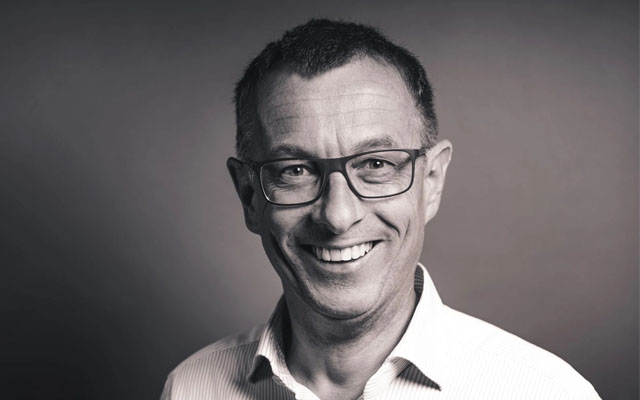
 What developments did you initiate during the last five years in the runup to the rebrand?
The positioning of Diethelm Travel, now DTH Travel, was one of my first steps which I did soon after I took over the helm. Most important for any tourism company is to know what you can do best, where you profile yourself and who your clients are. DTH Travel stands very clearly for a high competence through experienced travel professionals for FIT which is most of our business and group which is approximately 20 per cent. Our second competence is the MICE business. We are not operating in the mass market.
The adaptation in the workflow was multi-layered: first, we needed the right tool to support our daily work, thus we changed our entire IT set-up and implemented a new software (Tourplan NX) which we tailored to our needs. We hired a very competent IT team based in Malaysia and Thailand. Data loading is done decentralised. For the sales activities, we took the in-depth competences of our local management in each country. They know their countries and the possibilities best, and can tailor the programmes precisely to our client’s needs. This meant that DTH Travel went a different way compared to many competitors who are having their centralised sales teams. Our marketing team is led from Europe with staff in the Philippines, South America and Thailand. This gives us the proximity to our clients and we can make use of the best knowledge and language competence.
The digital workflow is certainly the biggest task. We are using IT to assist an efficient handling and operation but also for the possibility to offer dynamic rates and offers to our clients without any delay. This part is ongoing and our aim is to have a paperless operation. Most of our work spaces are equipped with dual screens and latest IT technology. PC’s have been upgraded with laptops. At the end, it is important that our staff can easily access extensive information and thus consult our agents to transform their needs into the best options.
Because of all these changes, we thought it fit to capture this renaissance period for our company by reintroducing ourselves as a new brand, DTH Travel, that takes an innovative approach and forward-thinking ethos in conducting our business.
What are the results of these changes?
They resulted in positive figures and international recognition. We’ve continuously been awarded as Asia’s Leading DMC by the World Travel Awards since 2019. We have already exceeded our sales figures as early as July – our figures from January to July 2023 surpassed our 2019 figures for the same period by over 50 per cent.
And you’re expanding and capturing new businesses.
We are expanding our network of offices from 13 Asian countries to 14. We opened a specialised office for guided group tours to Japan and South Korea based in Europe (Cologne). This operation is purely offering guided roundtrips for private groups or on join-in basis with fixed departures. The office exclusively serves the B2B trade. We are in the preparations for an inbound DMC operation in Japan and are presently recruiting the reservation staff. Both offices will be headed by Joerg Albrecht, a recognised trade professional for Japan and South Korea.
We entered into contracts with Lufthansa City Center (LCC) as from October 1, 2023, appointing our offices in Thailand, the Philippines, Malaysia and Singapore as official LCCs. These countries are the main centres where LCCs base their operations in Asia. LCCs share a very clear quality positioning with high operation stands for their FIT and group business. Since the pandemic changed a lot in our trade, LCCs had to look for adequate partners who can fulfil their requirements.
Your equal partners, each having a 1/3 stake in DTH Travel – how are they involved in the rebrand?
Thomas Maurer has had many years in the tourism industry, and was previously the owner and manager of the former Thomas Cook operation company in Asia under Travel Center Asia. He has always been passionate in product development, and has brought his extensive expertise to Diethelm. You will see the results of this in our extended line of new and exclusive products, such as our Heritage Collection in Thailand.
Gonpo Tsering is an important private equity investor in Switzerland, with a focus on IT digitisation and deep tech. His many years of experience and multiple successful projects, coupled with his incredible drive and vision, have led and paved the way for our fast IT development.
DTH Travel looks hi-tech driven. What are you doing differently compared with your previous distribution process?
We have customised Tourplan NX trade software to fit our clients’ needs. Our version is called DT Direct, and it provides our clients with on-demand access to all our products, including information on availability, dynamic rates, and the possibility to create bookings and confirmations.
Prior to this, everything was done manually – from itinerary generation to availabilities and costs, until the final booking. All the coordination work would naturally take some time, which would mean that our clients and their guests would have to wait for a response regarding any inquiry, no matter how simple, and would have to consider time differences. With DT Direct, the process is cut much shorter and it assists our clients in giving faster turnarounds to their customers. Our operation is more customer-centred and identified from the moment of the request until the clients arrive.
Won’t full digitalisation in the distribution process impact the personal touch and human interaction valued by DMC clients?
Our business, like any in the service industry, is built on personal relationships. When we look around at all the technological advancements, we always find that nothing replaces being served by a person.
When we were creating DT Direct, it was very clear to us that this, in no way, would replace the personal service that we must continue to provide our clients, which remains to be our core value as a DMC. DT Direct is only a tool that helps provide faster turnarounds; the service is still delivered by our local teams, who remain very active in advising our clients on the best products and excursions, and make the special arrangements depending on their needs. Our business is not an extractive process where a machine churns out products that our clients use; it’s an intimate exchange of knowledge of our clients telling us what their customer needs, and of us sharing the latest insights in our destinations that would fit the preferences of our clients. The only way this intimate exchange can be executed successfully is by delivering a personal kind of service, but it can definitely be enhanced and facilitated through the latest technology.
What are your plans for 2024?
Our group focus in 2024 is to further fine-tune our tour programmes with more innovations and digitise the workflow to the front-end where the client is (we are equipping our representatives and tour guides with mobile devices giving them access to itinerary details, allow individual changes or forced amendments due to irregularities). The service requirements, branding and identification of our agents is focused at all times.
How to make DMCs relevant?
Very clear and straight – if we, as a DMC, cannot produce added value in the service chain, there will be no justification for our work. A three-corner chain is outdated. With the digitised offering, we are able to compete with dynamic bed banks and give the tour operators and agents abroad a valuable tool for their retail. Our competence and operations are on the spot in the country. If someone books hotel accommodations with us, we are competitive to a bed bank. For the tour and roundtrip products, we have ownership and they are our exclusive offers. Guides at the destination are either employed, partly employed, on our payroll, or contracted freelancers sometimes exclusively connected with an agent. In a number of countries, we are operating our own luxury vehicles equipped with Wi-Fi, minibar and audio system. We are one of the DMC’s offering 24/7 concierge service in six to seven languages.