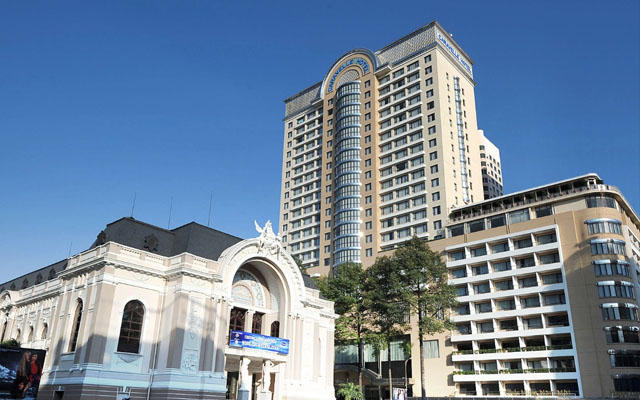
The 7th Hospitality Vietnam Conference, part of the Hospitality Asia Event Series managed by Hospitality Asia Media, will take place at Caravelle Saigon, Vietnam from April 3 to 5 this year, drawing an expected 350-plus attendees from diverse sectors in the hospitality industry.
The event comprises three summits – Hotel Investment Summit Vietnam; Hotel Design Summit Vietnam; and Hotel Revenue Summit Vietnam.
The 7th Hospitality Vietnam Conference will be held at Caravelle Saigon in Ho Chi Minh City from April 3 to 5
Other upcoming events in the Hospitality Asia Event Series include the 3rd Hospitality Thailand Conference in Bangkok, Thailand this May, and the 4th Hospitality Malaysia Conference in Kuala Lumpur, Malaysia this June.
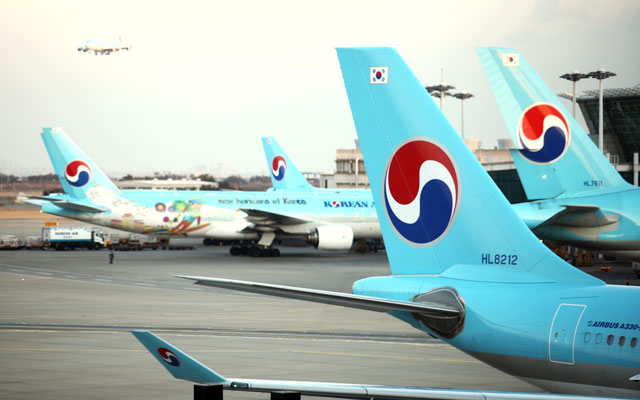
Korean Air has signed a long-term agreement with Accelya, a global leader in flexible, airline-centric software solutions, to enable the airline to take control of its retailing and further innovate its leading customer experience with the deployment of Accelya’s FLX Platform.
Korean Air will integrate Accelya’s NDC and the innovative FLX-Merchandizing module, to deliver personalisation and the most relevant offers to customers. Accelya’s NDC offering links airlines with over 50,000 travel agents including the world’s largest OTAs and TMCs.
Korean Air will integrate Accelya’s technology to deliver a more personalised experience for its customers
The FLX-Merchandizing module, running on both Accelya and AWS technologies, fine-tunes customer offerings and experiences. Leveraging the latest technologies, it will enable Korean Air to create, personalise and adjust its offers to better serve travellers across both direct and indirect channels.
The Accelya FLX Platform enabled more than half of all global New Distribution Capability (NDC) transactions in 2022, according to data from T2RL, an independent consultancy leader in travel technology and distribution strategy. The platform combines the power of the Amazon Web Services cloud and the latest advanced technologies to deliver unparalleled scalability and reliability, while enabling airlines to efficiently present millions of retail offers across all channels.
Yoo Tae Jung, managing vice president and NDC platform director at Korean Air, commented: “The exhaustive RFP process has highlighted Accelya’s technological expertise and flexibility. Our partnership with Accelya is a key step in reshaping our retailing strategy.”
Accelya CEO Sam Gilliland echoed this sentiment: “Our alliance with Korean Air is built around a shared belief in putting the customer first, making modern and forward-looking technology choices and ensuring airlines are truly in control of their retailing journey and not being held back by legacy ‘old world’ technology vendors. The deployment of the Accelya FLX platform will provide Korean Air with a clear pathway towards offer and order transformation, empowering them to control their future, with Accelya supporting them every step of the way.”
Raffles Hotel Singapore, in partnership with Singapore Symphony Orchestra, is bringing back its Magic Hour for 2024, with the first performance to take place on February 24 at 18.00.
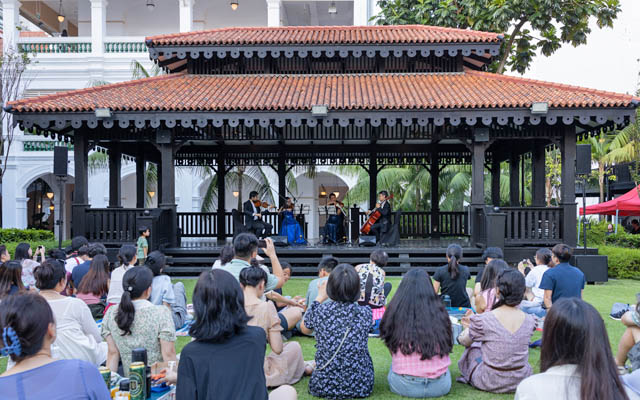
Presented as a series of six performances throughout the year, Magic Hour @ Raffles Hotel Singapore will be held at The Lawn, Raffles Arcade.
Music lovers can enjoy live performances at Raffles Hotel Singapore’s Magic Hour
Designed to enliven the boundless connections of live music performances that is deeply ingrained in the Raffles ethos, Magic Hour @ Raffles Hotel Singapore presents a wonderful opportunity for the community to be awed by the arts. The community can delight in inspiring and uplifting live music as the sun sets, all set against the backdrop of lush greenery and the iconic colonial architecture.
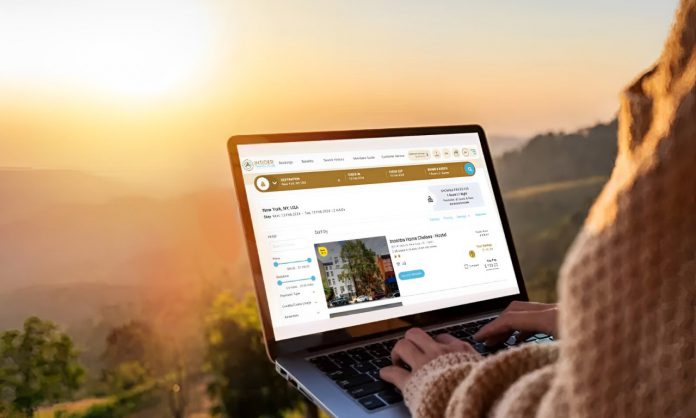
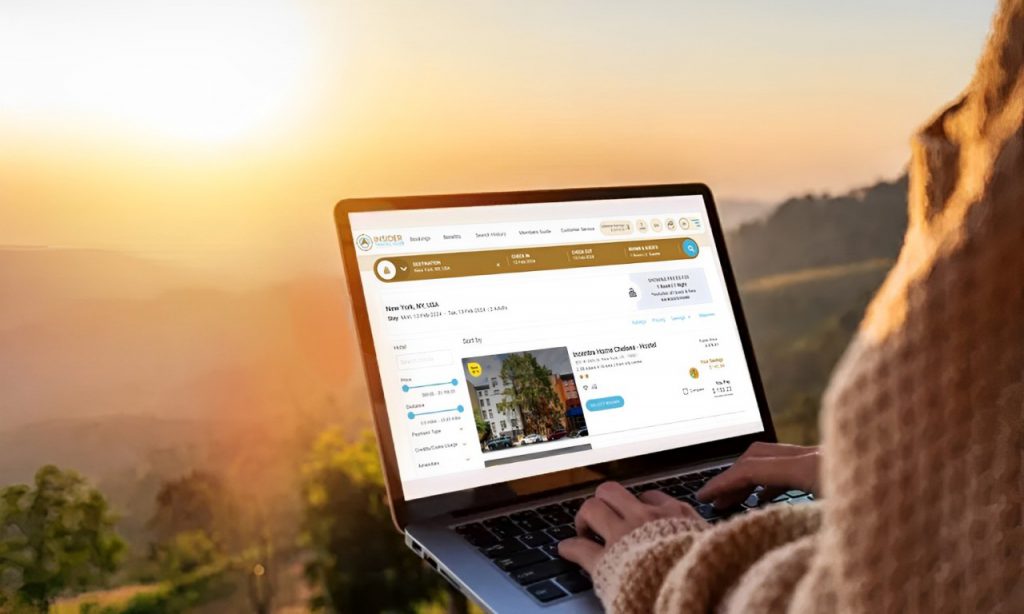
Create a turn-key travel club offering member-only travel and lifestyle benefits through one easy-to-use platform.
Many companies are looking at developing or implementing new consumer loyalty strategies to create sustainable revenue growth that is immune to crises and seasonality. Recurring revenue models are key, even as travel revenue is heavily impacted by macro factors.
According to a report by PYMNTS, 37 per cent of consumers will spend more with brands with a retail subscription. However, to increase revenue, new entrants or existing subscription organisations such as media sites or neobanks, need to find the right balance between giving users access to content and value worth paying for.
By offering different subscription packages and pricing tiers, companies can create more value for members and increase their revenue.
They can add new verticals such as travel or lifestyle benefits, and bundle them into an all-in offering, which lets subscription organisations design upselling journeys and experiment with different price points to maximise the customer lifetime value across different subscriber types.
Booking a trip is still a major pain point for travellers. With an overwhelming number of choices, the entire process can seem daunting. Streamlining this booking journey by offering user-friendly platforms and consolidated content can help.
Furthermore, building this one-stop shop comes with the promise of delivering competitive prices and broad inventories. It also enables companies to offer travel solutions tailored to specific groups of users that will ensure that travellers feel seen and valued throughout their journey.
While finding white-label solutions is relatively simple, sourcing real value and differentiating one’s brand experience from the mainstream online travel agency model can be rather complex.
True customer support, fully branded experience, global inventory, flexible pricing, custom margins/savings, and benefit negotiations should be combined to meet a brand’s specific requirements.
Custom Travel Solutions (CTS) is one of the few providers that specialises in this niche.
“A travel club is certainly the most profitable niche you can find in travel,” said Mike Putman, CEO and founder, Custom Travel Solutions.
“Besides operating our own 24/7 customer service globally, we put together all the tools, technology and vendors to deliver tailored travel member solutions to organisations all over the world.”
CTS has also recently seen and addressed a surge in demand for this type of product in the Asian market. With a dedicated product and business development team located in Pune, India, the company has recently enriched its platform with new inventory to cater to these specific audiences.
Custom Travel Solutions – your way to a turn-key travel club
CTS’s goal is to use its industry expertise, technology capabilities, and extensive relationship network to give companies a turn-key travel club that offers a comprehensive set of elite member-only travel and lifestyle benefits through one easy-to-use platform.
The company provides private-labelled travel clubs to its global portfolio of clients. With a first-in-class travel platform, CTS also offers consultative services in the travel and loyalty sector and supports its clients with travel content, sales, merchant services, and travel fulfillment.
In a strong indication of the rebound in outbound tourism from India, VFS Global, a visa outsourcing and technology services company for governments and diplomatic missions worldwide, said its visa application volumes in India for the year 2023 have reached 93 per cent of pre-pandemic figures. The company witnessed a 16 per cent growth in applications over the previous year.
“Some of the destinations that recorded strong demand included Canada, the US, France, Italy, Germany, Netherlands, Switzerland, Saudi Arabia and China. For our ‘visa at your doorstep’ service, we recorded a five times growth in 2023 compared to the pre-pandemic demand in 2019. Some of the reasons that can be attributed to the strong recovery are buoyant Indian economy and absence of any travel restrictions,” said Vishal Jairath, head – South Asia, VFS Global, while addressing a press event in New Delhi last week.
Countries like Switzerland, Austria, and France are set to increase their visa appointment availability in India; Brienz town in Switzerland, pictured
VFS Global is expecting visa application volumes to surpass pre-pandemic demand in 2024. In the past, getting visa appointments for longhaul destinations was a challenge with longer waiting periods – however, Jairath expects a much improved situation this year.
“Even though the situation improved in comparison to 2022, there was a demand and supply gap in 2023. There were visa delays because of disruptions. Many of our client governments were moving to remote visa processing systems and there was a lack of human resources. However, many client governments have confirmed that they have hired additional local staff and expatriates to manage demand. Thus, higher visa appointments will be available in 2024,” he shared.
Looking ahead, countries such as Switzerland, Austria, and France are set to increase their visa appointment availability in India by 20 to 25 per cent in 2024 compared to the previous year. Moreover, the Netherlands is boosting its visa appointment slots by 40 per cent in 2024, further easing the process for Indian travellers.
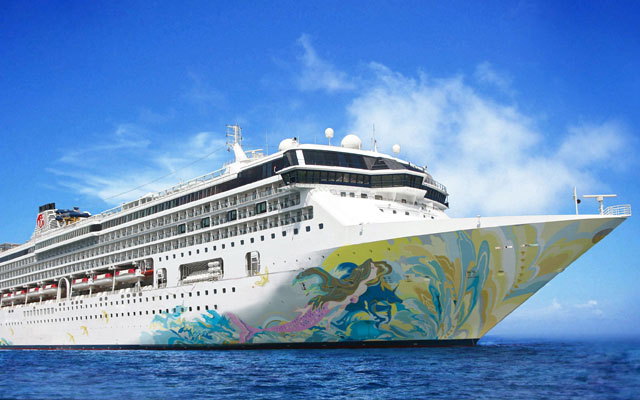
Resorts World Cruises (RWC) will be the first international cruise line to homeport in Jakarta, Indonesia from June 16 to July 1 this year.
The cruise line will offer four round-trip six-day-five-night cruises from Jakarta to Singapore and Kuala Lumpur (via Port Klang) onboard Resorts World One.
Resorts World One will homeport in Jakarta from June 16 to July 1 this year
With the six-day-five-night cruises, guests will also get to enjoy the ship’s onboard offerings – international and authentic Asian F&B across 18 restaurants and bars; a Roman-themed Parthenon Pool with a Caesar’s Slide and jacuzzi, virtual games, onboard duty-free shopping, spas, enrichment workshops, movie nights at sea and more.
RWC president Michael Goh said: “As an international cruise line that is homegrown in Asia, Resorts World Cruises is excited and proud to pioneer the first-ever homeport deployment in Indonesia. Indonesians are familiar with the Resorts World Cruises brand sailing out of Singapore and now they can sail with a round-trip cruise from Jakarta to Singapore and Kuala Lumpur on the Resorts World One. We look forward to developing the country’s and regional cruise tourism industry together.”
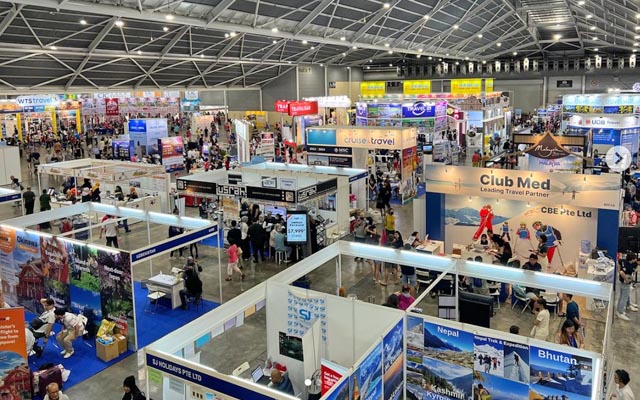
The annual NATAS Travel Fair, organised by the National Association of Travel Agents Singapore (NATAS), will return from March 1 to 3 with 20 per cent more exhibitors compared to the last edition in February 2023.
The event, which is open to the public will be held at Singapore EXPO Halls 4 and 5A. Visitors can expect to snap up an array of travel itineraries, packages and deals curated by participating travel agents, as well as obtain travel ideas and advice from more than 60 exhibitors including airlines, cruise lines, NTOs, and travel-related suppliers.
NATAS Travel Fair 2024 will offer travel itineraries, packages and deals curated by participating travel agents
The six NTOs joining NATAS Travel Fair 2024 are Central Japan, Hokkaido Tourism Organisation, Sarawak Trade And Tourism Office – Singapore, Taiwan Tourism Administration, Tourism Authority of Thailand, and Wonderful Indonesia.
The opening ceremony will be graced by Melissa Ow, chief executive of Singapore Tourism Board.
Steven Ler, president of NATAS, said: “NATAS is excited to welcome visitors who are eager to travel to the NATAS Travel Fair, a one-stop platform that aims to meet every traveller’s need. As the organisation representing travel agents in Singapore, we are pleased to be able to give travel agents and industry-related organisations a platform to showcase the different destinations, packages and deals they have to offer.”
NATAS Travel 2024 is proudly supporting Extra•Ordinary People (EPL), a non-profit charity with Institute of Public Character (IPC) in Singapore. EPL empowers children and youths with special needs, fostering their development of essential independent living skills that pave the way to increased employability. In partnership with EPL, NATAS aims to raise awareness about the importance of inclusivity in contributing to a harmonious and diverse society. During the three-day fair, EPL’s beneficiaries will take centre stage, showcasing their talents through heartfelt performances. Fair attendees will get to witness first-hand the resilience and abilities of these extraordinary individuals.
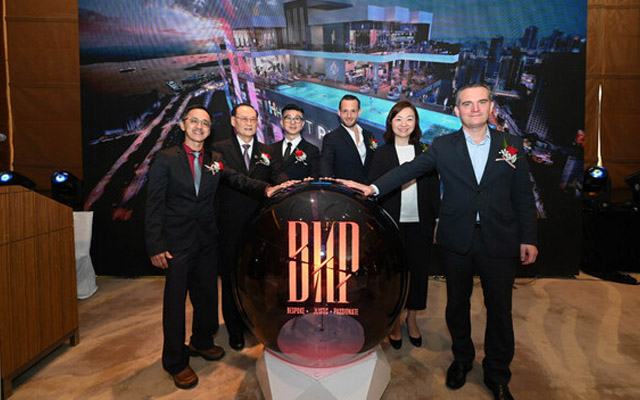
Developer Bangsar Heights Pavilion (BHP) and an affiliate of Hyatt Hotels Corporation have partnered to manage the 200-room Hyatt Place Johor Bahru City Centre, located at Quayside JBCC, a new lifestyle, retail and entertainment destination in the heart of Johor Bahru.
This collaboration marks a significant occasion for both parties, bringing Hyatt Place’s renowned select service offering tailored for those working on-the-go or travelling with families to Quayside JBCC, and solidifying Bangsar Heights Pavilion’s position as a leader in innovative development projects.
Hyatt Place Johor Bahru City Centre will be situated at Quayside JBCC, a new lifestyle, retail and entertainment destination in Johor Bahru
Hyatt Place Johor Bahru City Centre’s 200 rooms will feature dedicated spaces to work, sleep, and hang out. Facilities comprise The Breakfast Bar, lobby bar and restaurant, a grab-and-go station, business centre, meeting spaces, fitness centre and swimming pool.
Strategically positioned in Johor Bahru’s commercial district, Quayside JBCC is a freehold mixed development comprising retail, hotel, serviced suites, and sky bar fine dining. This development is just a short distance from the Johor Bahru Customs, Immigrations and Quarantine Centre.
Aaron Yap, CEO of BHP, commented: “We believe that this partnership will add value to the stakeholders of both companies; locally and internationally. We believe Hyatt’s expertise will be instrumental in positioning Quayside JBCC as a premier destination in Johor Bahru.”
“With BHP’s legacy of over 30 years of experience in developing residential, commercial, and industrial properties in the country, we are proud to give our guests a place they can call their own, defined by a comfortable and convenient stay during their travel,” said David Udell, group president, Asia Pacific, Hyatt.
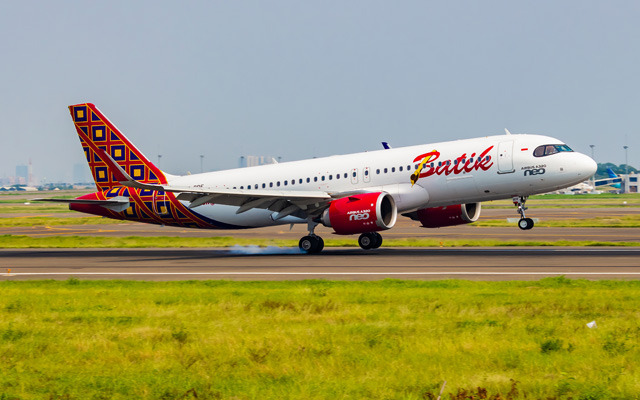
JAKARTA, INDONESIA - OCTOBER 6, 2020 : A Batik Air A320-200 arriving at Soekarno Hatta Intl Airport in Jakarta, Indonesia.
Batik Air has commenced its Batam-Kuala Lumpur service, operating three times weekly flights on a Boeing 737 aircraft.
Batik Air has started its thrice-weekly Batam-Kuala Lumpur service
The new route will connect passengers from Indonesia’s Batam to the airline’s network of 53 destinations across 22 countries through Kuala Lumpur International Airport in Malaysia.
PATA is set to organise its International Conference on Women in Travel from March 20 to 22 in Bohol, the Philippines.
Hosted by the Philippine Department of Tourism (DoT), the three-day conference featuring industry leaders will underscore the crucial role of women and the current state of gender diversity in the tourism industry. It will uncover initiatives and strategies towards progress and equality such as breaking barriers for women’s empowerment in the industry, promoting sustainability with women as agents of change, and fostering women’s leadership development.
PATA’s International Conference on Women in Travel will celebrate women’s achievements and contributions to travel and tourism
The event will not only celebrate women’s achievements and contributions to travel and tourism but also provide an opportunity to critically examine gender disparities in the industry, shedding light on various issues such as the lack of women in managerial positions.
Recognising that addressing gender equality in the travel and tourism sector is crucial to the responsible and sustainable development of the travel and tourism industry, PATA CEO Noor Ahmad Hamid said: “Despite comprising almost 50 per cent of the tourism workforce in the Asia-Pacific region, women have not received the appreciation and support necessary for their own economic and social prosperity. The event aims to spark meaningful dialogues and creative solutions dedicated to the empowerment of women in the travel sector.”
“This event aligns seamlessly with our commitment to promoting diversity and empowering women in the travel and tourism sector. Through this conference, we aim to showcase the country’s dedication to women’s progress, from supporting local entrepreneurship to advocating for gender equality in education,” remarked Philippines’ tourism secretary Christina Garcia Frasco.
Bohol is nestled in the heart of the Central Visayas region of the Philippines and is renowned for its landscapes, dolphin encounters near Pamilacan Island and coral garden exploration at Panglao, Balicasag, and Cabilao Islands. Other highlights include Danao’s Adventure Park, and Bohol’s rich heritage, featuring old houses, centuries-old stone churches, and watchtowers. The destination has also made significant strides in promoting women empowerment through various initiatives, supporting local women in entrepreneurship, providing opportunities for skill development and economic independence.