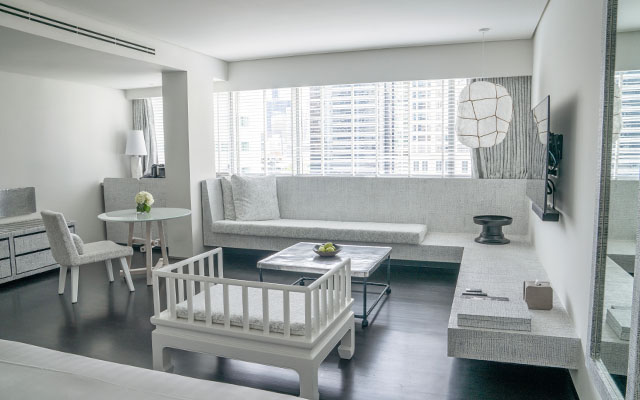
Martin Schnider has been named the new general manager of Mandarin Oriental, Kuala Lumpur.
With over 25 years of experience with Mandarin Oriental Hotel Group encompassing six Mandarin Oriental Hotels, Schnider brings a wealth of knowledge and expertise to his new role.
Prior to his appointment at Mandarin Oriental, Kuala Lumpur, Schnider served as the general manager of Mandarin Oriental, Doha.
Japan’s travel and tourism sector is nearing pre-pandemic recovery, according to the World Travel & Tourism Council’s (WTTC) 2023 Economic Impact Research. However, rebound is being hampered by staff shortages.
The study predicts international visitor spend in Japan will reach US$16.8 billion in 2023, marking a 553.4 per cent increase year-on-year. The sector’s GDP contribution, meanwhile, is predicted to reach US$285.5 billion this year, just 6.8 per cent shy of the record high of US$306.5 billion in 2019.
Japan’s government aims to ease overcrowding in popular cities and highlight tourism in rural areas; Dotonbori in Osaka, pictured (Photo: beeboys)
However, the travel and tourism industry is currently 300,000 jobs short of pre-pandemic levels, according to the June report. Even if the sector creates around 470,000 jobs in 2023, the number predicted by WTTC, employment in the sector will still be 5.2 per cent below that of 2019.
Japan’s Tourism White Paper 2023, released in June, said structural challenges facing the country’s travel industry include labour shortage, high turnover (particularly in hospitality at 25.6 per cent) and low productivity.
The Japan Tourism Agency, meanwhile, noted that the number of overnight stays in hotels by international travellers exceeded 10 million in April, the first time since January 2020, but labour shortages and increased staff workloads remain a concern.
Heather Hopkins Clement, CEO of travel agency Cruise Port Navigation, said many parts of Japan’s tourism industry are “struggling with labour shortages” and “cannot keep up with demand”.
“Workers who left the accommodation and eating/drinking service sectors due to Covid have not returned,” said Mitsuo Fujiyama of the Japan Research Institute, adding that the pandemic “heightened concerns about the stability” of roles that already had tough working conditions and low wages in 2019.
Popular areas such as Kyoto are feeling the crunch more than others. Inbound visitors at the city’s hotels totalled 313,203 in April, 22.9 per cent more than in April 2019, according to DMO Kyoto.
The Japan Spot Work Association reports that requests for “spot workers” (gig workers who sign up for shifts by smartphone app) from hotels increased tenfold year-on-year in April.
Atsushi Nosaka of the harbour and airport promotions division at Wakayama Prefectural Government, said local companies are working to overcome a shortage of hospitality and tourism staff to support excursions for international cruise ships.
Meanwhile, the national government aims to ease overcrowding and stimulate greater tourism consumption in rural areas by attracting overseas visitors with new and improved offerings nationwide. Its 2023–25 tourism plan includes support for the promotion of remote islands, snow sports, farm stays, national parks, “tourism towns” with significant history and cycle tourism.
Hiroyuki Takahashi, chair of JTB Corporation, said JTB is “working together with the public and private sectors in developing new tourism attractions to expand capacity in rural areas” in the face of “extremely high and growing” global demand to visit Japan.
Japan welcomed 1.95 million international travellers in April 2023, a 1,297 per cent increase year-on-year, according to the Japan National Tourism Organization, and JTB projects 21 million international arrivals by the end of 2023.
Sri Lanka’s economic unrest has tapered down in recent months and the destination is safe for travellers to visit despite more conservative global perceptions, stated several hoteliers in attendance at ILTM Asia Pacific.
Padmi Fernando, director of business development, Cinnamon Life Integrated Resort, told TTG Asia: “Sri Lanka has been safe for the last six months or so. What we had in Sri Lanka was a local challenge, where the civilians were going through a difficult time, but it was never unsafe for travellers.”
Hoteliers are trying to attract travellers to Sri Lanka; Colombo, pictured
Cinnamon Hotels & Resorts currently operates 11 properties throughout Sri Lanka, across several of its brands.
Elisa Grimaldi, director of public relations and communications at Minor Hotels, agreed: “The safety of our guests come first, and we will never promote a destination unless it’s safe. Earlier this year, when the situation was calmer, we sent out a press release to share that it was time to visit Sri Lanka.”
Grimaldi commented that the company, which has three properties in Sri Lanka, is working on special offers to entice travellers back to Sri Lanka, which will be rolled out soon.
“As a hospitality company, we recognise the impact tourism has. It didn’t help that Covid devastated the tourism economy. We are trying to get travellers to return because this way, we can support our local staff as they rely on the hotel for their income,” added Grimladi.
The media also has a very important part to play in helping to shift perceptions of a destination.
“We are open for business. Sri Lanka is very safe tor tourists, and the major crisis (fuel and power) is over for the short- to medium-term. In the long term, the government would have to (find ways to) solve it. Sri Lanka has actually obtained support from the IMF (International Monetary Fund), but unfortunately, that message has not gone out to the mainstream media,” opined Jan van Twest, director of The Fortress Resort & Spa.
For his property, the majority of his guests currently hail from the UK and India, as the various Asian markets are “more conservative”, and “more sensitive to economic issues”, and are seen in lesser numbers at the moment.
“It always starts with the media. If they go first and start writing about what’s new and what’s happening, it’ll help to lure travellers back,” noted Grimaldi.
Fernando pointed out: “The world today is a global village. Everybody sees what is happening. We did face challenges in basic facilities such as power cuts, but the unsafe notion is a wrong perception (of Sri Lanka) that was created from the media (fuss). Sri Lanka is the place to visit again, and we are more than ready to welcome tourists.”
Travel trade operatives at Japan’s regional ports are set to get a boost under a new tourism plan to increase the number of ports that accept foreign-registered cruise ships to 100 by 2025, up from 67 in 2019.
Interest in Japan is high since the country lifted its three-year docking ban on overseas-registered cruise vessels in March and is set to rebound quickly according to the Ministry of Land, Infrastructure, Transport and Tourism, which estimates port calls by such ships in 2023 could reach 60 per cent of the 2,000 recorded in 2019.
Silversea’s Silver Muse returns for sailings to Kagoshima
The national government’s new Tourism Nation Promotion Plan, which was approved at the end of March, will encourage ports in Japan’s rural areas to welcome international cruises in a bid to curb over-tourism and spread tourism spending nationwide, including to remote islands.
In 2019, the ports of Naha in Okinawa, Hakata in Fukuoka, and Yokohama in Kanagawa, were most visited by foreign-operated cruise ships, according to government data, but now lesser well-known areas will have opportunities to contend with larger ports.
In Kagoshima Prefecture, which stretches from the southern tip of Kyushu to Okinawa Prefecture, mainland and island ports are scheduled to receive 149 calls by international cruise ships in 2023.
In northern Japan, Yamagata Prefecture has listed welcoming international cruises as “one of the pillars in its efforts to attract inbound tourists” in its new tourism plan, said Yuta Endo, chief officer of the prefecture’s inbound promotion section.
The resumption of China’s cruise sector this month is adding confidence to the market as Chinese visitors accounted for about 80 per cent of all international arrivals at Japan ports in 2019.
On June 19, Blue Dream Star operated by Blue Dream Cruises departed from Shanghai for Japanese ports and, in July, the CSSC Carnival will begin sailings from Shanghai to Okinawa.
Merlin Entertainments (ME), which operates Legoland and resort theme parks, is on a “mandate to grow” and its new CEO has identified opportunities in the region for its indoor Midway attractions.
Calling himself a “growth CEO”, Scott O’Neil, who was appointed six months ago, has been visiting team members in the region to spread his message, assess existing assets and explore business development opportunities with leaders of other attractions.
O’Neil: excited about growth for Midway in 24 gateway cities, including Singapore, Shanghai, Osaka and Seoul
O’Neil predicted that Asia would be ME’s fastest region of growth in 2024.
ME was privatised in 2019, in a reported US$7.5 billion deal, and he shared that more Midway attractions, which are located in city centres, shopping malls or resorts and include brands such as Madame Tussauds, SEA LIFE, the Dungeons, and others, would be added.
Visitors, he explained, typically spend between two to three hours at these attractions.
O’Neil said “merger and acquisition (M&A) activity was buying better value than before” and he was “most excited about growth for Midway in 24 gateway cities, including Singapore, Shanghai, Osaka and Seoul”.
This expansion, he continued, would be based on “London as the model, our most successful business where 25 per cent of tourists goes to one of our attractions”.
ME was studying “what of that model works, how to acquire management contracts and add value to M&As with its know-how to cross-sell and upsell,” he noted.
During a 24-hour visit to Singapore, and Legoland Malaysia Johor Bahru last week, O’Neil told TTG Asia there were plans to “cluster” and expand Sentosa’s Madame Tussauds by adding an attraction or acquiring one nearby.
Visiting Seoul, Tokyo, Osaka, Shenzhen, Shanghai, Hong Kong and Macau on a North Asia tour in April, O’Neil commented that ME was opening its biggest Legoland in Shenzhen in 2024 and the park in Shanghai, expected to open next year as well, would become its global flagship.
Sojern has release the latest version of its Sojern Travel Marketing Platform with enhanced Artificial Intelligence (AI)-powered audiences.
Leveraging its longstanding AI capabilities to provide expanded support for more than 10,000 travel marketers annually, Sojern’s customers comprises hotels and resorts of all sizes, destinations, attractions and airlines.
Sojern’s AI-powered audiences enable marketers to make informed decisions on resource allocation and target the right customer segments
Sojern’s AI-powered audiences offer travel marketers a strategic advantage in optimising their marketing investments. By leveraging AI technology, marketers can make informed decisions on resource allocation, effectively targeting the right customer segments for maximum return on investment and business impact.
Through automated audience segmentation and optimisation, brands engage with relevant audiences in real time, achieving greater precision, efficiency, and cost-effectiveness. In response to increasing demand for personalised experience, and 71 per cent expressing their expectation of personalisation from companies, Sojern’s data-driven approach enables brands to deliver highly-tailored campaigns at scale while adhering to data privacy regulations, resulting in a more strategic and impactful marketing strategy that drives new traveller acquisition, boosts direct bookings, and maximises guest loyalty.
“Our customers needed to respond swiftly to the rapidly evolving digital marketing landscape, so during the pandemic, we expanded our automation and AI capabilities. It all begins with data, specifically the Sojern Traveler Ecosystem, which powers our platform with billions of travel intent signals from thousands of travel brands in every corner of the globe,” said Kurt Weinsheimer, chief solutions officer at Sojern.
“We have competitors that are just now building AI functionality, and I can tell you first-hand that it takes several years to develop and refine the sophisticated AI models that power our platform.”
The three key enhancements to Sojern’s AI-powered audiences include:
Integration of first party offline data By integrating customers’ offline data – including unified access to historical booking data across various distribution channels – Sojern empowers marketers to gain greater visibility and develop more robust audiences. Combining offline data with AI-powered audiences provides deeper insights into consumer behaviour and preferences, facilitating the creation of highly targeted and personalised campaigns.
The platform also enriches and scores offline customer data, helping marketers identify and prioritise conversion-ready customers. Overall, this integration empowers travel marketers to build a holistic and data-driven marketing solution, leading to improved engagement and better business outcomes.
Enhanced support for reactivation Sojern’s platform enables advertisers to identify and engage with previous customers who are currently in the market, driving loyalty throughout the customer journey. By combining reactivation with AI-powered prospecting and retargeting, Sojern’s full funnel strategy ensures increased return on investment and heightened customer satisfaction.
Expanded audience activation Through the Traveler Audiences To-Go offering, advertisers can activate these audiences across multiple advertising platforms of their choice, such as DV360, Xandr, Meta and YouTube, broadening their reach and providing greater convenience and flexibility.
Another significant benefit of Sojern’s AI-powered audiences is the integration with extensive data partnerships. By enriching retargeting, reactivation and prospecting audiences with data from Sojern’s Traveler Ecosystem, advertisers gain a broader view of customers beyond their owned channels or walled garden media platforms.
The use of durable identifiers illuminates blind spots in a privacy-compliant manner, enhancing audience quality and enabling real-time identification of consumers in-market. As a result, AI-powered audiences effectively reach the right audience at the right time with the right message.
“At Sojern, we’ve always believed in AI’s potential to enhance the travel experience. The latest iteration of our platform benefits both our travel marketing customers and their end consumers,” Weinsheimer added.
IndiGo has placed a firm order for 500 Airbus A320 Family aircraft, providing the airline a further steady stream of deliveries between 2030 and 2035.
The purchase agreement was signed on June 19 at the Paris Air Show 2023, and is the largest-ever single aircraft purchase by any airline with Airbus.
IndiGo has placed a firm order for 500 Airbus A320 Family aircraft, the largest-ever single aircraft purchase by any airline with Airbus
IndiGo operates over 300 aircraft presently, and has previous orders totalling 480 aircraft which will be delivered between now and 2030. With this additional firm order of 500 aircraft, IndiGo’s order book will total almost 1,000 aircraft, comprising a mix of A320NEO, A321NEO and A321XLR aircraft.
The fuel-efficient A320NEO Family aircraft will allow IndiGo to maintain its strong focus on lowering operating costs and delivering fuel efficiency with high standards of reliability. The young and fuel-efficient fleet will help IndiGo realise its sustainability ambitions, building on the already realised CO2 reduction of 21 per cent between FY16 and FY23.
Pieter Elbers, CEO of IndiGo, said: “This order strongly reaffirms IndiGo’s belief in the growth of India, in the A320 Family and in our strategic partnership with Airbus.”
Although China’s borders are now wide open, ILTM will no longer be holding its China edition in the foreseeable future. It will instead be focusing on the ILTM Asia-Pacific show based in Singapore.
“We’ve made the decision not to do China anymore at this point in time. The reason for this is because there is only so much budget to go around from the suppliers that come to ILTM. If we’ve got two shows in the same region, that budget is spread quite thin,” Alison Gilmore, portfolio director for ILTM Worldwide with RX Global, told TTG Asia.
ILTM will no longer be holding its China edition and will instead focus on the ILTM Asia-Pacific show based in Singapore (Photo: Rachel AJ Lee)
She pointed out that the whole cost of doing business at an ILTM trade show is not limited to just a participation fee. Exhibitors have to fork out money for beautiful booths, air tickets, accommodation and food.
“China was a great show, and we loved being there, but I think we need to make sure that we cover a bigger percentage of the Asia-Pacific region, and we can do that here in Singapore. We used to have an ILTM in Japan too,” she added.
Gilmore noted that every supplier would have different target markets, and being able to access other markets easily from Singapore is a plus point, as not everyone may want the China market.
This approach may well be the right one, as ILTM Asia Pacific 2023 draws strong participation, with floor size back to 2019’s levels.
While international arrivals to Indonesia this year surpass the pre-pandemic level, tour operators have yet to see traffic disperse beyond Bali.
Properties in Bali have more than recovered in hotel bookings – Nusa Dua Beach Hotel’s performance in May 2023 was already 10 per cent higher than the same period in 2019.
Ludri: bookings for June to August are far ahead of 2019
Over at Sol by Meliá Benoa and Sol by Meliá Kuta, cluster director Putu Yeni shared: “We aligned our target for the year with that of 2019, but by mid-year, our bookings are full till the end of the year. In fact, we have started receiving booking for 2024, (and have) just received seven bookings including one wedding from the UK for next year.”
Speaking to TTG Asia during the Bali and Beyond Travel Fair 2023, Ludri Ratnawati, director of sales and marketing of the hotel said: “Bookings for June to August are far ahead of 2019. This summer, Nusa Dua area is particularly busy. Moreover, the ANOC World Beach Games Bali 2023 (will take) place (from) August 5 to 12.”
Europe, the traditional market for the hotel, remains high, contributing 30 per cent of the international market mix, although slightly below 2019 levels.
“The UK and German markets slowed down a (little), but France, Poland and Italy are up. Our Australian market, which was only 11 per cent in 2019, is now 29 per cent,” she added.
Panorama Destination’s director Ricky Setiawanto also acknowledged the rapid growth of traffic to Bali, but remarked that most of his European travellers only stay on the island.
He noted: “The tourism recovery is strong, but only for Bali – our overland tours have not returned. Some travellers do (travel) out of Bali but only up to the neighbouring Lombok, Sumba or Labuan Bajo.”
Also, Middle Eastern flights to Jakarta cost more than to Bali, making it even less attractive to take the overland to Bali, Setiawanto opined.
While bookings from German-speaking countries to Bali were high, Marika Gloeckler, executive manager product and contracting, GoVacation Indonesia, said the numbers could be higher if more seats were available. However, most of her clients spent their 12-nights on the island.
She shared that the current trend is to focus on Bali before venturing out to nearby destinations, and that more may travel beyond Bali next year.
In addition, another issue she pointed out is that domestic airlines have not returned to pre-pandemic schedules and pricing, thus making it inconvenient for travellers to plan their trips.
She added that her company had relied on Garuda Indonesia before Covid, but the airline has yet to resume their flights. While Lion Air and Batik Air now cover many destinations in the country, their ever-changing schedules make it difficult to plan an itinerary.
Minor Hotels will be expanding its luxury Anantara brand in the Kingdom of Saudi Arabia with Trojena, located in Neom – a planned smart city in Tabuk Province in Saudi Arabia.
Anantara Trojena will offer 270 guestrooms and suites, some of which have private pools, as well as views of the lake and mountains. Other facilities planned for the development include four F&B venues, a fitness centre, Anantara Spa, an infinity pool, an outdoor cinema, event spaces, and a helipad.
Anantara Trojena is set to welcome visitors and residents in late 2026
Situated at an elevation of 2,600 metres, Anantara Trojena will be home to the Gulf’s first outdoor ski resort. It will be located in the Water Village, part of the Valley Cluster of Trojena. Currently under development, The Valley will be home to three developments with a 2.8km-long man-made freshwater lake at its heart. Anantara Trojena is slated to welcome visitors and residents in late 2026, as it works towards hosting the Asian Winter Games in 2029.
Anatara Trojena will also be powered by renewable energy like the rest of NEOM. There is also a Neom International Airport under construction.
During an interview at ILTM Asia Pacific, Elisa Grimaldi, director of public relations and communications at Minor Hotels, told TTG Asia: “We are trying to future-proof our portfolio. We know that things are changing quite rapidly within the world of travel and hospitality – that’s why we’re on the lookout for projects of the future, such as Trojena.”
Another property in line with luxury trends of the future is the “zen-like Anantara Anji Resort in China set in a tea plantation”. Slated to launch in 2025, the property boasts a “sustainability angle” and “wellness elements”, Grimaldi added.