Trip Affiliates Network (TA Network) has teamed up with Thai DMC Lark Holidays to provide their IaaS level travel infrastructure and connectivity services.
This collaboration will empower Lark Holidays’ clients with virtual card or local fund transfer services to process payments dynamically with their business partners and minimise payment fees, particularly cross-border and FX fees.
TA Network will provide digital solutions for Lark Holidays; Chiang Mai in Thailand, pictured
Balaji Manavalan, managing director of Lark Holidays, commented: “TA Network has been going to great lengths with their technical excellence and has agreed to do the same for Lark Holidays. Lark Holidays welcomes this new relationship as it aligns with our expansion plans across the Asia-Pacific region.”
TA Network managing partner Josef Foo added: “The exchange of services and products from this partnership will provide digital solutions to the issues faced by today’s travel agents. Following this collaboration, problems such as unaffordable gaps in the technology and complicated connections between suppliers and distribution channels will be resolved.”
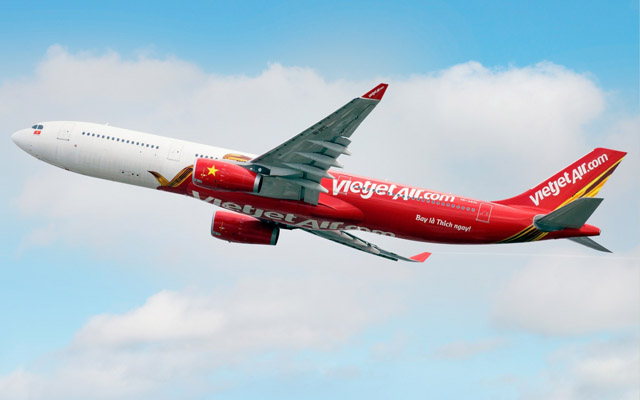
Vietjet has inaugurated two new international routes: Hanoi-Jakarta (Indonesia) and Phu Quoc-Busan (South Korea).
Vietjet launches services to Busan, South Korea today
The airline’s new route between Hanoi and Jakarta will operate four return flights per week on Mondays, Wednesdays, Fridays, and Sundays, while the Phu Quoc-Busan route operates seven round-trip flights per week.
A new experience has been unveiled at Hobbiton Movie Set, where fans of The Lord of the Rings and The Hobbit Trilogies can venture into an authentic Hobbit Hole interior, bringing them closer to the magic of Middle-earth.
Nestled in the Matamata countryside on the Alexander family farm in New Zealand, Hobbiton Movie Set has long been an admired destination for fans of the film series.
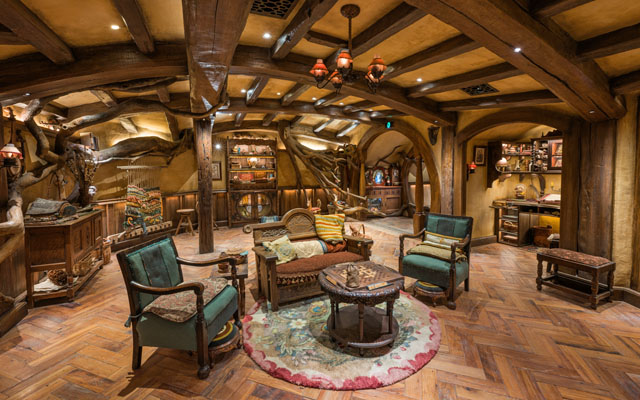
The Hobbit Hole features a labyrinth of fully-themed rooms with trinkets from yesteryear
The new immersive Bagshot Row experience will be included as part of every tour booked with Hobbiton Movie Set, and the tour durations will be increased to allow visitors sufficient time to explore the Hobbit Hole.
The Hobbit Hole features a labyrinth of fully-themed rooms: an entry hall, two bedrooms, a bathroom, a kitchen, and dining area, equipped pantry and a parlour complete with a fireplace. Hints of the inhabitants’ family lineage are seeded throughout, with heirlooms and trinkets from generations of Hobbits from yesteryear.
Visitors can even look out for several Easter eggs throughout the interior of the Hobbit Hole.
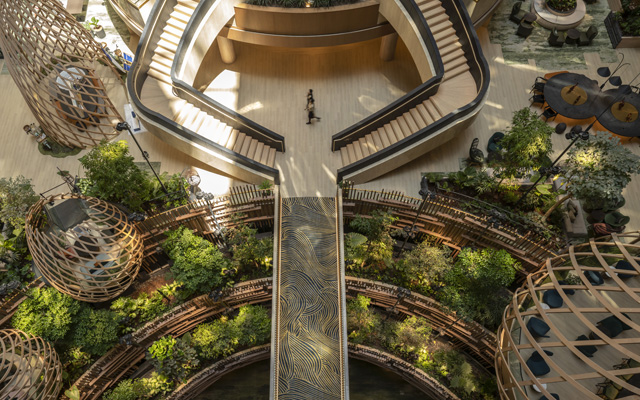
The lush foliage spread throughout the hotel acts as natural air purifiers and sinks for carbon dioxide, thereby helping to improve air quality and reduce the concentration of carbon dioxide within the building
The lush foliage spread throughout the hotel acts as natural air purifiers and sinks for carbon dioxide, thereby helping to improve air quality and reduce the concentration of carbon dioxide within the building
For environmentally-conscious travellers keen to explore a hotel that intertwines award-winning hospitality with innovative sustainability initiatives to curate unforgettable guest experiences, while providing green accommodation, PARKROYAL COLLECTION Marina Bay, Singapore will be an ideal choice for their sustainable sojourns.
Eco-friendly practices are central to the hotel’s core functions and applied across all its operations, with a holistic approach adopted towards sustainability and regeneration. From how they stay to what they eat, eco-conscious guests can go green all the way.
Green hospitality
1 of 4
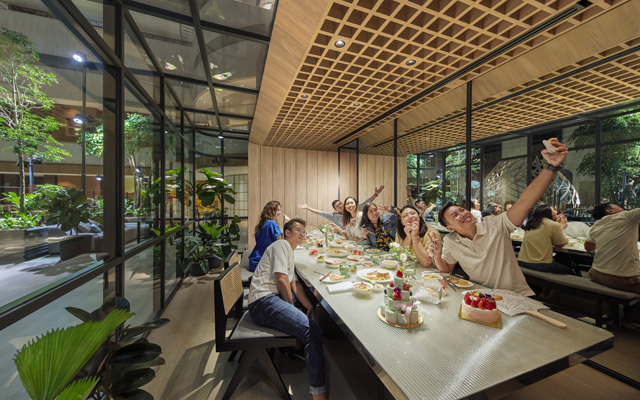
Tasty sustainable dining options are available for eco-conscious travellers
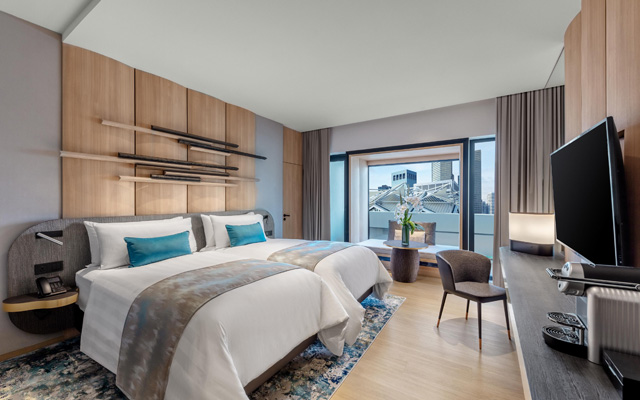
Motion sensors are deployed in all guestrooms to enable intelligent temperature control and efficient use of energy
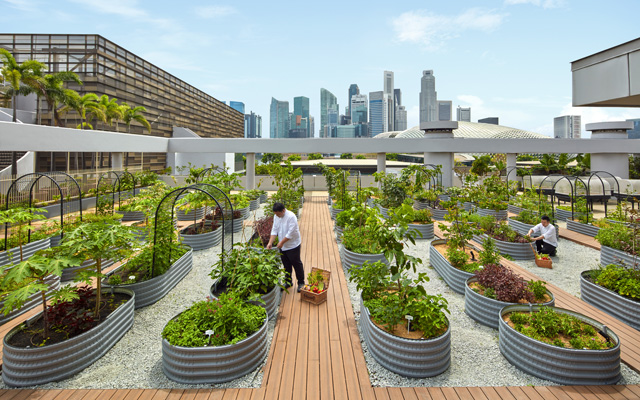
With over 60 varieties of fruits, vegetables, herbs, and edible flowers in the hotel's Urban Farm, the produce is used in its restaurants, bars, and spa
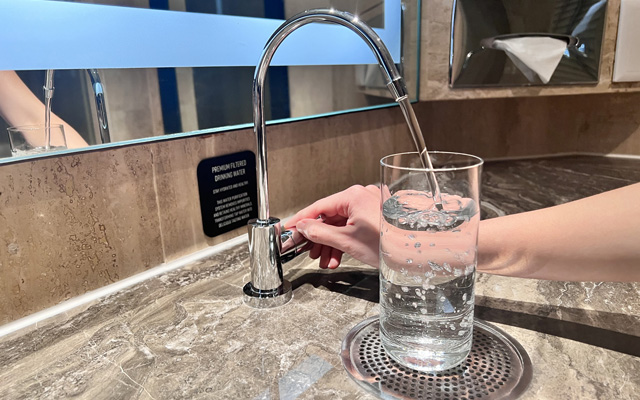
In the comfort of their rooms, hotel guests can enjoy water in glass bottles and from a water filtration system, eliminating the need for 360,000 single-use plastic bottles yearly
Green structural features
Beyond an attractive structural spotlight, the lush foliage featuring over 2,400 plants, trees, shrubs, and ground covers spread throughout the 583-key hotel acts as natural air purifiers and sinks for carbon dioxide – thereby helping to improve air quality and reduce the concentration of carbon dioxide within the building.
The planters are installed with drip auto-irrigation, which prevents water waste while energy-efficient grow lights are used to double up as support for the plants.
In 2020, the country’s first “Garden-in-a-Hotel” also approached its rebranding with a “rejuvenation” approach, rather than reconstruction, and avoided producing 51,300 metric tonnes of carbon emission – equivalent to wiping out 10,000 hectares of forest.
Reduction of energy and water consumption
Hotel guests enjoying the pool will be delighted to know that the 1,380 fibre-optic lights illuminating it during night-time, while visually beautiful, were chosen because they consumed three times less energy than standard lights.
Motion sensors are also deployed in all guestrooms to enable intelligent temperature control and efficient use of energy – they power down lights and air-conditioning when guests are away. Low-flow shower heads in the bathrooms help reduce water flow.
The luxury bayfront hotel’s 13 lifts and emergency lightings are also powered by the 210 rooftop solar panels which generate over 350 kWh of renewable energy per day, lowering overall electrical consumption and allow for savings of up to SG$21,900 per year on energy consumption.
Efficient waste management
Back in their guestrooms, hotel guests can enjoy water in glass bottles and from a water filtration system, eliminating the need for 360,000 single-use plastic bottles yearly. The hotel has also replaced miniature bath amenities with refillable pump bottles, doing away with two million miniature plastic packaging a year.
Besides, the in-room IPTV system helps minimise paper use too, while creating a more refreshed and clutter-free interior. Whether it is to book a spot in the gym or order room service, guests can do it all conveniently through the Stayplease digital concierge, by scanning an in-room QR code with their mobile devices.
Sustainable dining options
Eco-conscious travellers will also find tasty sustainable dining options widely available in PARKROYAL COLLECTION Marina Bay, Singapore to feed their guilt-free indulgences.
The hotel boasts a 150m2 Urban Farm on its rooftop which forms the backbone of the hotel’s farm-to-table, farm-to-bar, and farm-to-spa concepts.
Better planning of menus months in advance help reduce food waste and the hotel always tries to offer seasonal greens so that the vegetables can be grown at the farm, or sourced locally.
Responsible culinary is also practised so that guests can savour dishes such as Non-kill Sturgeon Caviar, where the caviar is milked from the sturgeon, rather than killing the fish to extract it, and Watermelon Rind in Sweet Potato Dumpling where food waste such as watermelon rinds are recycled instead of being disposed.
At restaurant Peppermint, the chefs recycle food waste by making use of the beef trimmings from other beef dishes, to make Shredded Beef Ragu Pasta. The beef is slowly braised for at least six hours until it is tender, then shredded for the ragu sauce.
Desserts like Mulberry Light Cheesecake is made from the mulberries, marigold, passionfruit bachelor button and coral vein, harvested from the hotel’s farm.
Other green innovations include two energy-efficient food waste digesters that break down food waste in a safe and environmentally-friendly manner into liquid, which is safe for disposal into the waste pipe, while eliminating environmental pollution of groundwater.
A partnership with Nespresso ensures used coffee capsules from the guestrooms and the COLLECTION Club Lounge are collected so that the aluminium from the capsules are repurposed and upcycled into products, such as bicycle frames and ballpoint pens, while the coffee grounds are processed into compost and then sent back to the hotel’s farm.
Moving ahead, PARKROYAL COLLECTION Marina Bay, Singapore continues to soldier on its green stride to become even more sustainable, with the upcoming launch of its rainwater harvesting system in late 2023 – all while providing a distinct and memorable world-class guest experience.
For more information on PARKROYAL COLLECTION Marina Bay, Singapore’s sustainability efforts, visit here.
Starting January 1, 2024, World of Hyatt will expand its awards and benefits to offer more flexibility and choices for its members.
World of Hyatt members will be able to choose from earning points for future free nights, enhancing stays with suite upgrades, to enriching their well-being experiences.
World of Hyatt will offer more flexibility and choices for its members
With the programme updates, members will be recognised more frequently along their journey with World of Hyatt and choose whether to use their award or gift eligible awards to loved ones.
Milestone Rewards will begin after 20 qualifying nights or 35,000 Base Points per year and continue for each 10 qualifying nights, up to 150 nights.
New Milestone Rewards include earning up to 2,000 Bonus Points on their next stay at a Hyatt property; selecting FIND credit to use on any FIND experience around the globe; gifting loved ones with stays; getting a complimentary second night at Miraval resort upon one night’s booking; and enjoying one free night in participating hotels and resorts.
Amy Weinberg, senior vice president, brand, loyalty and data, Hyatt, said: “The new Milestone Rewards are rooted in what we heard from our members – we understood they wanted more rewards and more choice, so we are offering a wider array of options to craft their travel journey, care for their well-being and immerse themselves in the transformative experiences that World of Hyatt offers.”
World of Hyatt is also rewarding eligible meeting and event planners, travel advisors, and small business administrators, offering new pathways for business stakeholders to earn status and milestones when they choose Hyatt for their clients and colleagues.
Those planning events or booking on behalf of travellers will earn two qualifying night credits toward tier status for every US$5,000 up to US$150,000 in eligible spend each year on qualifying events, bookings through Hyatt Privé, or when making a qualifying booking through Hyatt channels with an IATA number associated with their World of Hyatt membership.
Klook has successfully completed a US$210 million financing, supporting business growth and fortifying financial stability.
The equity round is led by Bessemer Venture Partners, with participation from BPEA EQT, Asia investment funds Atinum Investment and Golden Vision Capital, and corporate investment arms from South-east Asia, including Krungsri Finnovate (under Bank of Ayudhya), Kasikornbank Financial Conglomerate and SMIC SG Holdings. The round also includes bank facilities from Citi, JP Morgan, and HSBC.
From left: Klook’s Eric Gnock Fah, Ethan Lin and Bernie Xiong
For many Asian markets, 2023 marks the first year of travel recovery but Klook has demonstrated business success, surpassing previous milestones with a threefold increase compared to 2019 and boasting an annualised gross booking value of US$3 billion. Notably, the company also achieved overall profitability for the first time earlier this year.
Ethan Lin, CEO and co-founder, credits this accomplishment to the collective efforts of the team in establishing the groundwork for the post-Covid era of travel.
He said: “During the pandemic, we doubled down on our resources in merchant digitisation and the expansion of our supply network, including car rentals and outdoor experiences. This positions us strongly to capture new travel trends coming out of the pandemic.”
Through increasing brand strength, strategically building on and leveraging its app-first approach to both acquire and retain customers, Klook’s success sees over 80 per cent of bookings made through mobile today. Additionally, the influx of new customers acquired in 2023 more than doubled that of 2019, while repeat customers contributed to over half of the total bookings, demonstrating the sustained customer loyalty fostered by the platform.
“Leveraging strong business fundamentals that led to significant growth in revenue and profit this year, including a threefold increase in productivity (revenue per headcount), we are set for a new phase of sustainable expansion. With Asia in the early stages of post-Covid recovery, upcoming global events like the Paris Olympics 2024 and Osaka World Expo 2025, along with rising expenditures and digital adoption, the industry outlook in Asia is exceptionally positive,” added Lin.
The global travel industry is projected to soar to US$15.5 trillion by 2033, with Asia-Pacific leading the way as the fastest-growing region. Klook remains focused on catering to the increasing demand for immersive travel among Asian customers and showcasing the best of Asia to inbound travelers.
“Our goal is to empower travellers to explore the world effortlessly through the Klook app, a one-stop platform that seamlessly connects them to a comprehensive range of in-destination services, encompassing immersive experiences and convenient ground transportation,” shared Eric Gnock Fah, chief operating officer and co-founder of Klook.
Klook will strategically allocate the new funds to three key areas for growth: in product innovation; scaling social and digital marketing through the Klook Kreator programme to drive conversions with authentic, social, user-generated content; and advancing innovation through continuous artificial intelligence (AI) integration.
Klook recently collaborated with Google Cloud to integrate Generative AI across the platform, and will collaborate with new strategic investors in the region to increase market share and boost growth in South-east Asia.
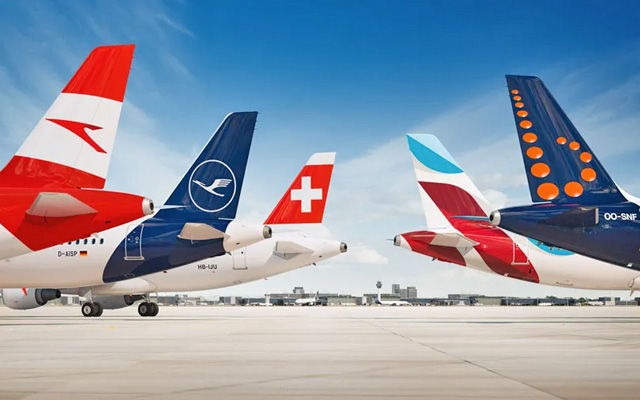
Travelport has launched Lufthansa Group airlines’ NDC content and servicing capabilities in the Travelport+ platform. Agents using Travelport+ will be able to easily search and compare NDC offers from the Lufthansa Group airlines, which include Austrian Airlines, Brussels Airlines, Lufthansa, SWISS and Air Dolomiti.
Travelport’s NDC content and servicing solution for the Lufthansa Group airlines has first become available to all agency customers located in Austria, Ireland, the Netherlands, and the UK. Access will expand to agency customers located in additional European countries in the coming weeks and will continue to roll out to Travelport+ customers in the Americas, Middle East, Africa and Asia-Pacific regions in early 2024.
Travelport’s NDC content and servicing solution will help agents to easily search and compare offers
Jason Clarke, chief commercial officer, travel partners, Travelport, said: “Our NDC solution is designed to minimise complex retailing processes so that agents using Travelport+ can easily shop and book NDC offers from the Lufthansa Group and provide a seamless servicing experience for travellers.”
Travelport+ enables agency customers to access a wide range of rich content, fares, and unique offerings from the Lufthansa Group airlines all in one place, enhanced by the Content Curation Layer. This technology enabler, embedded inside Travelport+, uses powerful artificial intelligence and machine-learning capabilities to provide agents and travellers a more modern retailing experience with accurate search responses, highly relevant results, and greater clarity and transparency.
By providing travel agents worldwide with the capability to seamlessly shop, compare, and book NDC offers from all Lufthansa Group airlines through Travelport, this ensures that travel customers have simplified access to a broad range of choices and optimal options.
What
Norwegian Cruise Line (NCL) recently celebrated its long-awaited return to Asia, and commenced a six-month season of voyages in the region.
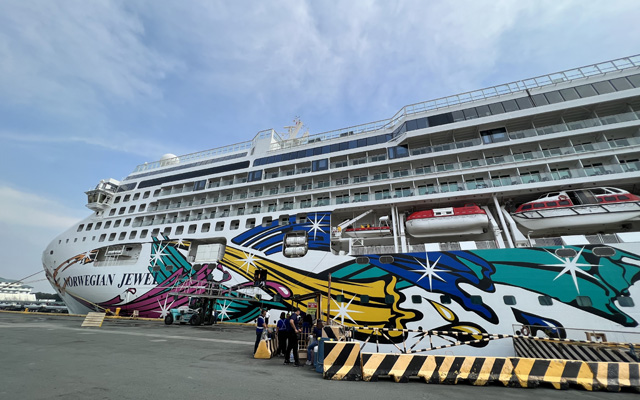
As the first ship in the NCL fleet to return to Asia in over three years, Norwegian Jewel offers 16 itineraries ranging in length from 10 to 14 days. For the first time, guests have the opportunities to call at 11 countries and sail from nine different departure ports, such as Singapore, Bangkok (Laem Chabang), Taipei (Keelung), and Seoul (Incheon). Other first port calls for NCL include Manila, Boracay, Palawan and Salomague in the Philippines; Bintan Island, Indonesia; and Hualien, Taiwan.
Facilities
The highlight of my cruise was undoubtedly the culinary experience, with 15 dining options available.
Throughout my 4D3N cruise from Taipei to Manila, I dined at the Tsar’s Palace which serves plated Western dishes, and had a burger for supper at the 24/7 O’Sheehan’s Neighborhood Bar & Grill. The indoor buffet-style Garden Café is where most people will be, as it serves up breakfast, lunch and dinner. The menu changes daily but my favourites were the Australian-style meat pies and Key Lime cheesecake; there’s also a soft-serve machine here!
I was able to dine at two speciality restaurants: La Cucina served up Italian favourites like an excellent burrata salad and moreish mushroom pasta, while Brazilian steakhouse Moderno Churrascaria featured an impressive salad bar filled with cured meats, cheeses, and piping hot soups, which guests can fill up on while waiting to be served skewers of sausages, steak, and chicken carved table-side.
Norwegian Jewel
1 of 4
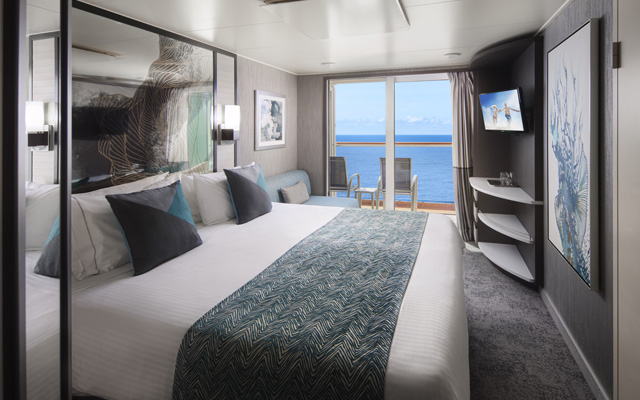
Balcony Stateroom
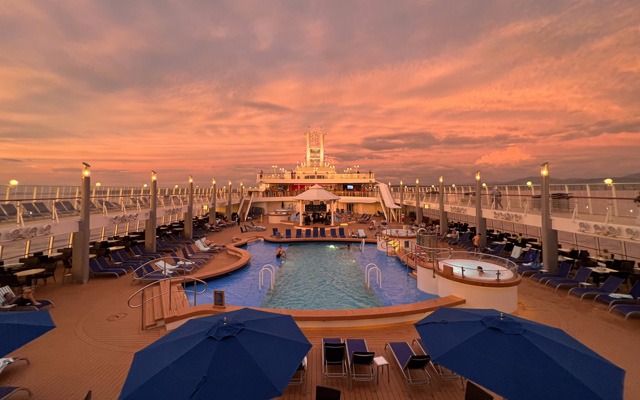
Main pool deck
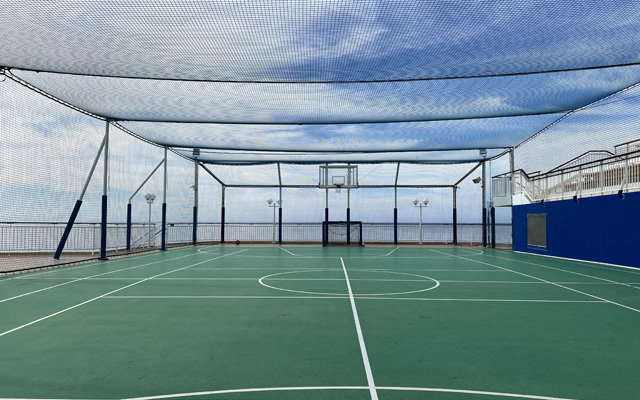
Sports area
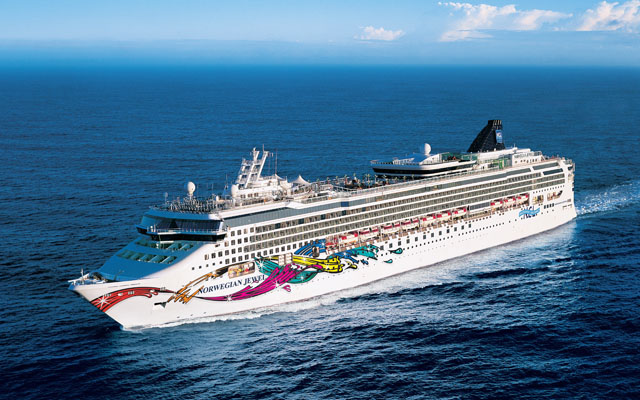
Norwegian Jewel at dock
Meanwhile, Bar City, located between the Casino and The Atrium on Decks 6 and 7, is a boon for those with Premium Beverage Packages to have a different drink at each of the four bars. Aside from Bar City, there are 13 bars and lounges, including a Sugarcane Mojito Bar, and Malting’s Beer & Whiskey Bar.
On one of the evenings, I caught the Rock You Tonight production, which delivered a high-energy performance featuring iconic songs from Queen, Journey, and The Who. Although I didn’t recognise all the songs, the dance crew were captivating in their performance, leaping and spinning across the stage with such gracefulness.
Finding moments of relaxation was effortless. The ship’s amenities, from spacious sun decks to cosy lounges, provided numerous idyllic spots for soaking up the soothing sea breeze or simply enjoying a good book.
Another space to relax is the Mandara Spa and Thermal Suite where a plethora of treatments from full-body massages to rejuvenating facials are offered. During my tour of the enormous thermal suite, I thought that the heated mosaic loungers and glass-walled saunas – located over the bridge wing and offering the same view as the ship’s captain – stole the show.
For the active, there’s an enclosed sports court behind the funnel, as well as shuffleboard courts, giant cheeseboards, and golf cages. Shore excursions can also be arranged for those looking to disembark at the myriad ports of call. Norwegian Jewel offers several shore excursions per location, with choices ranging from adventurous expeditions to trying the local cuisine.
The main pool deck offers two full-sized pools, four hot tubs, and tons of open deck space for sun loungers. Live music & DJs also keep the vibe going throughout the day.
To take in views of the ship and the endless sea, head to the forward sun decks on the 14th and 15th floors. It’s a quieter space away from the bar music and main pool deck.
Room
I stayed at the Balcony Stateroom on the 10th floor which was furnished with a queen-sized bed, and one single sofa bed. On both sides of the bed are USB charging ports, great for keeping your devices near you.
The room’s floor-to-ceiling glass doors opened up to a private balcony, and this was where I spent several hours perusing a good book; it’s been so long since I found time to sit down and read. While the Wi-Fi served my needs, however, it wasn’t the fastest.
I was also pleasantly surprised that the gentle rocking of the ship added to the overall sense of tranquillity, lulling me into a deep sleep every night.
All the accommodations on Norwegian Jewel, from the inside rooms right up to The Haven, underwent a significant revitalisation in late 2021, and I’m glad to report the modern bathrooms with large, glass-doored showers, as well as the cabin carpeting, certainly felt new.
Verdict
This 4D3N cruise experience from Keelung, Taiwan to Manila, Philippines was a perfect blend of relaxation opportunities, culinary excellence, and restful nights. As a frequent traveller who rarely opts for cruising holidays, I think I finally understand the appeal of cruising, and would not mind doing it again.
Vietjet has launched its Real Deal to new me, let’s Vietjet! Campaign for the festive season, which offers a wide range of activities both on land and in the air.
To kick off the festivities, Vietjet is running a ticket promotion with base-fare as low as US$0 from now to end of December 12 for flights from January 5, 2024 to October 31, 2024. Passengers can even pre-order hot meals and drinks at 30 per cent off.
Vietjet is offering ticket promotions and F&B discounts for the festive season
The offer is applied to all Vietnamese domestic routes and international services between Vietnam and Australia, India, Japan, South Korea, China, Taiwan, Hong Kong, Kazakhstan, and destinations in South-east Asia.
From December 15, Vietjet is also offering gifts in the form of an e-voucher worth 500,000 dong (US$20) for future flights.







 What
What