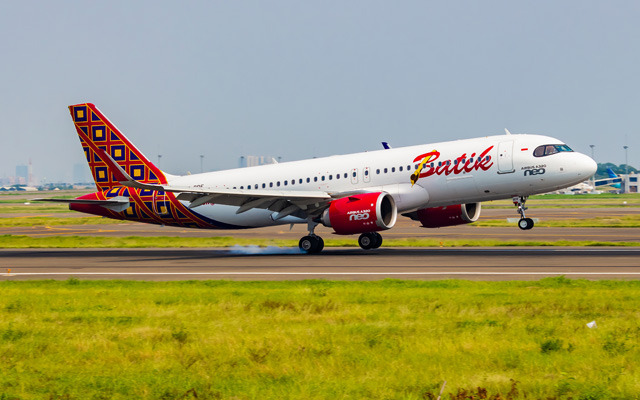
JAKARTA, INDONESIA - OCTOBER 6, 2020 : A Batik Air A320-200 arriving at Soekarno Hatta Intl Airport in Jakarta, Indonesia.
Batik Air has commenced its Batam-Kuala Lumpur service, operating three times weekly flights on a Boeing 737 aircraft.
Batik Air has started its thrice-weekly Batam-Kuala Lumpur service
The new route will connect passengers from Indonesia’s Batam to the airline’s network of 53 destinations across 22 countries through Kuala Lumpur International Airport in Malaysia.
PATA is set to organise its International Conference on Women in Travel from March 20 to 22 in Bohol, the Philippines.
Hosted by the Philippine Department of Tourism (DoT), the three-day conference featuring industry leaders will underscore the crucial role of women and the current state of gender diversity in the tourism industry. It will uncover initiatives and strategies towards progress and equality such as breaking barriers for women’s empowerment in the industry, promoting sustainability with women as agents of change, and fostering women’s leadership development.
PATA’s International Conference on Women in Travel will celebrate women’s achievements and contributions to travel and tourism
The event will not only celebrate women’s achievements and contributions to travel and tourism but also provide an opportunity to critically examine gender disparities in the industry, shedding light on various issues such as the lack of women in managerial positions.
Recognising that addressing gender equality in the travel and tourism sector is crucial to the responsible and sustainable development of the travel and tourism industry, PATA CEO Noor Ahmad Hamid said: “Despite comprising almost 50 per cent of the tourism workforce in the Asia-Pacific region, women have not received the appreciation and support necessary for their own economic and social prosperity. The event aims to spark meaningful dialogues and creative solutions dedicated to the empowerment of women in the travel sector.”
“This event aligns seamlessly with our commitment to promoting diversity and empowering women in the travel and tourism sector. Through this conference, we aim to showcase the country’s dedication to women’s progress, from supporting local entrepreneurship to advocating for gender equality in education,” remarked Philippines’ tourism secretary Christina Garcia Frasco.
Bohol is nestled in the heart of the Central Visayas region of the Philippines and is renowned for its landscapes, dolphin encounters near Pamilacan Island and coral garden exploration at Panglao, Balicasag, and Cabilao Islands. Other highlights include Danao’s Adventure Park, and Bohol’s rich heritage, featuring old houses, centuries-old stone churches, and watchtowers. The destination has also made significant strides in promoting women empowerment through various initiatives, supporting local women in entrepreneurship, providing opportunities for skill development and economic independence.
Minor Hotels has appointed Rohit Pandey as the new general manager of Anantara Jaipur Hotel.
In his new role, he will lead the launch and positioning of Minor Hotels’ first Anantara in India.
The seasoned pre-opening hotelier has amassed more than two decades of experience, and joins Minor Hotels from The Leela Bhartiya City Bengaluru in India, where he most recently served as the property’s hotel manager.
TUI Blue Hotels & Resorts has named Alex Lam as the head of operations, Southeast Asia. He will be responsible for overseeing all aspects of hotel operations and driving business performance.
With his extensive experience and proven track record in the industry, Lam was previously vice president of hotel operations at Conduit House before joining TUI Blue Hotels & Resorts. He also oversaw a portfolio of over 100 properties across the region during his tenure as Hyatt Regional’s vice president, hotel finance, Asia Pacific.
News that arrivals to Koh Samui surged by 66.65 per cent in 2023, compared with 2022, has been welcomed as a sign that the island’s tourism scene is well on the road to recovery. The end of 2023 was particularly successful, with 207,096 tourists arriving by air to the popular destination in December – a leap of 15.25 per cent on the same period in 2022.
The positive bump has also given more weight to a recent proposal to upgrade the island’s airport with new technology that will make the hub more efficient – able to handle up to 73 flights per day – and more sustainable.
Koh Samui’s tourism sector is seeing a robust bounce back to pre-pandemic levels
Speaking to TTG Asia, Tim Sargeant, co-founder & CMO of Explorar Hotels & Resorts, explained the significance of the development.
“It’s heartening to witness the region’s tourism sector bouncing back robustly. We’re currently surpassing the visitor rates and occupancy levels of 2019, marking a significant upturn not just for hotels and resorts but for the entire local community as well,” he said.
“Today’s travellers prioritise unique experiences in their destination choices, and with the surge in visitors to the island, it’s equally gratifying to see local businesses and communities flourish alongside. Adding to this positive momentum, the recent news about the airport’s expansion plans promises to further boost accessibility and convenience for visitors, heralding a new era of growth and opportunity for the region.”
Jane Soergel, general manager of InterContinental Koh Samui, shared: “We are delighted to witness the remarkable growth in tourist arrivals at Samui. We are also thrilled to note a significant uptick in the number of Chinese travellers returning to the island this year, further contributing to the positive tourism trend. This surge, underscores the island’s popularity as a sought-after destination.”
At present, Koh Samui benefits from a daily schedule of 50 flights. To further elevate the experience for international guests, an expansion of flight options in the near future is encouraged, remarked Soergel.
“We highly support the proposed increase in daily flights and we are excited about the opportunities this presents for the local tourism industry and our hotel.”
Editor’s note: The article has been corrected to show that the airport in Koh Samui will be able to handle up to 73 flights a day, not an additional 73 flights as previously stated.
International arrivals into Macau throughout the eight-day Spring Festival Golden Week (February 10 to 17) has crossed the 1.3-million mark, reaching close to 2019’s level, say authorities.
The bulk of arrivals came from China, with a million on record for the period. This segment made up 76.2 per cent of total visitor arrivals. The average daily volume of visitors from China exceeded 129,000, a year-on-year surge of 243 per cent and 101.3 per cent over 2019’s figures.
International arrivals into Macau during this year’s Lunar New Year reached near 2019’s level
Arrivals from Hong Kong reached 253,000, while the average daily volume of Hong Kong visitors neared 32,000, a surge of 34.6 per cent over last year’s and 97.8 per cent of 2019’s.
The average daily volume of international visitors topped 6,600, up by 168.8 per cent over last year’s and 78.5 per cent of 2019’s.
Macau’s Spring Festival tourism surge was supported by an array of festive events presented by the government, tourism businesses, and community organisations.
In a press statement, the Macao Government Tourism Office said visitor arrivals were trending towards significant recovery.
The average hotel occupancy rate in the destination also topped 95 per cent, while average room rate hovered at 1,922 patacas (US$238.60) during the Golden Week, a year-over-year growth of 23.4 per cent.
Ant Group, the owner and operator of open platform Alipay, has reported a rebound in consumer spending during this year’s Lunar New Year travel season, one that is significant as the first celebrations without restrictions since the Covid-19 pandemic.
In the holiday period between February 9 and 12, the number of transactions made by Alipay users overseas surpassed that of 2019’s level by seven per cent while consumer spending recovered to 82 per cent of 2019’s or 2.4 times of 2023.
Chinese tourists spent 70 per cent more on F&B than in 2019
Ant Group noted that closer socio-economic connections within Greater China, new visa-free policies from major South-east Asian destinations, and recovering international flight capacities were key drivers of the festival travel boom.
While traditional Asia hotspots kept their following, more distant destinations in Europe, Australia, New Zealand, the Middle East, and North America also showed a rise in Chinese traveller expenditure.
Alipay spend data showed that Hong Kong, Japan, Macau, Thailand, Malaysia, Singapore, South Korea, France, Australia and Canada were top destinations for Chinese travellers. Thailand, Malaysia and Singapore combined saw a 7.5 per cent increase over 2019, and a 580 per cent leap over 2023, with Thailand leading in total volume and Malaysia showing the largest increase.
Expenditure was made on traditional activities like shopping and tourism spots-hopping, as well as on immersive and unique local experience. Globally throughout the Lunar New Year week, Chinese tourists spent 70 per cent more on F&B than in 2019, venturing from downtown hotspots to off-the-beaten-track locations.
In-destination transportation spend now ranges from rail and taxi to subway and scooter-share, allowing more local SMEs on the public transport network to gain a share of international tourist revenue. The cost per ride on any vehicle for Alipay travellers dropped by 60 per cent compared to 2019.
On the back of new partnerships forged in 2023 and increased travel, cross-border expenditure on regional e-wallets powered by Alipay+ rose by 252 per cent year-on-year. Daily average transactions increased by 304 per cent. Japan, South Korea, Macau, Thailand and Singapore are the top five most popular destinations for Alipay+ consumers besides the Chinese.
Since September 2023, 10 leading e-wallets and payment apps in Asia have been serving their roaming users across Alipay’s 80-million-strong merchant network in China, also supported by Alipay+. Visa, Mastercard, JCB, Discover, and Diners Club International expanded their collaboration with Alipay for travellers linking their international credit or debit card to their Alipay e-wallet.
During the current Spring Festival, international travellers to China spent 500 per cent more on their international card-enabled Alipay accounts at merchants in China compared to 2023. Chinese restaurants, tourist attractions and public transportation are the most popular use cases for international visitors traveling in China and experiencing the festival.
The Philippines has unveiled the third and latest stop of the Philippines Hop-On-Hop-Off (HOHO) Bus Tours – the Pasay-Paranaque circuit, aka the Entertainment Hub.
Traversing the cities of Pasay and Paranaque, HOHO will now bring tourists into these entertainment hotspots that feature a blend of modern entertainment complexes, vibrant nightlife, and historical and cultural landmarks.
Philippines Hop-On-Hop-Off Bus Tours has launched the Pasay-Paranaque circuit
The Entertainment Hub features 13 designated bus stops at Ninoy Aquino International Airport (NAIA) Terminals 1, 2, and 3, Newport World Resorts, City of Dreams, Ayala Malls Manila Bay, Parqal, Okada Manila, Solaire Resort, Luxe Duty Free, MOA Main Stop, SMX Convention Center, and MOA Seaside.
It will also connect to the Business Hub of Makati and Cultural Hub of Manila, and a special by-appointment-only route in Malacañang showcasing Bahay Ugnayan and Teus Mansion, which are now accessible as heritage museums.
The Department of Tourism’s (DoT) secretary Christina Garcia Frasco said the launch in the premier cities of Pasay and Paranaque “is another addition to the already diverse tourism product offerings in the National Capital Region, and in the entire country”.
“The Hop-On-Hop-Off Tours have successfully promoted our heritage sites, museums, and lifestyle centres in the metropolis, and the entertainment spots, heralding our stories as a people,” she added, calling the initiative part of the strategies under the National Tourism Development Plan.
Frasco also spoke about HOHO’s foray into digitalising tours as a huge step forward to the country’s desire to boost the ease of doing business and travel, as well as to “provide travellers with cost-efficient, smart, and a digital environment for tourism”.
With the mobile app, tourists can explore Metro Manila and navigate key locations across the region. They can book their own itinerary – guided or DIY – which allows them to explore nearby attractions at their leisure, as well as check the schedule of the departing bus in various HOHO stops in real-time.
This year, the DoT will launch the remaining three HOHO hubs composed of the Heart Hub that includes the cities of San Juan, Pasig, and Mandaluyong; the Lifestyle Hub featuring the business and commercial district of the City of Taguig – The Bonifacio Global City, and the Mind Hub that focuses on educational institutions located in Quezon City.
In addition, the launch of the HOHO Entertainment Hub marks the inception of the country’s Layover tours for international transit passengers that is scheduled to be launched in the 2Q2024, allowing travellers on connecting flights with several hours to spare a chance to get a glimpse of the Philippines.
Accor has entered into a strategic partnership with Qualmark to work towards certifying Accor hotels, resorts and apartments across New Zealand as Gold Standard Sustainable Tourism Businesses.
Qualmark’s Sustainable Tourism Business certification criteria is a rigorous process that evaluates standards of sustainability across five key pillars: business systems, environment, people, community and culture, and health and safety.
Hotel St Moritz Queenstown – MGallery, pictured, has already achieved gold certification under Qualmark’s GSTC-recognised standards for sustainable tourism businesses
The criteria was recently the first in New Zealand to gain Global Sustainable Tourism Council (GSTC) recognised status, meaning Qualmark members can be confident that achieving Qualmark certification meets global standards of sustainability and that travellers can be assured of a globally recognised accreditation.
Qualmark New Zealand general manager, Steven Dixon, shared: “Compared to 10 years ago, travellers are now three times more likely to choose a business that has been sustainably accredited. Our vision is to see all New Zealand tourism businesses join Qualmark, to make it easier for our manuhiri (visitors) to make sustainable choices.”
Last year, Accor removed single use plastic items in over 80 per cent of hotels, and has plans to look into food waste and sustainability, water usage, eco certification and diversity and inclusion in 2024 and beyond.
Around the world, Accor is fully supporting its 5,500 hotels in obtaining external sustainable certifications. Through a combination of global and local partnerships, Accor will reach the target of 100 per cent of its network eco-certified by 2026.
“We are delighted to partner with Qualmark as a leading voice and authority for sustainability in the New Zealand market. Our hotels are already accredited with Qualmark and we are now taking actions for them to reach gold accreditation – the highest possible standard under the new GSTC aligned standards,” added Adrian Williams, chief operating officer, PM&E, Accor Pacific.
Radisson Hotel Group (RHG) will make its debut in Cambodia following the signing of a landmark agreement with Prince Real Estate Group to operate two brand-new properties in the city of Phnom Penh.
Scheduled to open by 1Q2026, this dual-branded project will see the launch of Radisson Red Phnom Penh and the upper-upscale Radisson Blu Hotel & Residences, Phnom Penh in the heart of the city. The two hotels and branded residence are integrated within the Prince Happiness Plaza, a condo project that is set amid a mixed-use development that will comprise high-end retail, dining and commercial elements.
Radisson Red Hotel Phnom Penh and Radisson Blu Hotel & Residences, Phnom Penh will launch by 1Q2026
Radisson Blu Hotel & Residences, Phnom Penh and Radisson Red Hotel Phnom Penh will be just a short drive from the new Phnom Penh International Airport, which is expected to be completed in 2025. This project is located within international embassies and in close proximity to popular attractions such as Independence Monument, the National Museum of Cambodia, and the Royal Palace.
The 250-key Radisson Blu Hotel & Residences Phnom Penh will offer 160 guestrooms and serviced apartments, as well as 90 branded residences ranging from Deluxe Studio Residences to Three-Bedroom Residences, all of which will feature premium amenities and panoramic views of the skyline and river.
Radisson Red Hotel Phnom Penh will comprise 200 keys, ranging from modern Deluxe Rooms to the spacious One-Bedroom Suites. The two properties will share an all-day restaurant, lobby lounge, spa, pool, gym, co-working spaces, reading lounge and event venues.
Ramzy Fenianos, chief development officer, Asia Pacific, RHG, said: “(Cambodia) is a key emerging market with vast potential for business and leisure travel, so this dual-branded development will add considerable value to our company’s rapidly expanding portfolio in South-east Asia.”
Edward Lee, CEO of Prince Real Estate Group, commented: “With its prime location and outstanding facilities, we are confident that this development will deliver world-class hospitality under the Radisson Blu and Radisson Red brands to the rising number of guests visiting Cambodia.”





 With his extensive experience and proven track record in the industry, Lam was previously vice president of hotel operations at Conduit House before joining TUI Blue Hotels & Resorts. He also oversaw a portfolio of over 100 properties across the region during his tenure as Hyatt Regional’s vice president, hotel finance, Asia Pacific.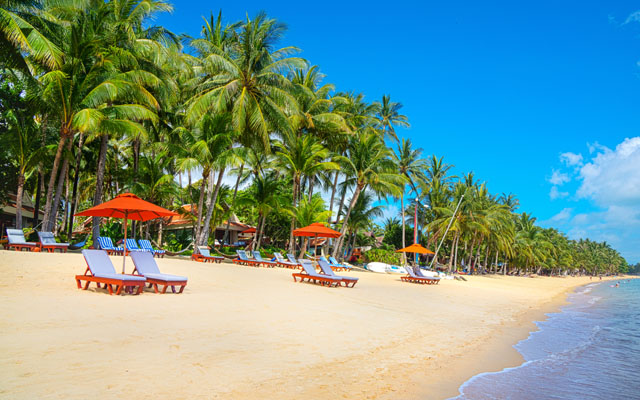













Minor Hotels has appointed Rohit Pandey as the new general manager of Anantara Jaipur Hotel.
In his new role, he will lead the launch and positioning of Minor Hotels’ first Anantara in India.